
MN-400-12 power supply, 12 V 400 W, code-named “birdhouse”
A reminder: to keep up with new posts on the blog, I recommend following me on Instagram. I’ll post notifications about every new article there, and maybe write about other interesting things too - link to my account
You can also subscribe to updates and new articles on the Telegram channel - https://t.me/KirichBlog
Right from the start, the person who sent me this power supply called it a birdhouse, and the name stuck. But what else would you call it, given its design? :)
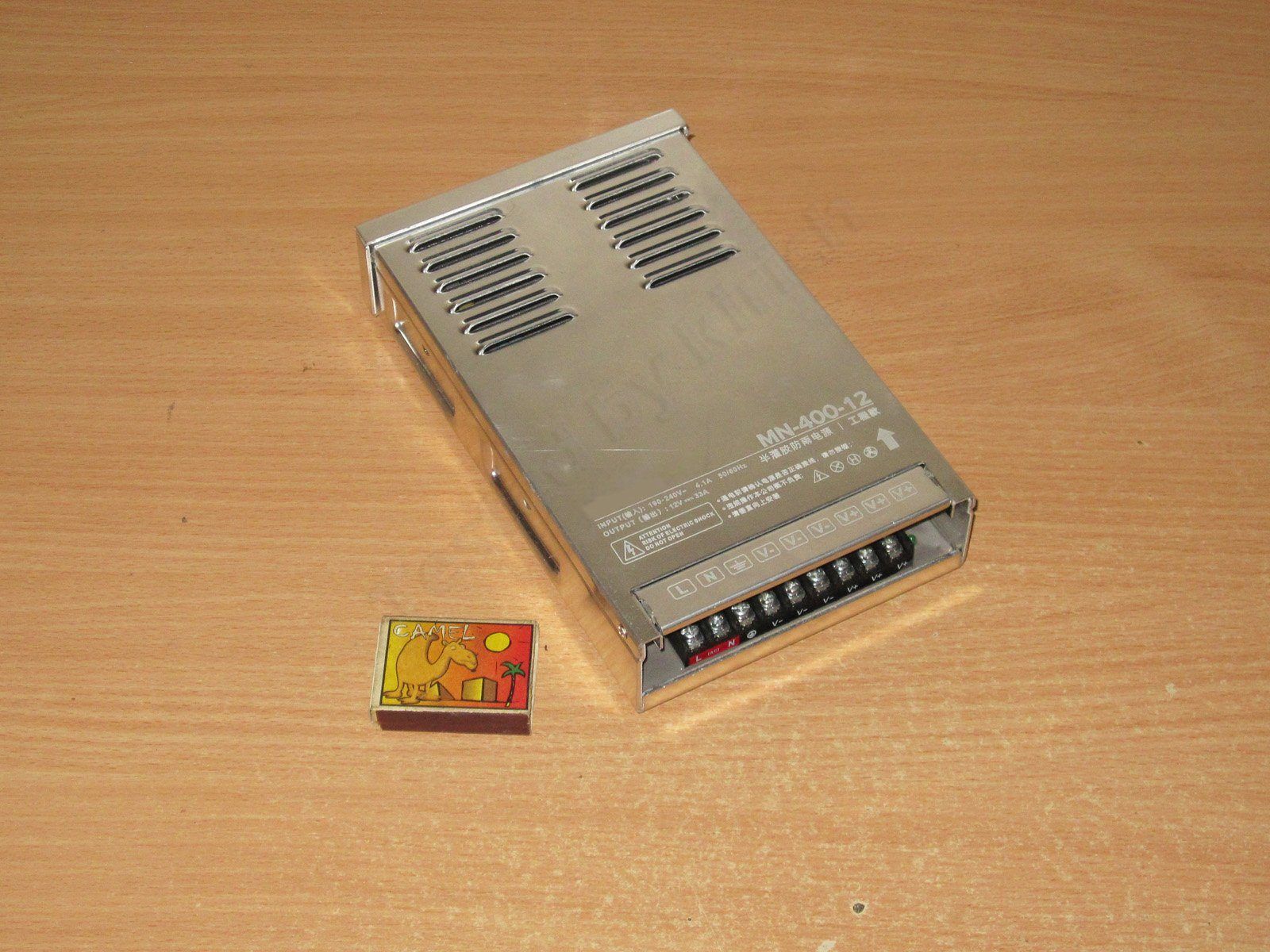
The case is made of fairly thick aluminum. There’s a “hole” for hanging it somewhere, as well as “feet” to keep it off the surface—I assume for better cooling. It also has ventilation holes, and the power supply itself is designed to be installed outdoors.
Case dimensions:
Length: 207/217 mm
Width: 127/130 mm
Thickness: 40/45 mm
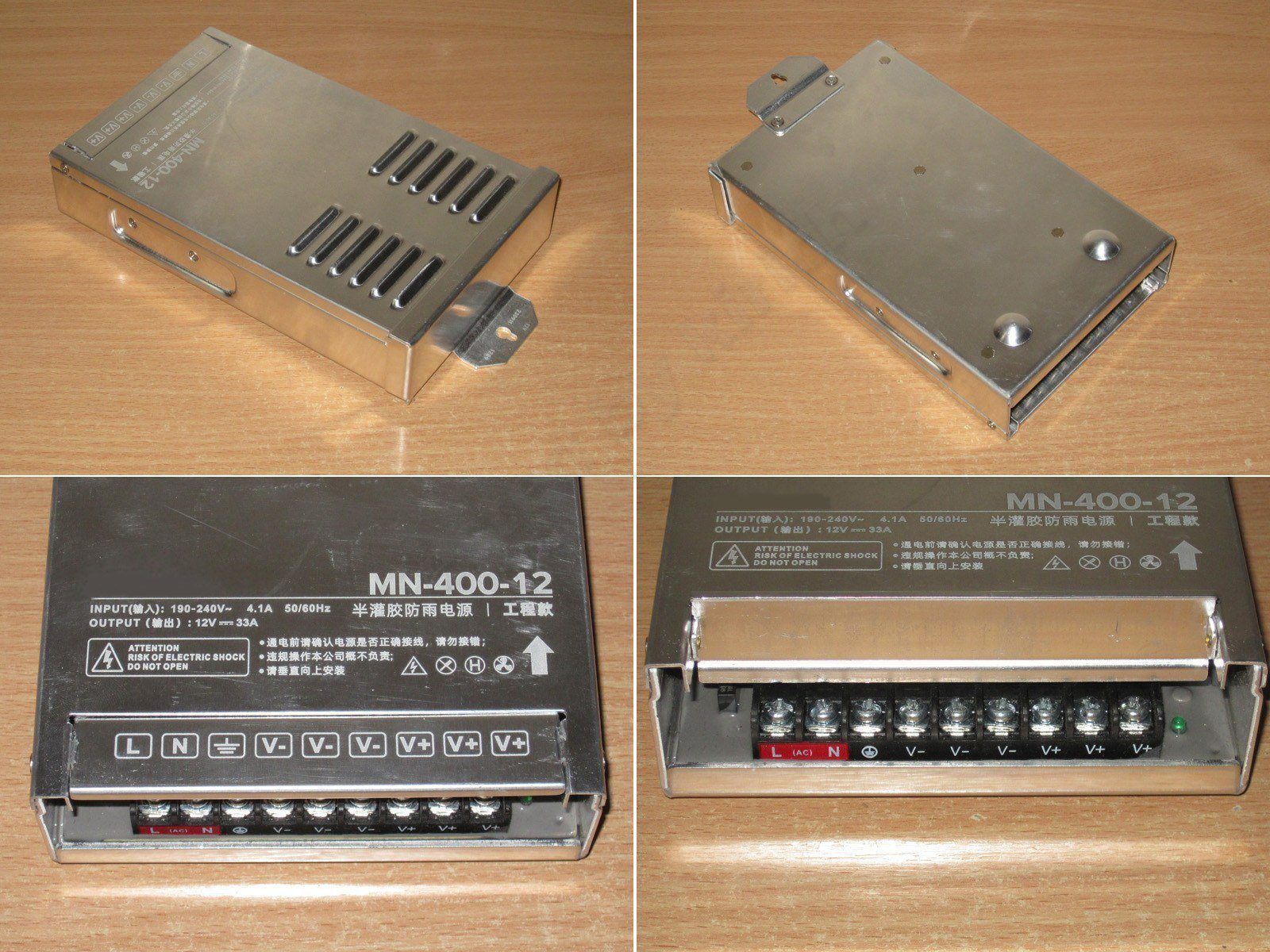
The case is labeled with an output voltage of 12 V and a current of up to 33 A.
I also like the terminal block, with the AC input terminals marked in color. The terminal block itself has no cover; instead, it’s covered by a small lid that’s part of the case.
It’s very easy to take apart, but there’s not much of interest inside. Power supplies built around this kind of circuit don’t have many components to begin with, and here some of them are also potted in compound.
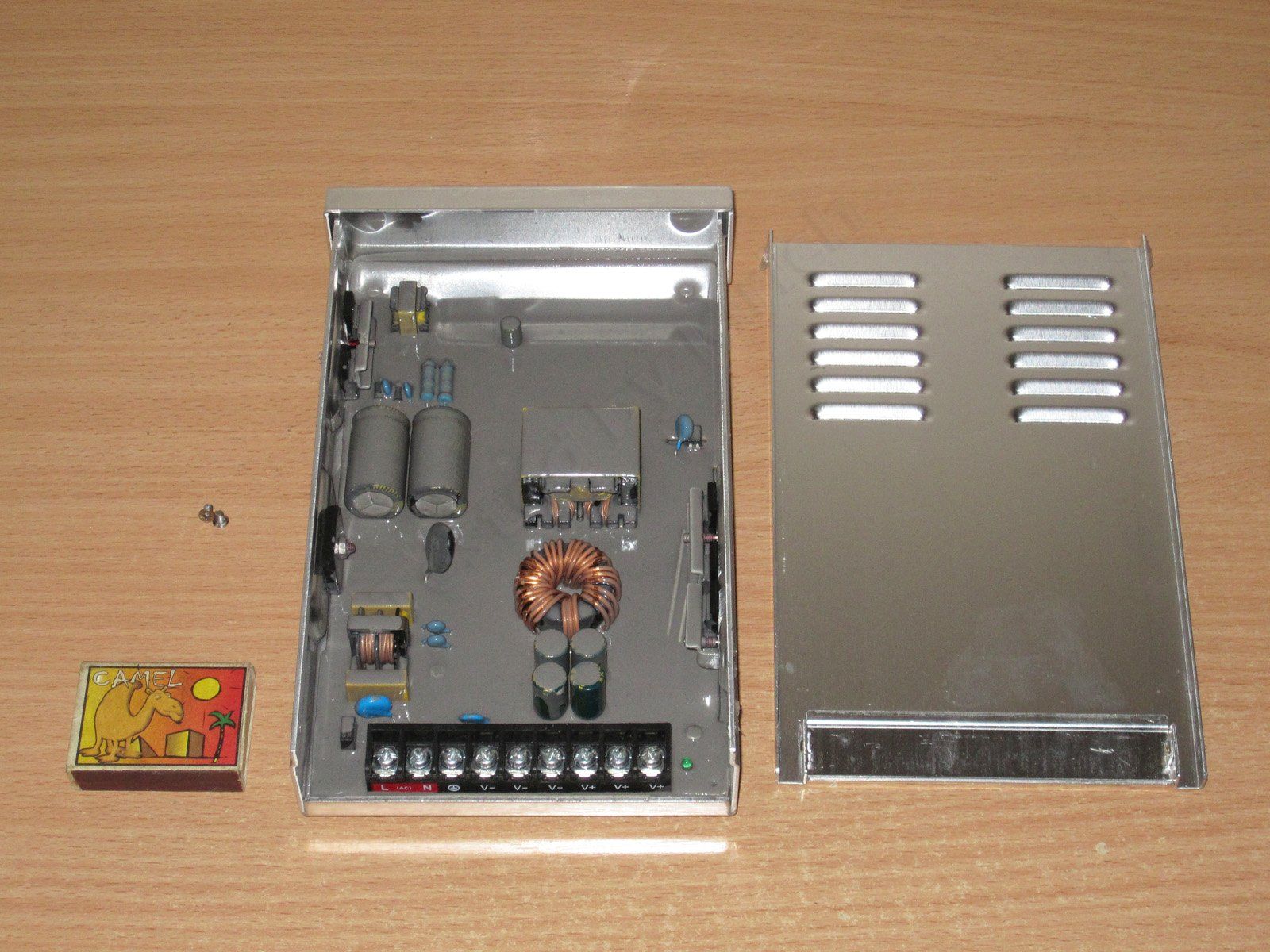
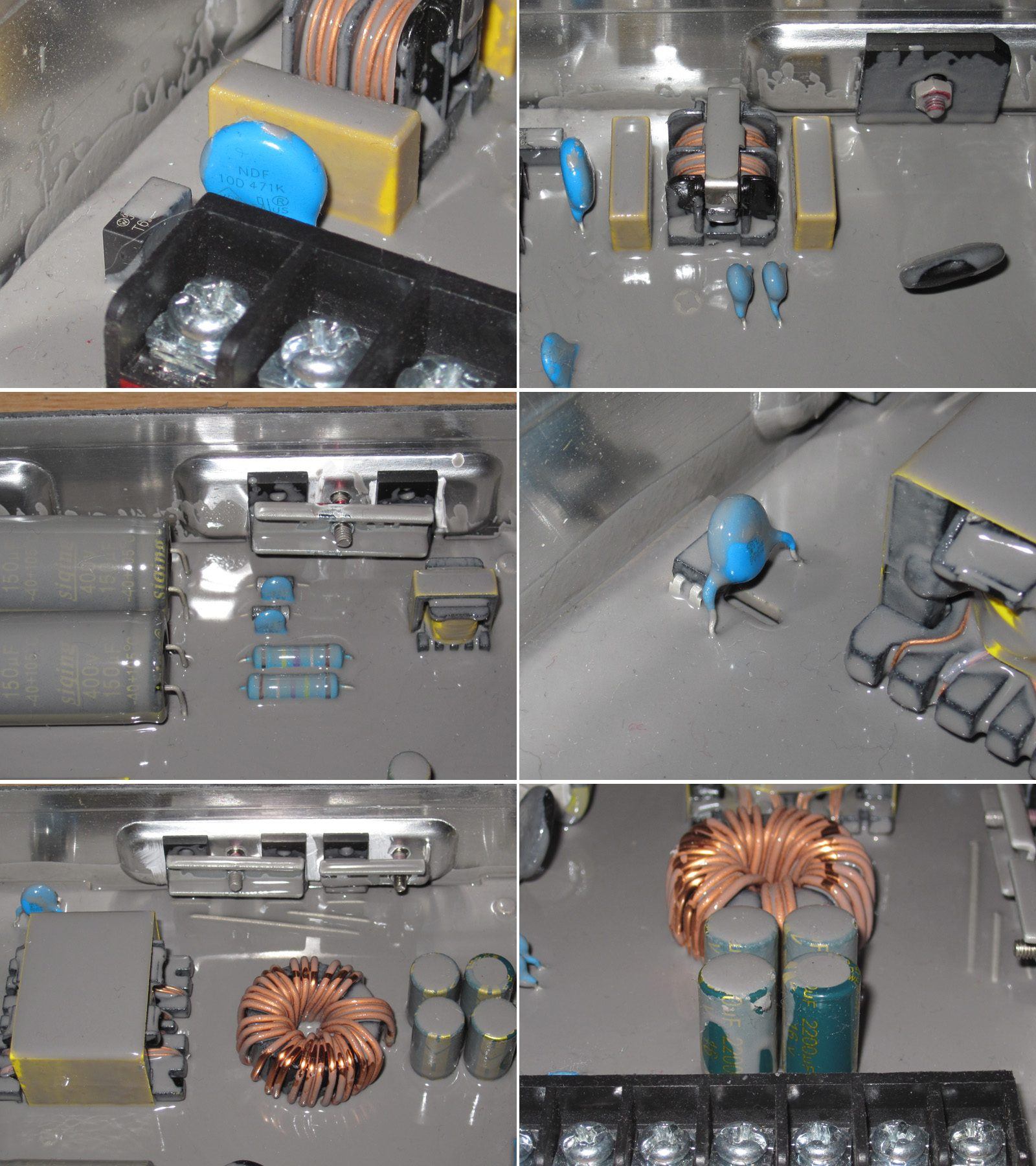
Even in a potted power supply, it’s easy to identify the main circuit sections:
Input filter
Inverter
Transformer
Output rectifier with inductor and capacitors
The potting is neat, but in places some component leads stick out a little above the surface, so this power supply isn’t actually sealed—it’s just moisture-resistant.
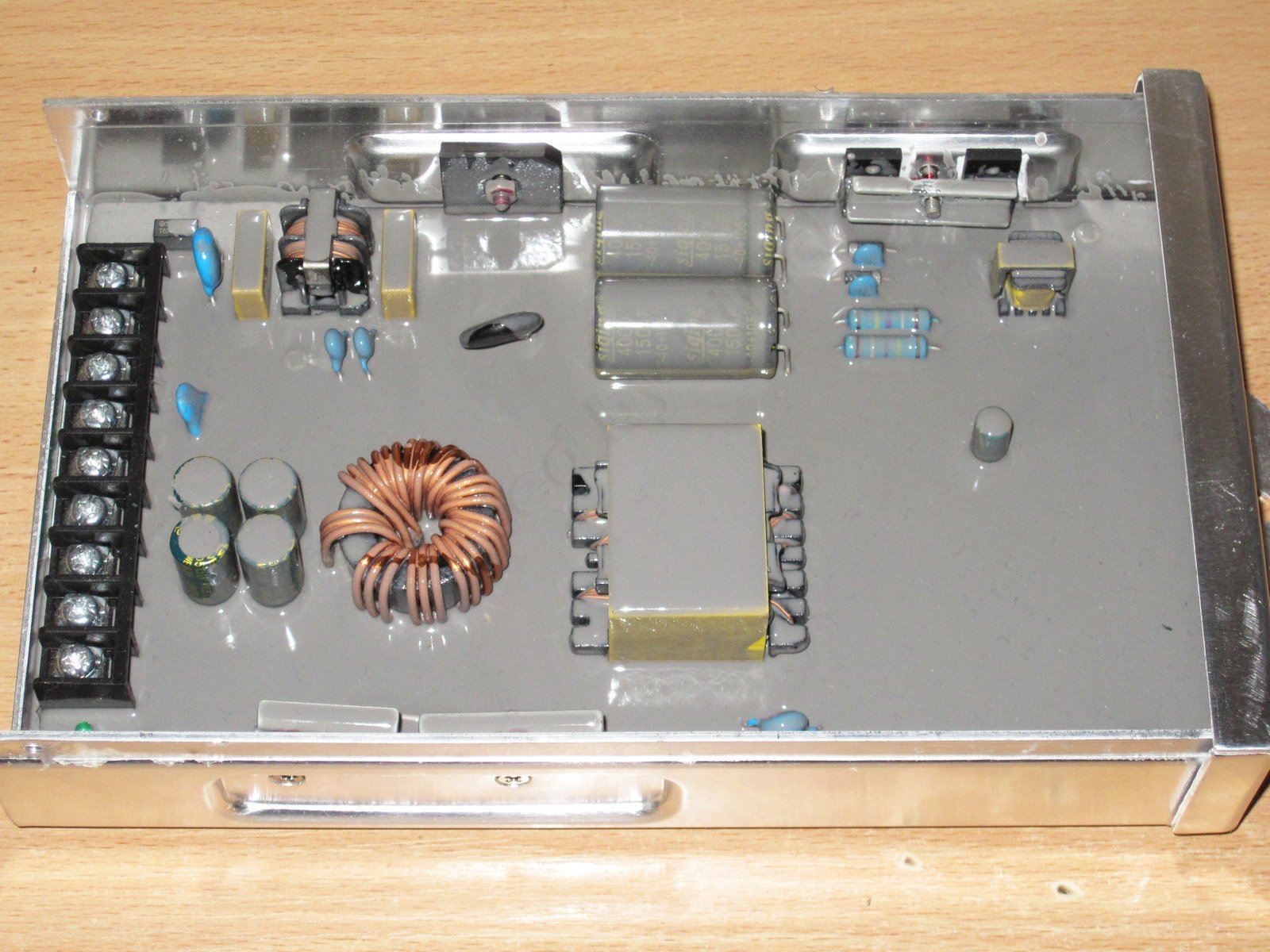
1. Fuse and varistor rated for 470 V peak
2. A proper input line filter, which is a plus. The bridge rectifier is pressed against the case, also a plus.
3. Inverter input capacitors and transistors. The capacitors are marked 400 V, 150 µF, so they’re connected in parallel.
4. Optocoupler isolation and a Y capacitor, as they should be.
5. Output section. It’s interesting that there’s an odd number of diodes.
6. There are four 2200 µF output capacitors, which I’d even call generous.
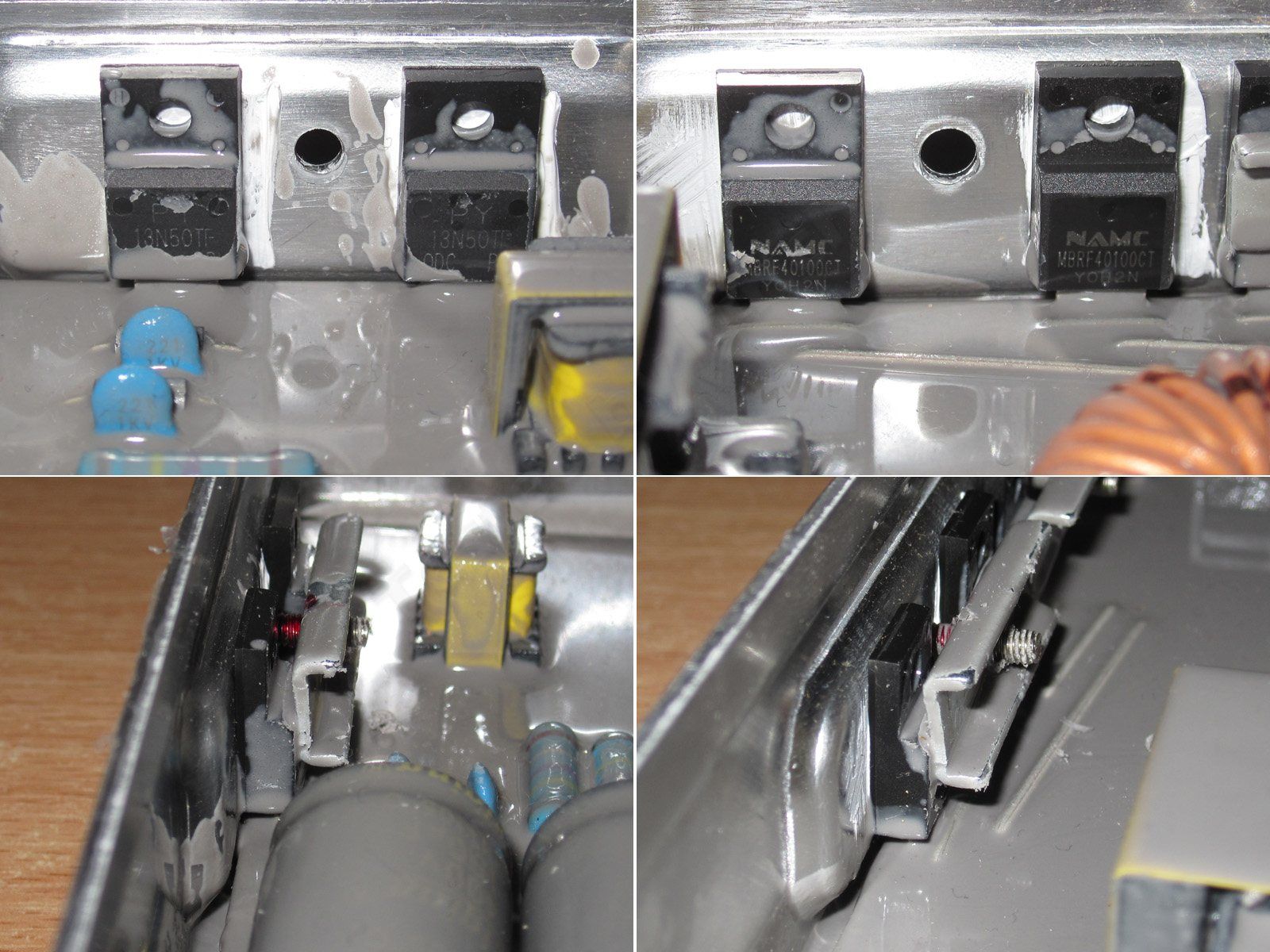
I removed the clamps from the transistors and diodes after testing so as not to compromise the test conditions.
The transistors are 13N50, and the diode assemblies are rated for 40 A and 100 V. No complaints here either.
The clamping arrangement, though, is so-so. While everything was clamped “at the factory,” it was all fine. But after I removed the clamp and cleaned off the sealant, the clamp kept trying to “slide” upward when I put it back. It’s not a critical issue; they could simply have mounted the transistors and diodes a little higher, which would have been more secure.
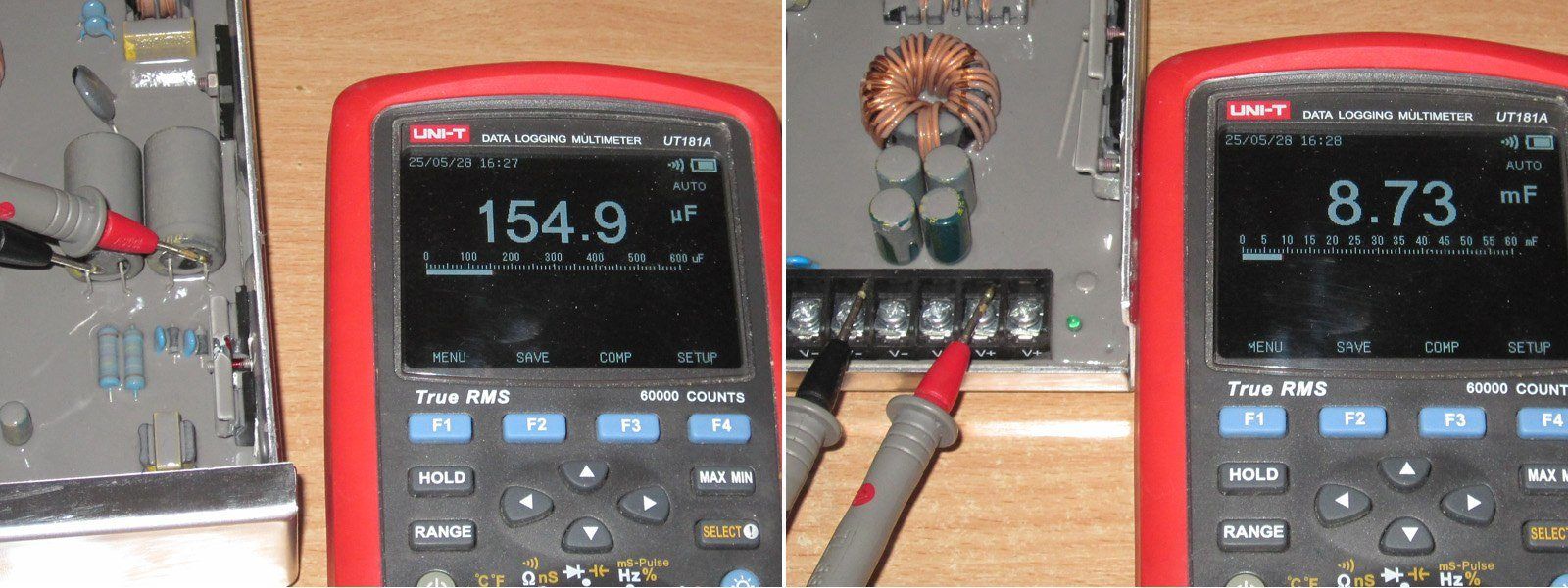
The input capacitors are almost half the specified value. They should have totaled 300 µF, which is reasonable for 400 W, but in reality we have just over 150 µF, which is reasonable for up to 200 W.
The output capacitors are fine.
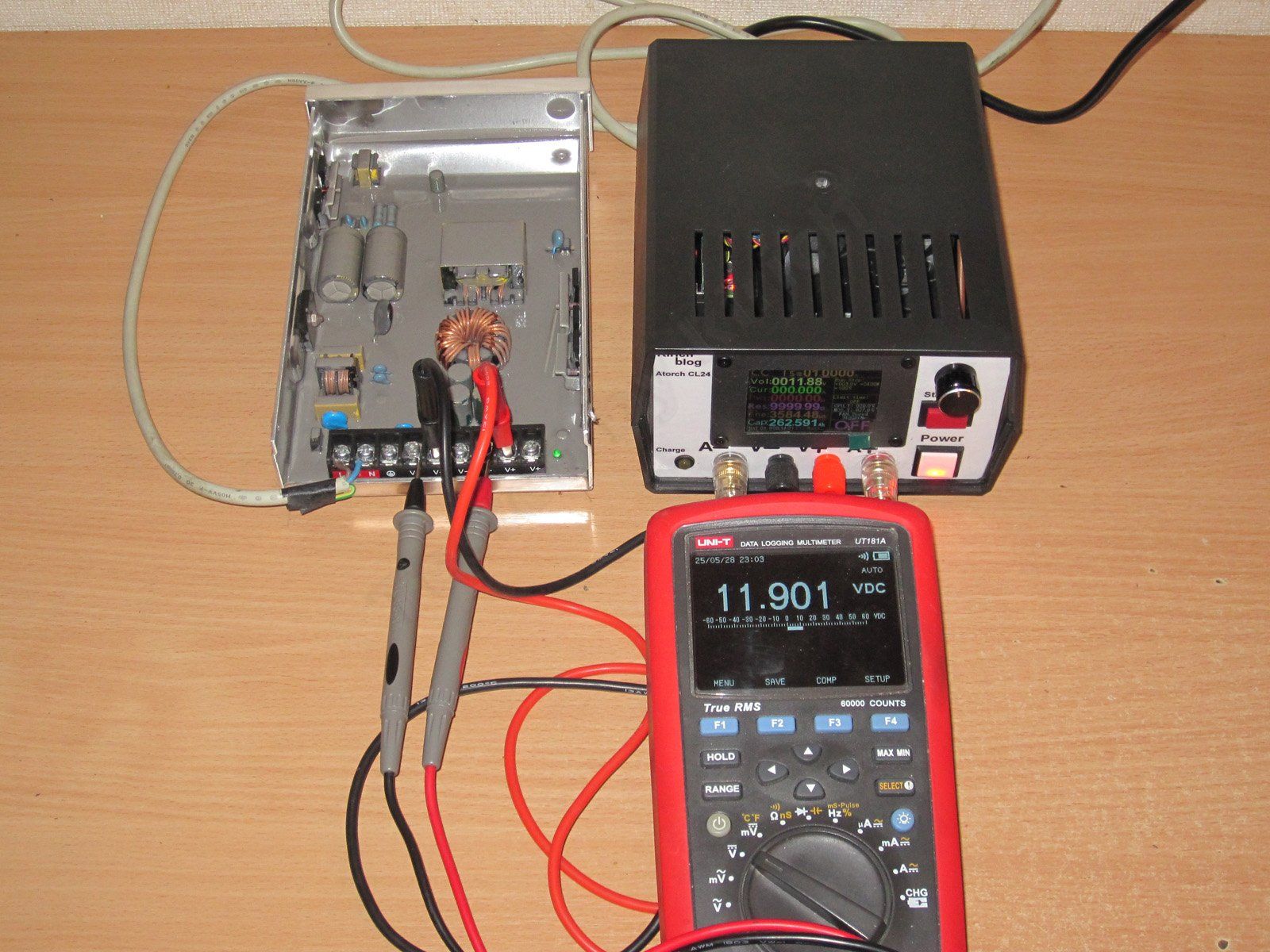
At first, I planned to use a load based on the DL24MP, since the rated current is up to 33 A. But it turned out the power rating was overstated too, so I used a 25 A load instead.
There’s no voltage adjustment. With the unit cold, the output is 11.901 V.
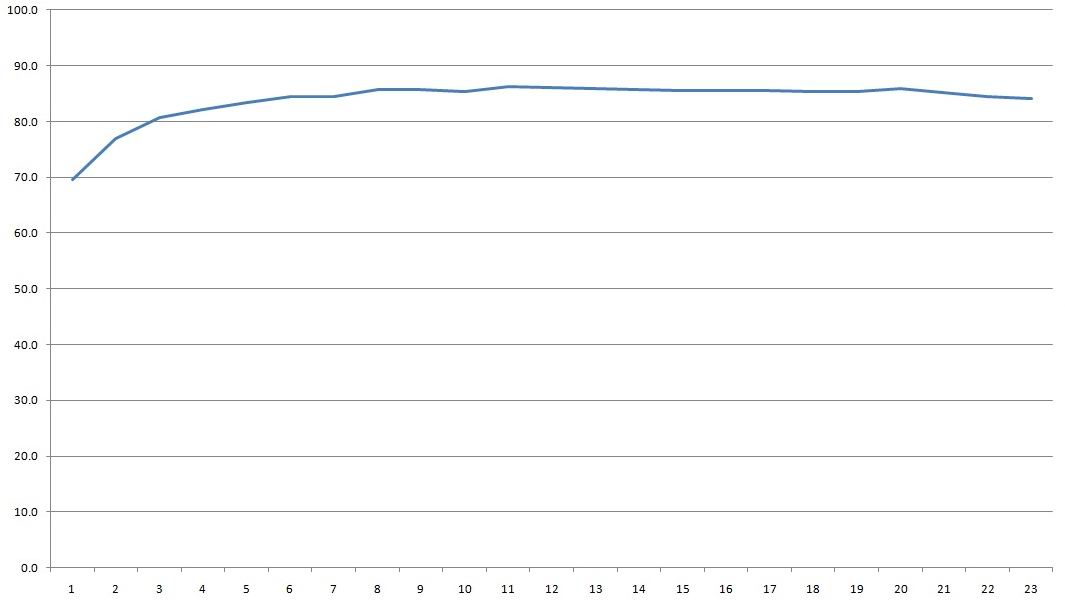
I checked efficiency over the 1–23 A range. The voltage held steady up to a load current of 21 A; at 22 A it was 10.33 V, and at 23 A it dropped to 9.37 V. In other words, the power supply started limiting its output, and its actual maximum power is 250 W.
Efficiency was about 85%, which is perfectly reasonable.
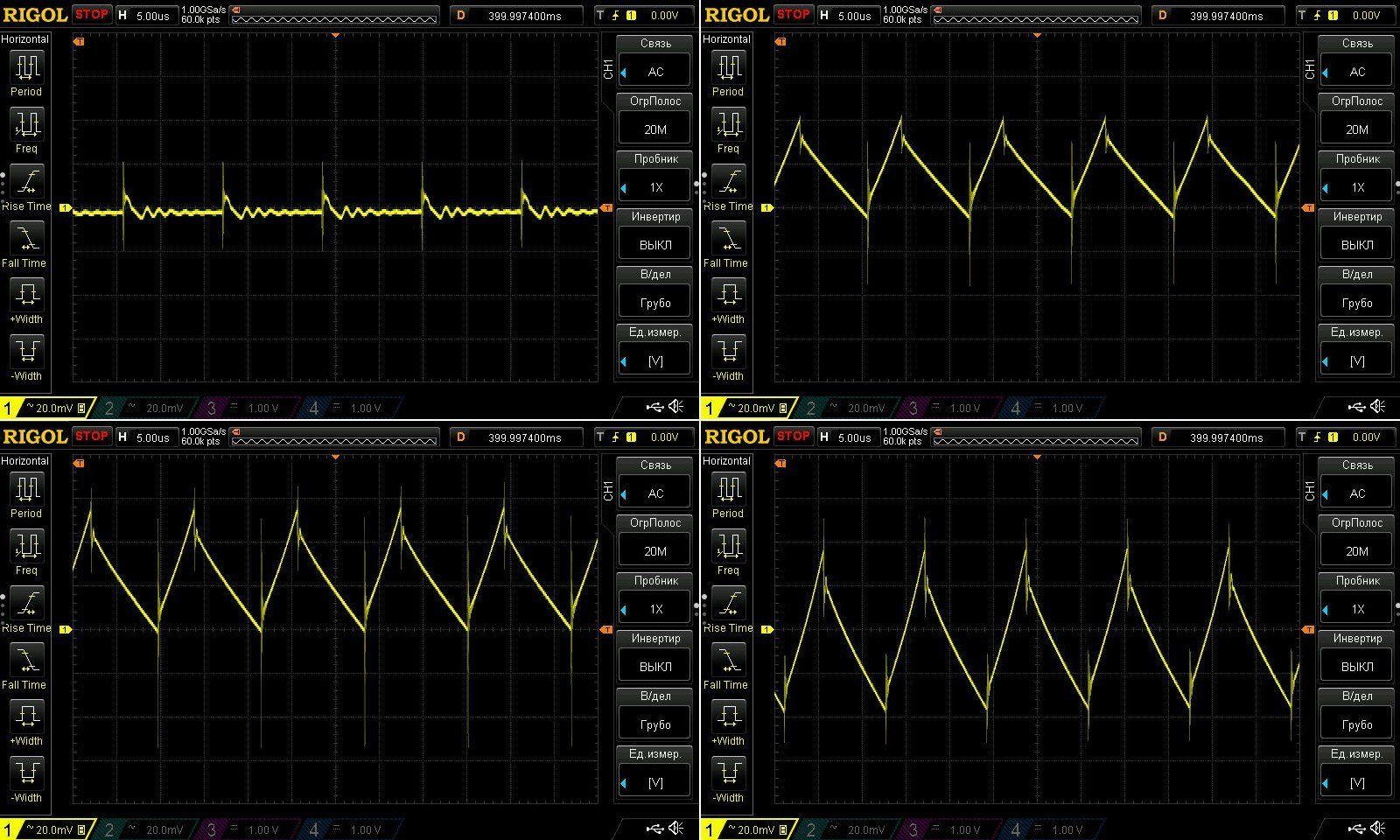
Since the power supply uses a half-bridge topology, output ripple is fairly low, especially given the generous output capacitance.
I tested it with no load and at 6, 12, and 20 A. Even at 20 A, the peak-to-peak ripple was about 80–100 mV, which is excellent.
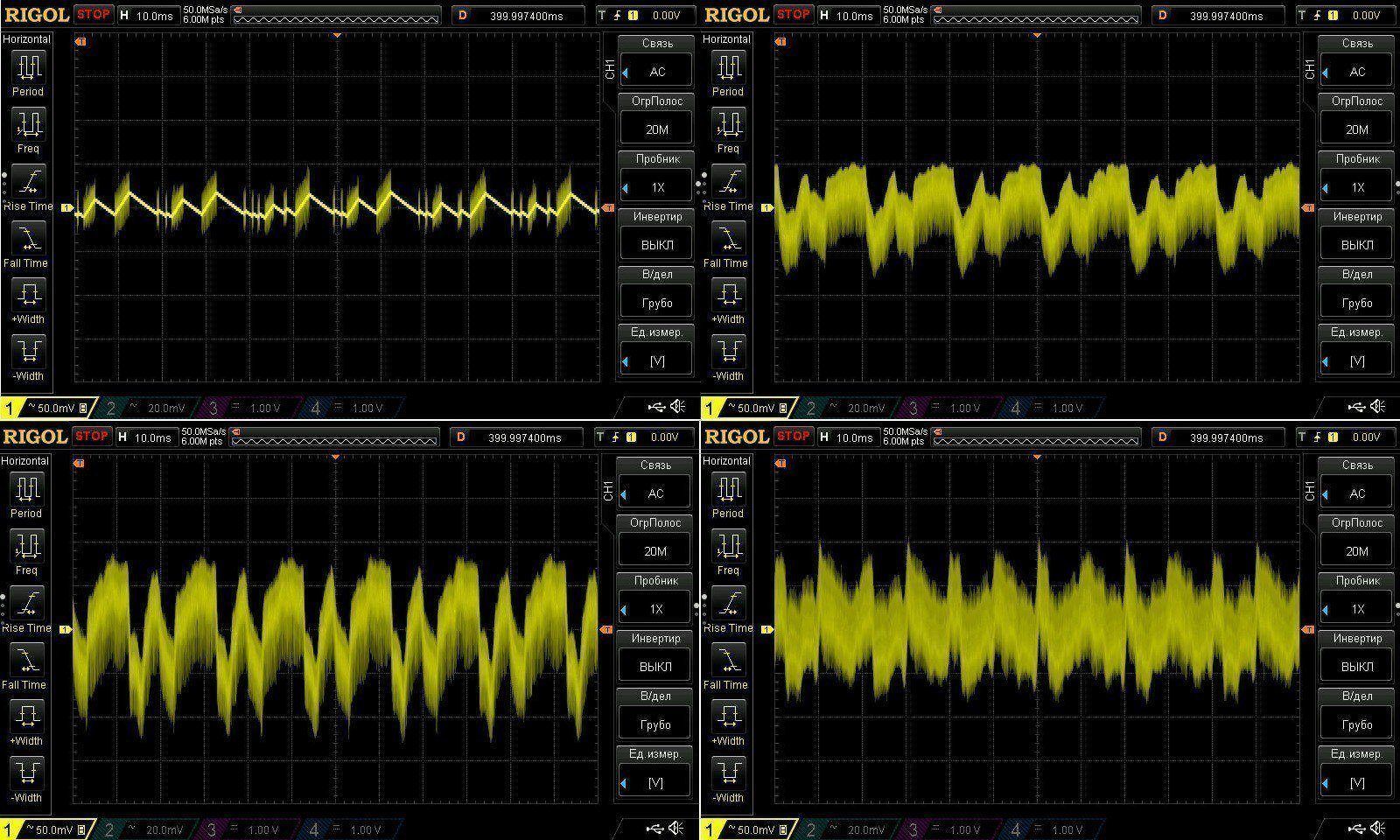
At low frequencies, the ripple is a little higher, around 150–200 mV, which is still pretty good, although it looks kind of... odd.
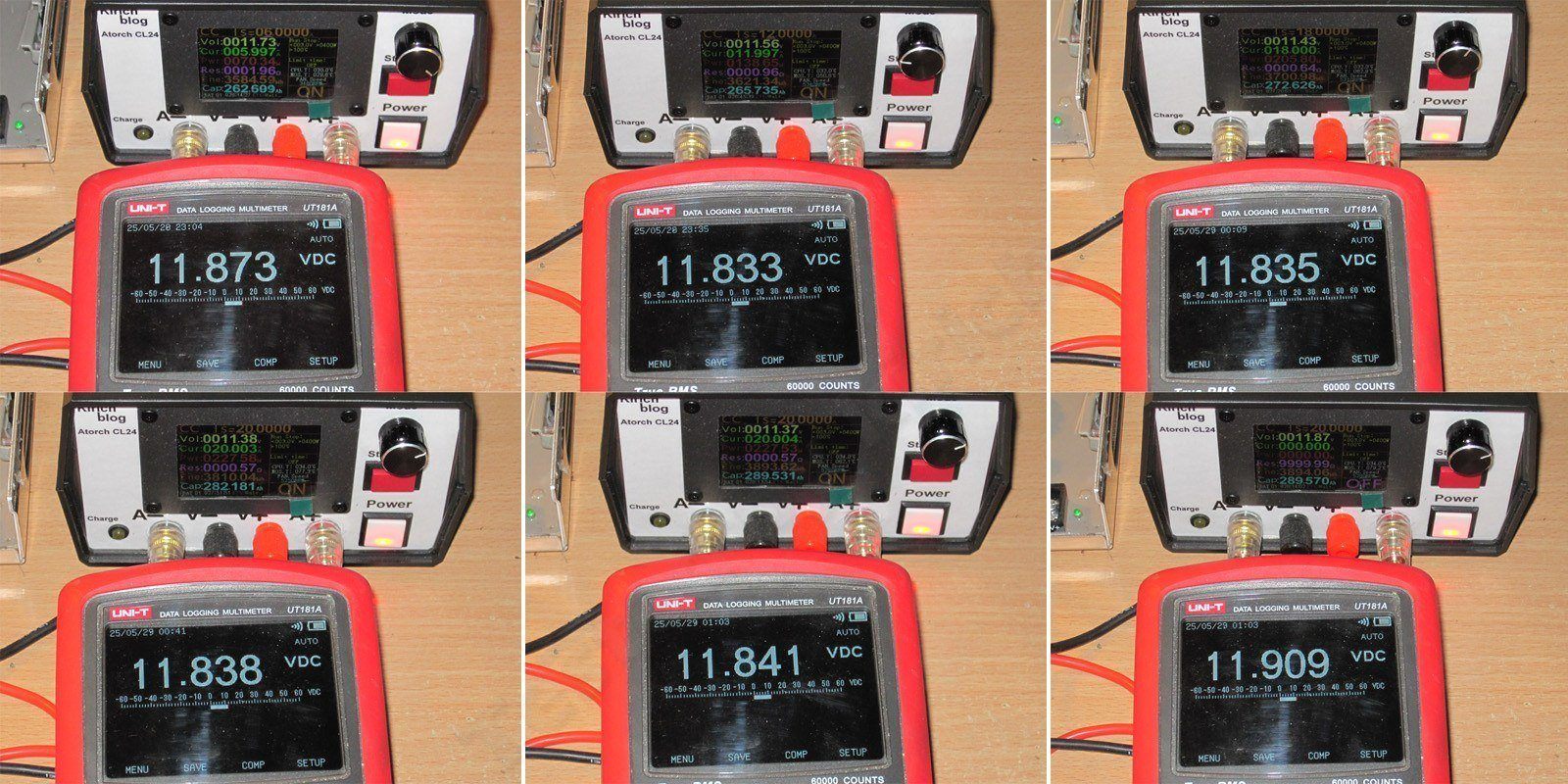
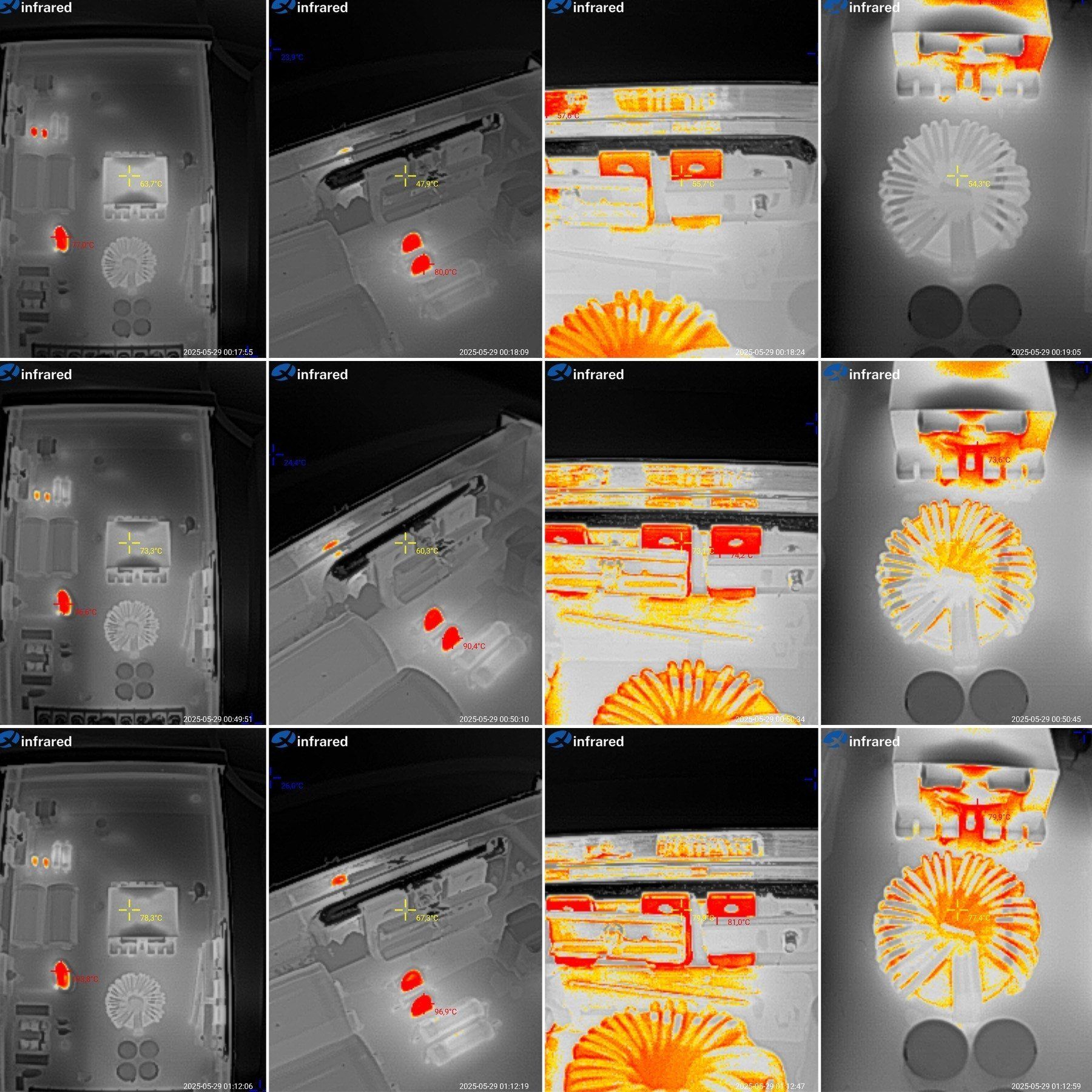
The thermal test was run at 6, 12, 18, and 20 A, for about 30 minutes at each step.
The readings were:
1. Cold power supply at 6 A: 11.873 V
2. Warm power supply at 12 A: 11.833 V
3. Heated power supply at 18 A: 11.835 V
4. hot PSU at 20 A - 11.838 V
5. End of the test at 20 A - 11.841 V
6. Hot PSU with no load - 11.909 V; the cold PSU with no load was at 11.901 V.
The voltage does vary somewhat with the load, but in my opinion 60 mV is not a difference worth worrying about. The voltage hardly depends on temperature at all: just 8 mV.
Now, as for the temperatures:
12 A - transformer 64 degrees, transistors 48 degrees, diodes 56 degrees, and the inductor around 55.
18 A - transformer 73 degrees, transistors 60, diodes 74, inductor around 71
20 A - transformer 78.3 degrees, transistors 67.3, diodes 81, inductor 77.
In my personal opinion, there's still about 25 degrees of headroom. In other words, if these temperatures were measured with an ambient temperature of 25 degrees, the PSU should be able to operate at an ambient temperature of up to 50 degrees.
Conclusions.
In my opinion, this is a very good power supply, with one exception: it's not 400 W, but 200-250 W. Still, it has a lot going for it: fairly good build quality, a proper input filter, low ripple, and plenty of thermal headroom for the components. Overall, I think there's much more good than bad about it. The only real downside is the false power rating...
I should also point out that the protection is set up correctly: the PSU will shut down due to overload long before it overheats. It would be much worse if the protection were set to, say, 300-350 W while the PSU already overheated at 250 W—and that happens more often.
That's all from me, and thanks to Vitaly for providing the power supply. What do you think of this PSU?
Questions and answers
What is the actual output power of the MN-400-12 power supply?
Above 21 A, the output voltage drops noticeably. Its actual maximum output is about 250 W, not the stated 400 W.
How much ripple does the MN-400-12 have under load?
At 20 A, the total ripple was about 80–100 mV. Low-frequency ripple was around 150–200 mV.
What did the author conclude about the MN-400-12?
The author praised its build, full input filter, low ripple, and temperature margin. The main drawback is its overstated power rating.
This model is included in the summary table: Comparison of power supplies: ripple, efficiency, and temperature rise
The figures from this review are in the measurement database: Power supplies
Discounted products
You may be interested in



Discounted products
All the content on the site and the advice are free, but we’d be grateful for your support of the project and the channel!
Only registered readers can comment. It takes a minute to sign up, and you can log in with the same account you use on the forum.
Log inRegister