
Adjustable RD6006-Max Converter from Riden
As you can probably tell, the manufacturer has essentially given a fairly popular converter series a bit of a "facelift". In my opinion, this makes perfect sense and should have been done a long time ago.
To keep up with new posts on the blog, I recommend following me on Instagram, where I'll post notifications about new articles and maybe write about something interesting now and then: link to my account
You can also follow updates and new articles on the Telegram channel - https://t.me/KirichBlog Note that discussion of reviews and articles is enabled on the channel, along with general chat. I recommend it.
As usual, before getting into the review itself, here's a list of products from this company that I've tested.
DPH5005
DPS8005
DPS5020
RD6006
RD6012
RD6018
RD6006P
RD6012P
RD6024
RK6006
Enclosure and power supply for RK6006
RD6030
Silicone case covers
RD 25A cable set
RS485 module with galvanic isolation for connecting RD60xx series converters
RD6018P
RD6012H
RK6012
RD6030-max
RK6006H
RK6018
RK8009, the last of Riden's five compact DC-DC converters
I reviewed a new version of the 6030 series converter in the Max edition some time ago. Back then, in the comments, I wrote that the manufacturer was unlikely to sell these separately, although a manager had actually told me they would. But some time has passed, they apparently saw that sales were going well, and decided to make this version available to everyone.
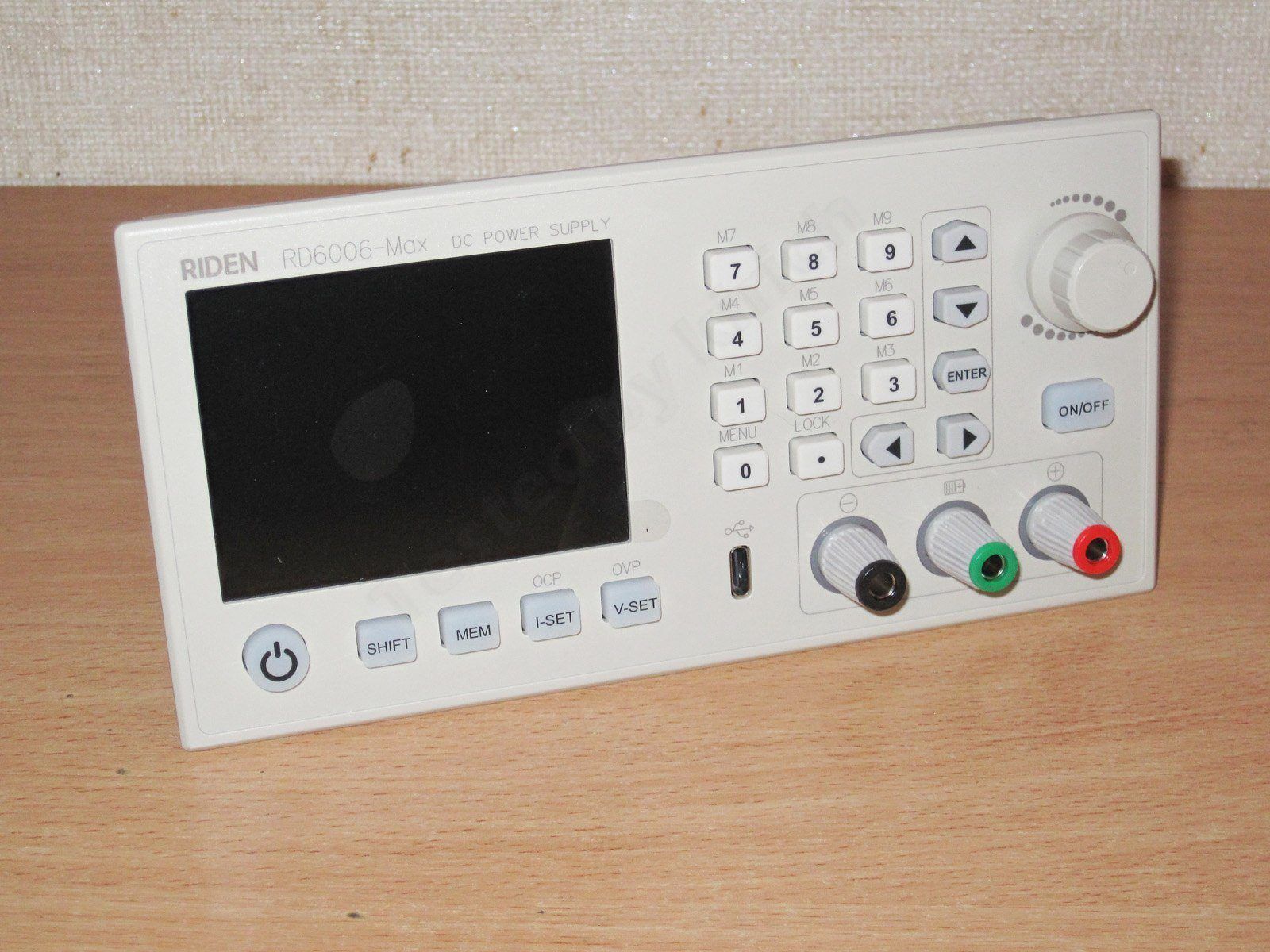
As a reminder, the key difference is the display size: it went from 2.4 inches to 3.2 inches. In my opinion, that's genuinely convenient, and it looks better too.
That's why this review will be relatively short: the changes are mostly cosmetic, and the converter itself seems to be unchanged.
As always, the packaging is excellent: a foam box inside a cardboard box, with the converter itself nestled in a fitted insert. The bottom of the packaging also lists all the planned models. I have to say, on the one hand it's great that they're updating the entire lineup of basic models, but it raises the obvious question: what about the P and H series?
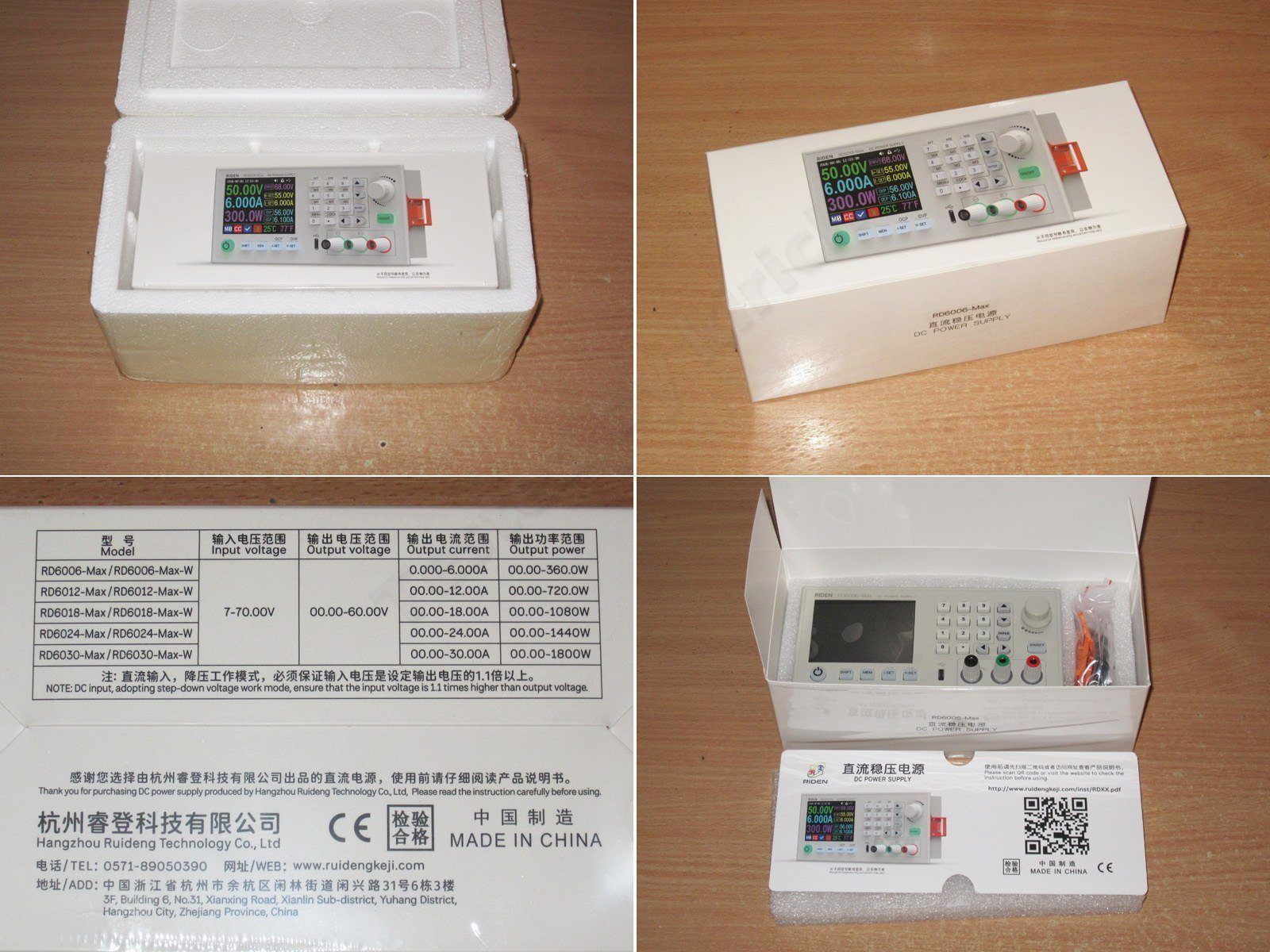
The converter is available in three configurations:
Basic
Basic plus WiFi
Basic + RS485 converter
I have the first version for this review. By the way, if you happen to need a WiFi or RS485 module, you can buy them separately: WiFi link and RS485 link.
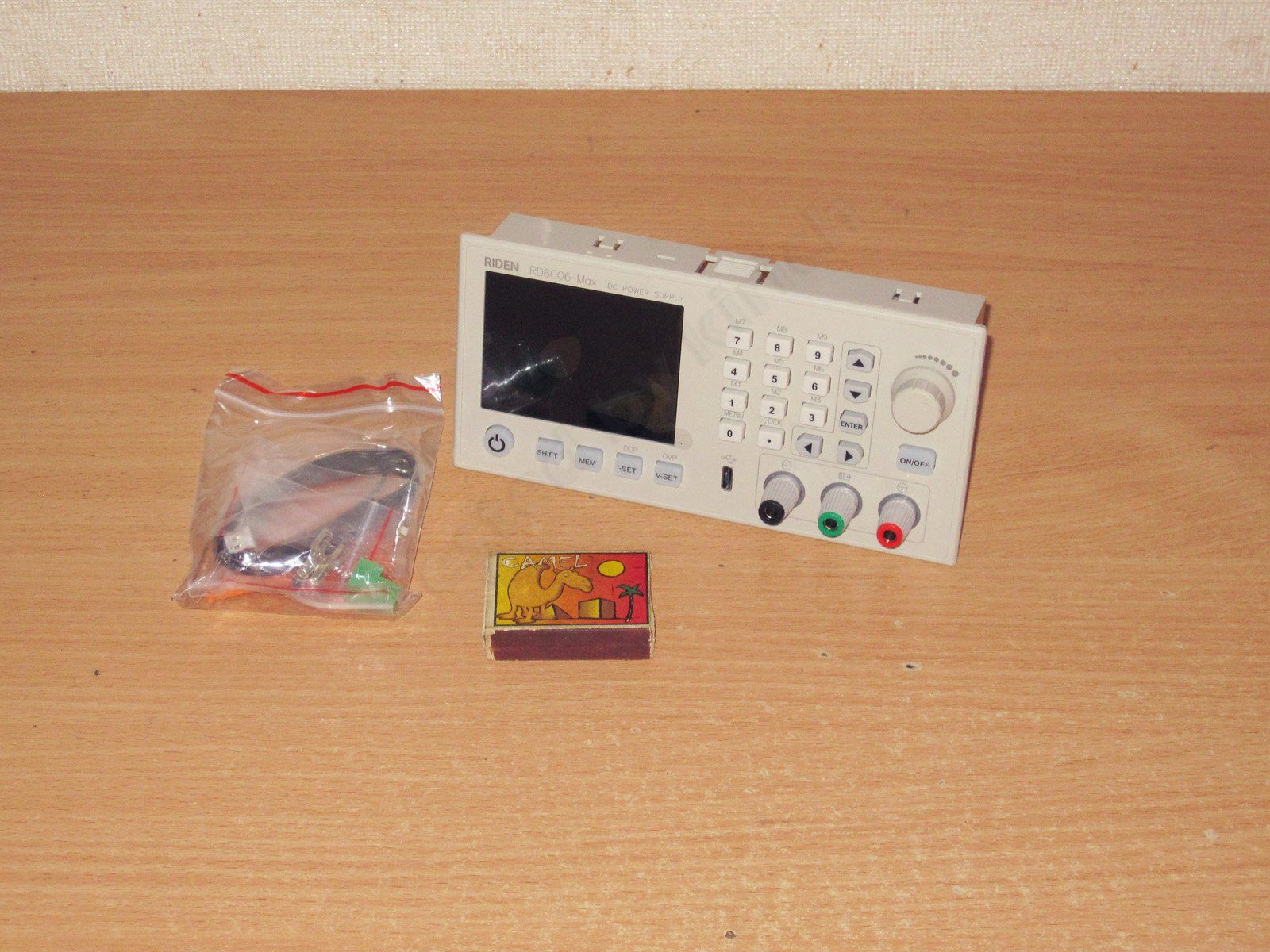
Specifications from the store page. Interesting that they listed the display as 2.4 inches out of habit :)
Model: RD6006-Max/RD6006-Max-W/RD6006-Max-RS485
Input voltage range: 6-70.00 V
Output voltage range: 0-60.00 V
Output current range: 0-6.000 A
Output power range: 0-360 W
Input voltage resolution: 0.01 V
Output voltage resolution: 0.01 V
Output current resolution: 0.001 A
Battery voltage resolution: 0.01 V
Input voltage accuracy: ±(1%+5 digits)
Output voltage accuracy: 0.3%+30 mV
Output current accuracy: 0.5%+5 mA
Battery voltage accuracy: ±(0.5%+3 digits)
Automatic cut-off current when charging a battery: 10 mA
Typical output ripple: 100 mV VPP
Operating temperature range: -10℃~40℃
External sensor temperature detection range: -10℃~100℃/0℉~200℉
External sensor temperature detection accuracy: ±3℃/±6℉
Constant voltage mode response time: 2 ms(0.1 A-5 A Load)
Constant voltage mode load regulation: 0.1%+2 mV
Constant current mode load regulation: 0.1%+3 mA
Capacity measurement range: 0-9999.99 Ah
Energy measurement range: 0-9999.99 Wh
Capacity and energy measurement error: ±2%
Buck operating mode: Voltage drop >1 V and >10%
Overtemperature protection: System temperature>80℃
Screen brightness setting: 0-5 (6 levels in total)
Screen: 2.4-inch color HD display
Cooling fan start conditions: Output voltage> 40 V or Output current>4 A or System temperature>45℃
Cooling fan shut-down conditions: Output voltage> 40 V and Output current<3.9 A and System temperature<40℃
Weight: About 0.33 kg
Product dimensions: 172*82*69 mm
Ripple measurement method: noise and ripple are measured at X1 range, AC coupling,
20 MHz bandwidth on your oscilloscope with a 0.1uF capacitor connected in parallel at the output terminals
And here are the main specs at a glance
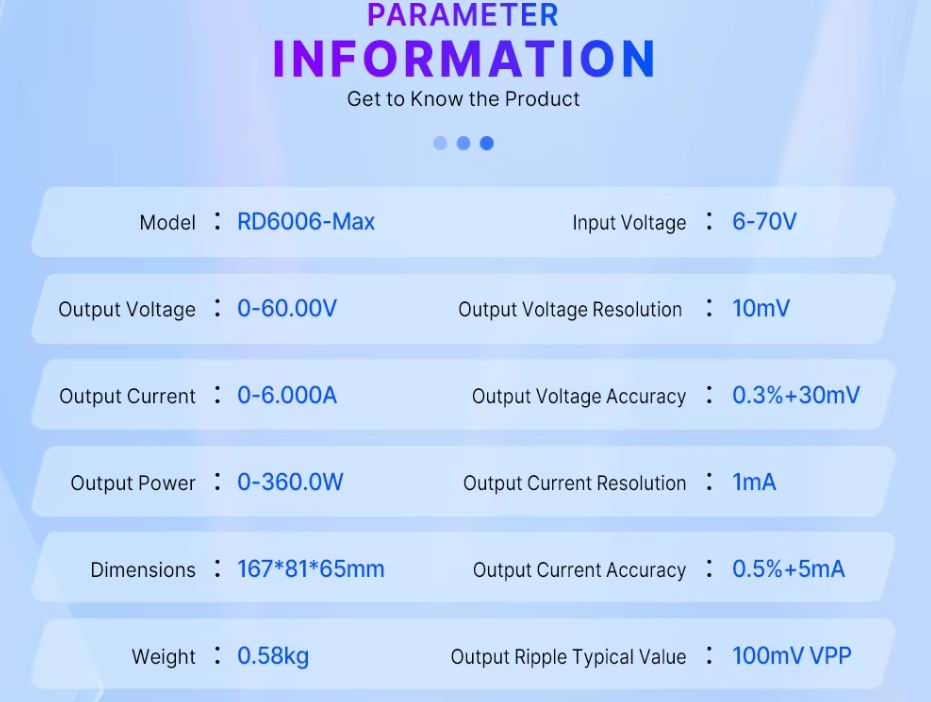
The only thing that seems new is in the last photo: some kind of retaining clips. They were also visible in the promotional photo I showed about a month ago.
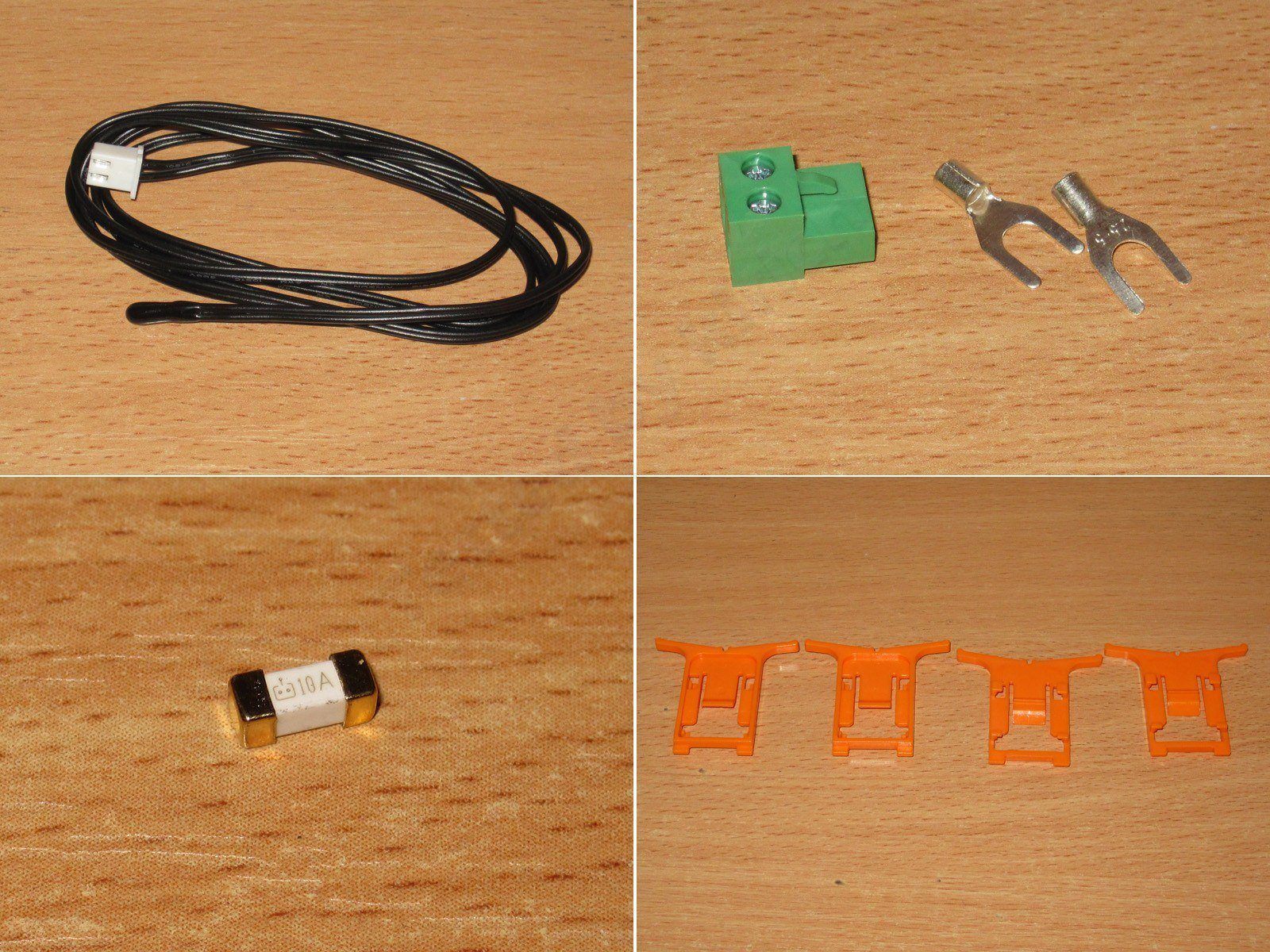
It looks very much like the RD6030-Max, so anyone who read that review probably won't find anything new here.
From what you can see, it has a large display and a USB-C port instead of Micro-USB. I think it even looks a little more modern.
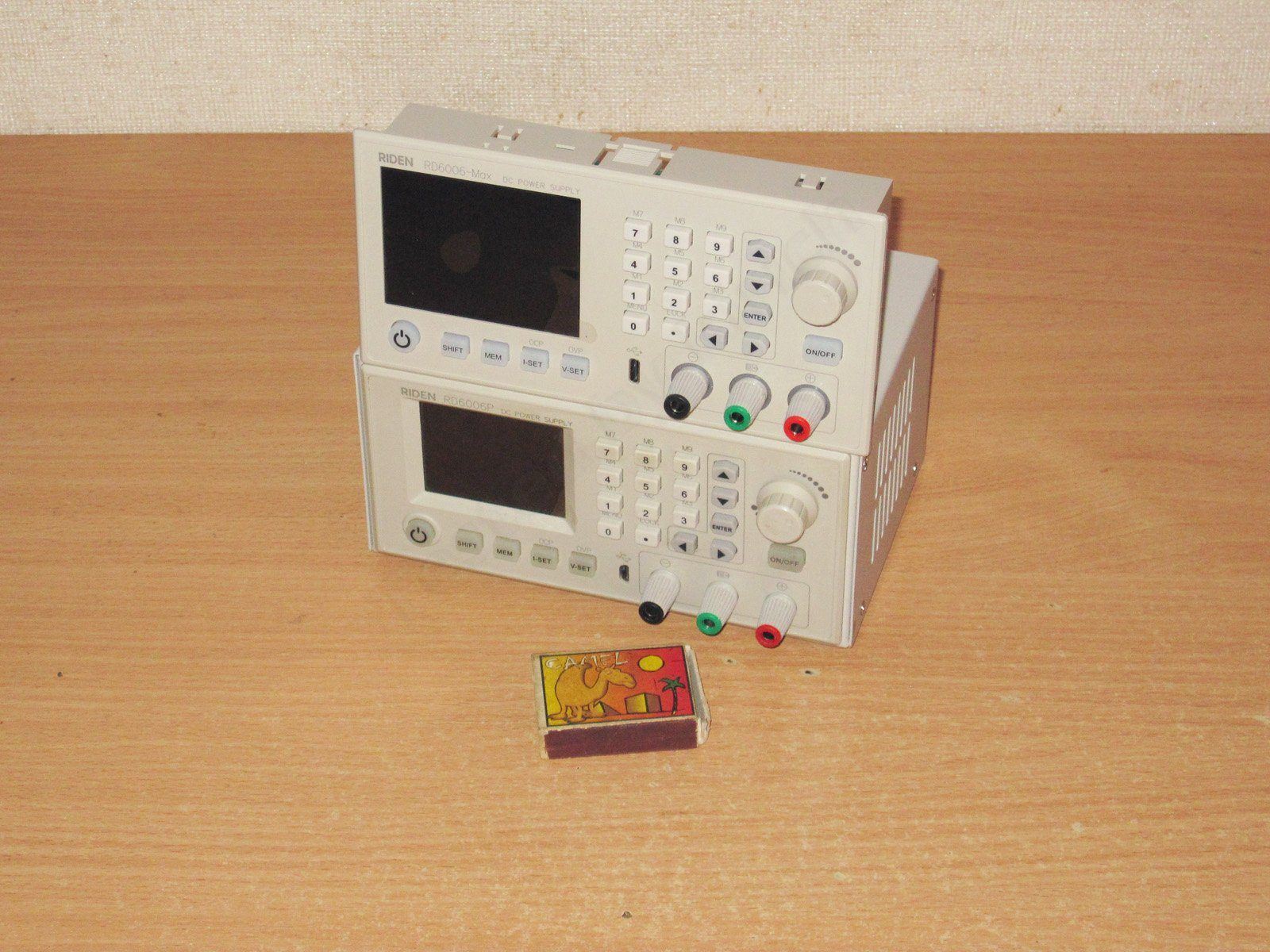
And here's a comparison with the RD6006P. Honestly, if they released an RD6006P-Max, I'd switch without a second thought just for the display. My eyesight isn't what it used to be, so maybe that's why I like the large display—or maybe it just looks better.
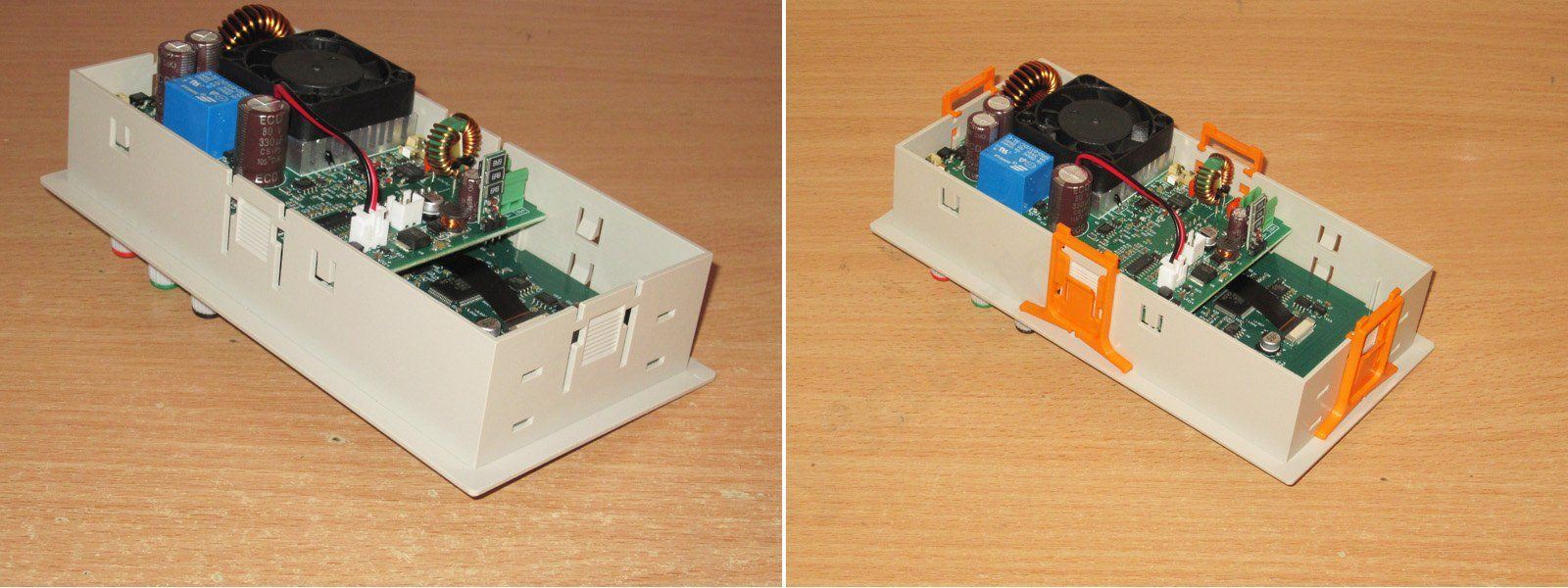
Here's another difference, not only from the old version but also from my RD6030-Max. There are two differences here:
1. The case is no longer 3D-printed; it was clearly made using an injection molding machine, which means they ordered a new mold.
2. Retaining clips. After all these years, they finally added them. For those who aren't familiar with the issue: if you install the module in the standard case, it fits without any trouble, but it rattles around inside, which is really, really annoying.
Now we have the Max version not only with a nice-looking case, but also with spring-loaded clips that keep it from wobbling, just as I'd been hoping...
The internals have also been updated, though the changes are more apparent in the circuit board layout. If you'd like to compare, you can do so in my review of the first version.
Basically, the developers have optimized the routing a little and made some changes to the circuit design. The first is immediately obvious; the second takes a closer look.
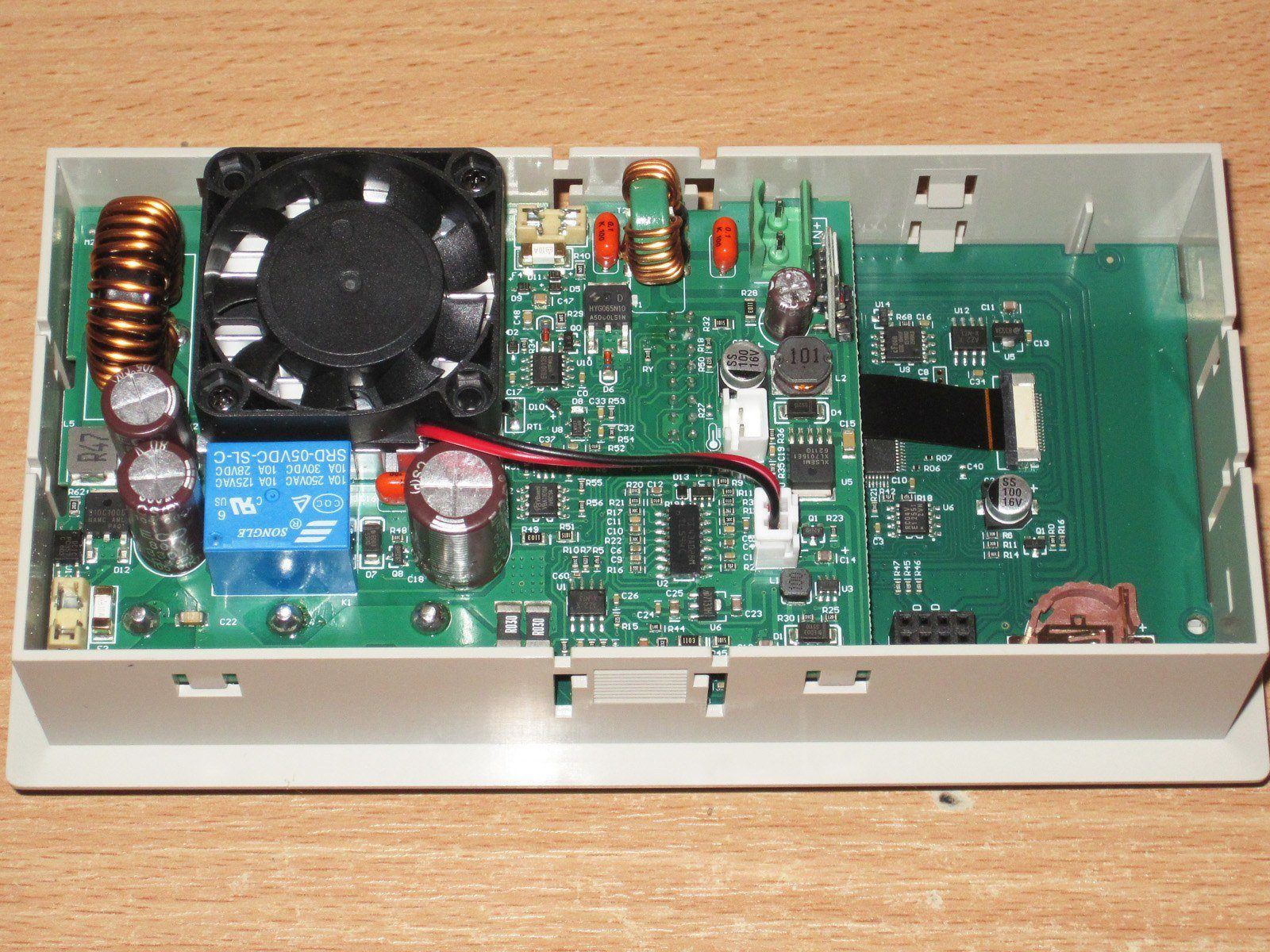
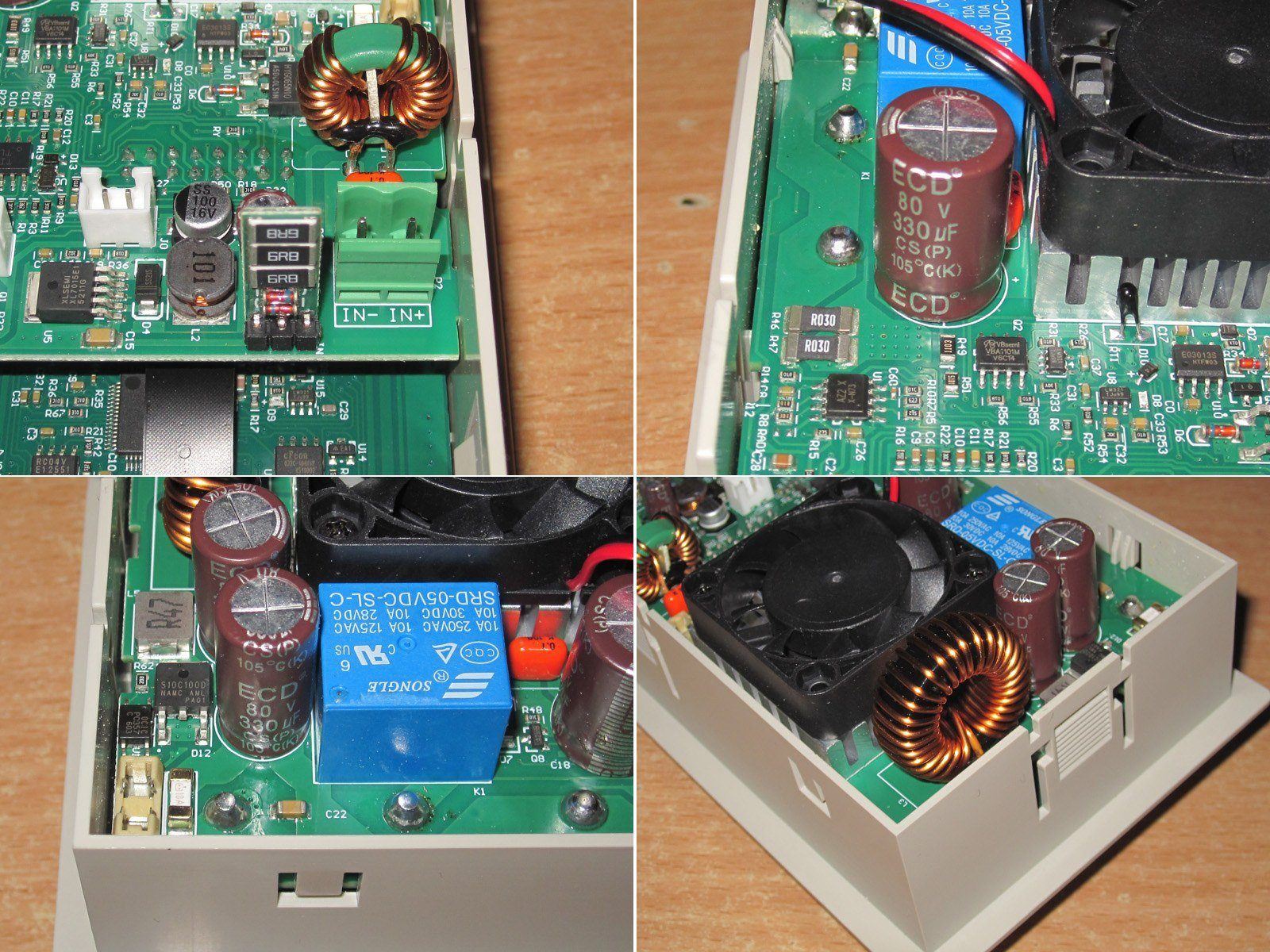
1. Board input, overvoltage protection circuit and input common-mode choke. If the input voltage exceeds 72 V, a warning appears; in theory, if you raise it further, the unit should shut down.
2. The input has a 330 µF, 80 V capacitor.
3. The output has a pair of 330 µF, 80 V capacitors, plus an inductor nearby to reduce ripple and a relay for switching the battery charging terminal. Further to the left is clearly the output circuit discharge section.
4. Converter output inductor.
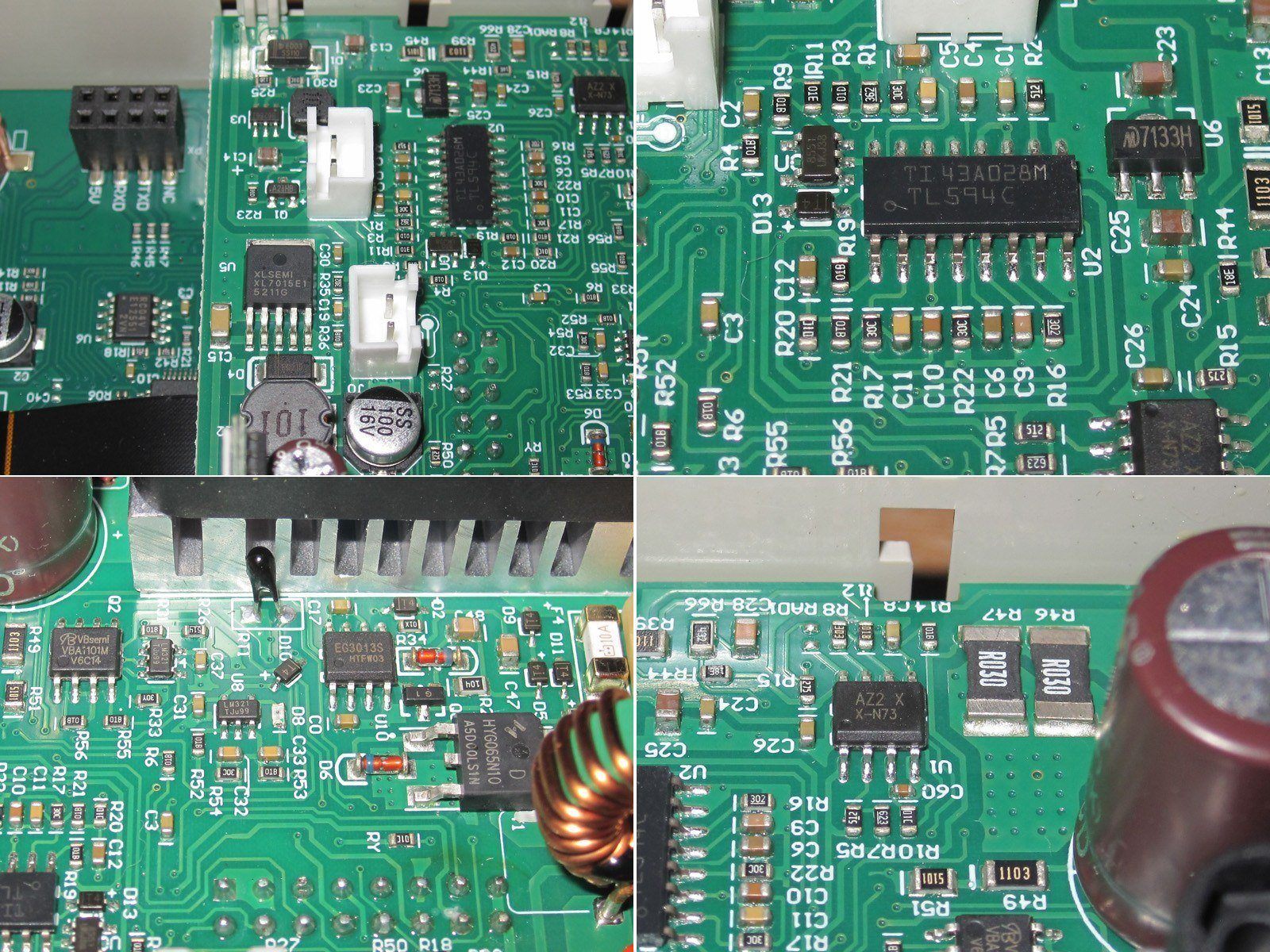
1. Secondary converter section that powers the board's electronics.
2. The converter itself is still based on the TL595.
3. Power transistor driver circuit and reverse-polarity protection transistor
4. Most likely, it’s the current-sense shunt and its op-amp.
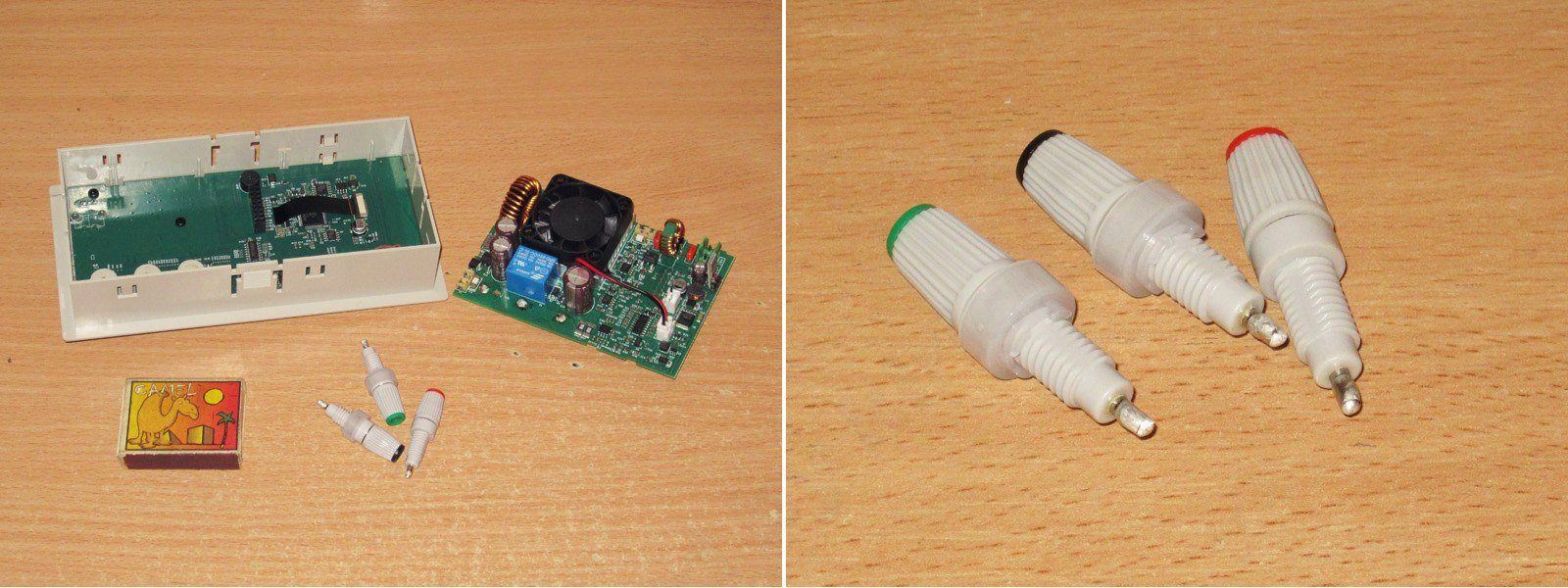
I didn’t take the RD6006 apart for my review, but this one definitely needs to be disassembled.
To do that, I desoldered the output terminals and removed the board.
When I desoldered the terminals, I noticed some translucent inserts. You can see them on the two terminals on the left; the one from the right terminal stayed in place.
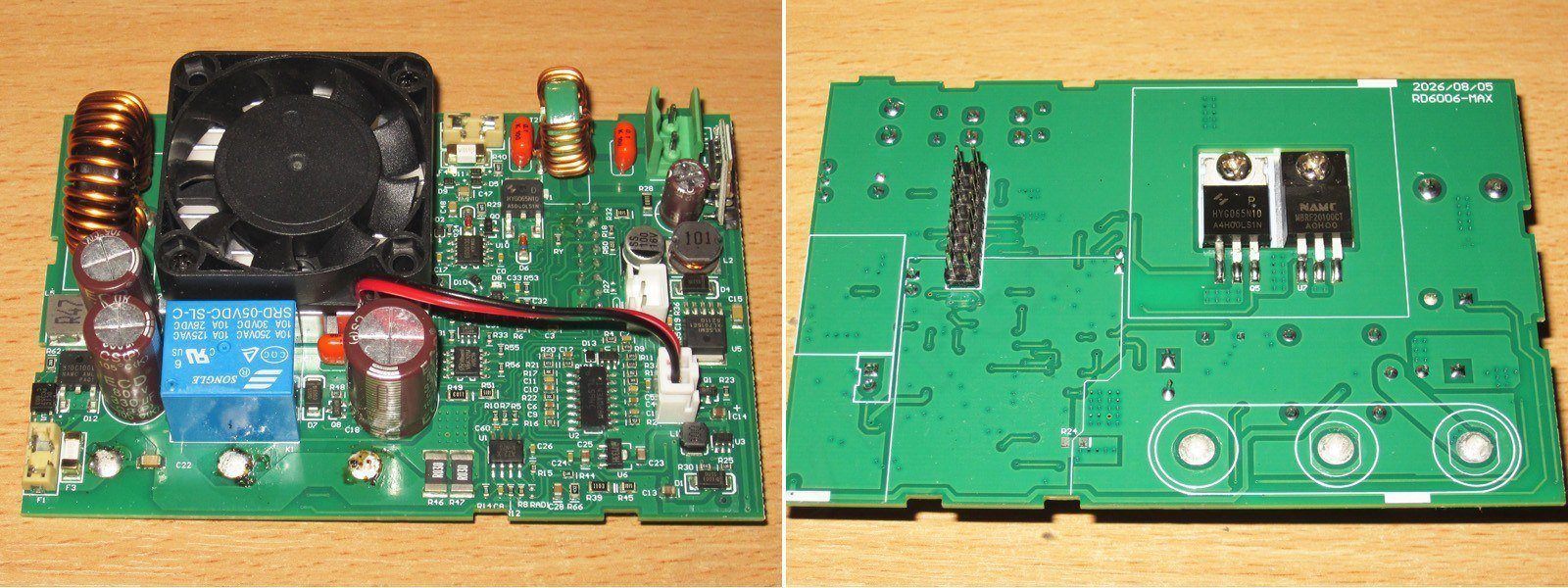
There’s not much of interest here: a power transistor and a diode. So, this isn’t a synchronous rectifier like in the more powerful models, but it’s not really needed here anyway.
The board is marked 6006-max, so this is the board for the new model.
The control board has also been changed, but the changes are mostly cosmetic. I specifically compared photos of the old and new versions, and I have to say that for the most part, they’ve just moved some components around.
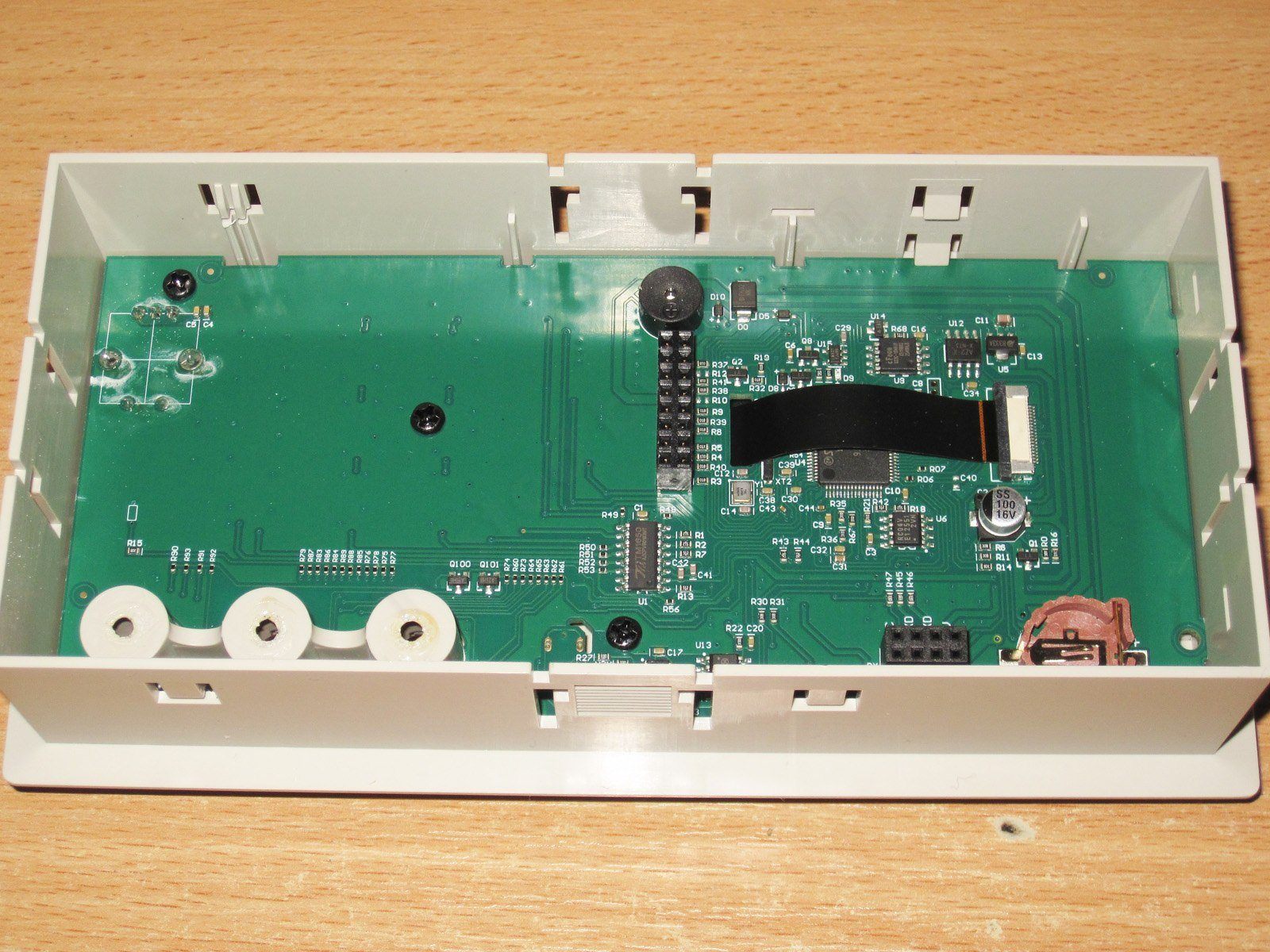
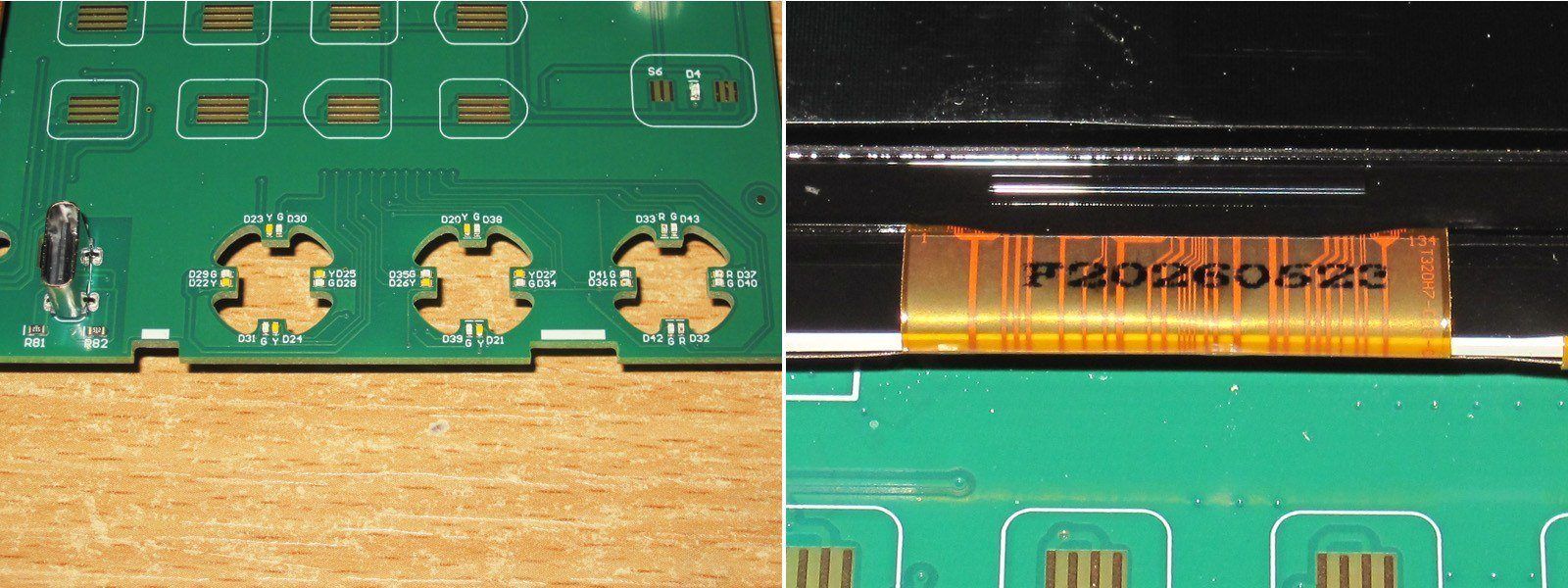
Since the display was replaced, the connector was moved, and its pinout was probably changed too. The ribbon cable used to run upward (as shown in the photo); now it runs downward. I’d guess you can’t simply swap one display for the other, as you can with Atorch.
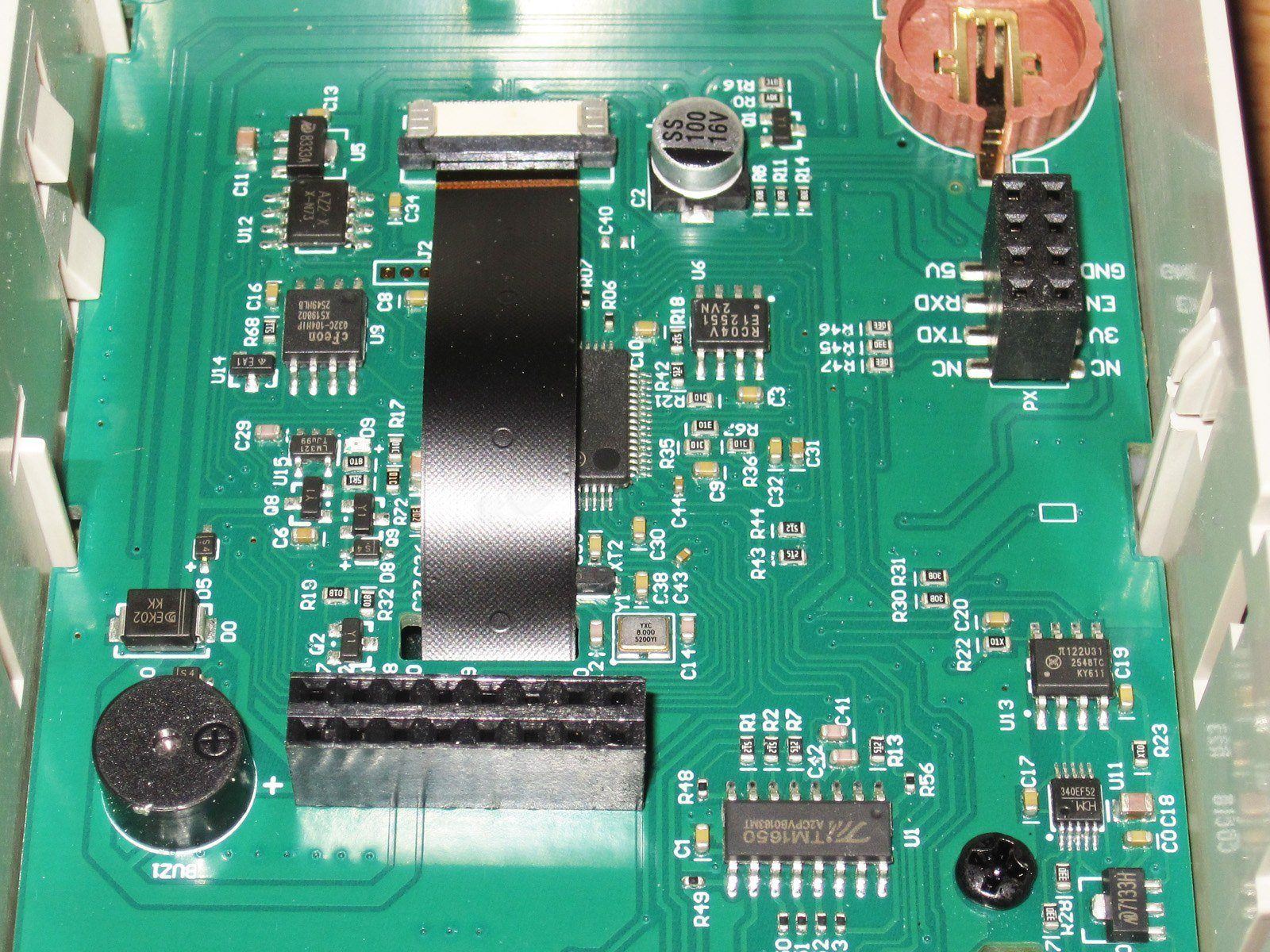 .
The USB converter section (with galvanic isolation), and the chip that controls the LEDs and possibly handles the keypad.
One obvious change is the addition of a handful of resistors. As a normal user, I take things apart first and only read the manual afterward, so I didn’t immediately understand what they were for. I did have a hunch, though: I’d noticed something in the photos about the terminals being illuminated.
And yes, these are the LED backlight resistors, one for each LED.
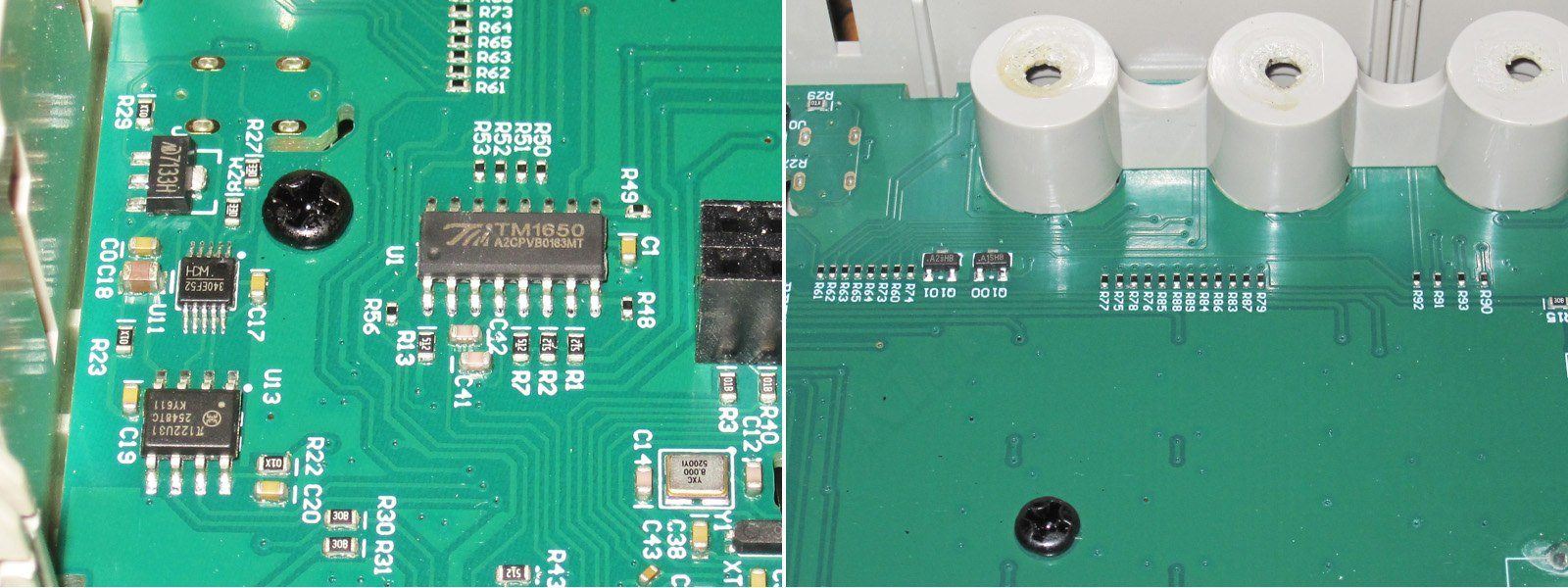
The back of the control board. I should mention that this is the first time I’ve removed this board, but while it wasn’t interesting enough to bother with before, I couldn’t resist this time.
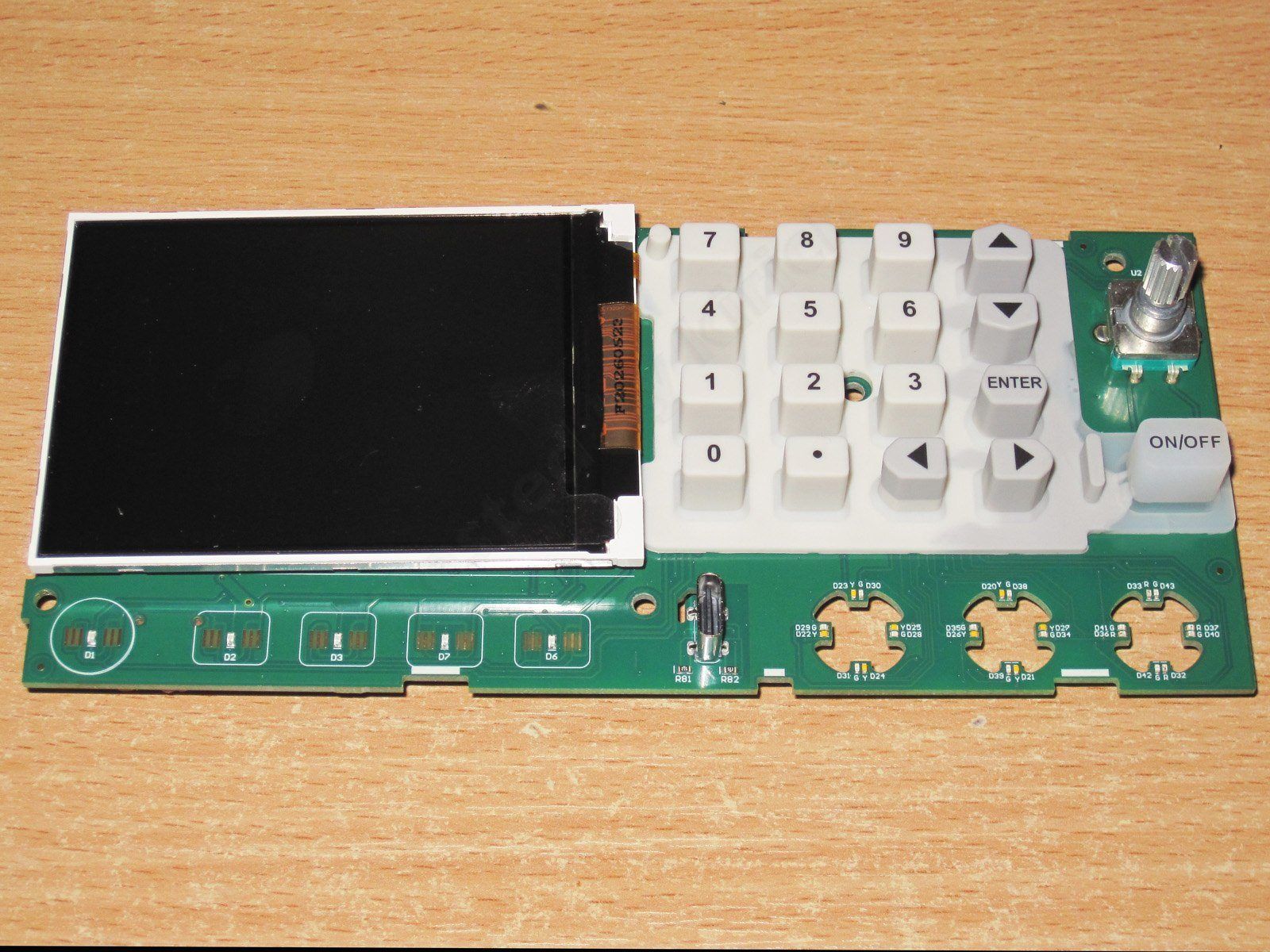
Yes, there are eight LEDs next to each terminal, in two colors, four of each. That makes 24 LEDs just to illuminate the terminals. I’d guess they can also be controlled independently. They could have illuminated the USB port too, while they were at it :)
The only display marking I could find was on its ribbon cable. Maybe it’ll be useful to someone.
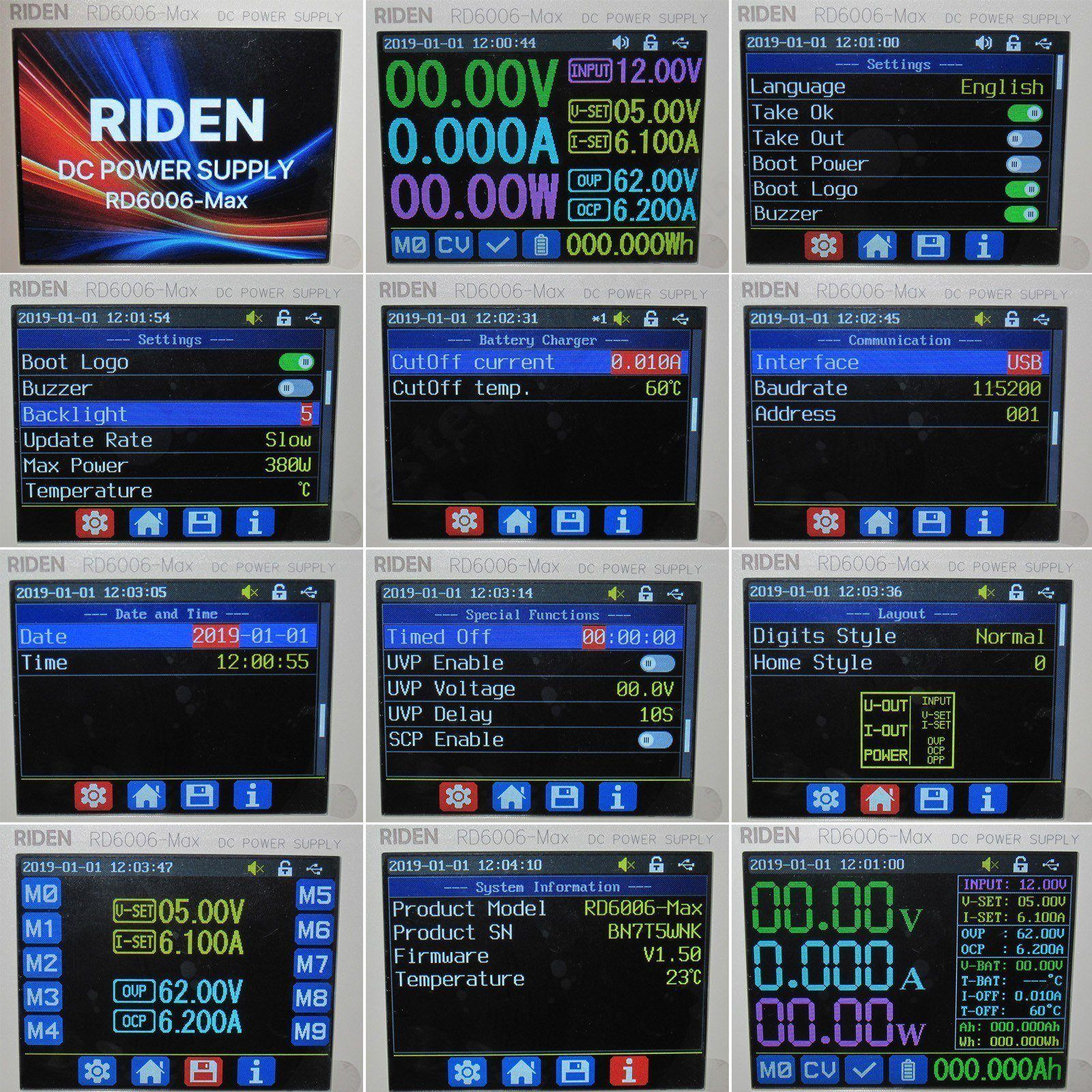
Menu.
On startup, the updated splash screen appears, then the unit switches to its normal operating mode.
The menu is basically the same as before, apart from a few new options that I recognize from the newer RK series models: an input undervoltage protection section, and a trigger-based overcurrent protection option, which I’ve already written about.
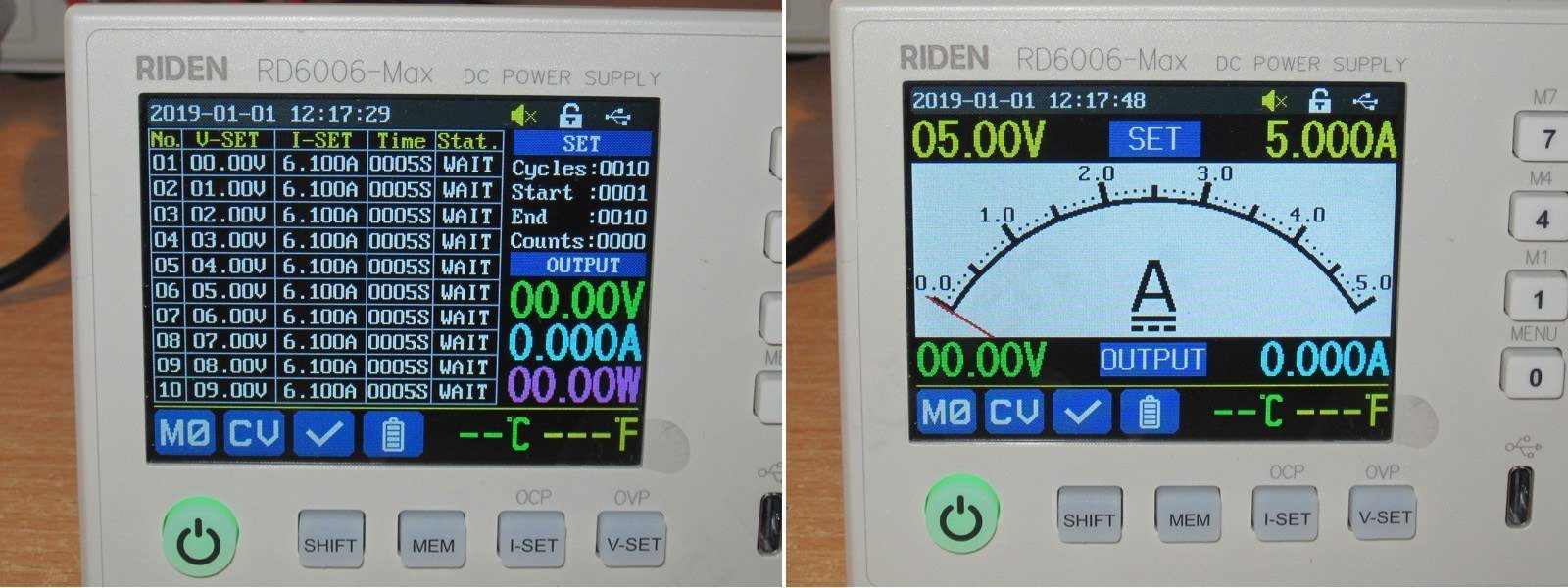
I would have wrapped up the menu description here if it weren’t for two new display modes. I first saw them in the description, then found them in the menu. By the way, a reminder: you can switch between these modes with the left/right buttons while in normal operating mode.
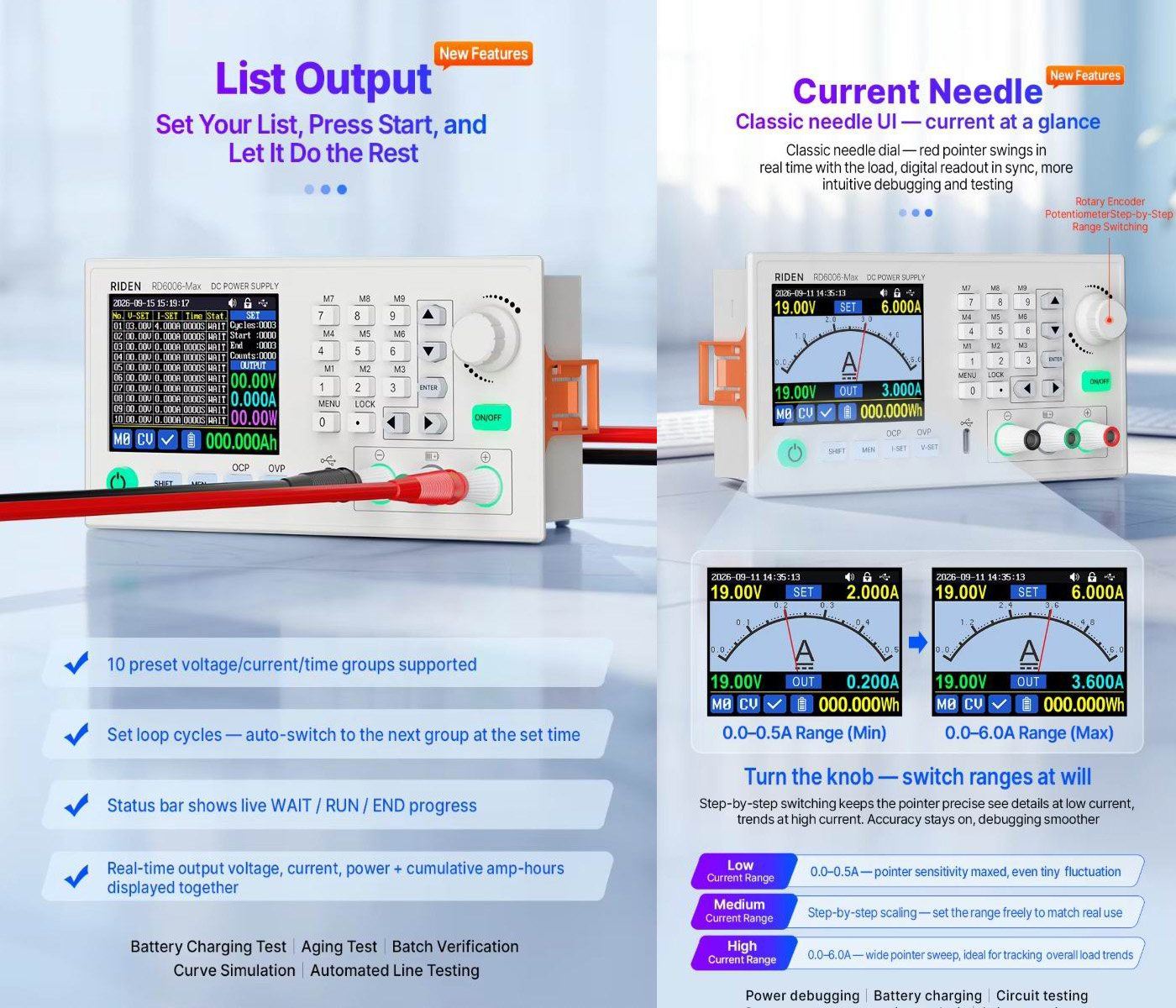
To be honest, I don’t get these modes. The first is a table; the second emulates an analog ammeter—and only an ammeter. Since the readout is less precise in this mode, it’s also split into two ranges, up to 0.5 and up to 6 A. Overall, it’s a pretty niche change.
This is the screenshot where I learned about this feature.
At input voltages of 12, 24, 36, and 48 V, the current consumption is 72, 38, 27, and 22 mA, respectively.
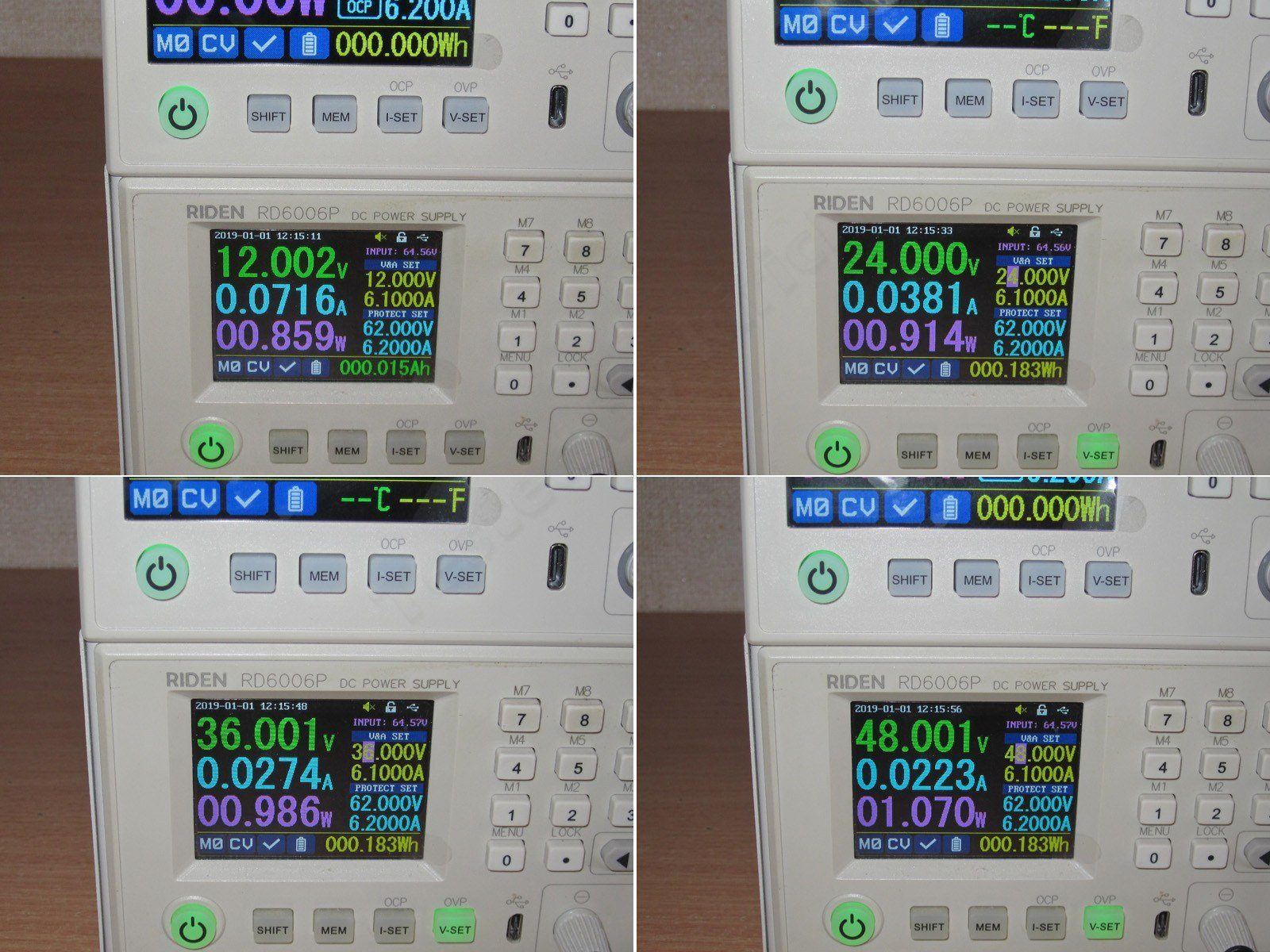
And a few tests.
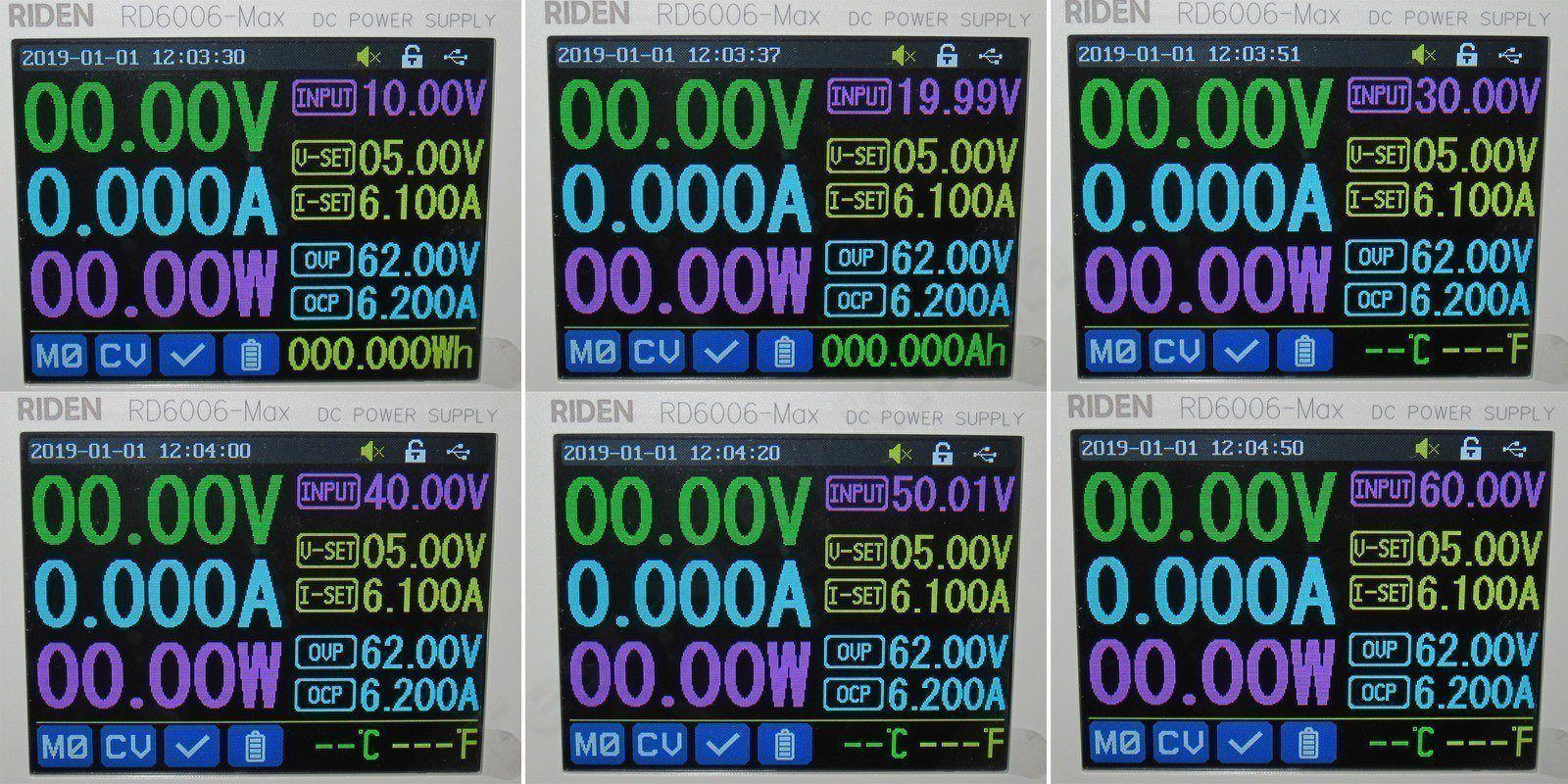
Test 1: input voltage measurement accuracy.
I tested it at 10, 20, 30, 40, 50, and 60 V, and have to say the accuracy is excellent. The maximum error was one count in the least significant digit.
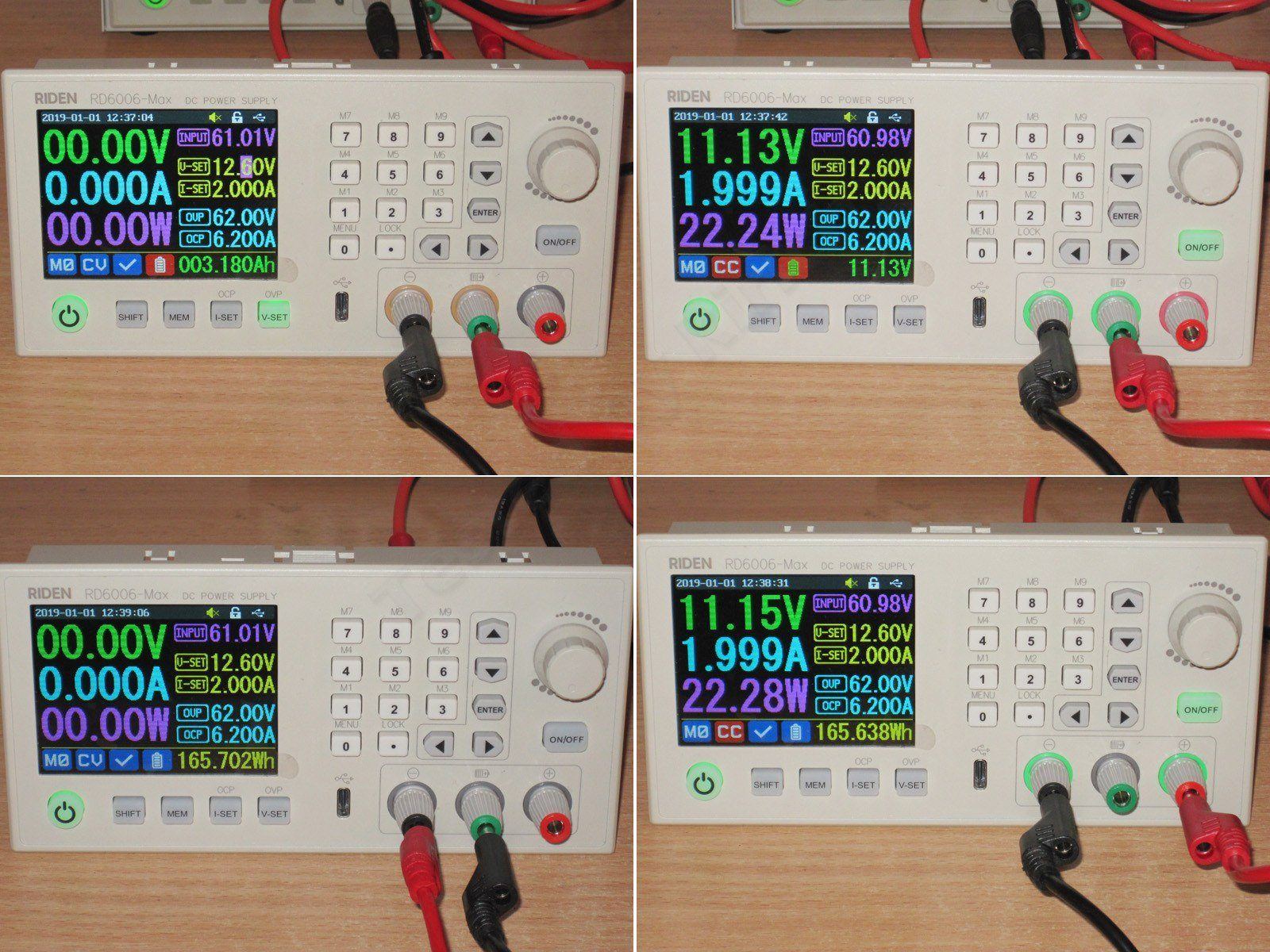
As for the terminal lighting, it looks nice, but for some reason I expected more—more lighting combinations, that is.
1. When a battery is connected to the charging terminals, they light up yellow.
2. In active mode, those same terminals glow green, while the unused terminal glows red.
3. If you reverse the battery polarity, the lights stay off.
4. In normal operating mode, when the output is active, the outer terminals glow green.
For example, I’d have made the terminals glow red while charging and green when charging was complete. Or they could glow red if the polarity is wrong. There are plenty of possibilities.
The lighting isn’t very bright, so it’s not distracting and looks well balanced. Damn, even my 6030-max doesn't have this....
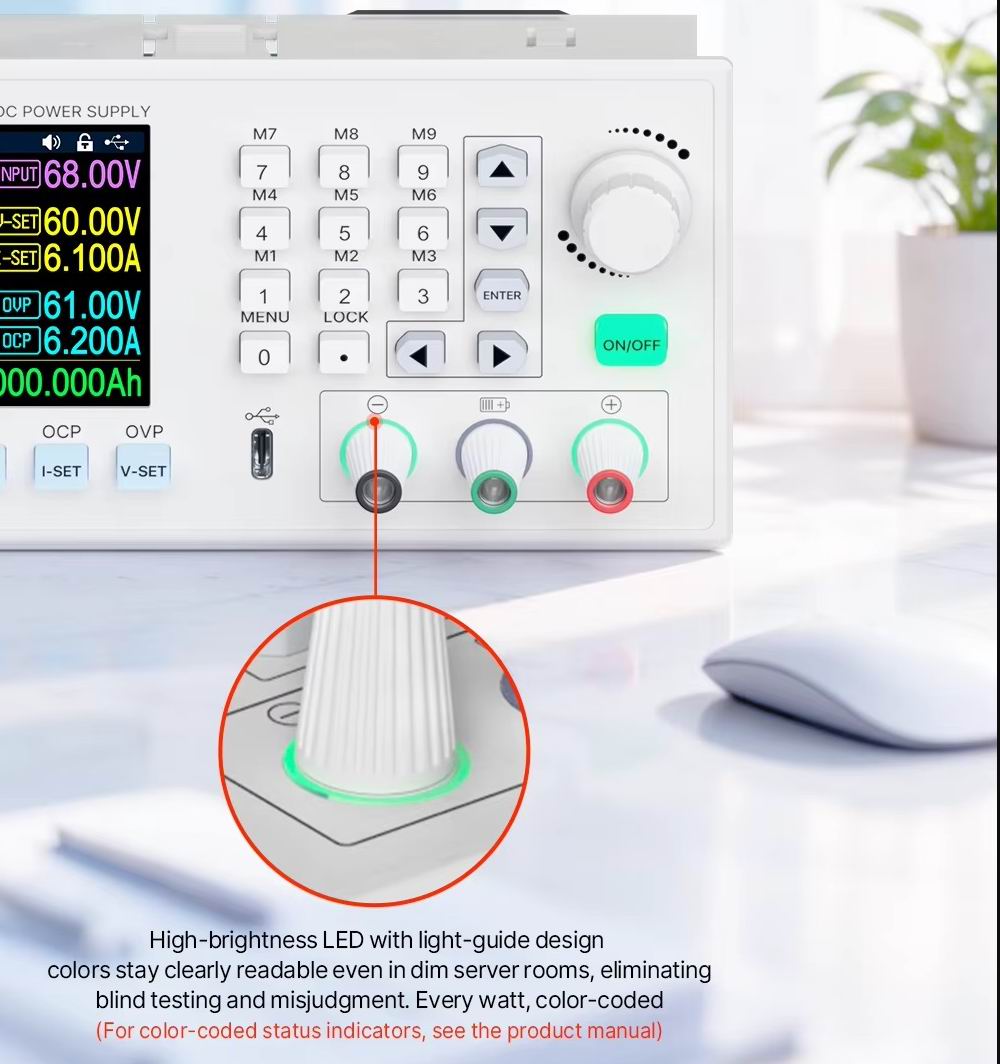
I tried to figure out what other indicator options there are. The description says, “See the manual.” I downloaded it, but it only has general information, unfortunately.
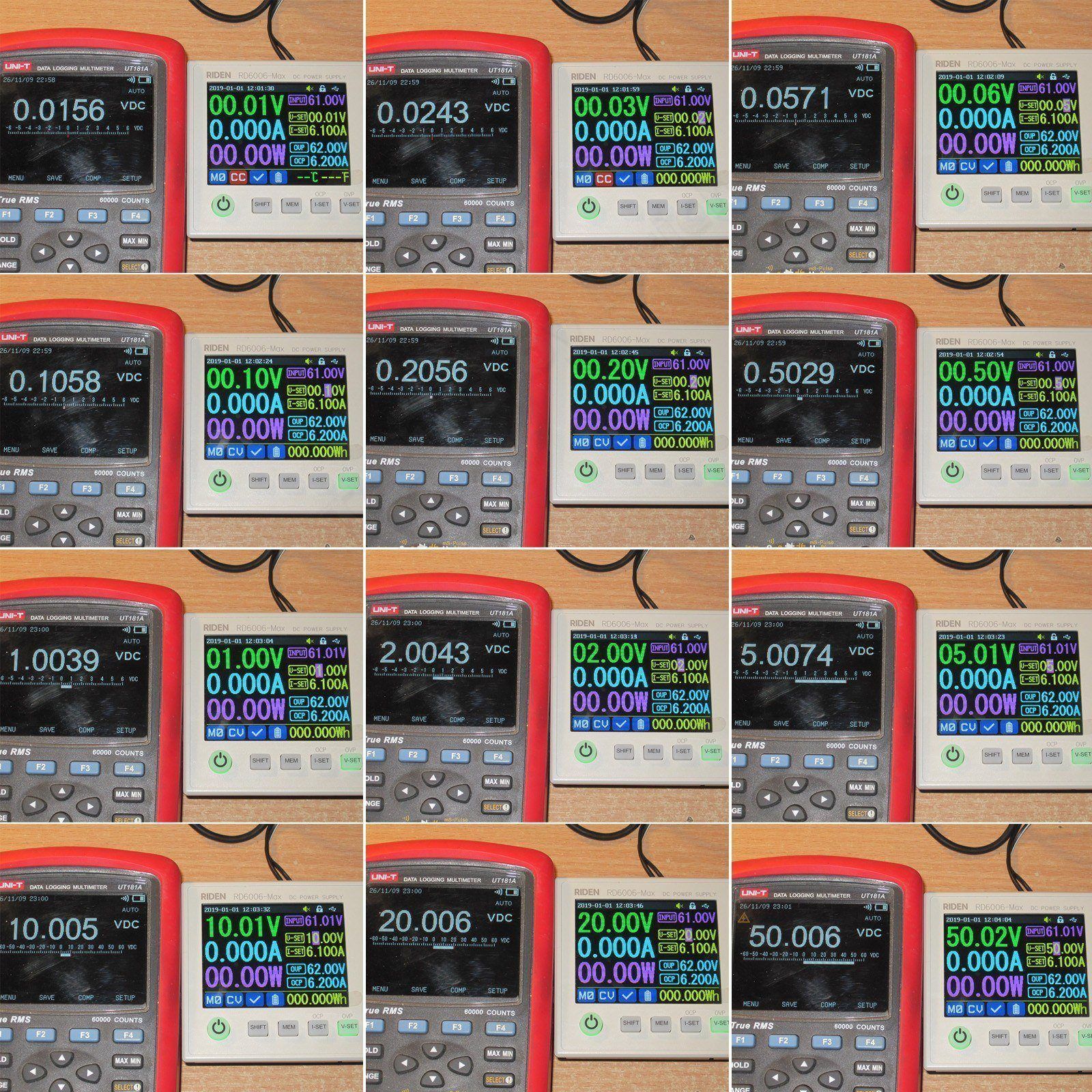
Test 2: voltage setting and measurement accuracy.
As usual, I checked the standard 1-2-5 sequence, starting at 10 mV and ending at 50 V.
Overall, the results are excellent, but there is one oddity: at 10 and 20 mV, the CC indicator was lit for some reason, which makes no sense. The error at these values is also large, but that part is normal.
Test 3: current setting and measurement accuracy.
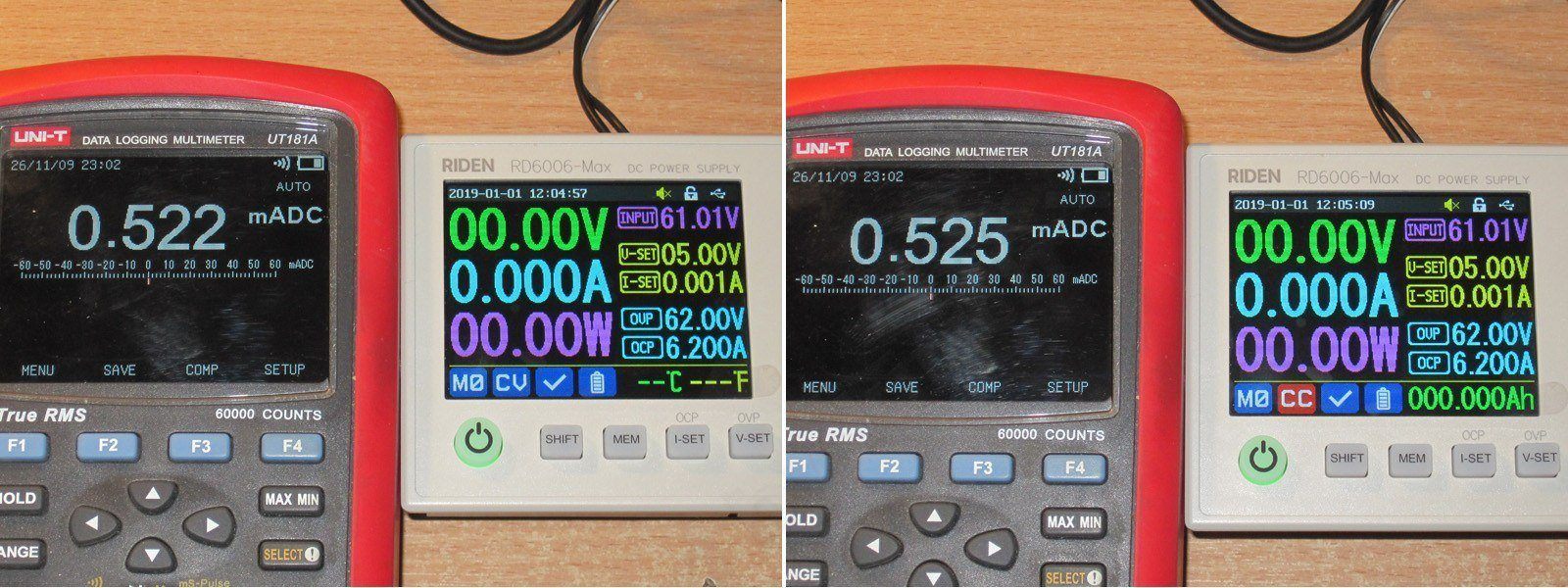
There was a surprise here too: in short-circuit mode, there is always a small current at the output, and it doesn't depend on whether the output is enabled or not. It's not really a problem, just a minor oddity. I don't think I'd noticed it before.
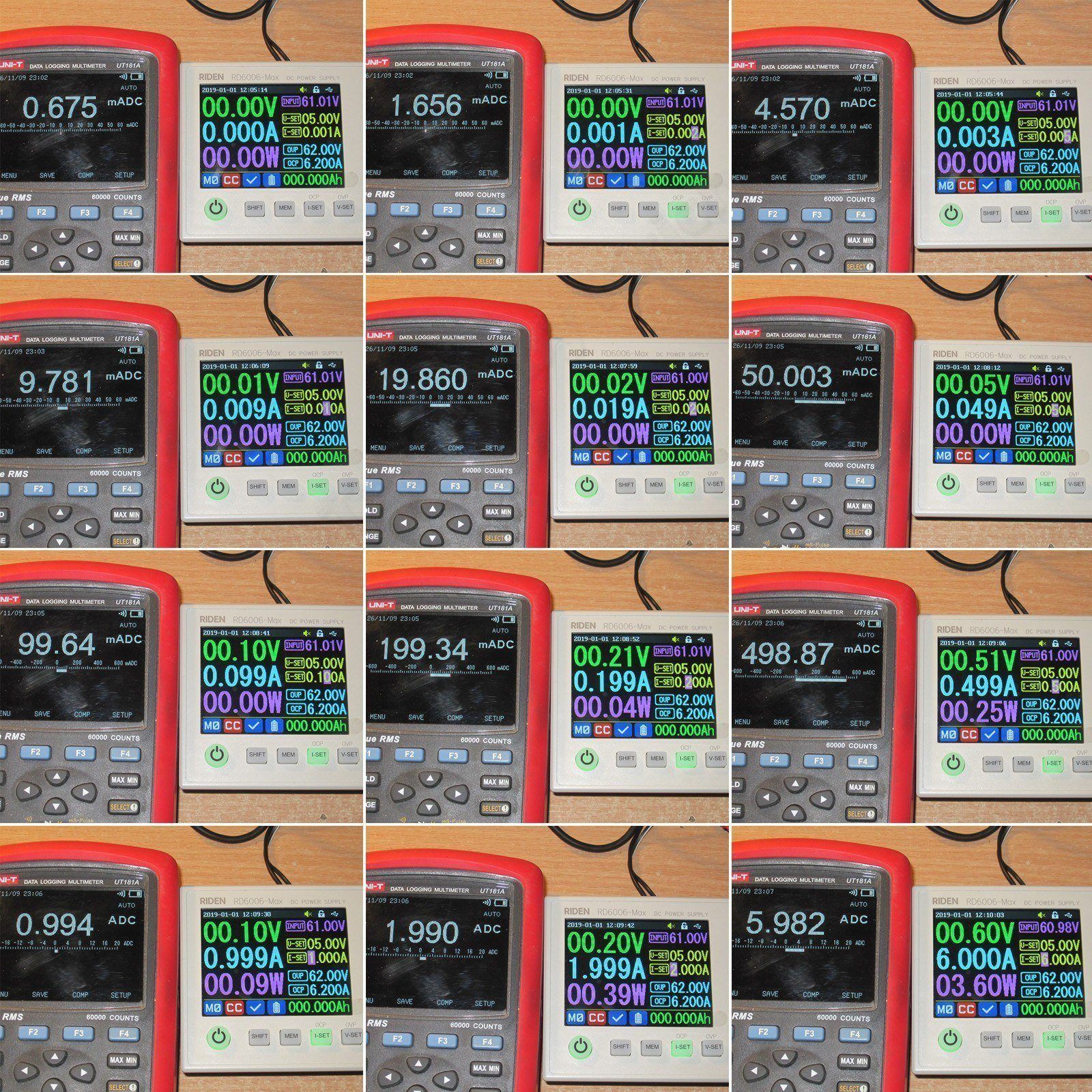
I tested current using the same 1-2-5 sequence, starting at 1 mA and ending at 6 A. I did make the last value 6 A rather than 5.
Here we have a relatively large error at the low end, but unfortunately this is a known issue: it's very difficult to make a budget converter that works across its full range with sufficient accuracy.
In practice, the current stabilizes properly from around 10 mA, but at low values, up to about 50-100 mA, there's some fluctuation, with the current varying by roughly 1-2 mA.
Test 4: output voltage versus load current.
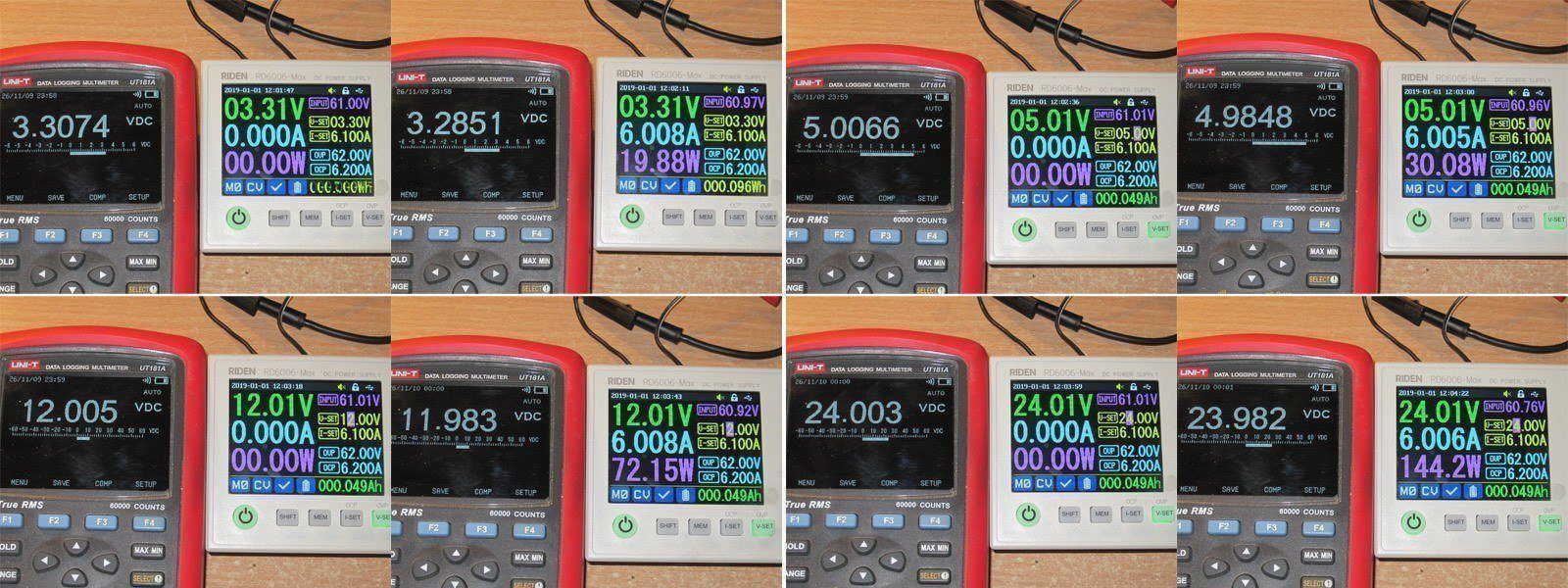
I tested at 3.3, 5, 12, and 24 V, comparing the voltage with no load and at full current.
The voltage drop was around 15-20 mV, which is a very good result. I should also note that this figure was even lower on the old 6006 version, at around 5-7 mV!
Test 5: minimum voltage drop across the converter.
The test was run at two input voltages, 24 and 48 V, and three load currents: 3, 4.5, and 6 A.
In the first case, I got minimum differences of 2.2, 2.3, and 2.4 V.
In the second, 4.15, 4.25, and 4.4 V, respectively.
Based on these measurements, you need at least 6-7 V of headroom. So, to get the full 61 V at the output, you'll need a power supply rated for at least 68 V.
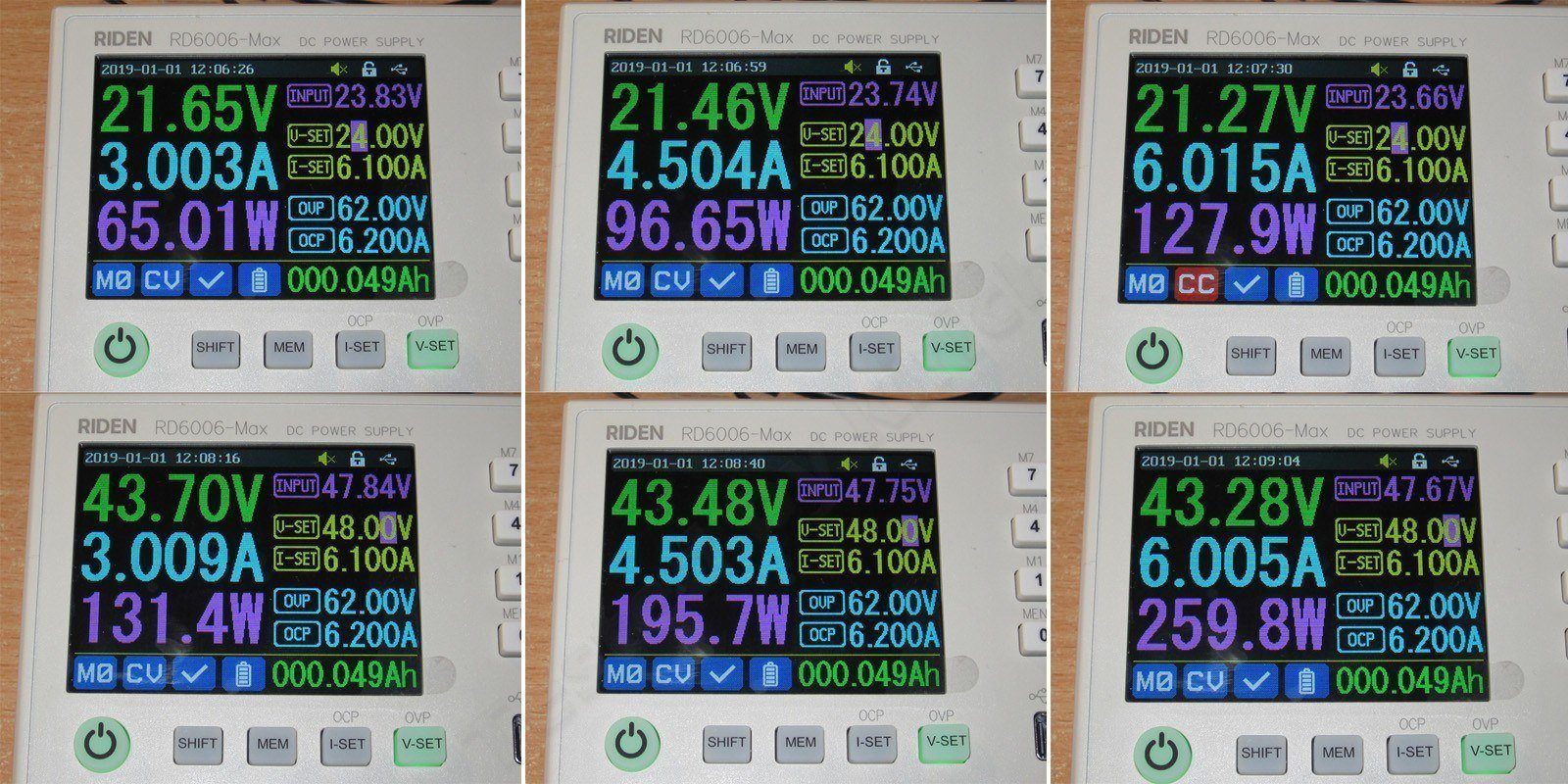
Test 6: voltage ripple.
The first test was run with the output set to 12 V, both with no load and at currents of 2, 4, and 6 A.
The manufacturer specifies up to 100 mV peak-to-peak. In reality, it was closer to 50 mV. I think the old version had about twice as much.
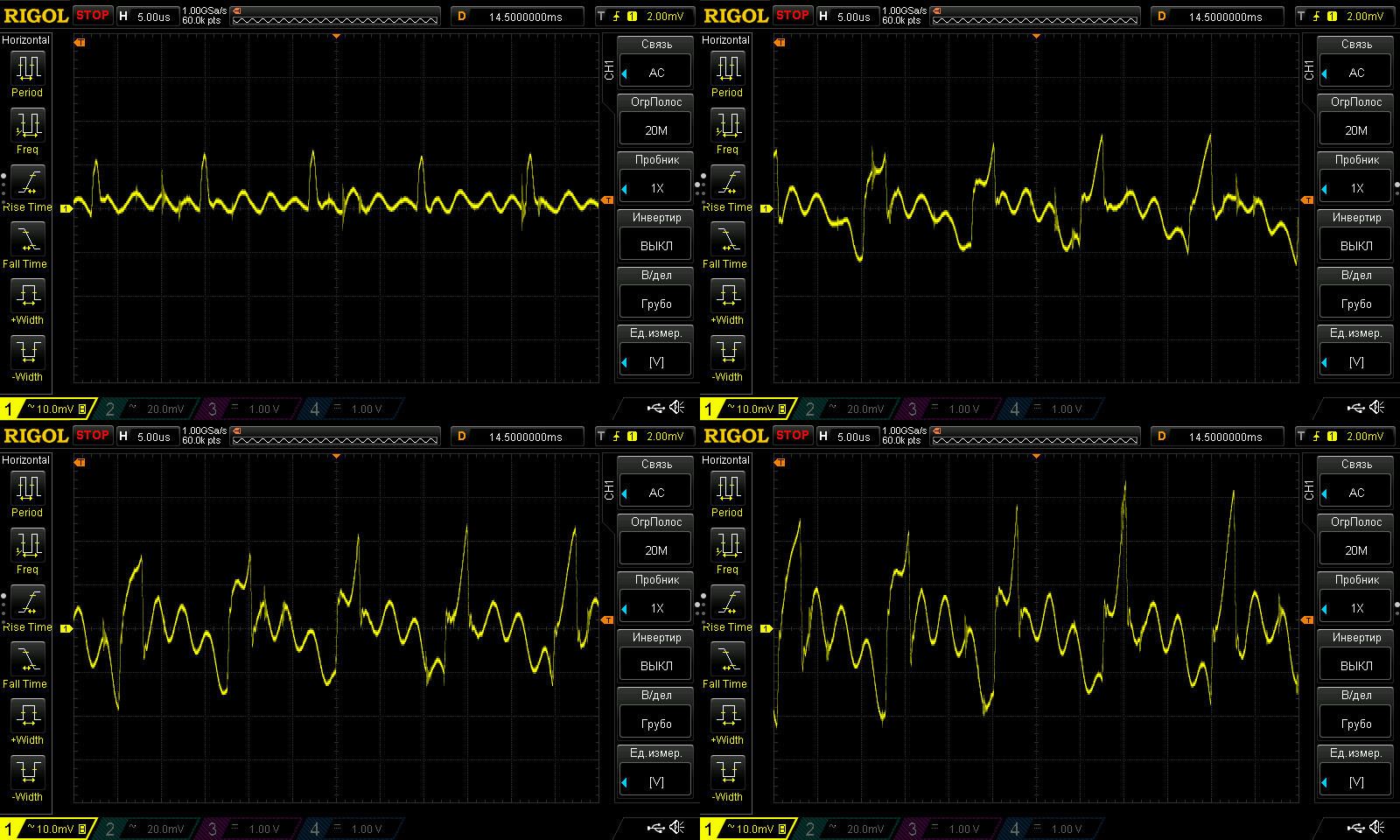
The second test was done differently: the current was kept at 6 A, while the voltage was varied between 5, 25, 36, and 48 V.
Here we see less ripple at voltages near the ends of the range, i.e. at 5 and 48 V, and more in the middle, at 25 and 36 V.
That works out to around 35-40 mV in the first case and 50-60 mV in the second.
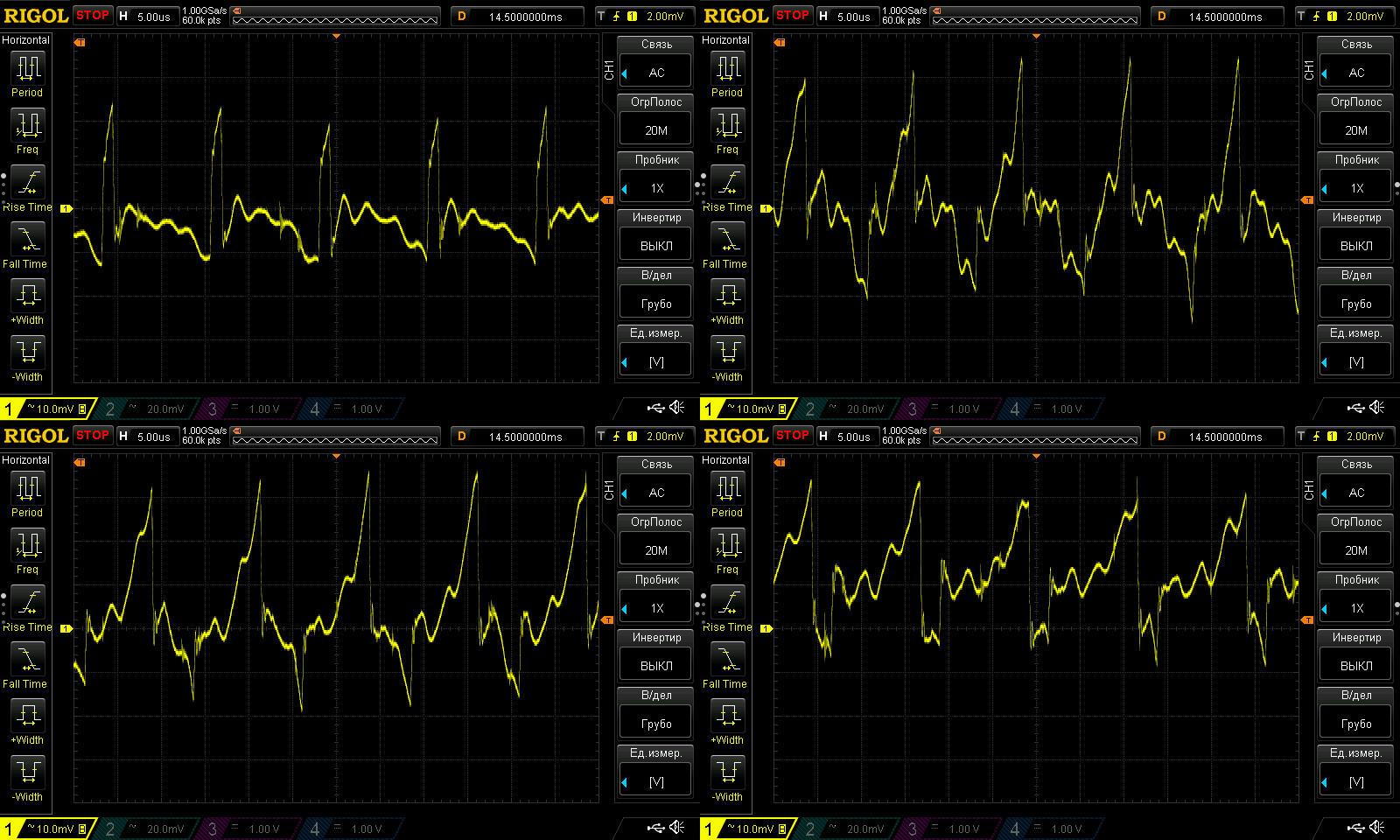
Test 7: transient response.
1. Applying 5 V to the output: no overshoot, and the waveform looks good.
2-4. Removing 5, 25, and 48 V from the unloaded output. The plot is stretched out here: at 5 V, the process is relatively quick, but at 48 V, it takes about 7 seconds for the voltage to drop to zero.
I didn't run this test on the 6006, but I think it was faster. I checked the 6012: at 5 V, the voltage drops to zero in about 0.12 seconds, compared with 0.8 seconds here. That's rather slow.
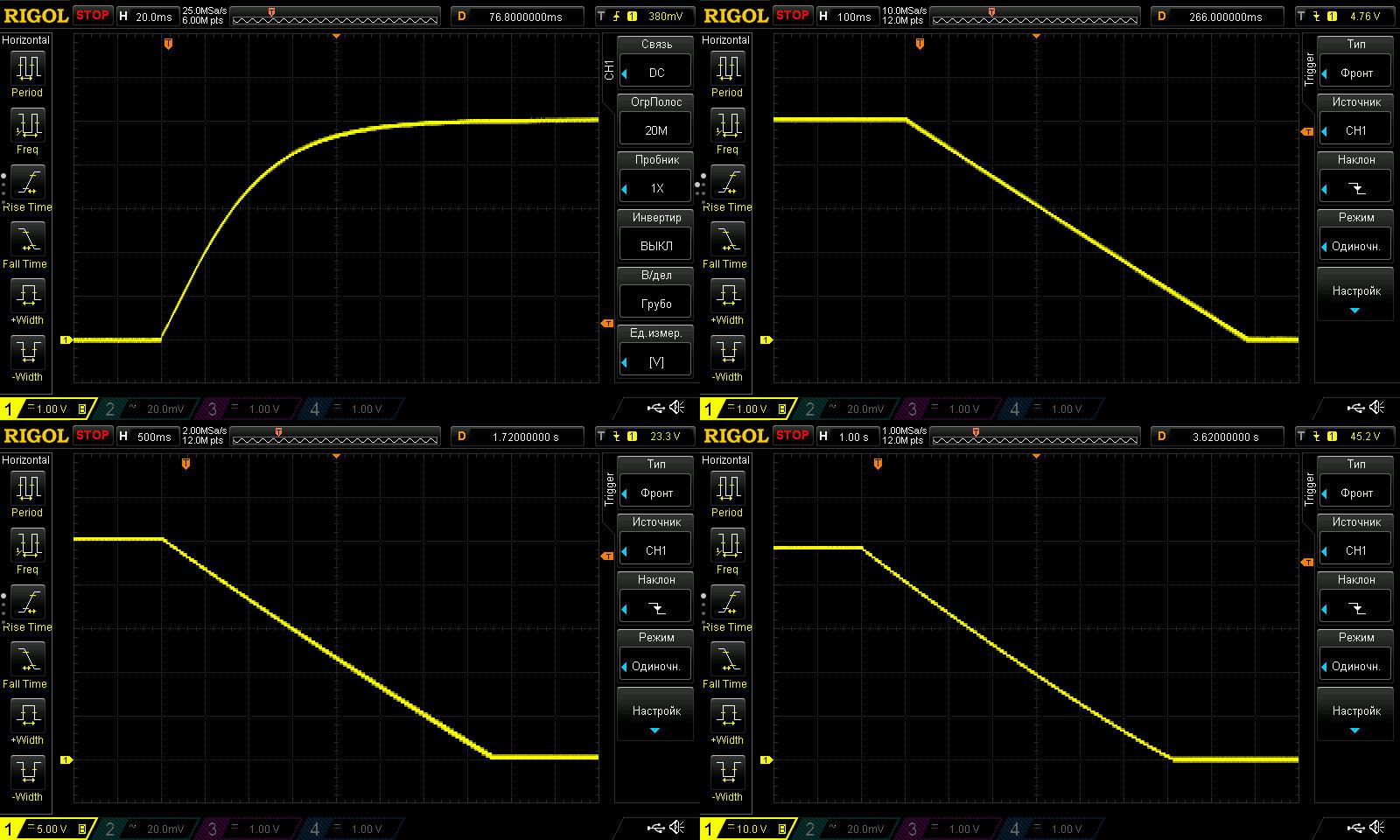
1, 2. Response to connecting/disconnecting a load. The output was set to 12 V, with a 30 Ω resistor connected continuously and a 3.3 Ω resistor connected in parallel with it (or disconnected). So this shows the response to a current step from 0.4 to 4 A and from 4 to 0.4 A.
3, 4. Transition from CV mode to CC mode and back, voltage 14 V, load current 4.5 A, current limit set to 3 A.
There are some small spikes when connecting/disconnecting the load, but overall I have no complaints.
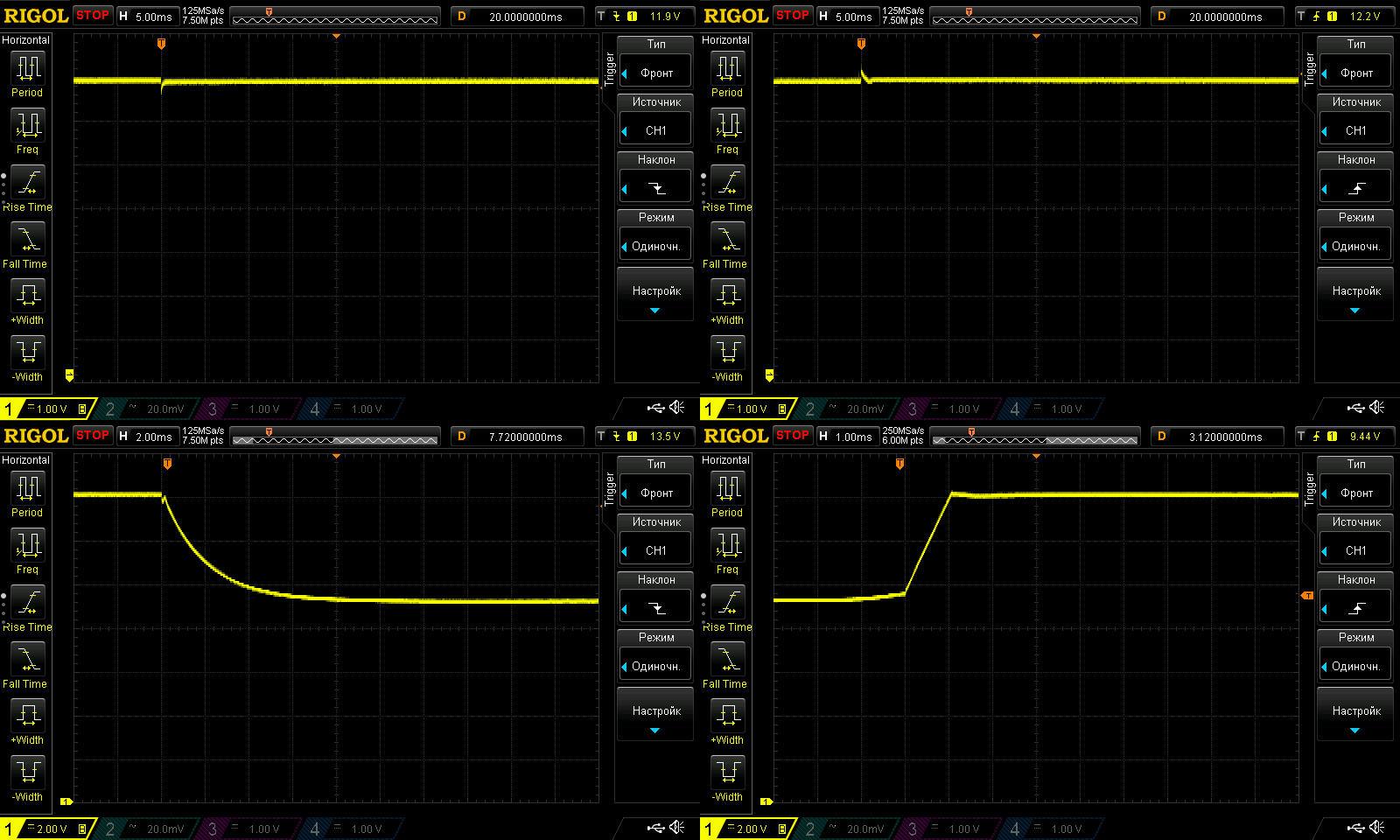
Test eight: efficiency measurement.
The test was performed with an input voltage of about 60 V, a load current of 6 A, and output voltages of 5, 12, 24, 36, 48, and 52 V. In the last case, I was limited by the input voltage, but I don't think that matters much.
Output voltage — efficiency — power loss
5 V — 75.3% — 9.82 W
12 V — 88.0% — 9.8 W
24 V — 93.6% — 9.8 W
36 V — 95.9% — 9.2 W
48 V — 97.2% — 8.3 W
52 V — 97.5% — 7.9 W
I wouldn't call the efficiency particularly high, but I think that's due to the lack of synchronous rectification. In this case, though, it doesn't matter much, since the power is low and the stock cooling is more than adequate.
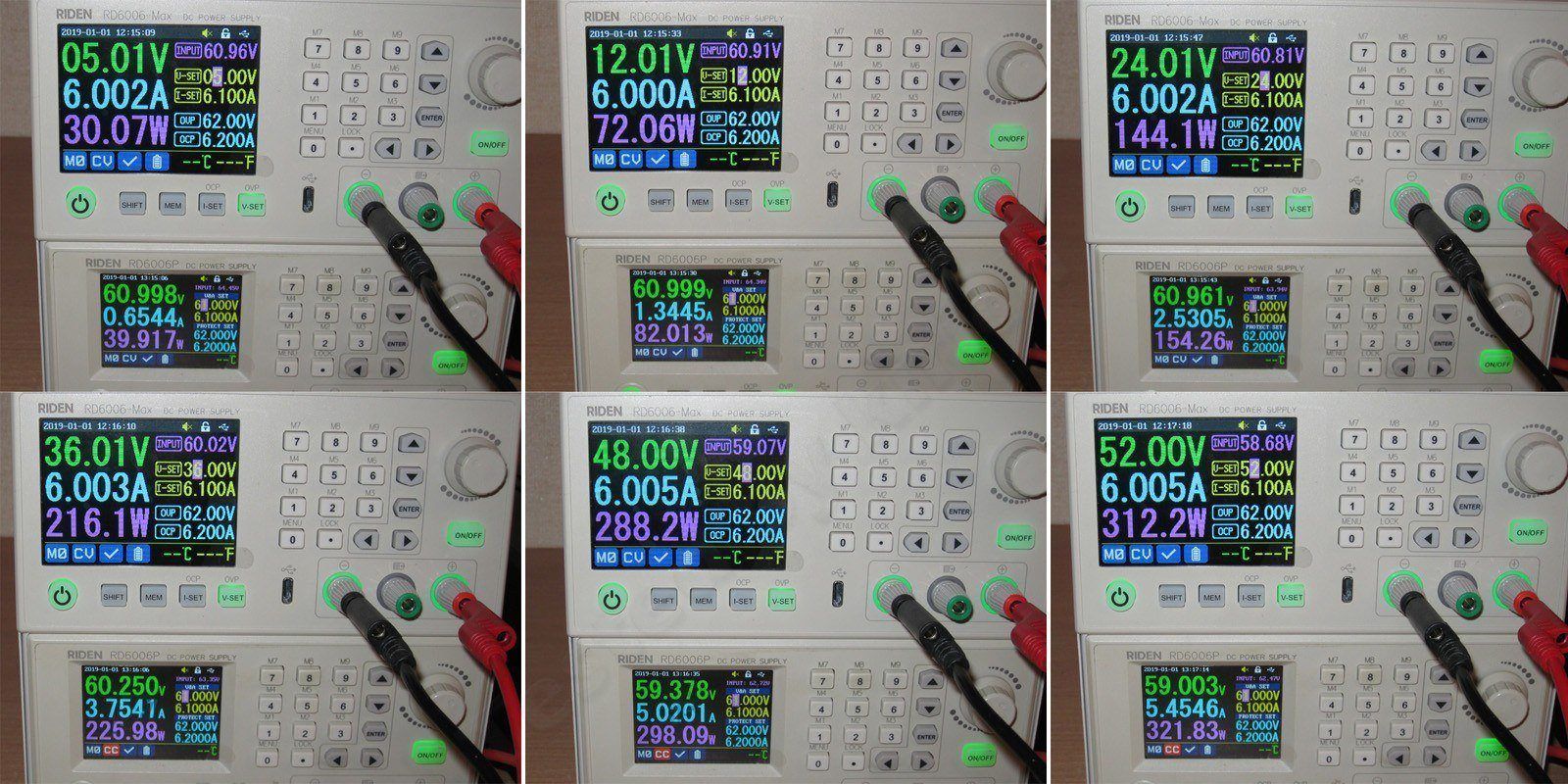
Test nine: temperature measurements.
Here I loaded the unit to roughly 85% of its rated power. It's not the maximum, of course, but given that losses at maximum load could well be lower than at lower loads, this is perfectly fine for a test. By the way, I happened to notice that my 6006P draws around 12–15 W from the mains with the output enabled. I was surprised it was that much.
I let it run like this for about forty minutes.
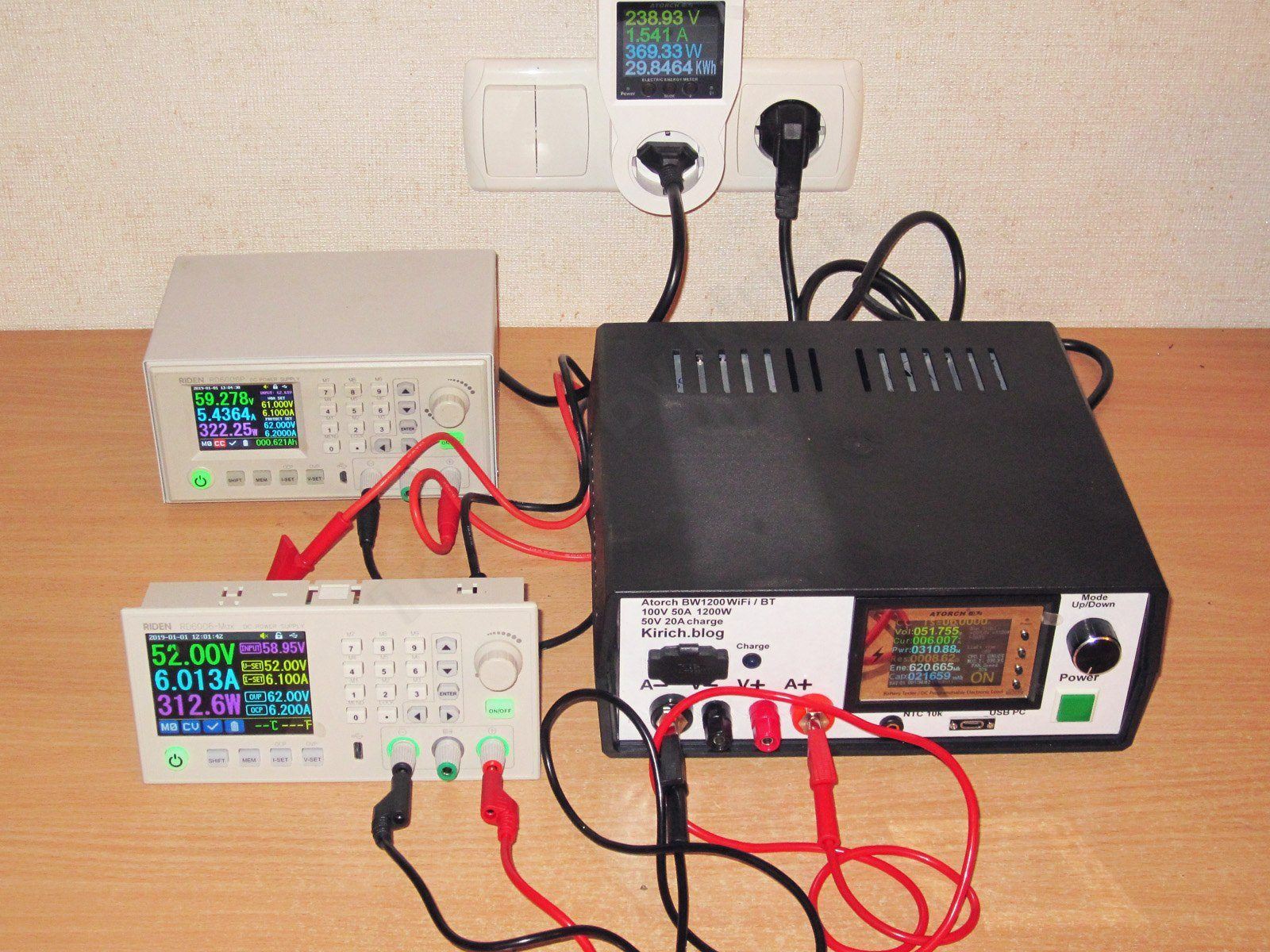
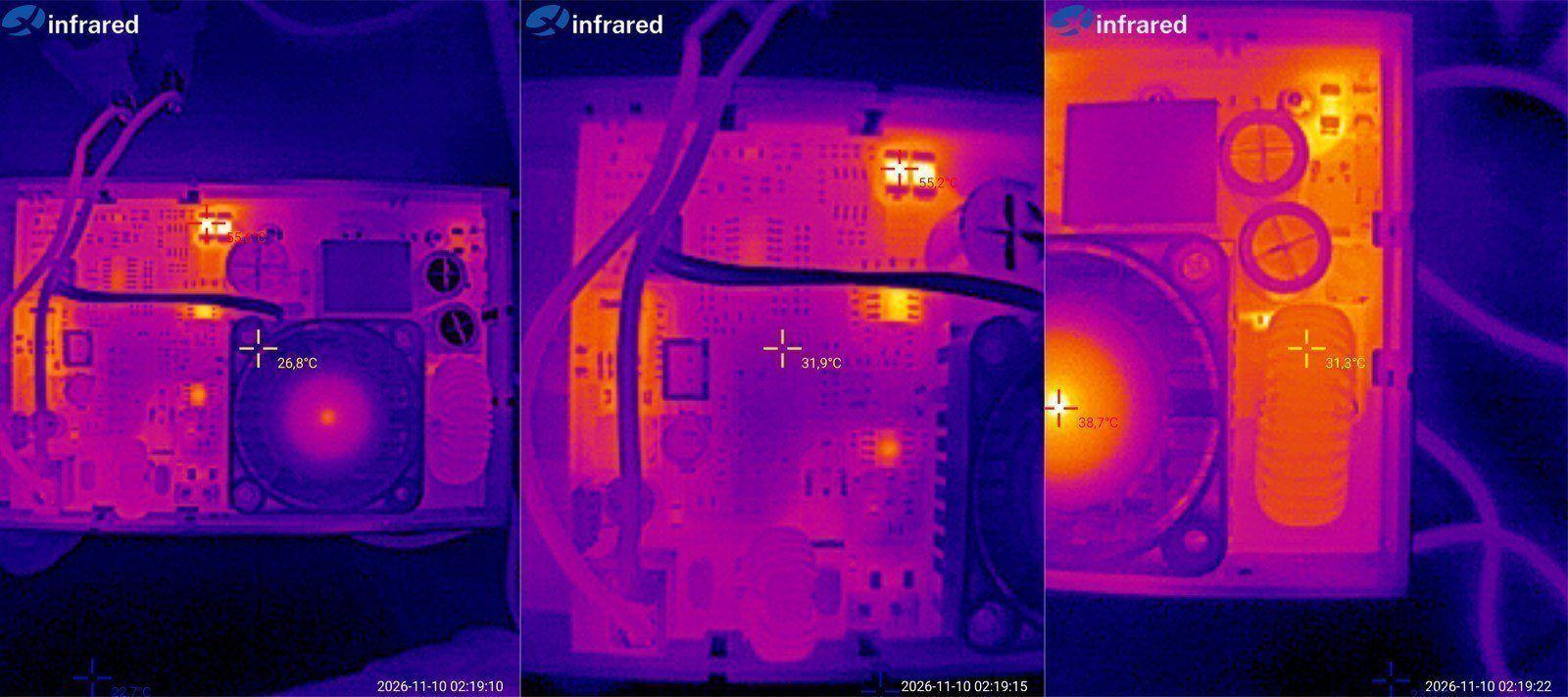
Here's what we get.
1. In the overall photo, the hottest component is the shunt, at about 55 degrees. In reality, I think it's a little higher.
2. The inductor is only about 33 degrees. Basically, you could say the converter is running well within its limits. The fan is fairly quiet, too.
Temperatures inside the case will probably be a little higher, but they're still nowhere near anything concerning.
Conclusions.
Overall, I liked the converter. There are clear improvements: a large screen, a USB-C connector, a new way of securing it in the case, an obvious redesign of the power section, added software features, and backlit terminal indicators. Taken together, these are more than just cosmetic changes.
I was a little disappointed that the ripple ended up slightly higher than on the first version, but I wouldn't say it's much higher.
So, some things got a little worse, but there are many more improvements. As I already wrote, if this had been an RD6006P-Max-type version, I would have replaced my main power supply without a second thought.
But buying it specifically as a replacement? I'm not sure—unless you really want the big screen and the “features.” But if you're choosing between the regular 6006 and the new one, definitely go for the new one.
That's all for today. By the way, another new product from Riden is on its way to me: a converter from the RK series. I thought they'd released all the models in the lineup, but they've surprised me again....
Questions and answers
How is the Riden RD6006-Max different from the earlier RD6006?
The RD6006-Max has a 3.2-inch screen instead of 2.4 inches, USB-C instead of Micro-USB, and spring-loaded case latches. The board and power section were also updated, with added software features and illuminated terminals.
How hot does the RD6006-Max get under load?
At roughly 85% of its power, after about 40 minutes the shunt reached around 55 °C and the inductor about 33 °C. The author found the fan relatively quiet.
Is it worth replacing a regular RD6006 with the RD6006-Max?
The author recommends the newer model when choosing between a regular RD6006 and the RD6006-Max. Replacing an existing converter makes sense if the larger display and new features matter; ripple is slightly higher than on the first version.
The figures from this review are in the measurement database: Converters
Discounted products
You may be interested in


Discounted products
All the content on the site and the advice are free, but we’d be grateful for your support of the project and the channel!
Only registered readers can comment. It takes a minute to sign up, and you can log in with the same account you use on the forum.
Log inRegister