
Molicel INR18650-P28A Batteries from E-One Moli Energy
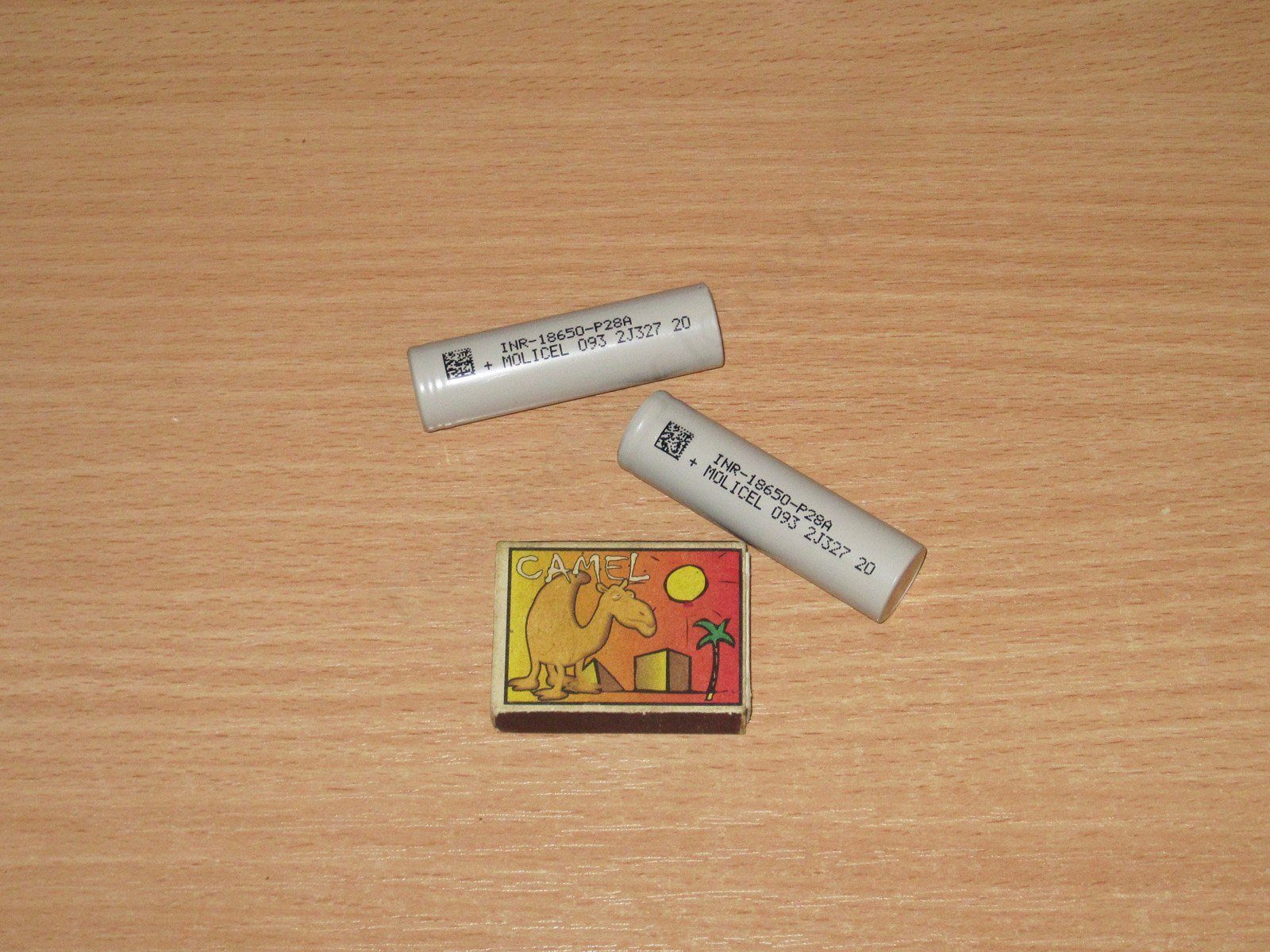
I’ll start with the 18650 version, with a capacity of 2800 mAh. There’s also a “little brother” to the battery reviewed here, with a capacity of 2600 mAh, which costs a little less.
I usually deal either with batteries from well-known brands or with inexpensive options from AliExpress, so I was interested to see a relatively new player enter the market. Their advertised specs are quite good.
I later found out that Molicel (E-One Moli Energy) is quite well known. Here’s what Wikipedia has to say about it:
Google translation from English; the original article is here.
Unlike the no-name models from AliExpress, this one comes with proper documentation: there’s a complete datasheet, and I’ll include screenshots from it throughout the review. In fact, even at this point, it’s clear this isn’t some basement operation.

Importantly, in addition to the basic information, the documentation explains how to decode the production date. It also states that the 2Dimensional code (similar to a matrix code) contains not just the batch number but the full production date, making the code unique to each individual cell.
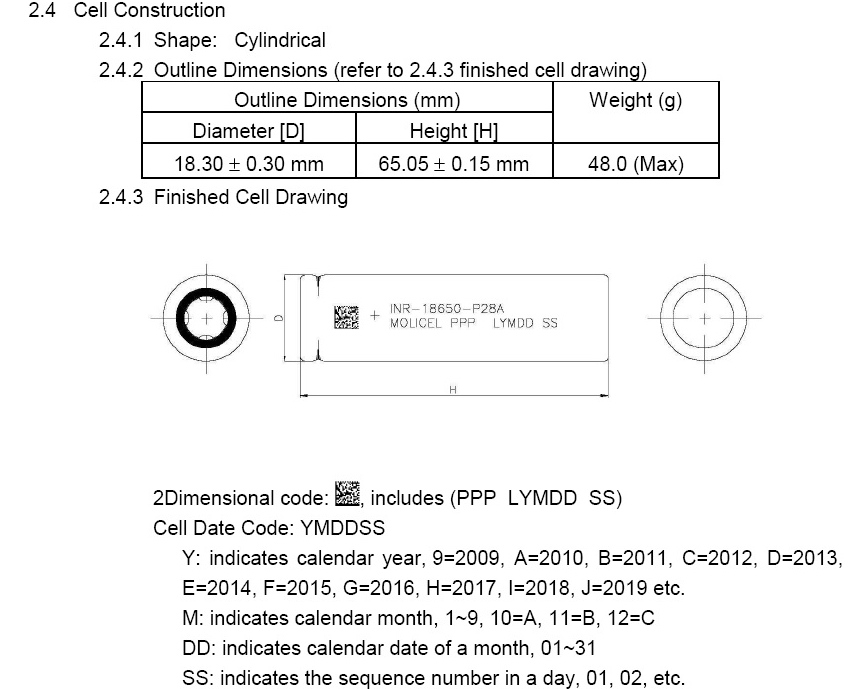
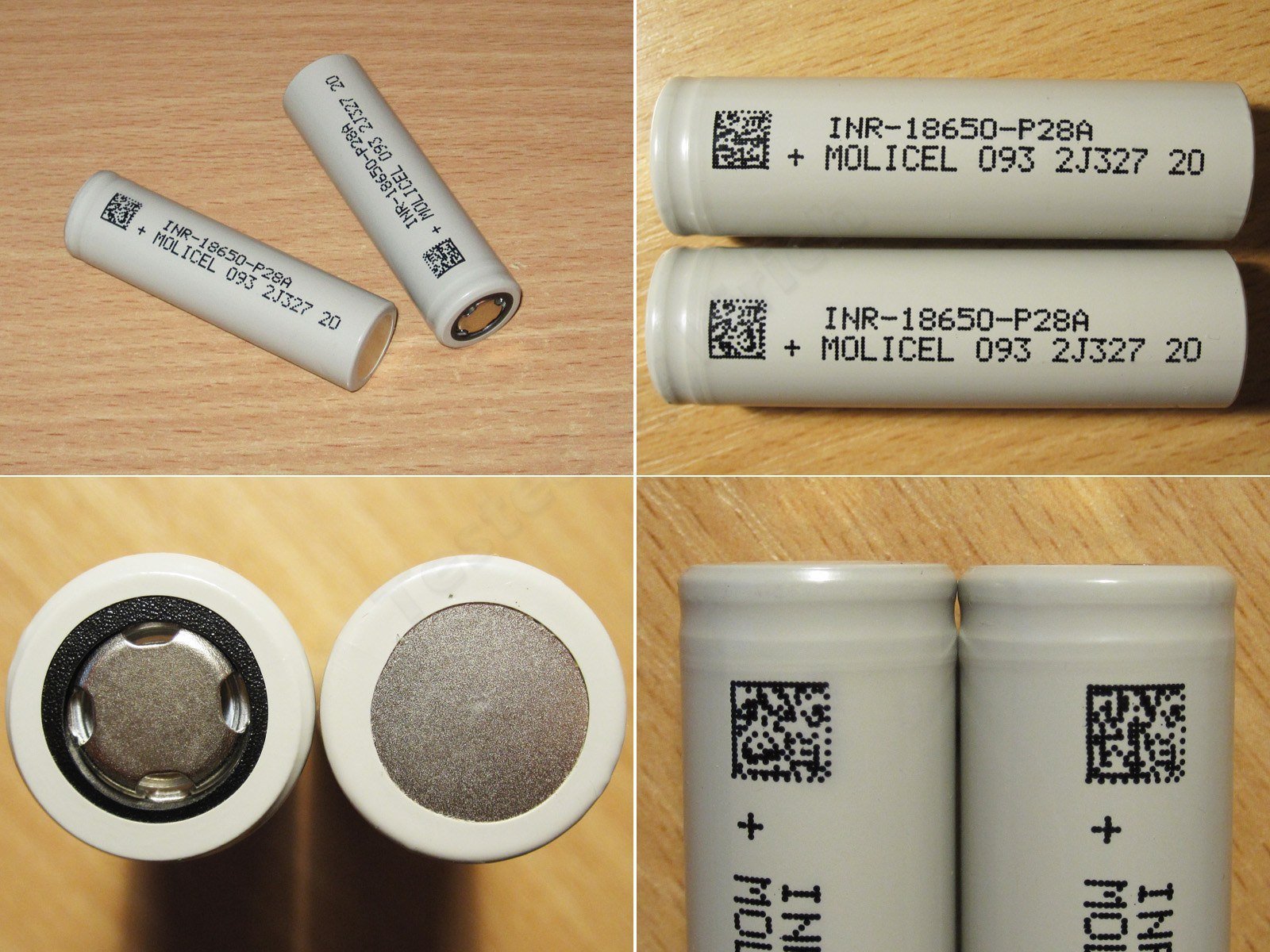
According to the 2J327 marking, the battery was made on March 27, 2019, so it’s what you’d call “fresh stock.”
The positive terminal is almost flush with the front end of the battery and has a four-spoke design.
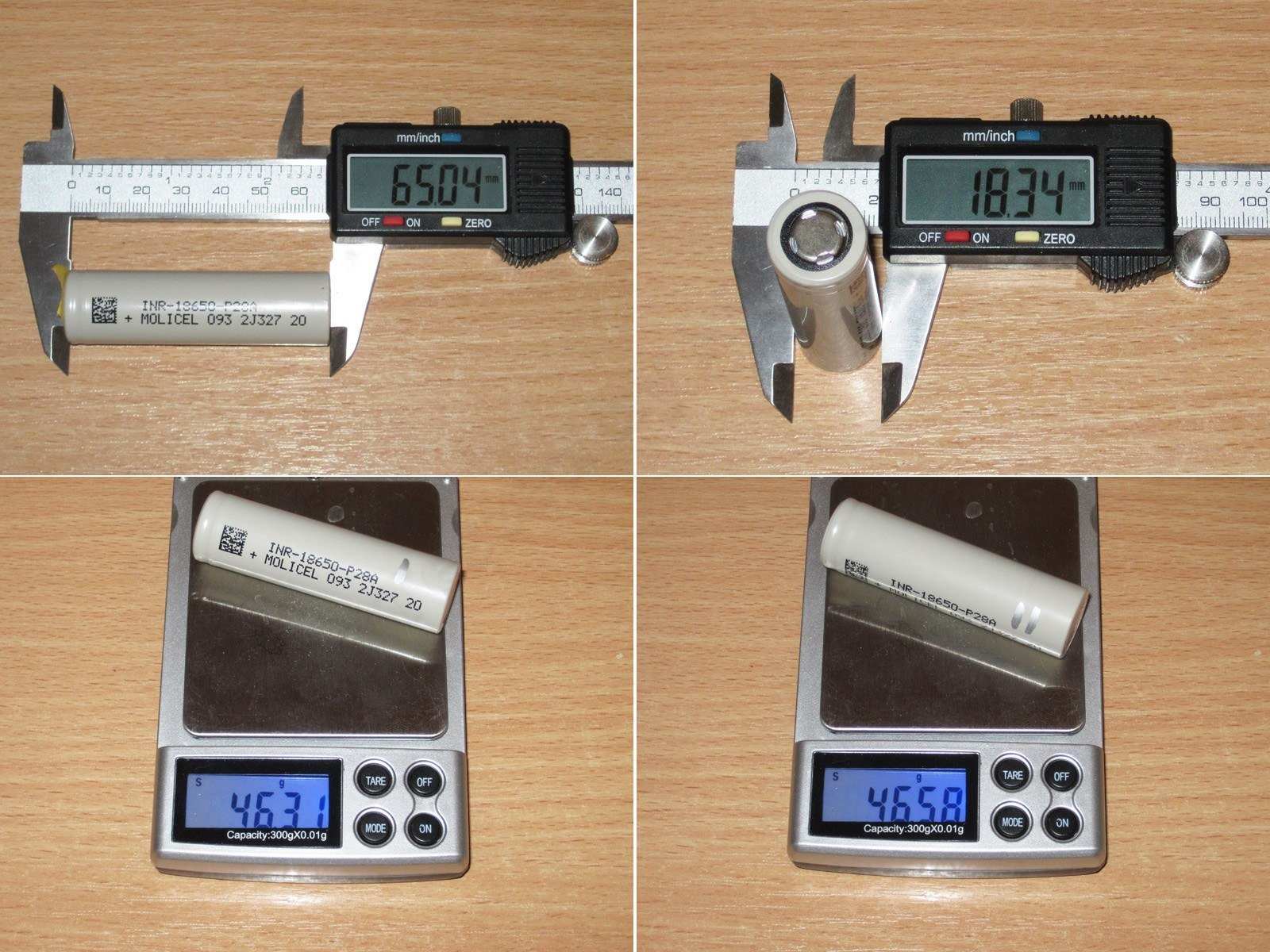
Dimensions and weight. As usual, at this stage I’ll distinguish between the batteries, and refer to each one by its own number from here on.
Someone once commented that datasheets don’t specify the design of the positive terminal, and that the illustrations are just examples. Well, here the manufacturer didn’t just provide a drawing, but also specified the dimensions—the diameter of the inner “pad” and its outer section. So I believe this kind of information isn’t included for no reason; it really does apply to the models listed in the datasheet.

Even during the “conditioning” stage, I noticed that the batteries differed slightly in capacity, though the difference was usually a little smaller.
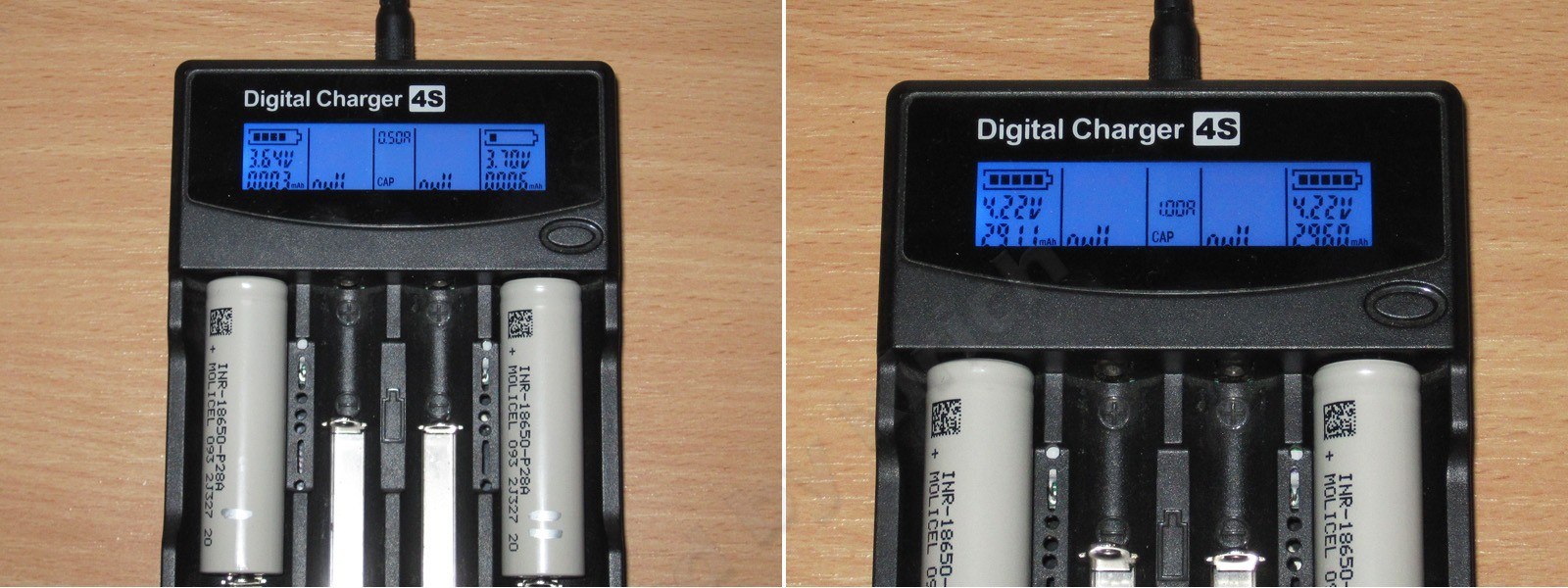
These batteries are marketed as high-current cells, so I’ll have to use the ZKE EBC-A20 load. Of course, I’d prefer the A40, but I don’t have one yet.
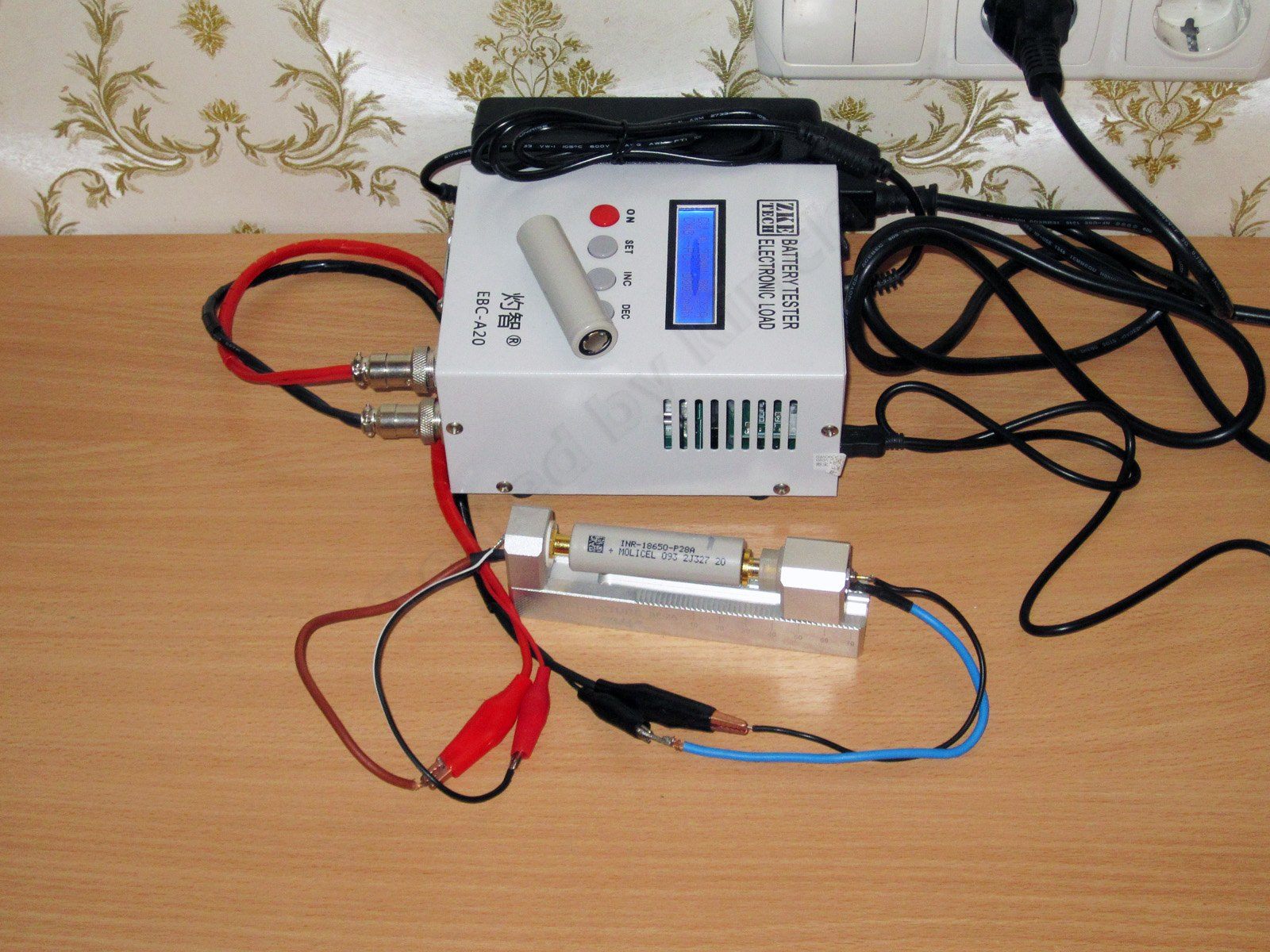
As usual, I’ll start with the charging test, although in fact this test is performed after the first test at 0.2C.
According to the datasheet, the normal charging current for this battery is 2.8 A, with charging terminated either after a set time (1.5 hours) or when the charging current drops to 50 mA. But since the load can’t do the first at all, and for the second it can only go down to a minimum of 100 mA, I’ll have to make do and assume the difference isn’t all that significant.
A full charge took 1 hour and 11 minutes, which is pretty good.

The datasheet specifies five checkpoints for measuring capacity, but I’ll expand the test a little by adding two more.

In total, the tests were run at these load currents (the additional ones are highlighted): 0.2C, 0.5C, 1C, 2C, 10 A, 15 A, and 20 A.
The results were 2814 mAh at 0.2C and 2656 mAh at 20 A, which is fully in line with the manufacturer’s specifications.
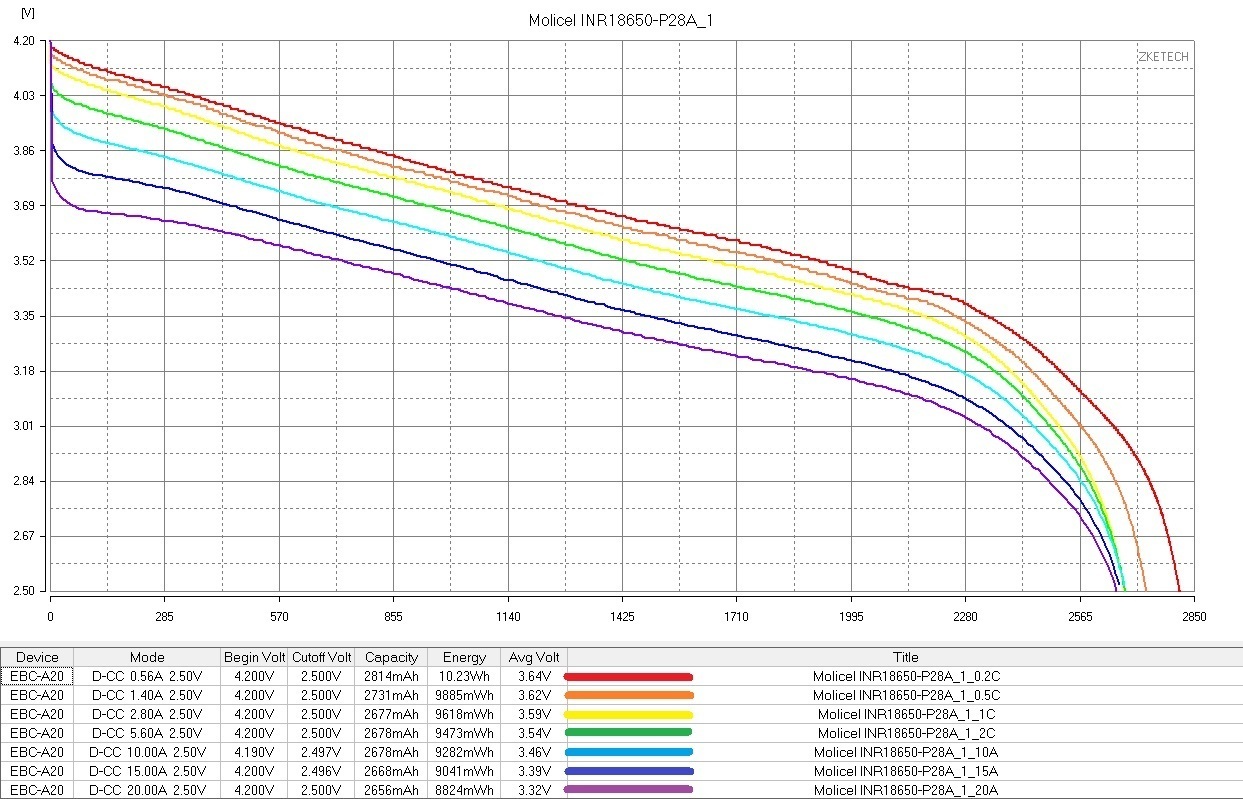
The battery temperature at 10 A, 15 A, and 20 A was a little on the high side. Also, during the 15 A test I was a bit late stopping the test, so I got a reading of only 66 degrees. I didn’t repeat the test; the second battery gives more accurate results.

As in the preliminary run, the second battery delivered more: 2854 mAh at 0.2C and 2687 mAh at 20 A.
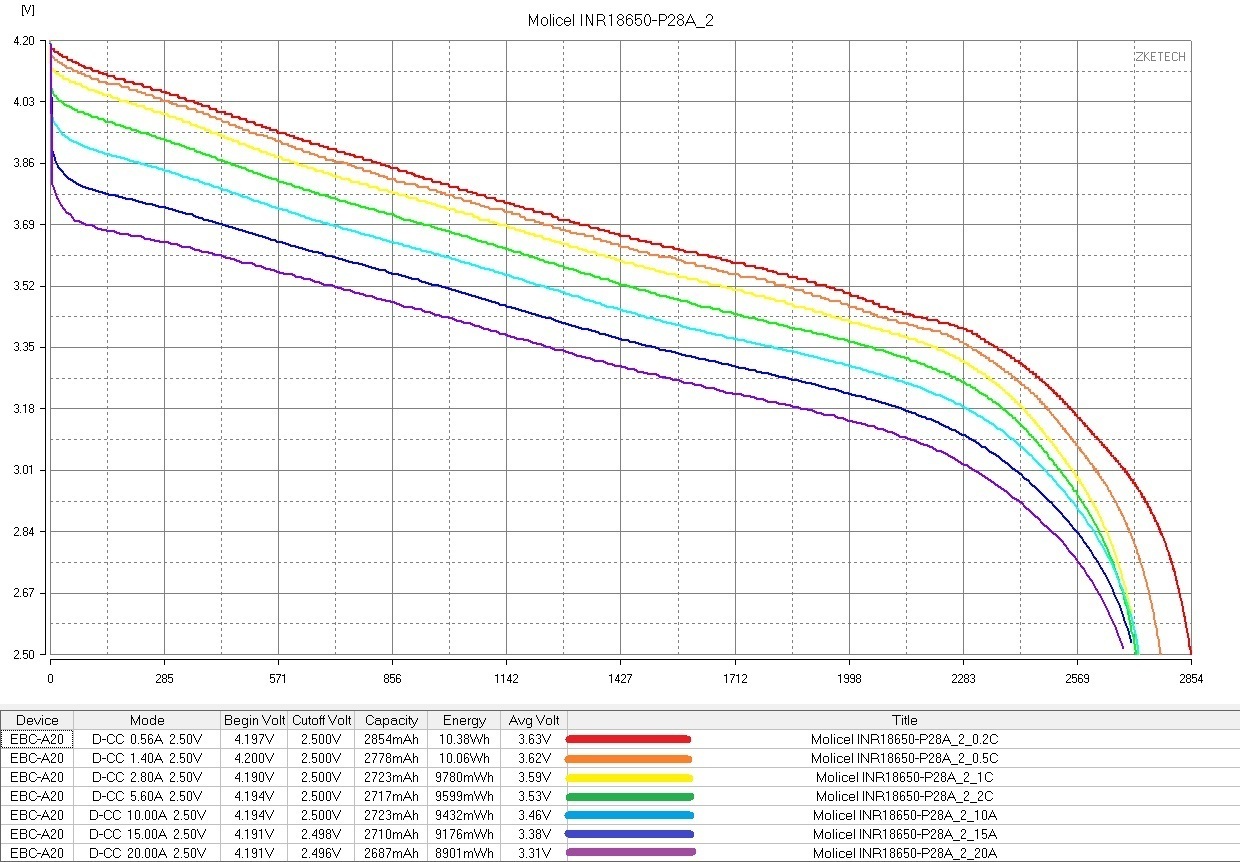
Temperature right at the end of the tests at 10 A, 15 A, and 20 A.

The technical documentation specifies a maximum continuous discharge current of 20 A, but the product page claims 35 A, so I tried that mode too. I had to limit the current to 30 A, though I don’t think that makes much difference.
I’ve used this test procedure many times: first charge the battery, then connect the electronic load and apply the load. Calculate the difference between the voltage shown by the load and the actual voltage, switch it off, enter the correction, and then continue the test. In this test, the discharge continues down to the voltage we need—in this case, 2.5 V.
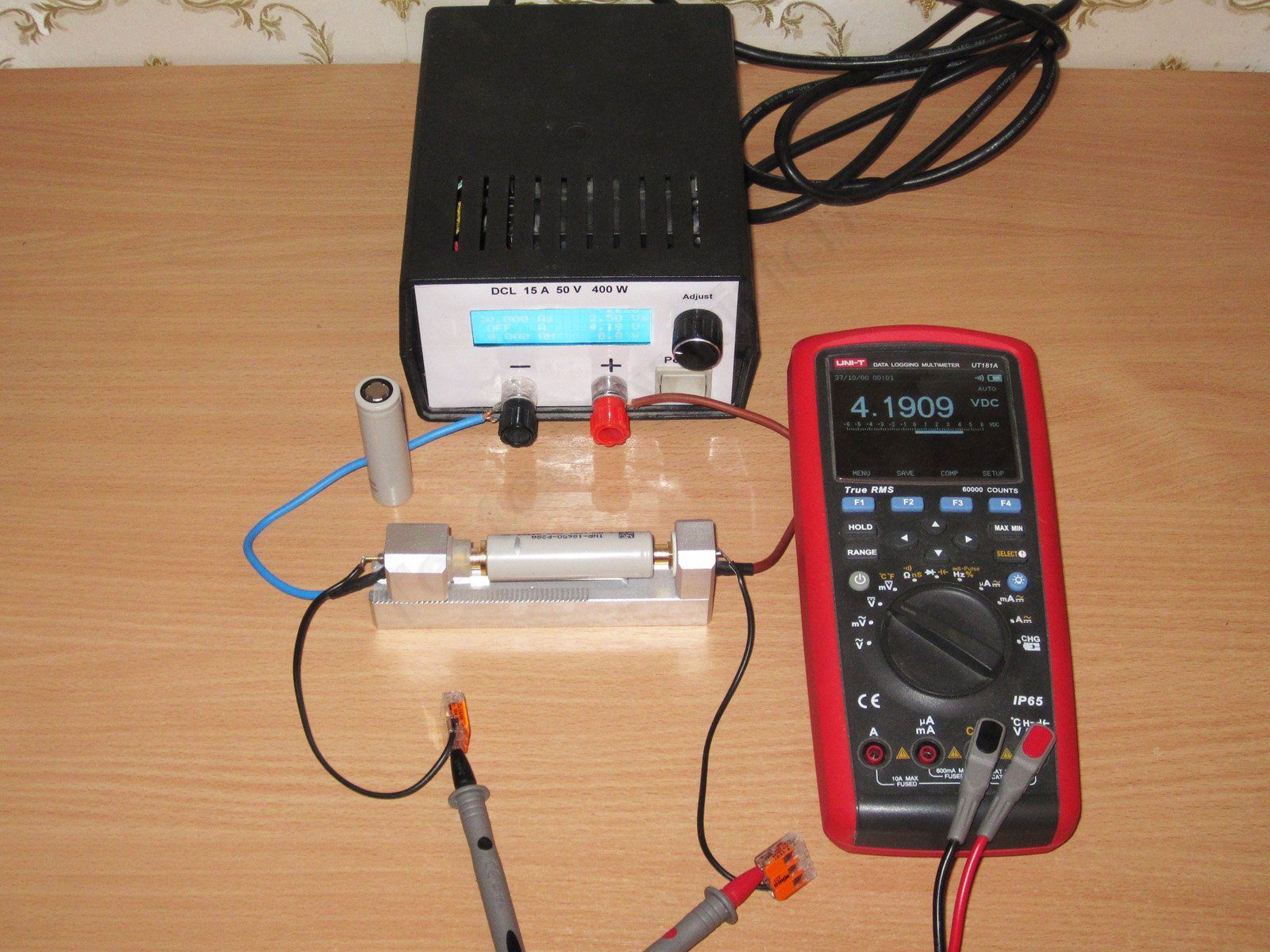
Just to be safe, I monitored the battery temperature during the test and disconnected the load as soon as it approached 100 degrees. By then, the battery had delivered 2333 mAh.
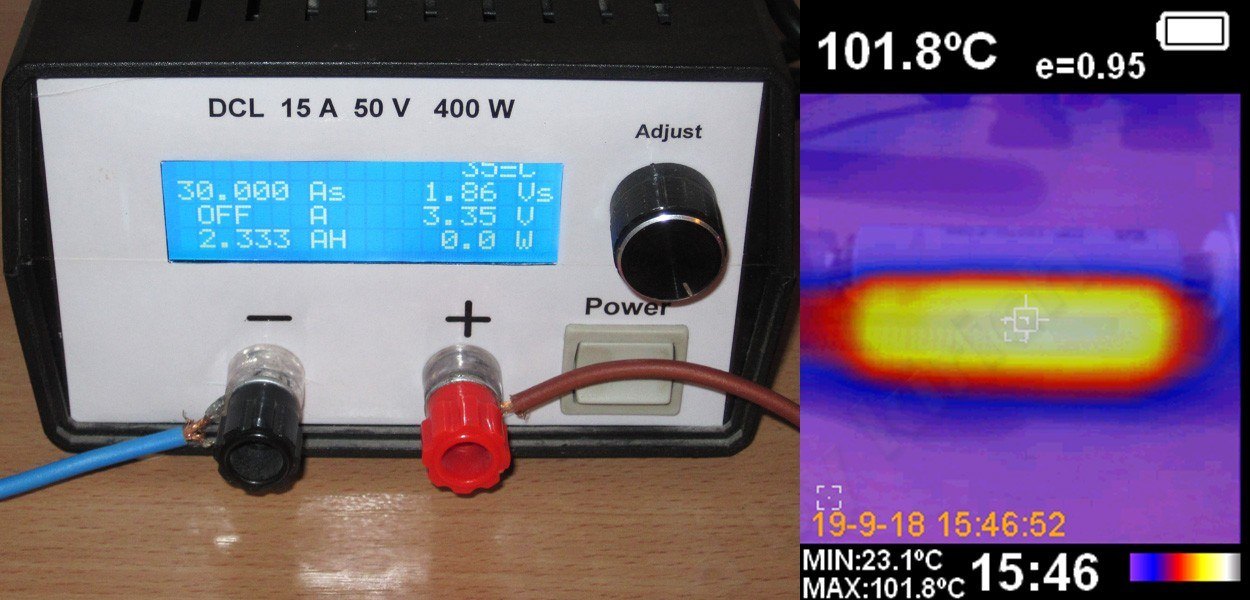
The second battery reached this point a little sooner. Unlike the first one, it had no pause at the start of the test.
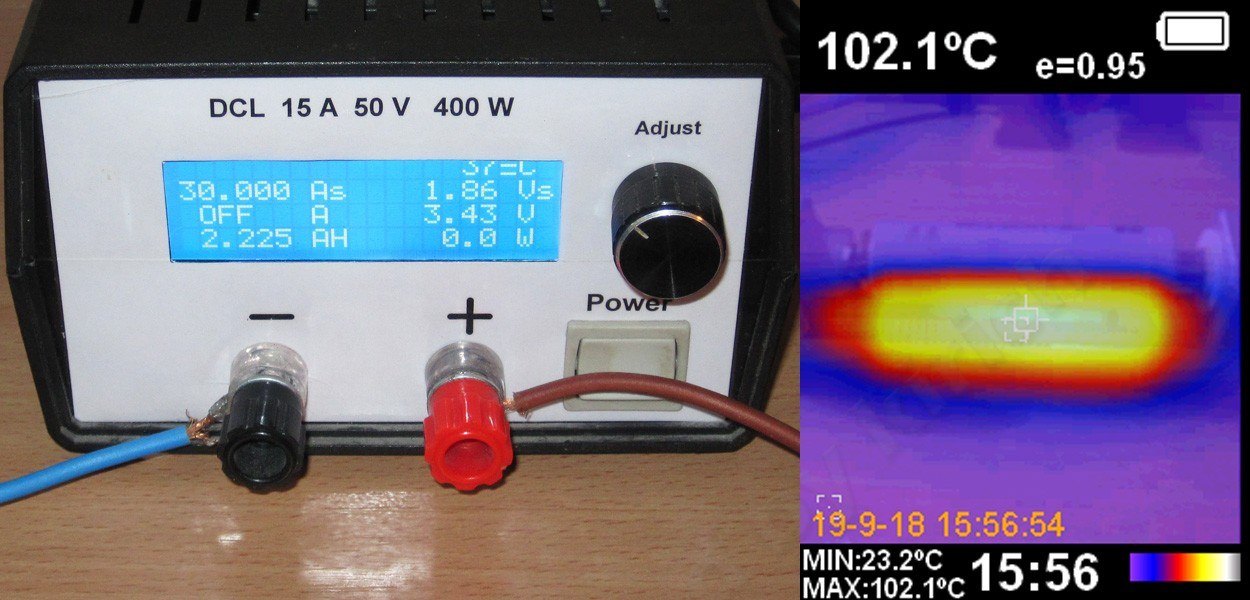
After letting the batteries cool to around 50–60 degrees, I continued the test. The final capacities were 2641 and 2666 mAh, respectively. If I hadn't stopped the test because of overheating, I think they would have reached around 108–110 degrees. At the beginning, the voltage rose: it first dropped under load, then started to climb slightly as the battery warmed up, and then began dropping again.
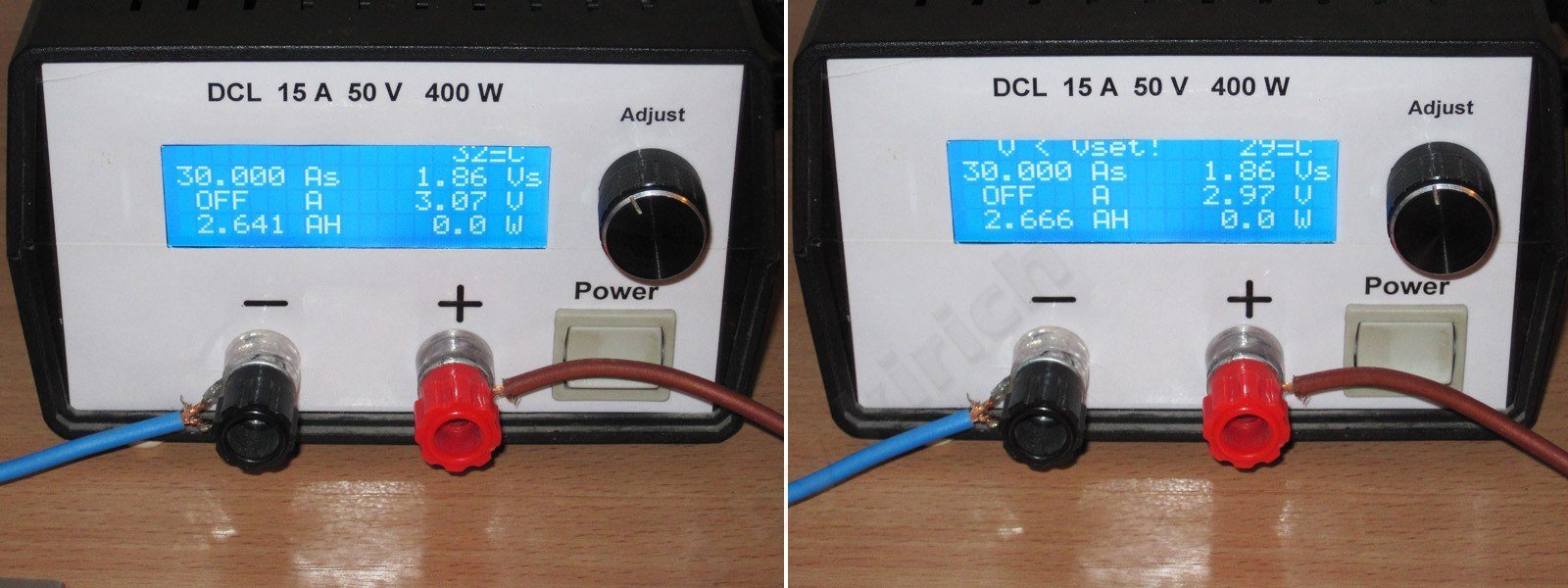
After one of the batteries had cooled completely, I discharged it further at 0.2C, which yielded another 81 mAh.

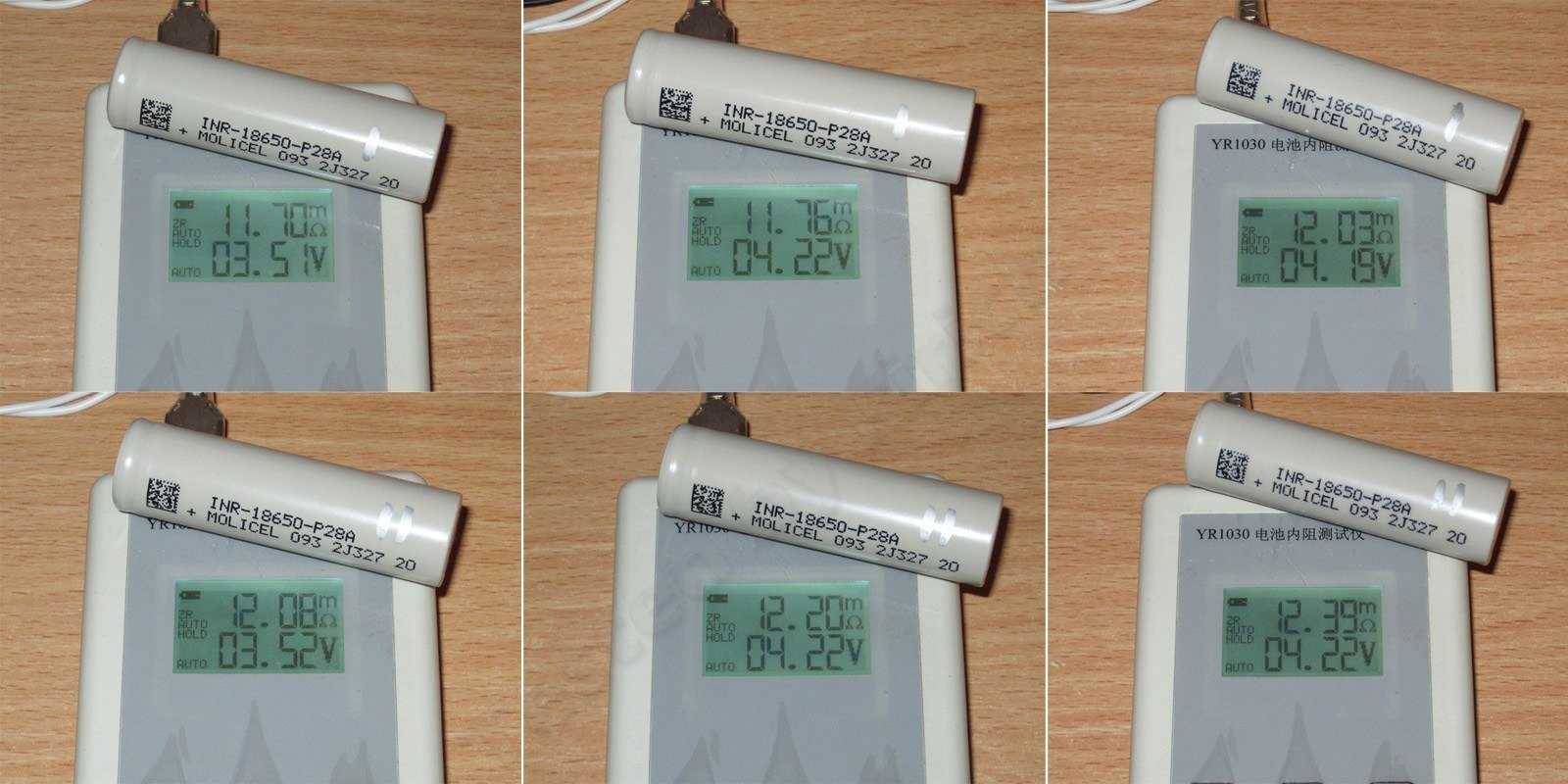
Besides the slight difference in capacity (the second battery has more), their internal resistance also differs. The second battery has higher resistance too, which surprised me a little.
As usual, the photo shows the results as received, after “conditioning,” and after all the tests—in this case, 9 tests for each cell.
When I first ordered these batteries, I assumed they were competitors to the Murata VTC5D, which also has a capacity of 2800 mAh, so I planned to make a comparison chart with that battery. Along the way, though, I'll also compare them with the well-known Samsung 30Q, rated for a maximum current of 20 A and a capacity of 3000 mAh—especially since the Molicel datasheet also specifies that current.
It turned out that up to and including 20 A, the Samsung clearly outperforms both the Molicel and the Murata, with the Molicel landing somewhere in between. Looking at the capacity figures, the difference between the Molicel and Murata at 0.2C and 10 A is very small. That's because the VTC5D was discharged down to 2.0 V, so it's better to look at the graph.
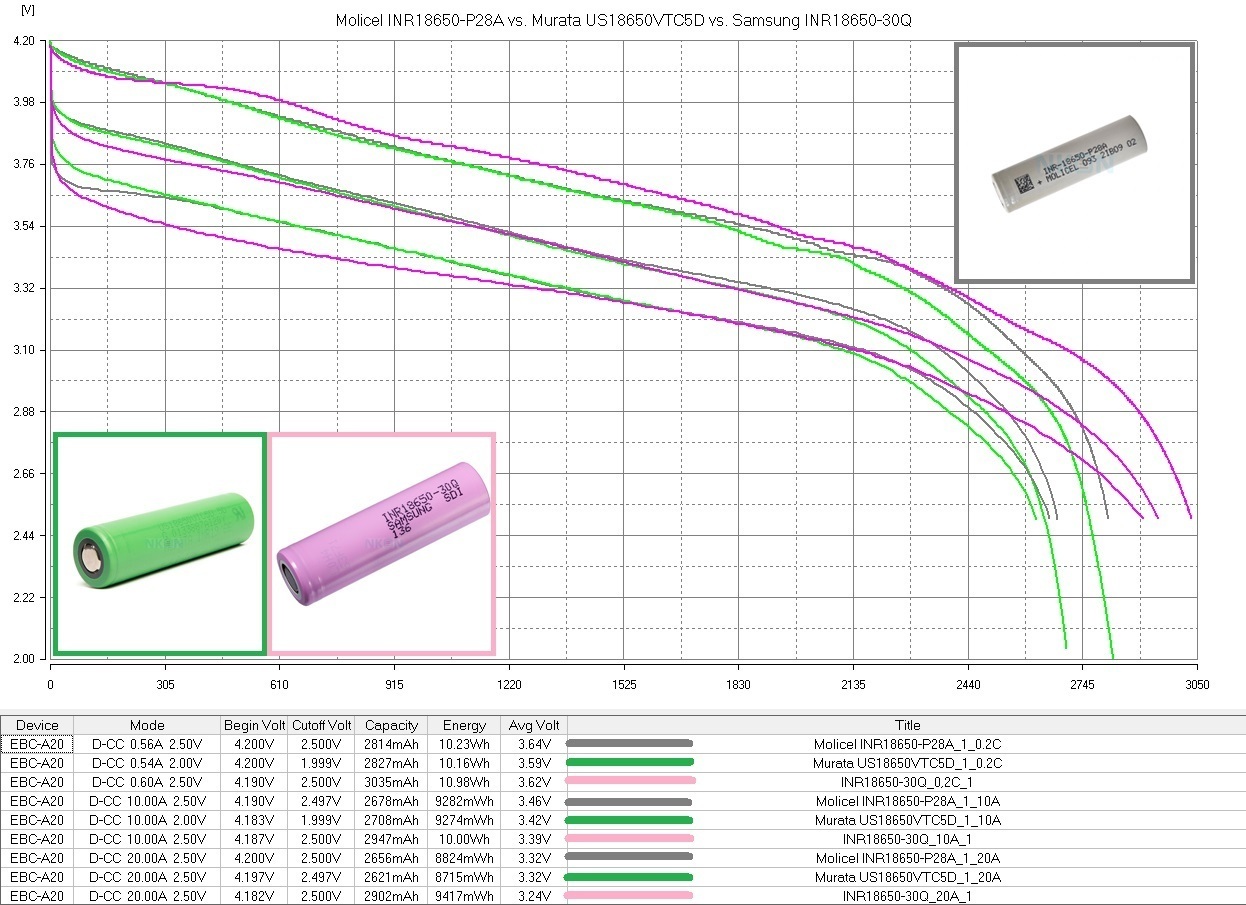
So, before the conclusions, here's one more quick comparison with the competition.
Compared with the VTC5D, the Molicel has roughly the same capacity, but runs a little hotter. For example, at a 30 A discharge, the VTC5D reached 102 degrees at full discharge, while the Molicel reached that temperature at around 90% discharge. In other words, 30 A is a bit too much for it.
Compared with the Samsung 30Q, both the Molicel and VTC5D have noticeably lower capacity at 20 A, but both can be discharged at higher currents. The 30Q's maximum current is 20 A, although according to the datasheet, 20 A is also the maximum for the Molicel.
Overall, these batteries are interesting in their own right. In my opinion, they're close to the Murata VTC5D, though they fall a little short. The INR18650-P28A is also slightly cheaper: €4.75 versus €6.95, although the VTC5D is sometimes priced at around €6.
I was a little disappointed by the variation in both capacity and internal resistance. The Murata showed some variation too, but to a lesser extent. That's why I try to test a pair of batteries rather than just one.
That's all from me. I hope you found the review useful.
модельный ряд аккумуляторов молисель, fspe70049, https://www.kirich.blog/obzory/akkumulyatory/798-akkumulyatory-molicel-inr18650-p28a-ot-e-one-moli-energy, fspe.80043.0438, moli icr 18650h, отзывы о molicel 18650, moli energy ihr 18650b, режим зарядки литиевого аккумулятора moli fspe 80043.0938 01 icr18650 н, moli fspe.80043.0138 icr 18650h, moli fspe 70043 .0634 04, moli fspe 70043 1824 28 icr 18650h, moli fspe.70044.2888 24 купить, molicel p26a inr18650 2600 мач 35a отзывы, moli fspe 70043 аккумулятор, moli fspe.70049.2098 03 imr 18650e, molicel inr18650 p26a 2 обзор, molicell, moli fspe 80043. 1758 что это, moli fspe.80043.0358, moli icr 18650h аккумулятор, moli icr-18650h аккумулятор, icr 18650h moli fspe. 70043. 2133 33 характеристики, icp1034500ca05715ca100 аккумулятор moli, 94v 0 e one molj, moli fspe 70043 1354
Questions and answers
What capacity did the Molicel INR18650-P28A cells deliver?
The first delivered 2814 mAh at 0.2C and 2656 mAh at 20 A; the second delivered 2854 and 2687 mAh, respectively.
Can the Molicel INR18650-P28A be discharged at 30 A?
The author tested it at 30 A but stopped when the temperature approached 100 °C. He considers this current excessive: the cell reached that temperature at about 90% discharged.
How does the Molicel INR18650-P28A compare with the Murata VTC5D and Samsung 30Q?
The author considers it close to the Murata VTC5D, though it falls slightly behind and heats more. At currents up to 20 A, the Samsung 30Q delivered more capacity than either competitor.
This model is included in the summary table: Battery comparison: measured capacity and resistance
The figures from this review are in the measurement database: Batteries
Discounted products
You may be interested in


Discounted products
All the content on the site and the advice are free, but we’d be grateful for your support of the project and the channel!
Comments2
Only registered readers can comment. It takes a minute to sign up, and you can log in with the same account you use on the forum.
Log inRegister
Comments are published in their original language.