
EVE 18650 batteries, four types
A reminder: to keep up with new posts on the blog, I recommend following me on Instagram. I’ll post notifications about new articles there and might also write about something interesting - link to account
You can also subscribe to updates and new articles on the Telegram channel - https://t.me/KirichBlog
A while ago, someone who sells batteries here got in touch with me. He takes his business very seriously; you can read more in these reviews - 32700, 32140, 33140. He’s a good, reasonable, and responsible guy. I recommend him.
Just before New Year, he asked if I’d like to test some more batteries. Well, why not? Though with the current situation in the power sector, doing so has become noticeably less convenient. Oh well, my home batteries will help me test batteries in defiance of our enemies :)
Just so I don’t forget: in this and the following reviews of batteries from this batch, I’ll include links to this guy’s store. And to make it more interesting for you, he gave me a promo code -
Promo code kirich_blog gives you a 5% discount on all products at miliom.com.ua. The discount is valid until February 28, 2026, and applies only to orders placed by individuals through the website using the promo code
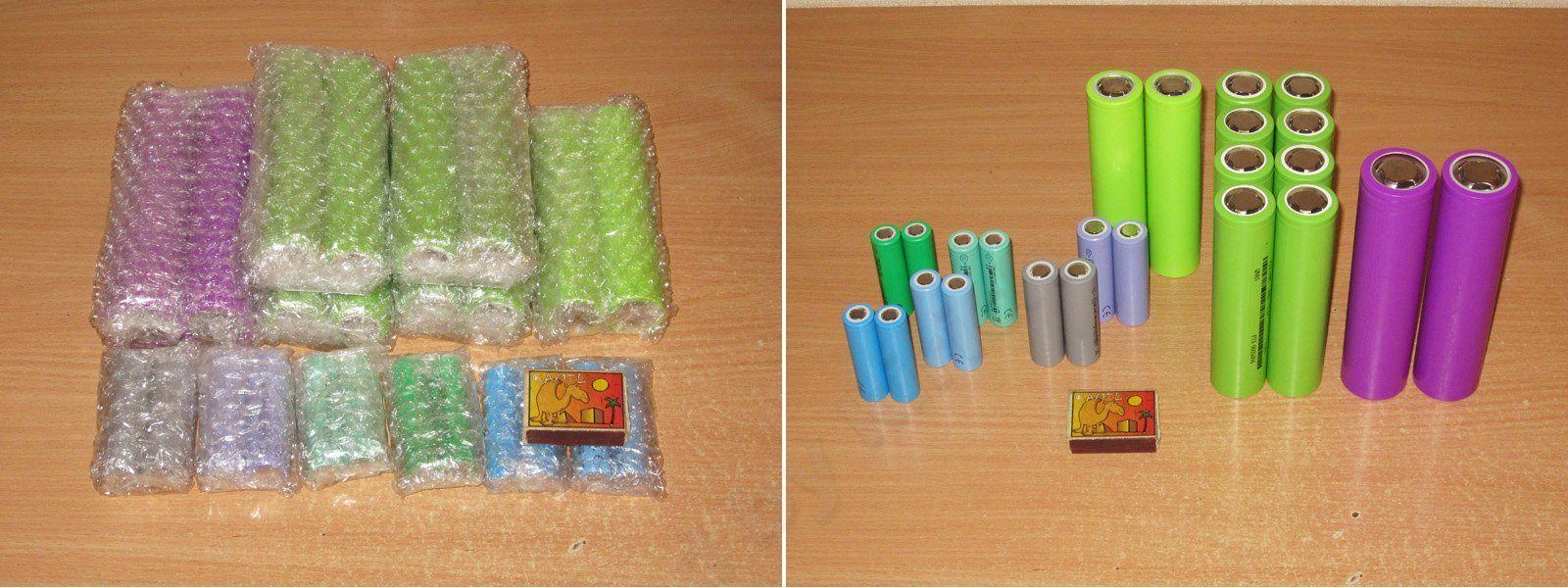
I’ll start with the EVE 18650 25P_2500mAh cells - link.
These cells are marketed as high-current cells, mainly for power tools, though of course that doesn’t mean they can’t be used for other purposes.
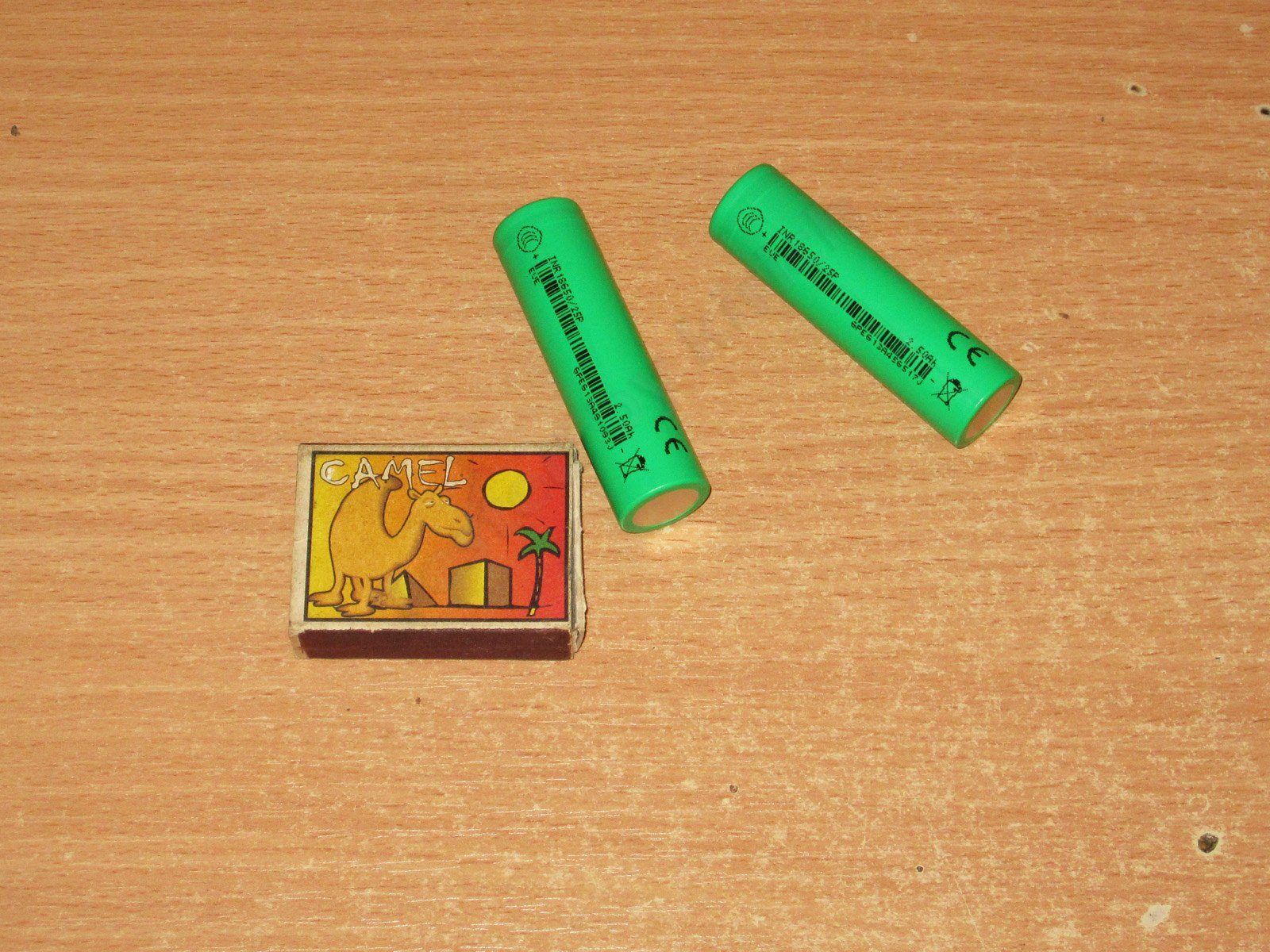
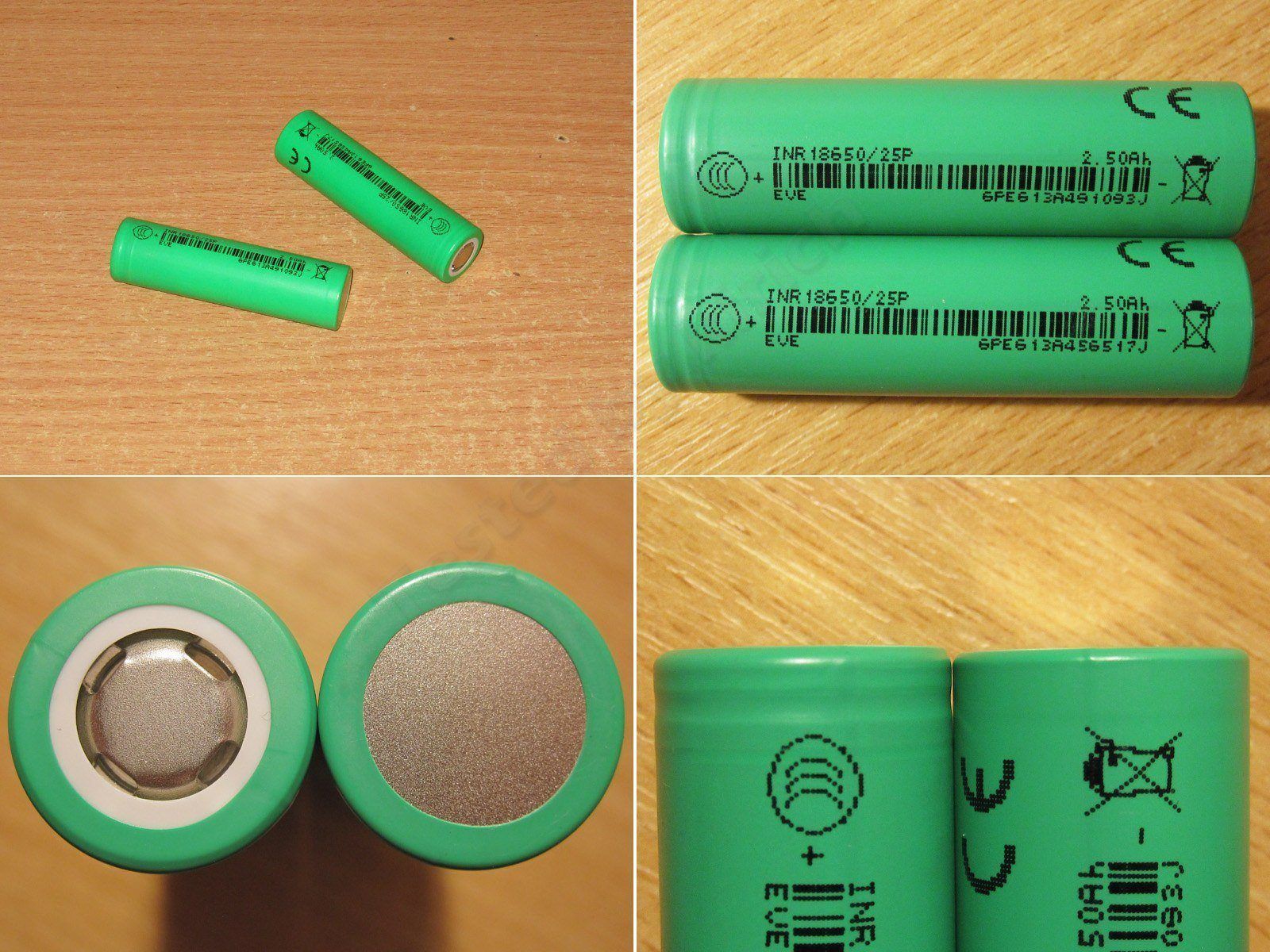
The heat-shrink wrap is green, the positive terminal is flat and has four tabs, and the cells are marked with the model and capacity.
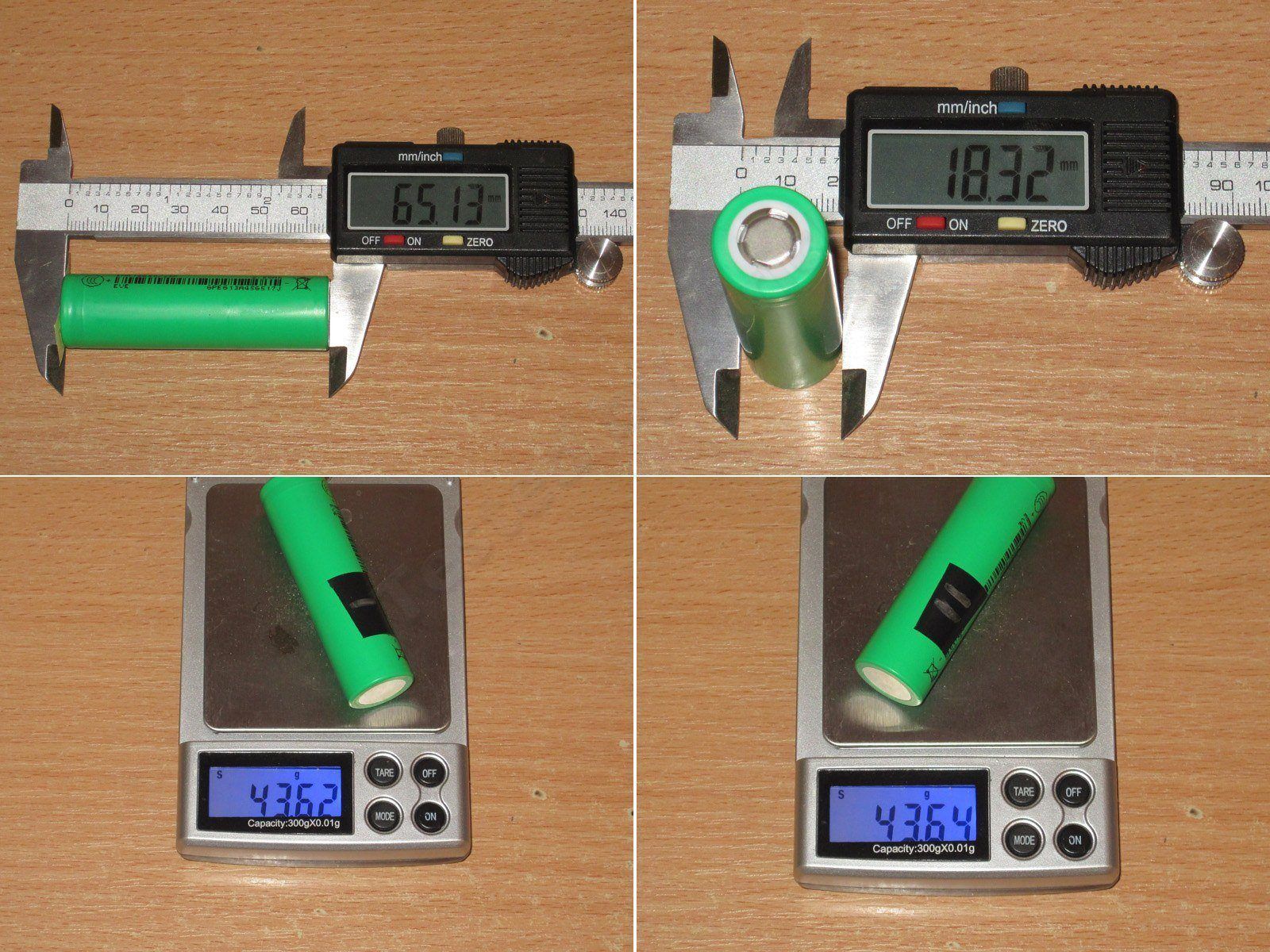
Dimensions and weight. When measuring the cell diameter, I tried to get the maximum value, since none of the batteries are perfectly round, and that can sometimes matter.
As always, before testing I run a “conditioning” cycle. But a reminder: lithium batteries don’t need to be “broken in”; this cycle is simply to make sure the initial charge doesn’t affect the measurements.
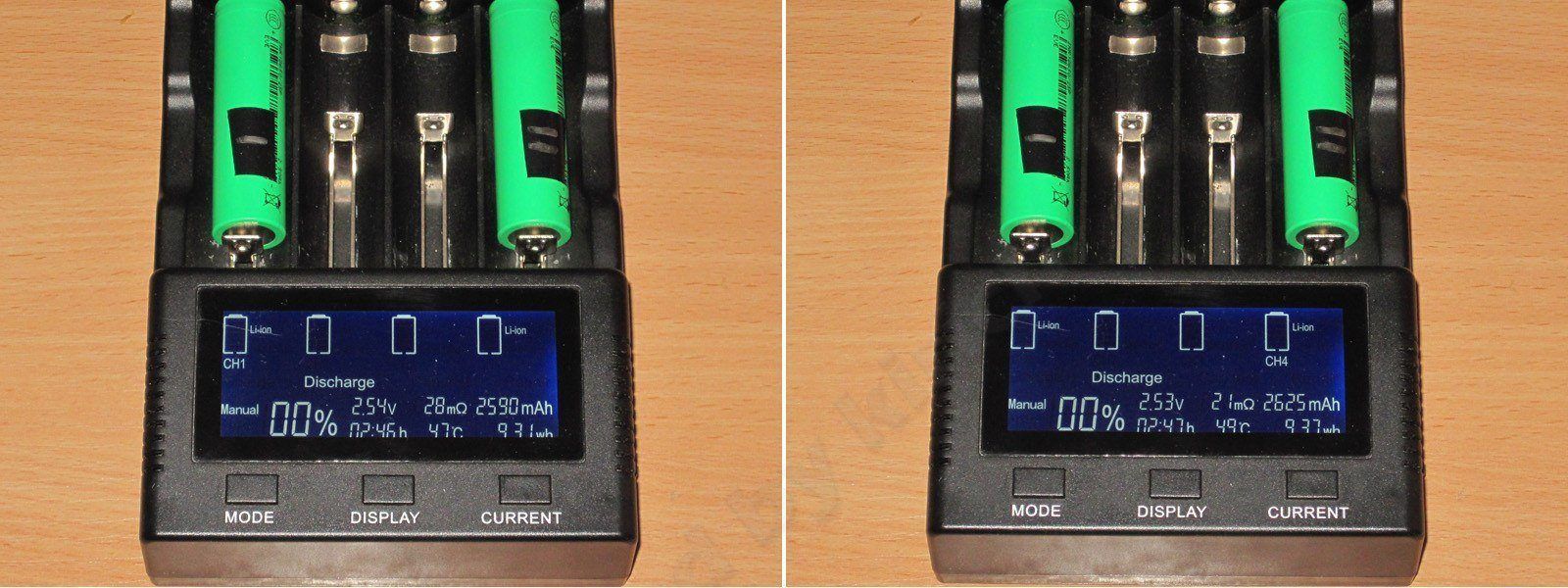
The initial charge took about 1780 mAh, and then they delivered about 2600 mAh when discharged at 1 A.
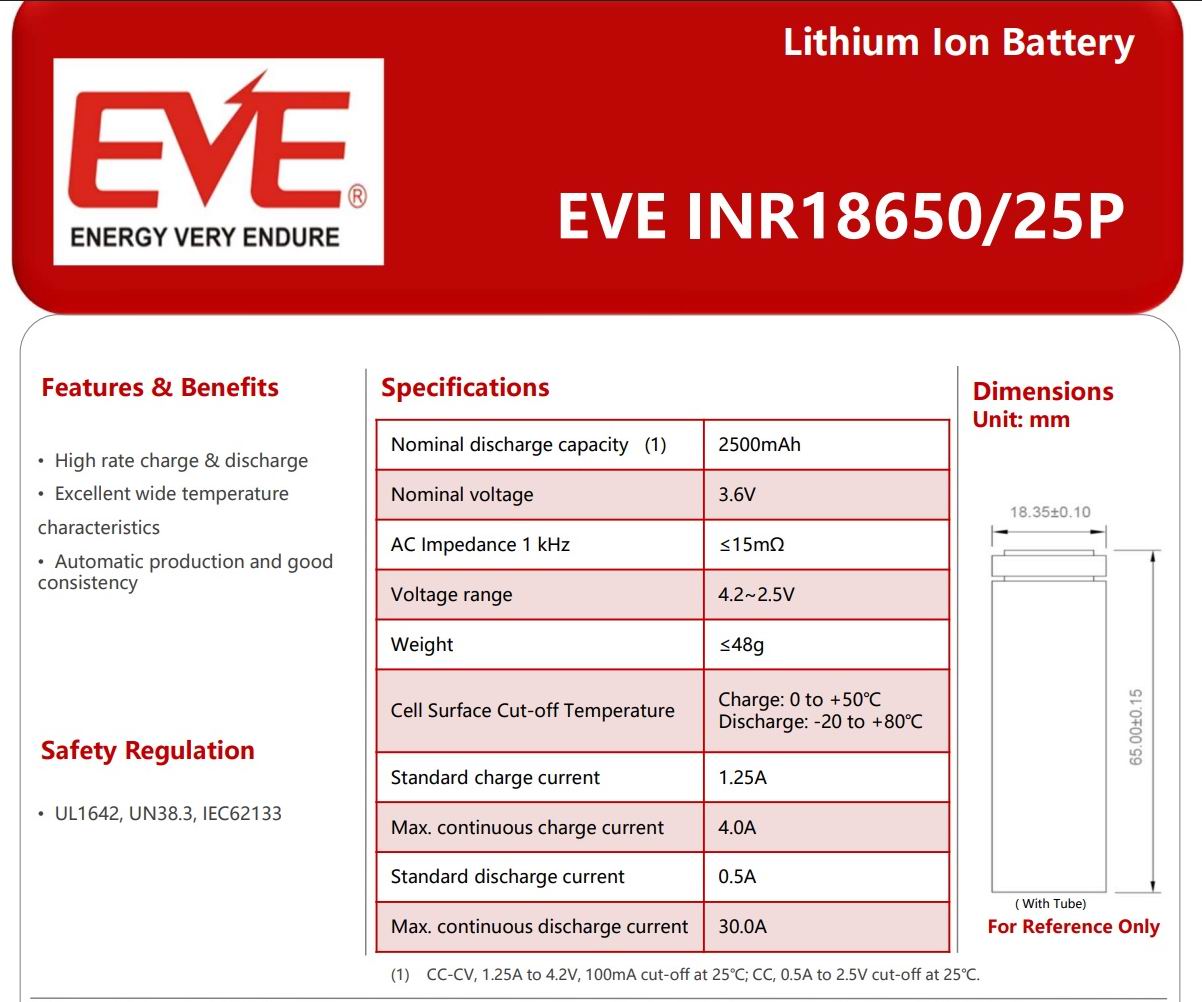
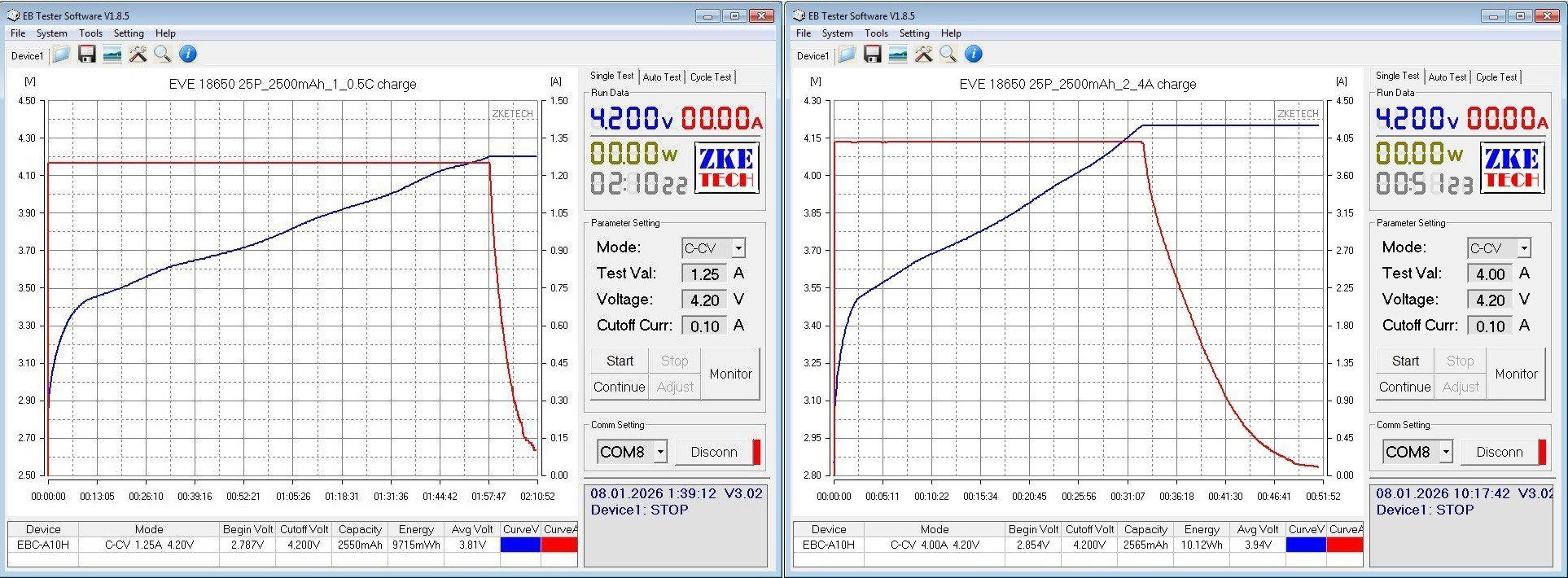
The specified nominal charging current for these cells is 0.5C, with a maximum of 4 A. This can be a critical parameter, by the way, since some power tools come with “fast” chargers, and not every battery of this size can be charged at 4 A.
Charging at 0.5C took 2 hours and 10 minutes, an excellent result. At 4 A, it took 51 minutes, which is also pretty good. The batteries take a charge without any trouble, but I recommend keeping the charging current below 1C to extend their service life.
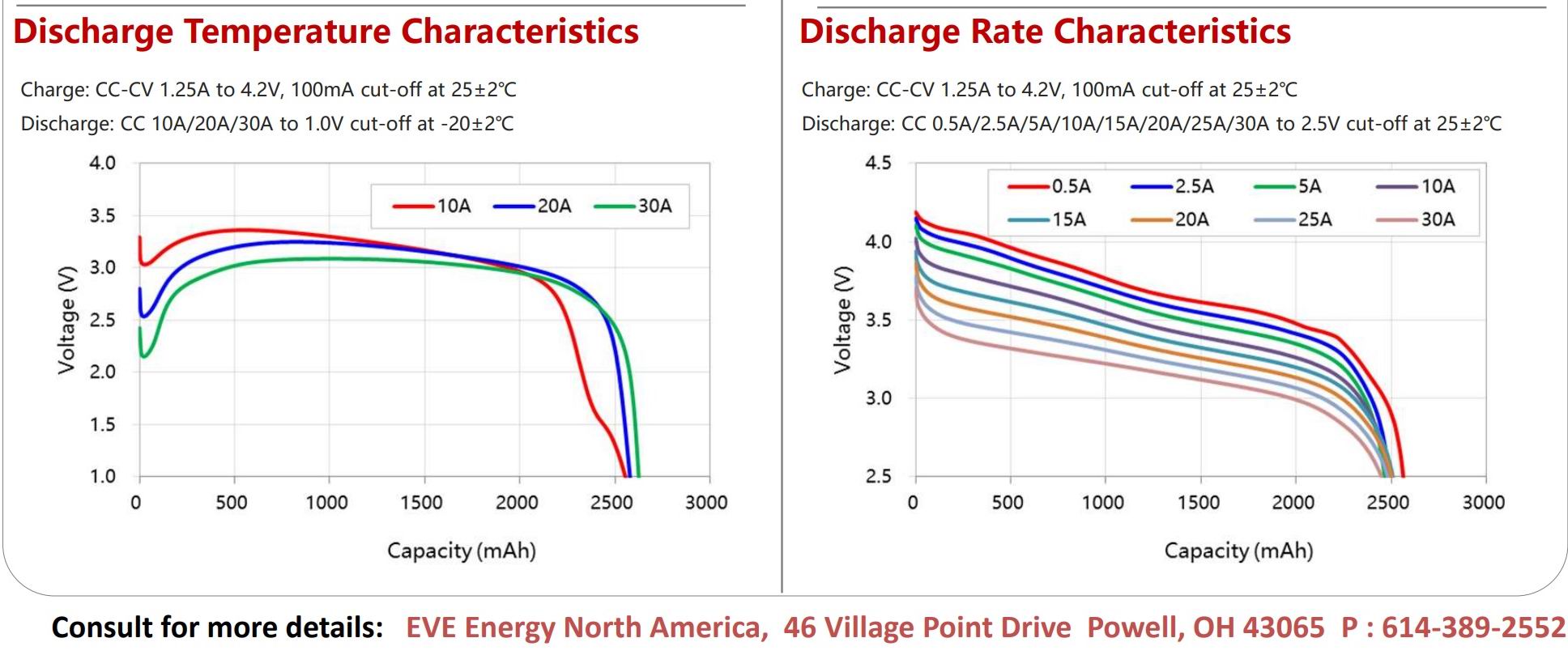
As for discharge current, the manufacturer specifies a maximum continuous current of 30 A and even provides a graph showing a test at that current.
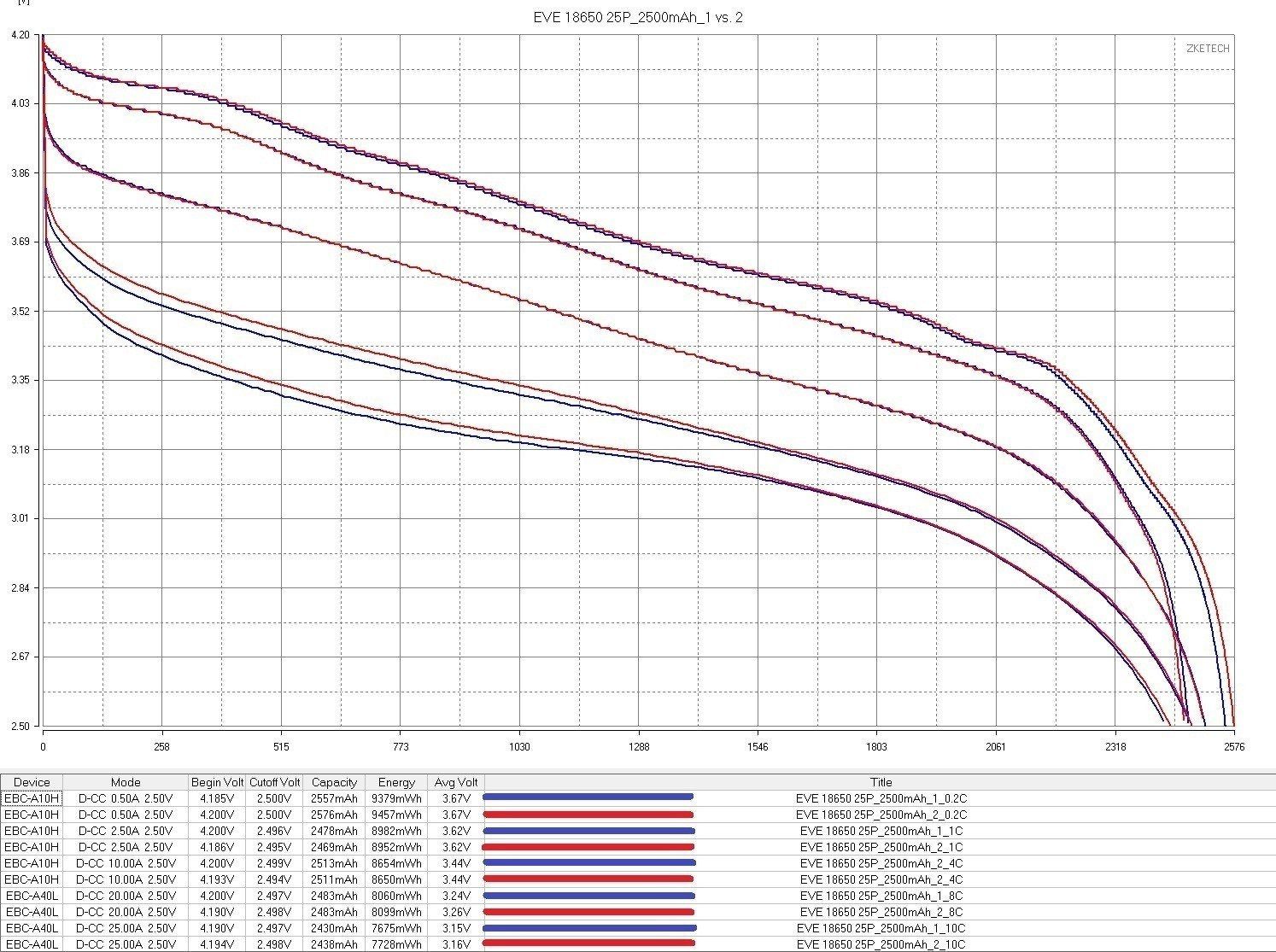
I tested them at the same rates: 0.2, 0.5, 1, 2, 4, 6, 8, and 10C. I ran into some difficulties at 12C, or 30 A.
The cell delivers its rated capacity without any trouble at both 0.2C and 0.5C. No complaints there.
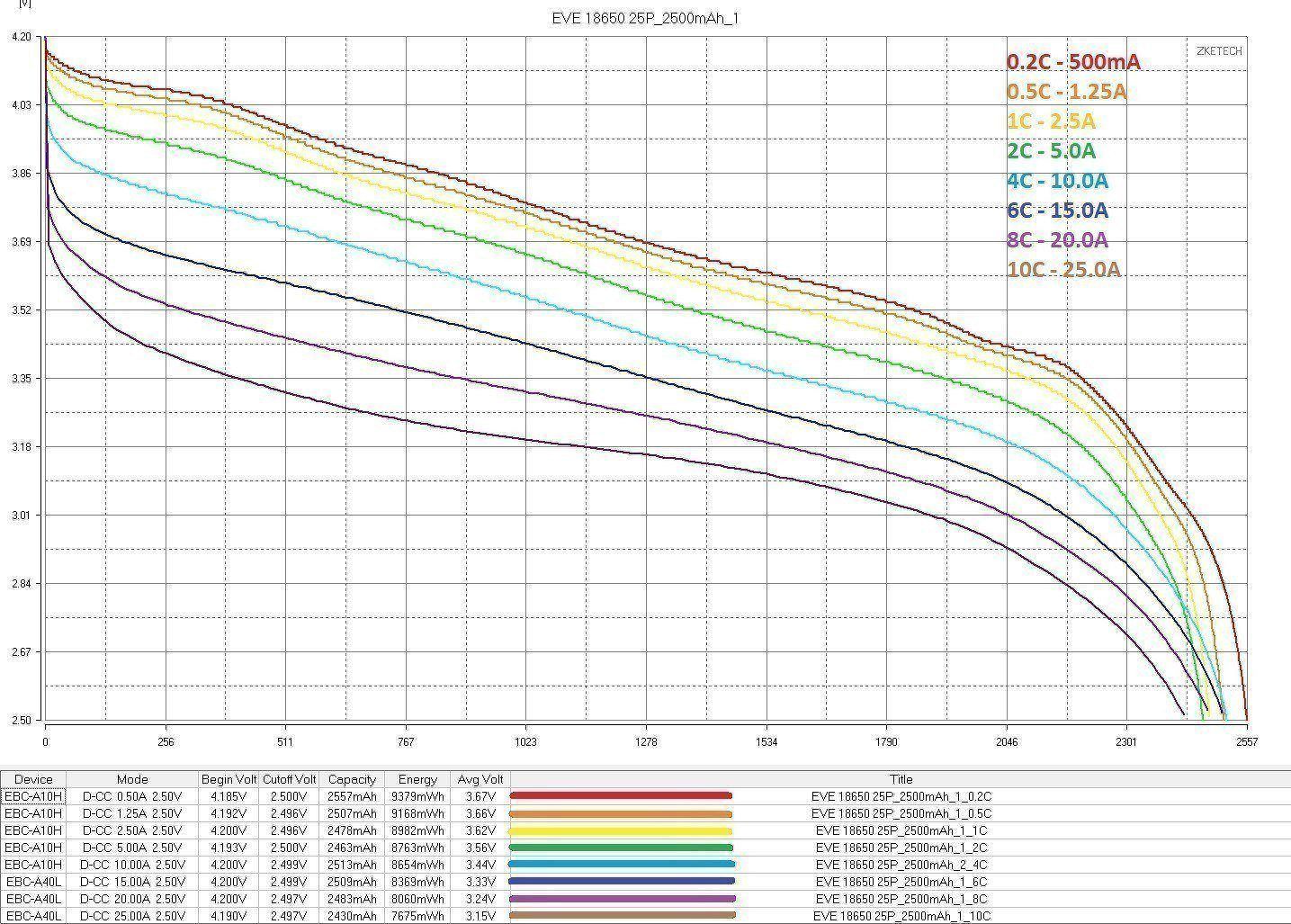
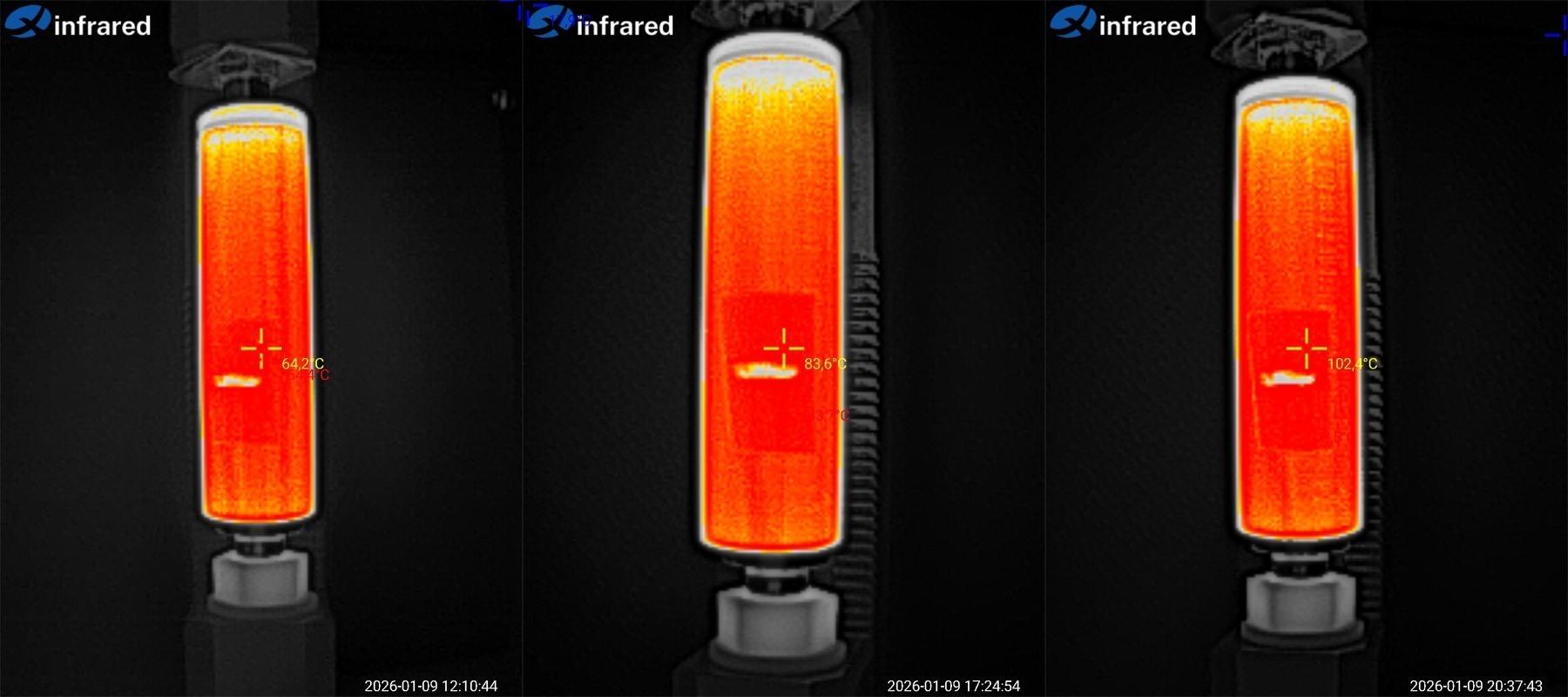
But there are some issues with heat. Below are the results at 6, 8, and 10C, or 15, 20, and 25 A, respectively. Since the cell had already heated up to over 100°C at 25 A, I decided not to run the test at 30 A for obvious reasons.
The actual safe continuous current for these cells is probably around 20 A, provided they aren’t packed tightly together or are given additional cooling.
The second sample performed more or less the same.
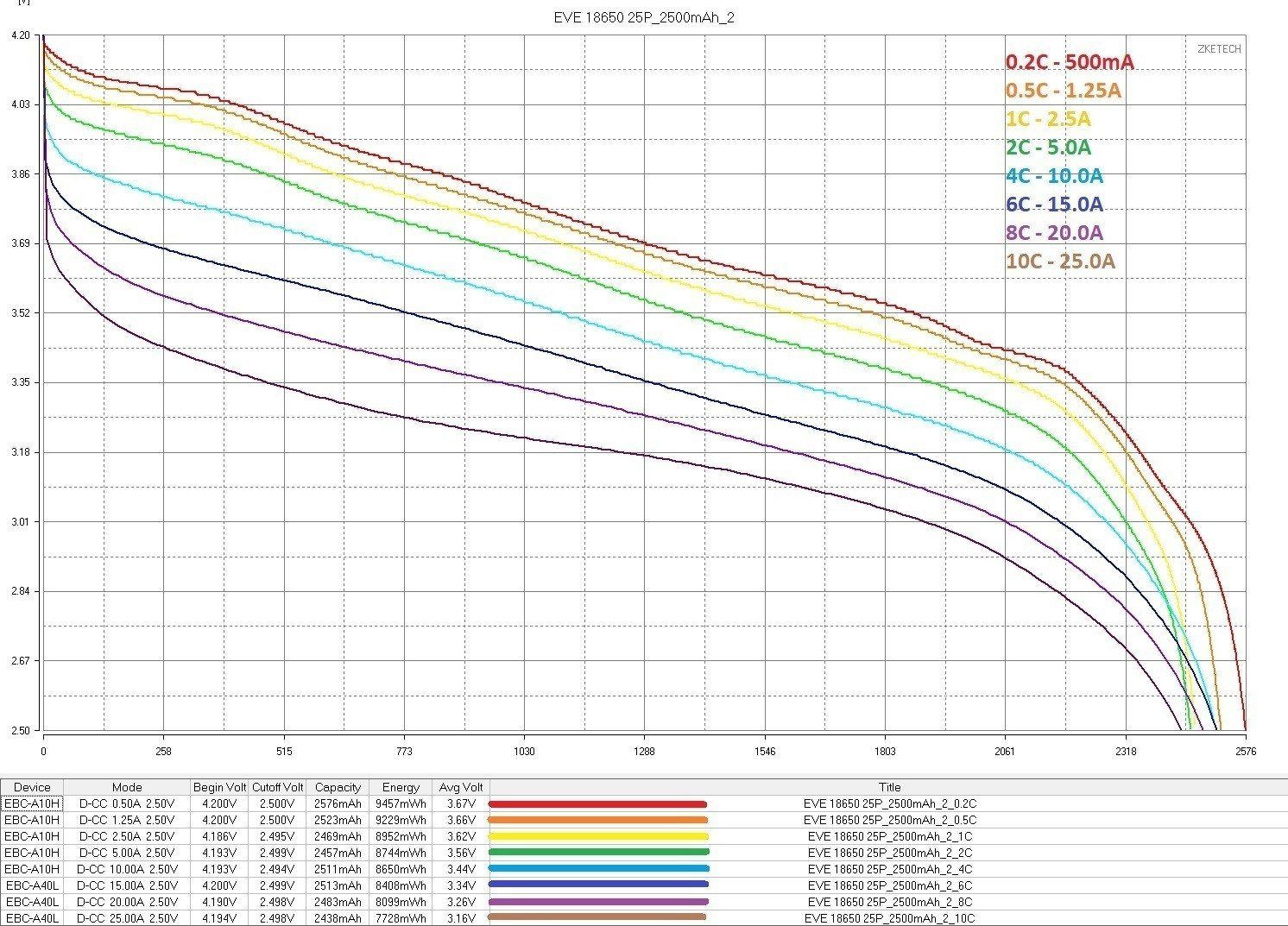
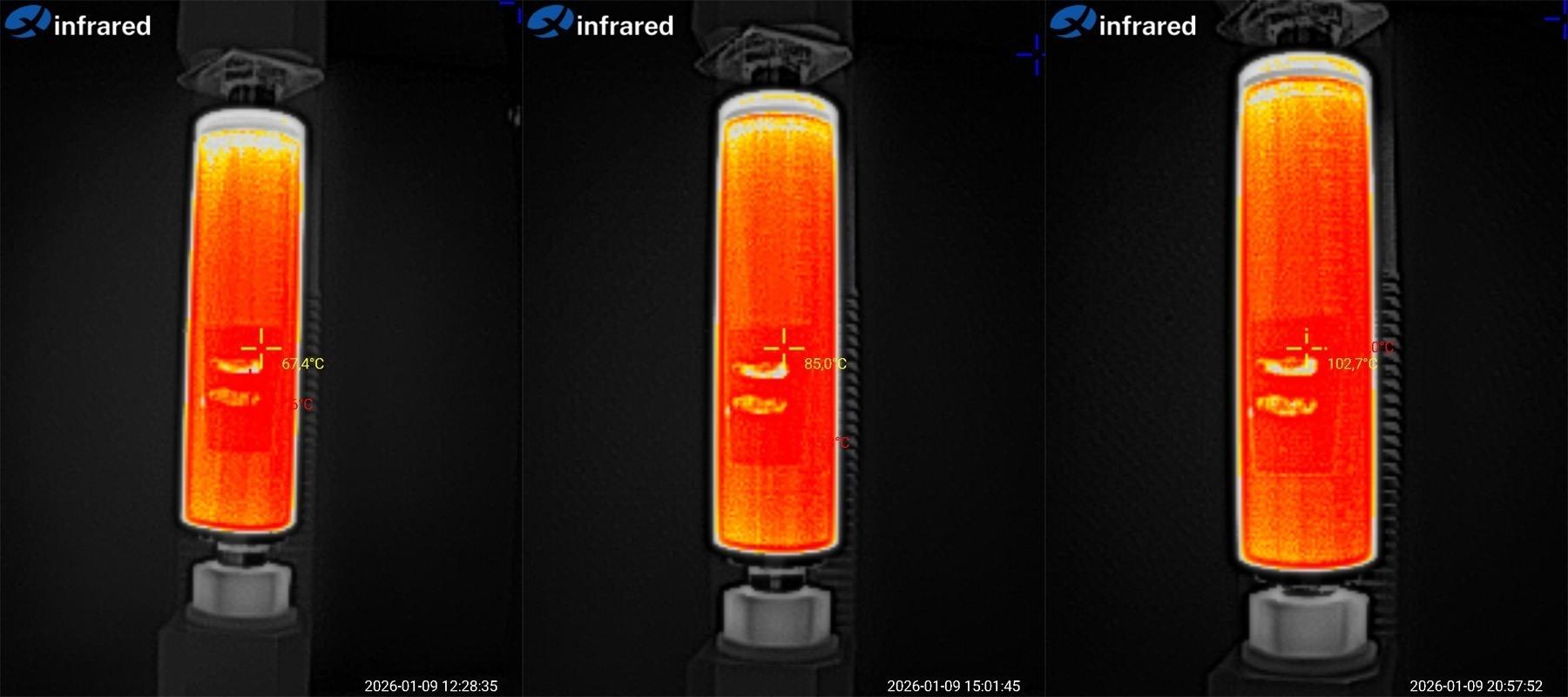
As usual, I checked that the test results for the two cells matched. Here are the results at 0.2, 1, 4, and 10C.
There was a noticeable difference at currents above 10–15 A, so I think the results are fine.
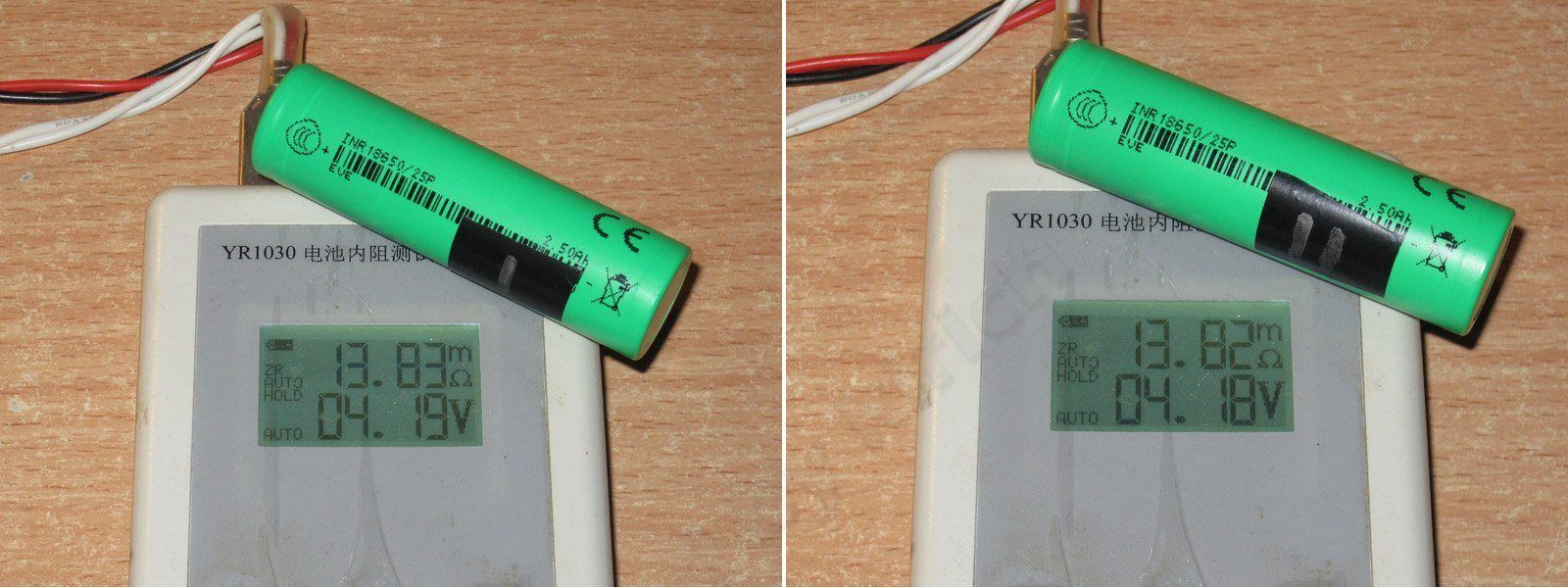
I measured the cell impedance right after receiving them and again after all the tests, but I think the final reading is the one worth looking at. By the way, the initial impedance was often slightly higher than after testing and a full charge. I think this is probably because the batteries arrive at around 30% charge.
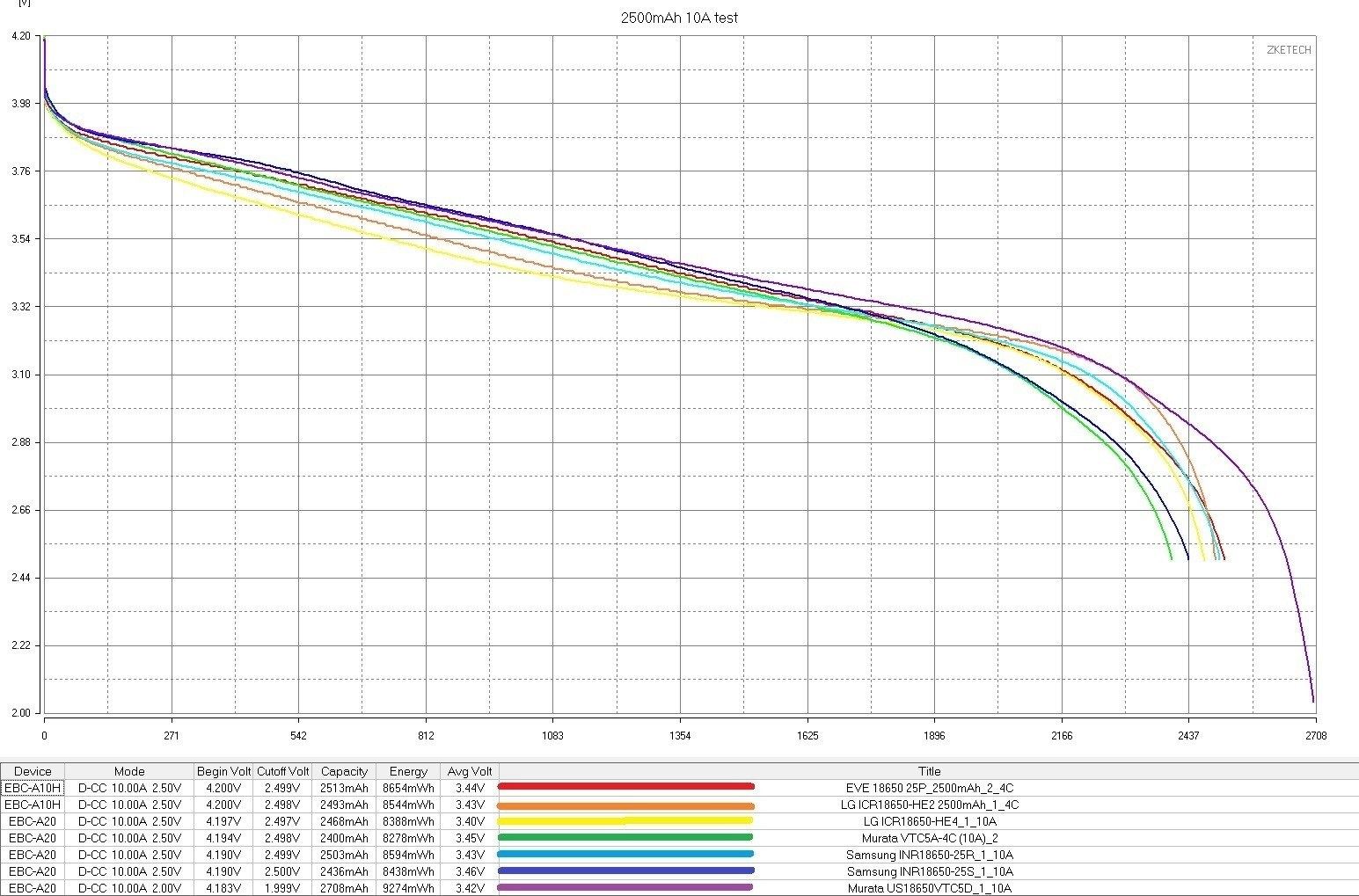
I decided to compare these cells with some other fairly well-known models:
1. The ones under review
2. LG ICR18650-HE2 2500mAh - review
3. LG ICR18650-HE4 - review
4. Murata US18650-VTC5A - review
5. Samsung INR18650-25R - review
6. Samsung INR18650-25S - review
7. Murata US18650-VTC5D - review
First, at 10 A. The VTC5D has a slight advantage here, since it can be discharged down to 2 V.
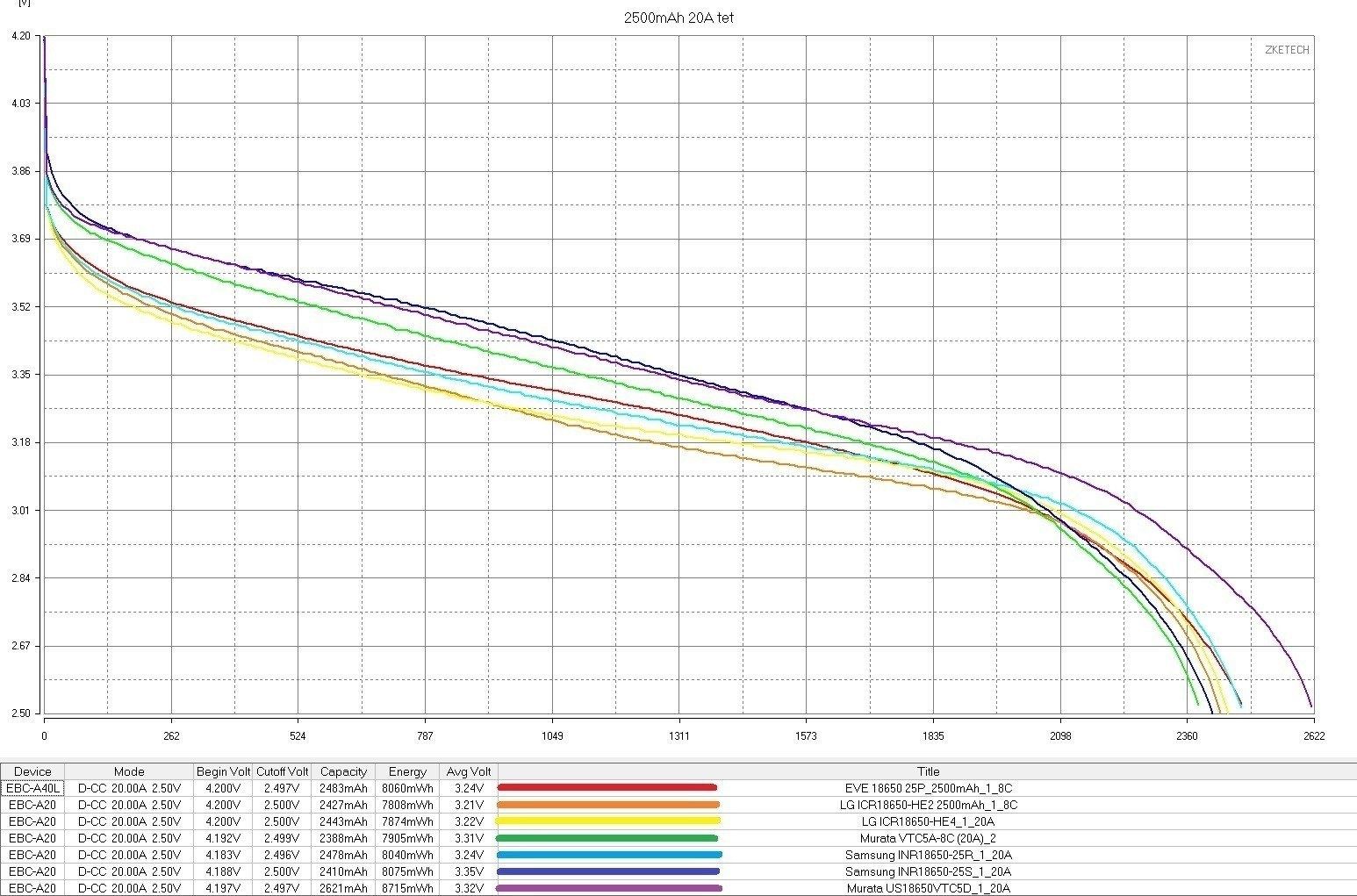
And at 20 A, which I think makes for a more useful comparison, especially since all the cells are on equal footing here.
The cells under review are somewhere in the middle in terms of average voltage. Their capacity in Ah is almost the best of all the cells compared, but their capacity in Wh is slightly above average.
Second pair, EVE 18650 26V_2550mAh - link
These cells are positioned more as budget models, since price is the only thing that sets them apart. The tests will make that clear.
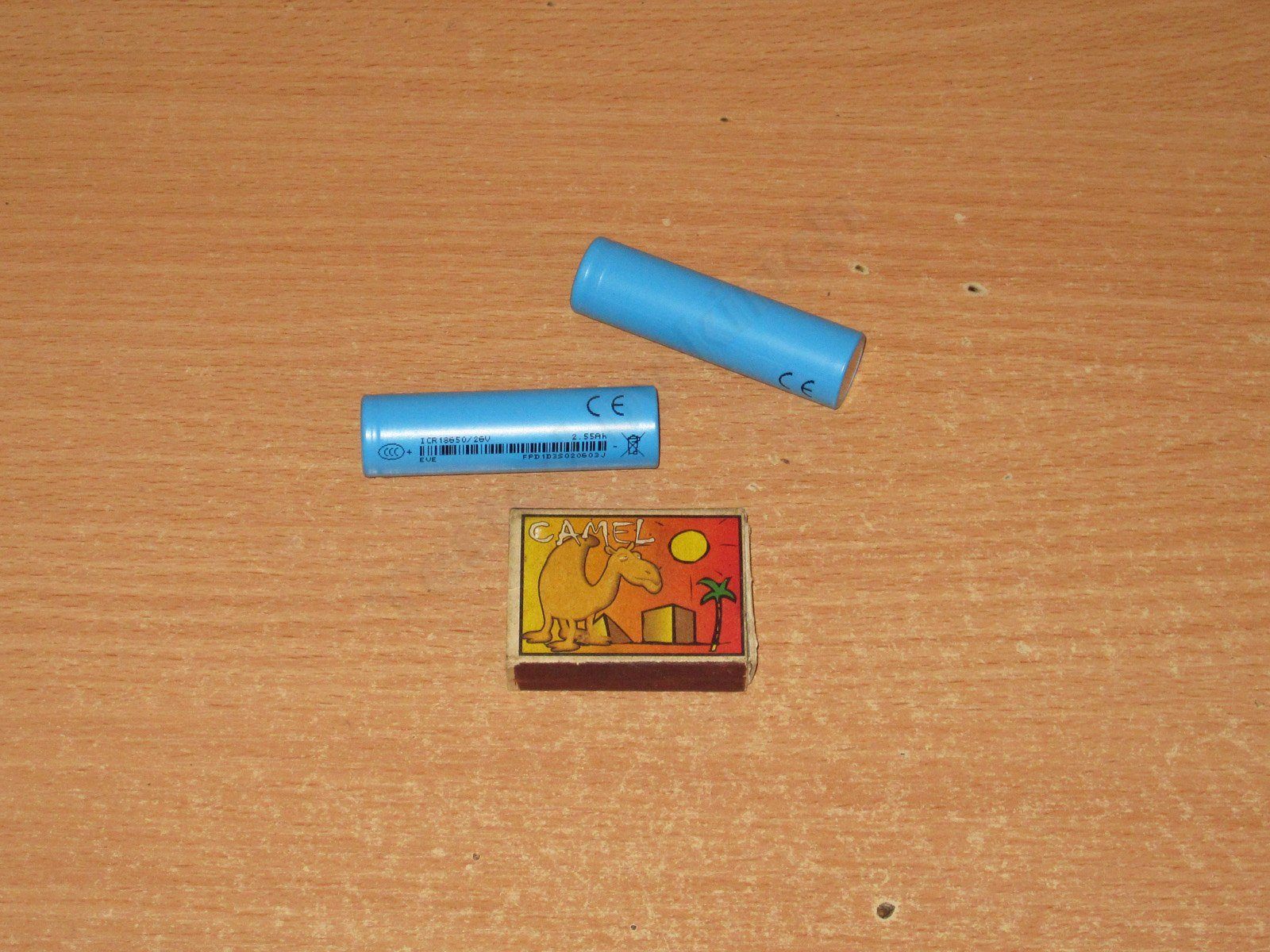
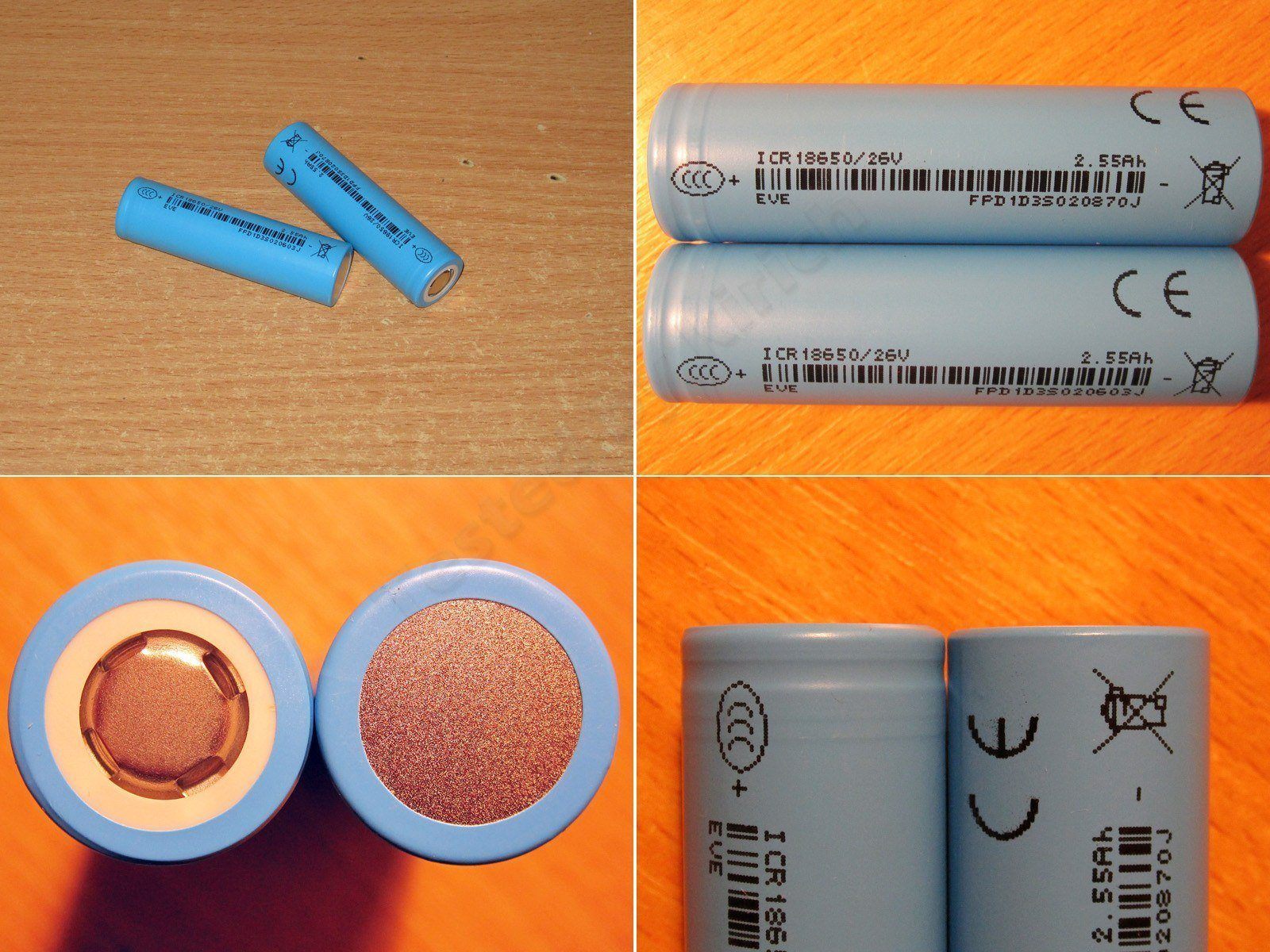
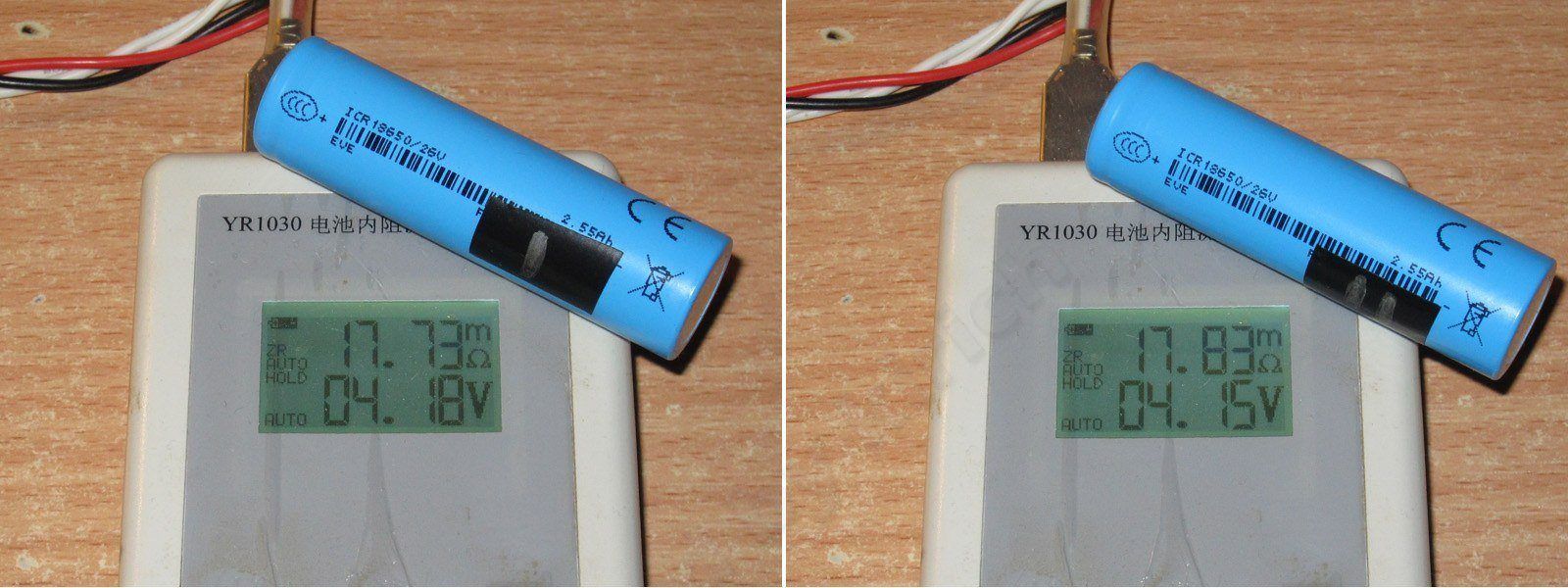
The heat-shrink wrap is blue. Without the camera flash, the camera's white balance went completely haywire; the first photo shows the correct color.
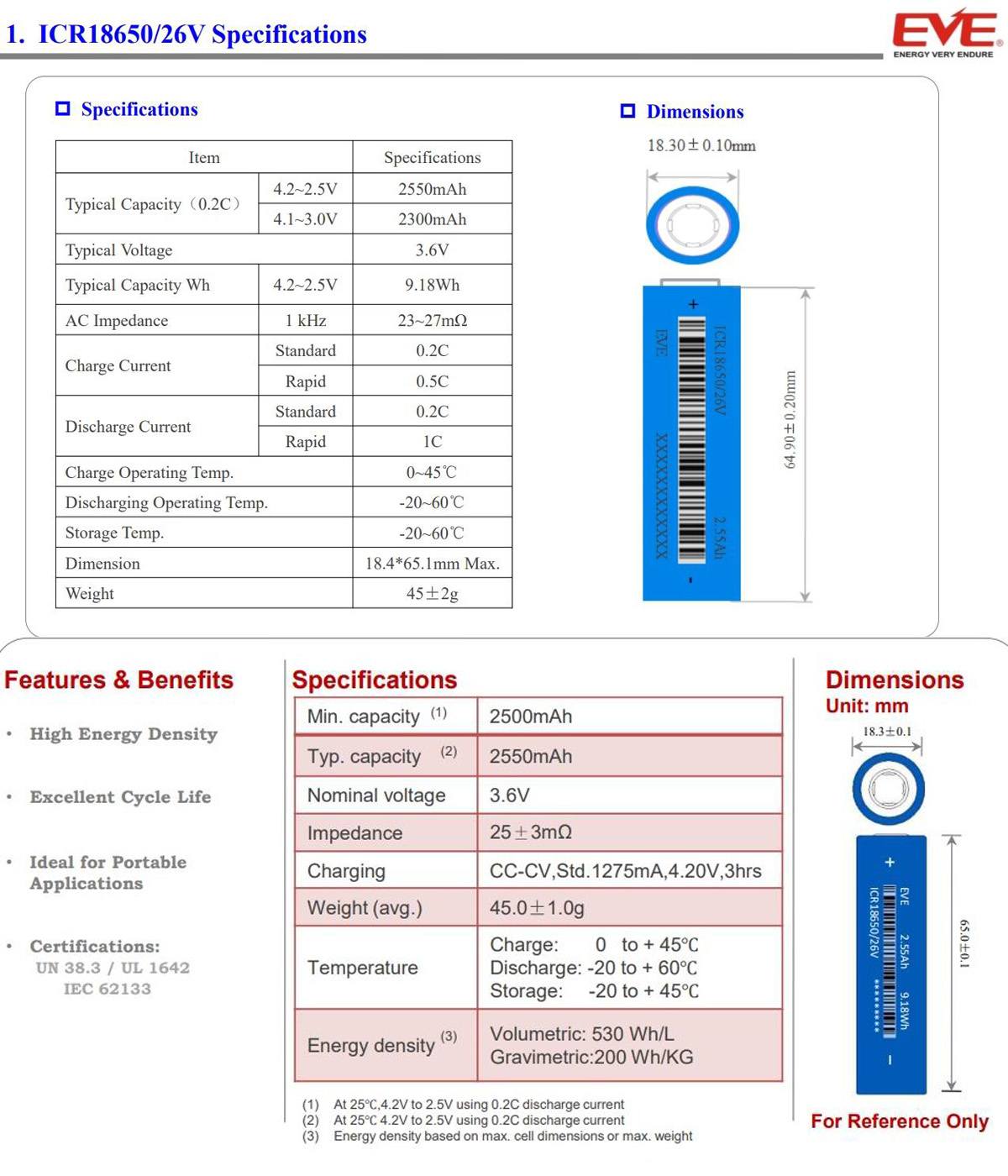
Note that although the model code suggests a capacity of 2600mAh, the actual capacity is 2550mAh.
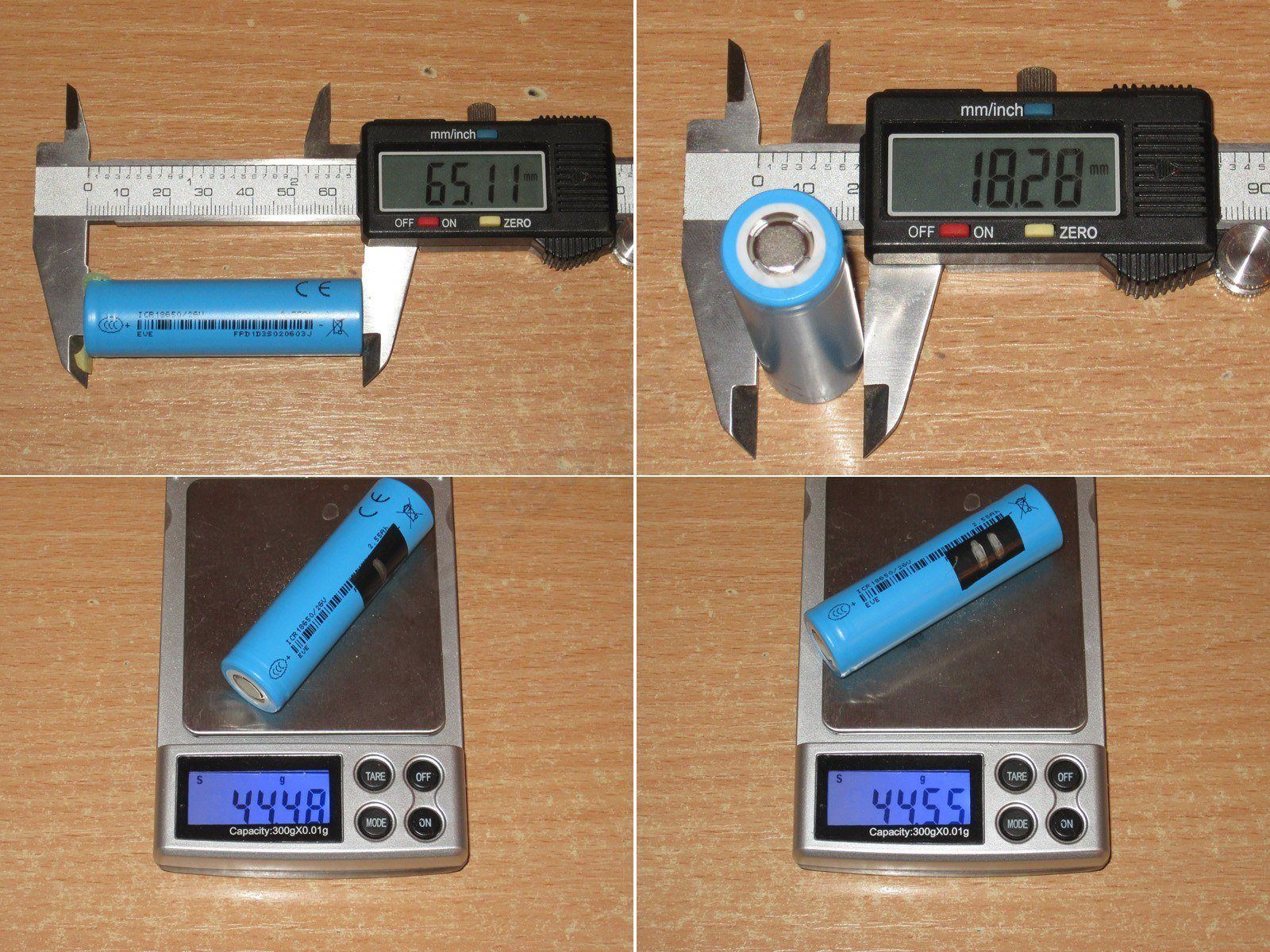
Cell dimensions and weight.
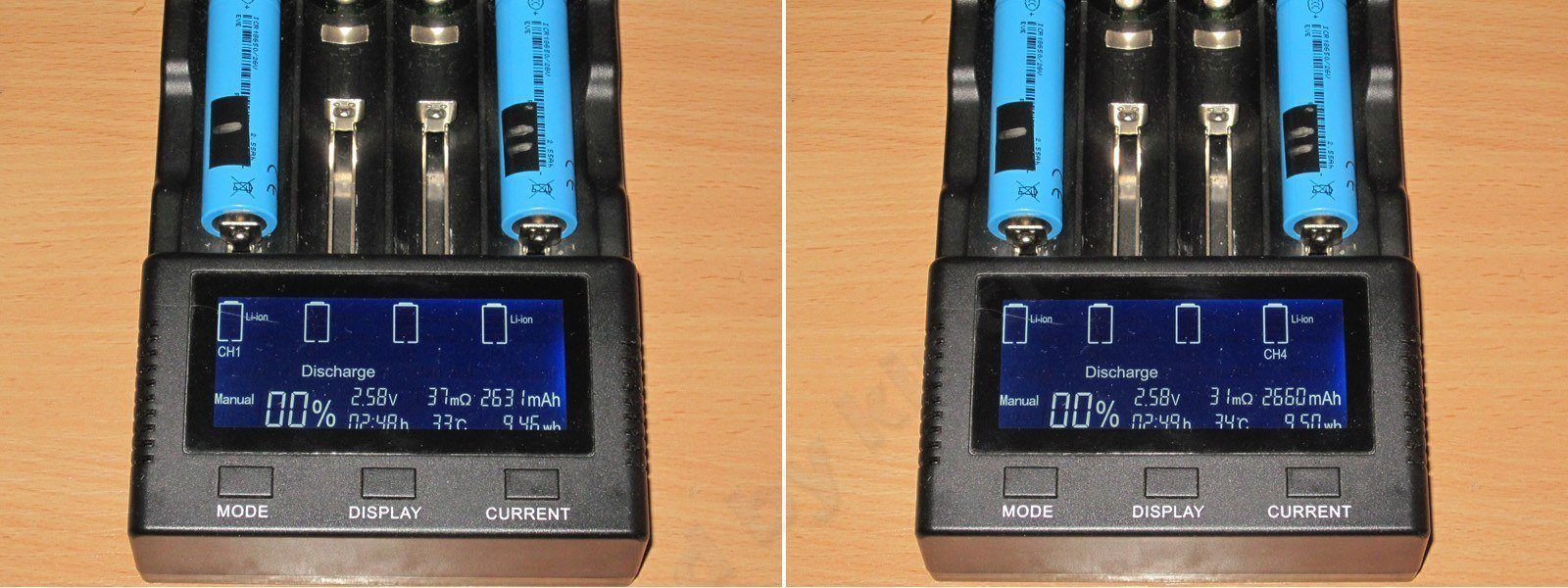
The first charge took 1640mAh, and I got about 2650mAh at a current of 1 A.
There was quite a bit of inconsistency in the recommended charging currents. One datasheet listed standard/fast charging as 0.2C and 0.5C; another specified 0.5C for standard charging; and a third gave 0.2C and 1C.
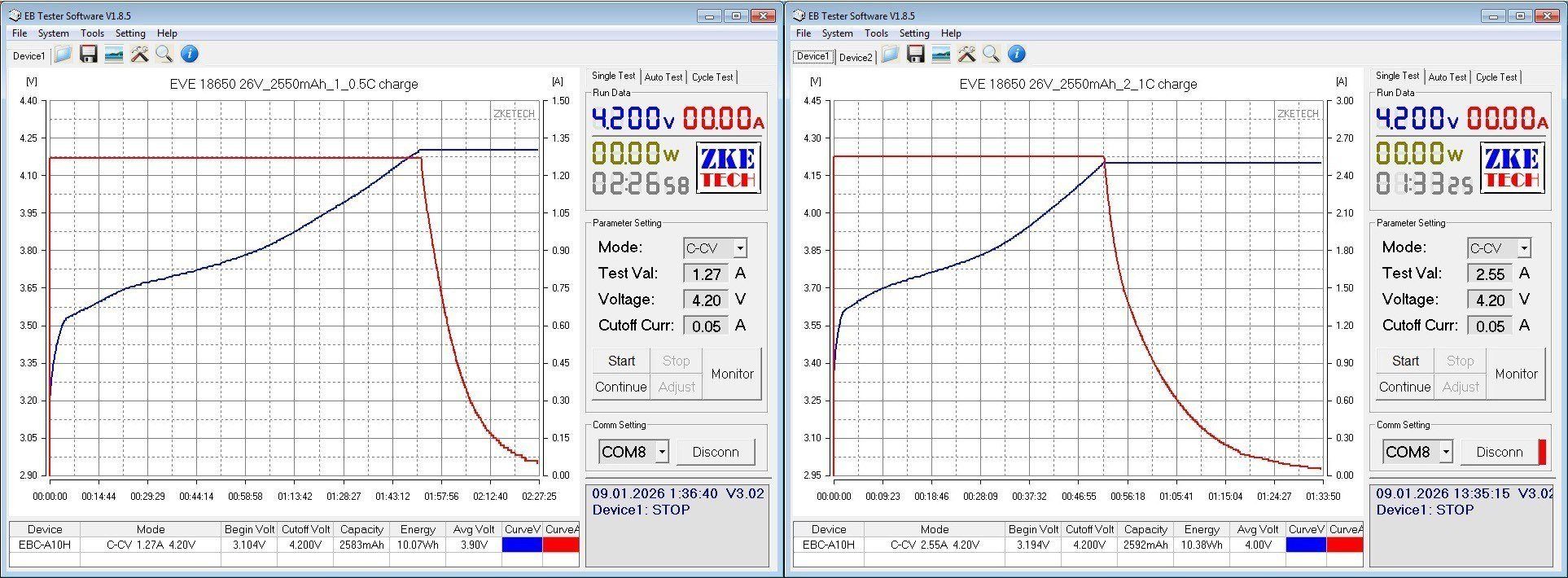
In the end, I decided that 0.2C was just too slow and tested at 0.5C and 1C.
At 0.5C, charging took 2 hours and 27 minutes; at 1C, it took over an hour and a half, which seems like a lot to me. Charging at 0.2C probably isn't worth it, but 0.4–0.5C is perfectly fine for these batteries.
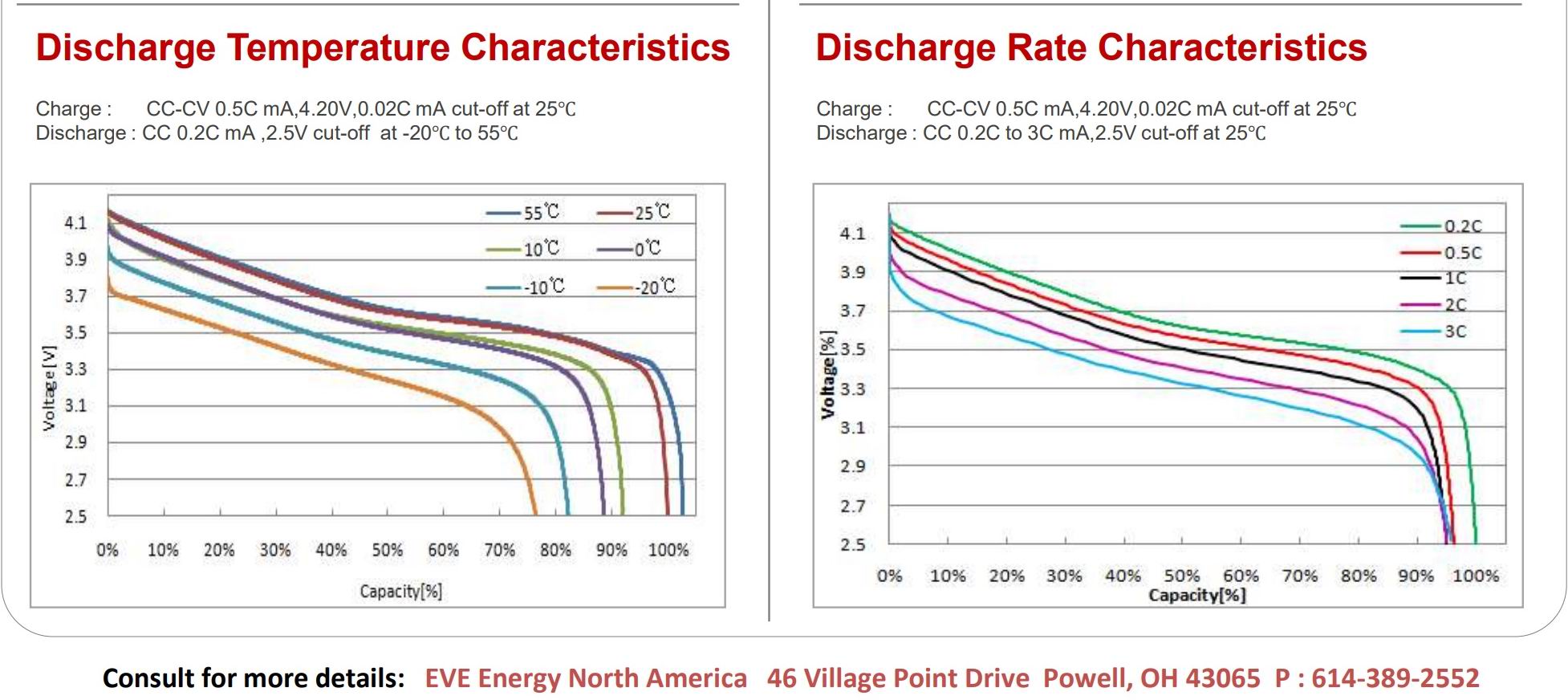
The discharge current recommendations are inconsistent too: one source says 1C maximum, another says 3C, while the graphs everywhere show currents up to 3C.
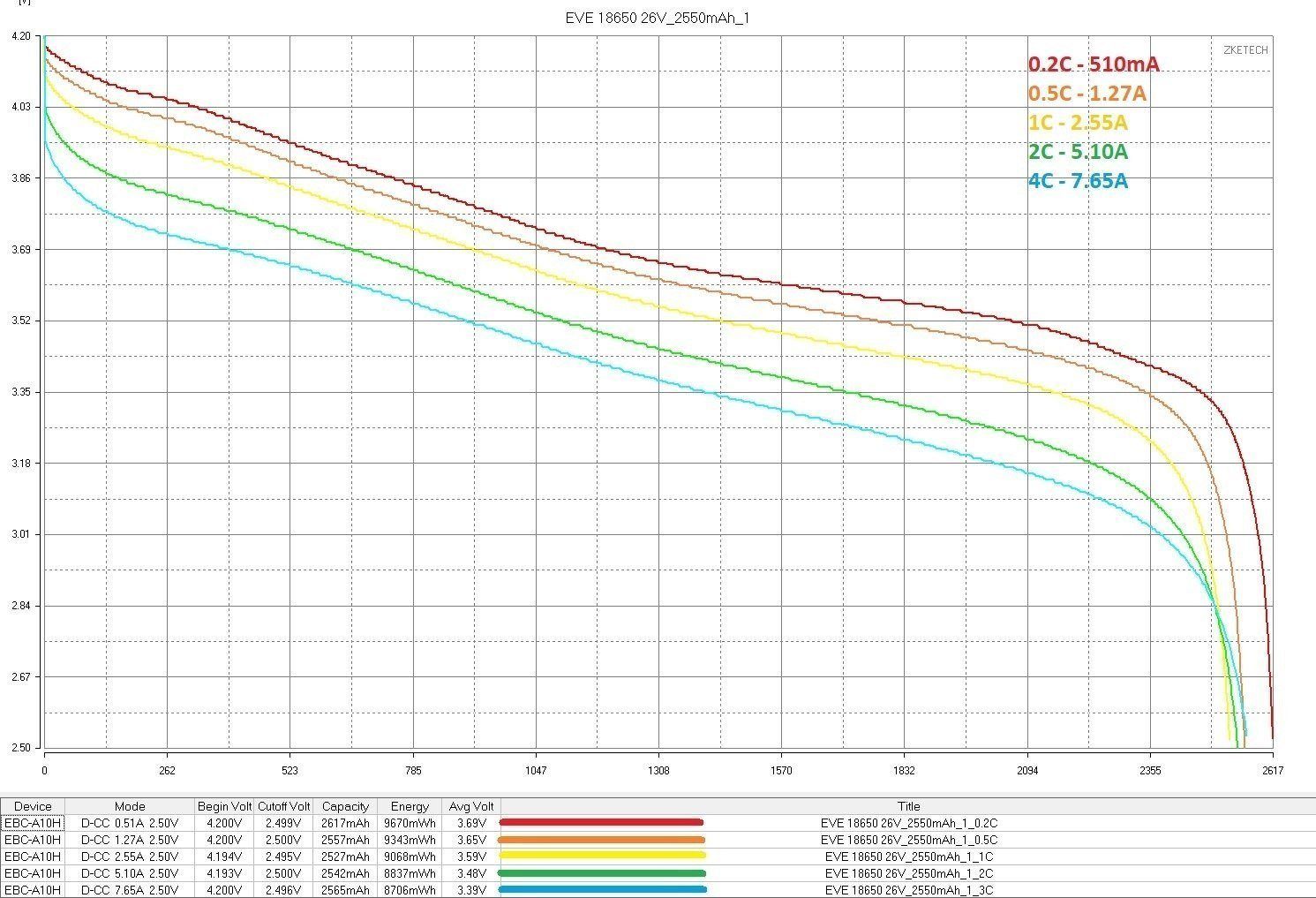
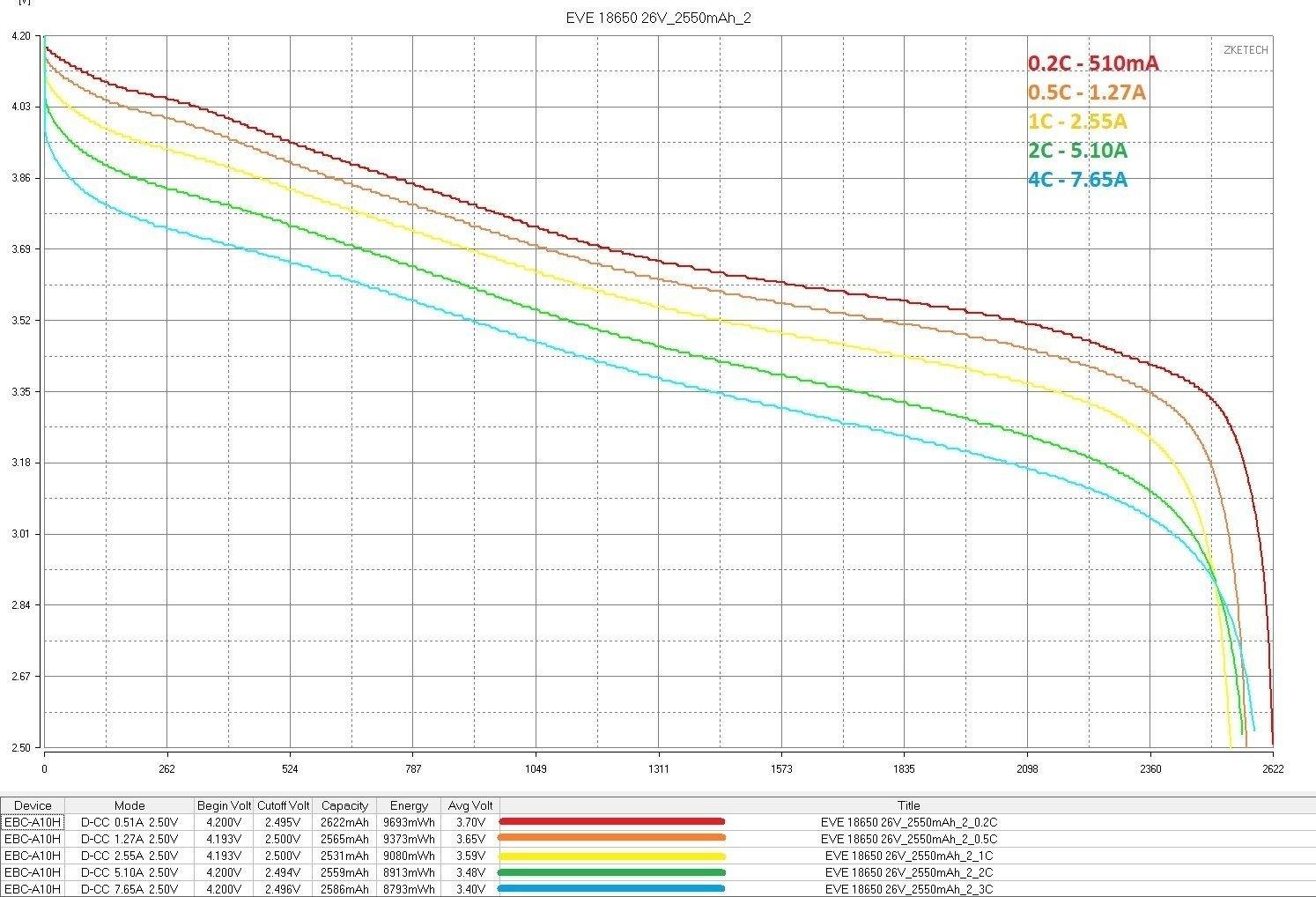
I tested at 0.2C, 0.5C, 1C, 2C, and 3C (the graph has a typo: it says 4C instead of 3C).
At 0.2C, the cells deliver 2600mAh; at 0.5C, 2550mAh. No complaints here.
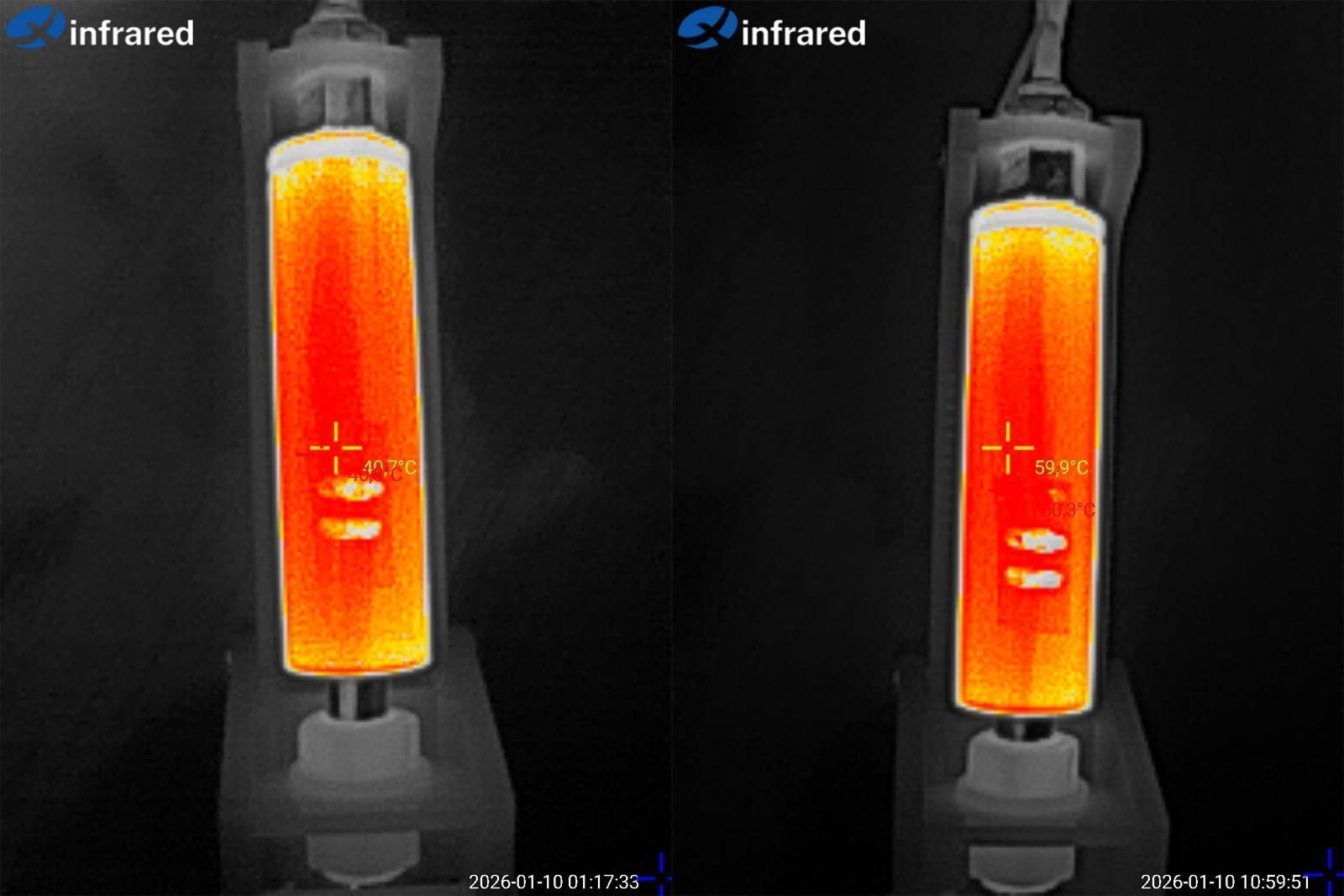
Heating at 2C and 3C. Considering that these cells clearly aren't designed for high discharge currents, the results are perfectly reasonable.
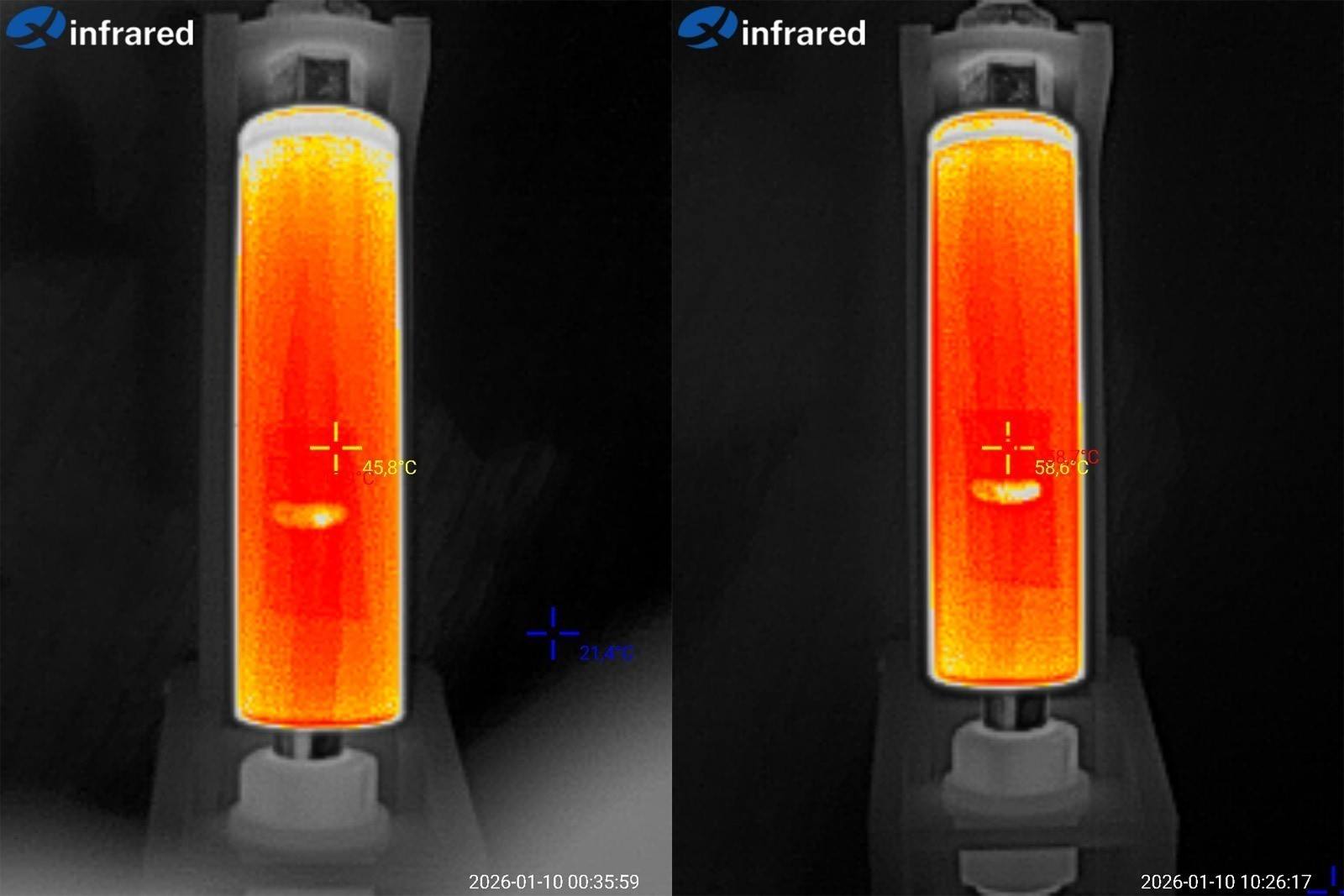
The second sample produced comparable results.
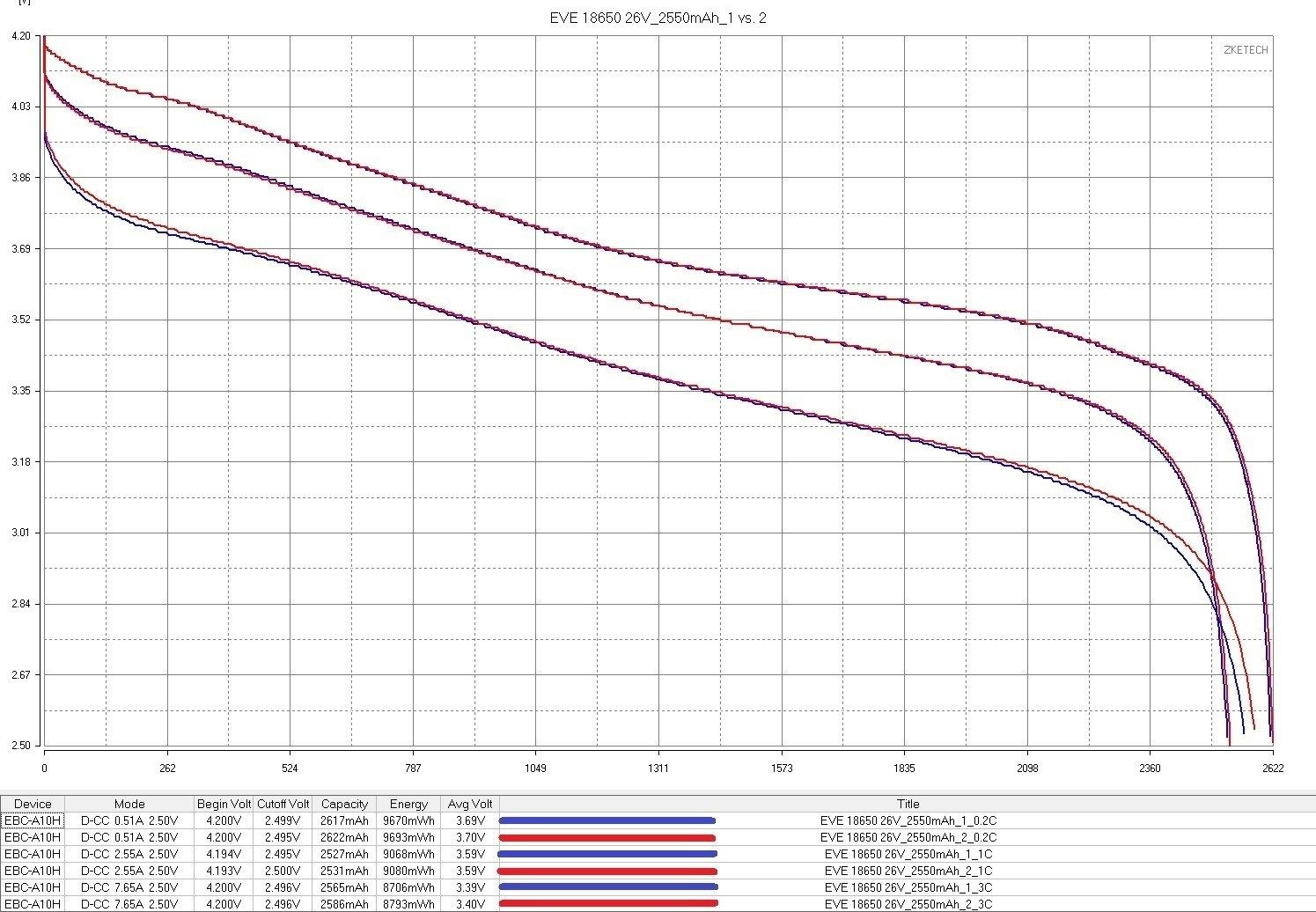
A consistency test at 0.2C, 1C, and 3C showed no issues either. These are perfectly decent cells for battery packs.
Impedance after testing was about 17.8mΩ, which is perfectly reasonable for the stated specifications. The datasheet actually gives about 25mΩ.
Third pair, EVE 18650 33V_3200mAh - link
These can be considered high-capacity cells, although there are cells with comparable capacity that can handle higher currents. But once again, price makes a big difference.
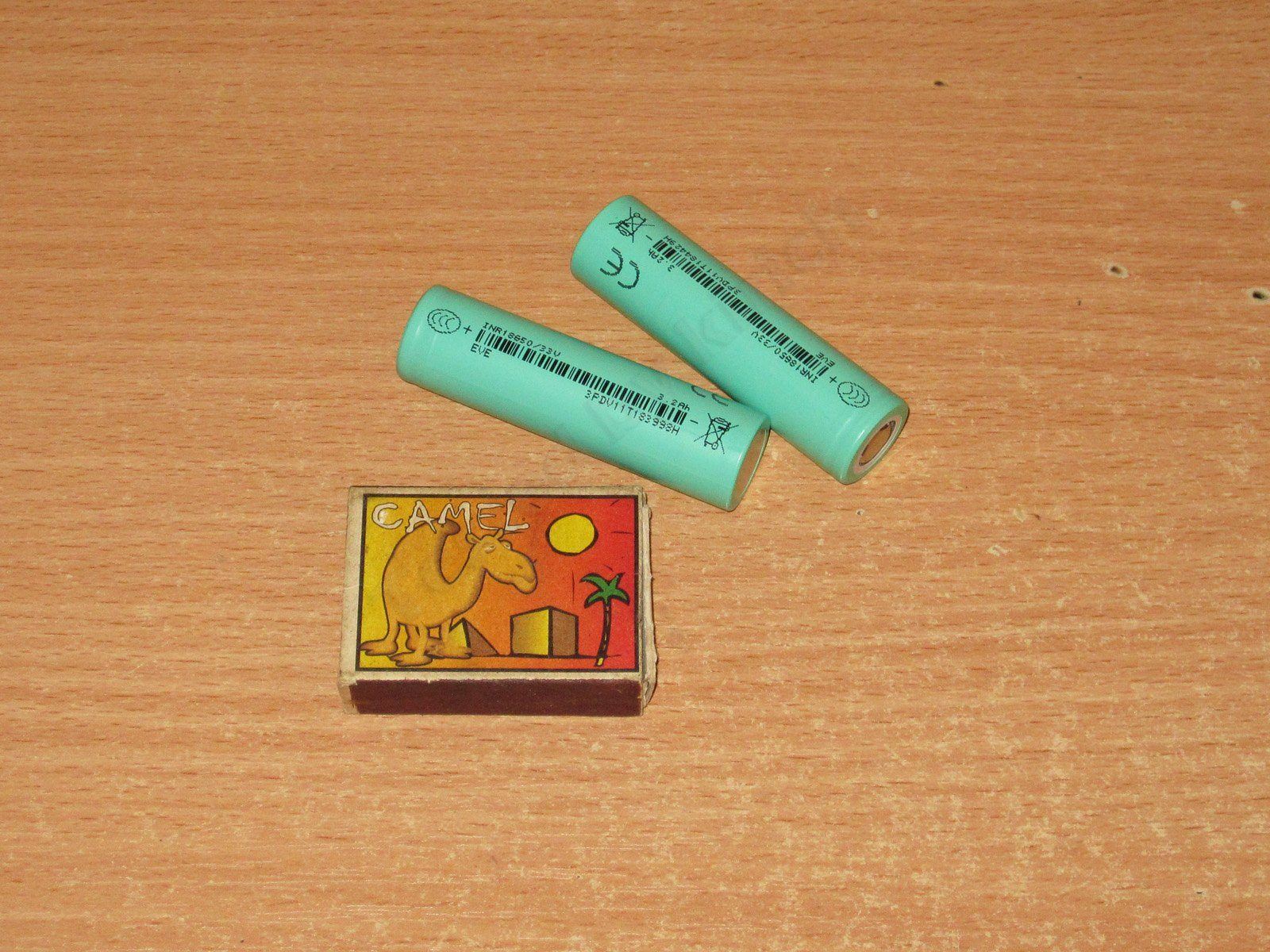
The heat-shrink wrap is light green. The 33 marking on the cells immediately catches the eye, suggesting a capacity of 3300mAh, even though the stated capacity is 3200mAh. Honestly, why write the model number as 33 when it would be simpler to write 32 and avoid confusion?
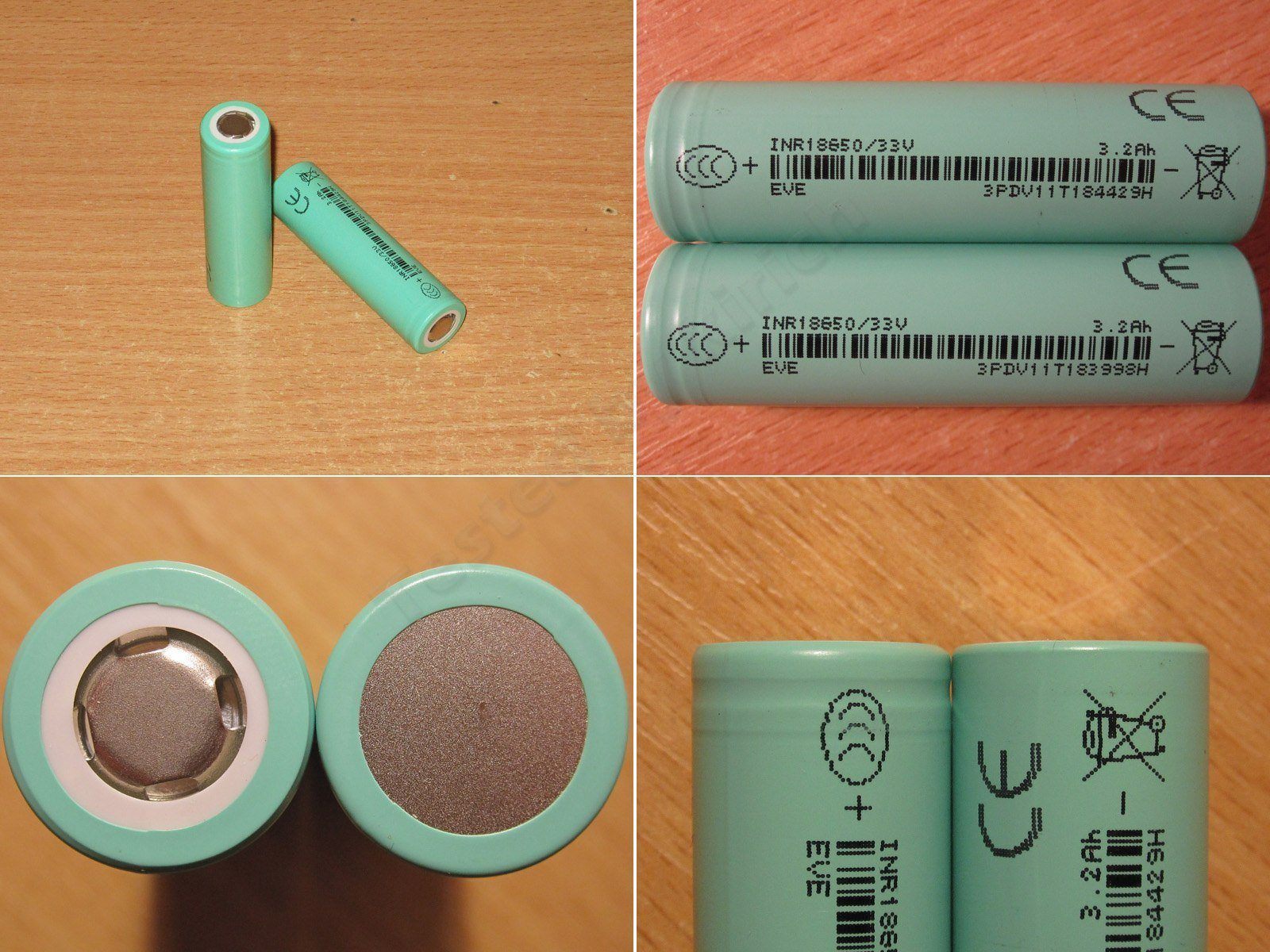
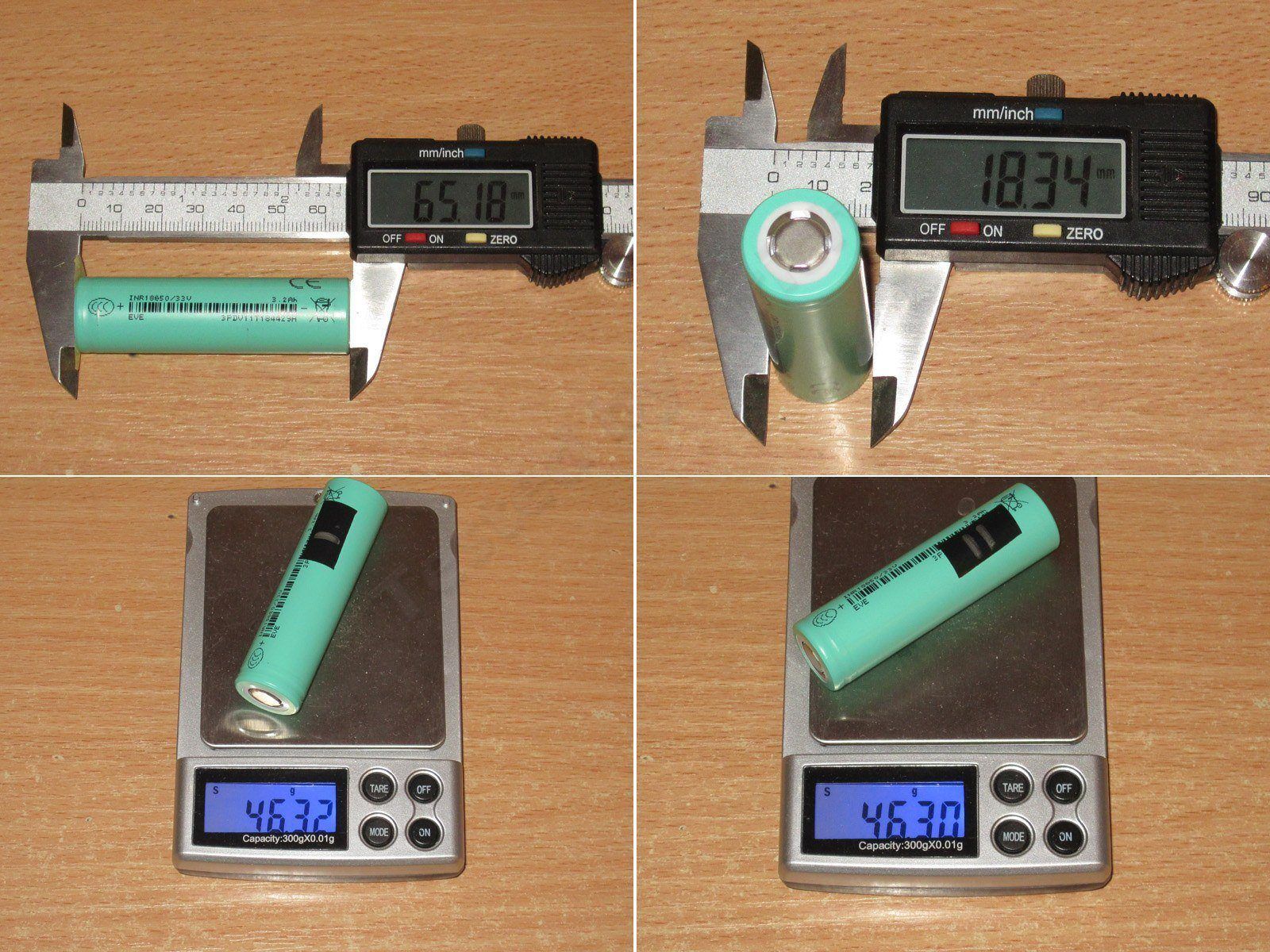
Cell dimensions and weight.
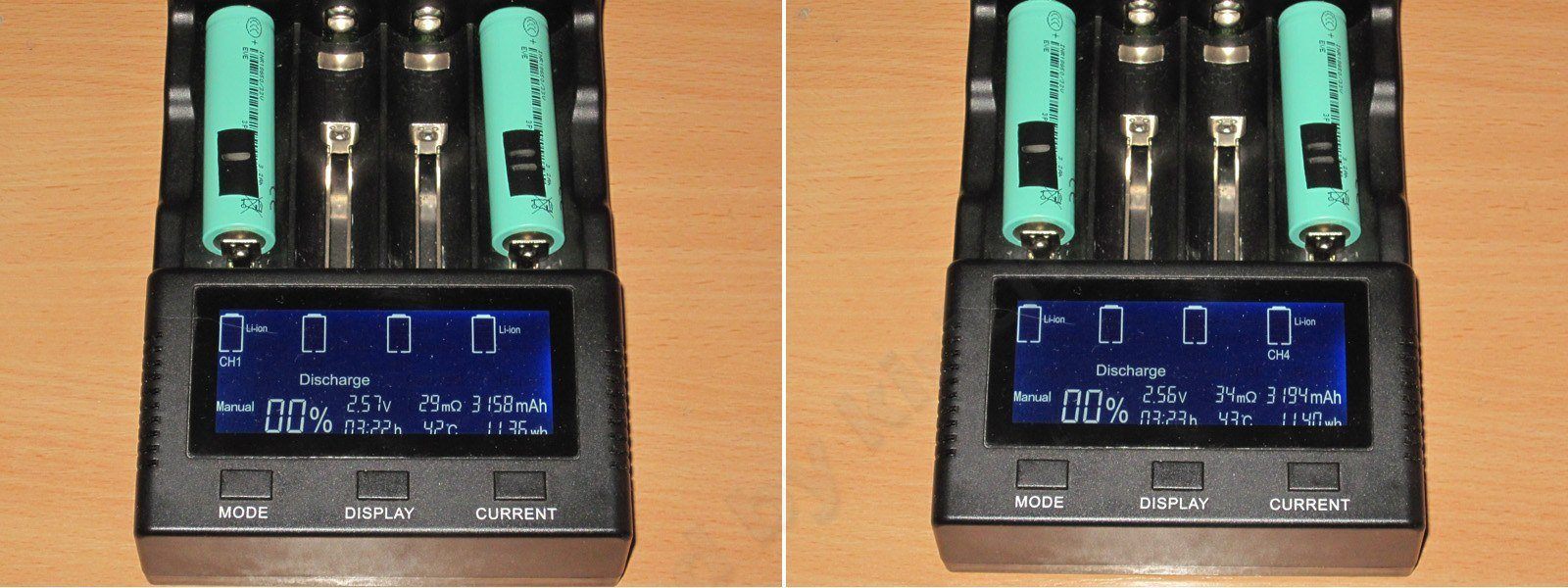
The first charge took about 2550 mAh. The first discharge at 1 A delivered about 3170 mAh. Somehow, I expected more.
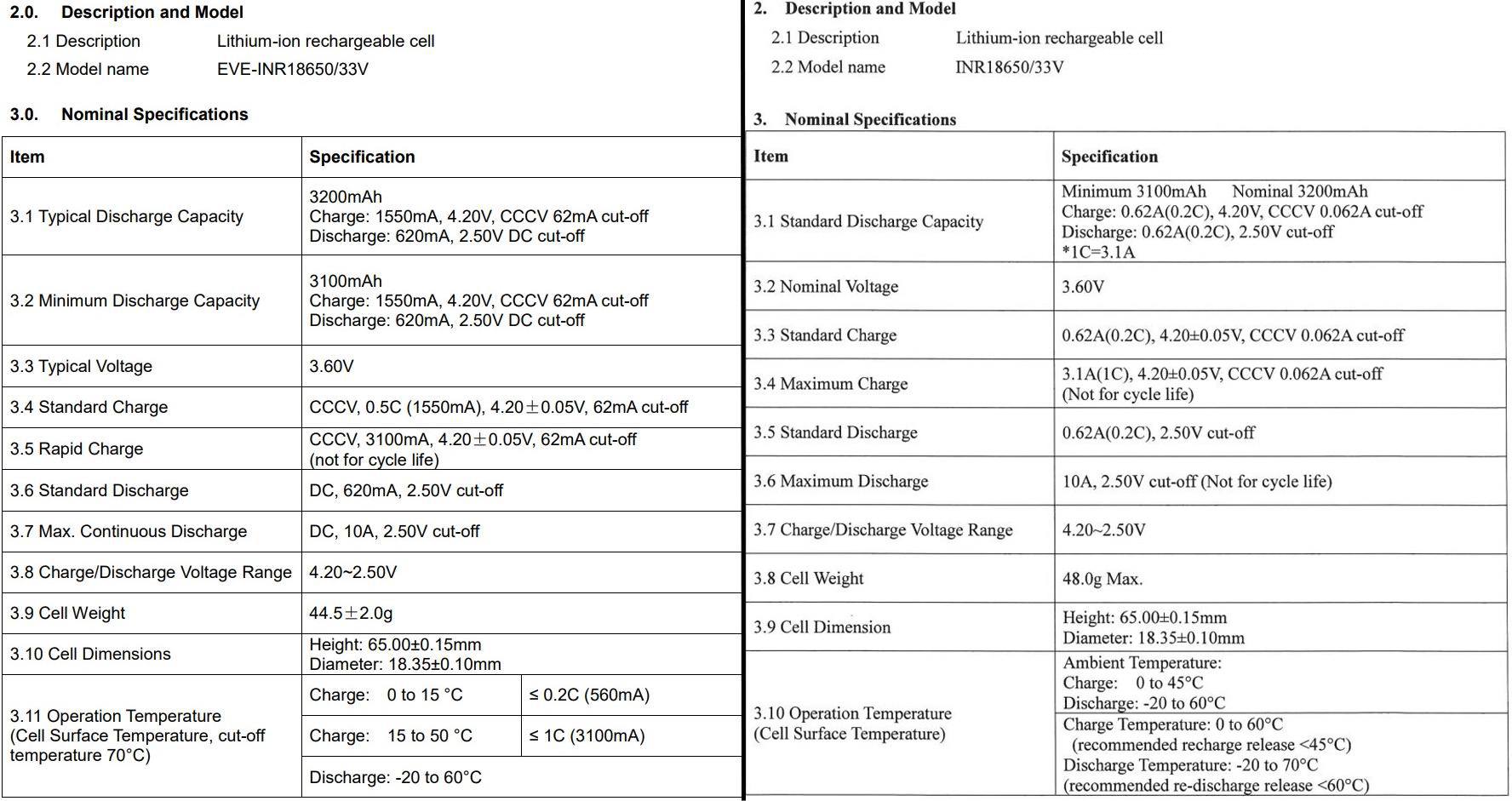
I found two datasheets online: an older one from 2019 and a newer one from 2023, and their specifications and operating modes differ. For example, the older one specifies charging at 0.5C and 1C, while the newer one says 0.2C and 1C. And it’s not just the current—the cell weights differ too: 44.5 g ± 2 in the first datasheet, and “up to 48 g” in the second.
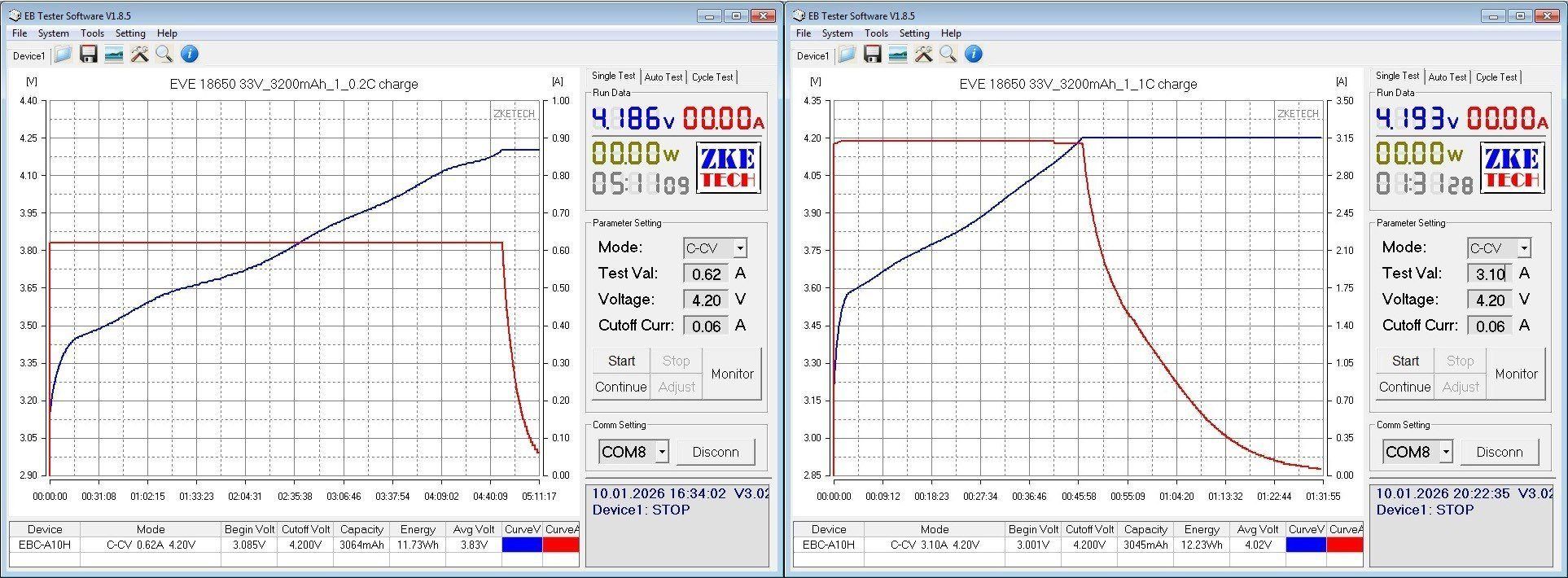
I tested the charging current at 0.2C, 0.5C, and 1C. But unfortunately, while preparing this review, I noticed that the results of the 0.5C test had somehow been lost :(
So let’s see how they perform at 0.2C and 1C, as specified in the newer datasheet.
At 0.2C, it’s no surprise that everything looks good—it’s hard to get poor results at such a low current. But 1C seems a bit high for these cells, in my opinion. Still, the results are similar to those for the previous cells: about an hour and a half.
So my recommendation remains the same: it’s better to charge cells like these at 0.4–0.5C.
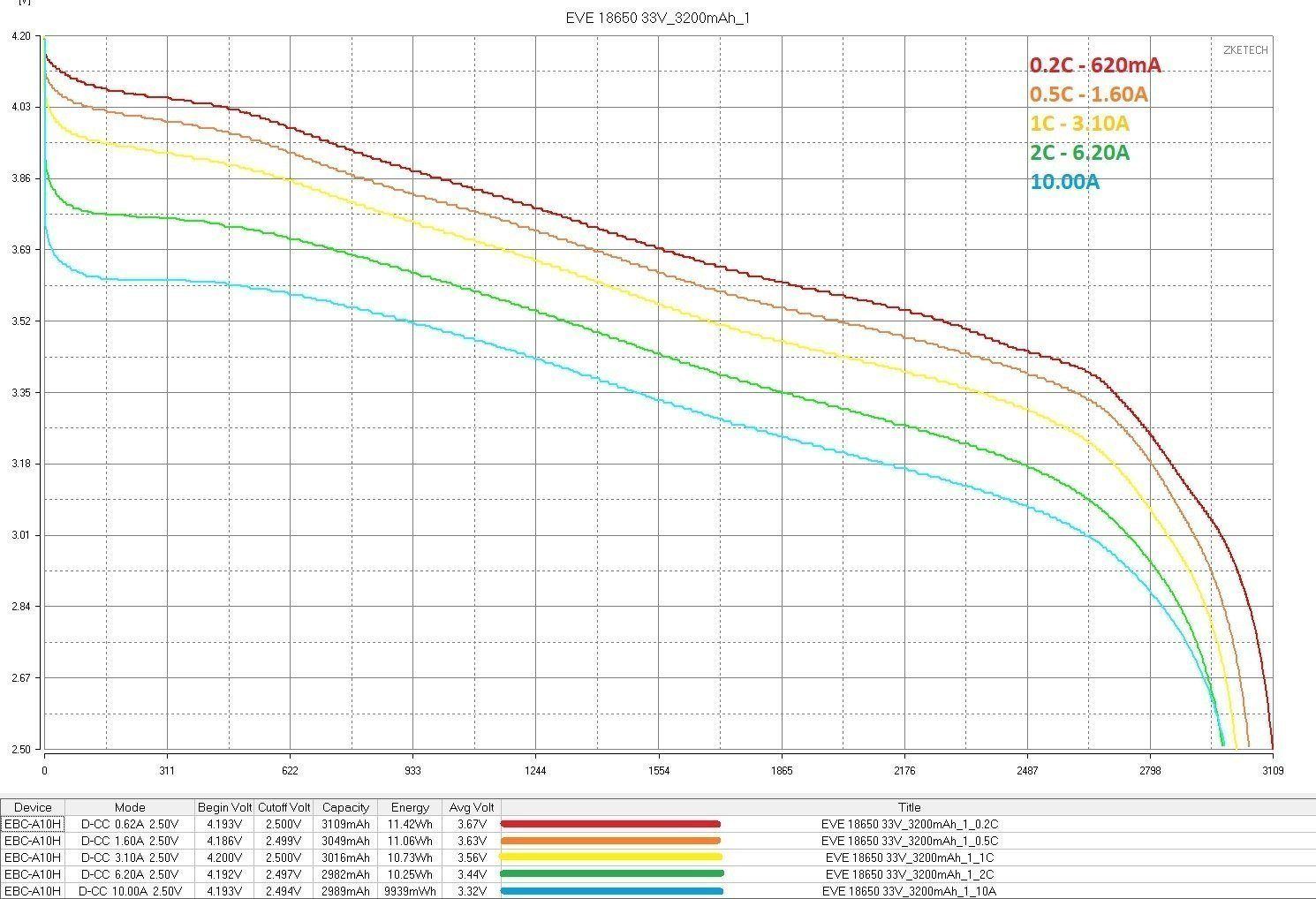
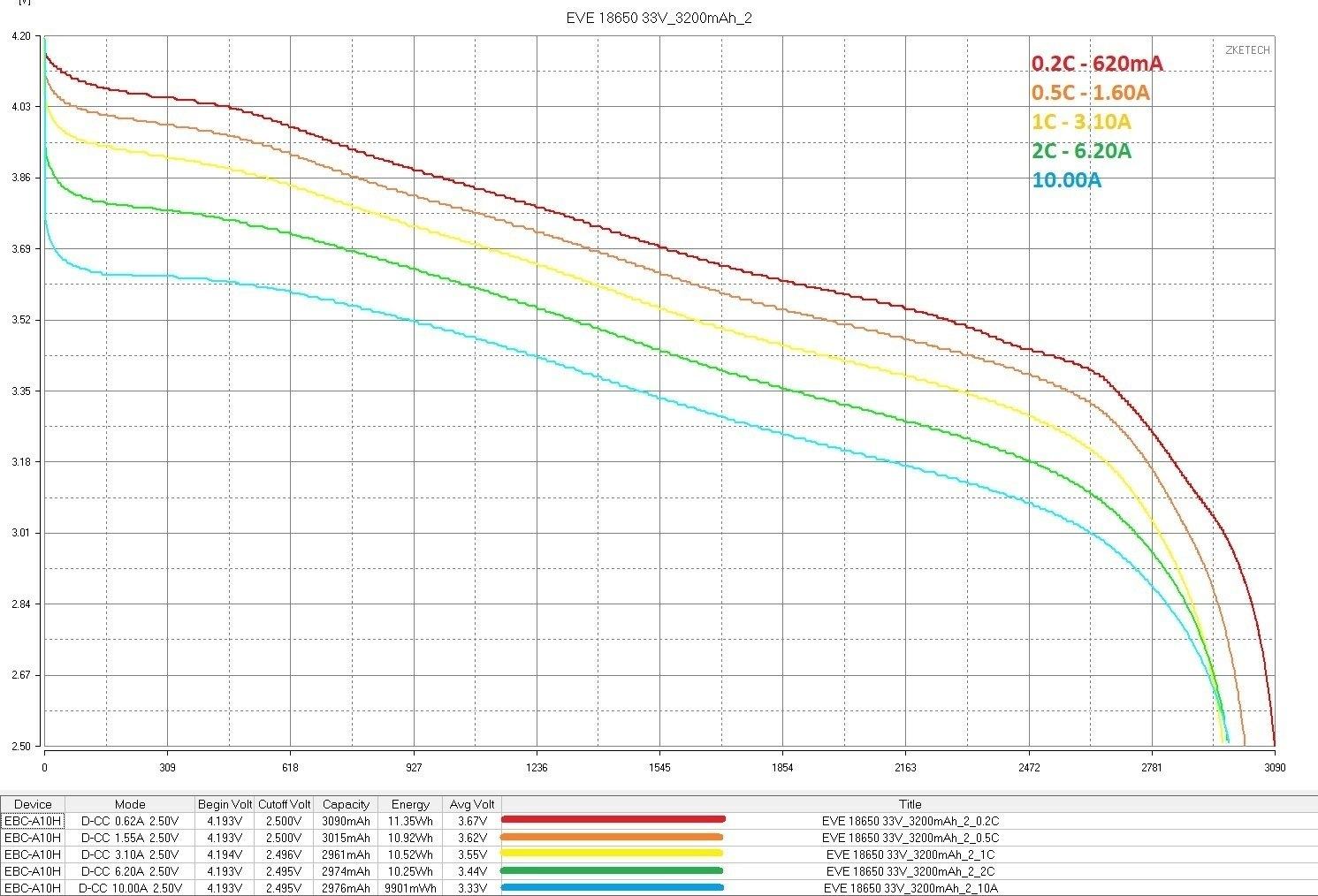
Capacity was measured at 0.2C, 0.5C, 1C, 2C, and 10 A.
The results were roughly in line with those from the “normalization cycle,” at about 3100 mAh. That seems a little odd given the 3.2 Ah printed on the casing. The datasheets are worded rather cleverly: the older one says 3200 mAh, while the newer one gives a minimum of 3100 mAh and a nominal capacity of 3200 mAh. I don’t really like it when manufacturers play games like this.
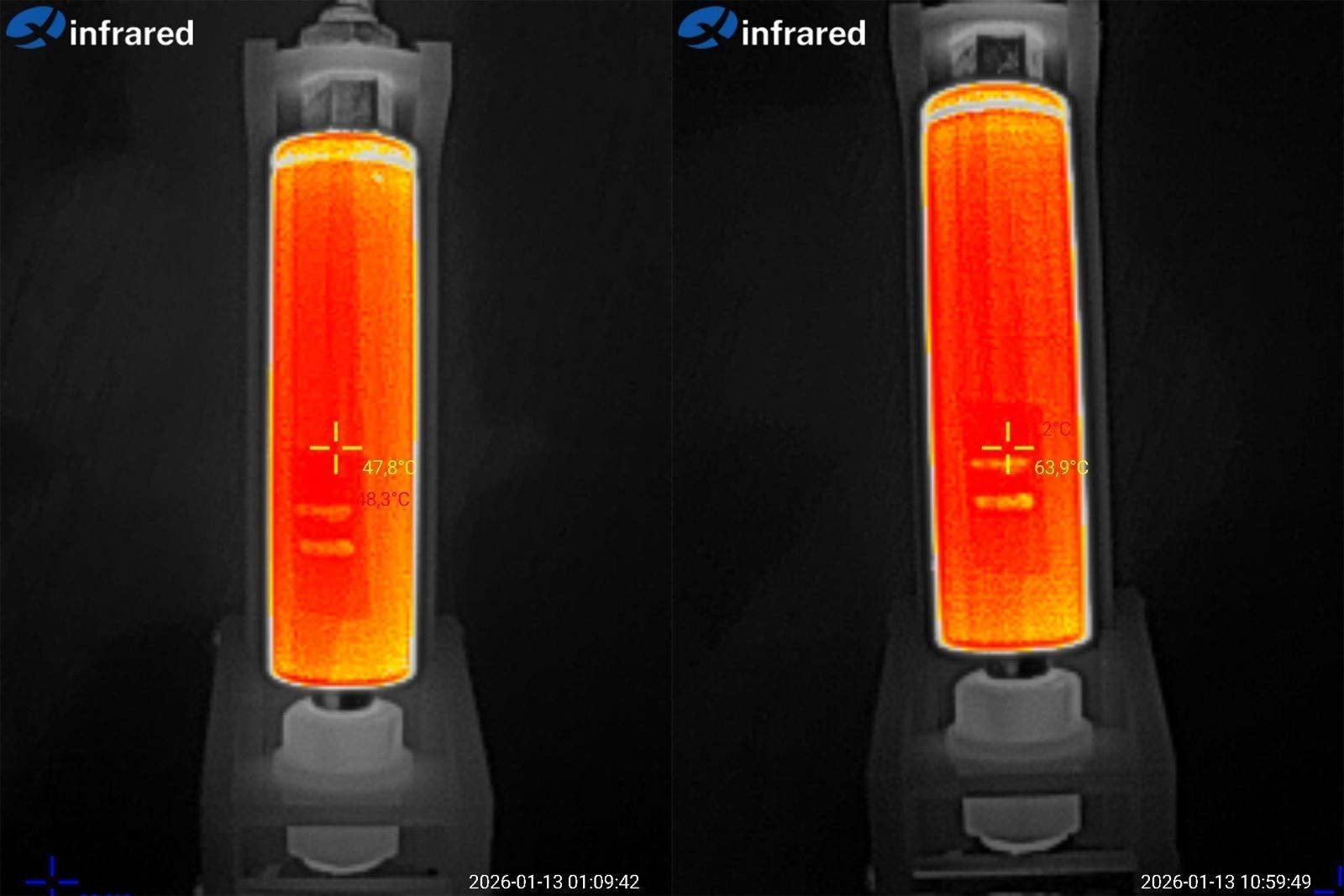
Temperature at 2C and 10 A. Here I agree with the manufacturer: they can handle 10 A, but that really is the maximum current. The manufacturer specifies that it’s not for cyclic use—in other words, occasional use is fine, but not continuously.
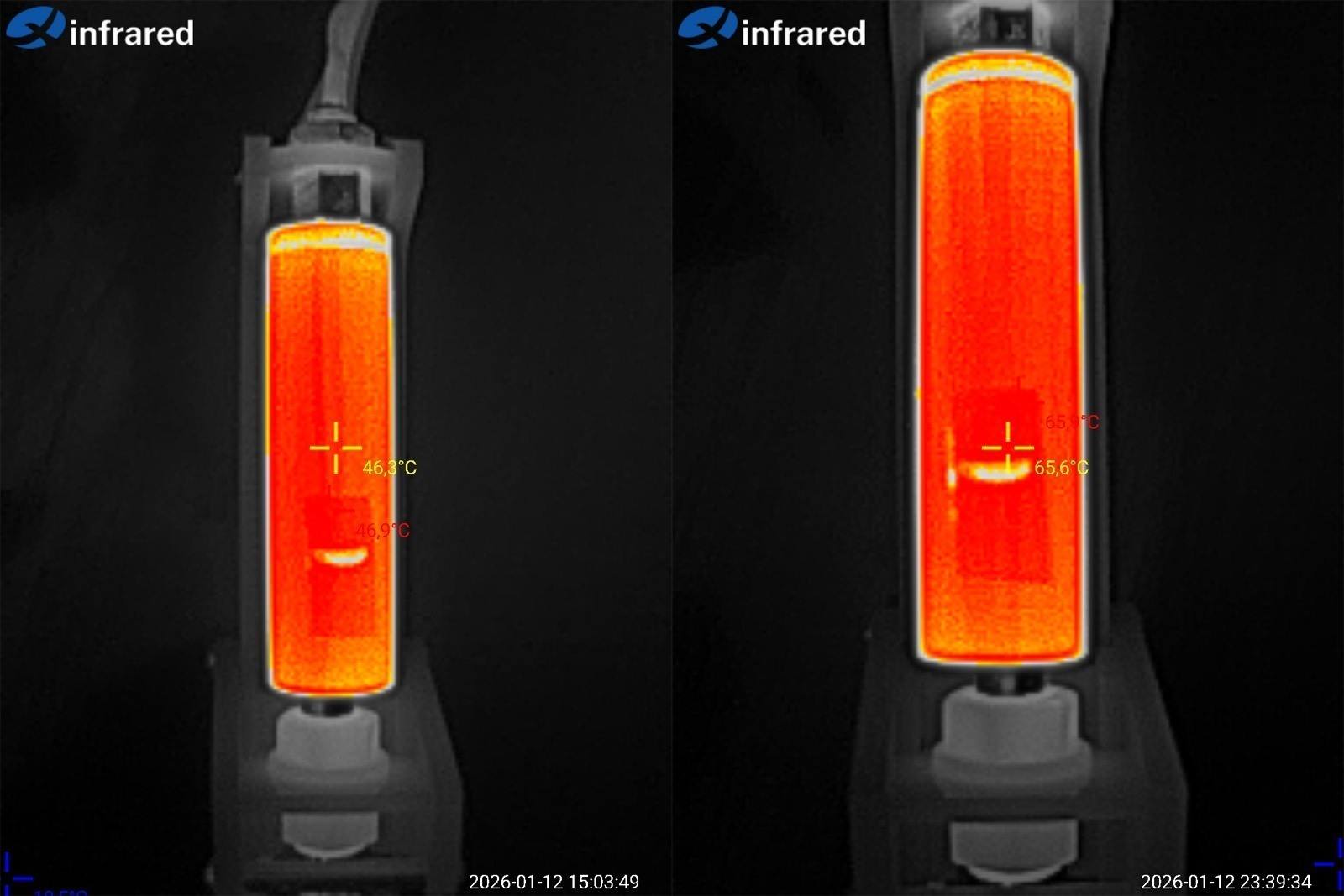
The second cell fell just short of 3100 mAh, delivering only 3090 mAh at 0.2C. There is a small caveat here, though: capacity is specified at an ambient temperature of 23–27°C. It was a little cooler in the room. I don’t think I need to explain how—and because of whom—the heating is working these days :(
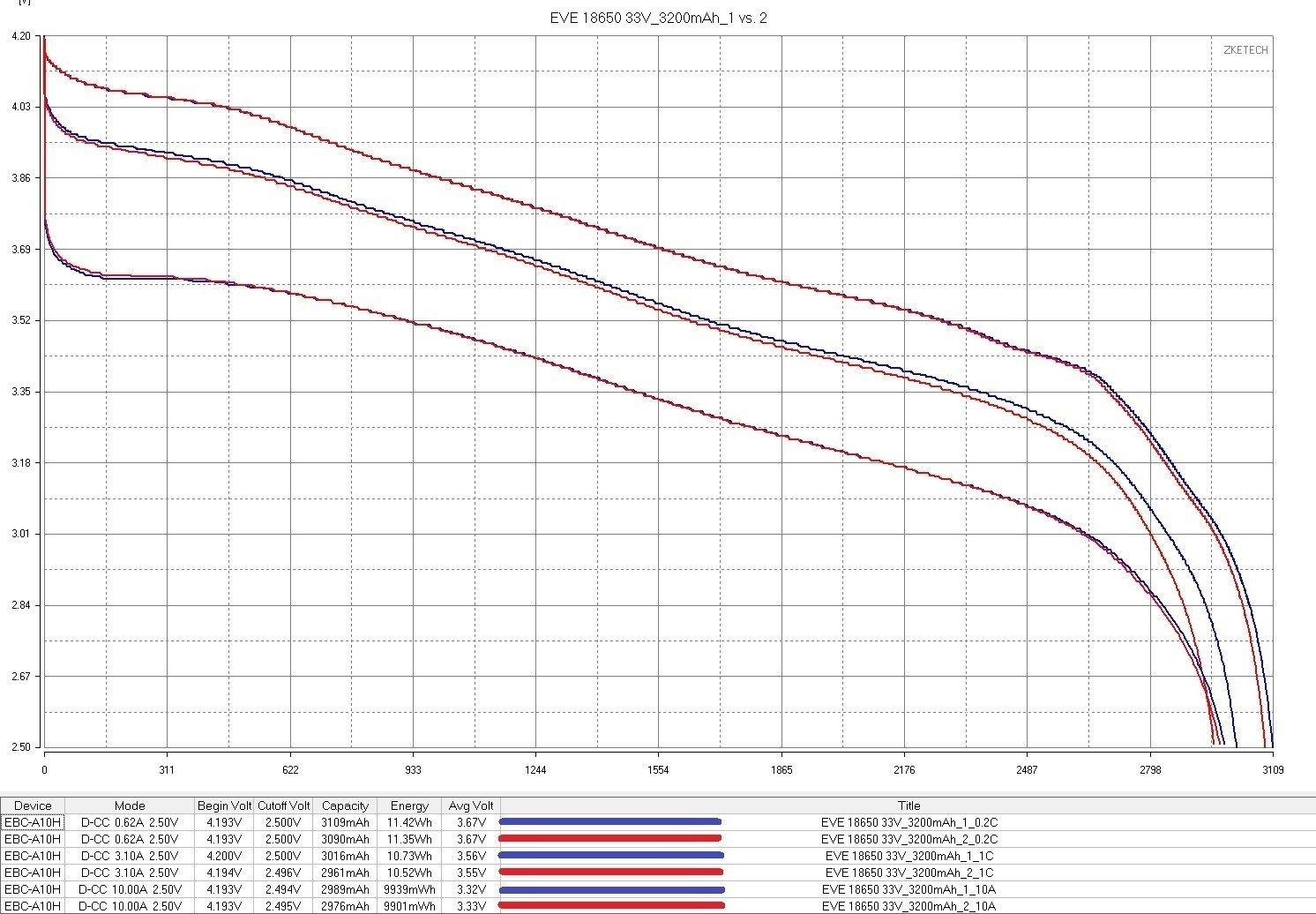
Results of the matching test at 0.2C, 1C, and 10 A. There is a noticeable spread at 1C, although the results at 0.2C and 10 A are practically identical. The difference is about 1.5% numerically. The temperature may be to blame; I can’t say for sure, but judging by the other results, the batteries are fine.
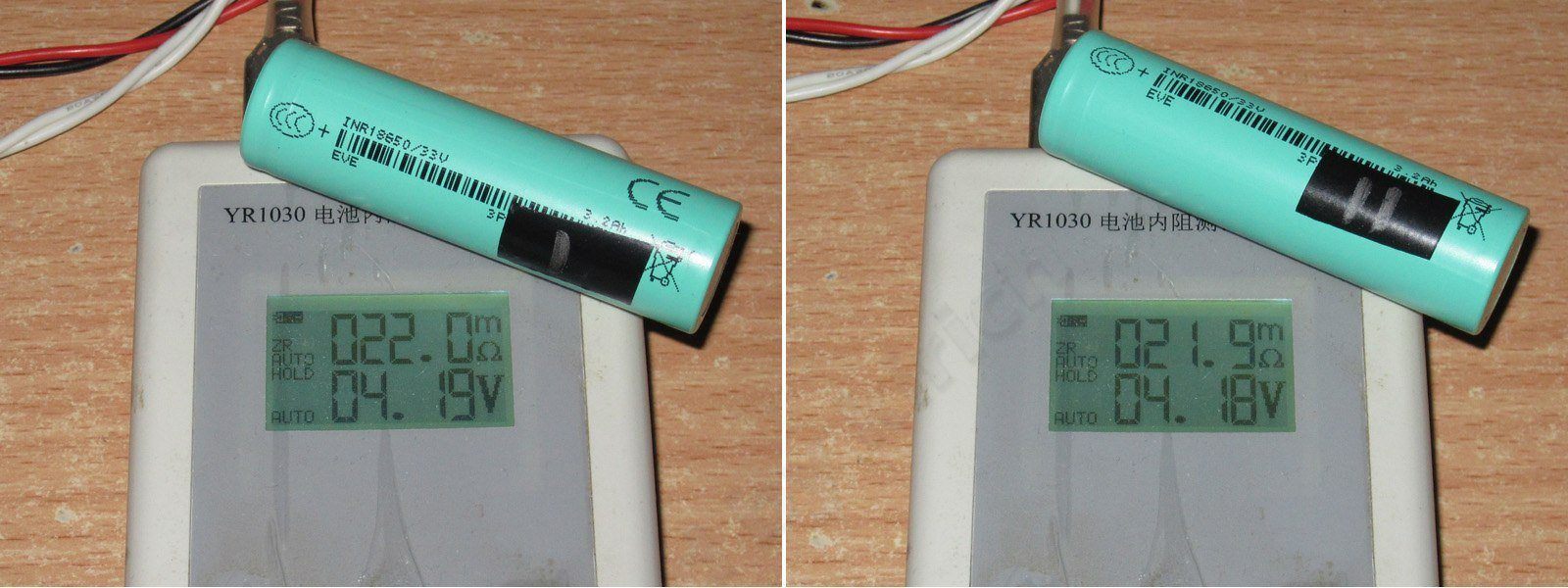
The cells have an impedance of about 22 mΩ. That’s to be expected, and I wouldn’t say it’s high or low—it just is what it is.
And the fourth pair: EVE 18650 35V_3400mAh - link.
These batteries definitely fall into the high-capacity category. They’re not Vapcell cells with their 4000 mAh, of course, but 3400 mAh is still quite good—especially for power banks and similar devices, where relatively low current output is usually offset by using more cells.
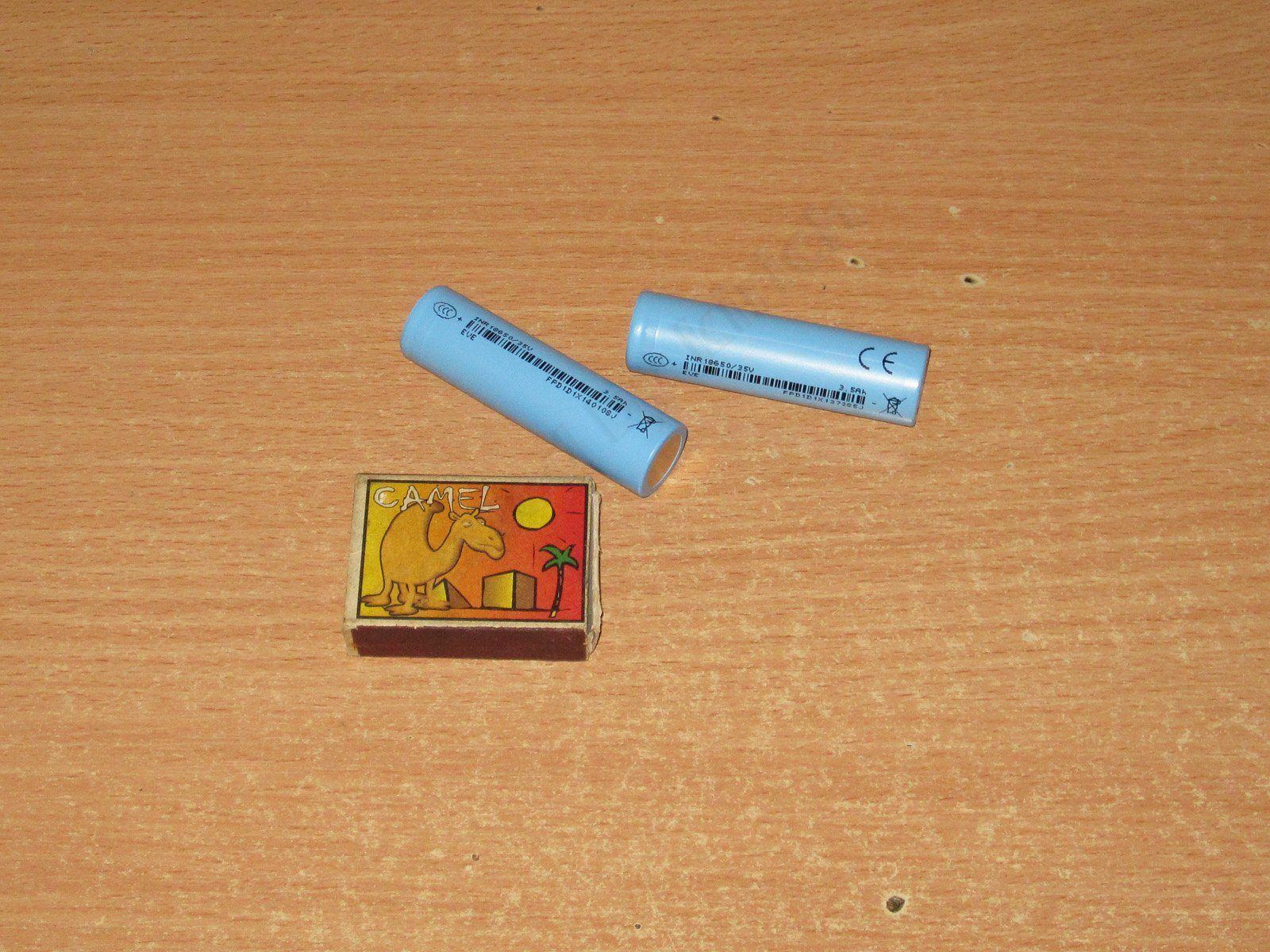
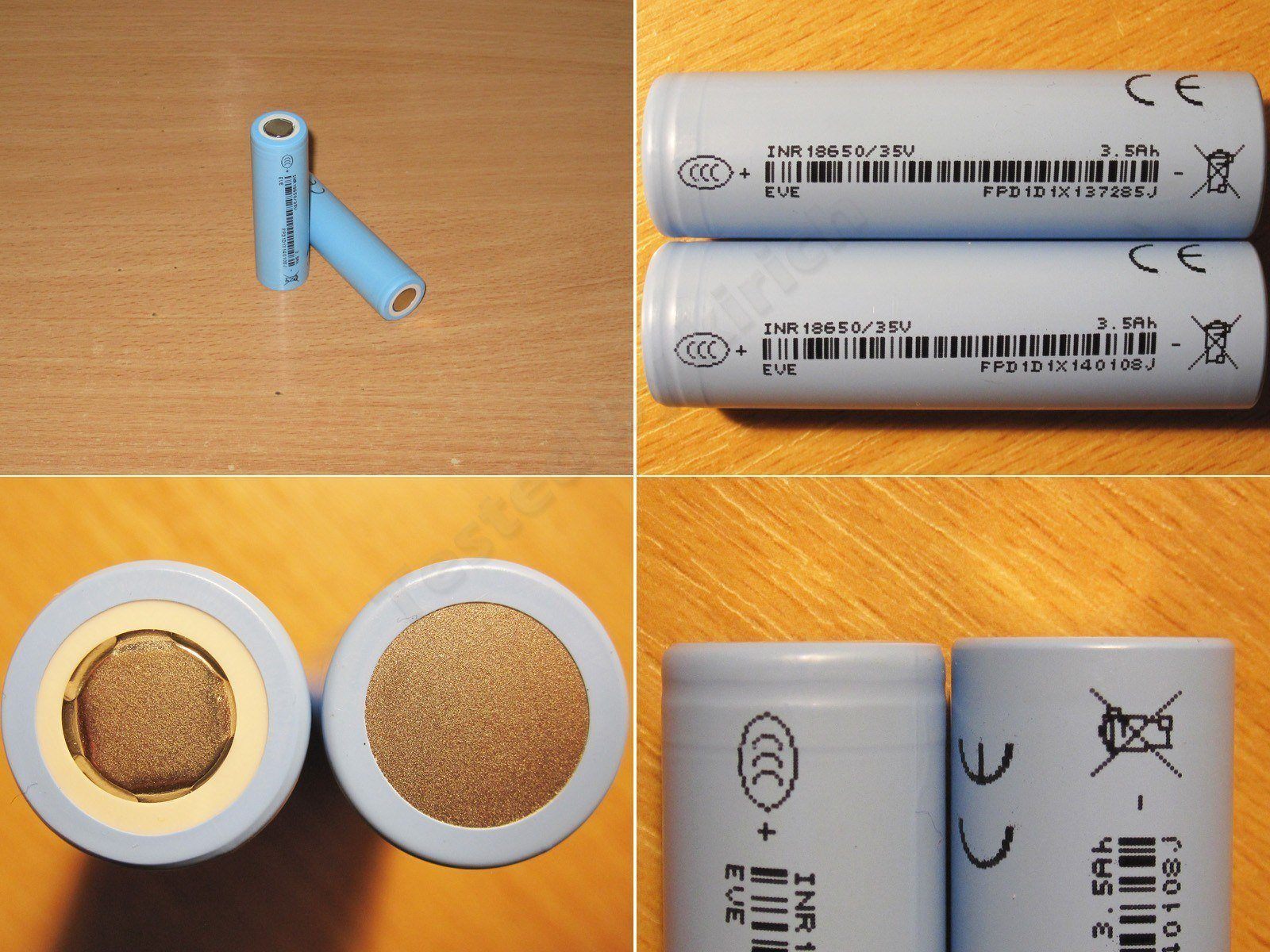
The heat-shrink wrap is light blue. The marking includes the number 35, and the capacity is listed as 3.5 Ah.
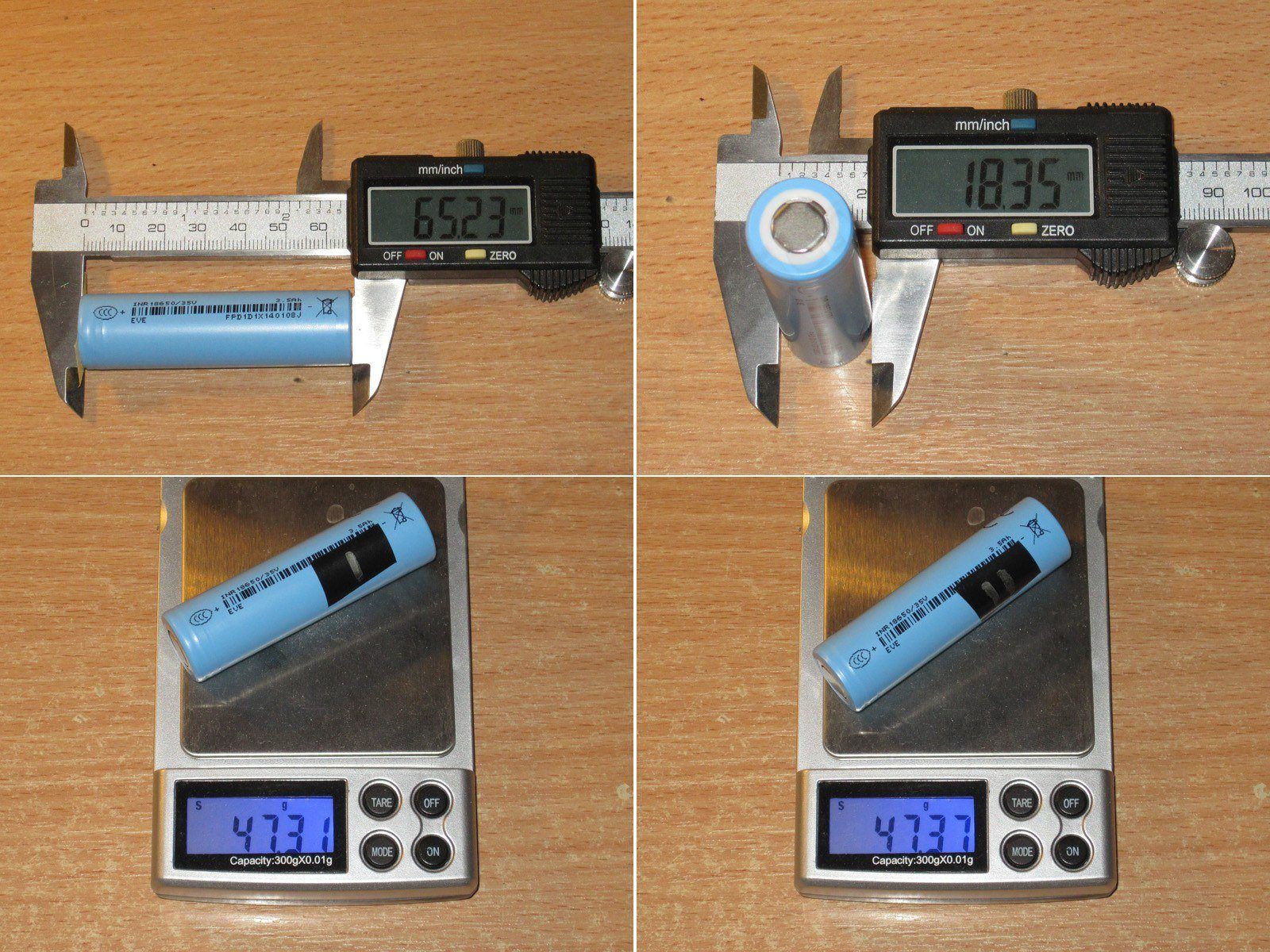
Cell dimensions and weight.
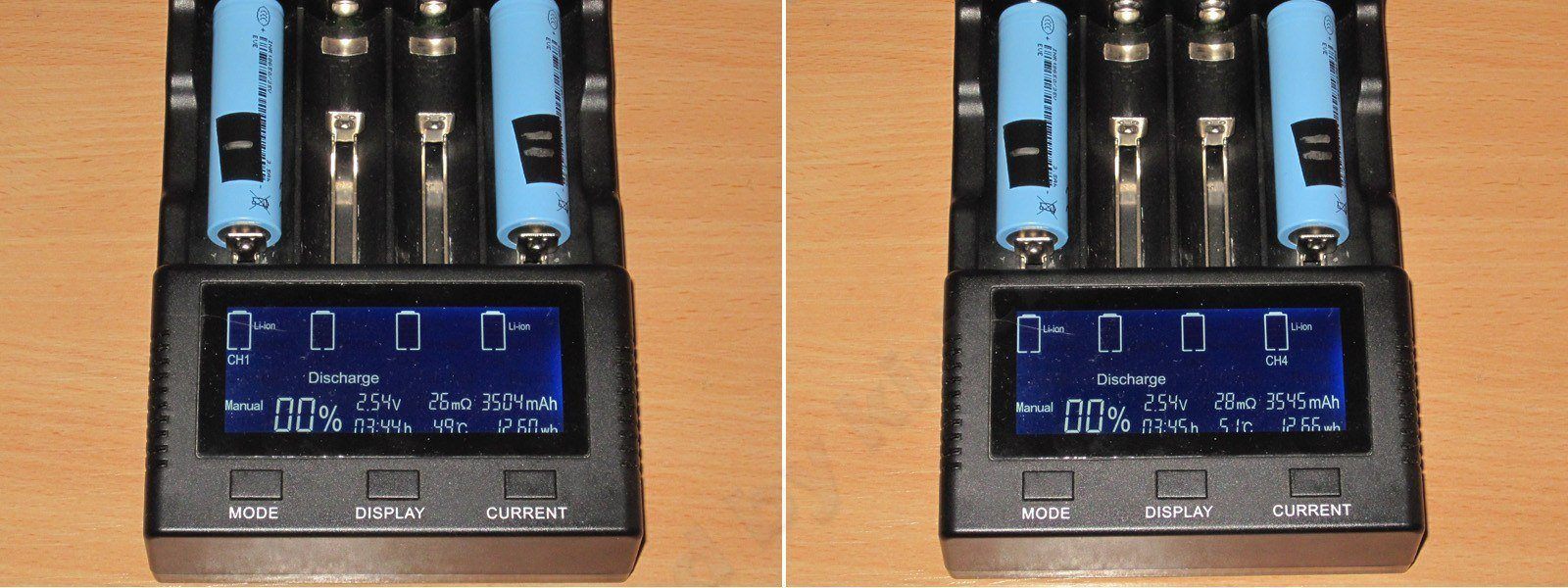
The first charge took almost 3000 mAh. At 1 A, they delivered a little over 3500 mAh.
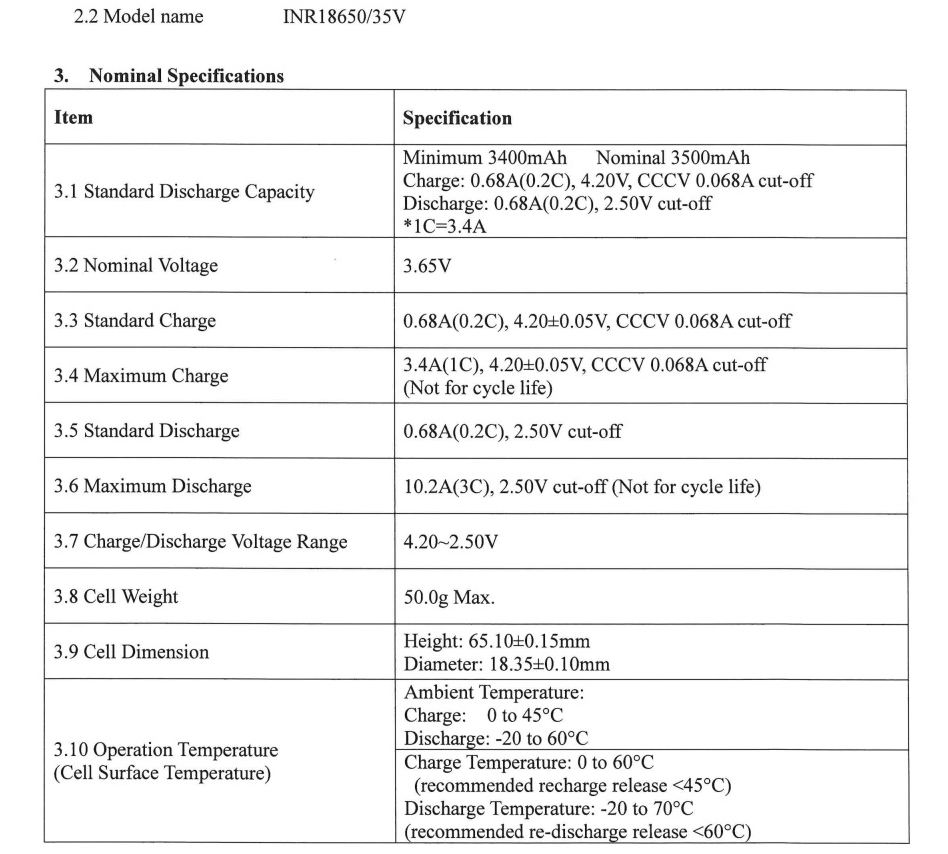
The manufacturer specifies a minimum capacity of 3400 mAh and a nominal capacity of 3500 mAh. The specified charging currents are 0.2C for standard charging and 1C for fast charging.
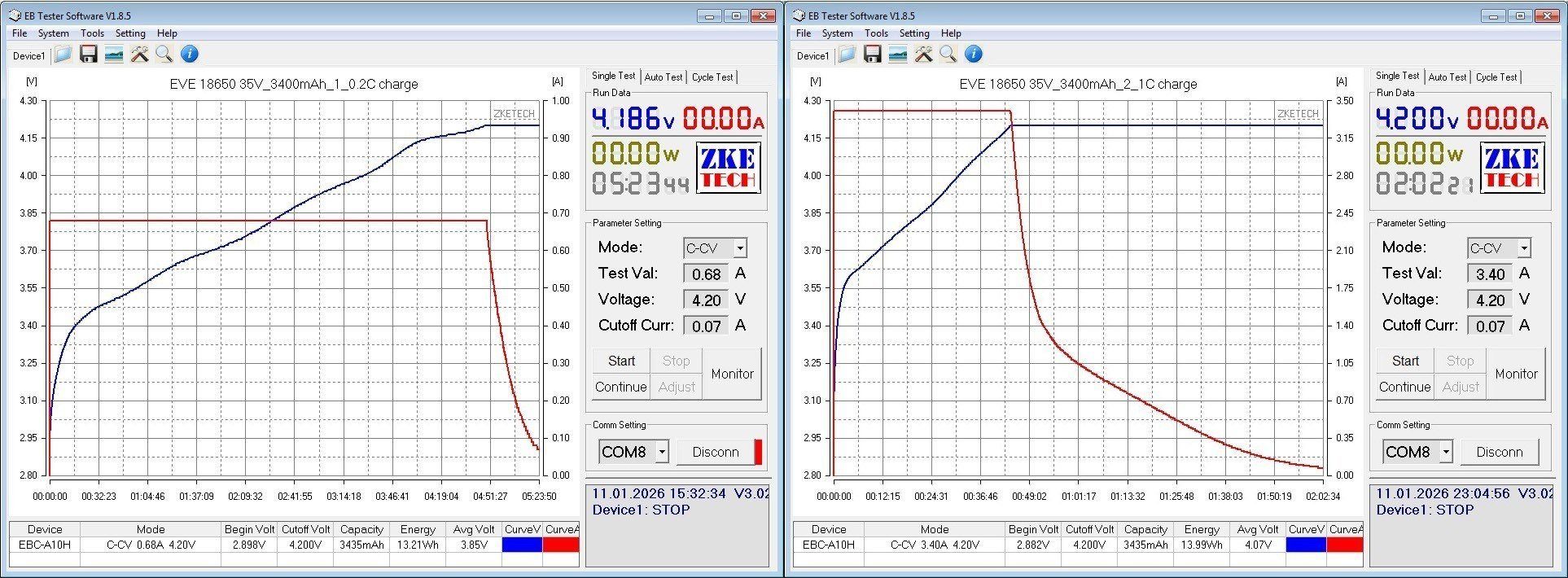
First, I tested the charging cycle at 0.2C and 1C, as specified. The first takes a long time, but the CV phase is short. The second looks pretty grim to me: charging at 1C takes over two hours, and the CC phase is very short.
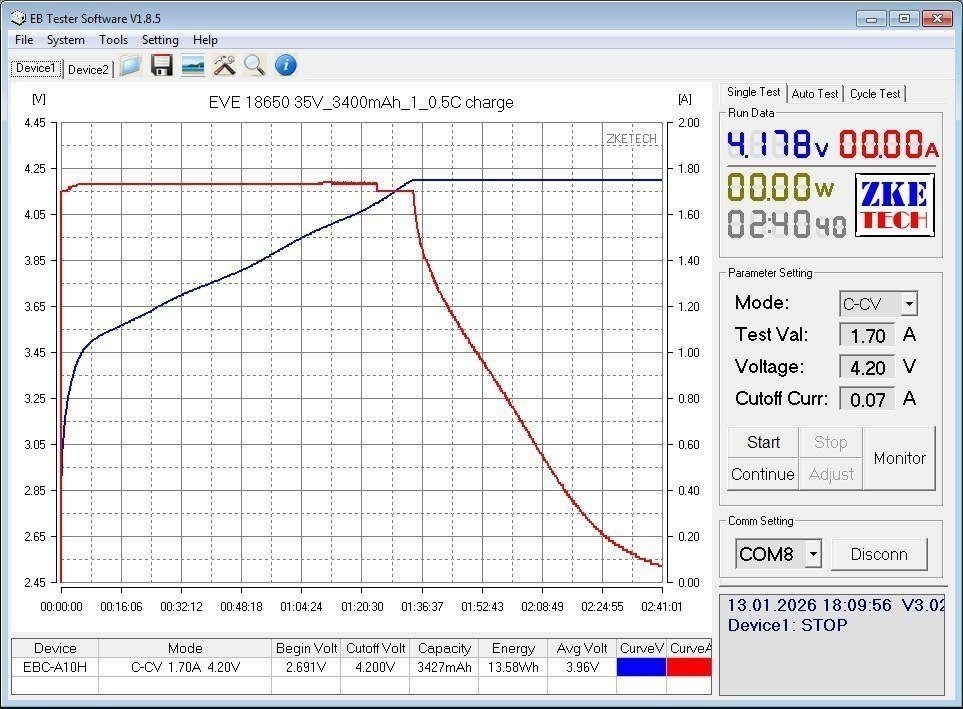
That’s why I also tested them at the 0.5C current I usually recommend, as I wanted to do for the previous cells too.
Here we have a relatively long CC phase and a moderate CV phase. Total charging time is 2 hours 40 minutes, which isn’t much longer than at 1C.
So my recommendation remains the same. 0.2C is useful, but takes a long time; 1C is too hard on the cells. The sweet spot is 0.4–0.5C, or maybe 0.33–0.5C.
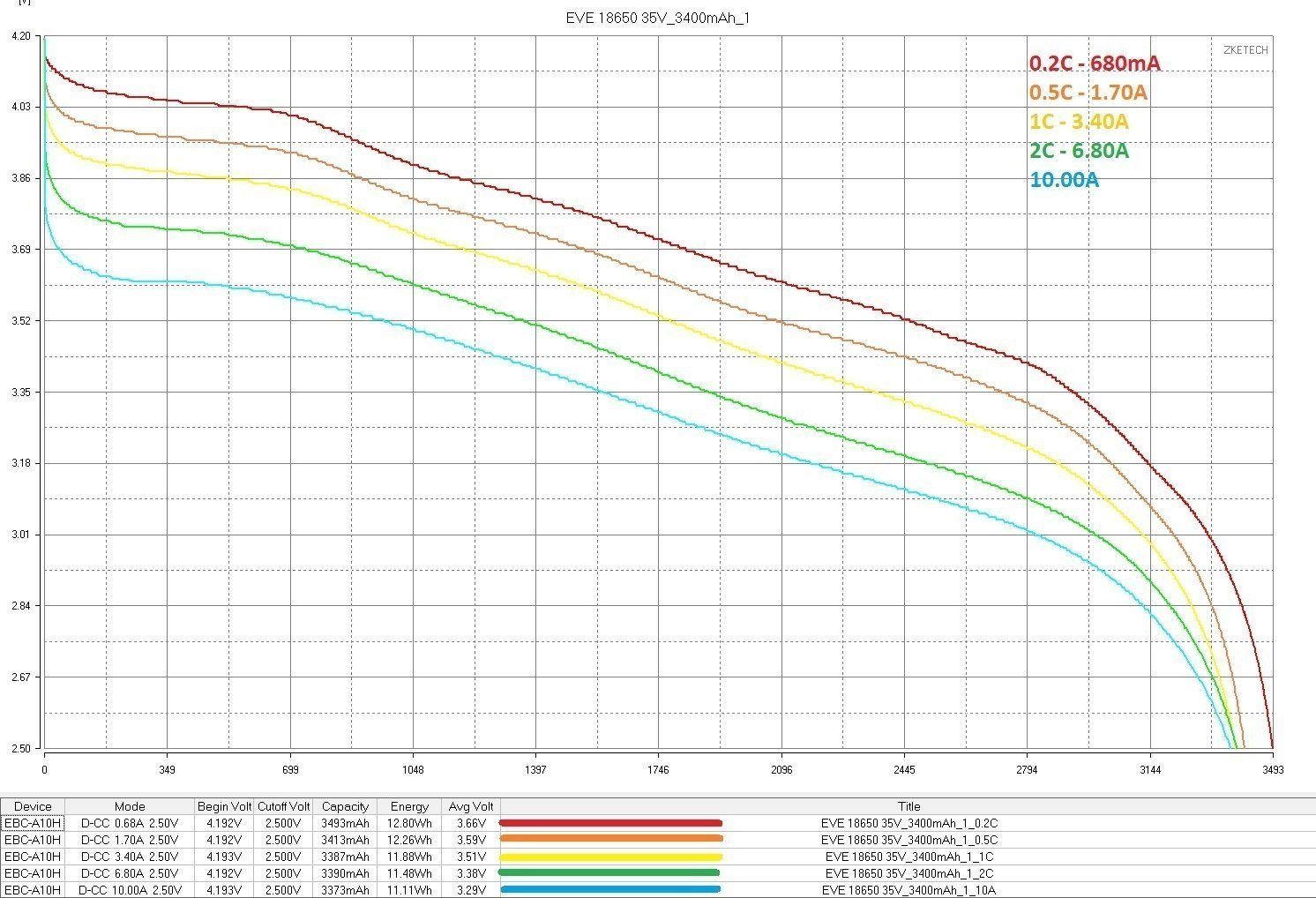
The discharge test was performed at 0.2C, 0.5C, 1C, 2C, and 10 A. The manufacturer specifies a maximum current of 10.2 A, but this battery tester tops out at 10 A, and I figured the 0.2 A difference wouldn't matter.
So, we get almost 3500 mAh here. The stated minimum is 3400 mAh, which is achieved at 0.2C and 0.5C.
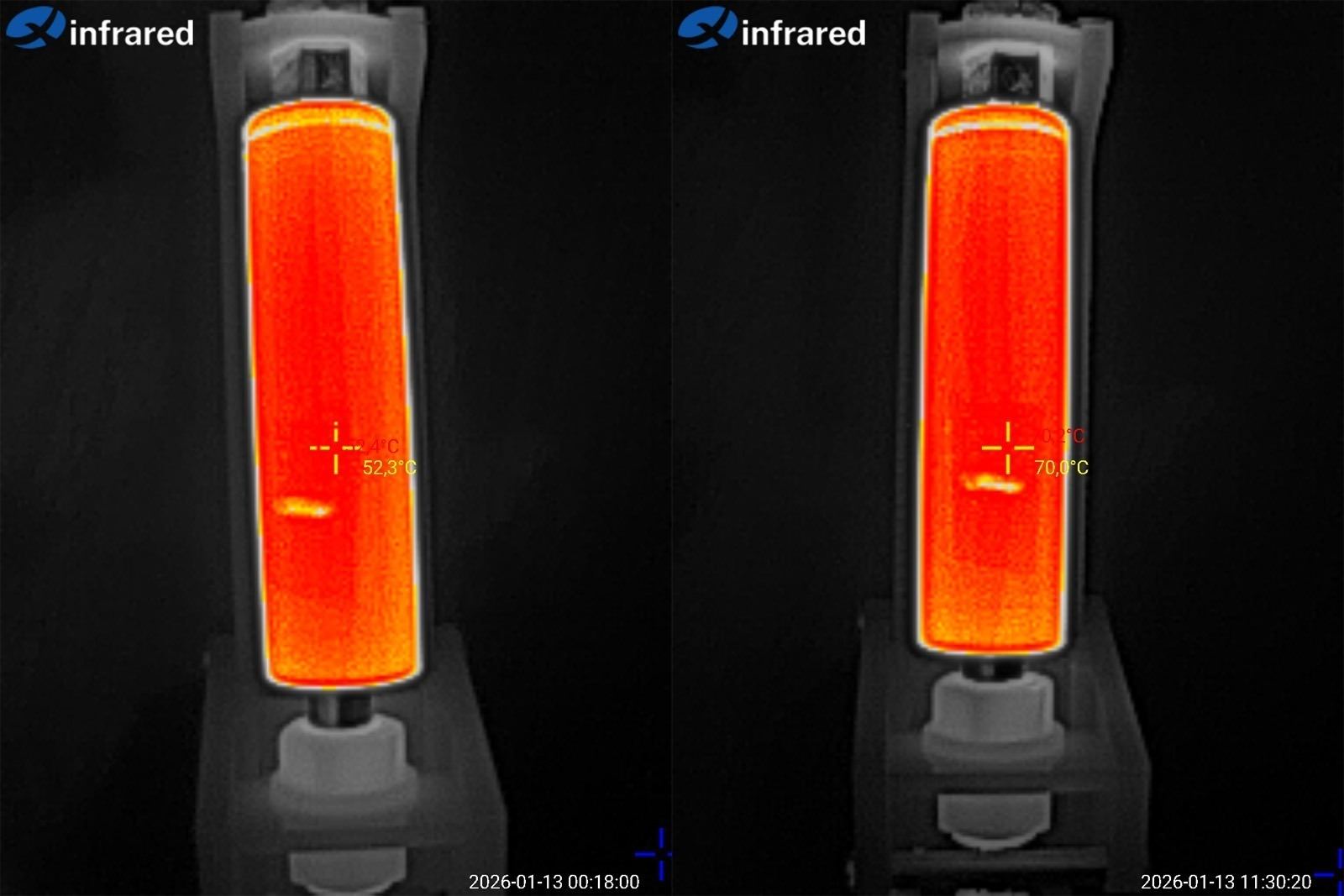
Case temperature at 2C and 10 A. In my opinion, 10 A is a bit much for these cells. The thing is, for batteries, the most critical temperature is usually during charging, but discharge isn't quite so straightforward either: high-current cells handle high temperatures during discharge better than high-capacity cells do.
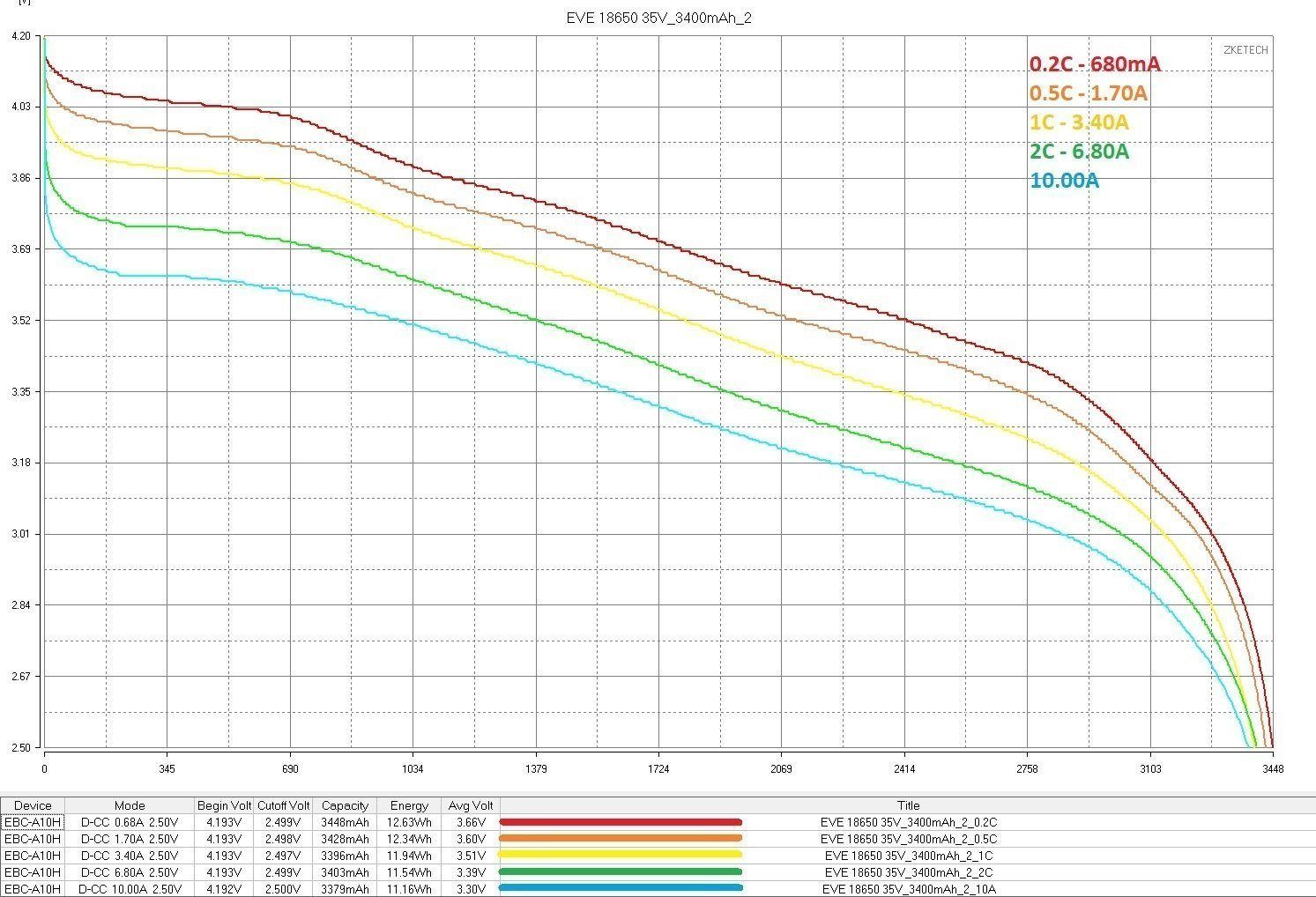
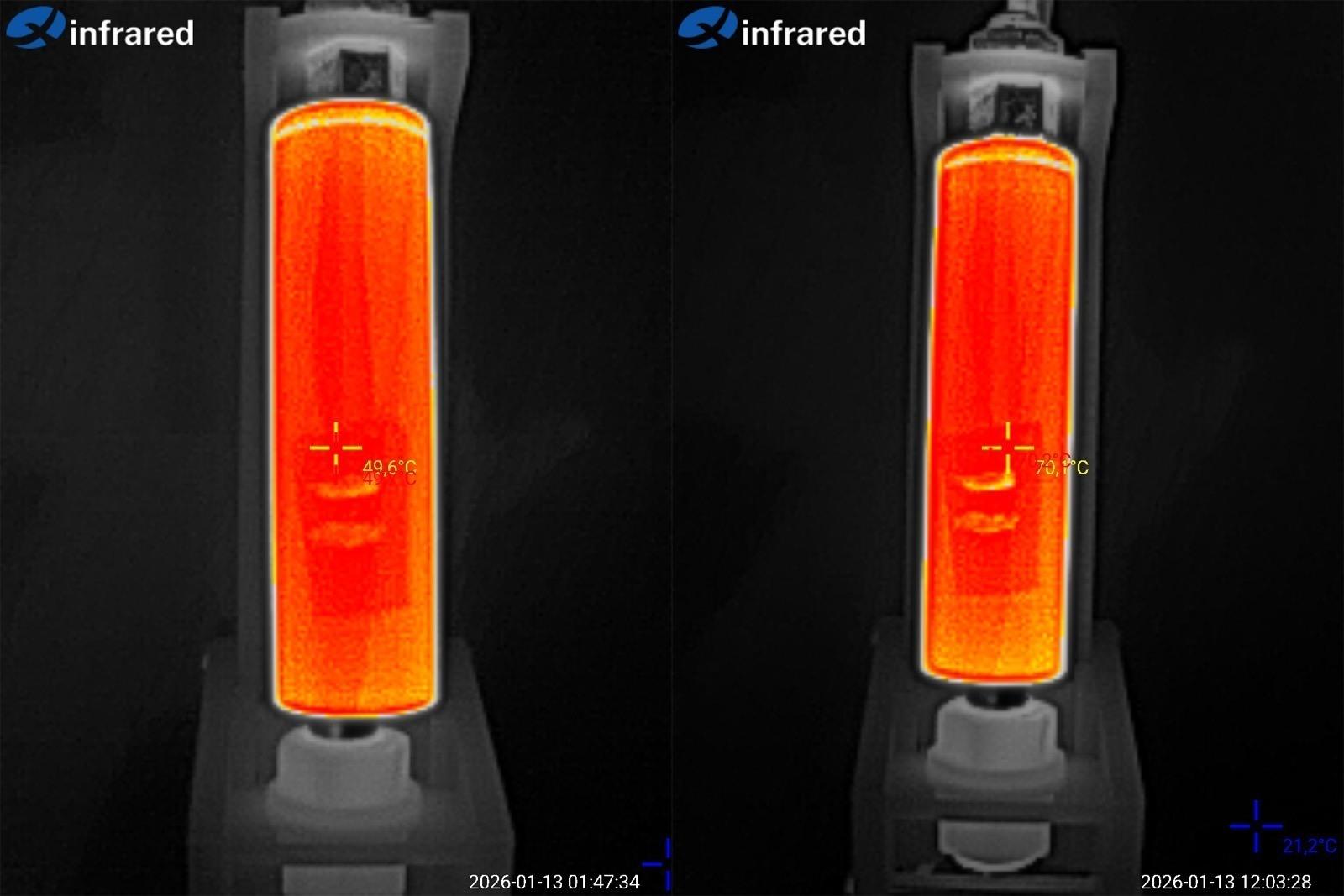
The second sample produced roughly the same results, although its capacity at 0.2C was a little lower. This may be due to measurement error or test conditions.
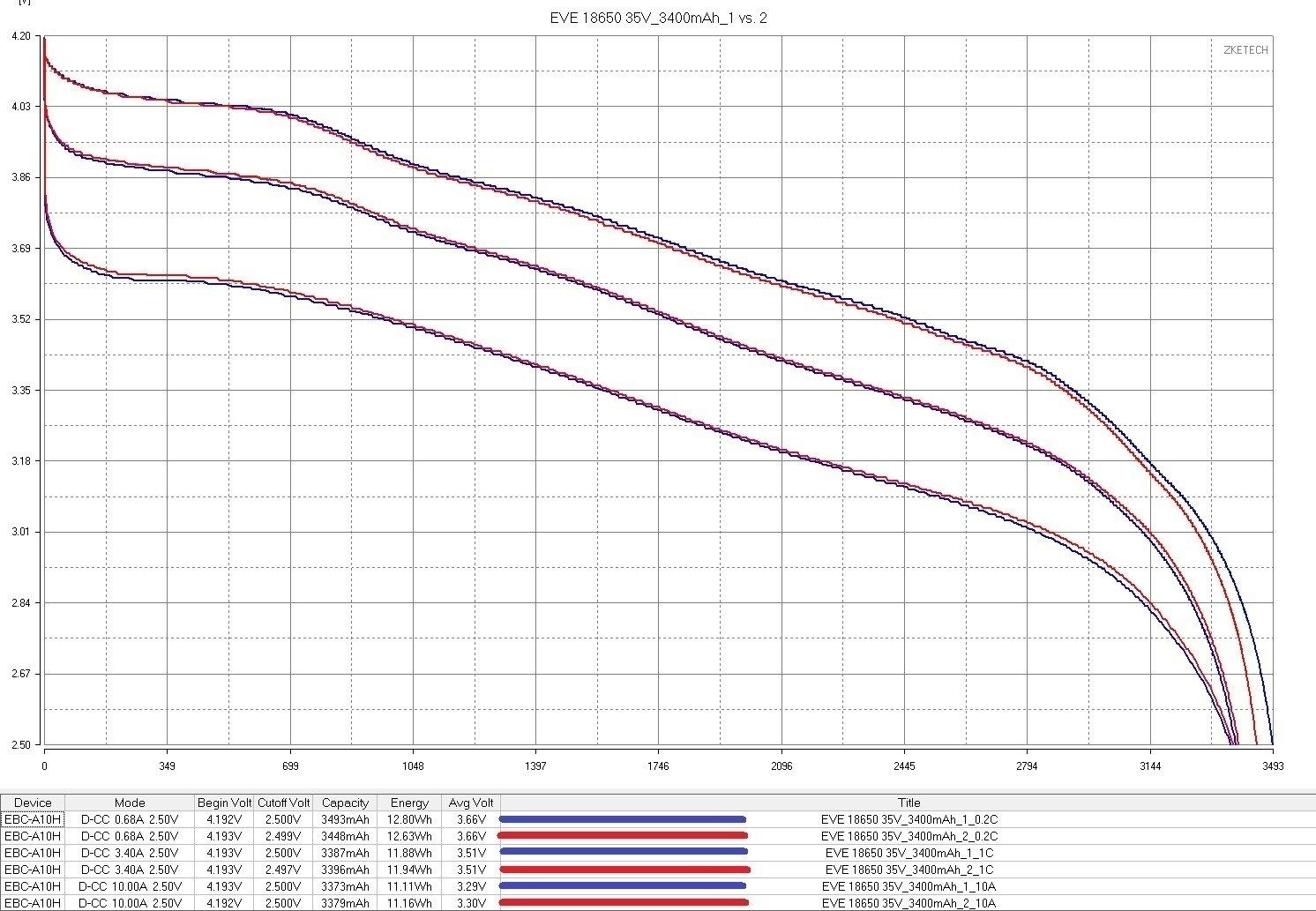
Checking how closely the cells match at 0.2C, 1C, and 10 A. As I mentioned above, I got a small spread at 0.2C; the results at the other rates are excellent, so the difference at 0.2C can be put down to measurement error.
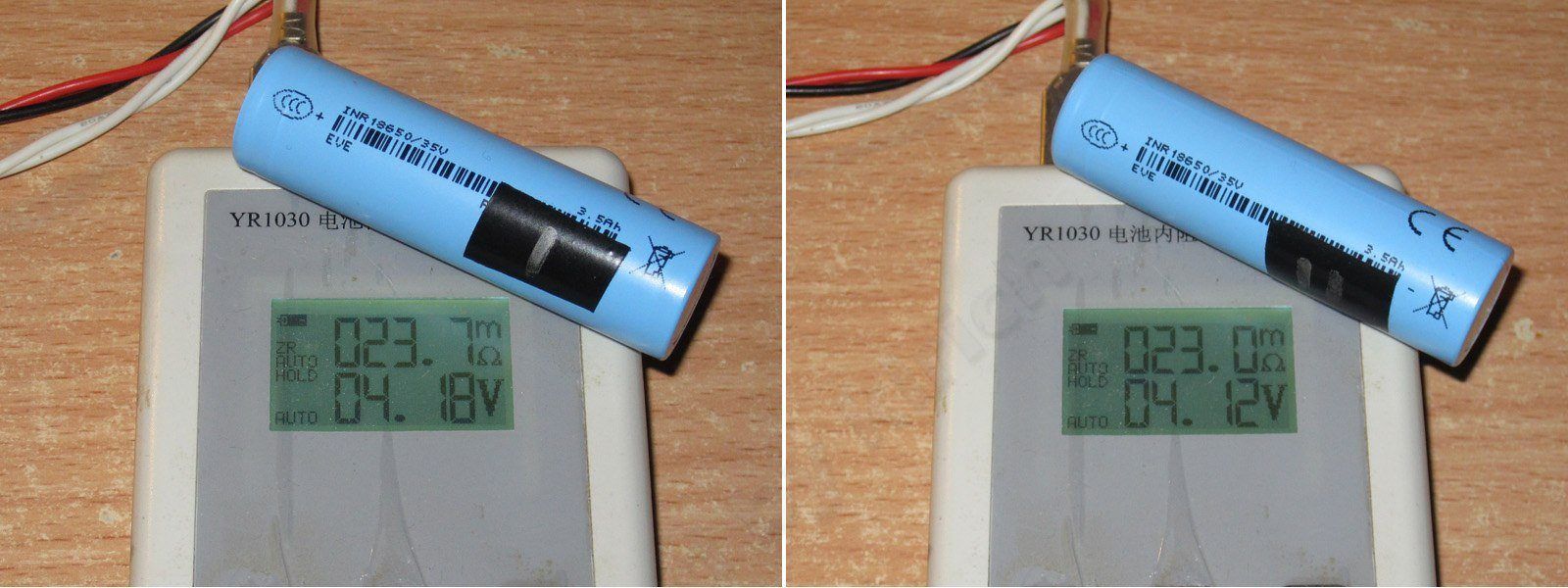
By the way, the cells' impedance isn't much higher than the previous ones, which is nice.
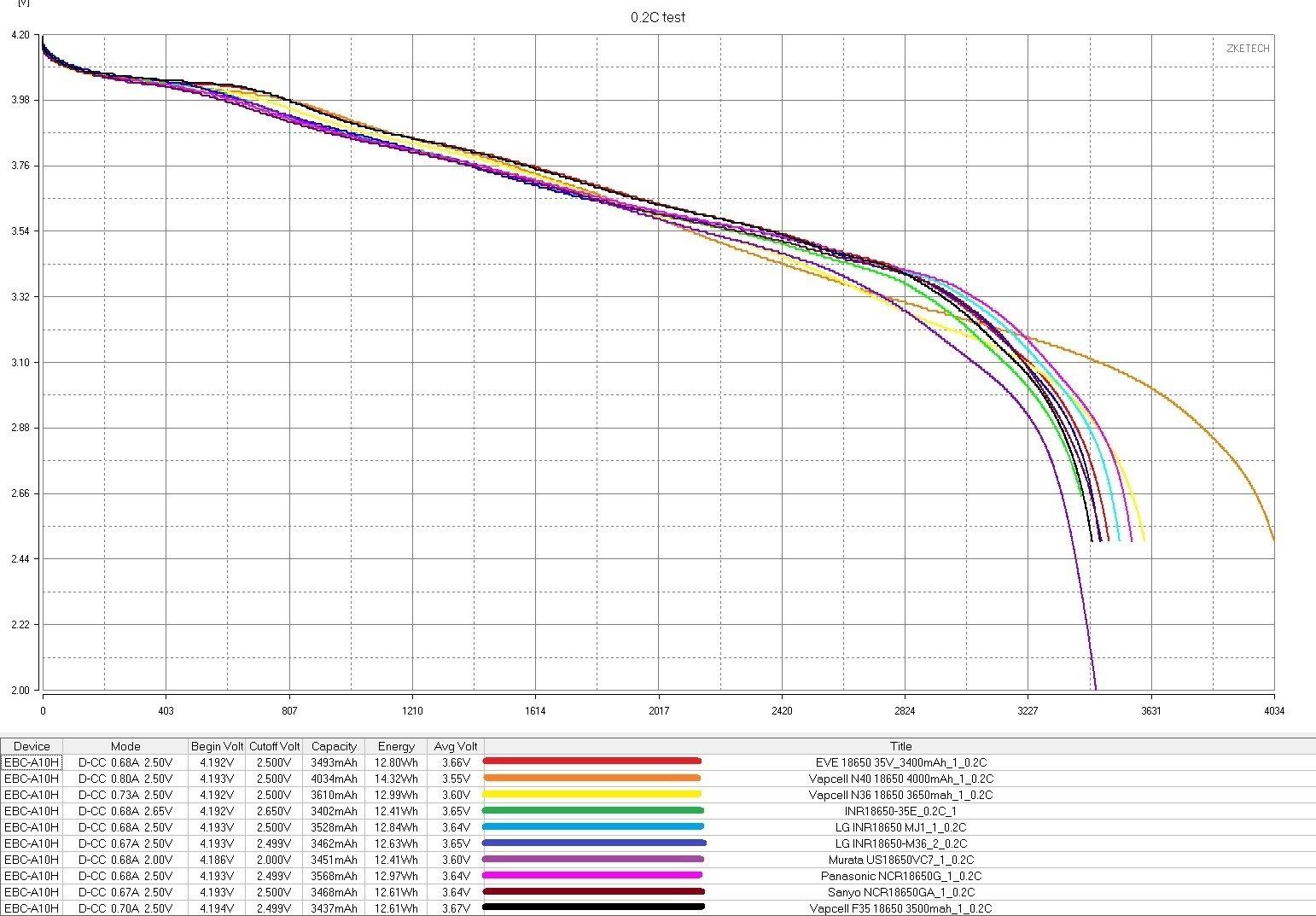
Comparing the 2.55 and 3.2 Ah cells wasn't very interesting, but I'll compare the 3500 mAh version with the others too. They didn't all fit, though—I have a limit of 10 cells per chart.
1. The cells under review
2. Vapcell N40 - review
3. Vapcell N36
4. Samsung INR18650-35E
5. LG INR18650-MJ1
6. LG INR18650-M36
7. Murata VC7
8. Panasonic NCR18650G
9. Sanyo NCR18650GA
10. Vapcell F35
First, at 0.2C—and here Murata is cheating again by discharging down to 2 V :)
EVE came in somewhere around the middle.
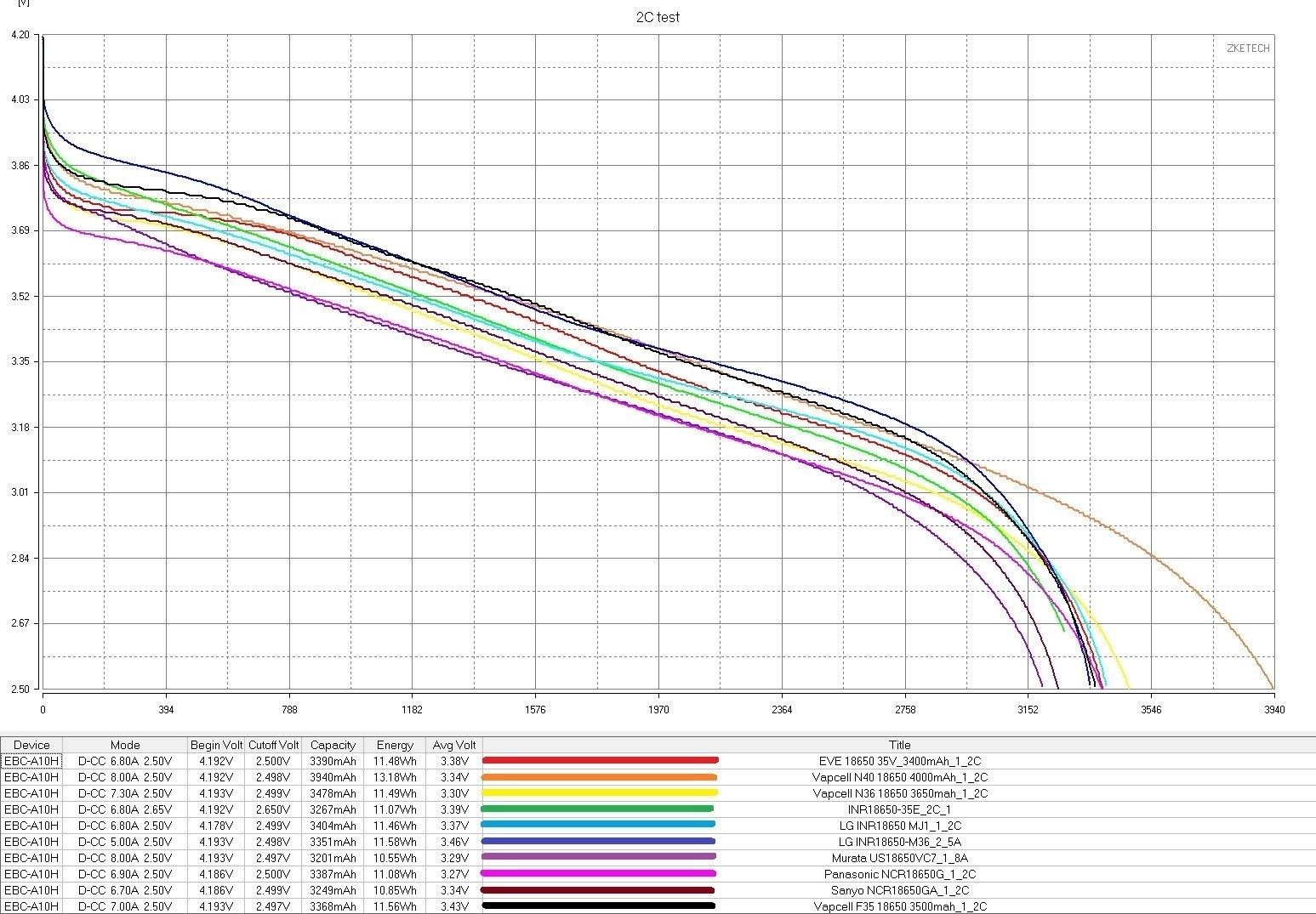
And at around 2C.
Here EVE is clearly above the middle—you can see it at a glance at the graph. Their voltage is higher, and their capacity is a little above the midpoint too.
Higher voltage throughout the discharge means more energy delivered in Wh, while a later cutoff on the graph means greater capacity in Ah. Note that these aren't always linked: two similar cells with the same capacity in Ah won't necessarily have the same capacity in Wh.
Conclusions.
EVE 18650 25P_2500mAh — decent cells, but the manufacturer is clearly exaggerating the maximum continuous current. They simply won't handle 30 A without extra measures; they overheat even at 25 A. Overall, though, they're more than adequate for power tools.
EVE 18650 26V_2550mAh — I don't quite know what to make of these batteries. They don't stand out for either capacity or current; they're just ordinary budget cells, and sometimes that's exactly what you need. Samsung has some similar models, by the way: ICR18650-26F and ICR18650-26H
EVE 18650 33V_3200mAh — This one's actually hard to call. The casing says 33, while the label specifies 3.2 Ah, but our tests show closer to 3.1 Ah. They're not particularly powerful in terms of current either. It's all a bit strange. Still, if the price is right, they'll do just fine in a power bank.
EVE 18650 35V_3400mAh — I actually liked these cells. They didn't stand out much while I was testing them, but the comparison with other “classmates” was more revealing. If we leave out the Vapcell N40 and the Murata, which cheats just as much, these are pretty good—well suited to high-capacity power banks.
That's it for part one. I hope you found it useful, and thanks to Alexander for sending the cells for testing.
2, 18650 с 4 выводами, eve 18650 35v тестирование
Questions and answers
What continuous discharge current can the EVE 18650 25P handle?
Although the manufacturer rates it at 30 A, the cell exceeded 100 °C at 25 A. The author puts its safe continuous current at around 20 A, provided the cells are not tightly packed or receive extra cooling.
What capacity did the EVE 18650 26V_2550mAh deliver?
At a 1 A discharge, the author measured about 2650 mAh. The cell delivered 2600 mAh at 0.2C and 2550 mAh at 0.5C.
What does the author recommend the EVE 18650 33V and 35V for?
The 33V measured around 3.1 Ah and may suit a power bank if its price is acceptable. The author also found the 35V a good option for high-capacity power banks compared with other models.
This model is included in the summary table: Battery comparison: measured capacity and resistance
The figures from this review are in the measurement database: Batteries
Discounted products
You may be interested in


Discounted products
All the content on the site and the advice are free, but we’d be grateful for your support of the project and the channel!
Comments1
Only registered readers can comment. It takes a minute to sign up, and you can log in with the same account you use on the forum.
Log inRegister
Comments are published in their original language.