
Fans again: this time 50 mm models from Sunon and Delta, plus one no-name
202₴
As a reminder, to stay up to date with new posts on the blog, I recommend following me on Instagram, where I'll post notifications about every new article and maybe write about something interesting too — link to my account
You can also subscribe to updates and new articles on the Telegram channel — https://t.me/KirichBlog
Some time ago, I published a review of the Mean Well EPP-500-54 power supply. I bought it to install in a compact Riden case and make a small adjustable power supply.
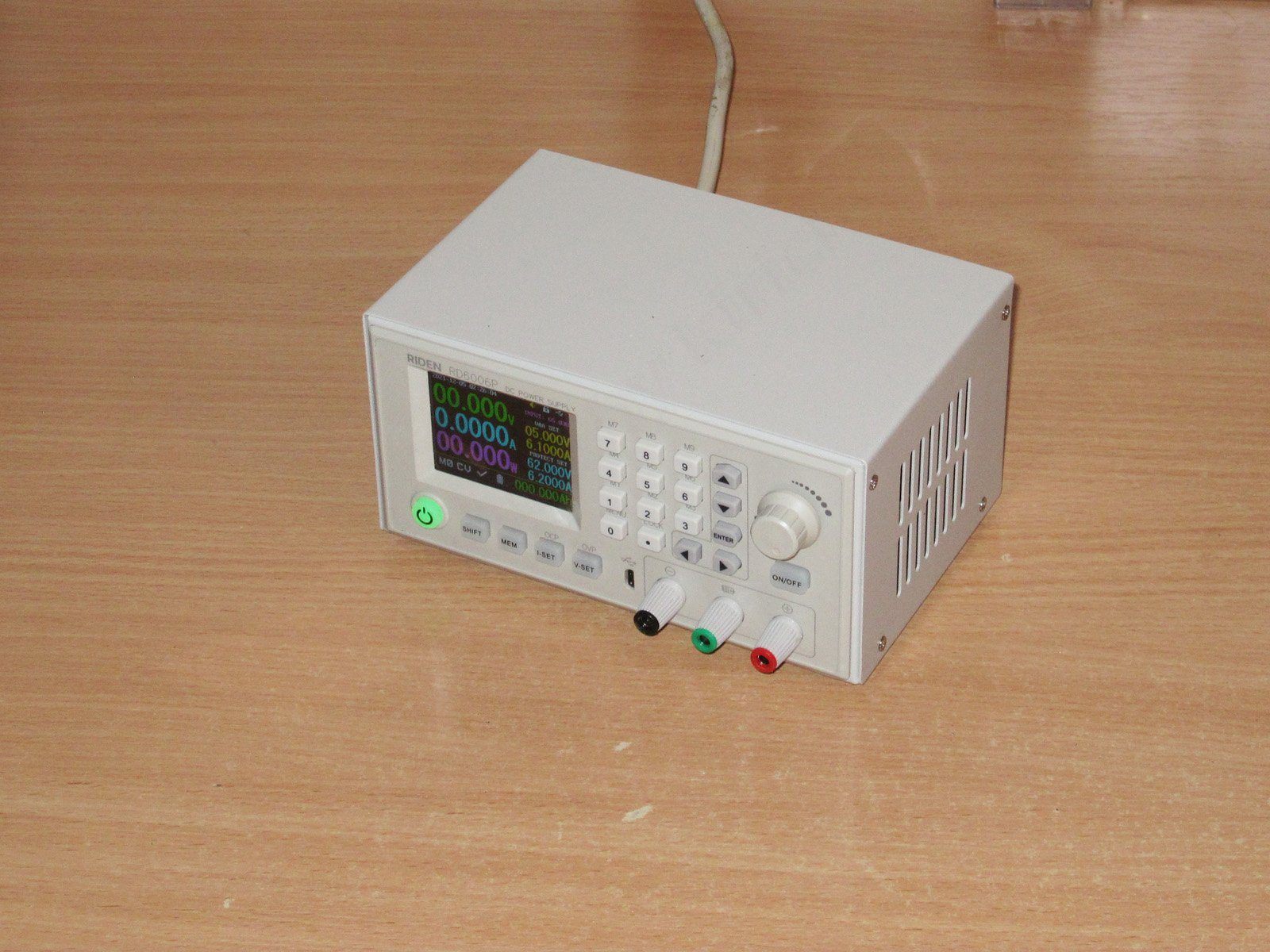
The job was done, but not completely, since the power supply does get hot and needs cooling. Plus, the case housed not just the power supply itself, but also a converter.
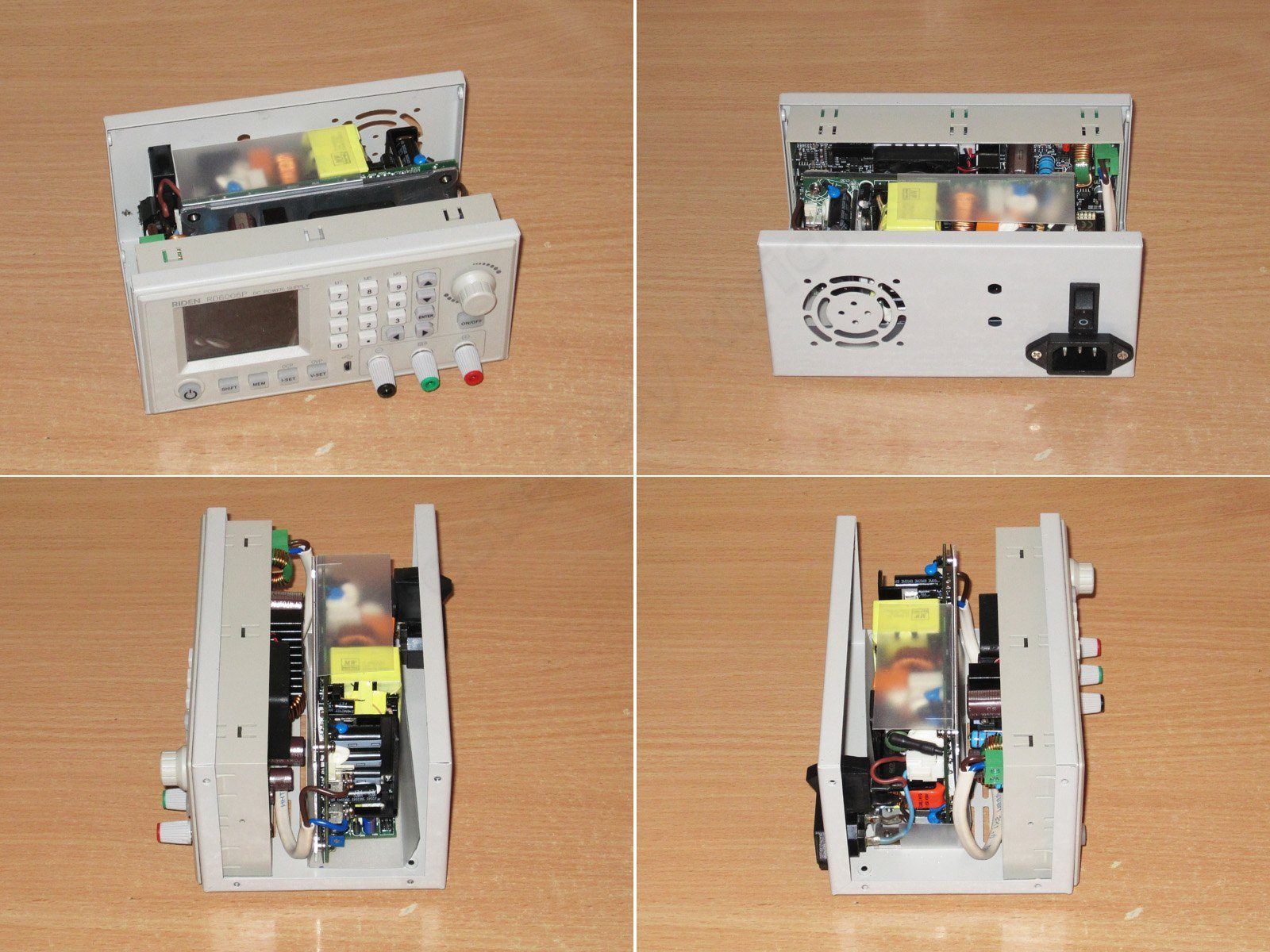
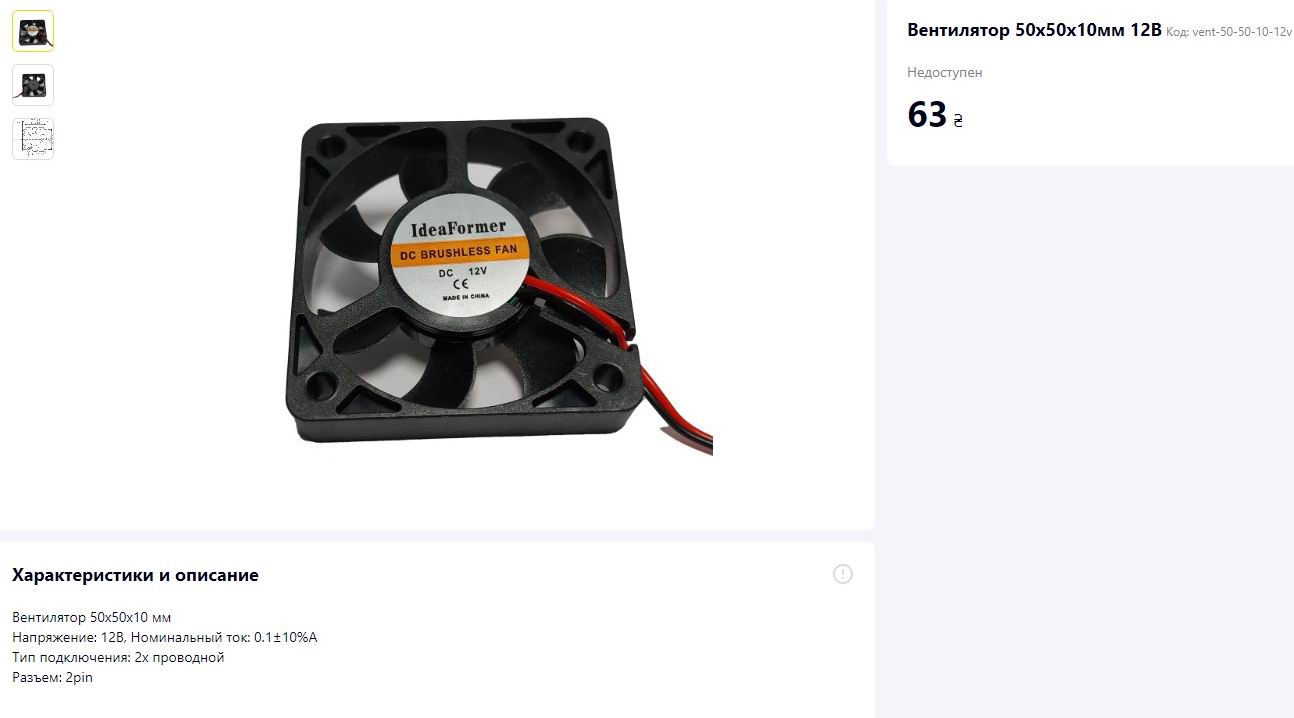
When I was visiting a friend in Lutsk, I also bought a small 50 mm fan and installed it. I could say I was happy with it, but unfortunately there's no speed control, so it's noticeably noisy. That might be a topic for another review, though; that's not the point here.
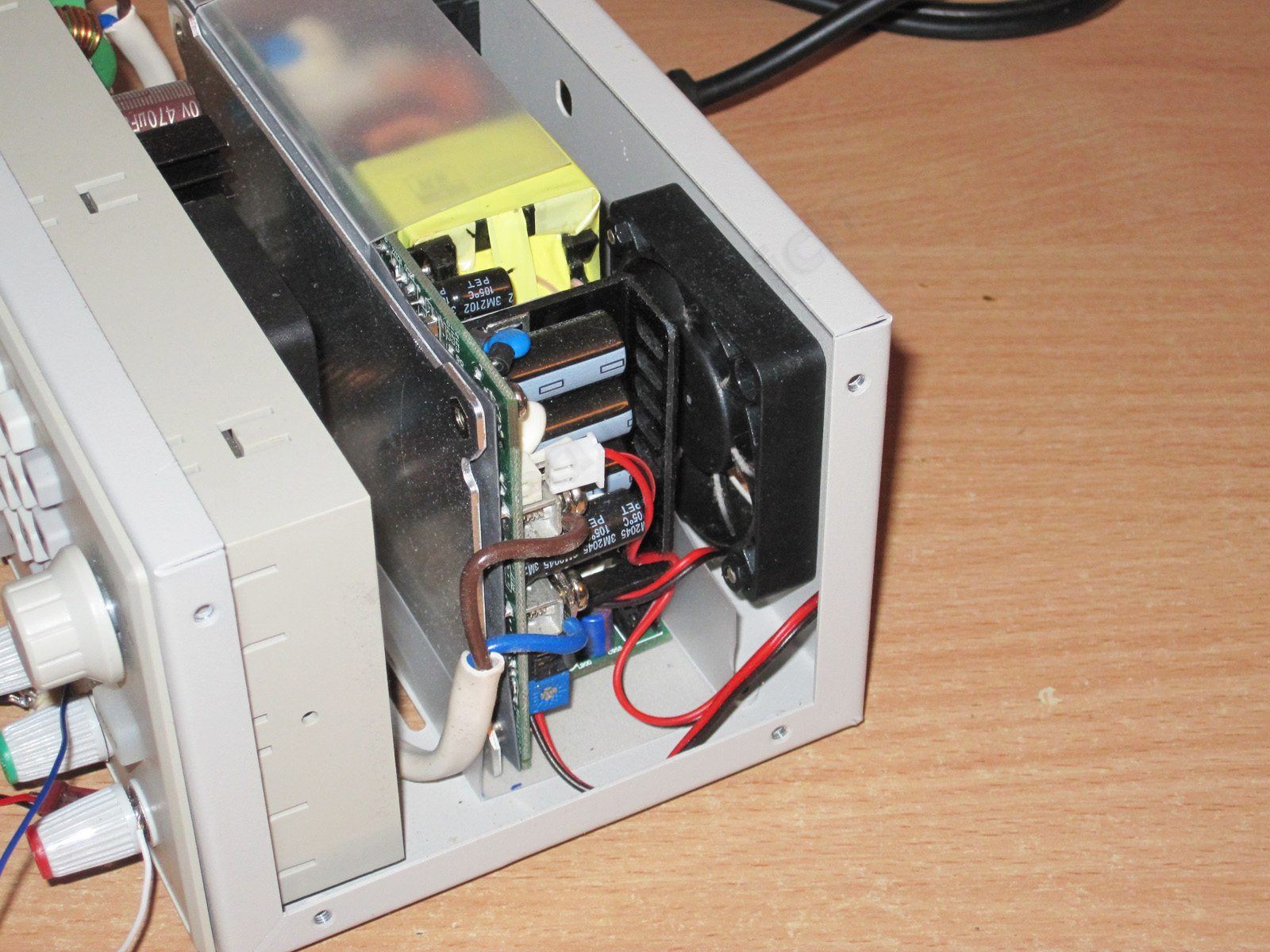
A fan for this case and power supply needs to be 10–15 mm thick. A 20 mm one will fit too, but it ends up right up against the heatsink, which naturally reduces performance because the airflow is "blocked".
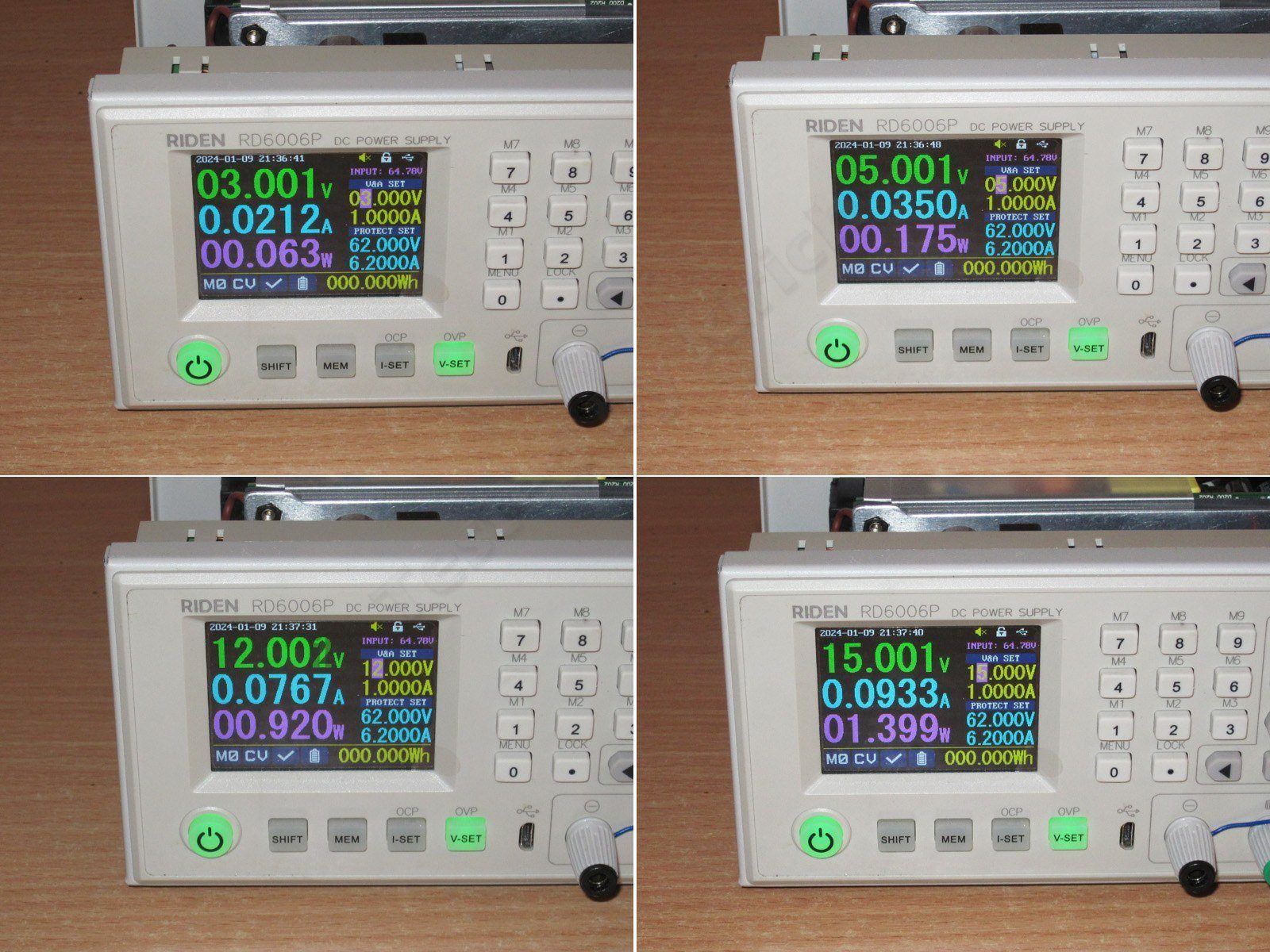
It starts at around 3 V. At 5 V it draws 35 mA, and at its rated 12 V it draws about 75 mA, which is less than the stated 100 mA. Even at 15 V, it doesn't reach its rated current.
That doesn't really matter in this case, since its airflow is sufficient as it is. I just need to add temperature-based speed control, because the noise is genuinely annoying.
The point of this review is that I had an RD6012P module lying around for a long time, along with the same power supply, but I was missing the case. Not long ago, I mentioned this in one of my videos, and several people got in touch—many thanks to them. One viewer said he'd seen this case on OLX and sent me a link. I ended up buying it. The price was a bit steep, 800 UAH, but what won't you do to satisfy your gadget cravings? I wanted two power supplies that looked identical :)
There's no point showing the assembly and modification of the power supply; I simply repeated what I'd done before, with one exception: I modified the fan's power circuit. As a reminder, the fan is powered by the main power supply itself, which has a dedicated connector for it.
The thing is, its output has a 12 V regulator, but I needed a higher voltage because I wanted to run the fan at full speed.
In fact, the voltage isn't fully regulated. With no load, it's around 8–9 V. With a load of at least 10%, it rises to about 14–15 V, giving us 12 V at the output. If you raise the input from the rated 54 V to 60+ V, the output gets closer to 16 V.
In the end, I got an adjustable voltage range of 9 to 15 V, compared with the original 8–12 V.
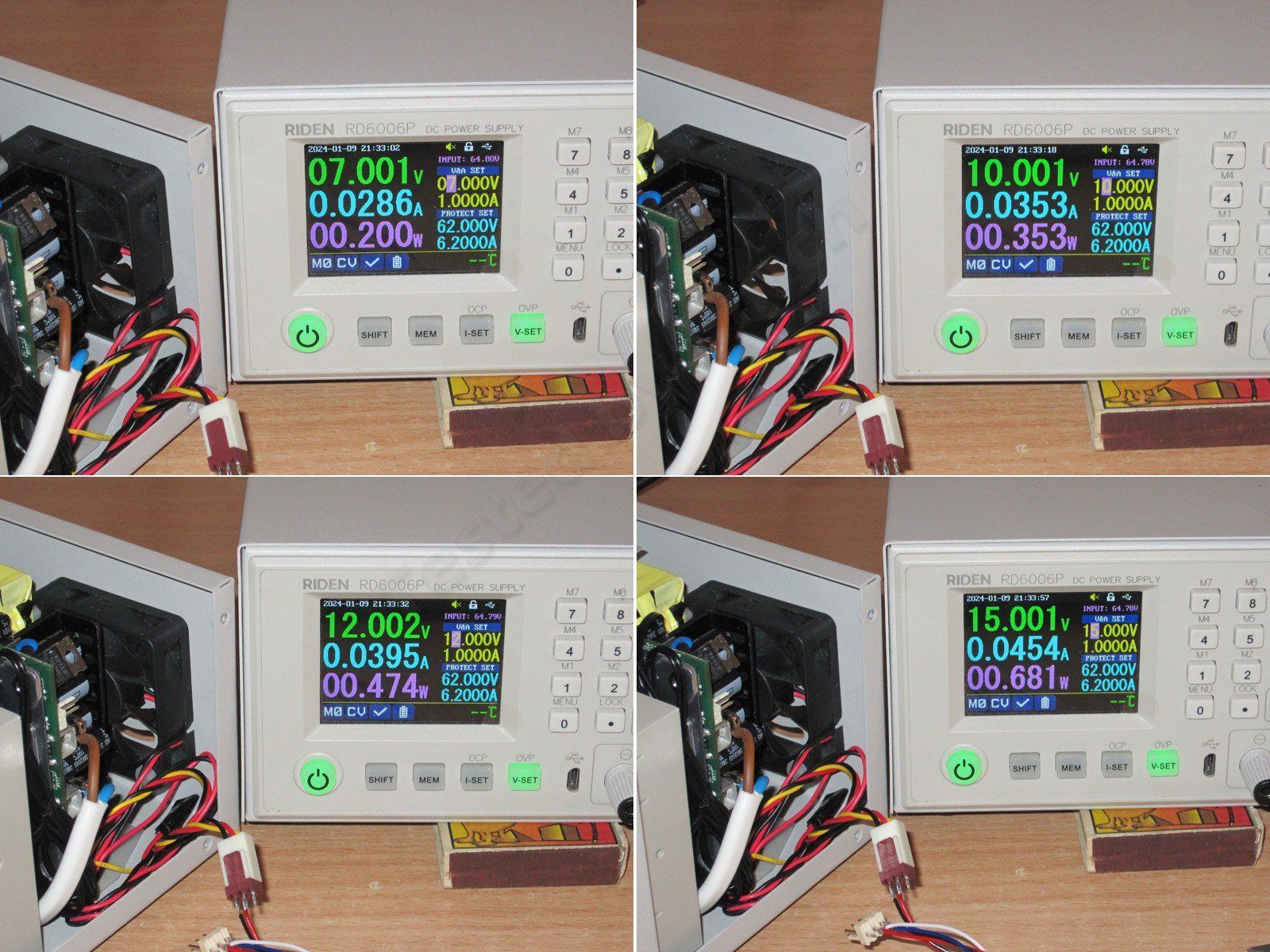
I didn't have a fan with suitable airflow at home, just some small Sunon rated at 0.5 W.

This model starts at around 7 V and draws almost its rated 0.5 W at 12 V. It also works fine at 15 V. It's quiet, by the way, but unfortunately it's too weak for my needs.
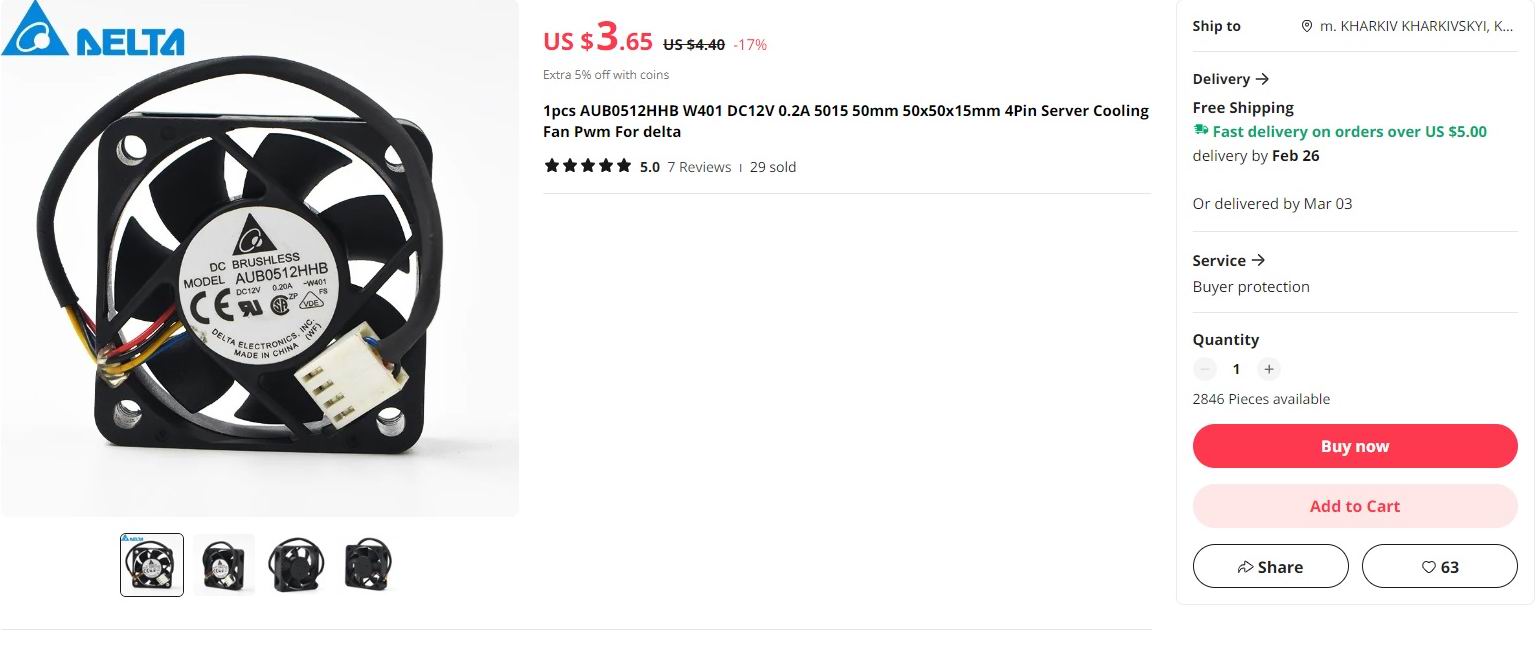
So during a sale I decided to order a more powerful fan. I bought it here for about 100 UAH ($2.54). Judging by the photos, it looks like an original, except it says For Delta.
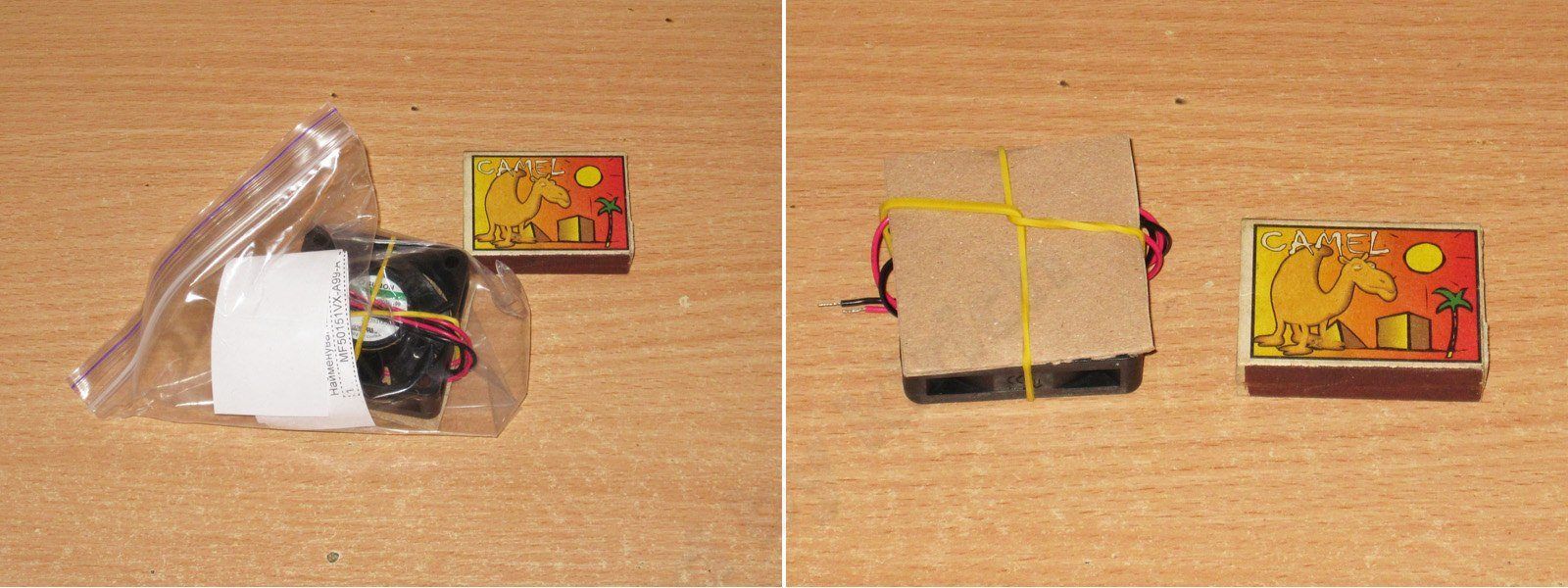
Five stars for the packaging: a cardboard box big enough to hold about ten of them.
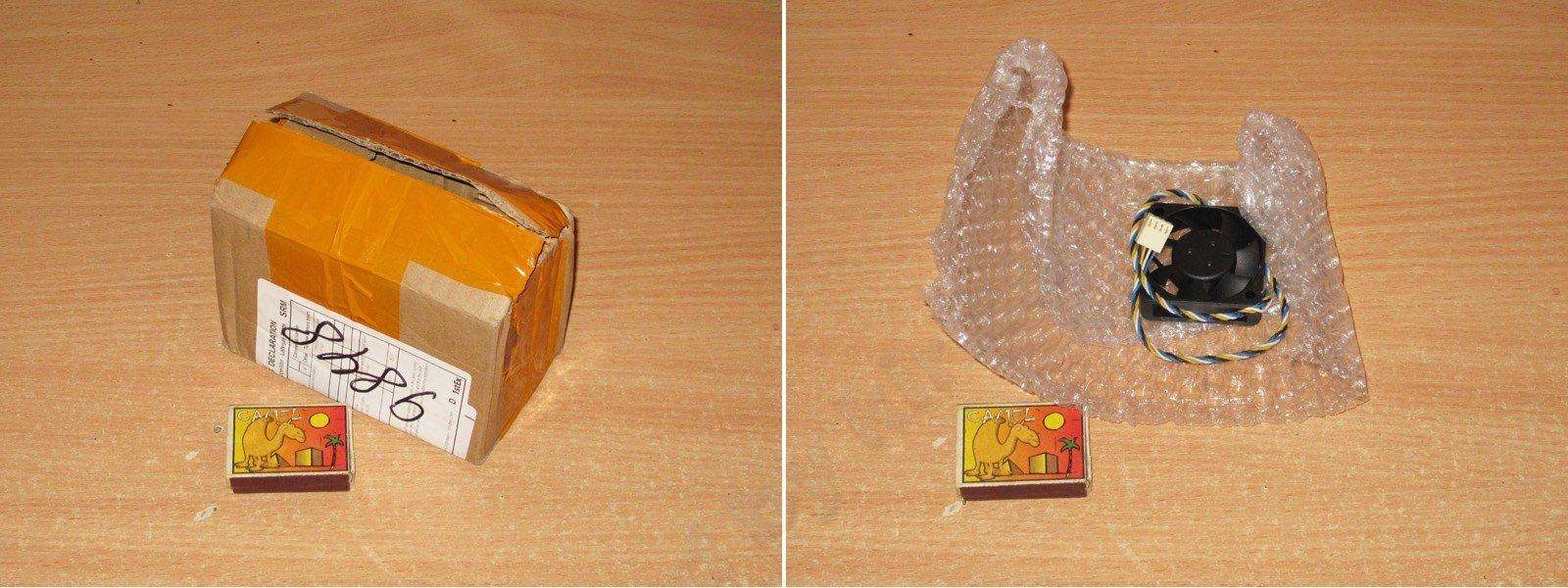
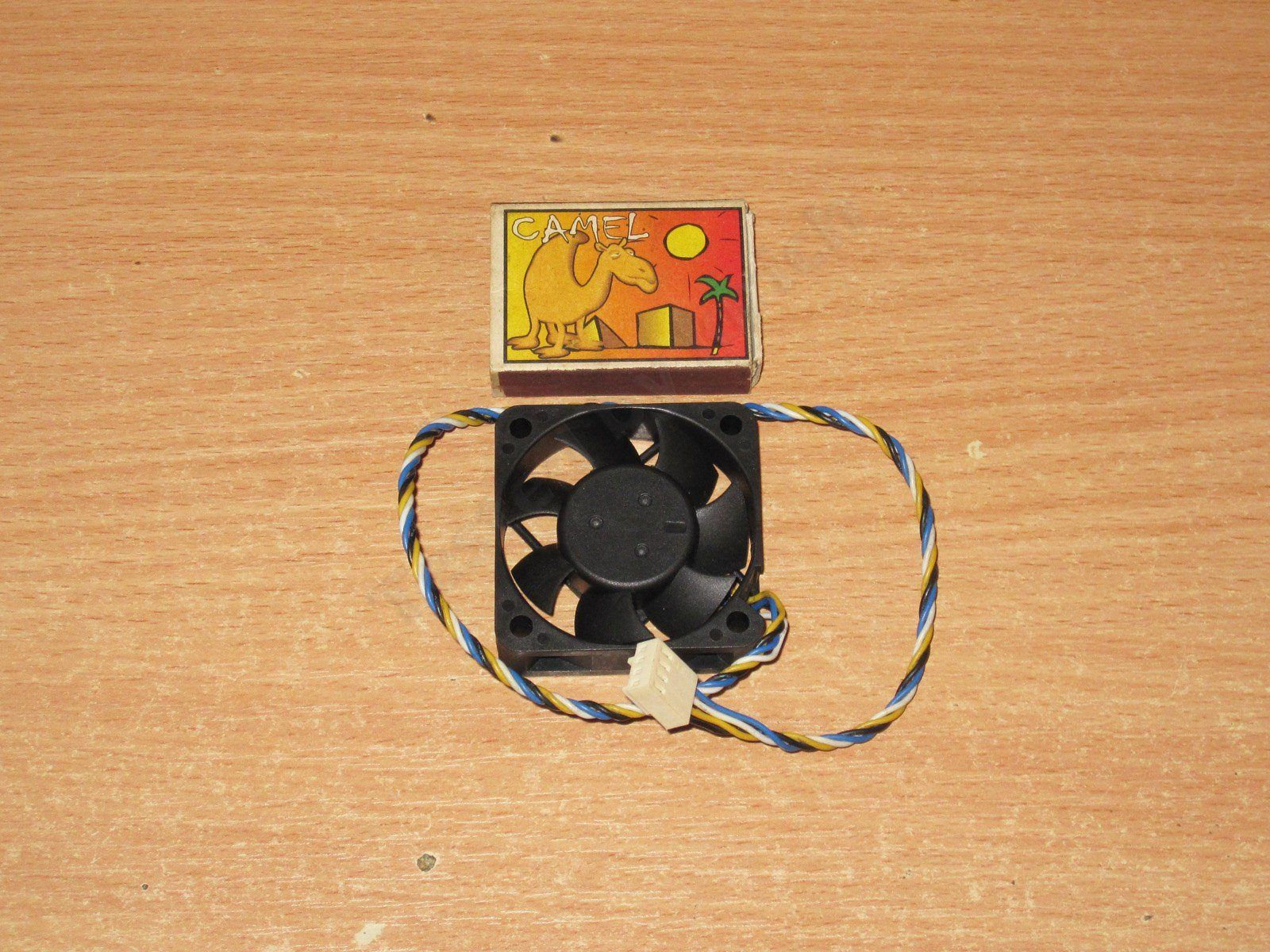
It's 50 × 50 × 15 mm, with a four-wire connection. The wires are fairly stiff, and subjectively it looks like a used genuine fan.
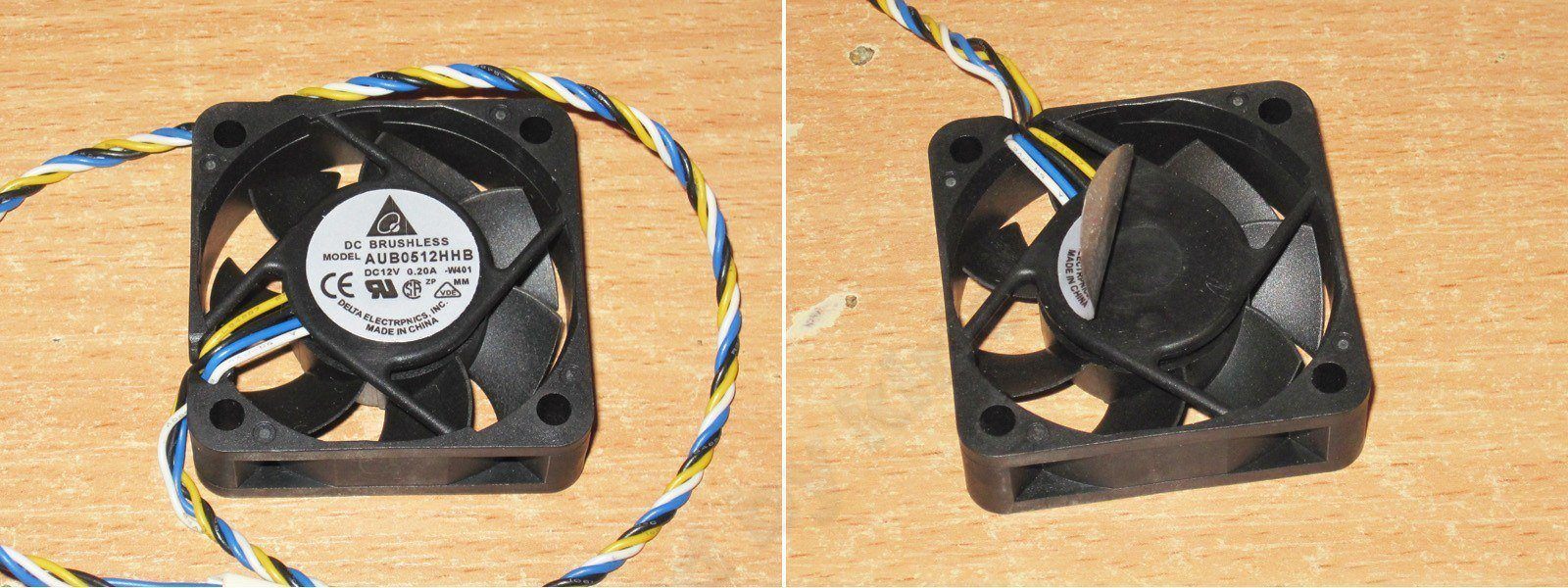
But the sticker is clearly not original. You can tell from the CE symbols, which are joined together here rather than separated as they are in the store photo.
It starts at around 7 V and shuts off when the voltage drops to 4 V. Unfortunately, it doesn't reach the stated 200 mA even when supplied with 15 V, although it blows noticeably harder than the Sunon shown earlier. Another disappointment, basically.
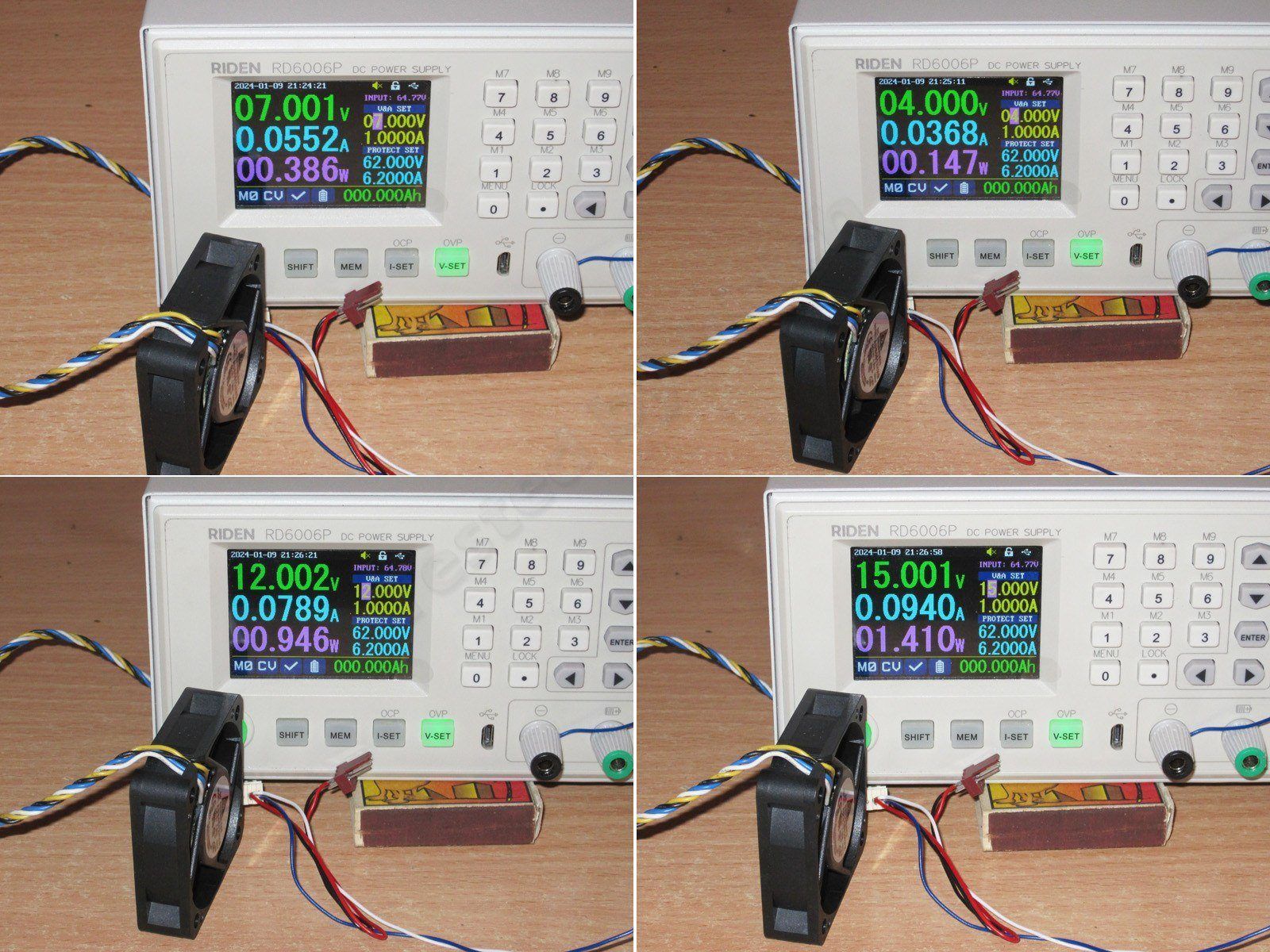
I specifically chose a 15 mm thickness; they usually produce more pressure. although I needed the opposite: it wasn't blowing air in, but drawing it out of the enclosure.
If you block its outlet, the current draw increases, which shows that it's designed to work against pressure.
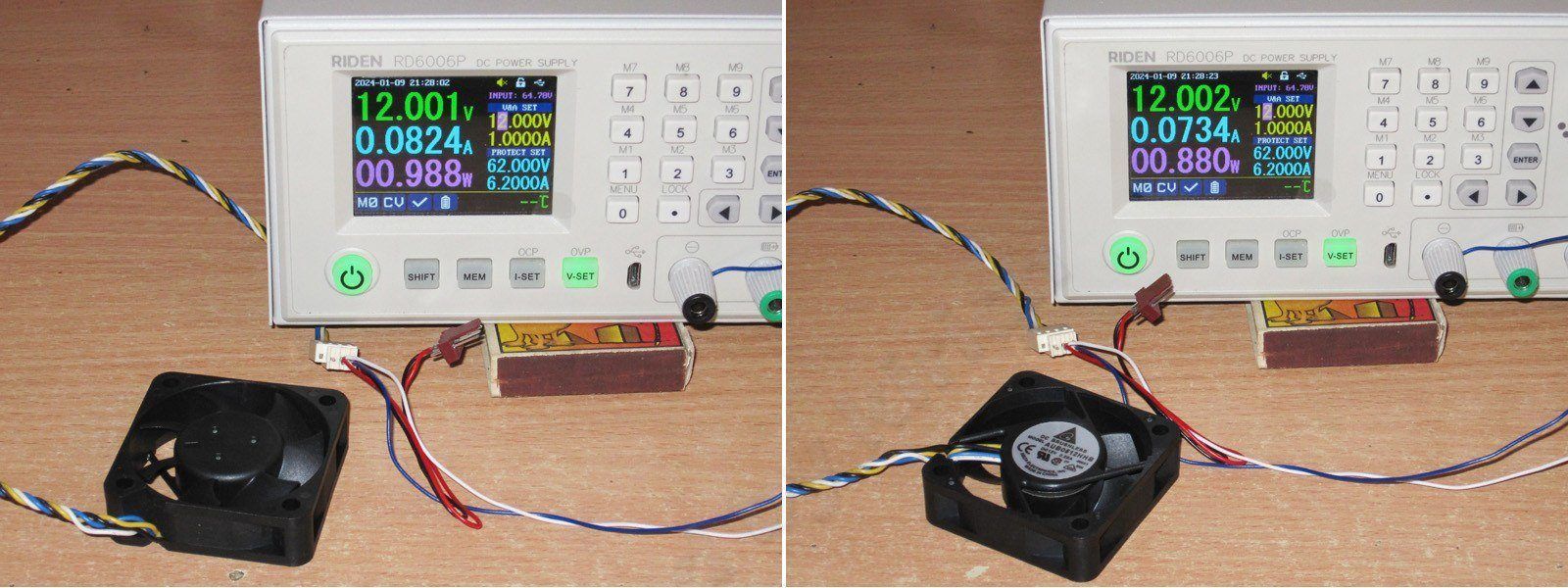
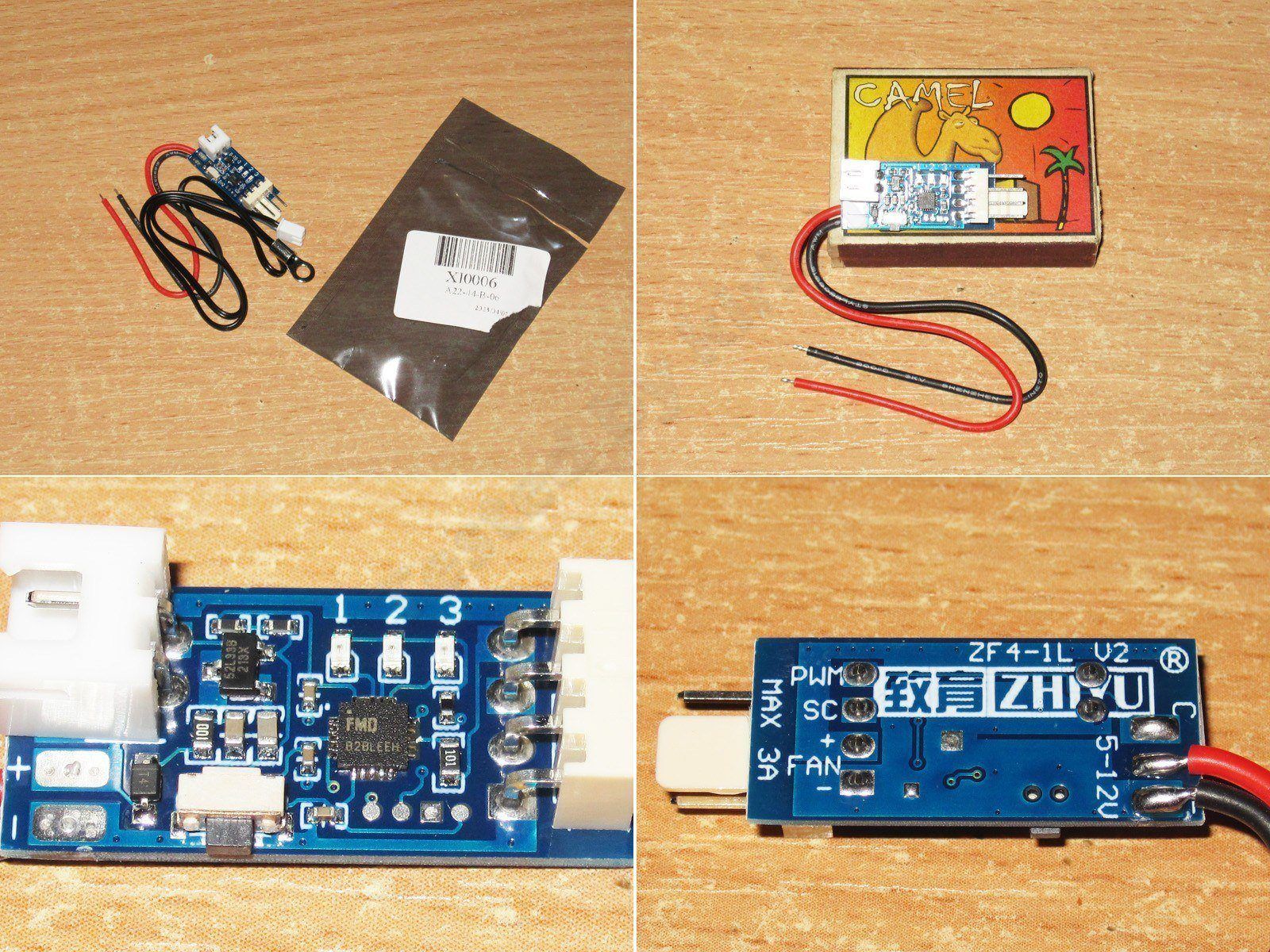
I probably would have kept it if not for one problem. First, I wanted some quiet, so I found a fan controller at home designed for four-wire fans. I bought it not long ago here, although I usually use controllers for three-wire fans.
They regulate the speed very well and work great, but... this particular fan had one quirk. It won't start below 7 V, but keeps trying and clicking about once every half-second. It's incredibly annoying... And when the voltage rises above 7 V, it immediately starts running at a fairly high speed, so there's no way to run it quietly.
In the end I thought, what the hell... I found a suitable fan at our local Cosmodrome, combined it with another order to save on shipping, and ordered it.
I went for the relatively inexpensive Sunon MF50151VX-A99-A, which costs around 200 UAH, or about $5–5.50. Yes, that's twice as much as the AliExpress fan, but at least it's new—and as for the rest, we'll see.
It's 50 × 50 × 15 mm; that's reflected in the model number. It has a two-wire connection. There's also a three-wire version, but it's more expensive. The rated power is 1.38 W.
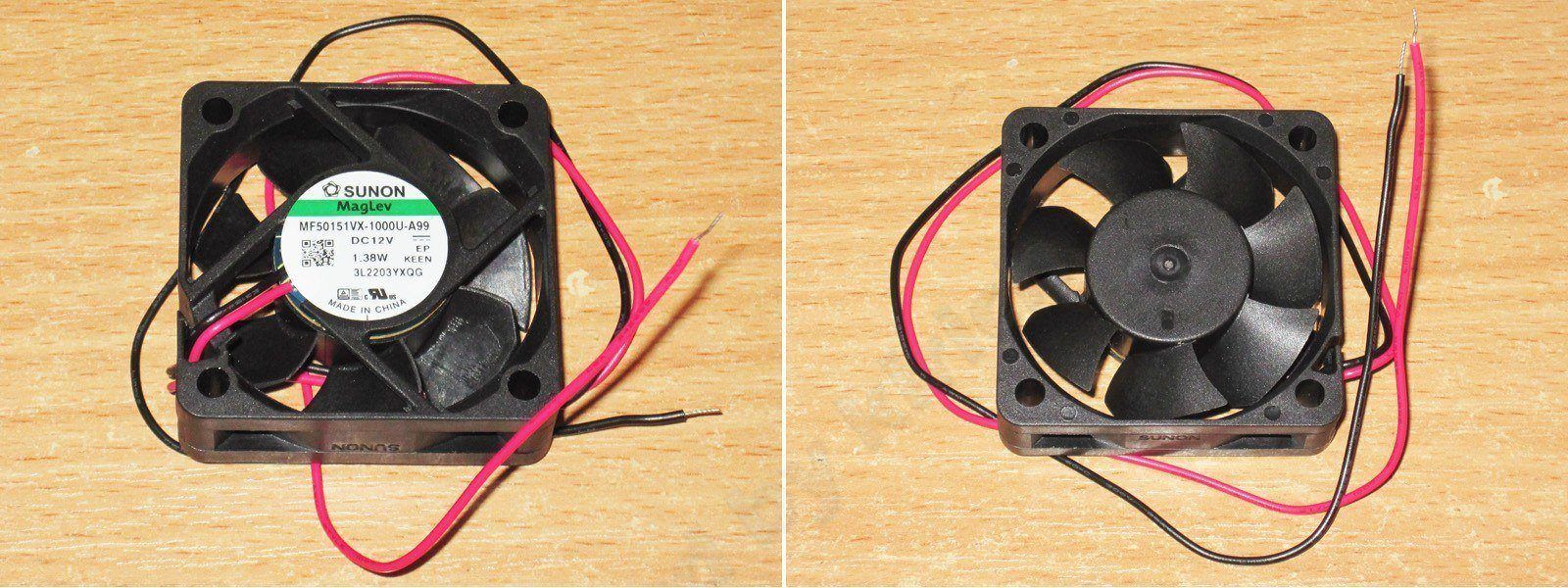
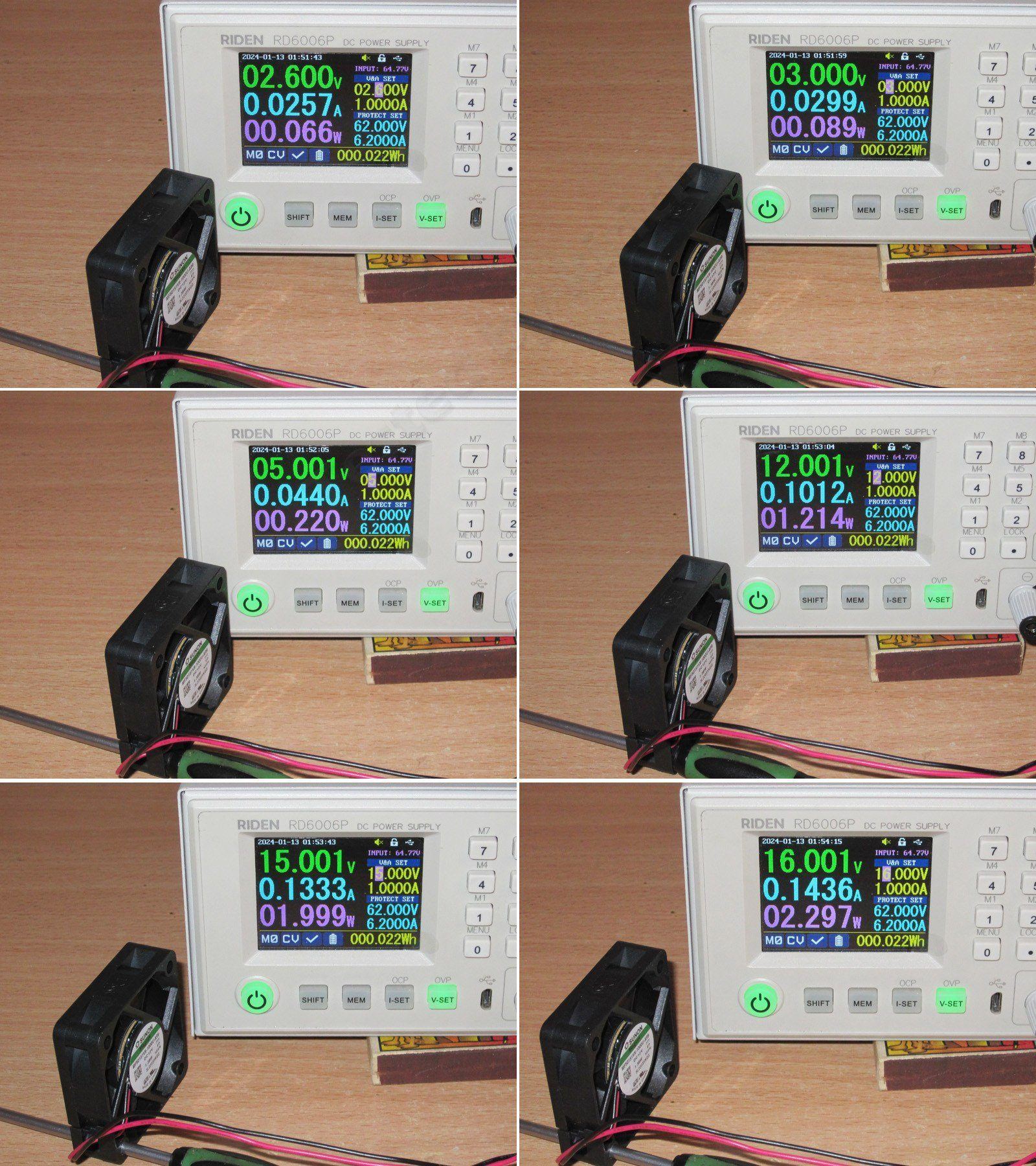
It starts at 2.6 V and runs great at 3 V. At 12 V it draws 1.2 W, a little less than the specified 1.38 W. At 15 V, though, it reaches 2 W, and the airflow is so strong that it starts blowing the fan away—even though I'd slipped it over the tip of a screwdriver. It also runs at 16 V, but that's clearly outside its normal operating range.
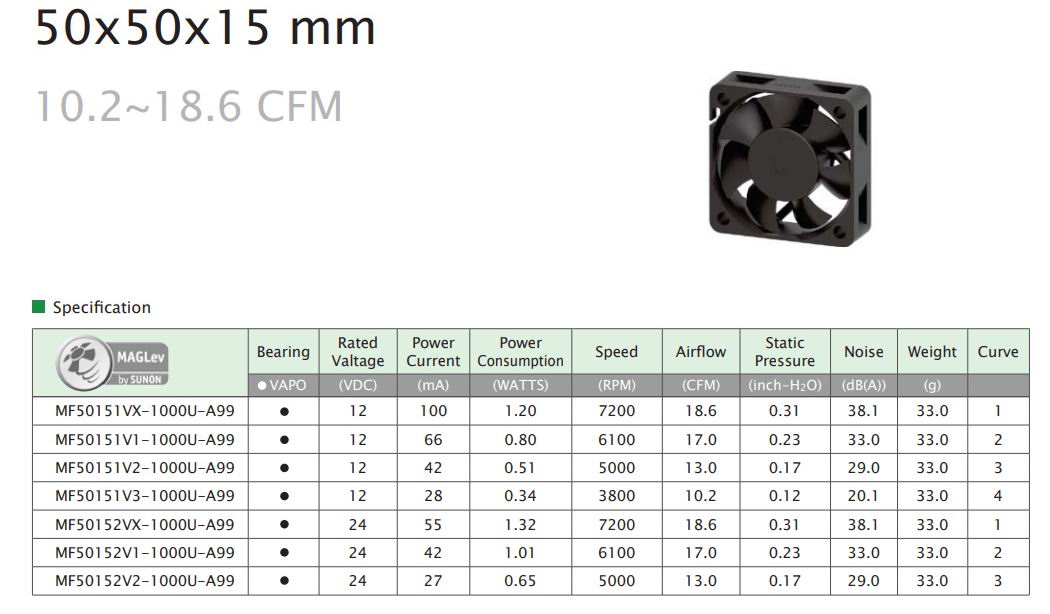
There's a caveat with the power rating: sometimes it's specified at 13.8 V rather than 12 V. I found this fan in the catalog (top entry), and it clearly lists the 12 V version as 1.2 W, which matches my measurements.
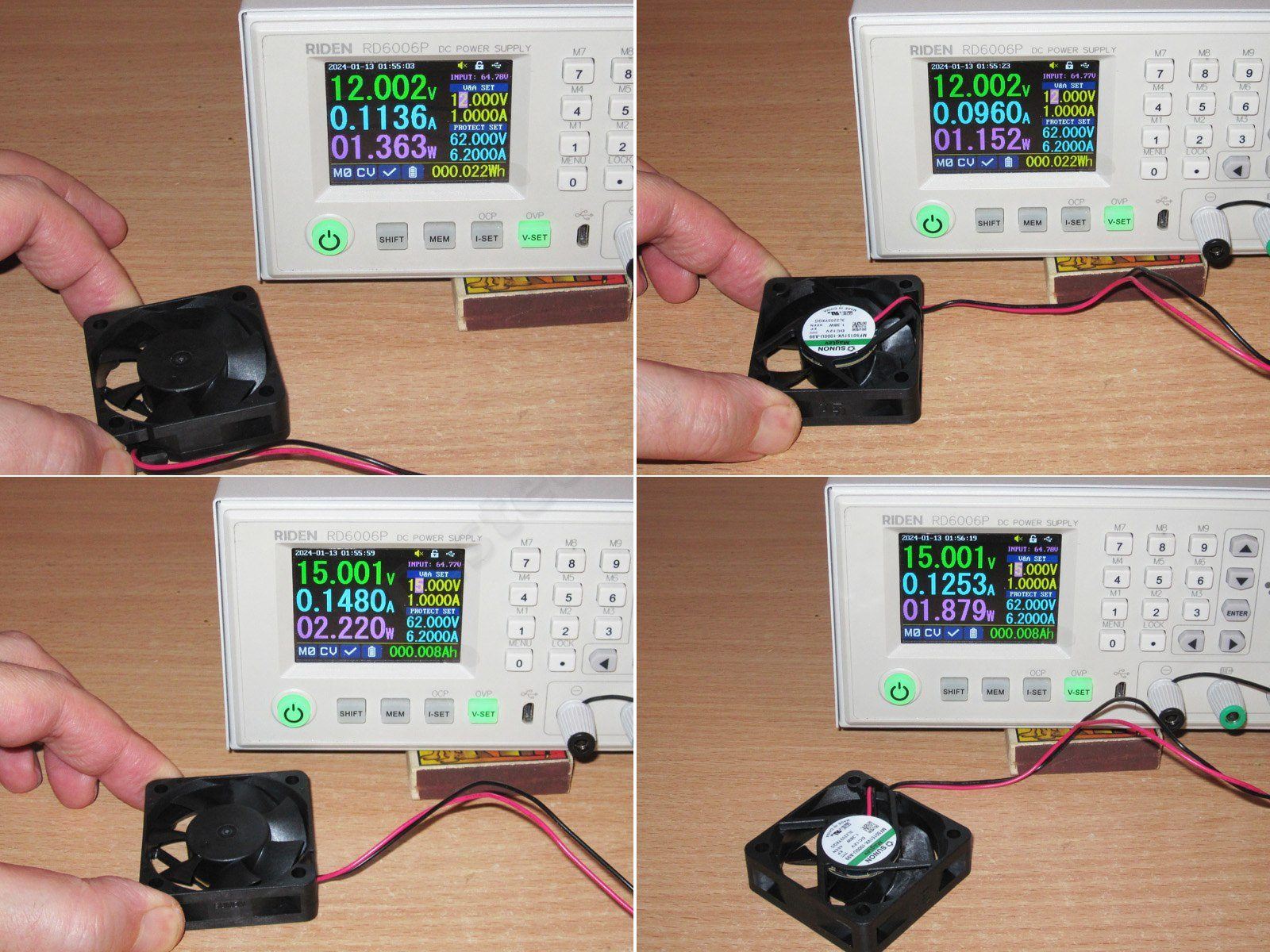
I checked what happens when the outlet is blocked and when the air intake is blocked. In the first case, the current increases; in the second, it drops. Just to be sure, I tested at both 12 V and 15 V.
Conclusions.
Once again, it turned out that buying a fan locally would have been easier and faster. Yes, AliExpress was cheaper, but once again I got something different from what was advertised. And it would have been one thing if the power were just lower, but it also behaves strangely...
As always, no complaints about Sunon: excellent fans that run relatively quietly. This one is MagLev, and the last one shown also moves a decent amount of air despite its small size. Anyway, I installed it in the power supply. I still need to add temperature-based speed control, because although the power supply does have a crude form of it, there are often times when the fan doesn't need to run at all—especially during a pause, when the power supply is running with no load.
That's all from me. I hope this was useful, and as always, I'd be glad to hear your comments.
202₴
This page was found when searching for:
csc5113c datasheet
csc5113c datasheet
The figures from this review are in the measurement database: Tools
Discounted products
You may be interested in


Discounted products
Support the project
All the content on the site and the advice are free, but we’d be grateful for your support of the project and the channel!
Comments2
Discuss on the forumHave a question or some experience to share? Discuss the article with the author and readers: the forum is a convenient place to share schematics and photos.
Go to the forumOnly registered readers can comment. It takes a minute to sign up, and you can log in with the same account you use on the forum.
Log inRegister
Comments are published in their original language.