
Examining power supplies from Ukrainian stores, Part Three
I’ve finally reached the third and final part of my look at the power supplies available from specialist stores.
This part will be relatively short, but I hope it’ll be interesting. As always, the best bit comes at the end :)
A reminder: to keep up with new posts on the blog, I recommend following me on Instagram. I’ll post notifications about new articles there, and maybe write about something interesting too - link to my account
You can also subscribe to updates and new articles on the Telegram channel - https://t.me/KirichBlog Just a note: discussion of reviews and articles is enabled on the channel, along with general chat. I recommend it.
A note: to avoid any accusations, and as agreed with the project sponsor, the labels on all the test units have been removed. Any resemblance to specific brands is coincidental. Otherwise, I promise this review will be as unbiased as possible, as is the case with all my reviews.
Also, a reminder that blog content may only be used with the author's permission and with an active link to the original article.
36 W, 12 V, 3 A desktop power supply.
The stated input voltage range is 100–240 V. Here I’m back to the fact that the permitted voltage in our household mains is up to 253 V, not 240 V. What’s more, even the old upper limit under the mains voltage tolerances was 242 V.
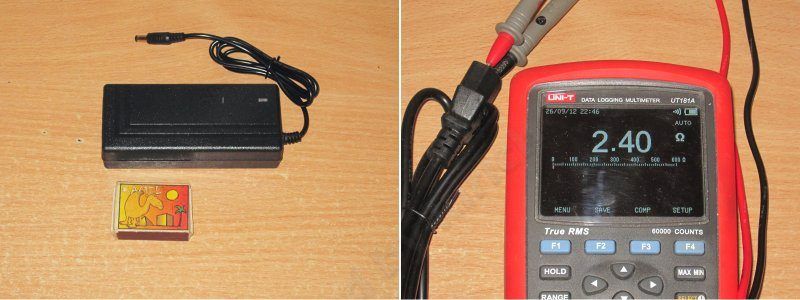
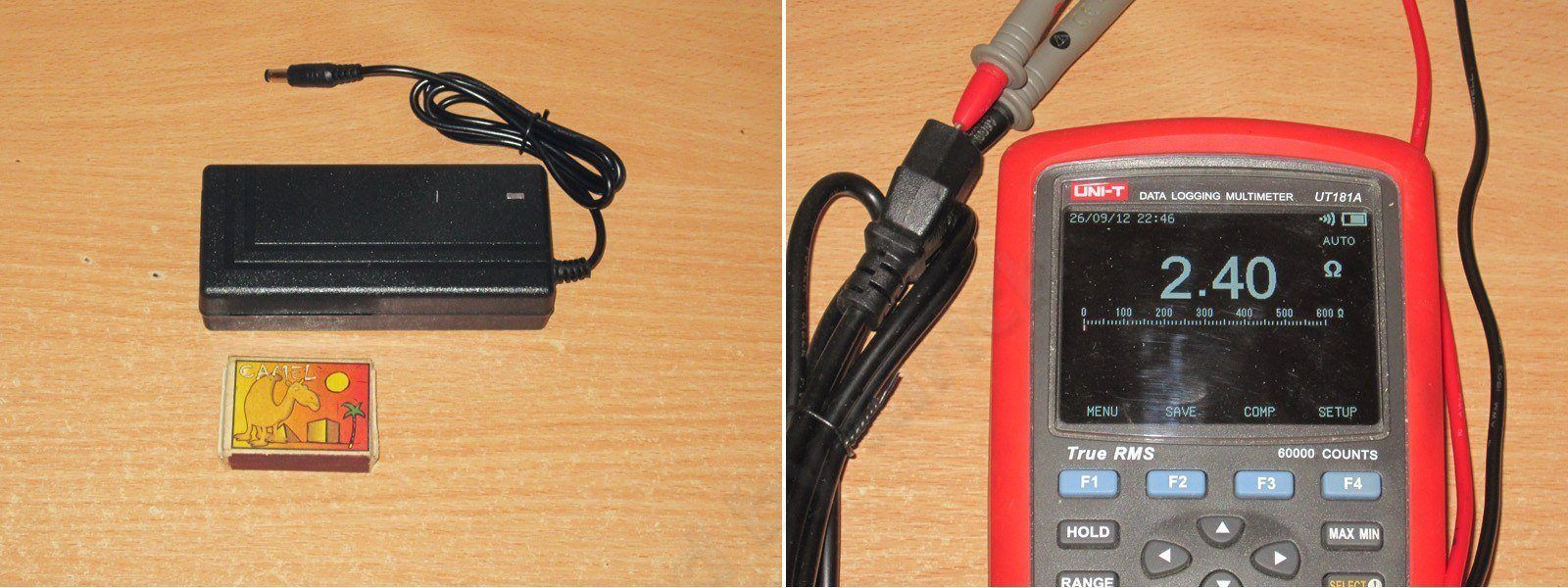
Looks like a very ordinary budget unit; a mains cable is included.
The mains cable is a story in itself. After Elektronny Mir sent me mains cables with a resistance of 2 Ω, I thought nothing could surprise me anymore. But now I have a new record holder: 2.4 Ω.
The inside is a bit unexpected. Apparently, they decided to turn a “wall adapter” into a desktop model for their product range.
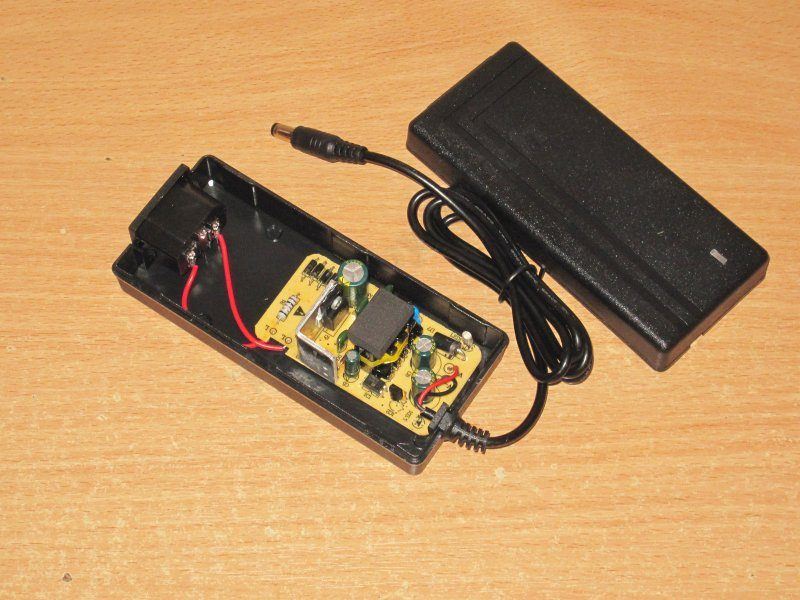
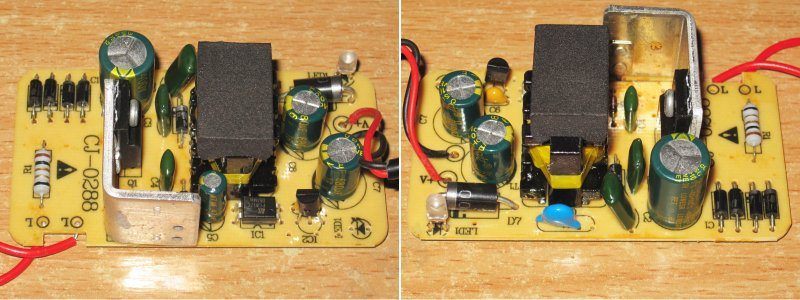
Compact and fairly simple. There’s no input filter, and not even a conventional fuse; a fusible resistor on the input side also serves to limit the current.
But the high-voltage transistor is mounted on a heatsink, which gives me some hope.
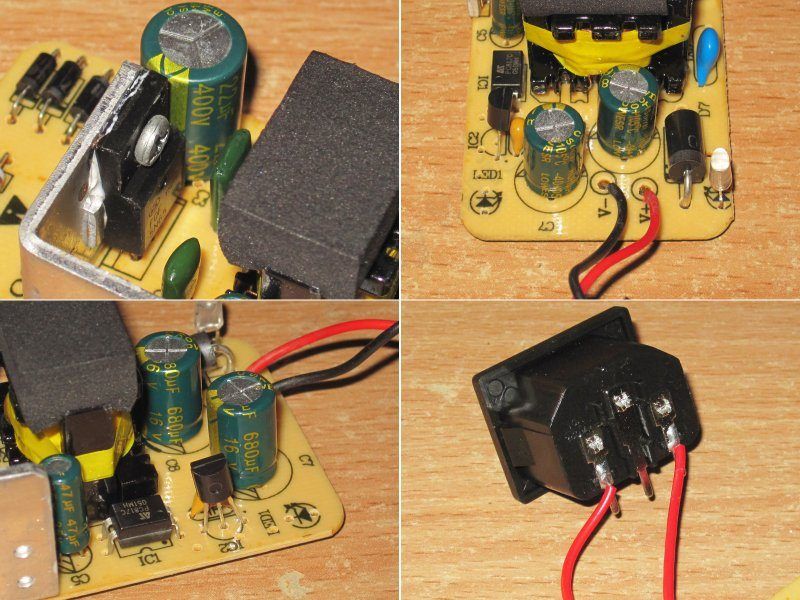
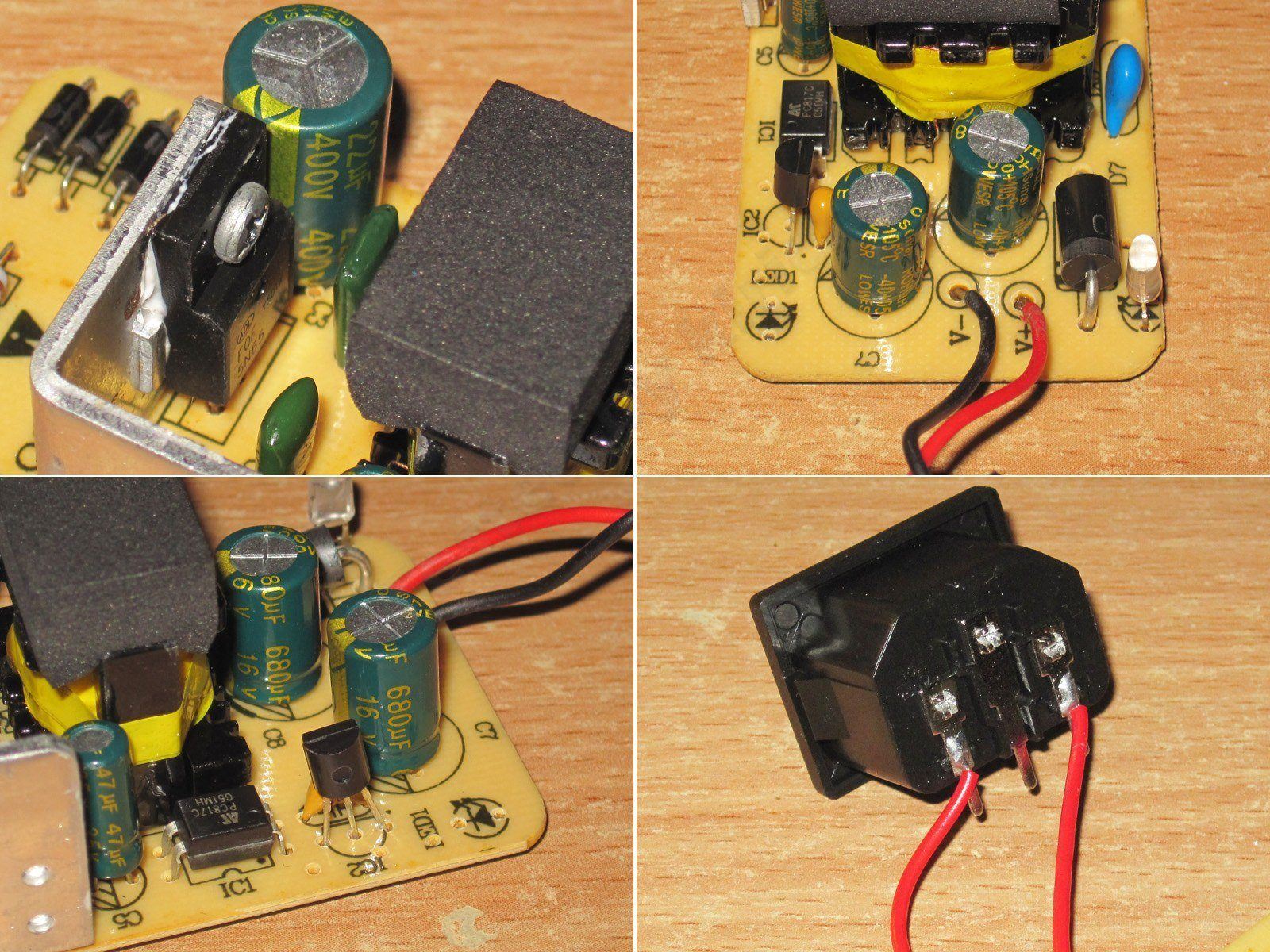
1. A 5 A, 65 V transistor, more than enough for the stated 36 W. The input capacitor is 22 µF.
2. There’s a single diode on the output; I’m almost certain we can forget about getting 3 A.
3. A pair of 680 µF capacitors. I’ll also note that this has a proper feedback circuit, not the “economy” version using a zener diode.
4. But this connector with the little wires soldered to it looks a bit... economical.
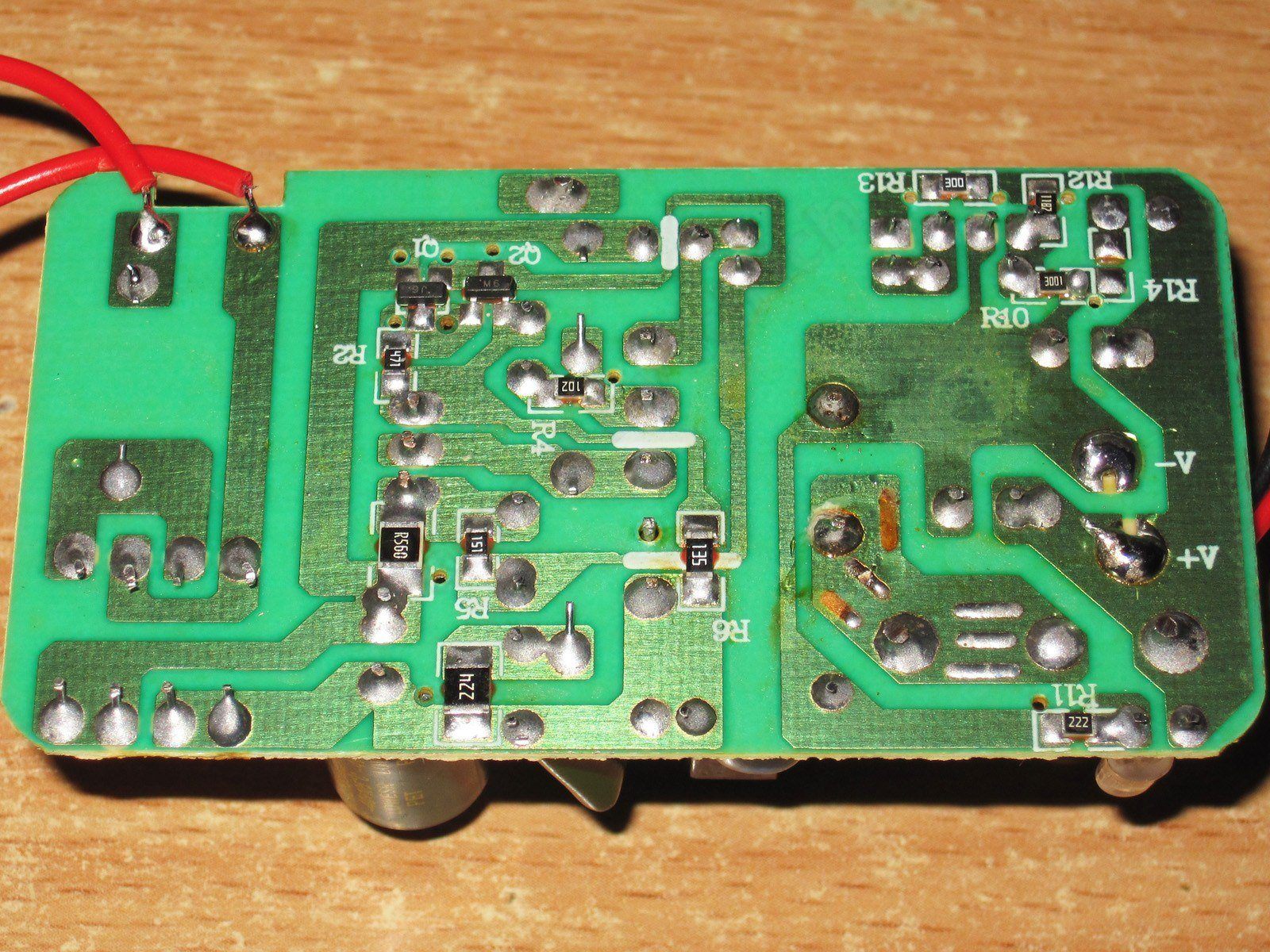
I was even more surprised when I turned the board over: it’s a self-oscillating converter.
No, there’s nothing inherently wrong with a self-oscillating converter. It’s a classic topology that was widely used, for example, in power supplies for even branded Japanese air conditioners, as well as in the standby supplies of ATX power supplies.
But, as always, there’s a catch: the board has a small electrolytic capacitor, and when it dries out, converters like this tend to run away, even when the feedback can no longer help. So many computer power supplies have burned out this way...
Branded power supplies addressed this in three ways: a protective zener diode across the output, a high-quality capacitor, or a film capacitor instead of an electrolytic one.
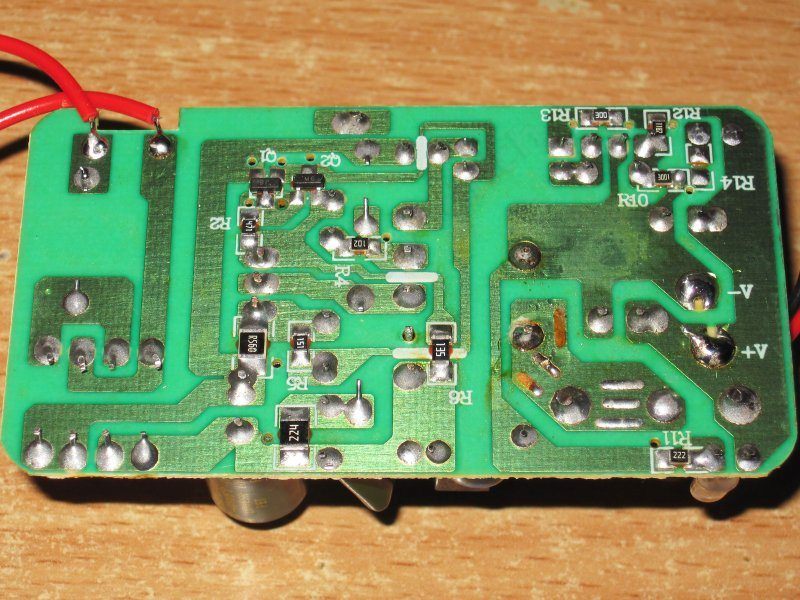
But I’ve digressed—and for good reason, because this power supply has a safety issue. Look closely at the circuit board and you’ll see that the clearance between the primary and secondary traces is only about 2 mm. So even though there’s a Y capacitor here, it doesn’t help.
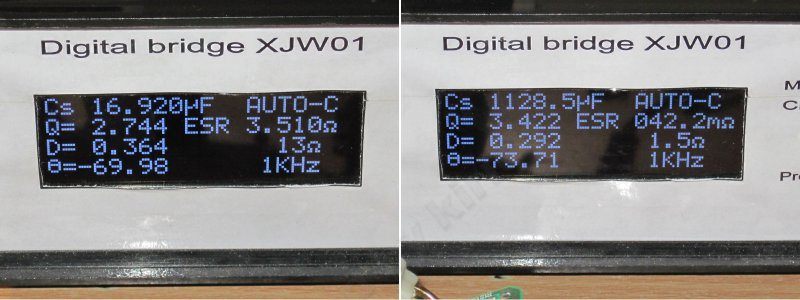
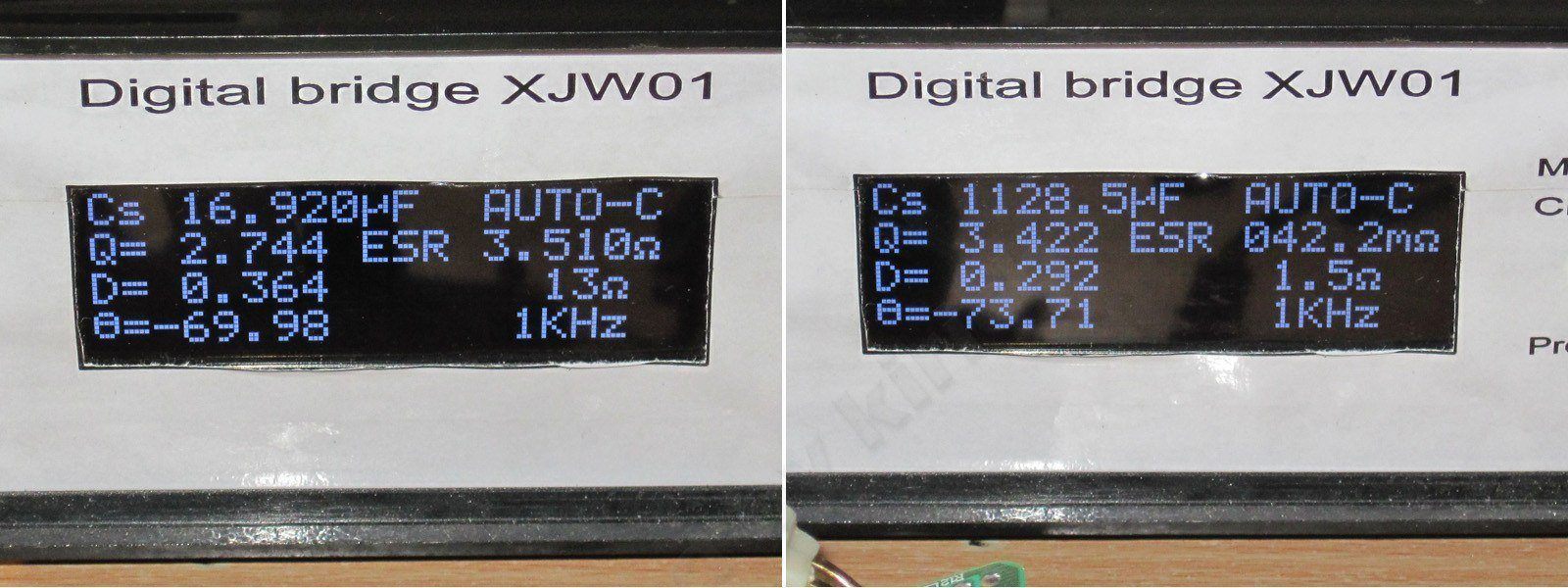
The actual input capacitor is 17 µF, and the output capacitors total 1128 µF. That seems a bit low for the stated power and input voltage range.
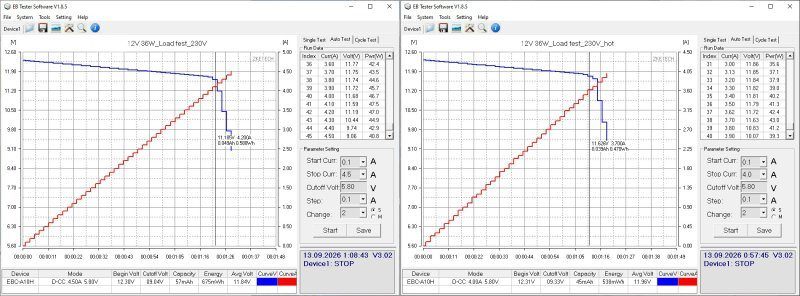
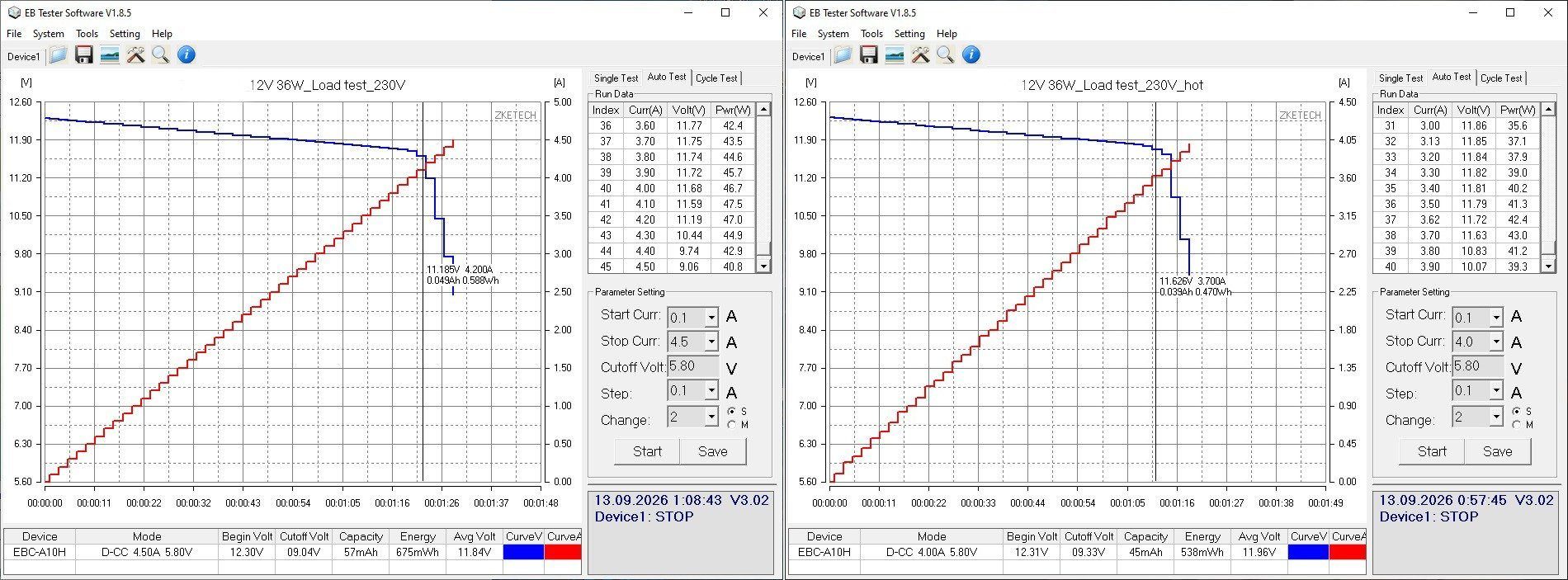
The protection trips at 4.2 A when cold and 3.7 A when hot. That’s a bit high, but the fact that the protection current depends so much on temperature is good; it’s essentially a simple thermal protection circuit, though the threshold is a little too high.
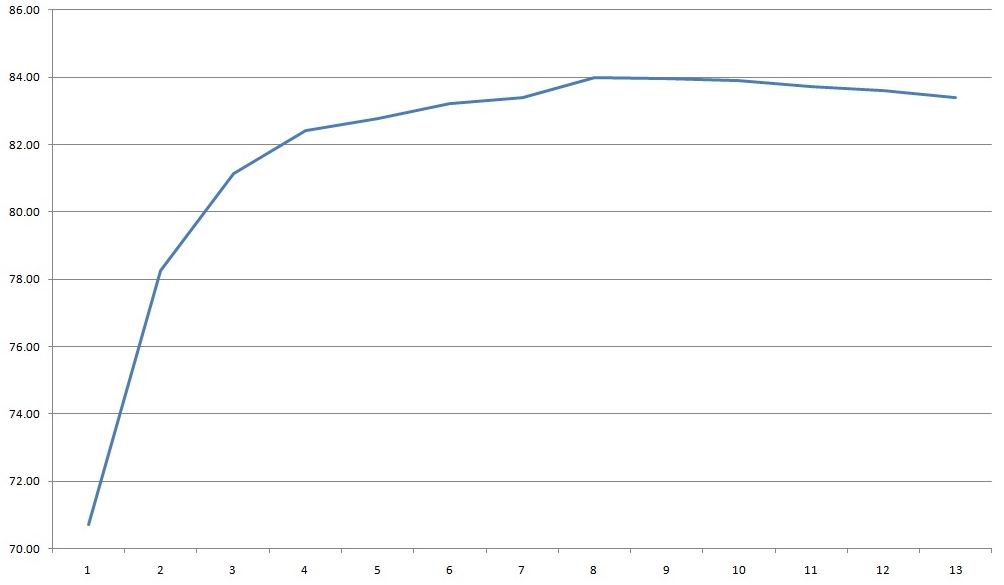
The efficiency is actually not bad. To be fair, a properly designed self-oscillating converter isn’t much less efficient than modern ICs.
Efficiency was measured from 0.3 to 3.9 A in 0.3 A increments. No-load power consumption is about 0.5 W.
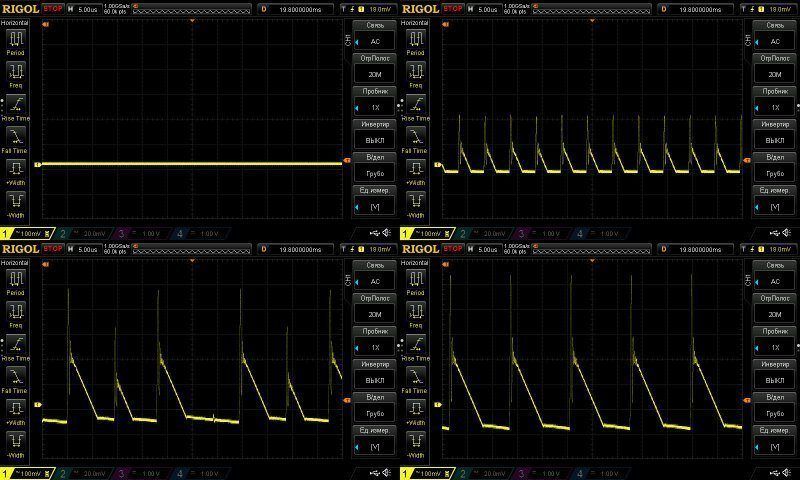
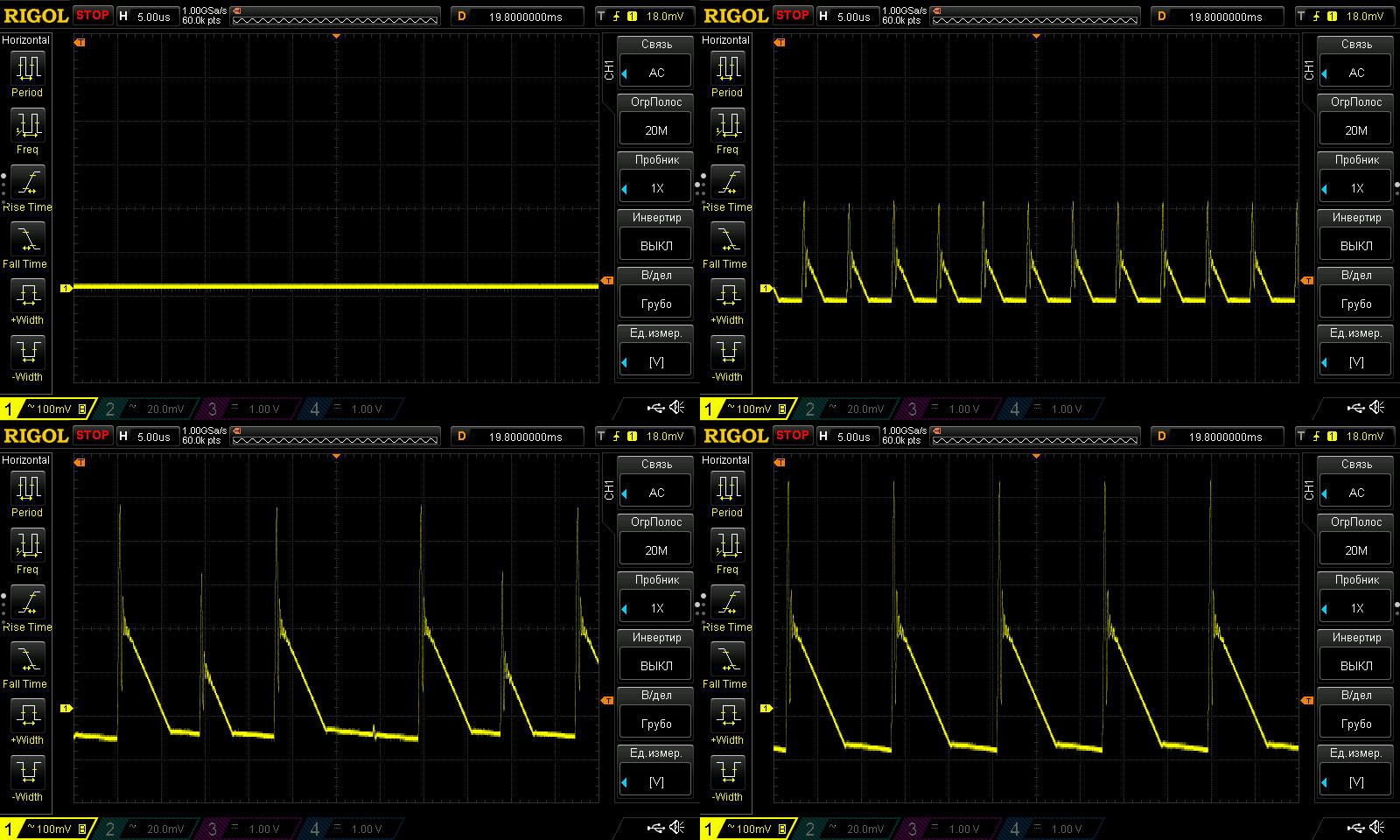
Ripple with no load and at currents of 1, 2, and 3 A.
Overall, it's acceptable for a budget unit: around 300 mV for the main ripple and 600 mV including the "spikes." That's fine for LED strips, but I definitely wouldn't recommend it for powering a router, for example.
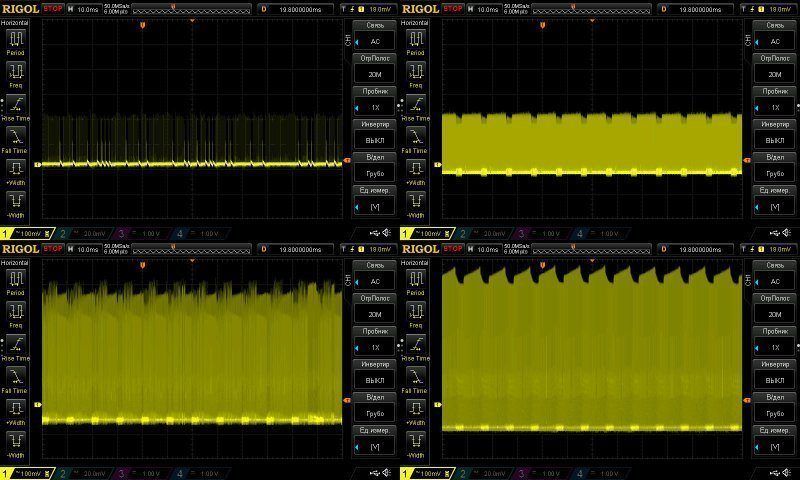
At 100 Hz and maximum power, there is some ripple, which is to be expected. As I wrote, this is fine for powering undemanding loads, but that's about it—and certainly not at maximum power.
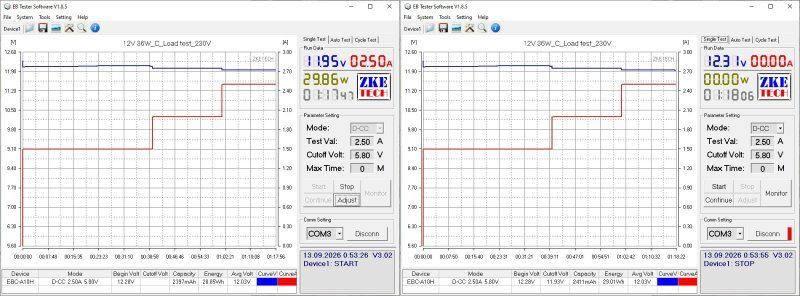
The load test was run in three modes, at currents of 1.5, 2, and 2.5 A. The voltage rises slightly with temperature, but by only 30 mV, so this can be ignored.
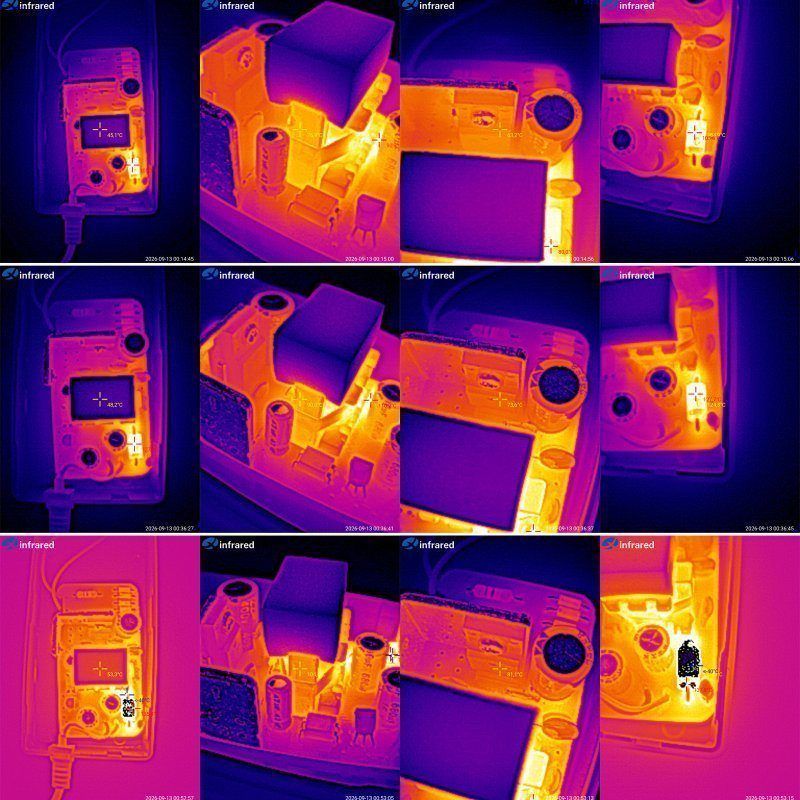
Now for the temperatures.
1.5 A — transformer 77 degrees, transistor 63, diode 106
2 A — transformer 90 degrees, transistor 74, output diode 128
2.5 A — transformer 104, transistor 81, output diode went over 138.
It's probably already clear that even 2 A (24 W) is pushing this power supply close to its limits, so a realistic continuous current is more like 1.7–1.8 A.
Power supply in a metal case, 100 W, 12 V, 8.3 A
The stated input voltage range is 110–240 V.
I think it's hard to find an electronics enthusiast who hasn't come across these power supplies. They're a convenient, practical solution, and inexpensive too. At lower power levels, they also offer effective cooling, since most of the case is aluminum and doubles as a heatsink.
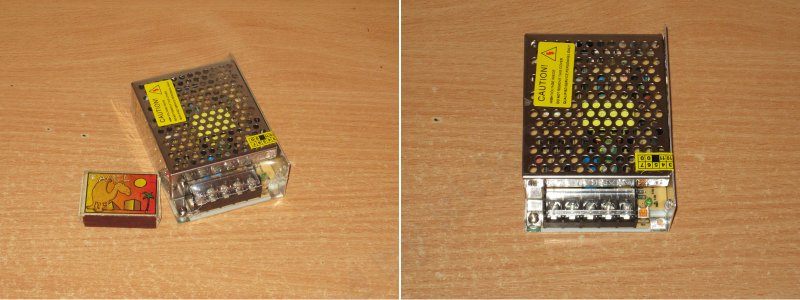
Everything here is familiar: a covered terminal block, output voltage adjustment, and a power indicator LED. It's a shame there are only two output terminals, but I think that's typical of all power supplies of this kind.
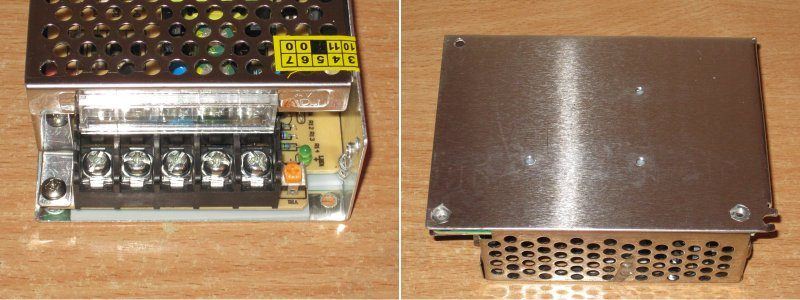
Usually, all you need to do to get inside is remove one or two screws. Let's do that.
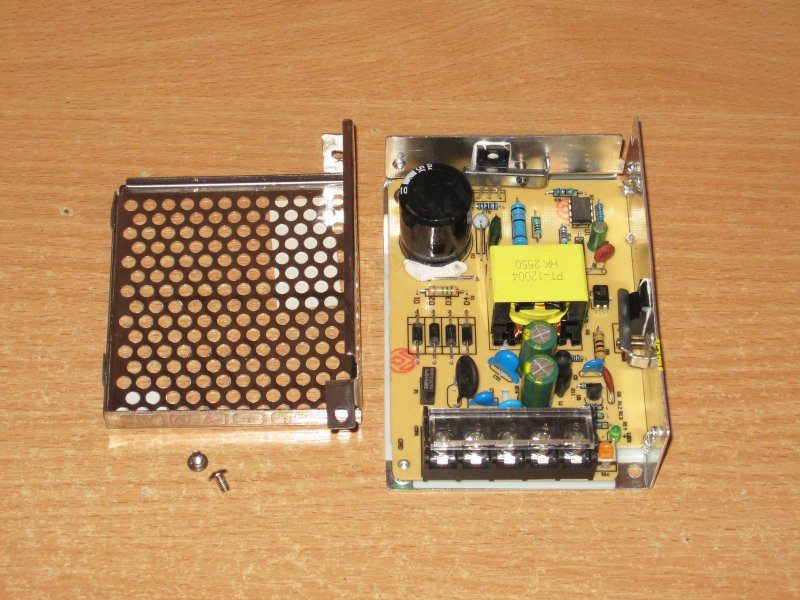
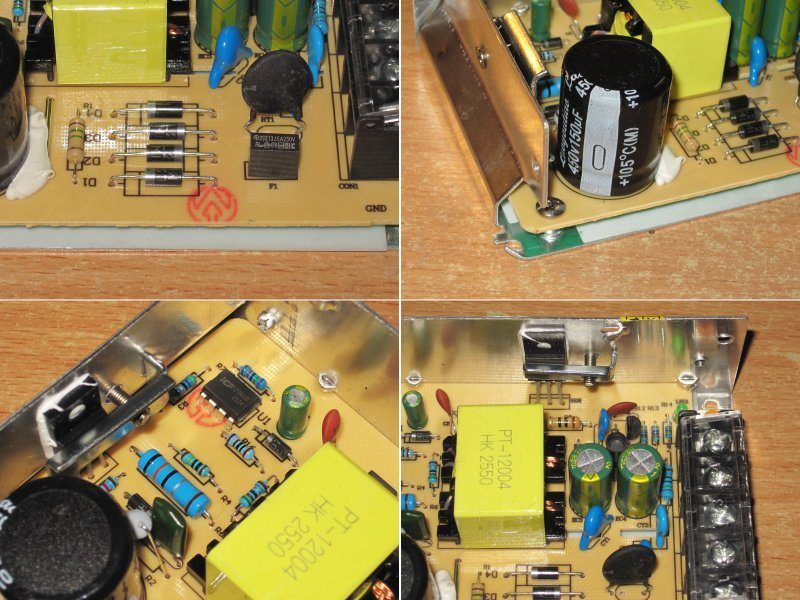
This is basically another "budget option." For example, you can see right away that there's no input filter, and the board is clearly made of phenolic paper laminate.
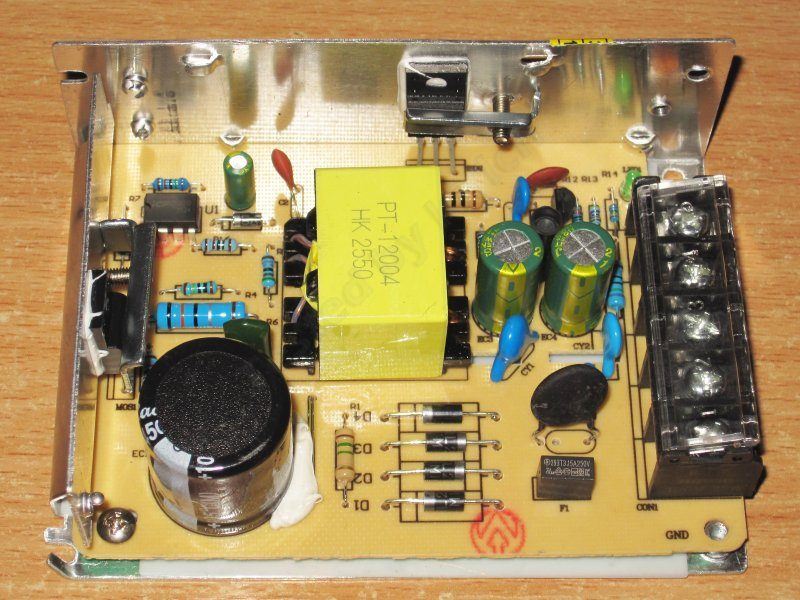
1. No filter; it has a fuse, a thermistor, and a bridge rectifier made from discrete diodes.
2. The input capacitor is rated for 450 V, with a stated capacitance of 150 µF.
3. The PWM controller section. The power supply is built around a CP2021D; there is no thermal protection.
4. The output has a typical diode assembly bolted to the case, along with a pair of filter capacitors.
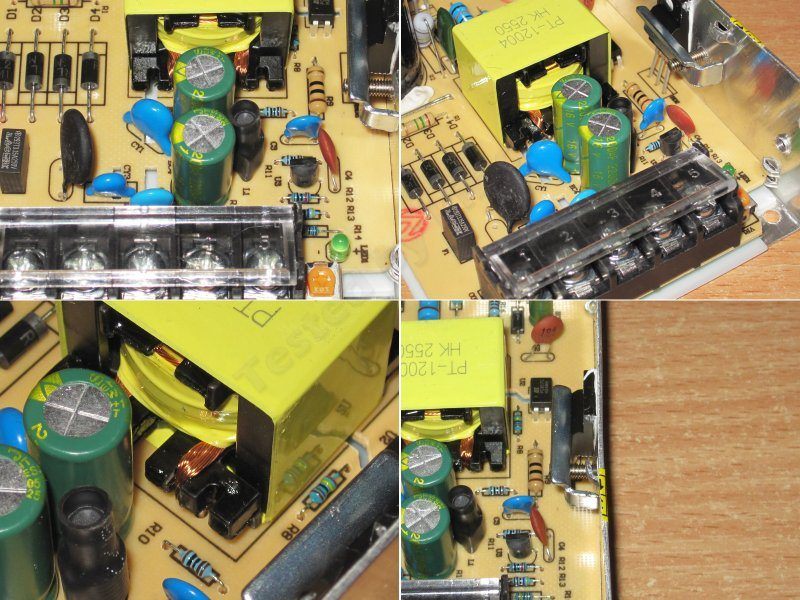
1. Y capacitors are present, and you can also immediately see an output inductor to reduce ripple.
2. There are two 2200 µF capacitors, which is pretty good; it should work fine.
3. The transformer winding uses stranded wire, which I also approve of.
4. But the case is very cheaply made—it's quite soft and prone to deforming around the installed components, the transistor and diode assembly.
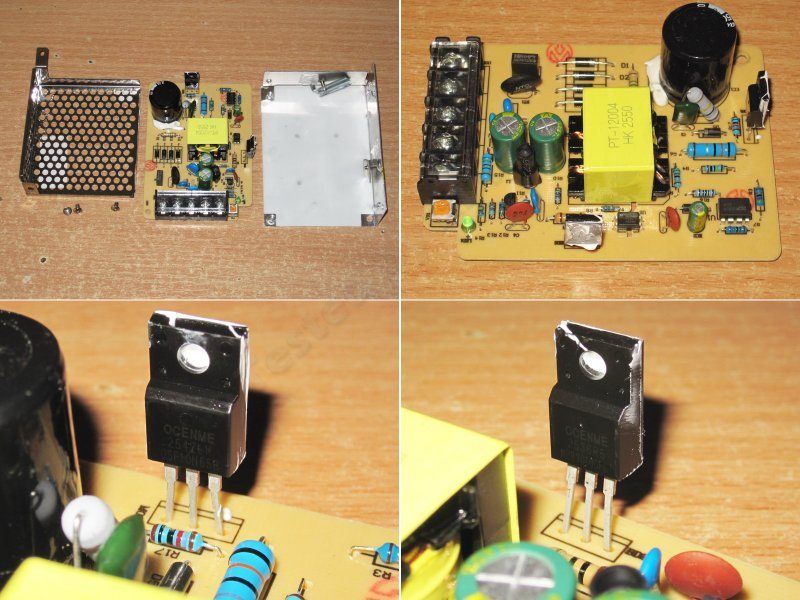
Let's take it apart further.
1. They forgot to put a plastic insulator under the board.
2. The other side of the circuit board. They didn't skimp on the thermal paste, by the way.
3. A 10 A, 650 V transistor—fine.
4. The diode assembly is from the same manufacturer and has the same markings: 30 A, 100 V. No complaints there either.
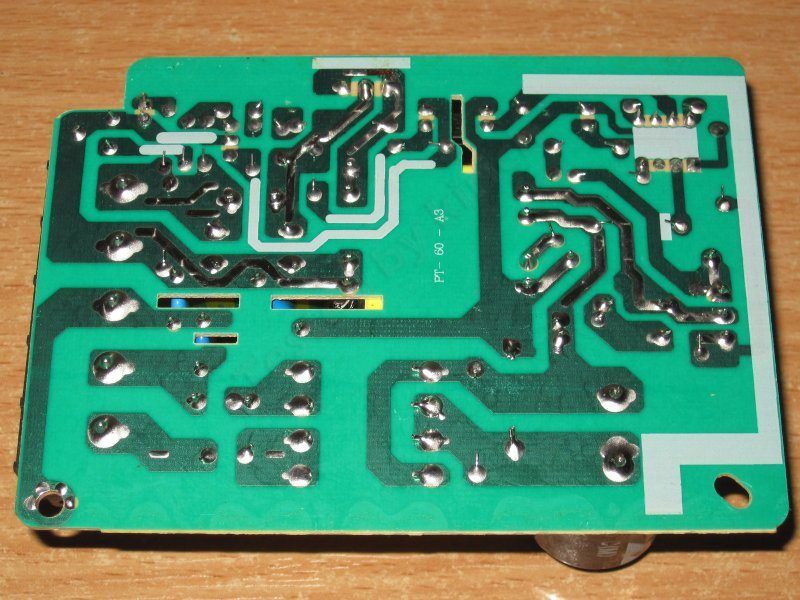
The circuit board is clean, but in my opinion the clearance between the primary and secondary sides is a bit small. The safety slots are the only thing that partly mitigates this.
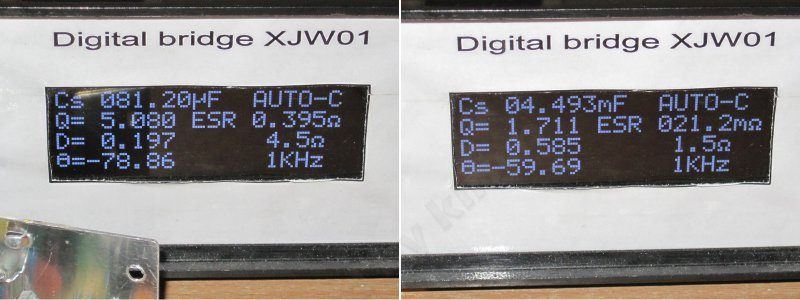
The input capacitor's actual capacitance is 81 µF, which is quite enough for this model, at least with our mains voltage.
The output capacitance is about 4500 µF, also fine.
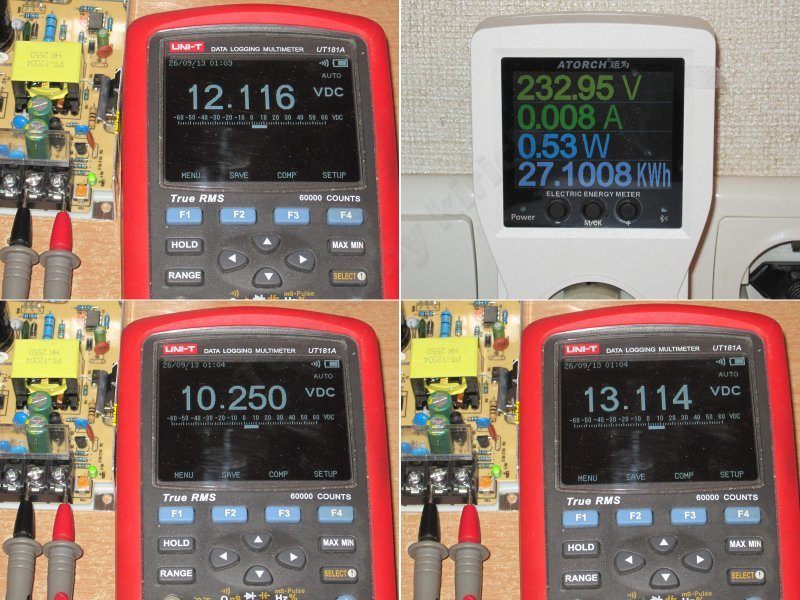
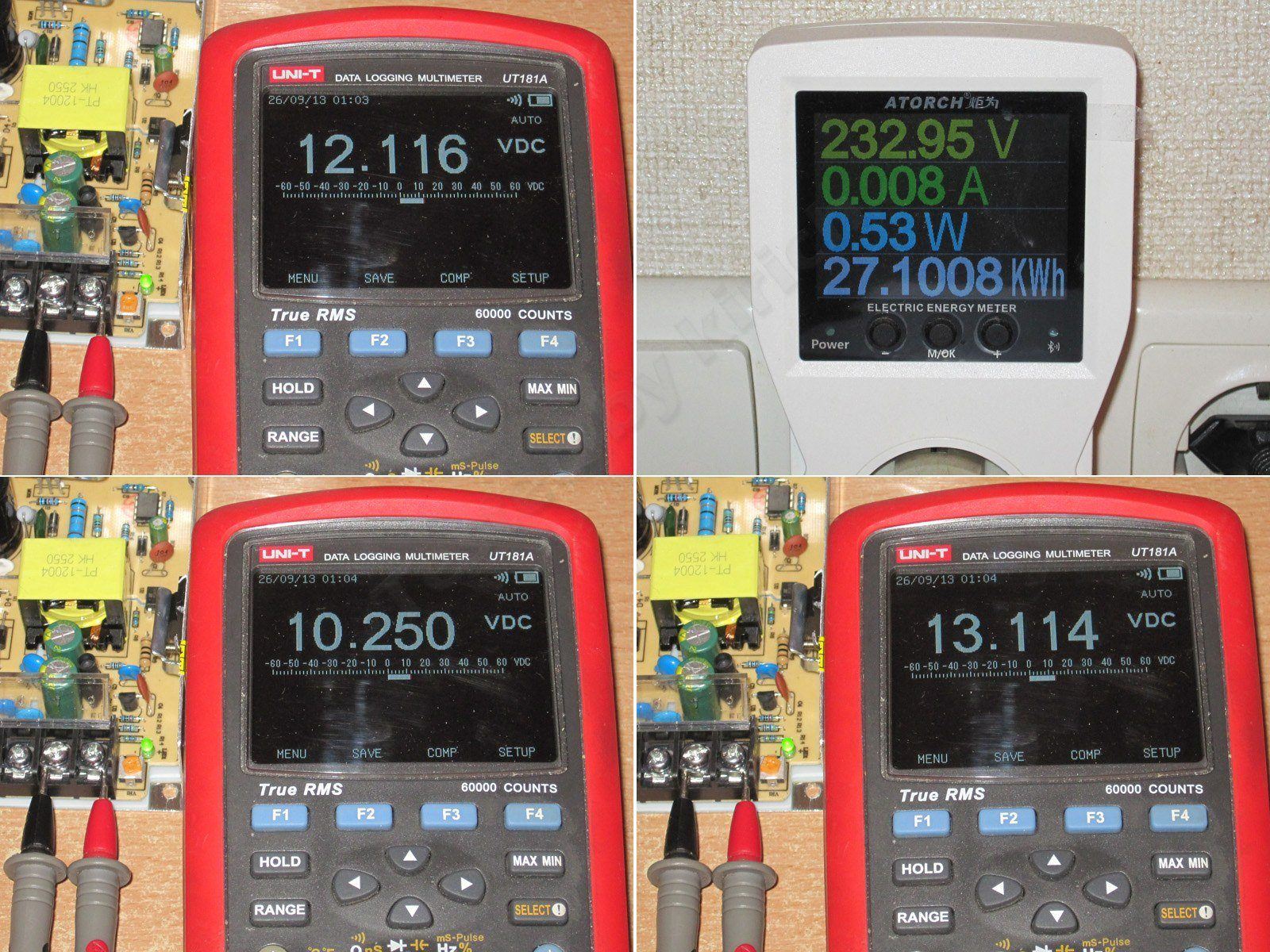
The output was initially set to 12.11 V, and no-load power consumption is about 0.5 W.
The voltage can be adjusted from 11.2 to 13.1 V, but there's a problem: if you turn the voltage all the way down with no load, the controller switches to start/stop mode, causing the voltage to fluctuate. Not that it’s critical, but it’s unpleasant and can matter in some situations.
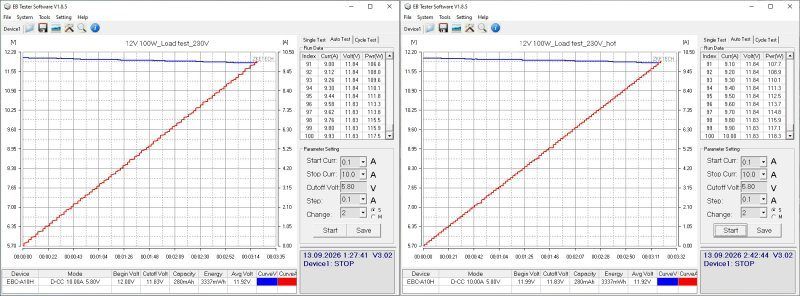
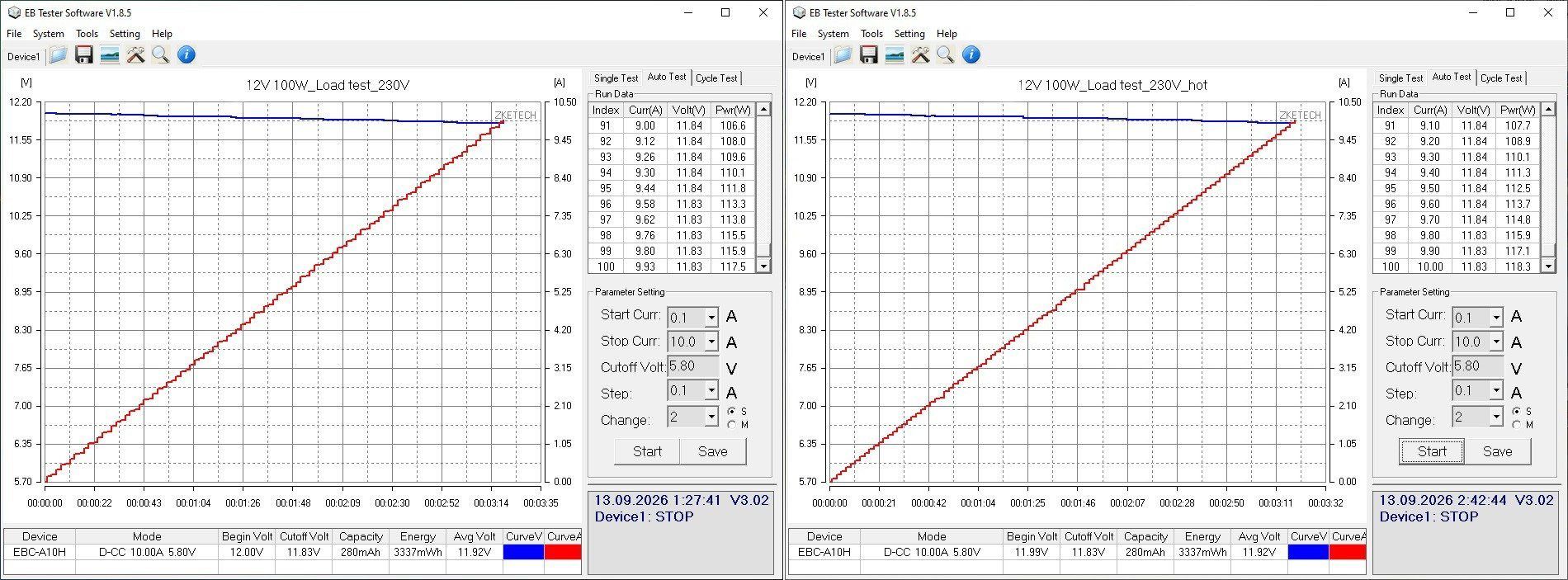
When checking the protection current, I hit the load’s limit. An additional test showed that the protection is set to around 11–11.5 A, which is perfectly acceptable as long as it doesn’t overheat.
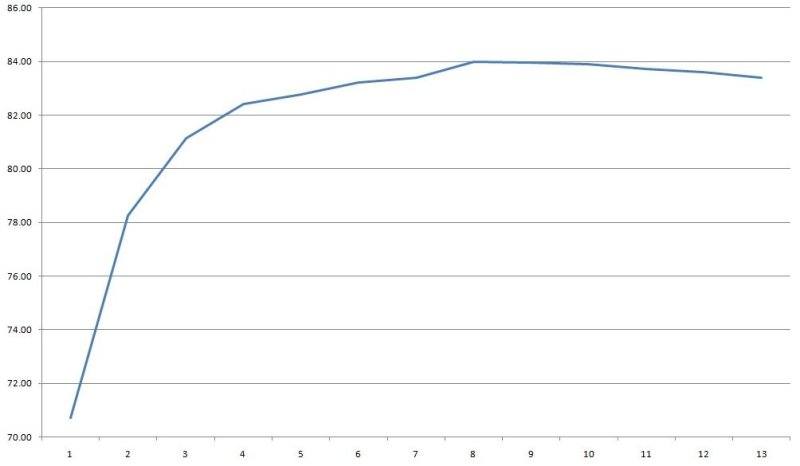
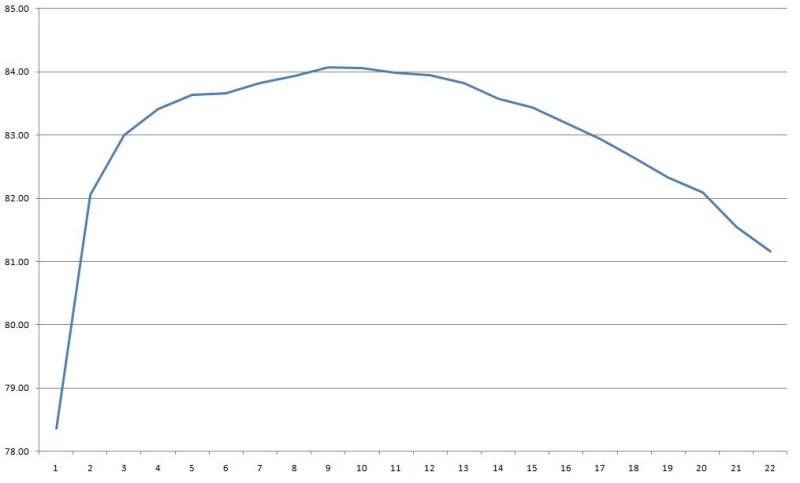
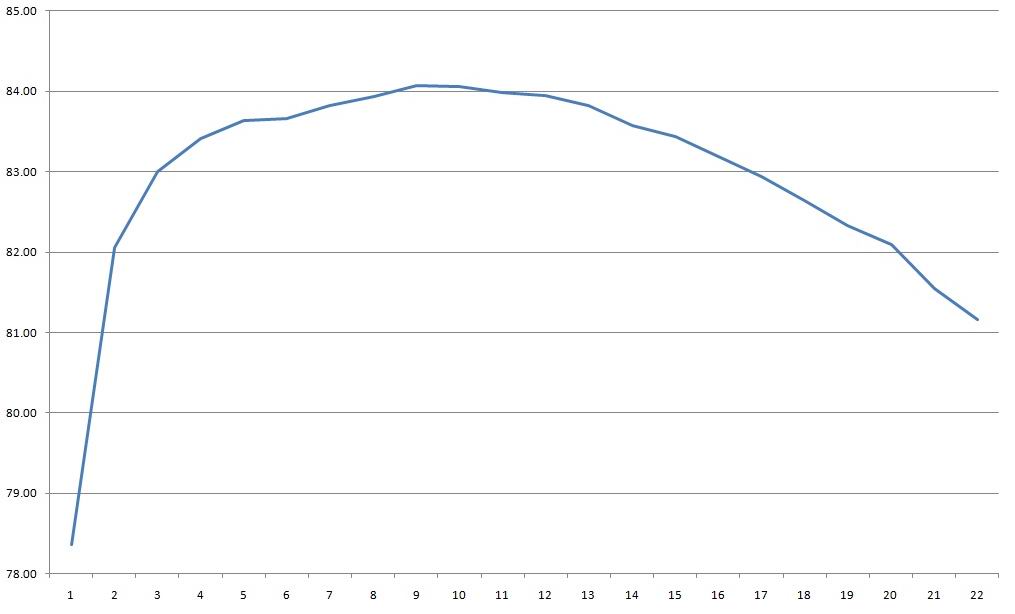
Efficiency was measured from 0.5 to 11 A in 0.5 A increments. It peaks at 84%, but the odd shape of the graph gave me pause; it looks like the power supply is struggling a little with the load. In theory, this can happen because of an undersized transformer, or, for example, if its windings are made of aluminum rather than copper. But I won’t make any claims, since I haven’t checked.
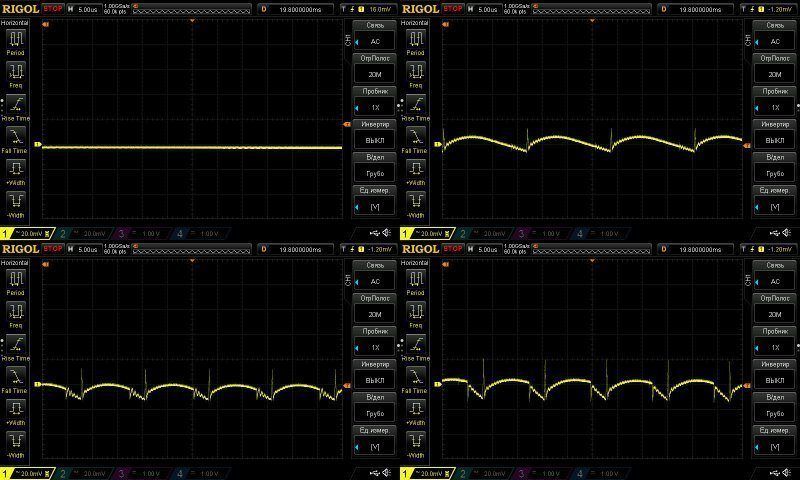
Ripple was measured with no load and at currents of 3, 6, and 9 A.
Since there’s an inductor on the output, the high-frequency ripple is small, as expected—just around 20–25 mV, which is certainly good.
At low frequencies, though, the picture isn’t as rosy. On the one hand, we see sharp, large peaks at 100 Hz, but it’s not that straightforward.
Proportionally, these peaks are much higher than the average background level, but in terms of the overall amplitude, they’re around 100 mV—not all that much. They’re more unpleasant to look at, and this power supply is unlikely to be suitable for anything audio-related.
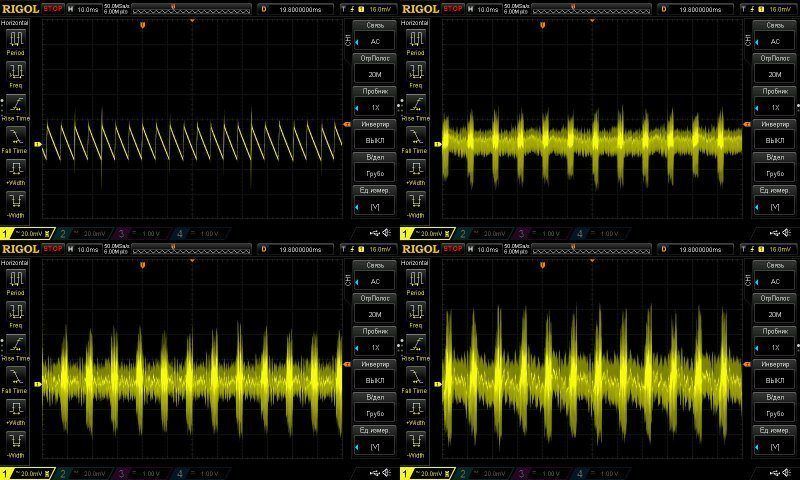
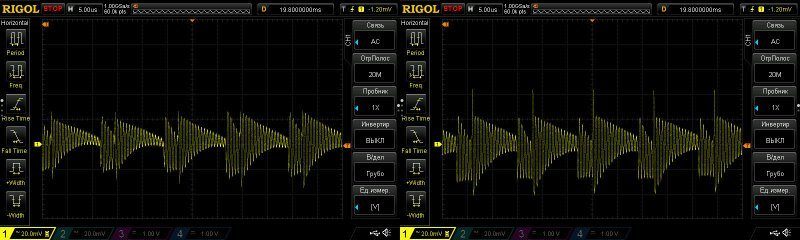
What I liked even less was the occasional resonance at 6 and 9 A. But again, without a detailed investigation, I won’t make any definite claims. Subjectively, the power supply works just fine.
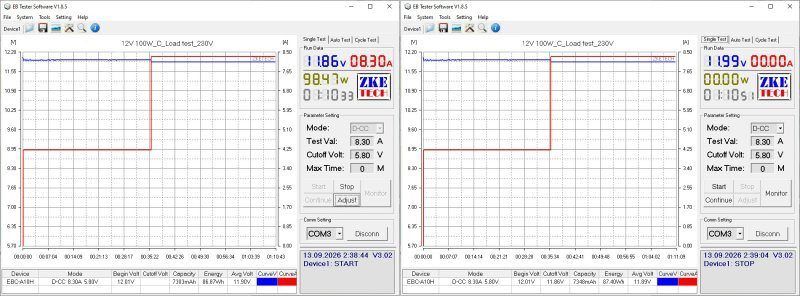
The load test was performed at currents of 4.2 and 8.3 A. As I’ve already mentioned, to avoid being accused of testing outside the specified operating conditions, I limited the tests to the stated ratings.
There is some load-dependent voltage drop, incidentally—150 mV, which is unusual for power supplies like these. The effect of heating is small, just 20 mV.
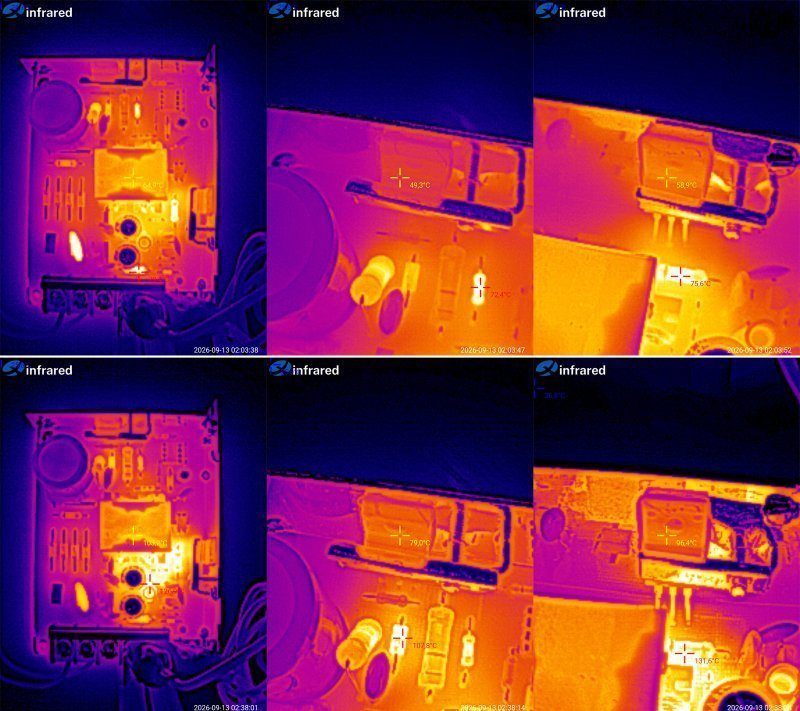
Component temperatures.
At 4.2 A: transformer 65°C, transistor 49°C, diode assembly 59°C.
At 8.3 A: transformer 103°C, transistor 79°C, diode assembly 96°C.
In my opinion, the transformer temperature leaves no safety margin. As I’ve already mentioned, these power supplies have a particular quirk: they’re often installed in enclosed boxes where the air temperature is considerably higher than normal. Keep that in mind when choosing one.
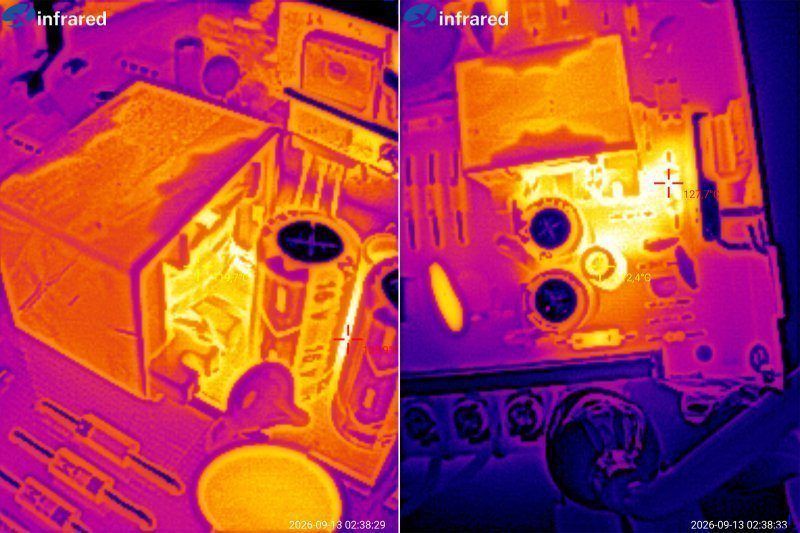
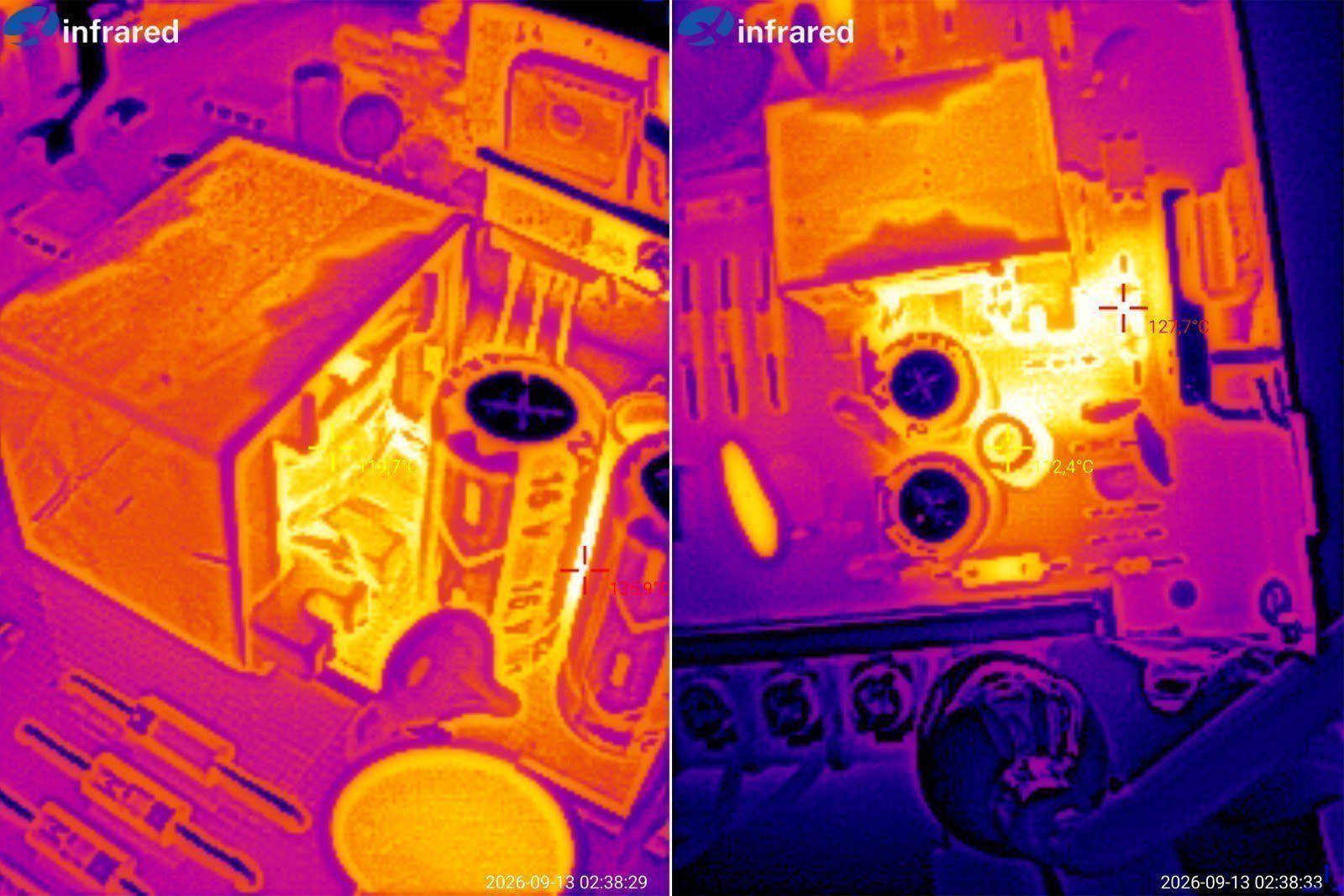
Just out of curiosity, at the end of the test I checked the temperatures at a few other interesting spots.
The transformer winding was around 120°C; the output inductor winding was around 136°C, with 113°C on top; the diode snubber resistor was 128°C.
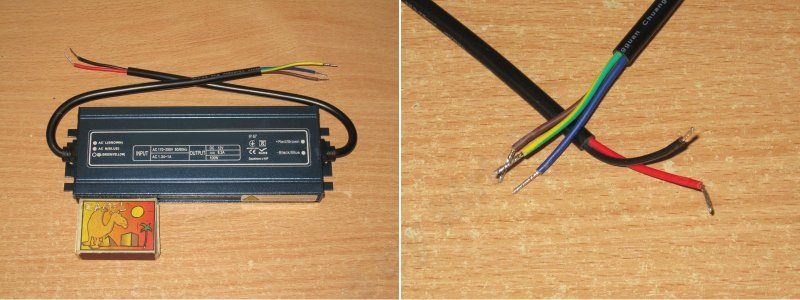
The third power supply is also rated at 100 W, 12 V and 8.3 A, but in a sealed enclosure.
The stated input voltage range is 170–250 V.
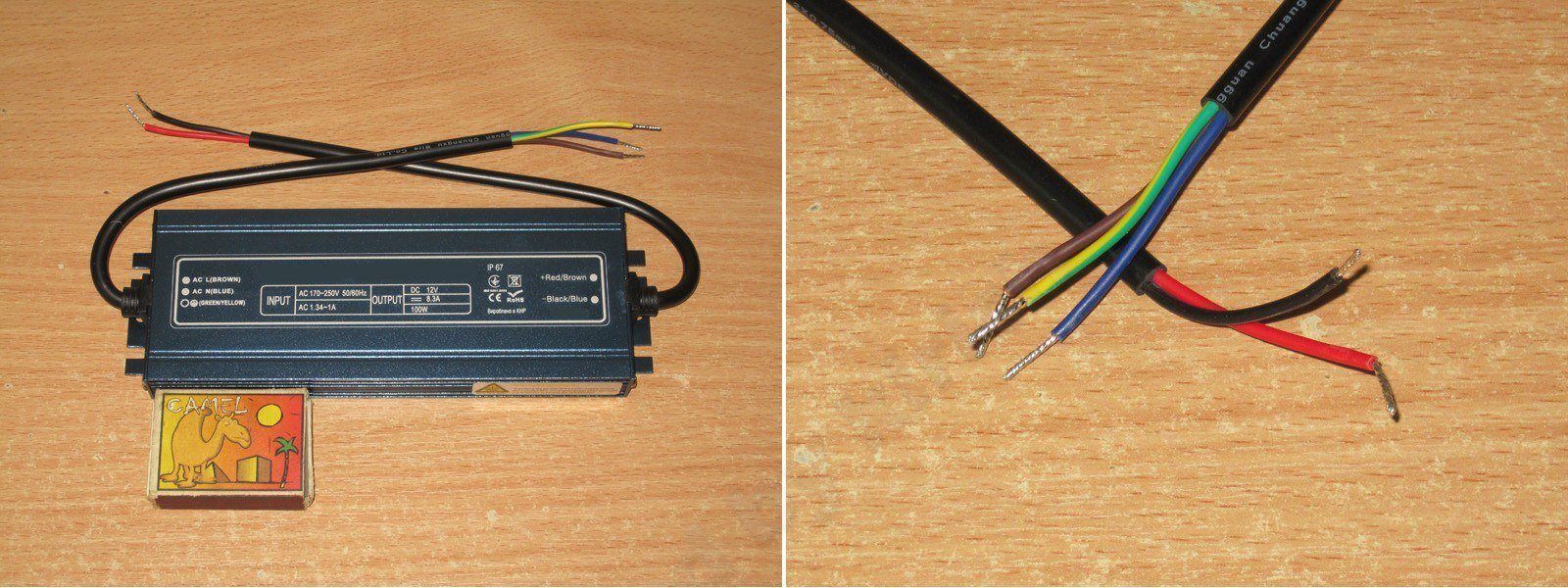
There wasn’t much else to photograph here: the enclosure is made from aluminum extrusion, apparently anodized, and the wires are a decent gauge. No complaints at all—in fact, I really liked this enclosure design.
As with the previous unit, when I checked the overcurrent protection, its threshold turned out to be above 10 A. An additional test gave exactly the same result as before: around 11–11.5 A.
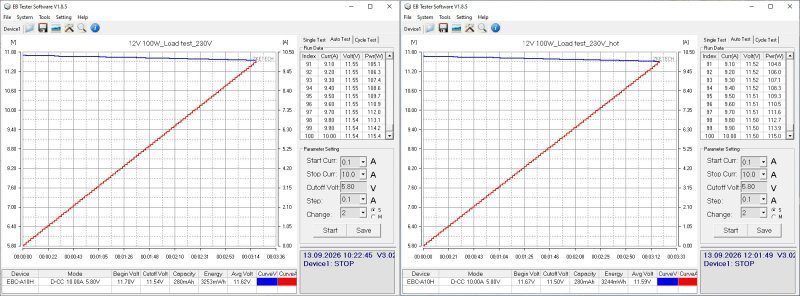
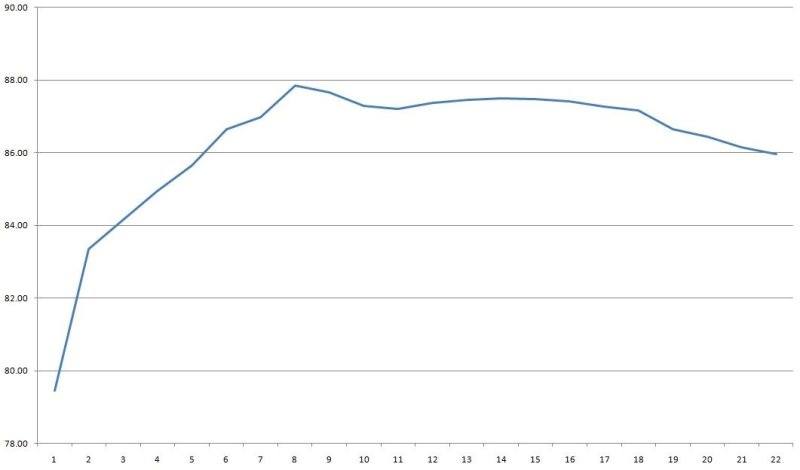
Efficiency was measured from 0.5 to 11 A in 0.5 A increments, and turned out to be pretty good—around 87–87.5%.
No-load power consumption is around 0.5 W.
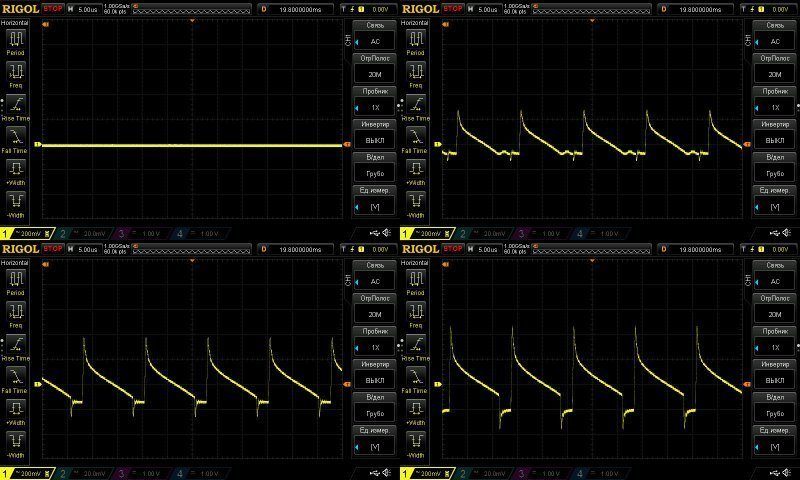
Ripple with no load and at currents of 3, 6 and 9 A.
And this is where this model disappointed me. Everything seemed to be going so well, then suddenly there’s 800 mV of ripple at maximum current. That’s really not good, especially since the power supply doesn’t look like a budget model.
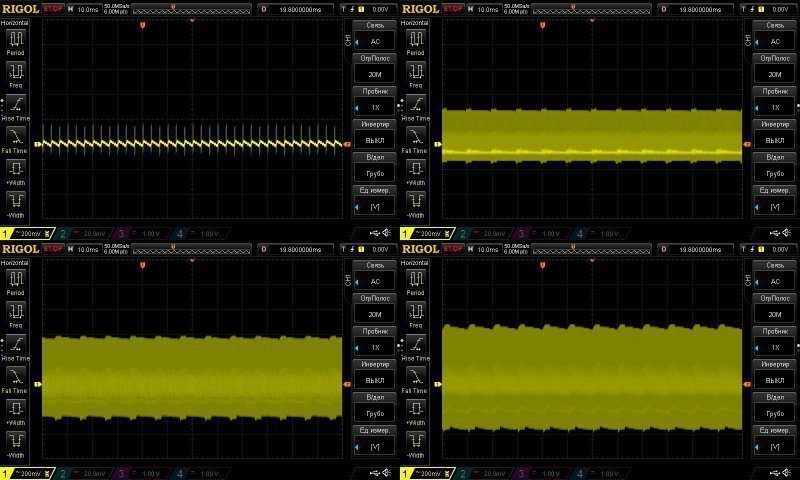
At 100 Hz, though, there’s almost no ripple. Most likely, the input capacitor has plenty of capacity, especially since the power supply is rated only for the “high” input voltage range.
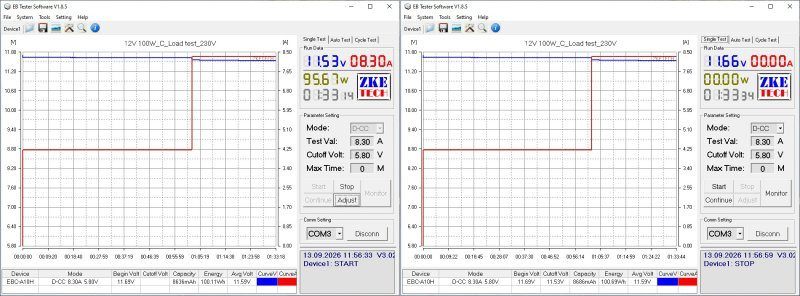
The load test was run at 4.2 and 8.3 A, within the stated ratings.
At full load, the voltage dropped by about 0.16 V, partly due to the output cable. The voltage change as the unit warmed up was small, around 30 mV.
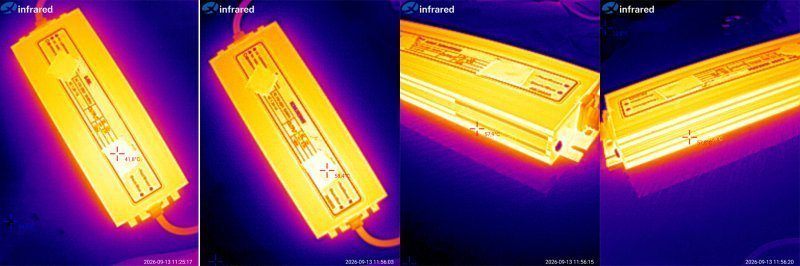
Enclosure temperatures in the two operating modes.
First thermal image: 4.2 A, enclosure at 42°C.
Thermal images 2–4: 8.3 A, enclosure at 58°C; both sides were also at 58°C.
No complaints about the thermal performance; these temperatures are typical for power supplies like this. For obvious reasons, it’s difficult to measure the temperature of individual components here, but since the enclosure itself acts as a large heatsink, overheating is rare.
The fourth power supply is also rated at 100 W, 12 V and 8.3 A.
The stated input voltage range is 180–265 V.
This is the “tasty” one I promised at the very beginning. I ordered it mainly out of curiosity, to get a closer look at this marvel of Chinese electronics.
Even when you unpack it, it gives you a sense of “premium” quality: there’s a little box, and the power supply itself sits in a plastic tray.
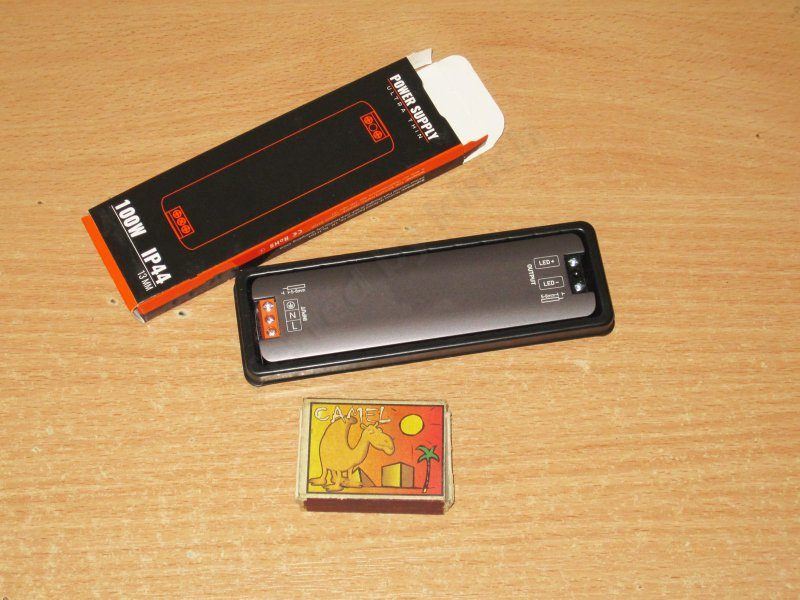
It’s genuinely compact: 123 × 33.8 × 13 mm, and weighs just over 94 g. The metal enclosure feels nice to the touch, it’s anodized, and the color scheme looks great. Honestly, I’m impressed :)
It connects via two terminal blocks. I do have some doubts about whether the output terminal block will work properly at these currents, but it’s apparently rated for 10–16 A, so let’s assume it’s fine.
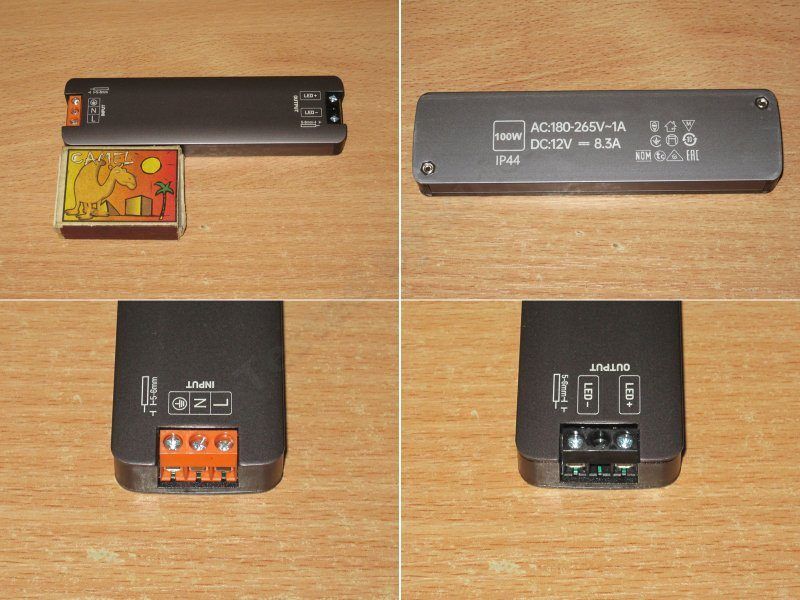
This power supply is essentially sealed, though with the terminals exposed, it’s more accurate to call it water-resistant. Also, as I’ve already mentioned, potting compound usually improves thermal performance by reducing localized hot spots and spreading the heat around. Naturally, that’s assuming the potting compound is the right kind, not just silicone from Epicentr.
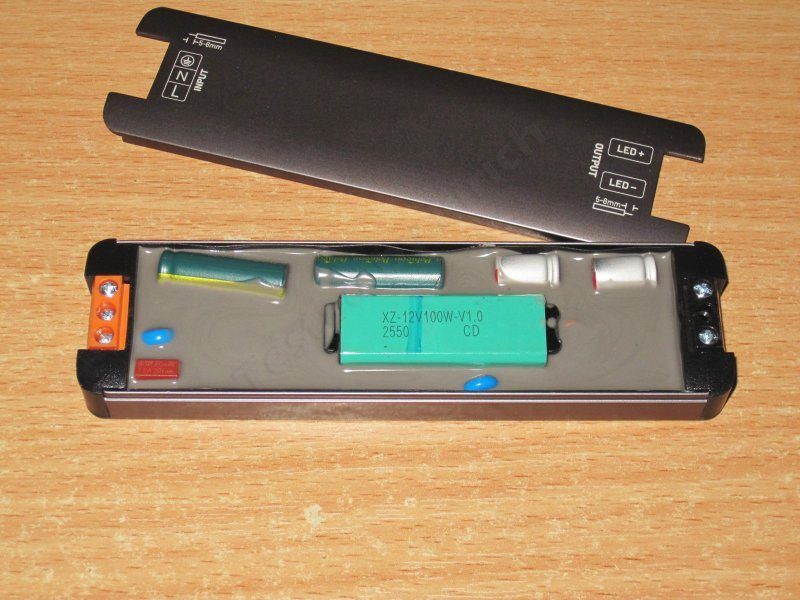
On the input side there’s a pair of long, thin capacitors, the kind that are popular in ultra-thin LCD monitors and TVs these days. Each is probably somewhere between 22 and 33 µF.
On the output side there’s a pair of polymer capacitors. Judging by their size, they’re probably around 1000 µF, 1500 µF at most. I forgot to measure them, but it’s not critical.
The rectifier is probably synchronous; a conventional one in a package like this would overheat quickly. Also, as far as I could tell, the transformer’s output winding is made with Litz wire, which is a good thing. The Y capacitor is visible on the left; you can recognize it by its distinctive case.
In short, I really like it. Looks nice :)
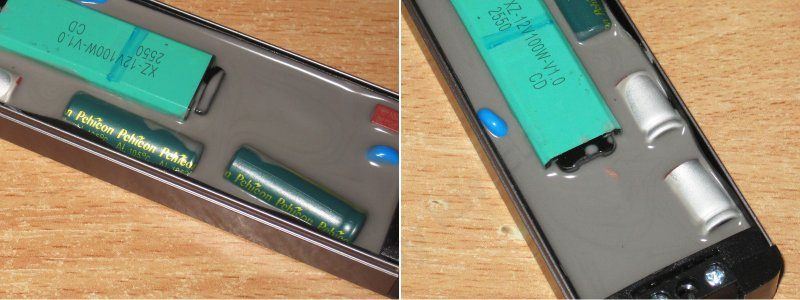
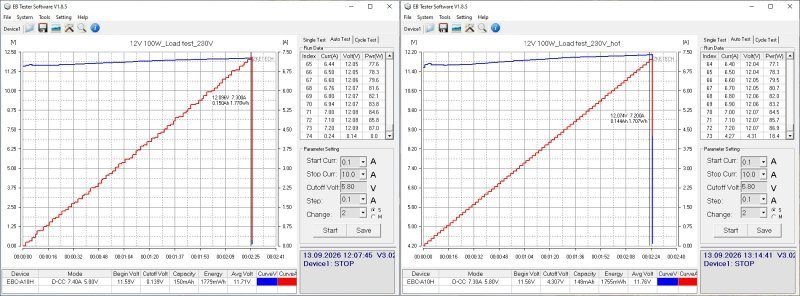
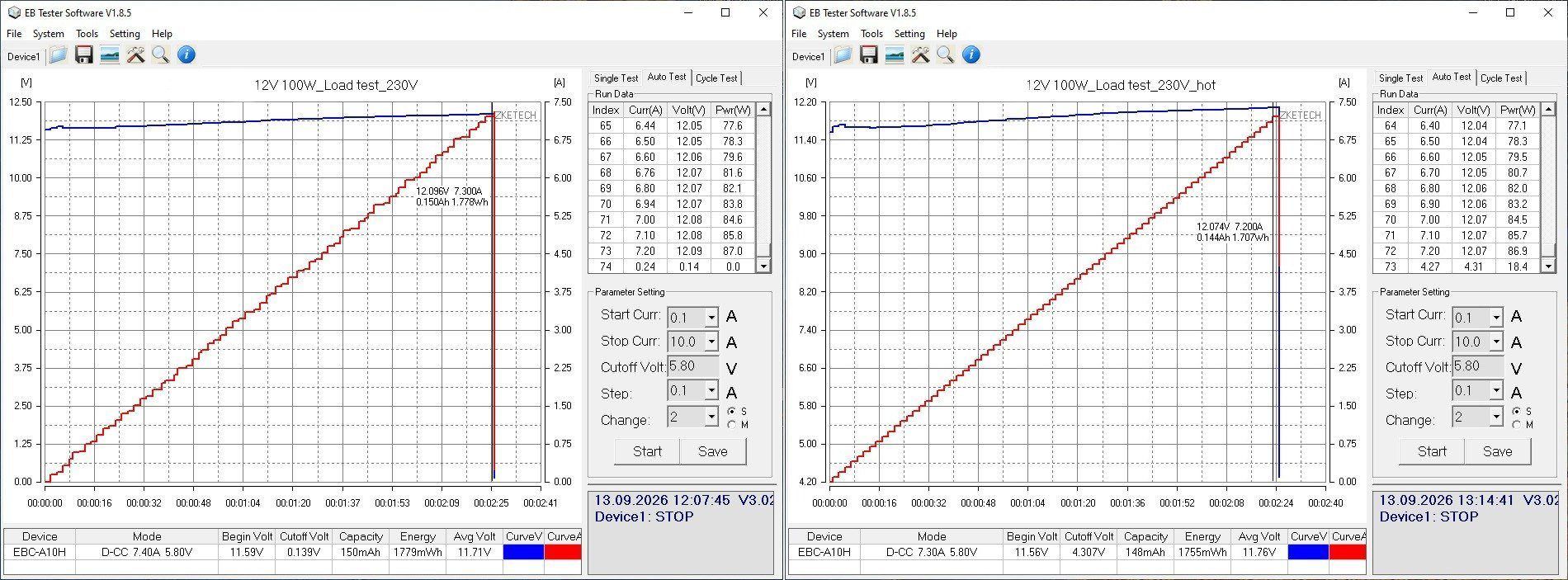
But the very first test showed that the maximum output current is around 7.2–7.3 A; beyond that, the protection kicks in. So even at this stage, we’re getting only 85 W out of the claimed 100.
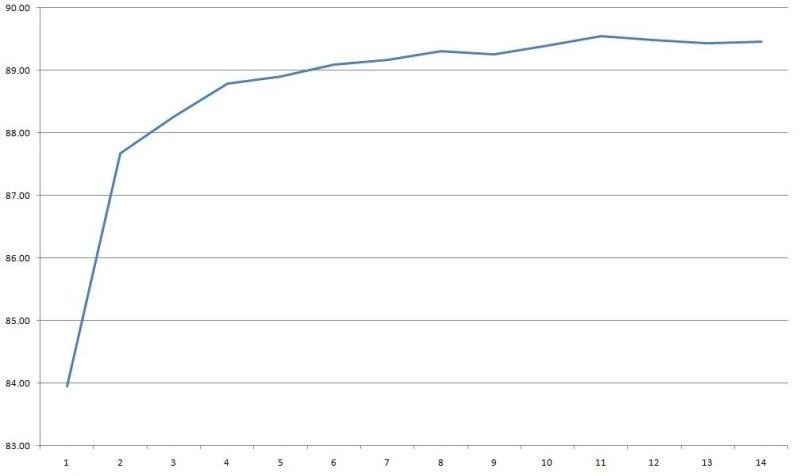
Efficiency was measured from 0.5 to 7 A in 0.5 A increments.
The efficiency came in at 89–89.5%, which is decent, but not impressive. I even expected it to be a bit higher. Put simply, at 7 A, this little box dissipates about 10 W as heat, which is quite a lot.
With no load, it draws only about 0.05 W.
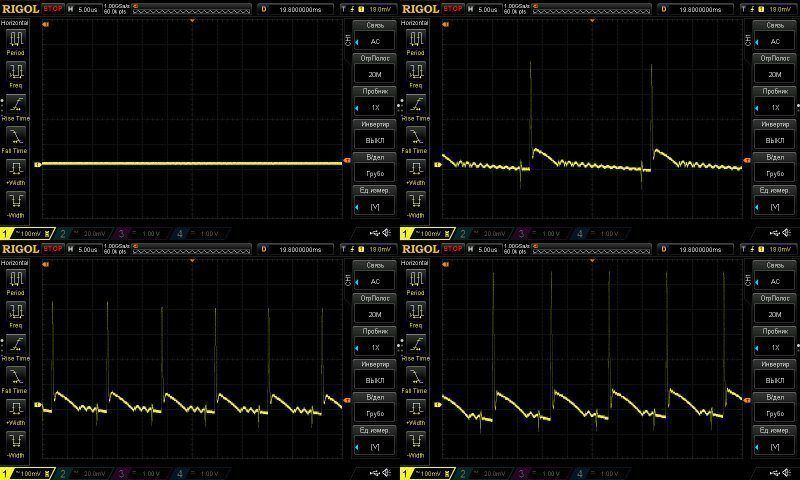
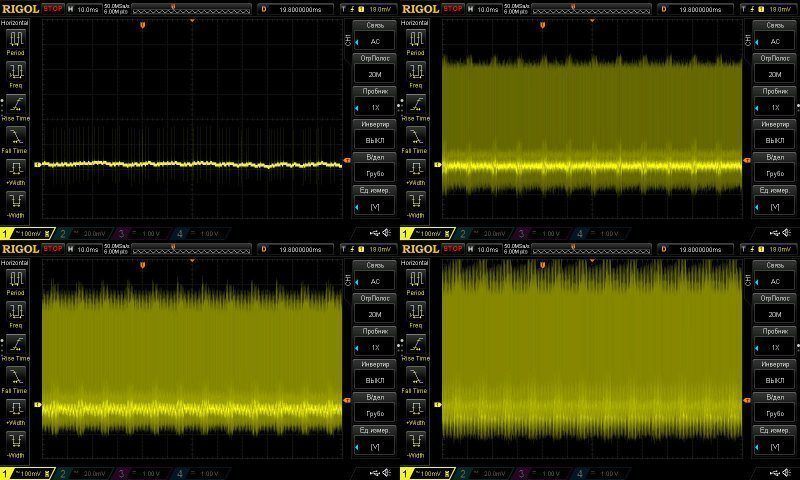
Ripple was measured with no load and at currents of 2.5, 5, and 7 A.
The main component was about 120 mV, which would be good if it weren’t for the “spikes,” which brought the total peak-to-peak ripple to around 650 mV. But as I’ve written many times, these “spikes” are suppressed quite effectively by an ordinary cable, or even a small capacitor at the input of your device.
But here’s the question: if there’s a pair of polymer capacitors on the output, and the waveform still looks like this, then something may be wrong somewhere.
As expected, the overall low-frequency noise level was high, although the 100 Hz component was within reason, so I won’t complain.
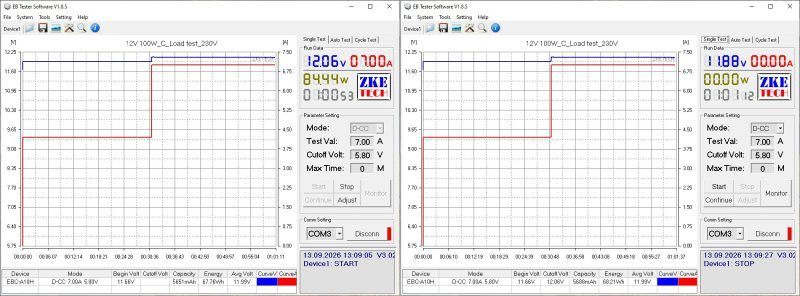
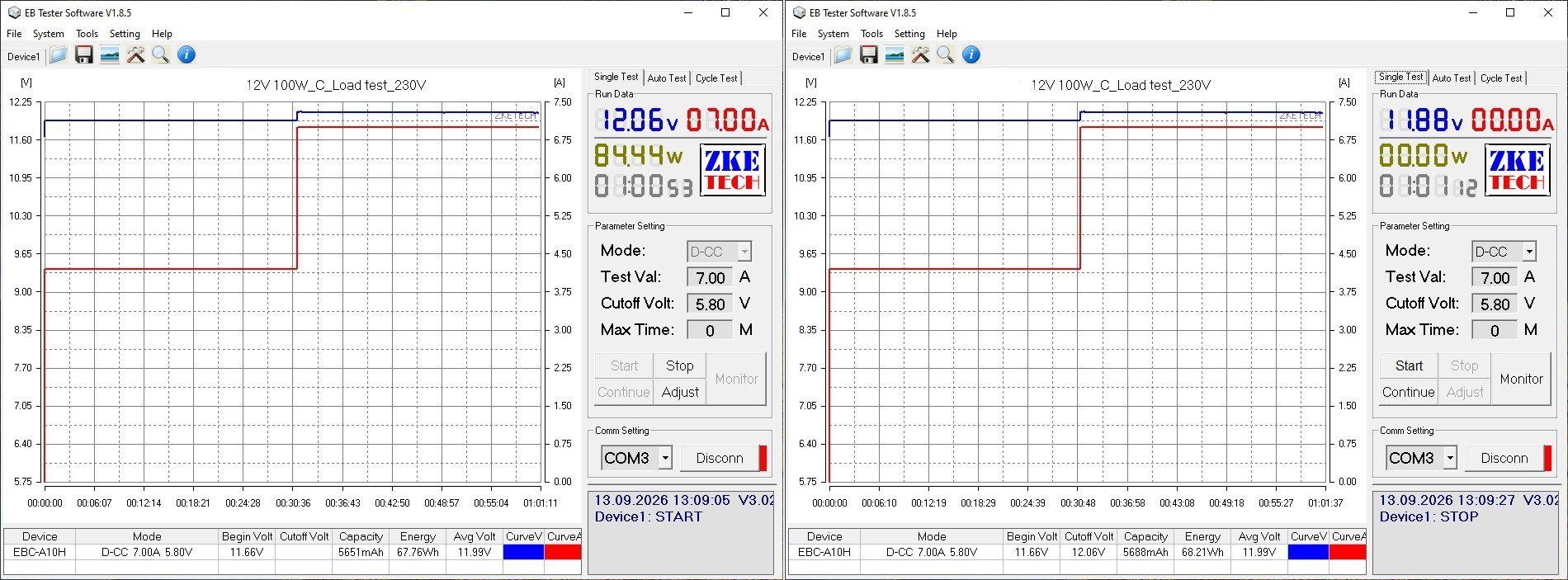
The load test was performed at currents of 4.2 and 7 A.
The power supply has a fairly strong positive load regulation: at 7 A, the voltage rises by as much as 0.4–0.5 V.
I suspect the output voltage is regulated on the primary side. There’s also a noticeable positive temperature coefficient: the voltage rises by about 0.22 V as it warms up.
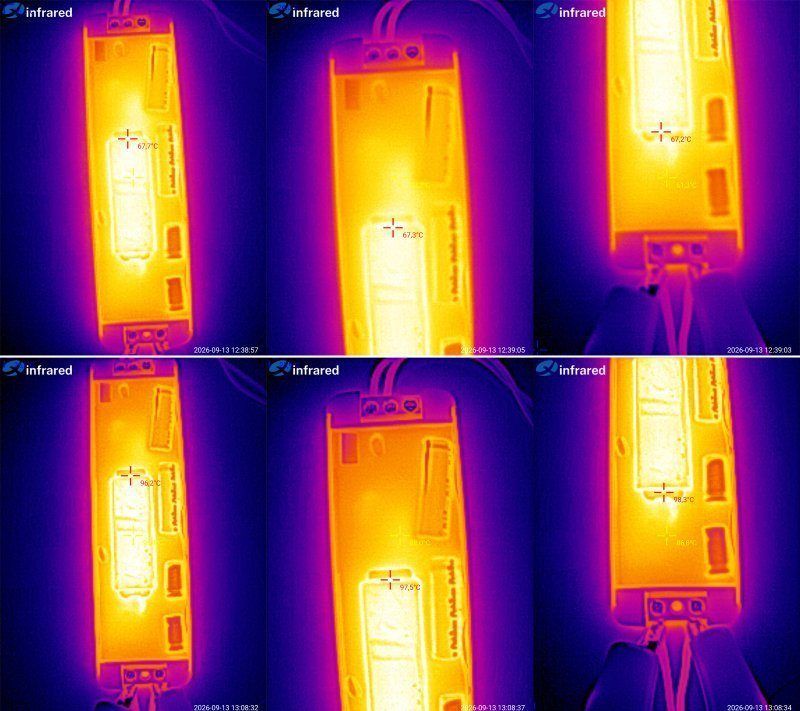
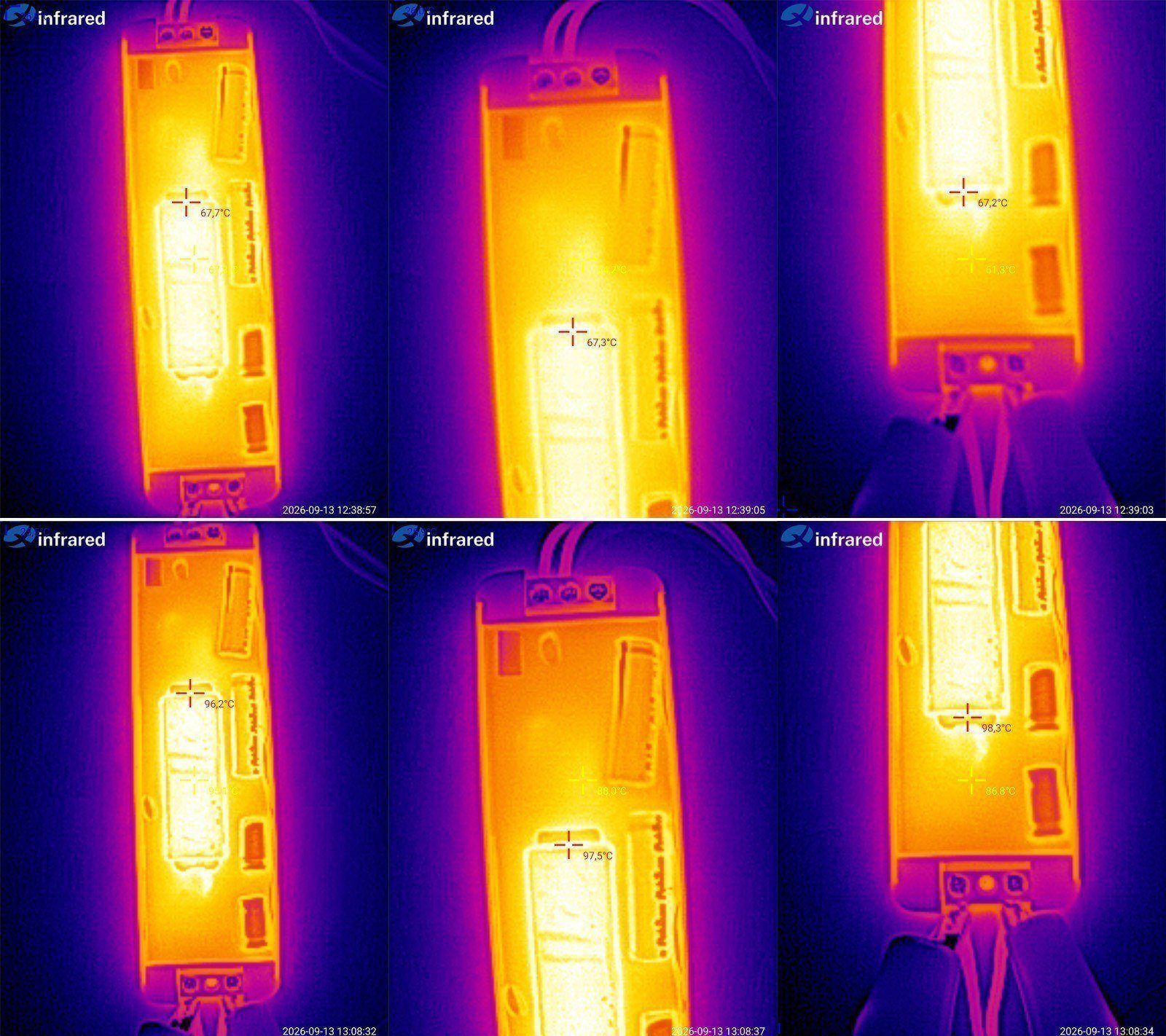
Now let’s look at the temperatures. Obviously, I can’t measure them accurately, but still.
I checked the transformer temperature, as well as two spots: between the input and the transformer, where the diode bridge and probably the inverter transistor are located, and between the transformer and the output, where the rectifier should be.
Unfortunately, some parts are hard to see.
At 4.2 A: transformer 68 degrees, high-voltage section 64 degrees, output section 61 degrees.
At 7 A: transformer 95 degrees, high-voltage section 88, output section 87.
Honestly, I’m pleasantly surprised—not that this power supply, despite its claimed 100 W rating, could only be tested up to 82 W, but that at around 80 W it doesn’t overheat and shut down.
Judging by the design, I’d guess this is a conventional flyback converter, with a fairly decent transistor on the input side and a synchronous rectifier on the output. That would explain the middling efficiency and high level of switching ripple.
But that’s just my guess.
Conclusions.
1. 36 W desktop model. A typical budget model: everything about it is great—the wired connector, self-oscillating converter, poor electrical safety, power output 1.5–2 times lower than claimed, noticeable ripple, and, as a bonus, a mains cable with high resistance. Still, it works well enough for low-power, undemanding loads such as LED strips, though I personally wouldn’t buy one.
2. 100 W enclosed model. Also a budget option, with plenty of cost-cutting, but at least it looks like they cut costs intelligently. The input filter doesn’t affect operation, the input capacitor has enough capacitance for our mains frequency, the components aren’t undersized, and there’s an output filter. My main concerns are the somewhat high operating temperature, the thin metal case, the strange low-frequency ripple, and, I suppose, the overall cost-cutting.
3. 100 W sealed model. One of those cases where everything seems great at first—the temperature, stability, build quality—until you put an oscilloscope on it and see how awful the output is. And the main problem with the ripple isn’t that it’s there, but that it will only get worse with use. It never gets smaller, so in a year or so the waveform will be even worse. Otherwise, though, it’s a decent power supply.
4. 100-watt ultra-compact. A very, very interesting power supply. Yes, it couldn't deliver its claimed 100 W, and yes, 7 A is genuinely the maximum current it can handle—and it would be better to reduce that to around 6 A. In other words, its continuous power is probably closer to 70 W. Still, the fact that it delivers decent power in such a compact package deserves respect. The only thing that really disappointed me was probably the disproportionately large “needle” spikes in the ripple.
That’s all for today. I hope this was useful, and I’d love to hear what you think of this part and the previous two. And, of course, thanks to the person who decided to send me this whole interesting bunch for testing.
This part will be relatively short, but I hope it’ll be interesting. As always, the best bit comes at the end :)
A reminder: to keep up with new posts on the blog, I recommend following me on Instagram. I’ll post notifications about new articles there, and maybe write about something interesting too - link to my account
You can also subscribe to updates and new articles on the Telegram channel - https://t.me/KirichBlog Just a note: discussion of reviews and articles is enabled on the channel, along with general chat. I recommend it.
A note: to avoid any accusations, and as agreed with the project sponsor, the labels on all the test units have been removed. Any resemblance to specific brands is coincidental. Otherwise, I promise this review will be as unbiased as possible, as is the case with all my reviews.
Also, a reminder that blog content may only be used with the author's permission and with an active link to the original article.
36 W, 12 V, 3 A desktop power supply.
The stated input voltage range is 100–240 V. Here I’m back to the fact that the permitted voltage in our household mains is up to 253 V, not 240 V. What’s more, even the old upper limit under the mains voltage tolerances was 242 V.
Looks like a very ordinary budget unit; a mains cable is included.
The mains cable is a story in itself. After Elektronny Mir sent me mains cables with a resistance of 2 Ω, I thought nothing could surprise me anymore. But now I have a new record holder: 2.4 Ω.
The inside is a bit unexpected. Apparently, they decided to turn a “wall adapter” into a desktop model for their product range.
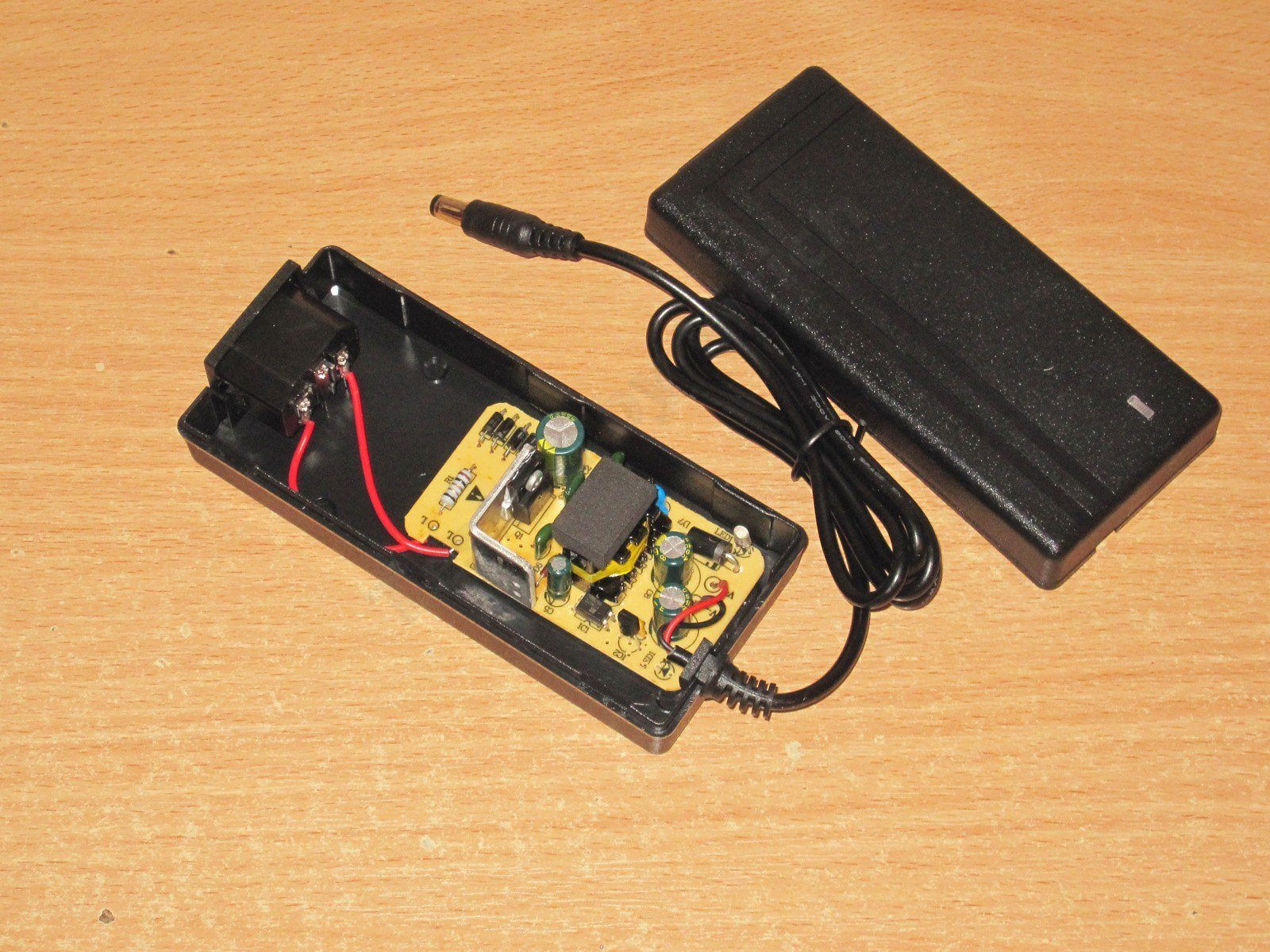
Compact and fairly simple. There’s no input filter, and not even a conventional fuse; a fusible resistor on the input side also serves to limit the current.
But the high-voltage transistor is mounted on a heatsink, which gives me some hope.
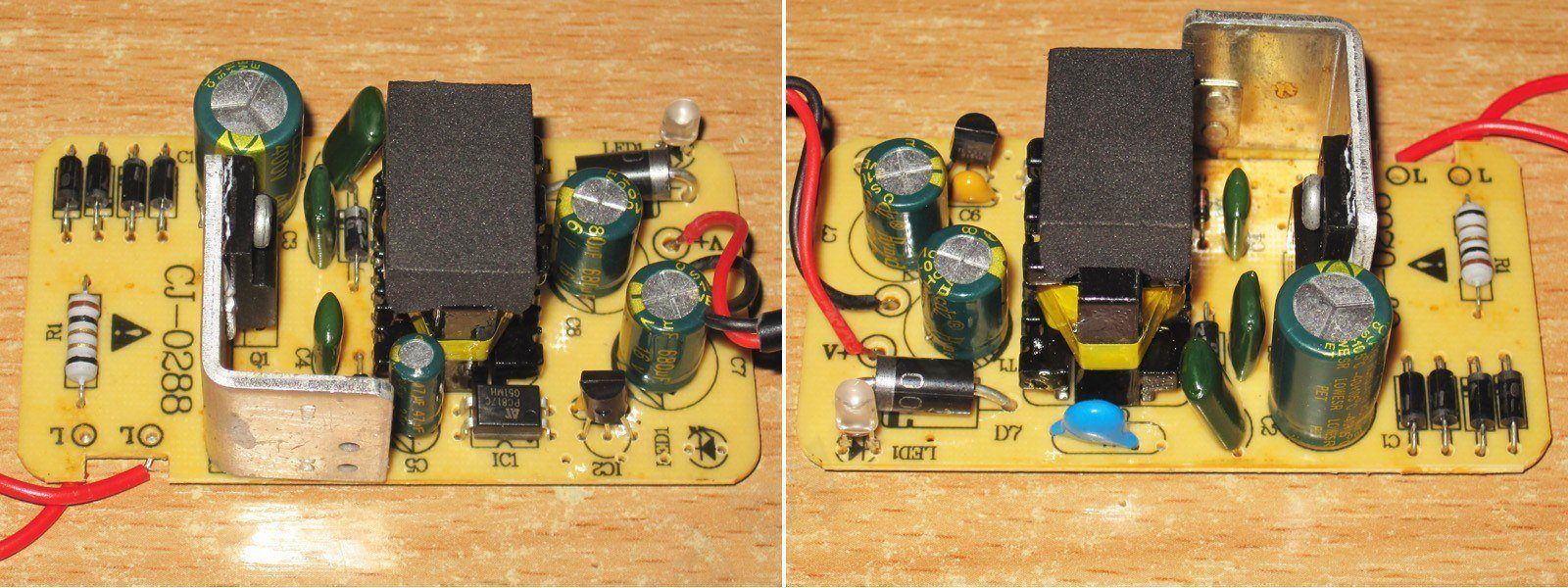
1. A 5 A, 65 V transistor, more than enough for the stated 36 W. The input capacitor is 22 µF.
2. There’s a single diode on the output; I’m almost certain we can forget about getting 3 A.
3. A pair of 680 µF capacitors. I’ll also note that this has a proper feedback circuit, not the “economy” version using a zener diode.
4. But this connector with the little wires soldered to it looks a bit... economical.
I was even more surprised when I turned the board over: it’s a self-oscillating converter.
No, there’s nothing inherently wrong with a self-oscillating converter. It’s a classic topology that was widely used, for example, in power supplies for even branded Japanese air conditioners, as well as in the standby supplies of ATX power supplies.
But, as always, there’s a catch: the board has a small electrolytic capacitor, and when it dries out, converters like this tend to run away, even when the feedback can no longer help. So many computer power supplies have burned out this way...
Branded power supplies addressed this in three ways: a protective zener diode across the output, a high-quality capacitor, or a film capacitor instead of an electrolytic one.
But I’ve digressed—and for good reason, because this power supply has a safety issue. Look closely at the circuit board and you’ll see that the clearance between the primary and secondary traces is only about 2 mm. So even though there’s a Y capacitor here, it doesn’t help.
The actual input capacitor is 17 µF, and the output capacitors total 1128 µF. That seems a bit low for the stated power and input voltage range.
The protection trips at 4.2 A when cold and 3.7 A when hot. That’s a bit high, but the fact that the protection current depends so much on temperature is good; it’s essentially a simple thermal protection circuit, though the threshold is a little too high.
The efficiency is actually not bad. To be fair, a properly designed self-oscillating converter isn’t much less efficient than modern ICs.
Efficiency was measured from 0.3 to 3.9 A in 0.3 A increments. No-load power consumption is about 0.5 W.
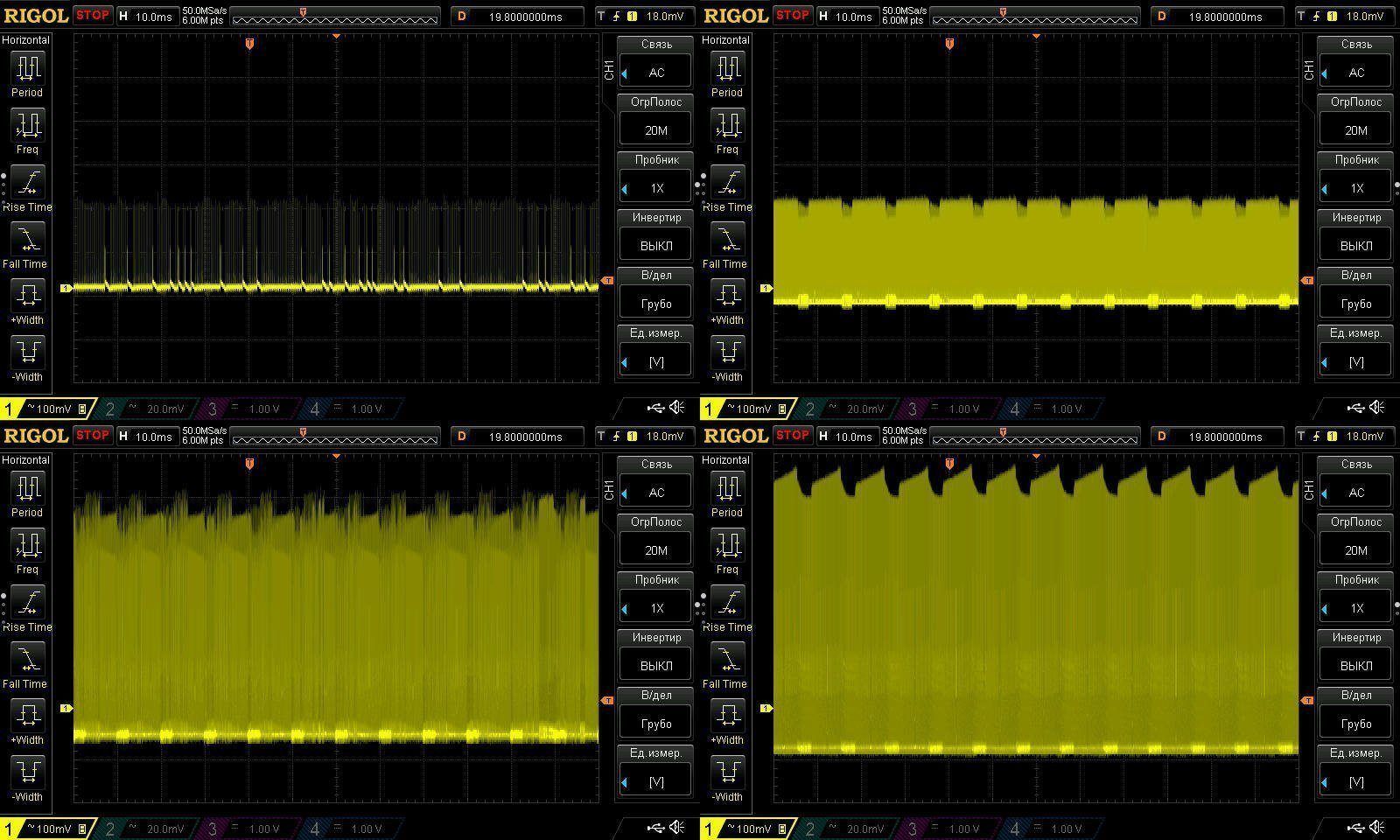
Ripple with no load and at currents of 1, 2, and 3 A.
Overall, it's acceptable for a budget unit: around 300 mV for the main ripple and 600 mV including the "spikes." That's fine for LED strips, but I definitely wouldn't recommend it for powering a router, for example.
At 100 Hz and maximum power, there is some ripple, which is to be expected. As I wrote, this is fine for powering undemanding loads, but that's about it—and certainly not at maximum power.
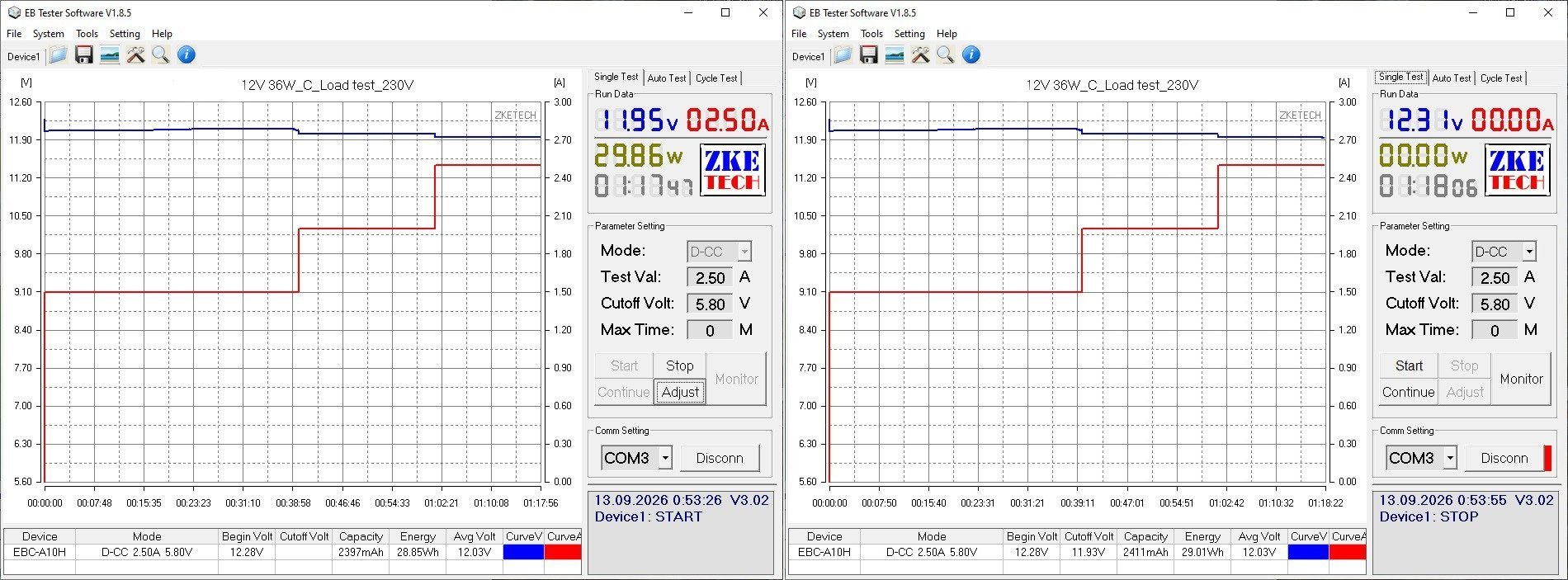
The load test was run in three modes, at currents of 1.5, 2, and 2.5 A. The voltage rises slightly with temperature, but by only 30 mV, so this can be ignored.
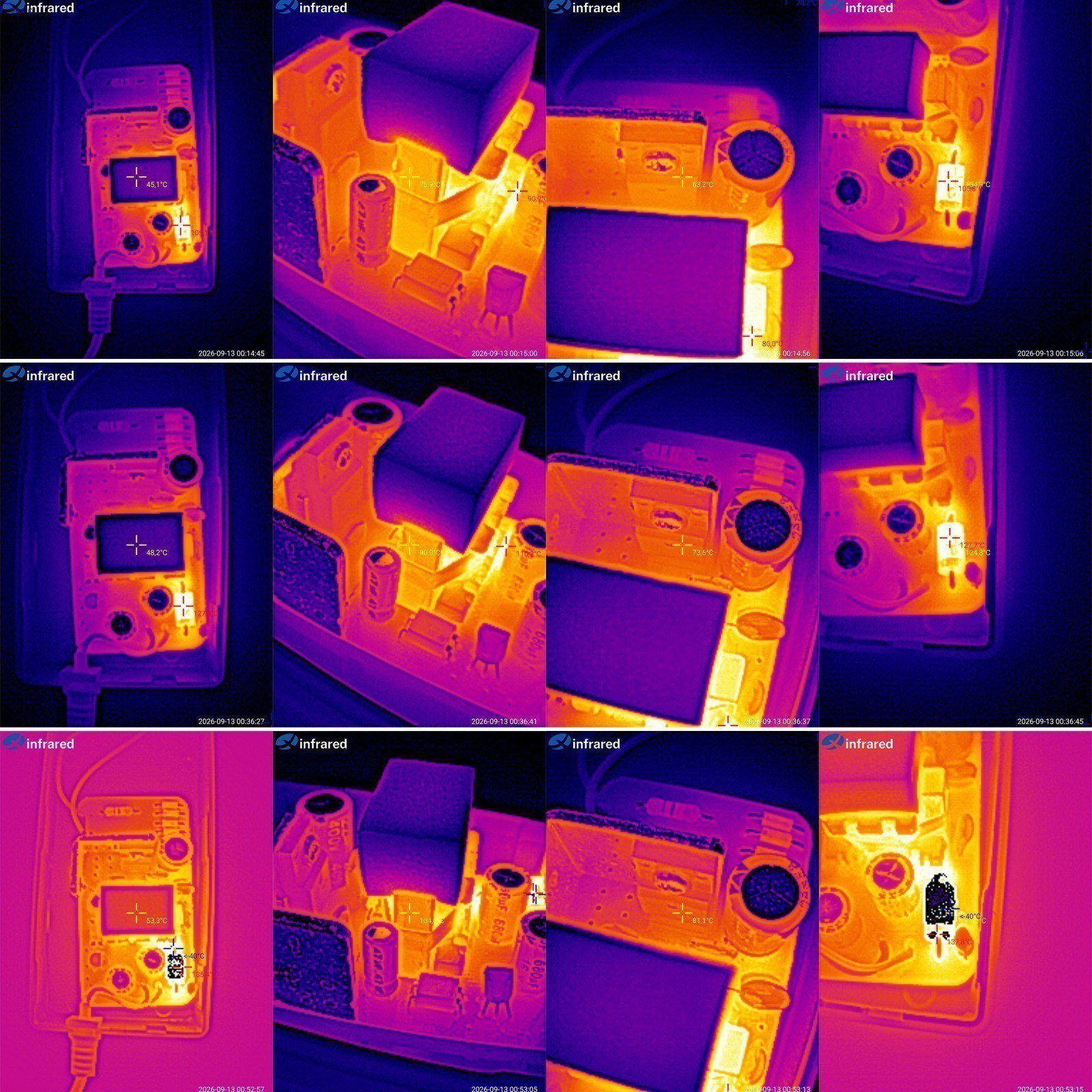
Now for the temperatures.
1.5 A — transformer 77 degrees, transistor 63, diode 106
2 A — transformer 90 degrees, transistor 74, output diode 128
2.5 A — transformer 104, transistor 81, output diode went over 138.
It's probably already clear that even 2 A (24 W) is pushing this power supply close to its limits, so a realistic continuous current is more like 1.7–1.8 A.
Power supply in a metal case, 100 W, 12 V, 8.3 A
The stated input voltage range is 110–240 V.
I think it's hard to find an electronics enthusiast who hasn't come across these power supplies. They're a convenient, practical solution, and inexpensive too. At lower power levels, they also offer effective cooling, since most of the case is aluminum and doubles as a heatsink.
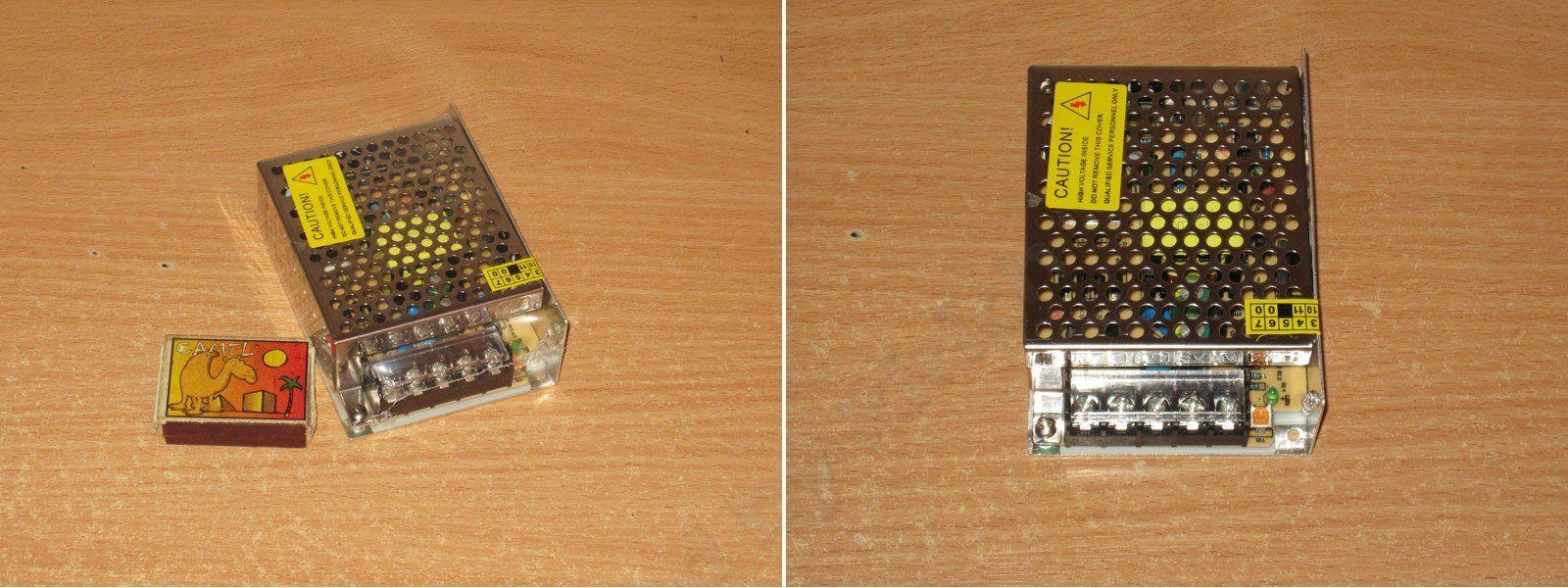
Everything here is familiar: a covered terminal block, output voltage adjustment, and a power indicator LED. It's a shame there are only two output terminals, but I think that's typical of all power supplies of this kind.
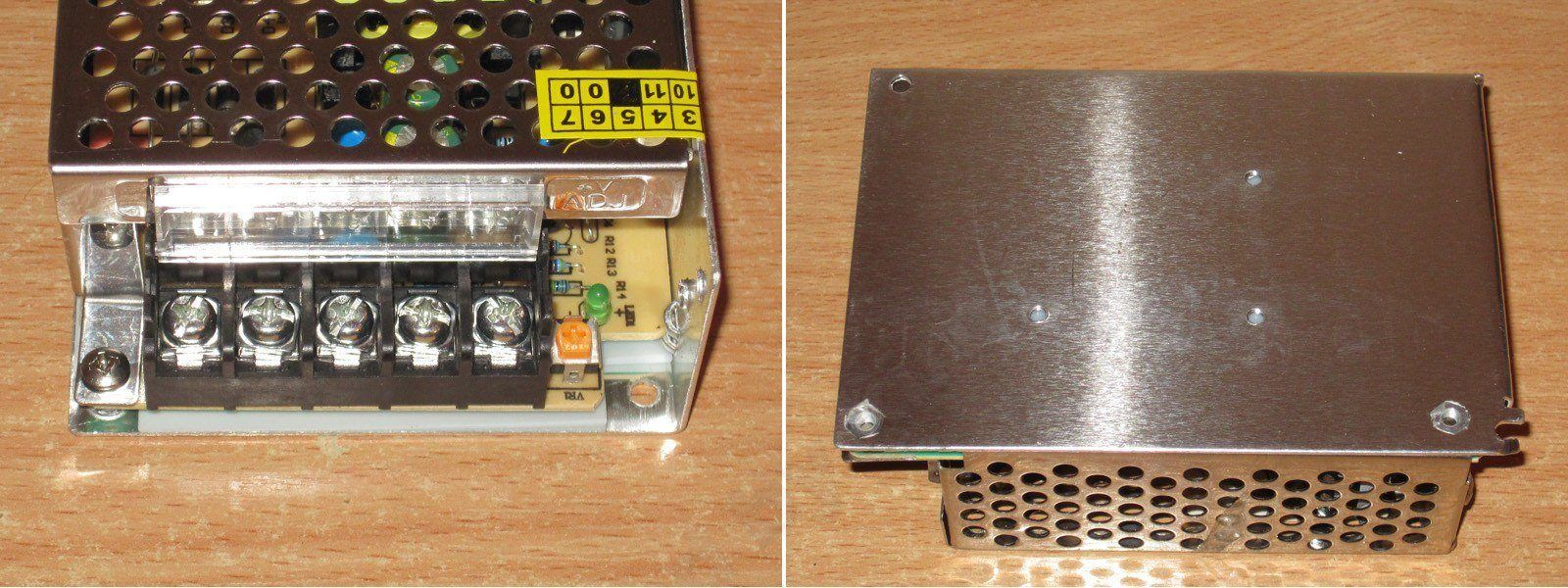
Usually, all you need to do to get inside is remove one or two screws. Let's do that.
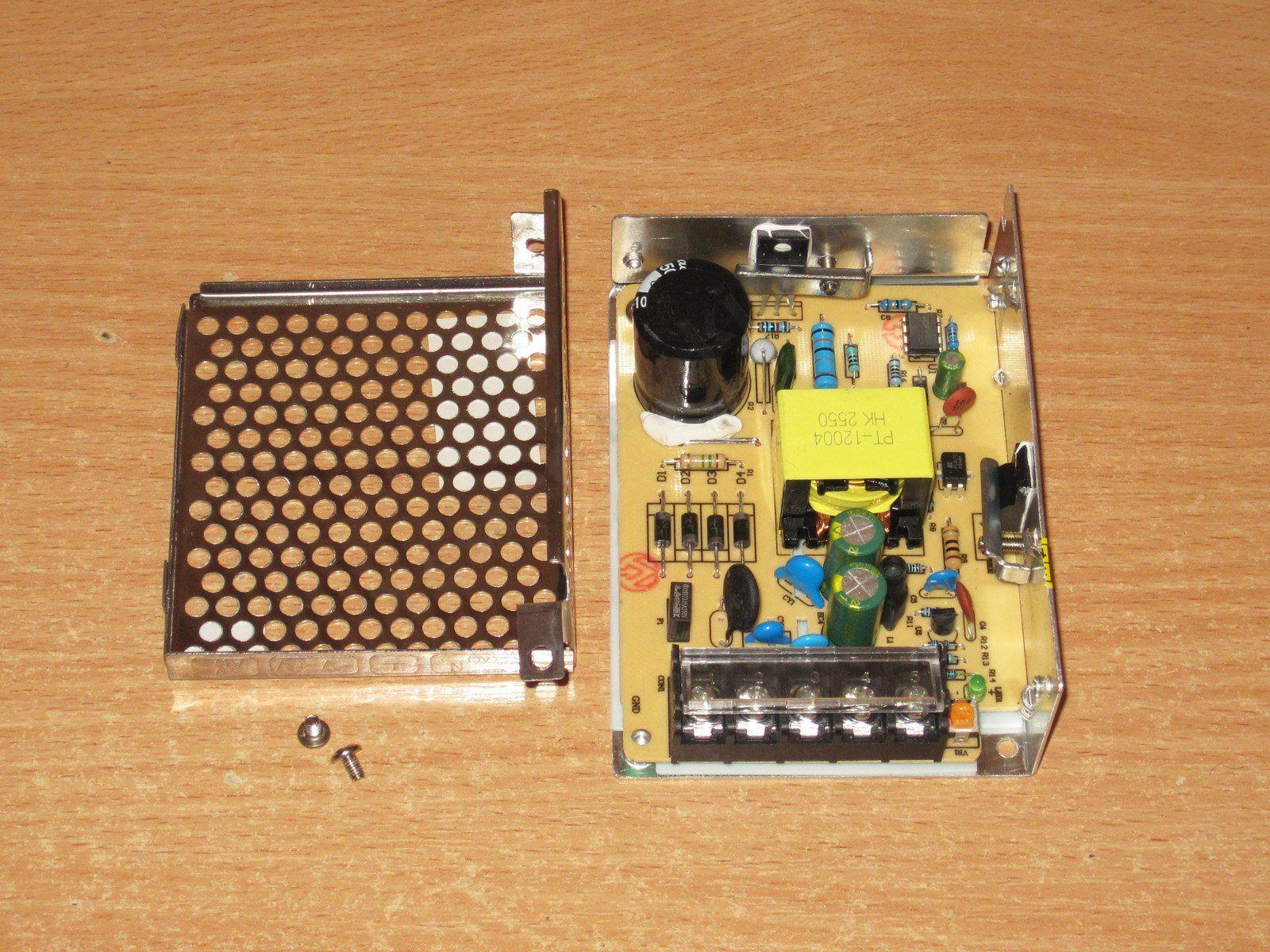
This is basically another "budget option." For example, you can see right away that there's no input filter, and the board is clearly made of phenolic paper laminate.
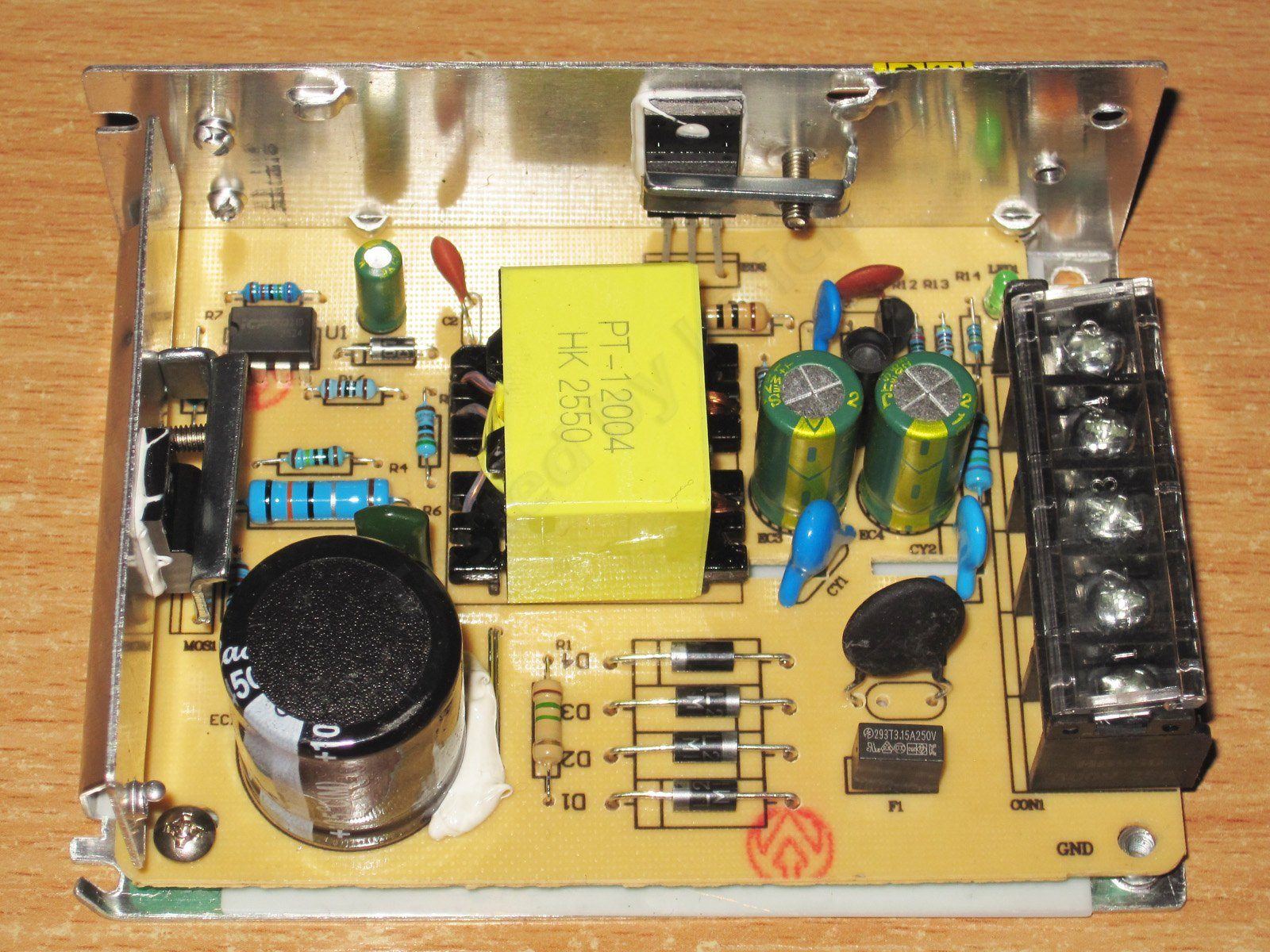
1. No filter; it has a fuse, a thermistor, and a bridge rectifier made from discrete diodes.
2. The input capacitor is rated for 450 V, with a stated capacitance of 150 µF.
3. The PWM controller section. The power supply is built around a CP2021D; there is no thermal protection.
4. The output has a typical diode assembly bolted to the case, along with a pair of filter capacitors.
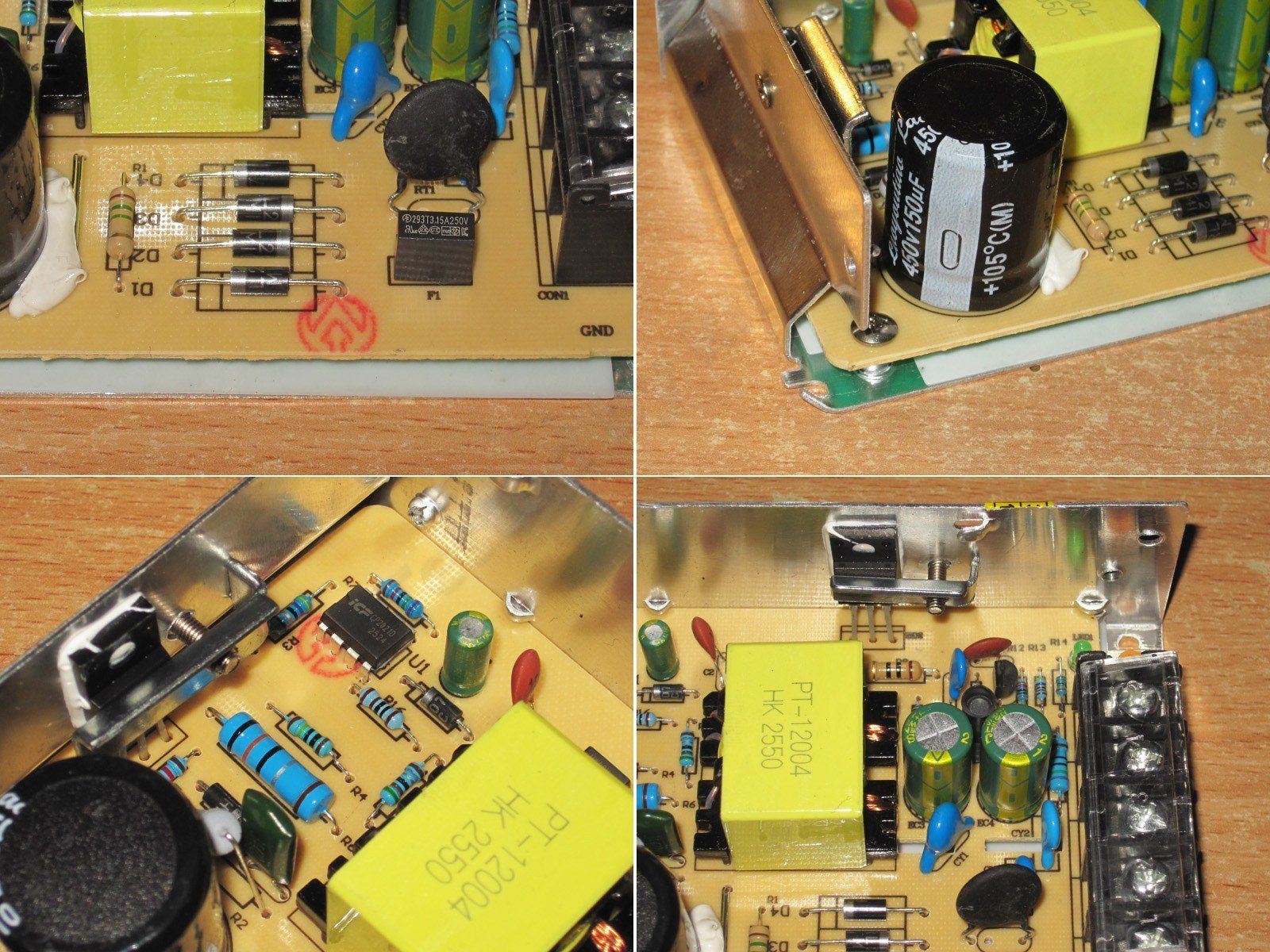
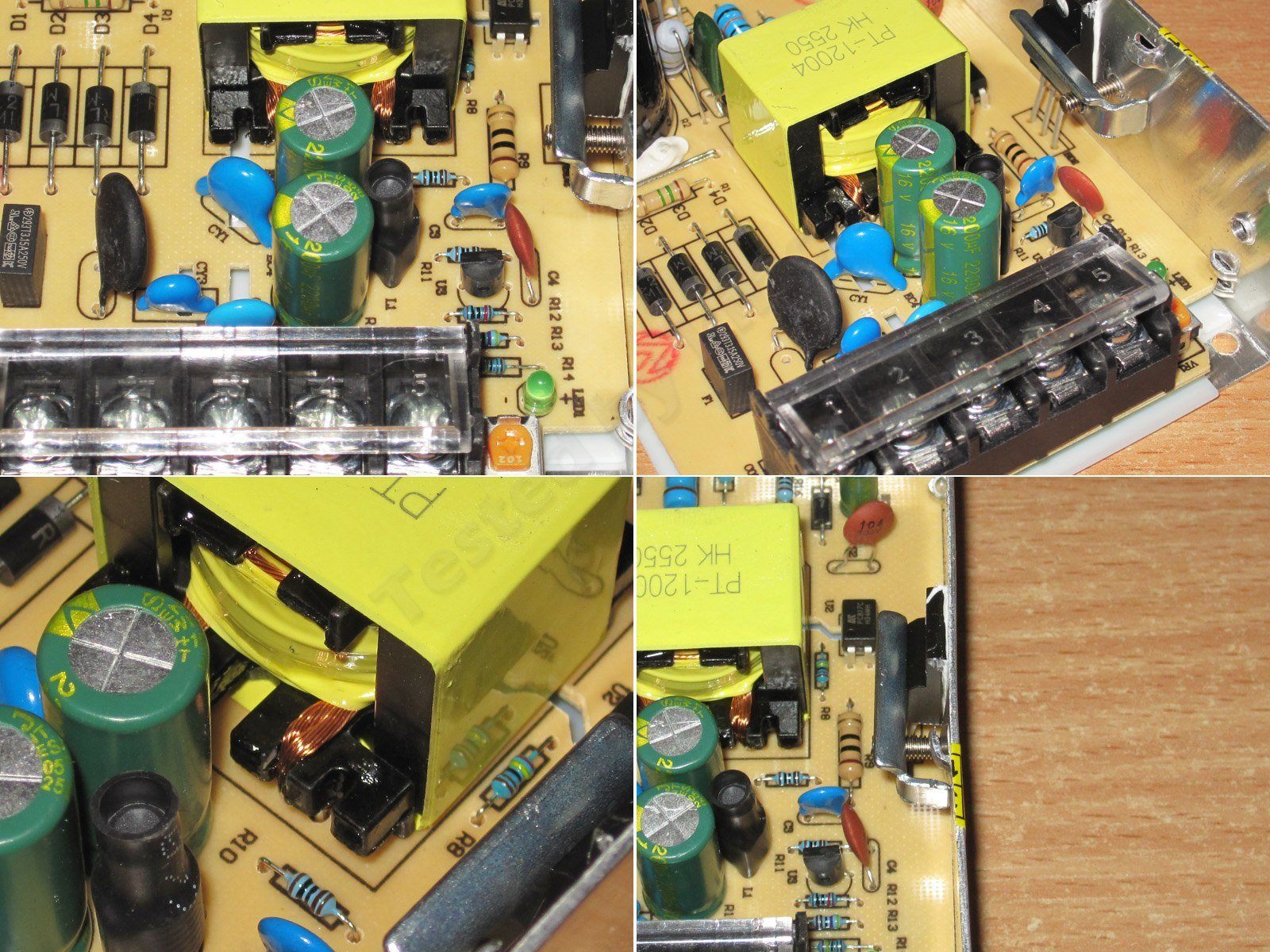
1. Y capacitors are present, and you can also immediately see an output inductor to reduce ripple.
2. There are two 2200 µF capacitors, which is pretty good; it should work fine.
3. The transformer winding uses stranded wire, which I also approve of.
4. But the case is very cheaply made—it's quite soft and prone to deforming around the installed components, the transistor and diode assembly.
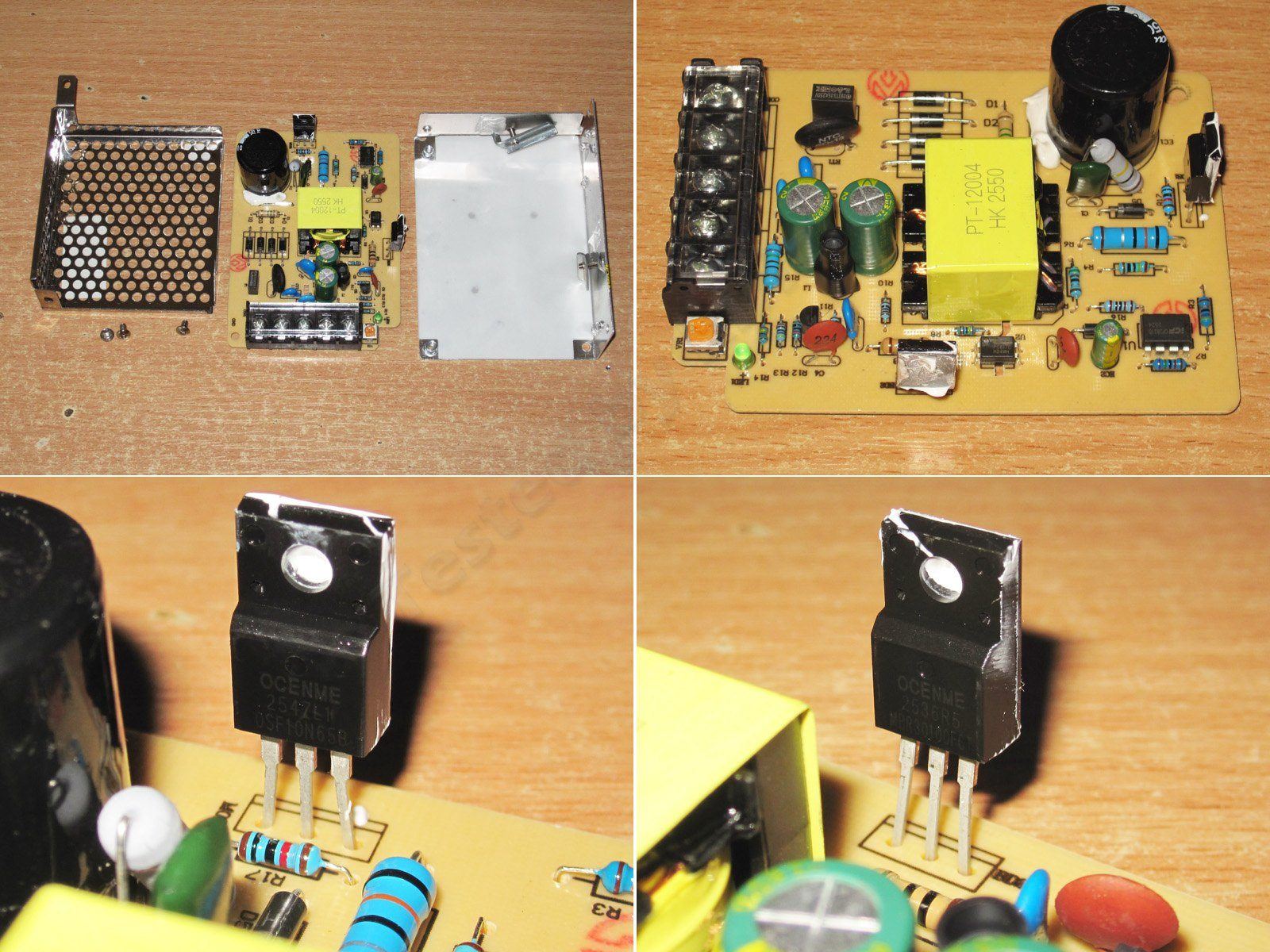
Let's take it apart further.
1. They forgot to put a plastic insulator under the board.
2. The other side of the circuit board. They didn't skimp on the thermal paste, by the way.
3. A 10 A, 650 V transistor—fine.
4. The diode assembly is from the same manufacturer and has the same markings: 30 A, 100 V. No complaints there either.
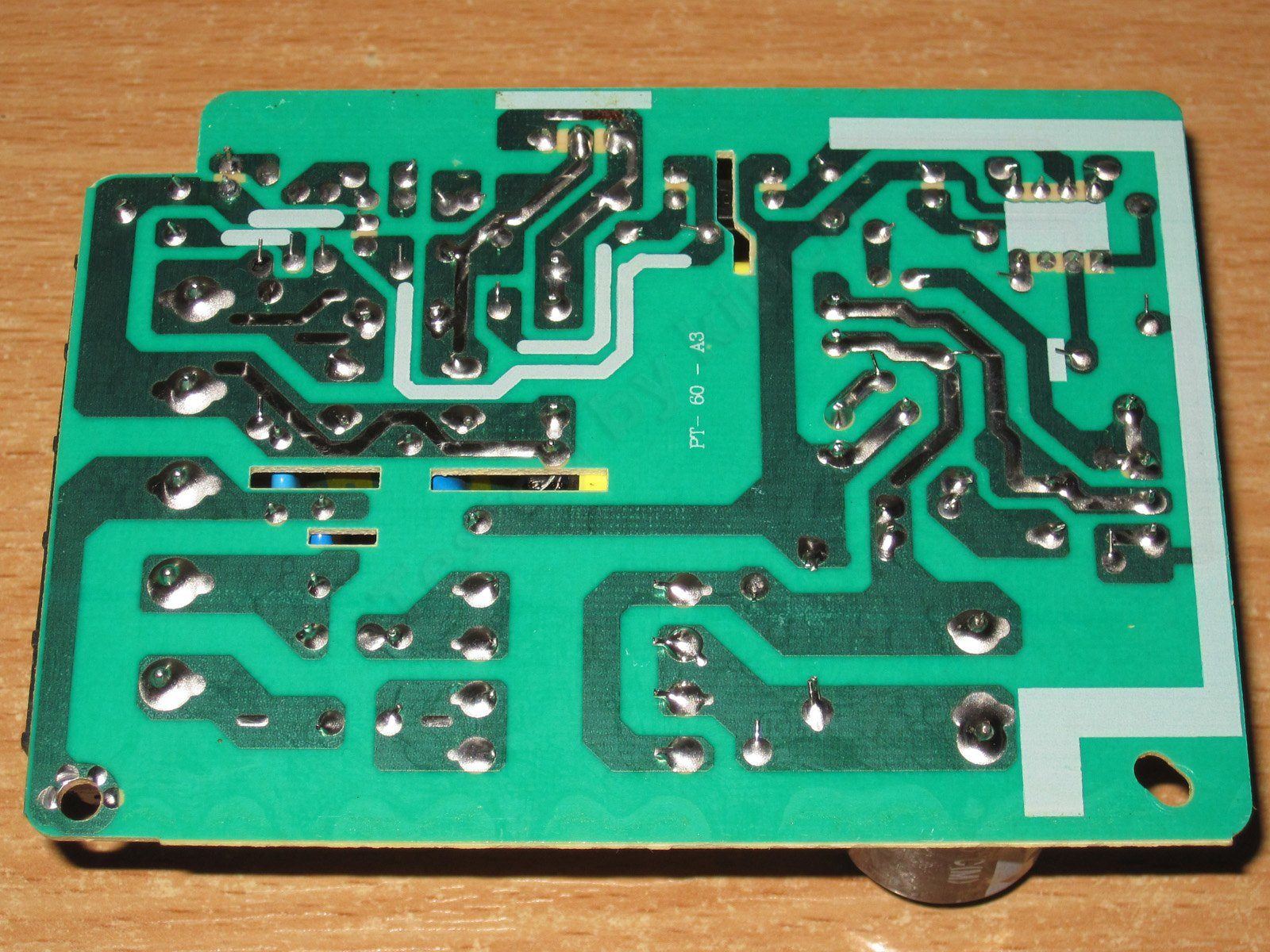
The circuit board is clean, but in my opinion the clearance between the primary and secondary sides is a bit small. The safety slots are the only thing that partly mitigates this.
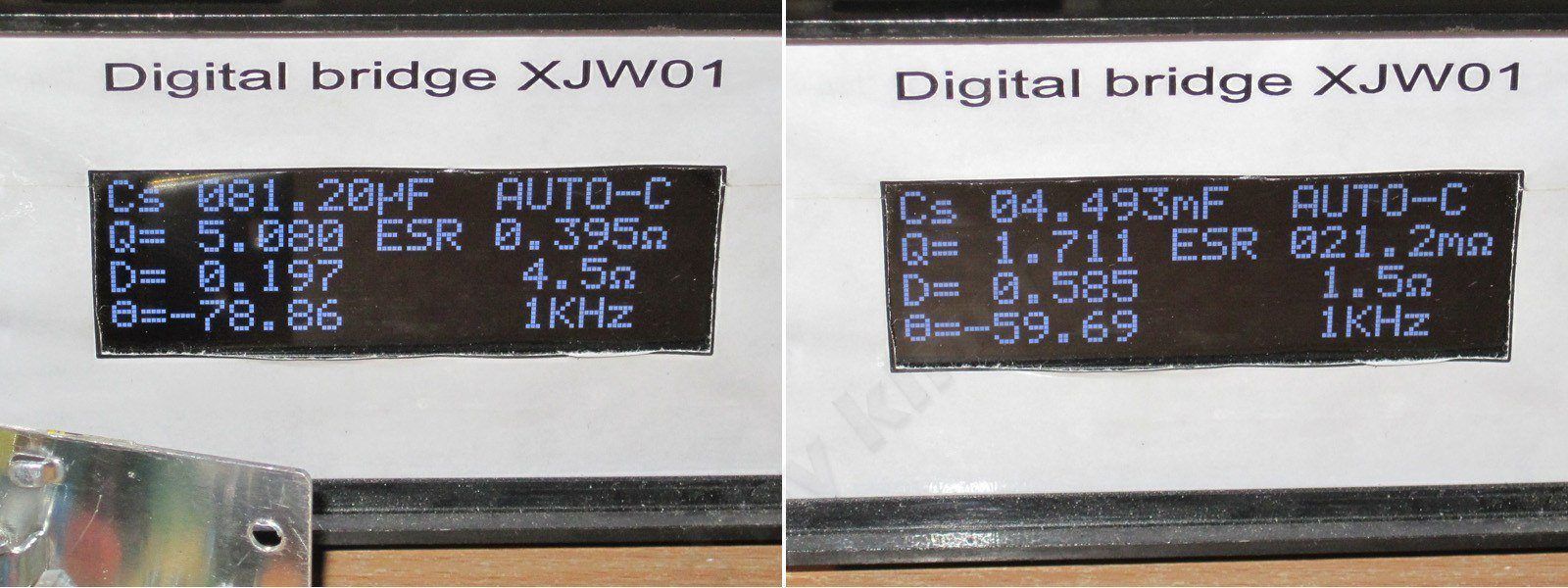
The input capacitor's actual capacitance is 81 µF, which is quite enough for this model, at least with our mains voltage.
The output capacitance is about 4500 µF, also fine.
The output was initially set to 12.11 V, and no-load power consumption is about 0.5 W.
The voltage can be adjusted from 11.2 to 13.1 V, but there's a problem: if you turn the voltage all the way down with no load, the controller switches to start/stop mode, causing the voltage to fluctuate. Not that it’s critical, but it’s unpleasant and can matter in some situations.
When checking the protection current, I hit the load’s limit. An additional test showed that the protection is set to around 11–11.5 A, which is perfectly acceptable as long as it doesn’t overheat.
Efficiency was measured from 0.5 to 11 A in 0.5 A increments. It peaks at 84%, but the odd shape of the graph gave me pause; it looks like the power supply is struggling a little with the load. In theory, this can happen because of an undersized transformer, or, for example, if its windings are made of aluminum rather than copper. But I won’t make any claims, since I haven’t checked.
Ripple was measured with no load and at currents of 3, 6, and 9 A.
Since there’s an inductor on the output, the high-frequency ripple is small, as expected—just around 20–25 mV, which is certainly good.
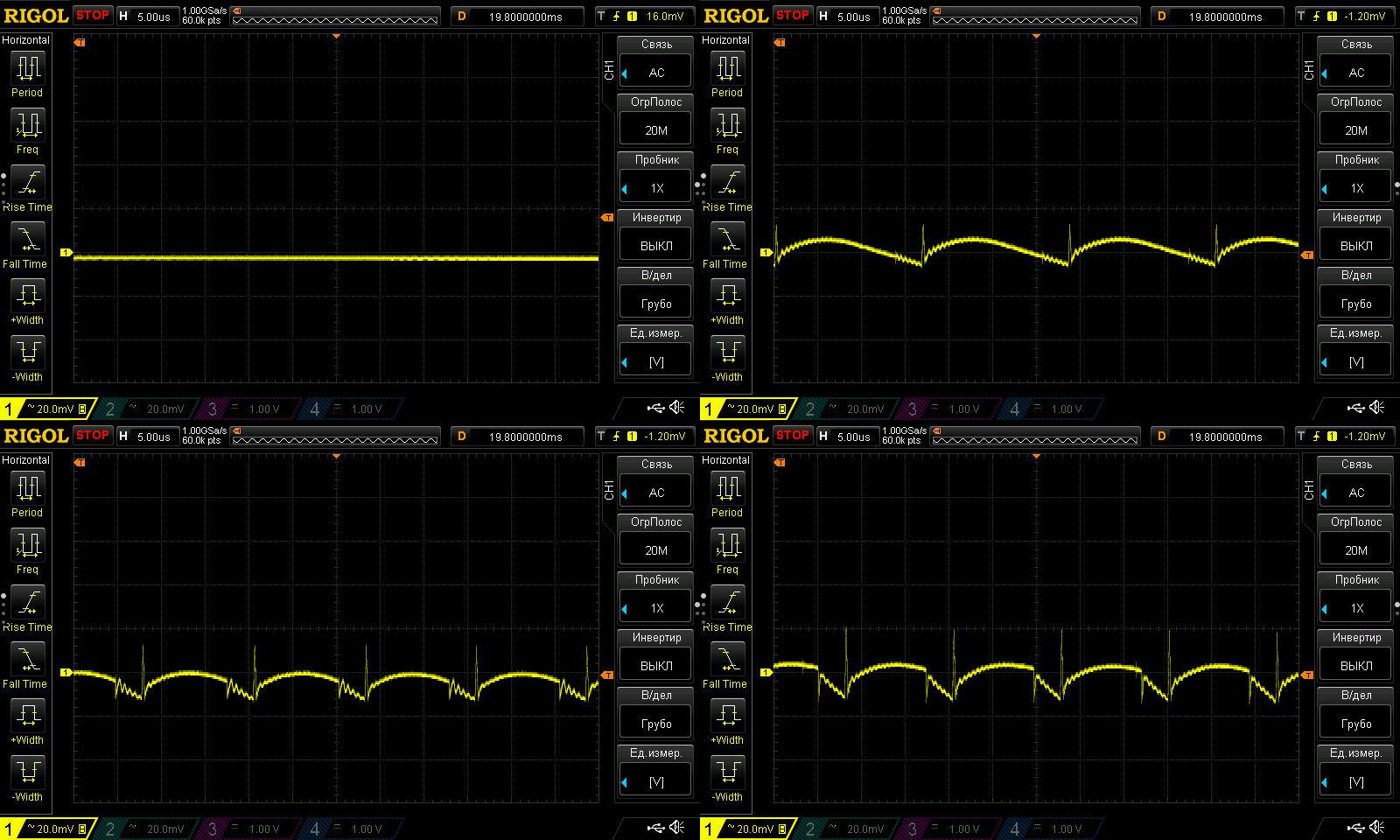
At low frequencies, though, the picture isn’t as rosy. On the one hand, we see sharp, large peaks at 100 Hz, but it’s not that straightforward.
Proportionally, these peaks are much higher than the average background level, but in terms of the overall amplitude, they’re around 100 mV—not all that much. They’re more unpleasant to look at, and this power supply is unlikely to be suitable for anything audio-related.
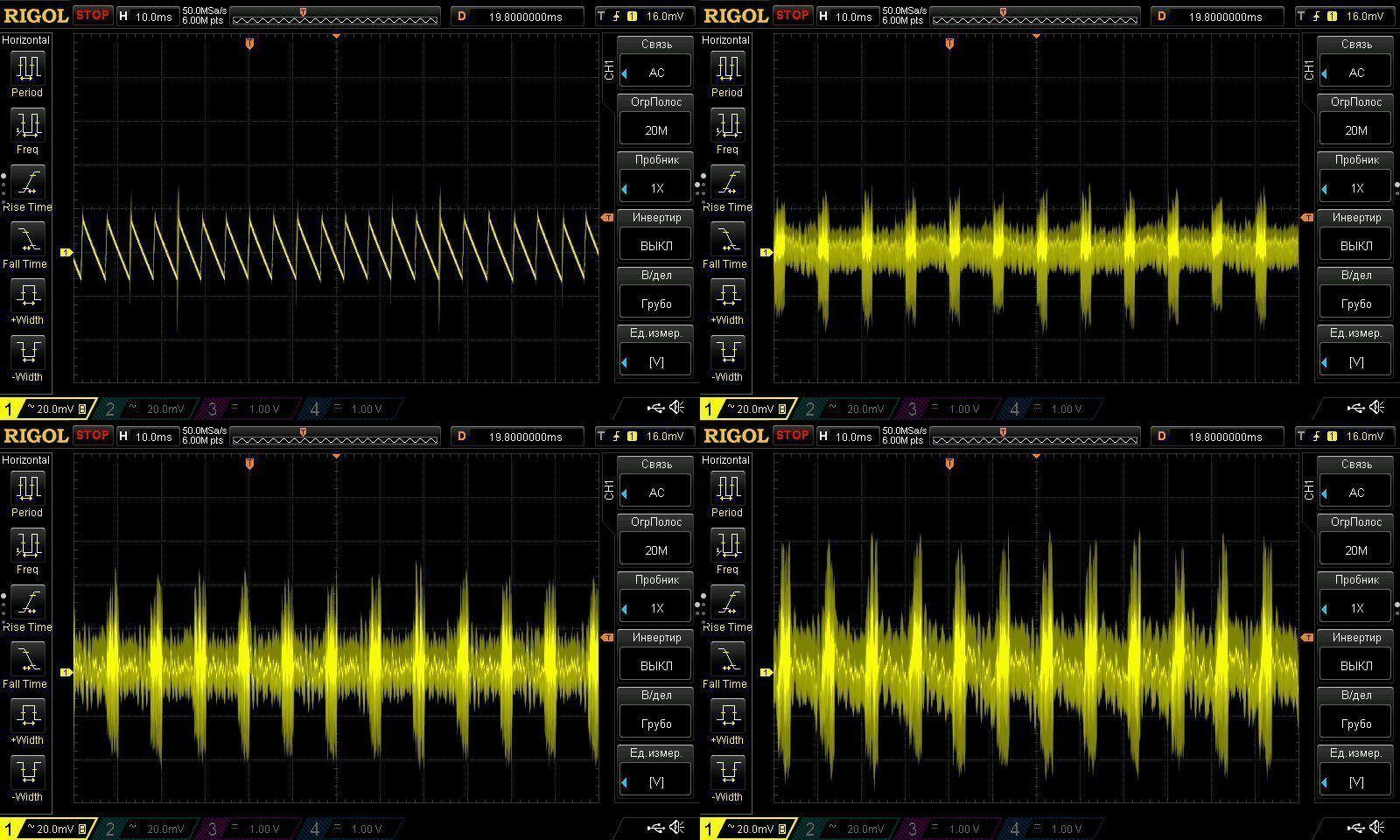
What I liked even less was the occasional resonance at 6 and 9 A. But again, without a detailed investigation, I won’t make any definite claims. Subjectively, the power supply works just fine.
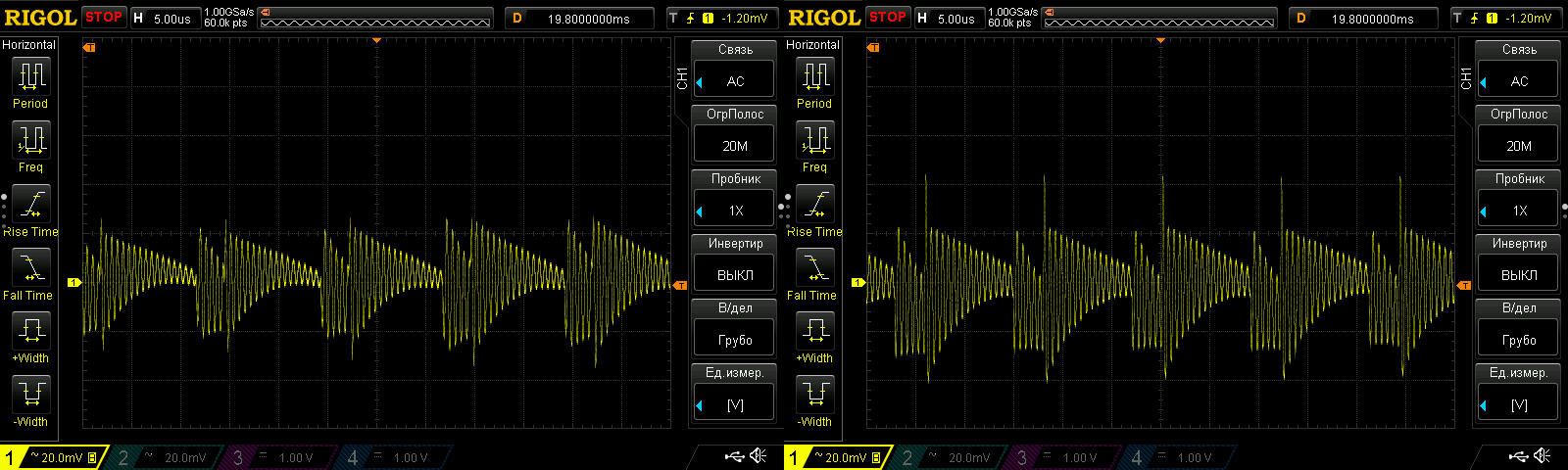
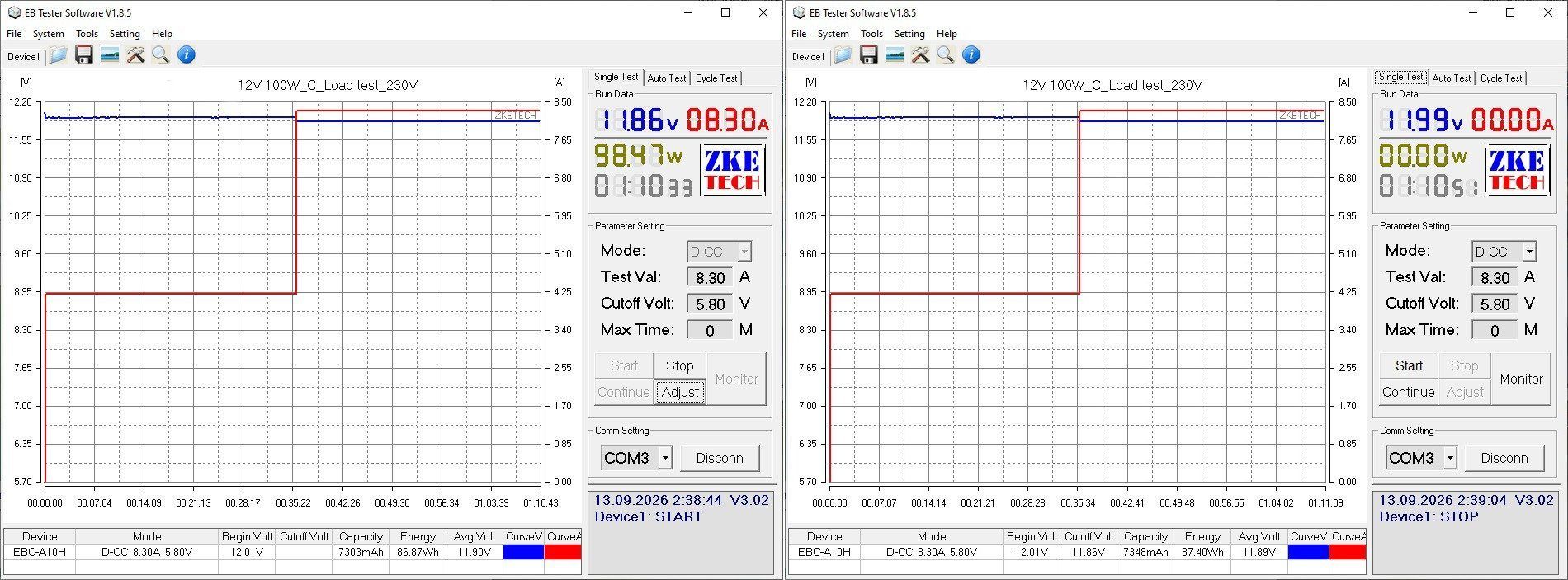
The load test was performed at currents of 4.2 and 8.3 A. As I’ve already mentioned, to avoid being accused of testing outside the specified operating conditions, I limited the tests to the stated ratings.
There is some load-dependent voltage drop, incidentally—150 mV, which is unusual for power supplies like these. The effect of heating is small, just 20 mV.
Component temperatures.
At 4.2 A: transformer 65°C, transistor 49°C, diode assembly 59°C.
At 8.3 A: transformer 103°C, transistor 79°C, diode assembly 96°C.
In my opinion, the transformer temperature leaves no safety margin. As I’ve already mentioned, these power supplies have a particular quirk: they’re often installed in enclosed boxes where the air temperature is considerably higher than normal. Keep that in mind when choosing one.
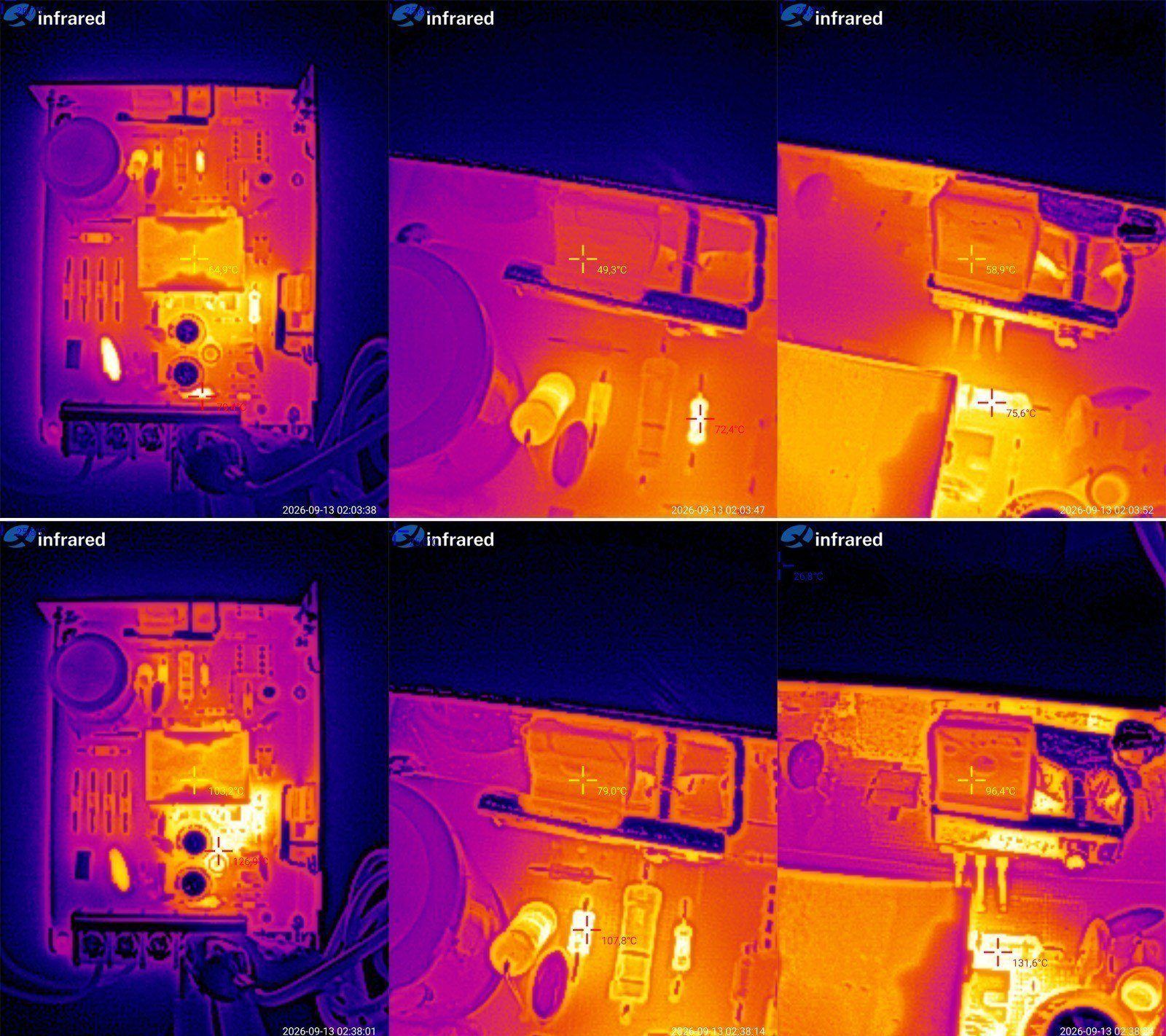
Just out of curiosity, at the end of the test I checked the temperatures at a few other interesting spots.
The transformer winding was around 120°C; the output inductor winding was around 136°C, with 113°C on top; the diode snubber resistor was 128°C.
The third power supply is also rated at 100 W, 12 V and 8.3 A, but in a sealed enclosure.
The stated input voltage range is 170–250 V.
There wasn’t much else to photograph here: the enclosure is made from aluminum extrusion, apparently anodized, and the wires are a decent gauge. No complaints at all—in fact, I really liked this enclosure design.
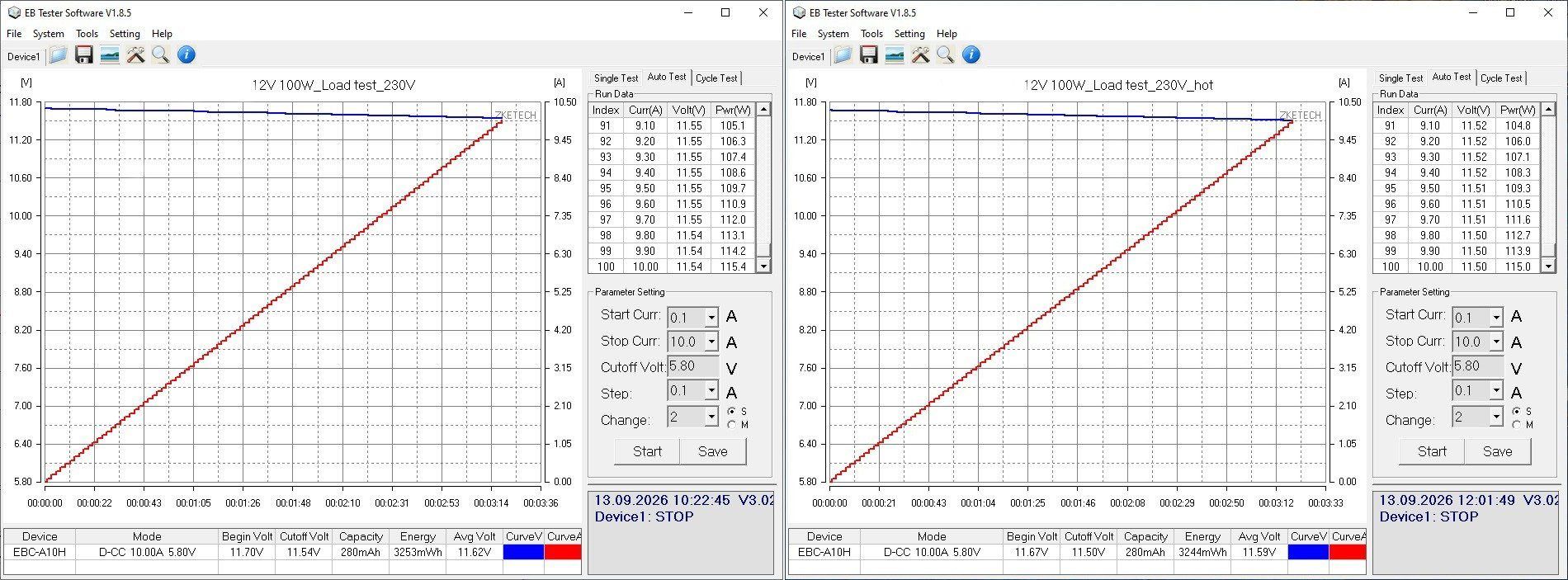
As with the previous unit, when I checked the overcurrent protection, its threshold turned out to be above 10 A. An additional test gave exactly the same result as before: around 11–11.5 A.
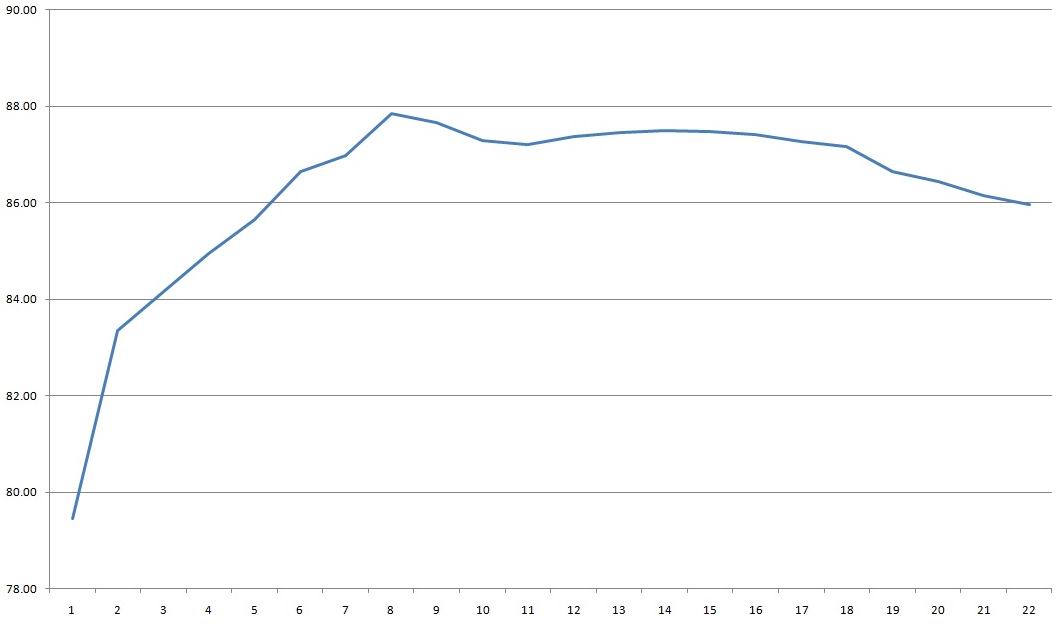
Efficiency was measured from 0.5 to 11 A in 0.5 A increments, and turned out to be pretty good—around 87–87.5%.
No-load power consumption is around 0.5 W.
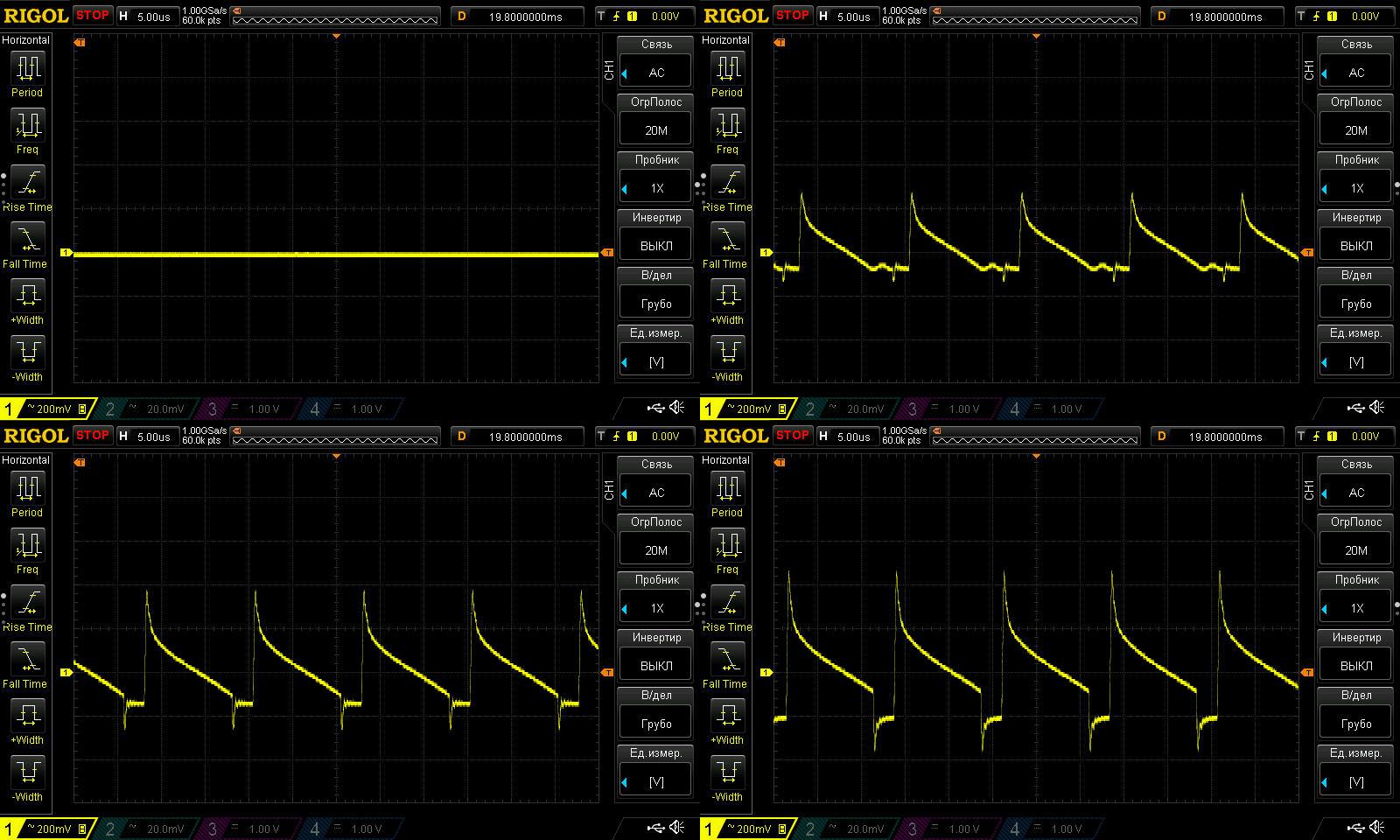
Ripple with no load and at currents of 3, 6 and 9 A.
And this is where this model disappointed me. Everything seemed to be going so well, then suddenly there’s 800 mV of ripple at maximum current. That’s really not good, especially since the power supply doesn’t look like a budget model.
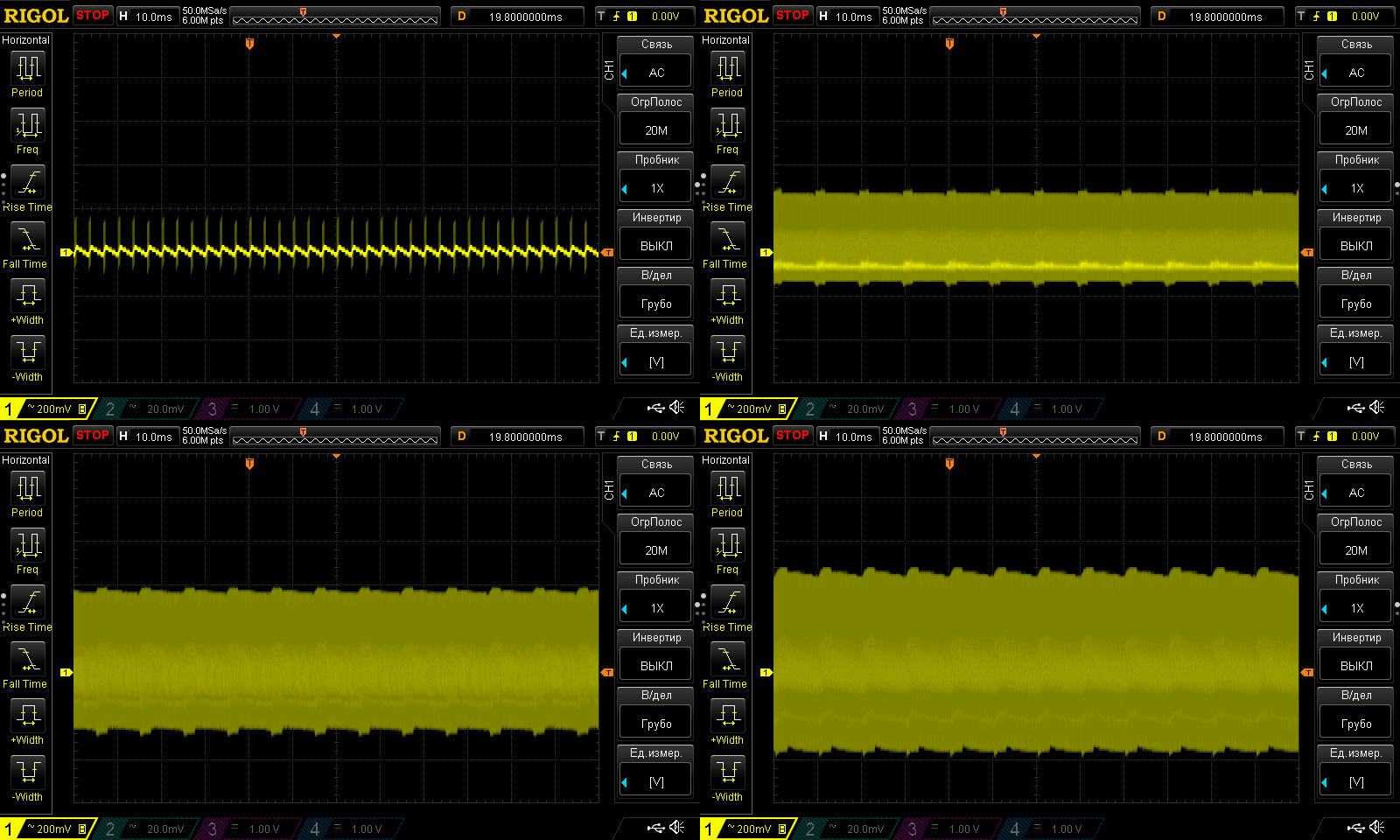
At 100 Hz, though, there’s almost no ripple. Most likely, the input capacitor has plenty of capacity, especially since the power supply is rated only for the “high” input voltage range.
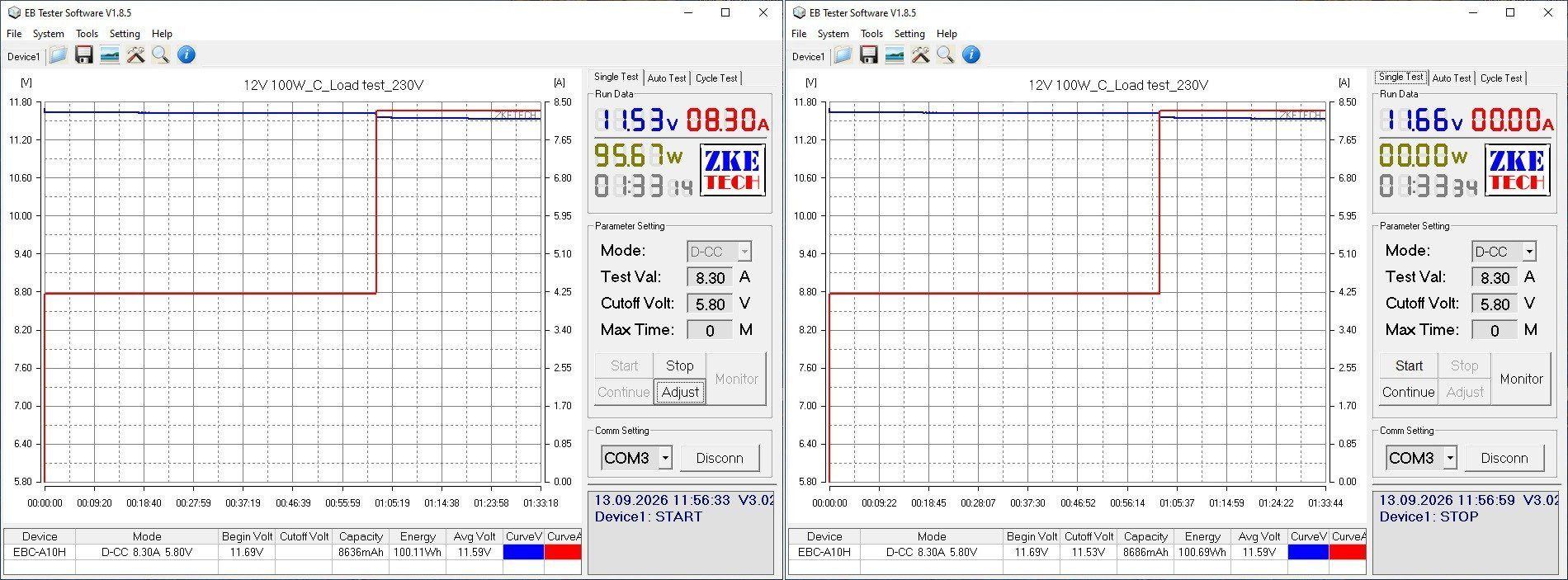
The load test was run at 4.2 and 8.3 A, within the stated ratings.
At full load, the voltage dropped by about 0.16 V, partly due to the output cable. The voltage change as the unit warmed up was small, around 30 mV.
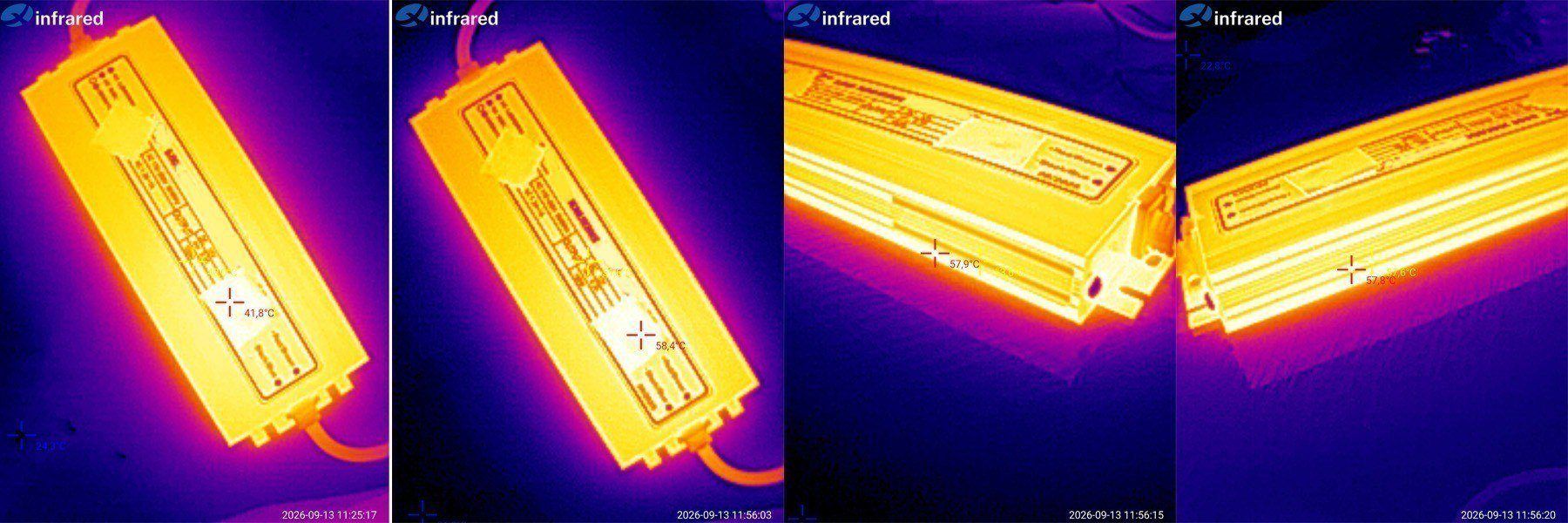
Enclosure temperatures in the two operating modes.
First thermal image: 4.2 A, enclosure at 42°C.
Thermal images 2–4: 8.3 A, enclosure at 58°C; both sides were also at 58°C.
No complaints about the thermal performance; these temperatures are typical for power supplies like this. For obvious reasons, it’s difficult to measure the temperature of individual components here, but since the enclosure itself acts as a large heatsink, overheating is rare.
The fourth power supply is also rated at 100 W, 12 V and 8.3 A.
The stated input voltage range is 180–265 V.
This is the “tasty” one I promised at the very beginning. I ordered it mainly out of curiosity, to get a closer look at this marvel of Chinese electronics.
Even when you unpack it, it gives you a sense of “premium” quality: there’s a little box, and the power supply itself sits in a plastic tray.
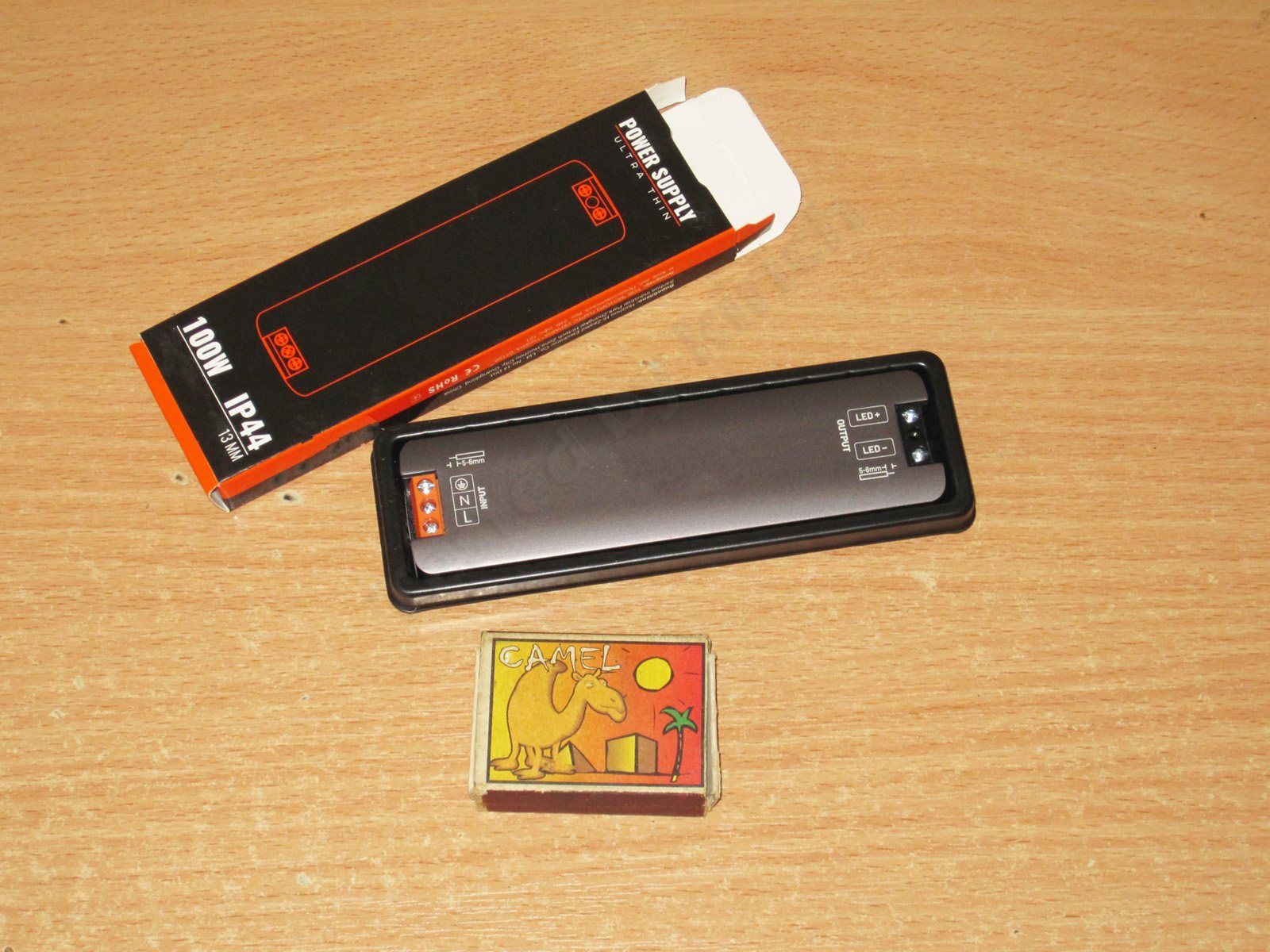
It’s genuinely compact: 123 × 33.8 × 13 mm, and weighs just over 94 g. The metal enclosure feels nice to the touch, it’s anodized, and the color scheme looks great. Honestly, I’m impressed :)
It connects via two terminal blocks. I do have some doubts about whether the output terminal block will work properly at these currents, but it’s apparently rated for 10–16 A, so let’s assume it’s fine.
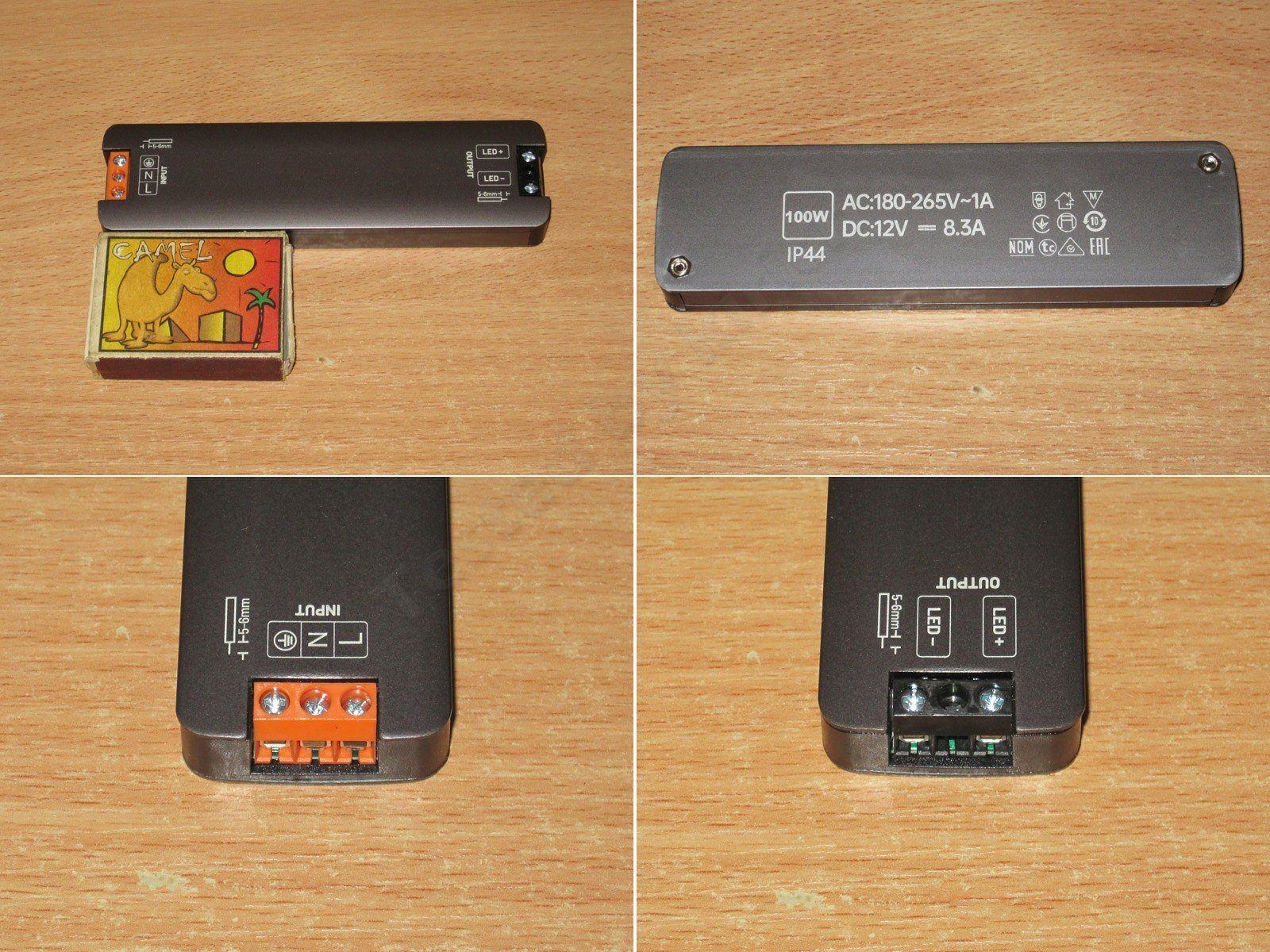
This power supply is essentially sealed, though with the terminals exposed, it’s more accurate to call it water-resistant. Also, as I’ve already mentioned, potting compound usually improves thermal performance by reducing localized hot spots and spreading the heat around. Naturally, that’s assuming the potting compound is the right kind, not just silicone from Epicentr.
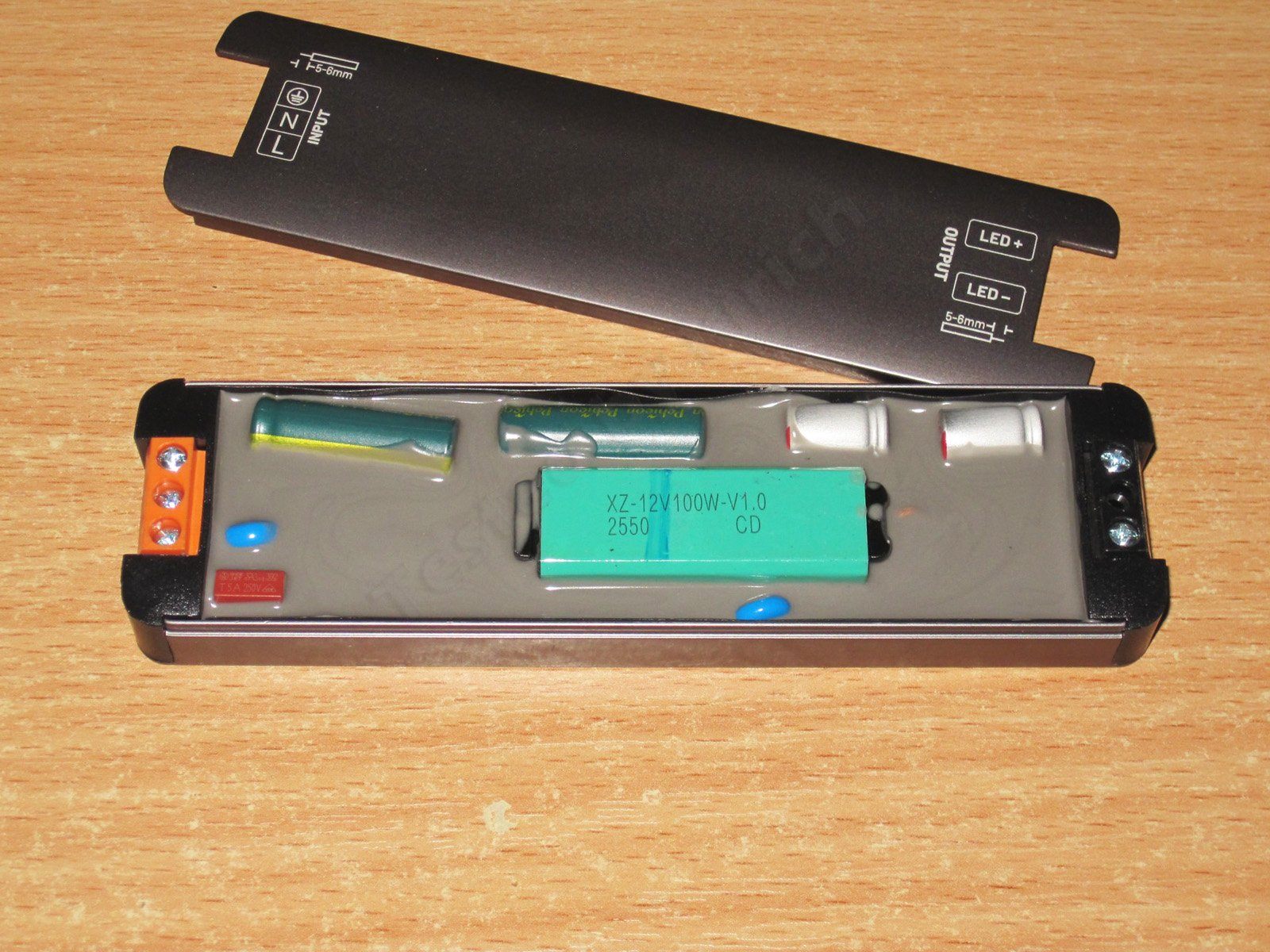
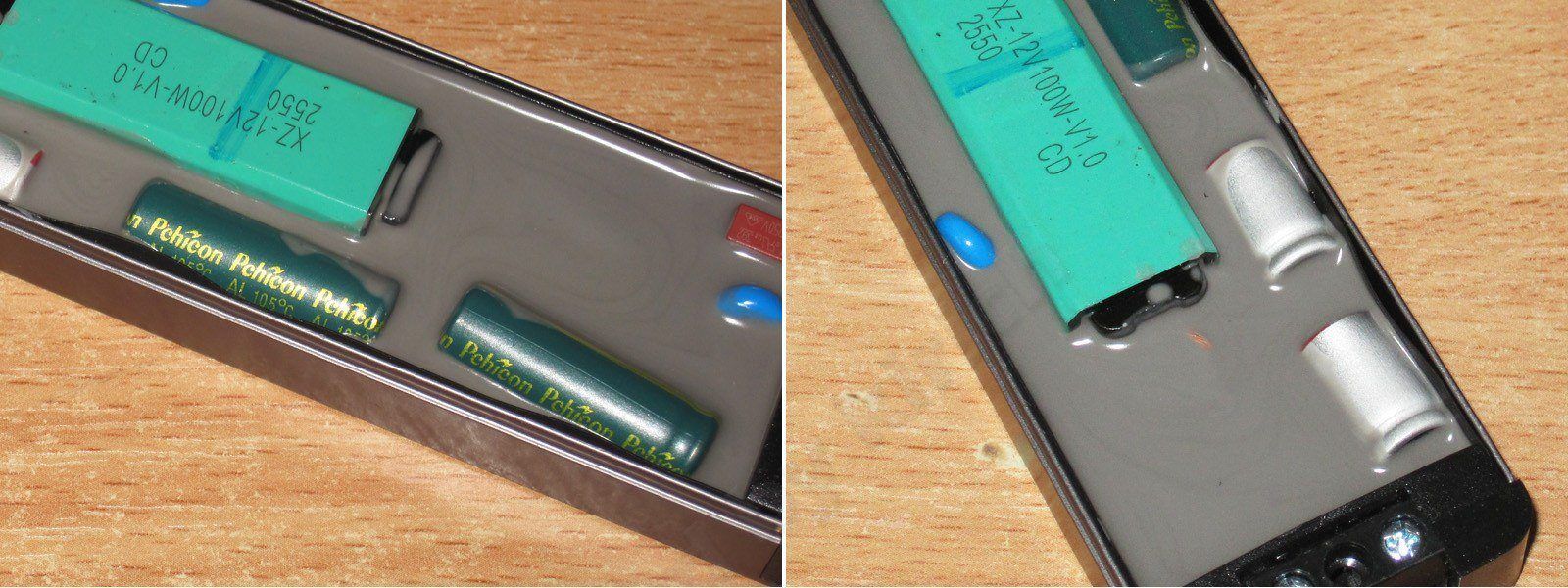
On the input side there’s a pair of long, thin capacitors, the kind that are popular in ultra-thin LCD monitors and TVs these days. Each is probably somewhere between 22 and 33 µF.
On the output side there’s a pair of polymer capacitors. Judging by their size, they’re probably around 1000 µF, 1500 µF at most. I forgot to measure them, but it’s not critical.
The rectifier is probably synchronous; a conventional one in a package like this would overheat quickly. Also, as far as I could tell, the transformer’s output winding is made with Litz wire, which is a good thing. The Y capacitor is visible on the left; you can recognize it by its distinctive case.
In short, I really like it. Looks nice :)
But the very first test showed that the maximum output current is around 7.2–7.3 A; beyond that, the protection kicks in. So even at this stage, we’re getting only 85 W out of the claimed 100.
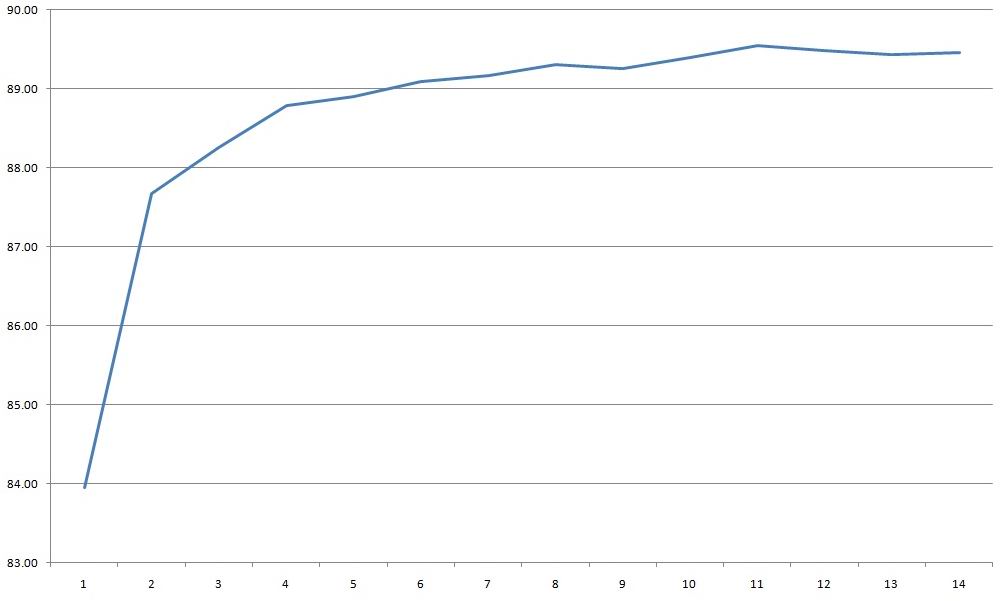
Efficiency was measured from 0.5 to 7 A in 0.5 A increments.
The efficiency came in at 89–89.5%, which is decent, but not impressive. I even expected it to be a bit higher. Put simply, at 7 A, this little box dissipates about 10 W as heat, which is quite a lot.
With no load, it draws only about 0.05 W.
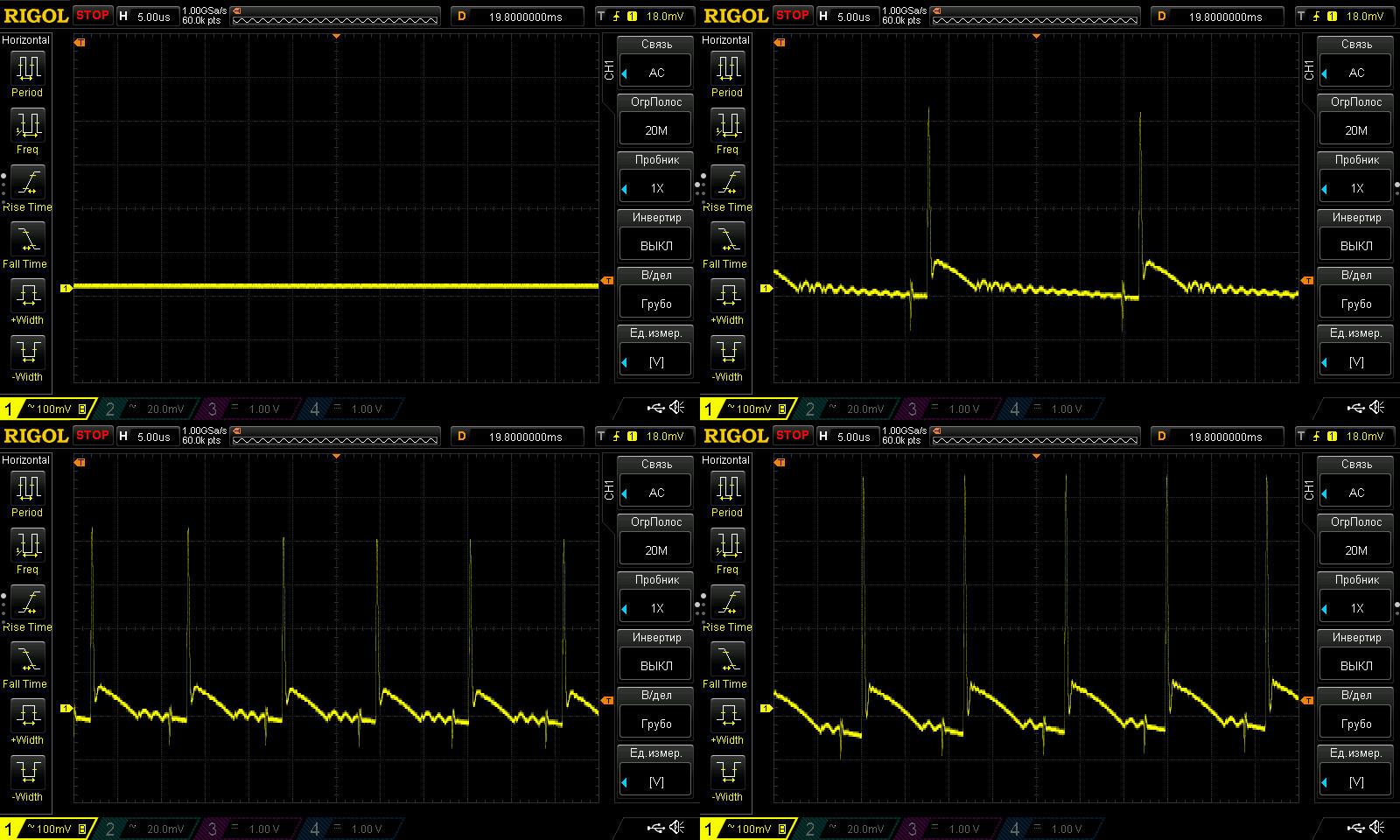
Ripple was measured with no load and at currents of 2.5, 5, and 7 A.
The main component was about 120 mV, which would be good if it weren’t for the “spikes,” which brought the total peak-to-peak ripple to around 650 mV. But as I’ve written many times, these “spikes” are suppressed quite effectively by an ordinary cable, or even a small capacitor at the input of your device.
But here’s the question: if there’s a pair of polymer capacitors on the output, and the waveform still looks like this, then something may be wrong somewhere.
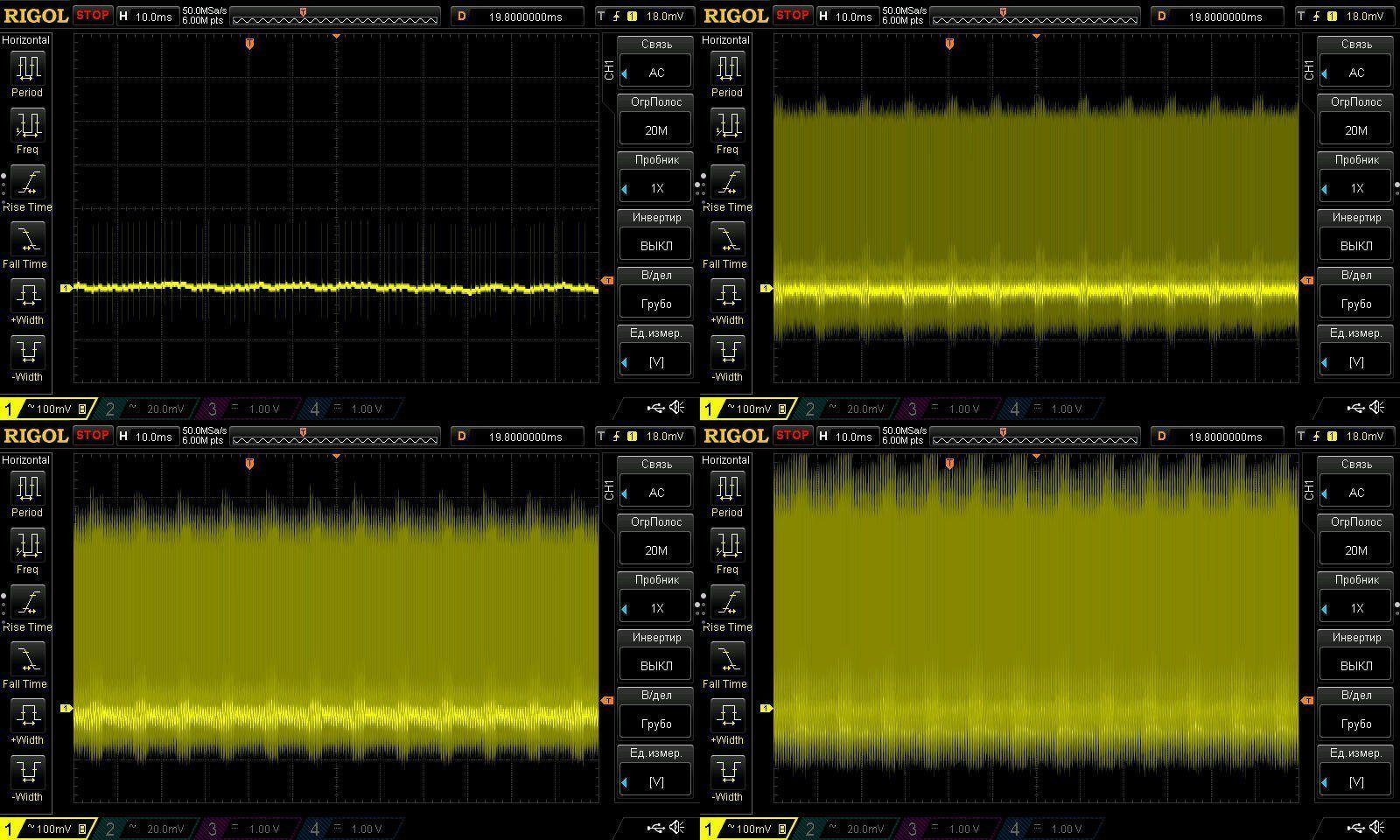
As expected, the overall low-frequency noise level was high, although the 100 Hz component was within reason, so I won’t complain.
The load test was performed at currents of 4.2 and 7 A.
The power supply has a fairly strong positive load regulation: at 7 A, the voltage rises by as much as 0.4–0.5 V.
I suspect the output voltage is regulated on the primary side. There’s also a noticeable positive temperature coefficient: the voltage rises by about 0.22 V as it warms up.
Now let’s look at the temperatures. Obviously, I can’t measure them accurately, but still.
I checked the transformer temperature, as well as two spots: between the input and the transformer, where the diode bridge and probably the inverter transistor are located, and between the transformer and the output, where the rectifier should be.
Unfortunately, some parts are hard to see.
At 4.2 A: transformer 68 degrees, high-voltage section 64 degrees, output section 61 degrees.
At 7 A: transformer 95 degrees, high-voltage section 88, output section 87.
Honestly, I’m pleasantly surprised—not that this power supply, despite its claimed 100 W rating, could only be tested up to 82 W, but that at around 80 W it doesn’t overheat and shut down.
Judging by the design, I’d guess this is a conventional flyback converter, with a fairly decent transistor on the input side and a synchronous rectifier on the output. That would explain the middling efficiency and high level of switching ripple.
But that’s just my guess.
Conclusions.
1. 36 W desktop model. A typical budget model: everything about it is great—the wired connector, self-oscillating converter, poor electrical safety, power output 1.5–2 times lower than claimed, noticeable ripple, and, as a bonus, a mains cable with high resistance. Still, it works well enough for low-power, undemanding loads such as LED strips, though I personally wouldn’t buy one.
2. 100 W enclosed model. Also a budget option, with plenty of cost-cutting, but at least it looks like they cut costs intelligently. The input filter doesn’t affect operation, the input capacitor has enough capacitance for our mains frequency, the components aren’t undersized, and there’s an output filter. My main concerns are the somewhat high operating temperature, the thin metal case, the strange low-frequency ripple, and, I suppose, the overall cost-cutting.
3. 100 W sealed model. One of those cases where everything seems great at first—the temperature, stability, build quality—until you put an oscilloscope on it and see how awful the output is. And the main problem with the ripple isn’t that it’s there, but that it will only get worse with use. It never gets smaller, so in a year or so the waveform will be even worse. Otherwise, though, it’s a decent power supply.
4. 100-watt ultra-compact. A very, very interesting power supply. Yes, it couldn't deliver its claimed 100 W, and yes, 7 A is genuinely the maximum current it can handle—and it would be better to reduce that to around 6 A. In other words, its continuous power is probably closer to 70 W. Still, the fact that it delivers decent power in such a compact package deserves respect. The only thing that really disappointed me was probably the disproportionately large “needle” spikes in the ripple.
That’s all for today. I hope this was useful, and I’d love to hear what you think of this part and the previous two. And, of course, thanks to the person who decided to send me this whole interesting bunch for testing.
This model is included in the summary table: Comparison of power supplies: ripple, efficiency, and temperature rise
The figures from this review are in the measurement database: Power supplies
Calculate manuallyAll calculators
Discounted products
You may be interested in



Discounted products
Support the project
All the content on the site and the advice are free, but we’d be grateful for your support of the project and the channel!
Comments1
Discuss on the forumThere’s already a forum thread, but no replies yet. Be the first!
Post on the forumOnly registered readers can comment. It takes a minute to sign up, and you can log in with the same account you use on the forum.
Log inRegister
Comments are published in their original language.