
Three at 100, or what’s happening in Ukraine’s switching power supply market, Part One
Today I’m starting a short series of reviews looking at what other power supplies are available in Ukraine. I’m not talking about random units listed on OLX or Prom, but products from fairly large sellers. Yes, sellers is the right word—I’d like to say manufacturers, of course, but I don’t know that many actual manufacturers, and they mostly focus on industrial models, though not always.
If I’m wrong and these power supplies really are made in Ukraine, let me know in the comments.
To keep up with new posts on the blog, I recommend following me on Instagram. I’ll post notifications about all new articles there, and might also share something interesting from time to time: link to my account
You can also follow updates and new articles on the Telegram channel - https://t.me/KirichBlog Note that discussion of reviews and articles is enabled on the channel, along with general chat. I recommend it.
A note: to avoid any accusations, and as agreed with the project sponsor, the markings on all the test units have been removed. Any resemblance to particular brands is coincidental. Otherwise, I promise this review will be as unbiased as possible, as are all my reviews.
So, today we’ll look at three 100 W models, in two different designs and from different price segments.
I’ll start with the standard power supply in a perforated metal case. After plastic-cased units, this is probably the most common format.
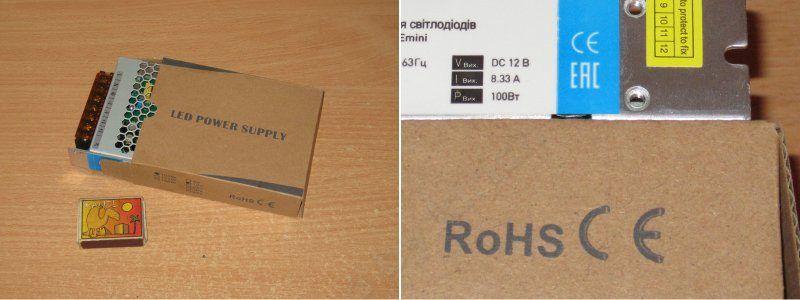
Power: 100 W; voltage: 12 V; current: about 8.3 A.
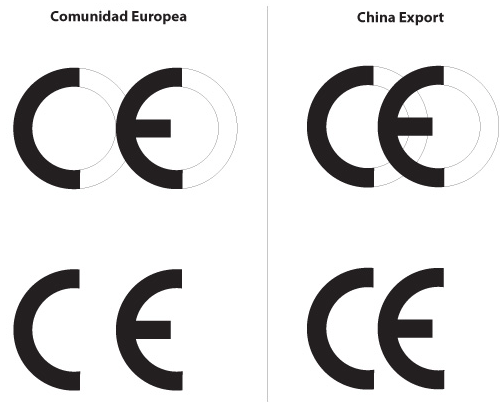
The CE marking gave me pause. These aren’t just random characters: their design, and especially the spacing between them, follows a specific standard. It could indicate European certification, or it could be China Export.
For anyone who doesn’t know, here’s a quick reminder. You can find the rest on Google.
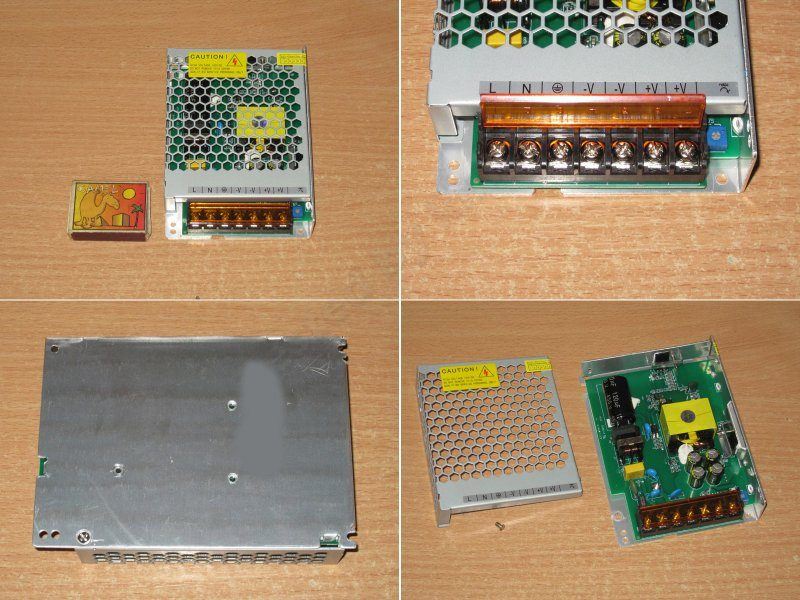
This is a familiar design to many: convenient, practical, and effective at cooling. In principle, you’d have to try pretty hard to mess this one up.
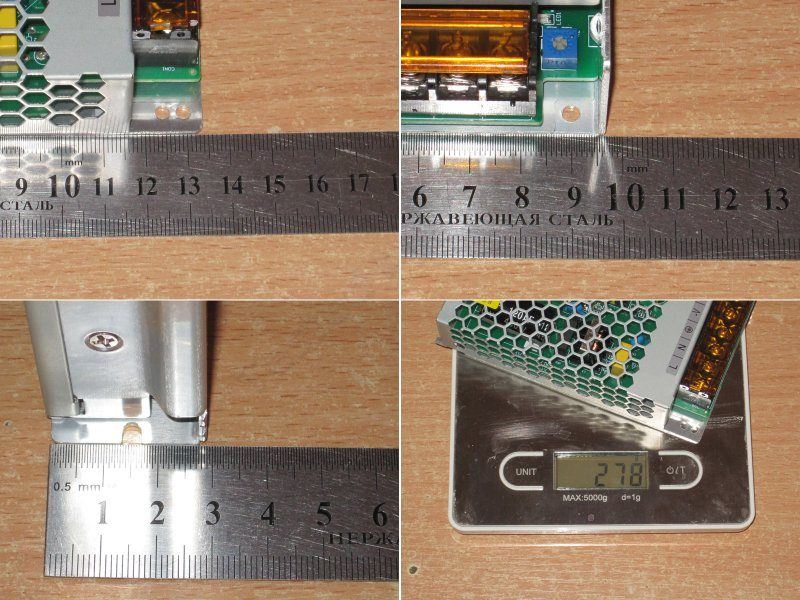
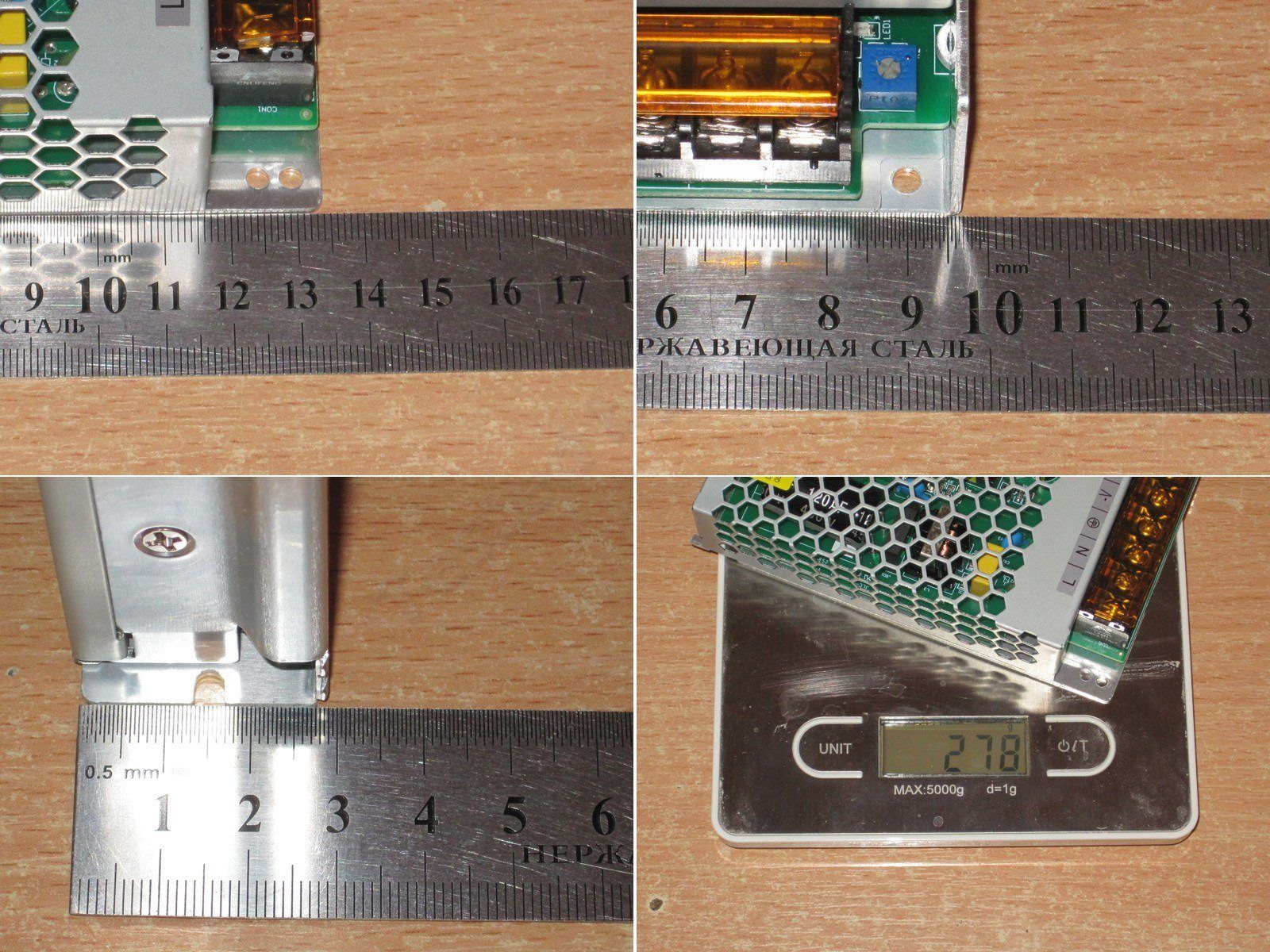
Dimensions are about 135 × 96 × 29 mm.
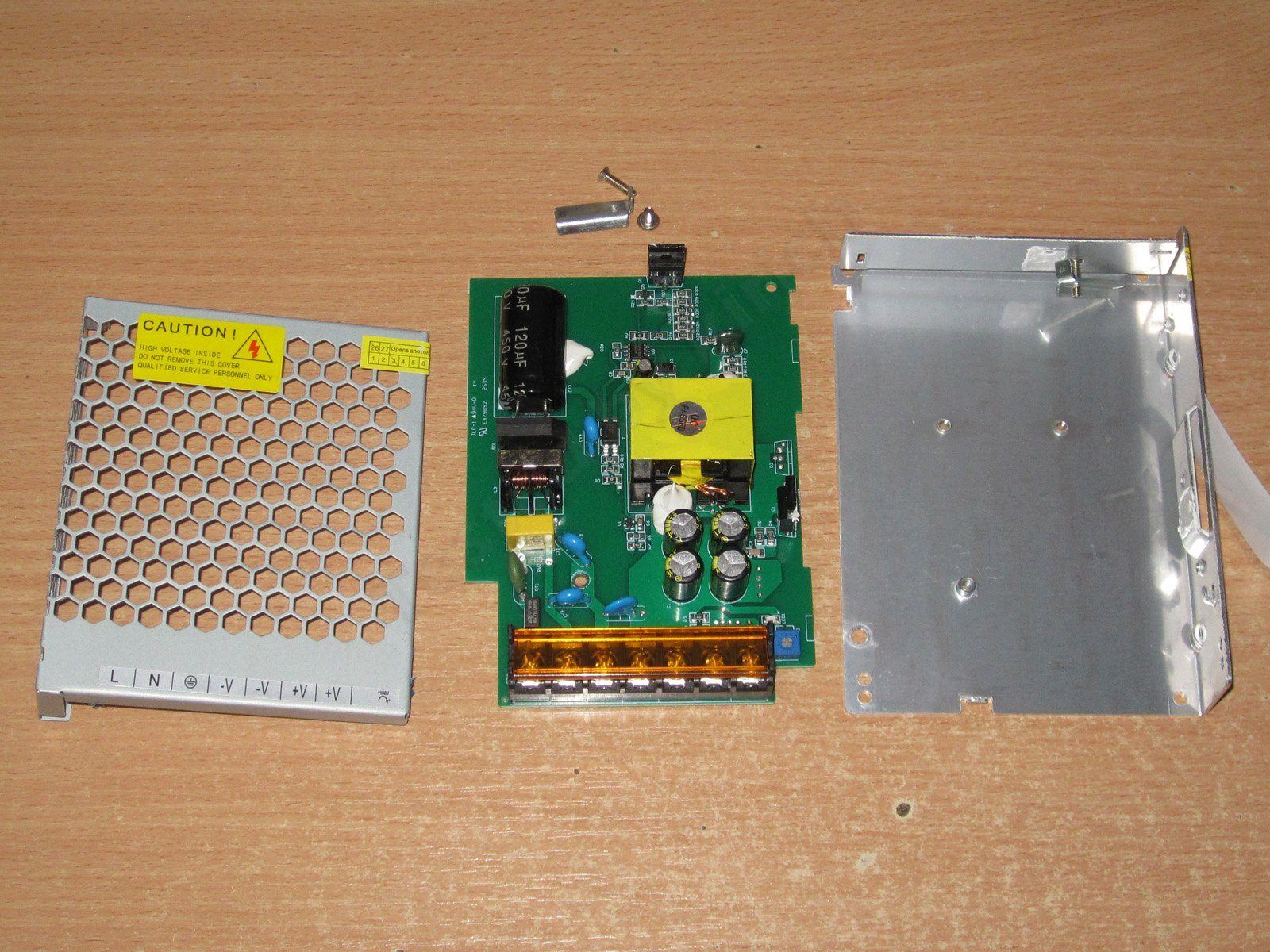
The circuit board is neat, the layout is spacious, and I have no complaints about the assembly.
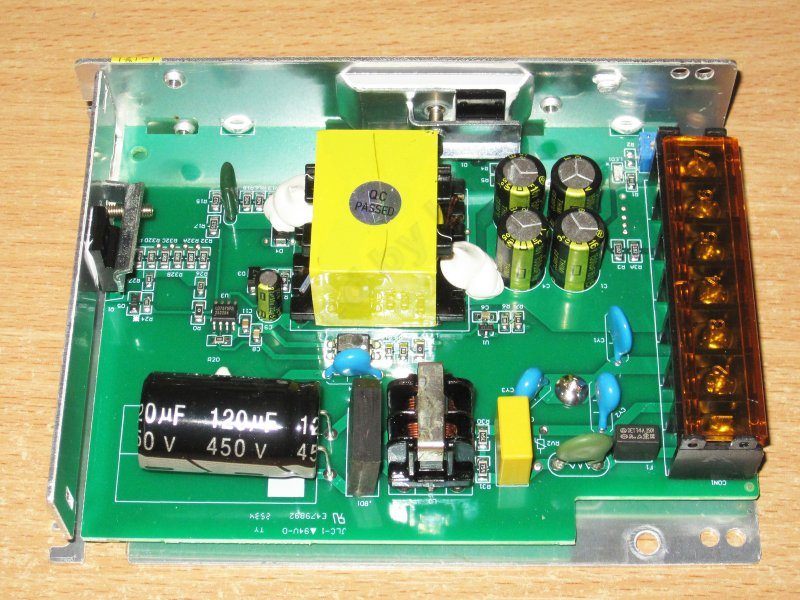
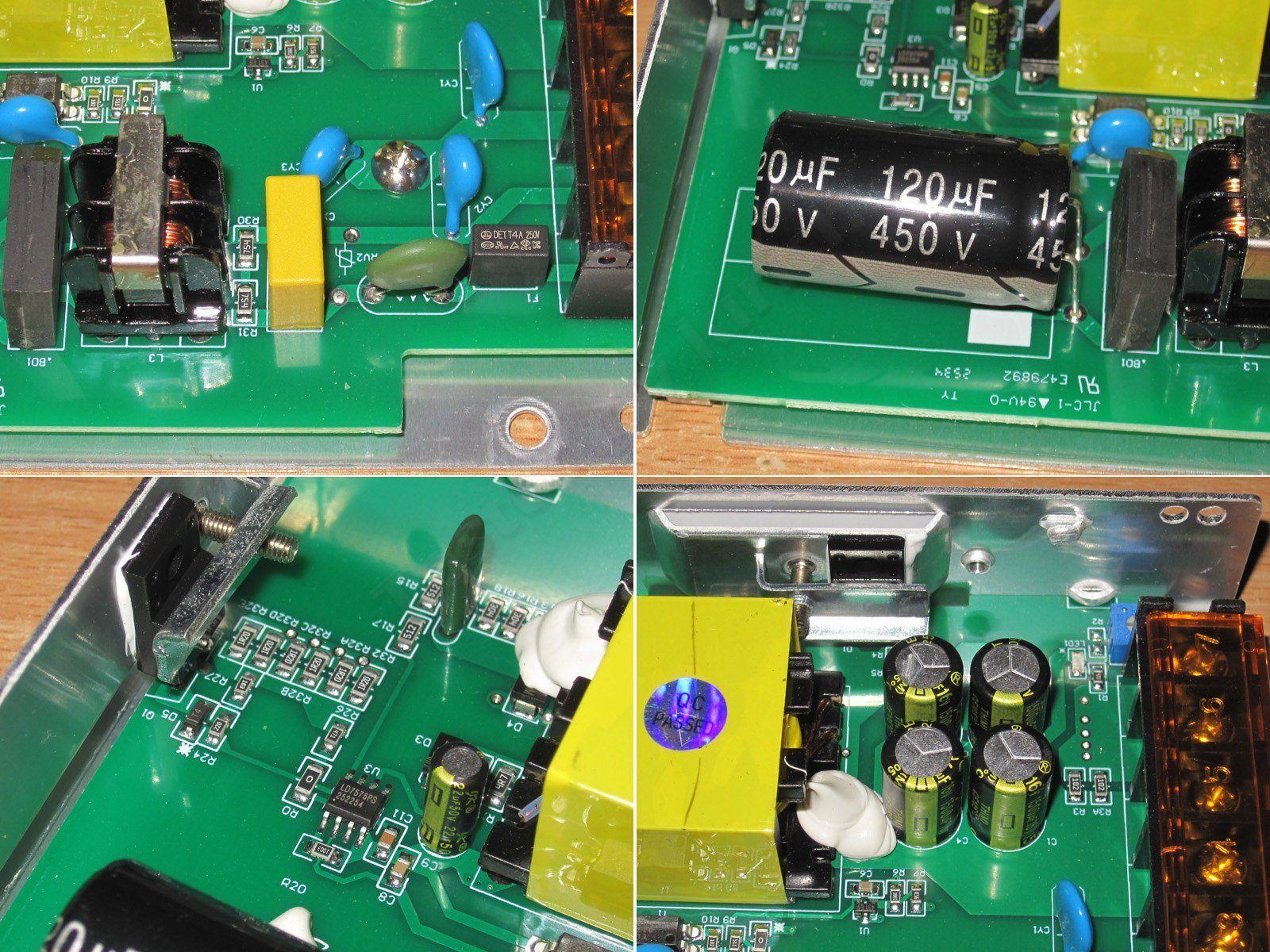
The input has a filter, a thermistor, and a fuse, but no varistor.
The input capacitor is rated at 120 µF and 450 V—unusual, but a nice touch.
The PWM controller section. It’s interesting that they chose to make the shunt from a bunch of small resistors.
There are four capacitors on the output, which is also the right approach: more small ones are better than one large one. There are two 1 kΩ bleeder resistors in parallel; personally, I think one is unnecessary, but that’s just my opinion.
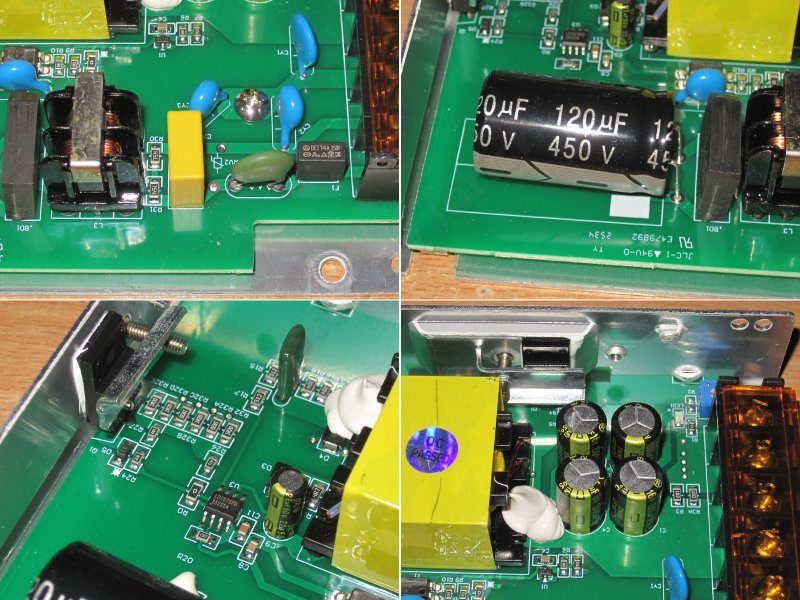
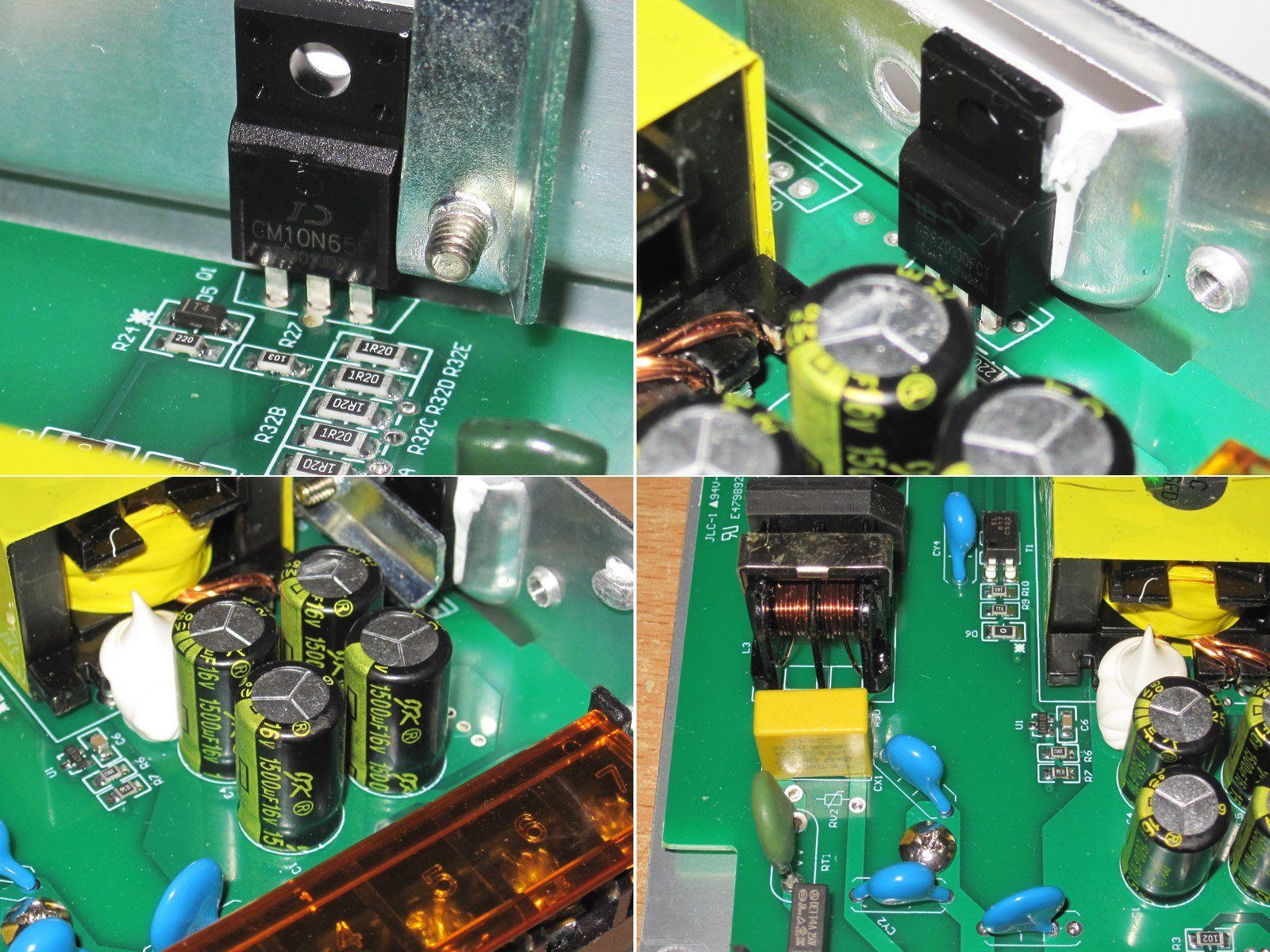
The high-voltage transistor is rated for 10 A and 650 V. No issues there.
The rectifier assembly is rated for 20 A and 100 V. It’s a close fit, but with proper cooling, it should be fine.
The output has four 1500 µF, 16 V capacitors. I approve, both in terms of capacitance and quantity.
There are three Y capacitors, and I have no complaints about those either.
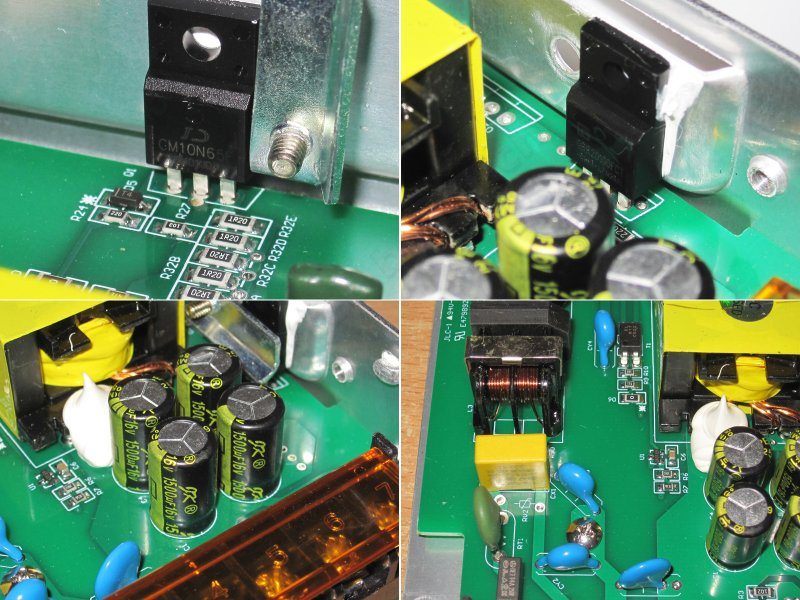
The unit comes apart easily, in the usual way.
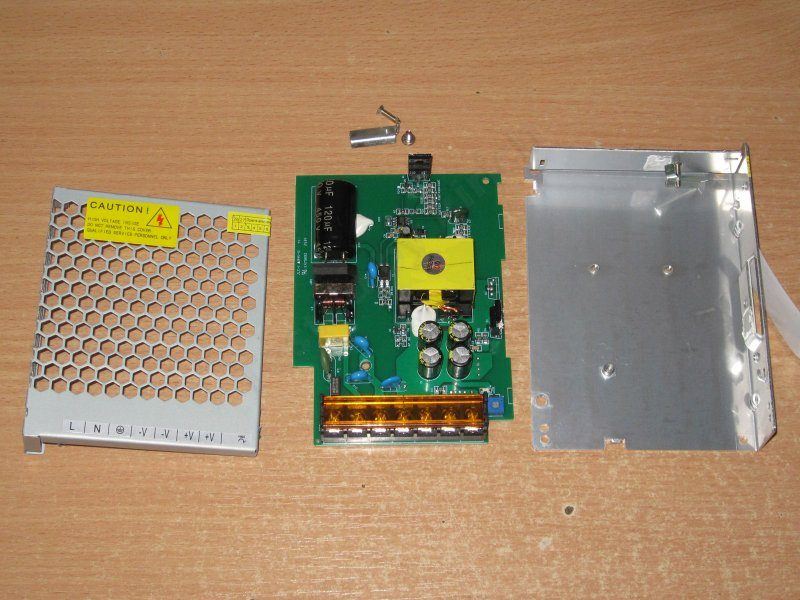
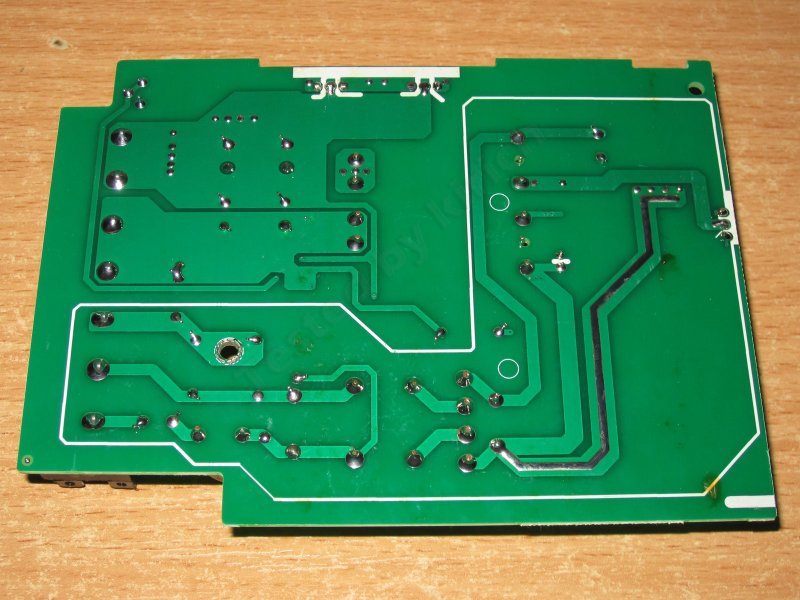
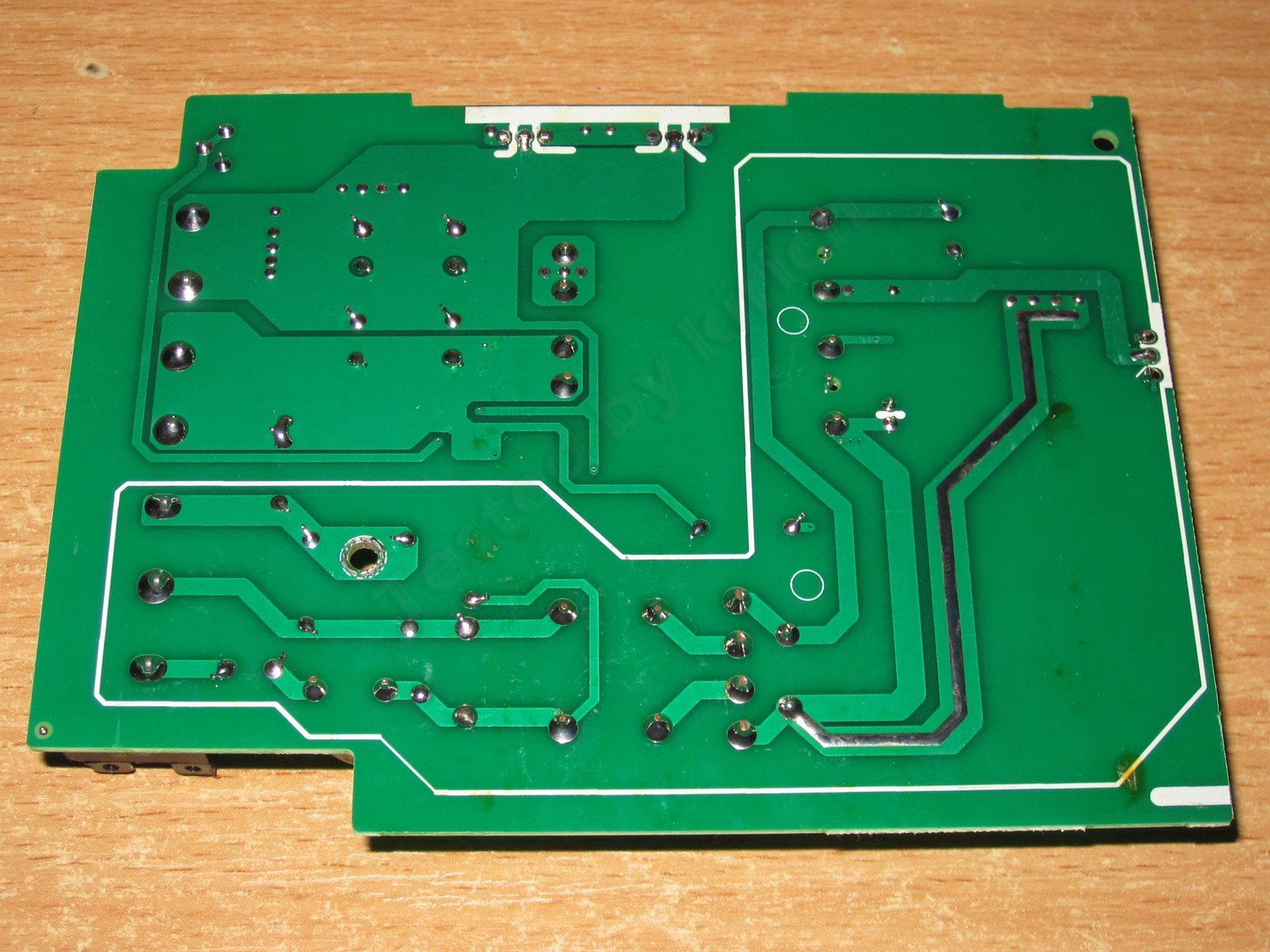
The only thing I can really fault is that the circuit board hasn’t been cleaned properly in places, with some unexplained blobs left behind. Otherwise, no complaints. I'll note that the board is made of fiberglass laminate, not phenolic paper.
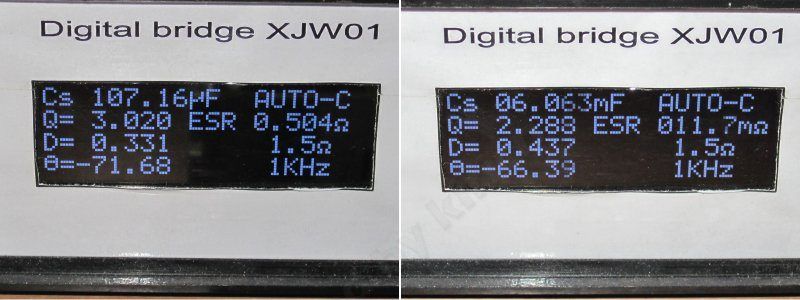
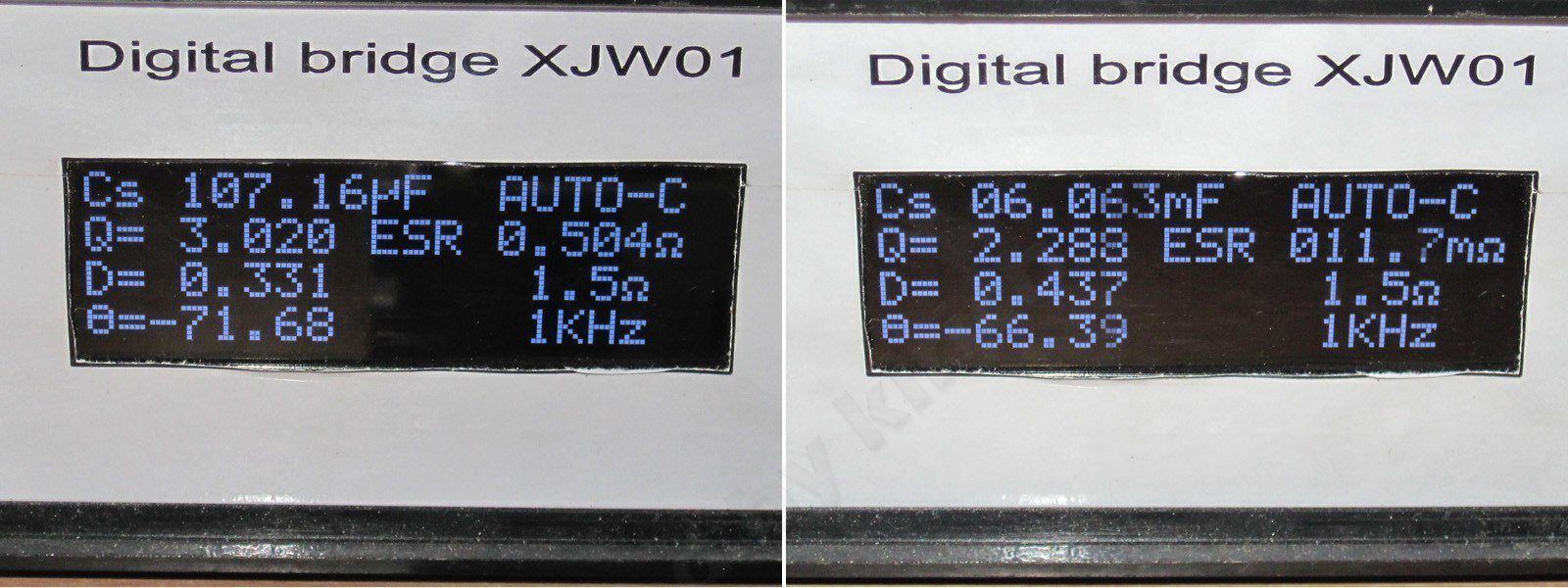
The actual input capacitor is 107 µF. That's on the low side, but quite sufficient for a 100 W power supply. The manufacturer does specify an input range starting at 100 V, though, so assuming it can deliver full power at that voltage is rather optimistic. I'd recommend reducing the load at low input voltages.
The total output capacitance is 6000 µF, which is fine.
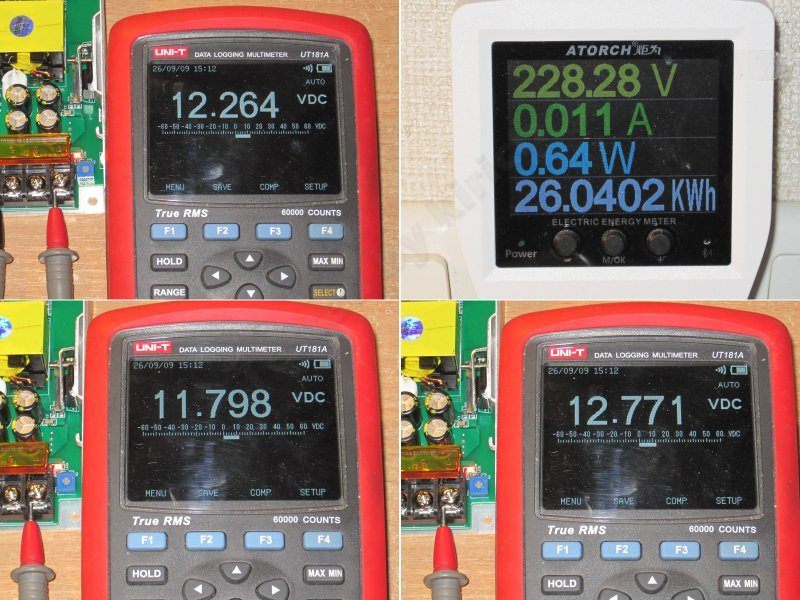
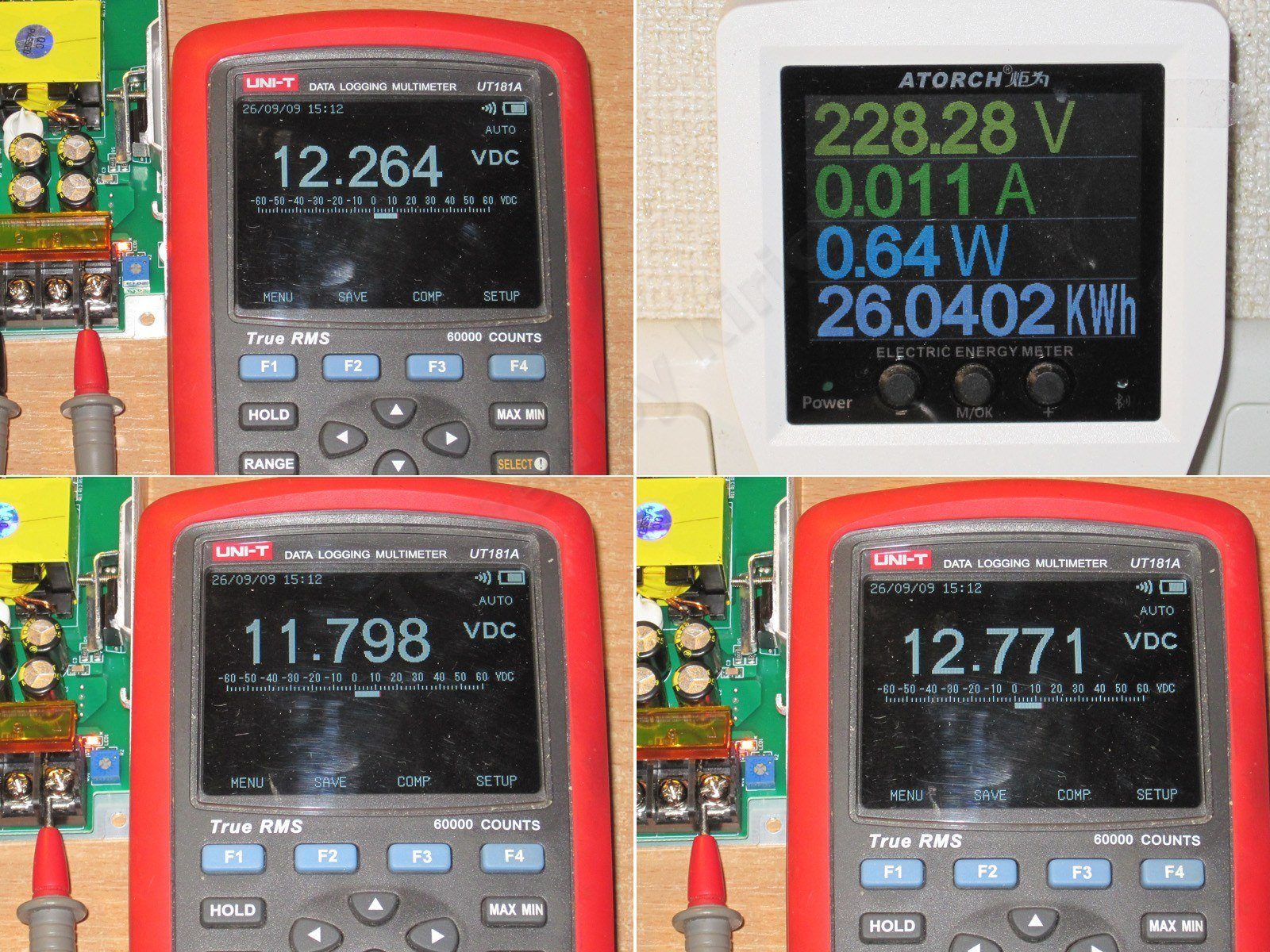
The output was initially 12.26 V. No-load power consumption was about 0.65 W, almost half of which was used by the bleeder resistors.
The adjustment is very smooth, with a range of about 11.8–12.8 V.
The output voltage barely changes with the load over the 0–10 A range; the change is negative and about 40 mV.
The overcurrent protection threshold is set high: it trips above 12.5–13 A, which is about 150% of the rated current. That's just my subjective opinion, of course.
Since my main electronic load is limited to 10 A, I checked the actual trip current using another load.
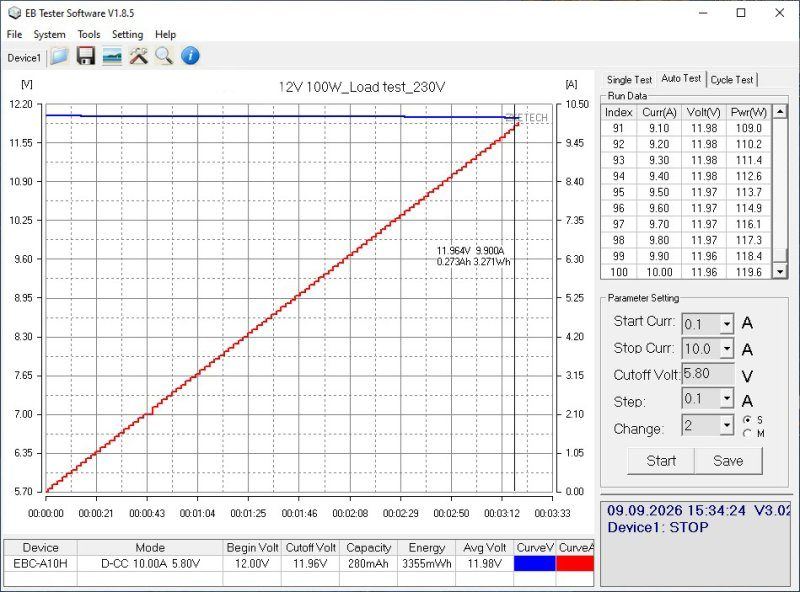
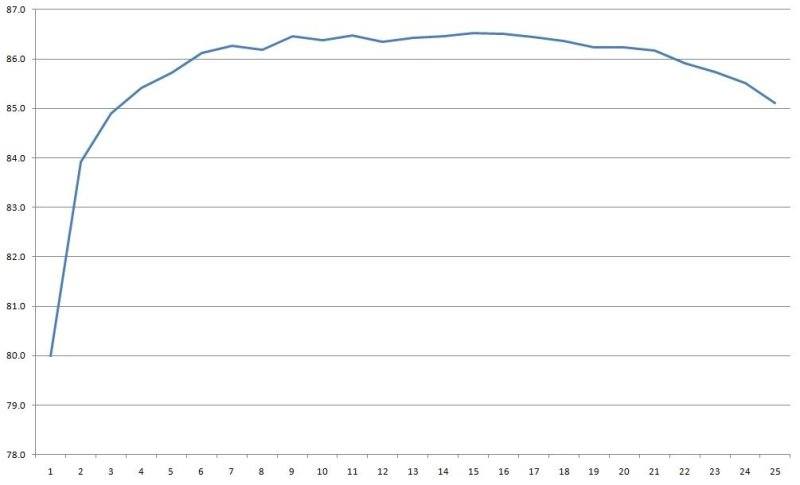
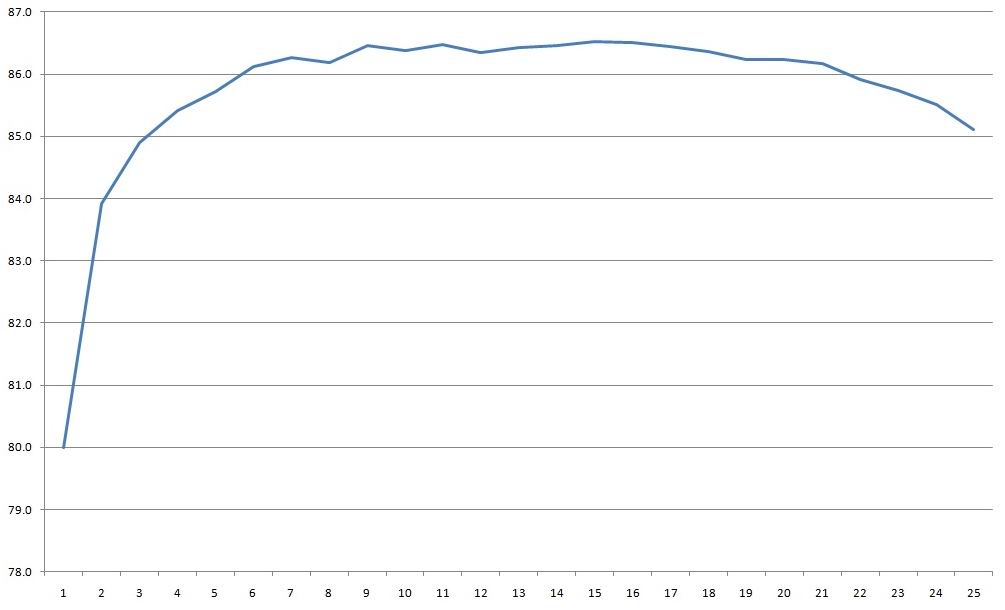
Efficiency is about 86–86.5%, which is typical for most power supplies with this topology, though there are exceptions on both sides.
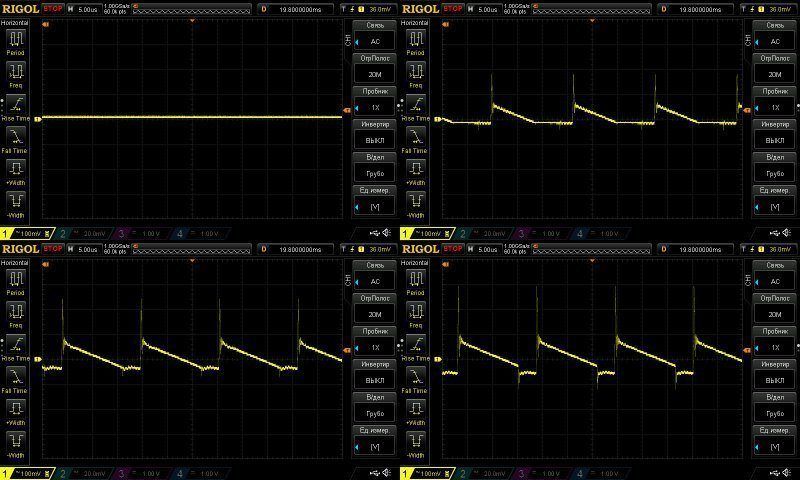
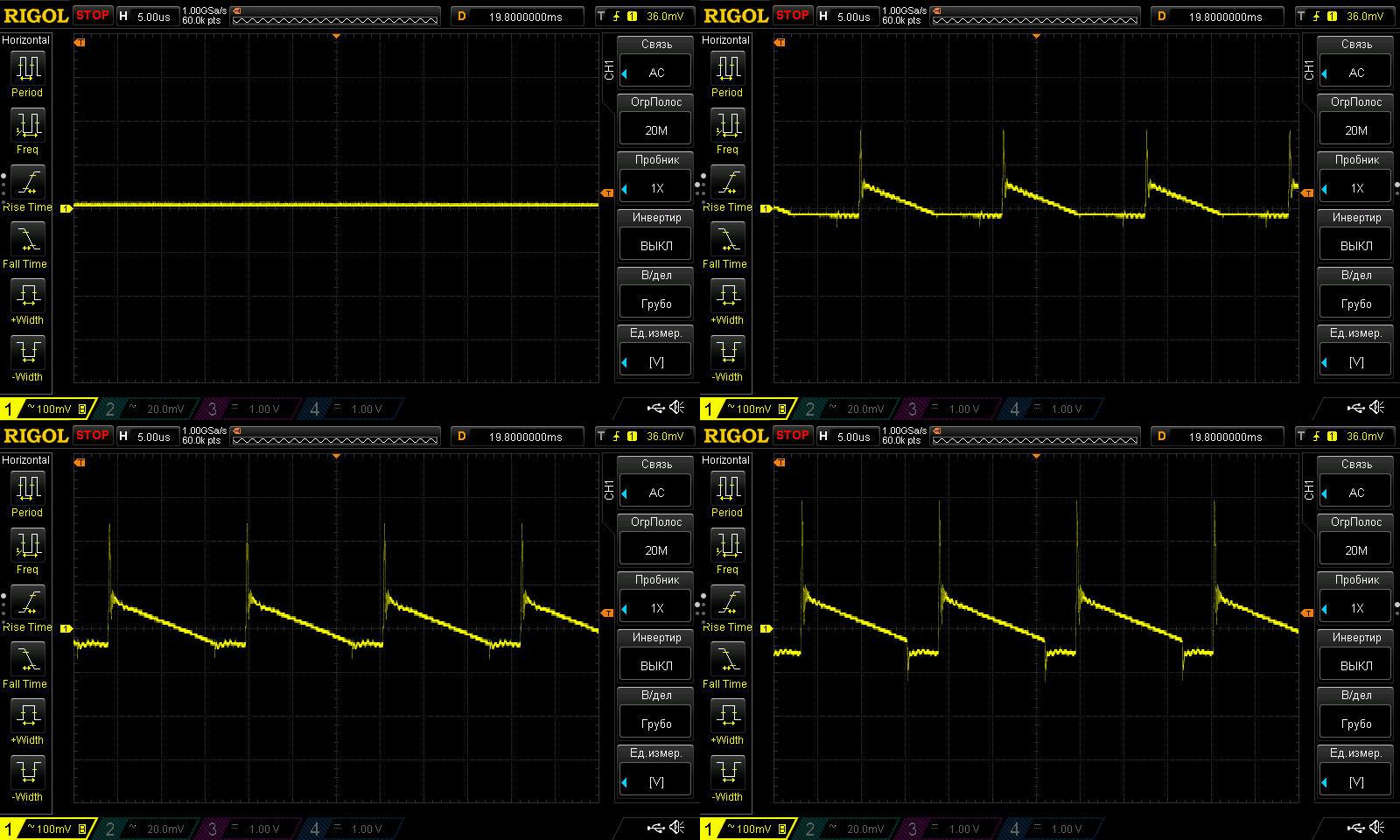
Ripple was measured with no load and at currents of 3, 6, and 9 A.
At full power, the ripple amplitude of the main component was about 160 mV. Including the spikes, the total amplitude was about 400 mV. That's not particularly high—quite typical—but given the output capacitor arrangement, I expected it to be a little lower.
Still, 160 mV is neither good nor bad—more or less average.
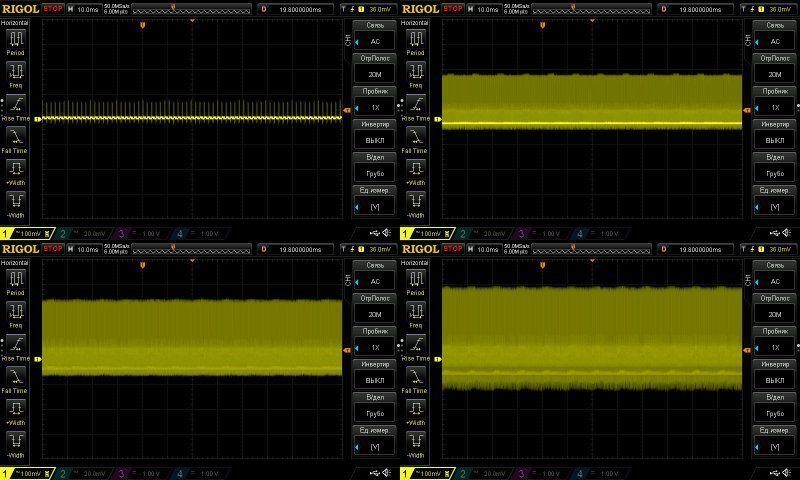
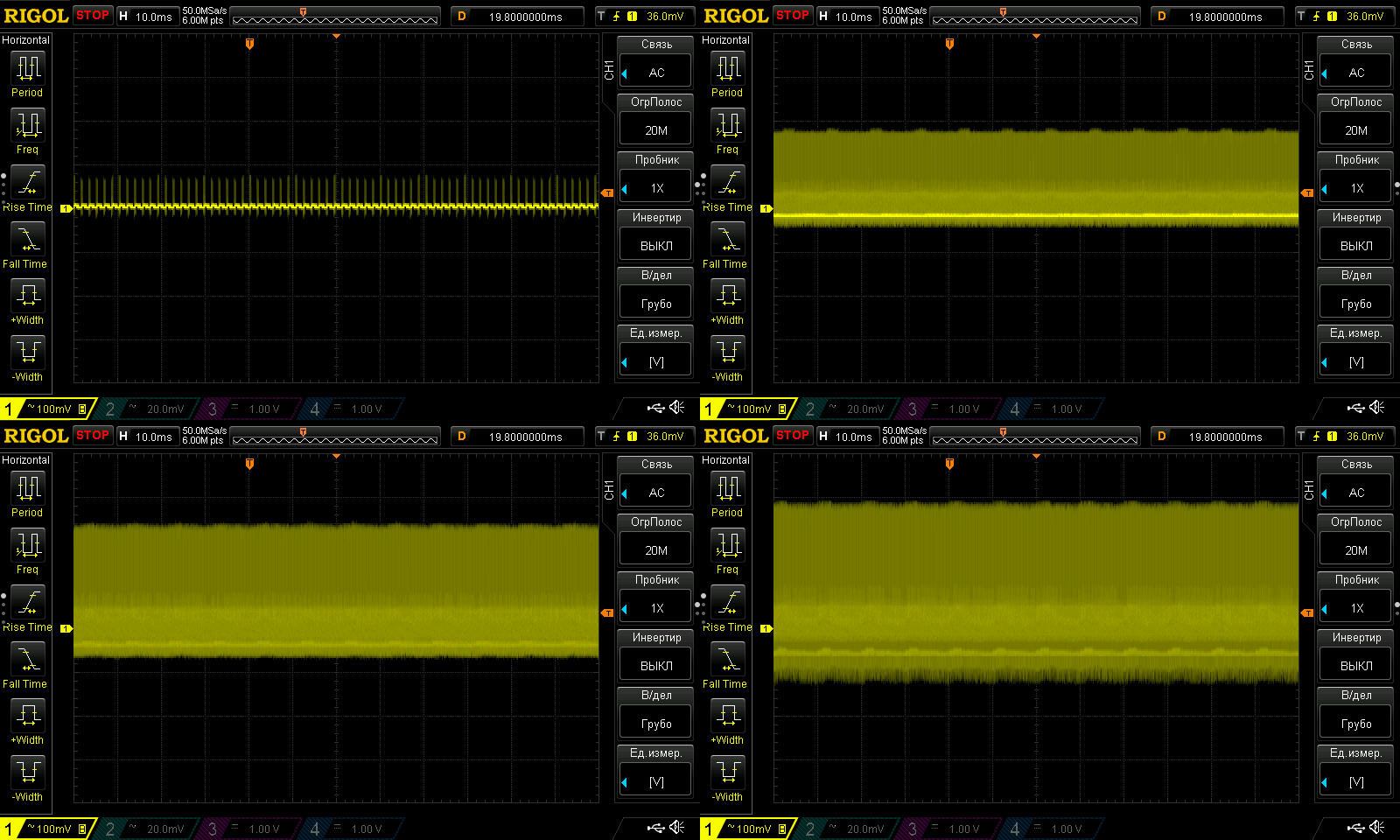
I have no complaints about mains-frequency ripple; in fact, there isn't any.
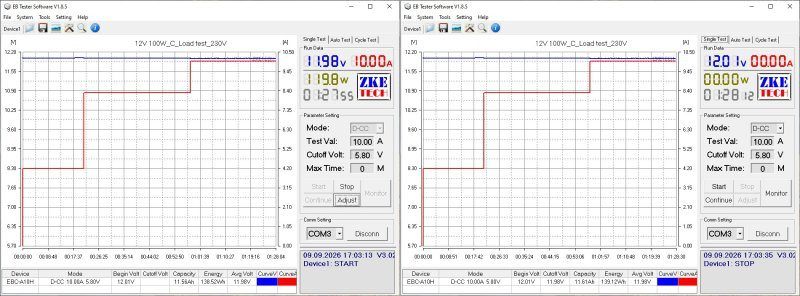
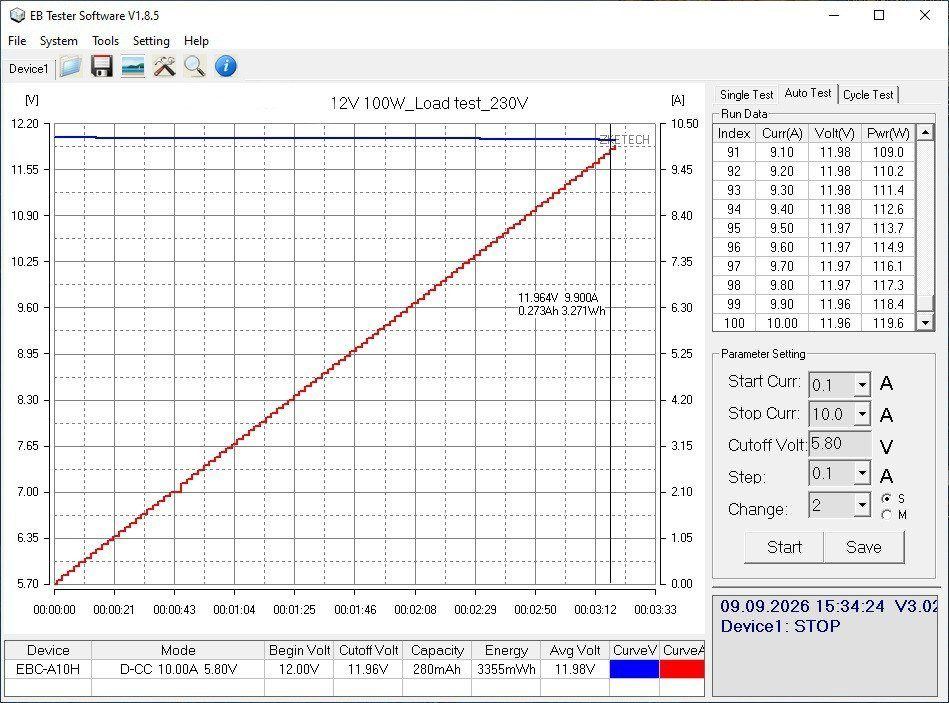
The load test was run in three modes: the two rated load levels, 50% and 100%, and at 10 A, or 120%.
The voltage doesn't vary with temperature, and its change with load is slightly negative, as I mentioned above.
And, of course, the temperatures.
4.2 A — transformer 50 degrees, transistor 39, diode assembly 50
8.4 A — transformer 71 degrees, transistor 57, diode assembly 77 degrees
10 A — transformer 84 degrees, transistor 70, diode assembly 92 degrees.
So, this is a good example of heat being distributed normally, with reasonable operating temperatures. The power supply works just fine at 10 A, so the 12.5–13 A protection threshold may make sense, although higher ambient temperatures could cause problems.
The second power supply is also rated at 100 W, 12 V, and 8.3 A, but this one has a sealed enclosure.
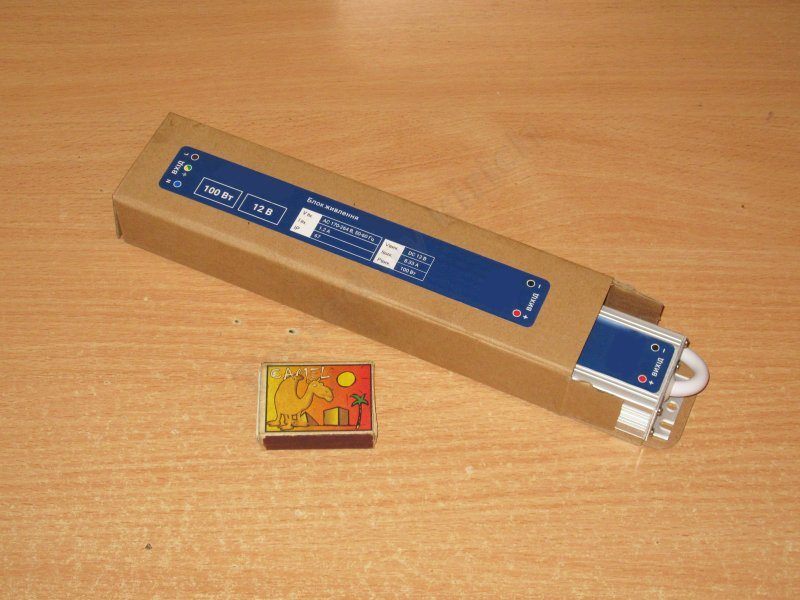
The packaging is neat, with all the key information shown both on the box and on the power supply itself.
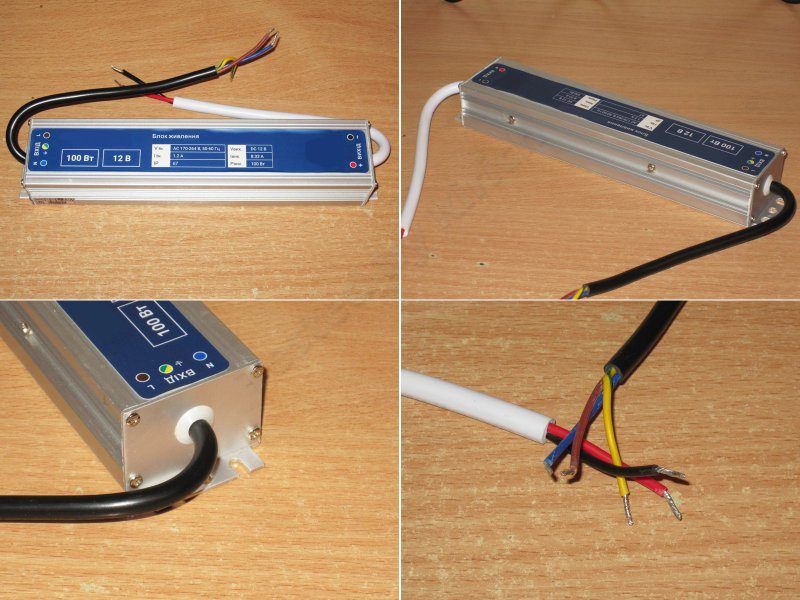
There's not much to show here: it's a typical aluminum enclosure with cables coming out of it. The enclosure has cooling fins, which is certainly useful, and the cables have an adequate cross-section.
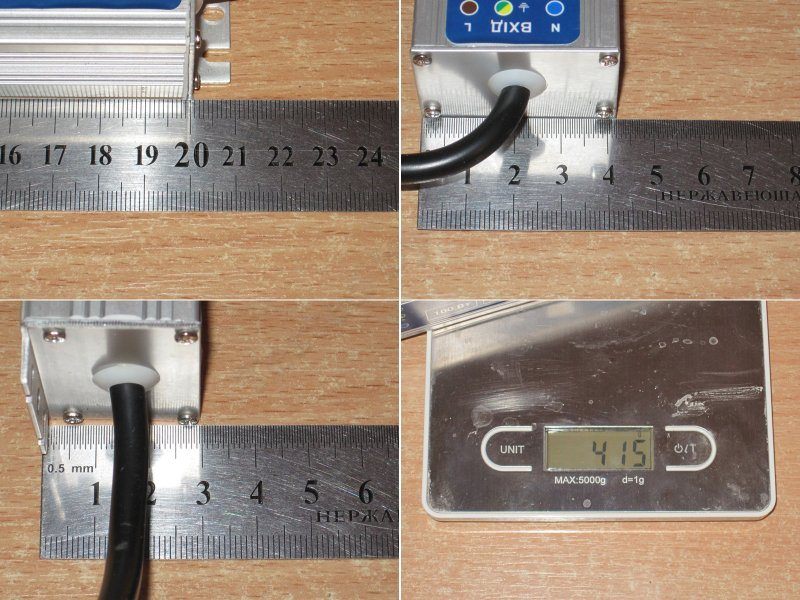
Overall dimensions are about 210 (190) × 42 × 30 mm; weight is 415 g.
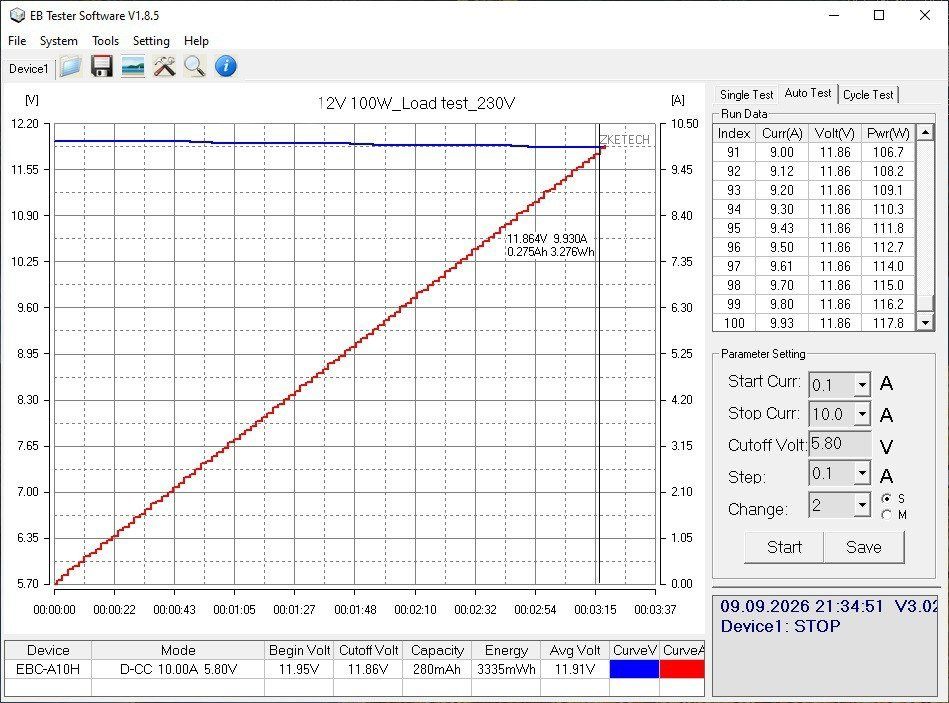
The protection tripped above 10 A. A follow-up test with another load showed a trip current of about 11–11.5 A, which is quite reasonable.
The output voltage changed by 90 mV with the load, which is fine considering I was measuring after the cable.
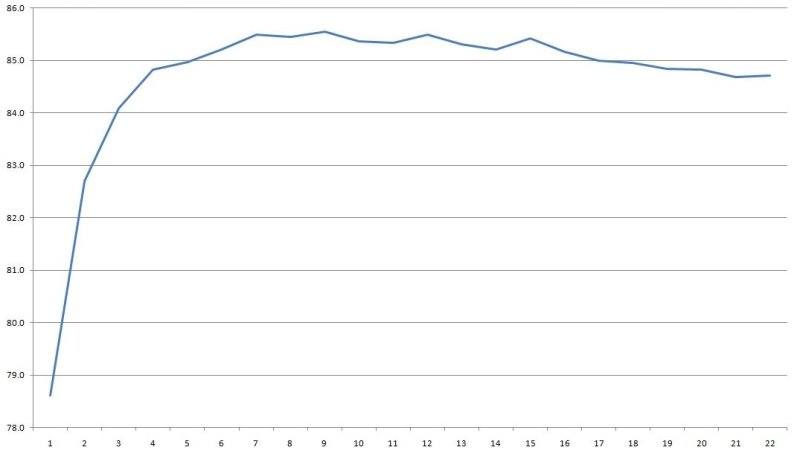
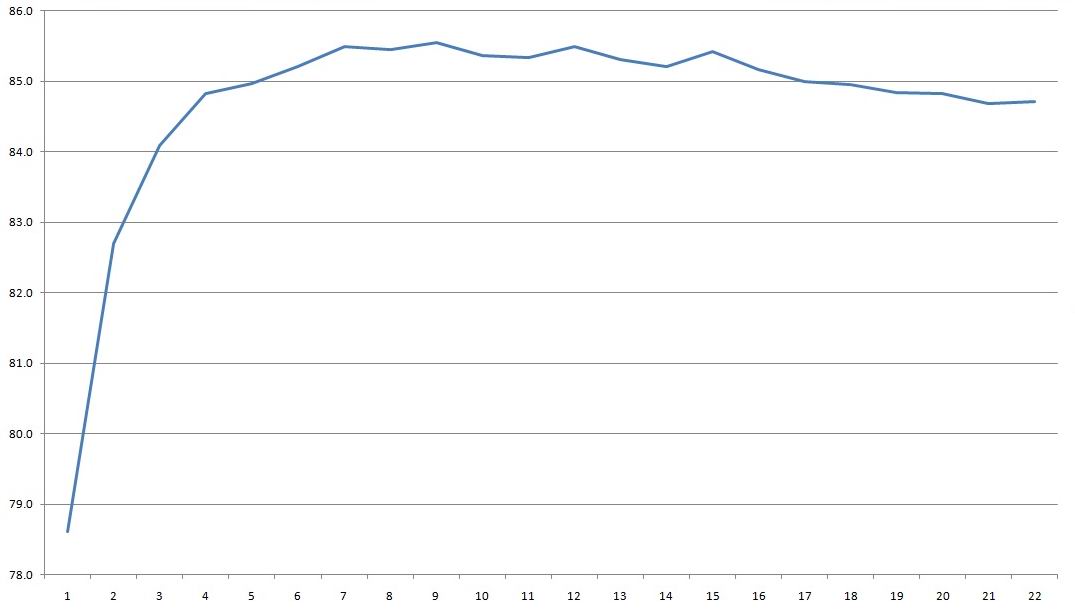
Efficiency is slightly lower than the previous model, at 85–85.5%. Some of the loss may be in the cable, but either way, that's a typical efficiency figure.
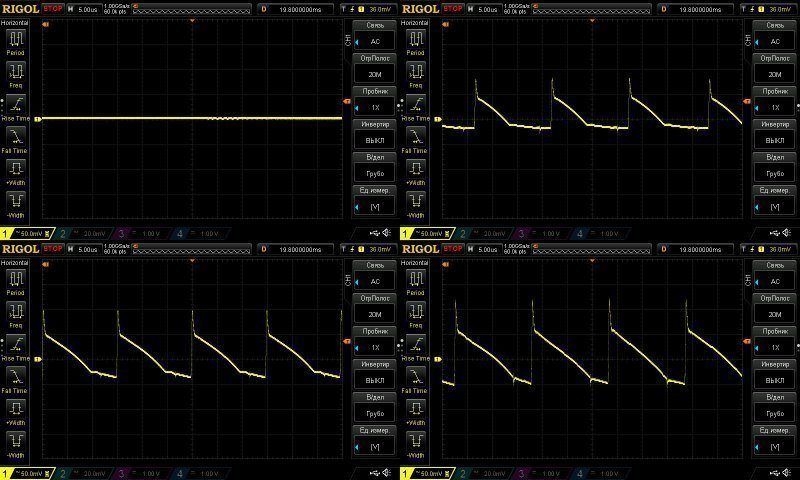
High-frequency ripple was measured with no load and at currents of 3, 6, and 9 A.
I have no complaints here either: the main component is 100–110 mV, with a total amplitude of about 170 mV. Interestingly, the spikes made it through the cable, even though it was short.
Overall, no complaints.
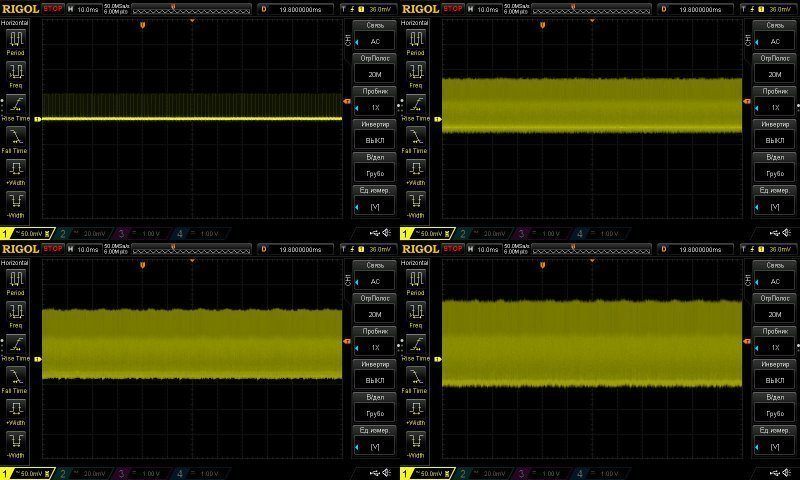
There's practically no 100 Hz ripple, which is nice.
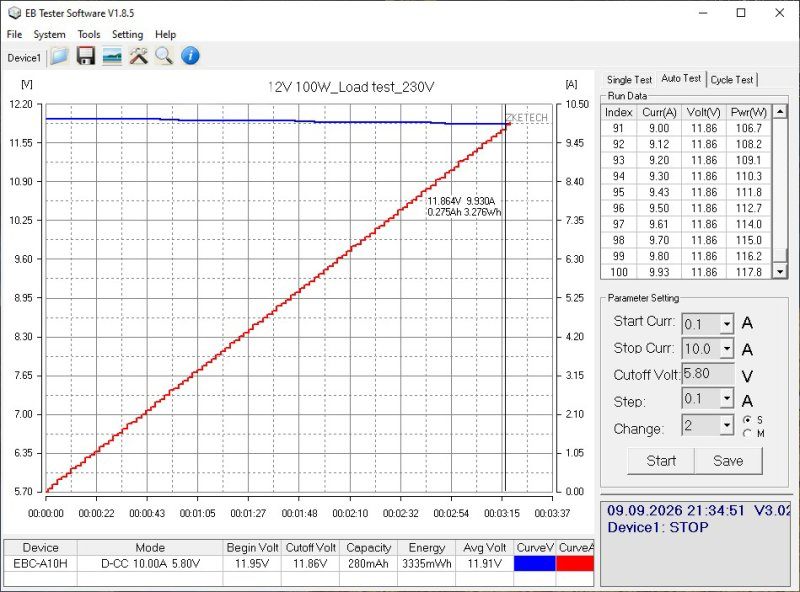
The test was run in the same modes as for the previous model, i.e. 50% and 100% are the rated loads, and 10 A is the maximum, but after a while the 10 A test shut down. The protection threshold may have dropped, so I set it to 9.8 A and continued the test.
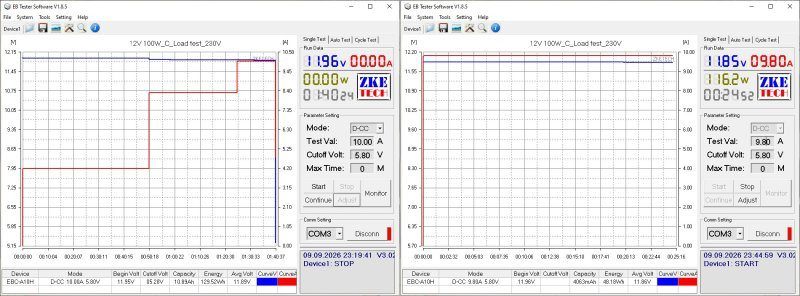
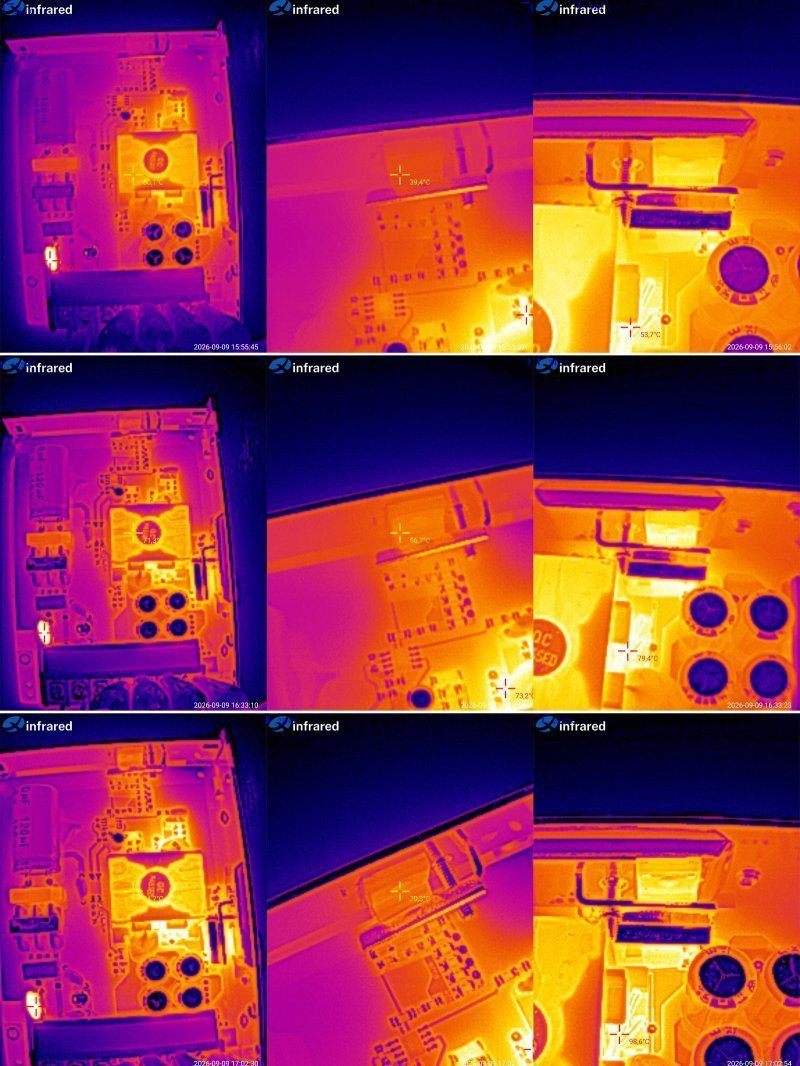
Test results at load currents of 8.3 and 10 A.
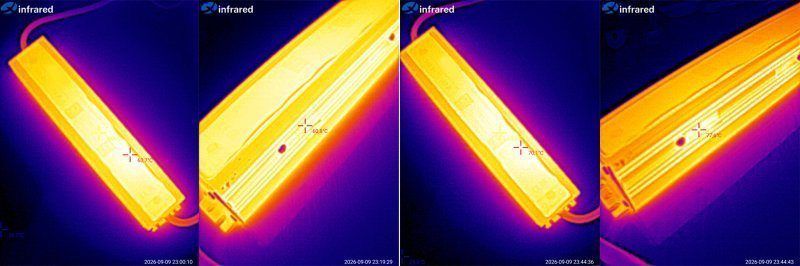
The top measurement was essentially the temperature of the label, indirectly indicating the temperature around the transformer. On the side, near the diode assembly—the usual hottest spot—I stuck on a small piece of electrical tape to improve measurement accuracy.
The results of the 50% load test were spoiled, so I'm not posting them.
So, we have:
At 100% load, the case is at 61 degrees and the side is at 61.
At 120% load, the case is at 70, and the side is closer to 78.
Nothing unusual—typical temperatures for a typical power supply of this design. And yes, a reminder: if the case burns your hands, that doesn't mean it's overheating; that's usually its normal operating temperature.
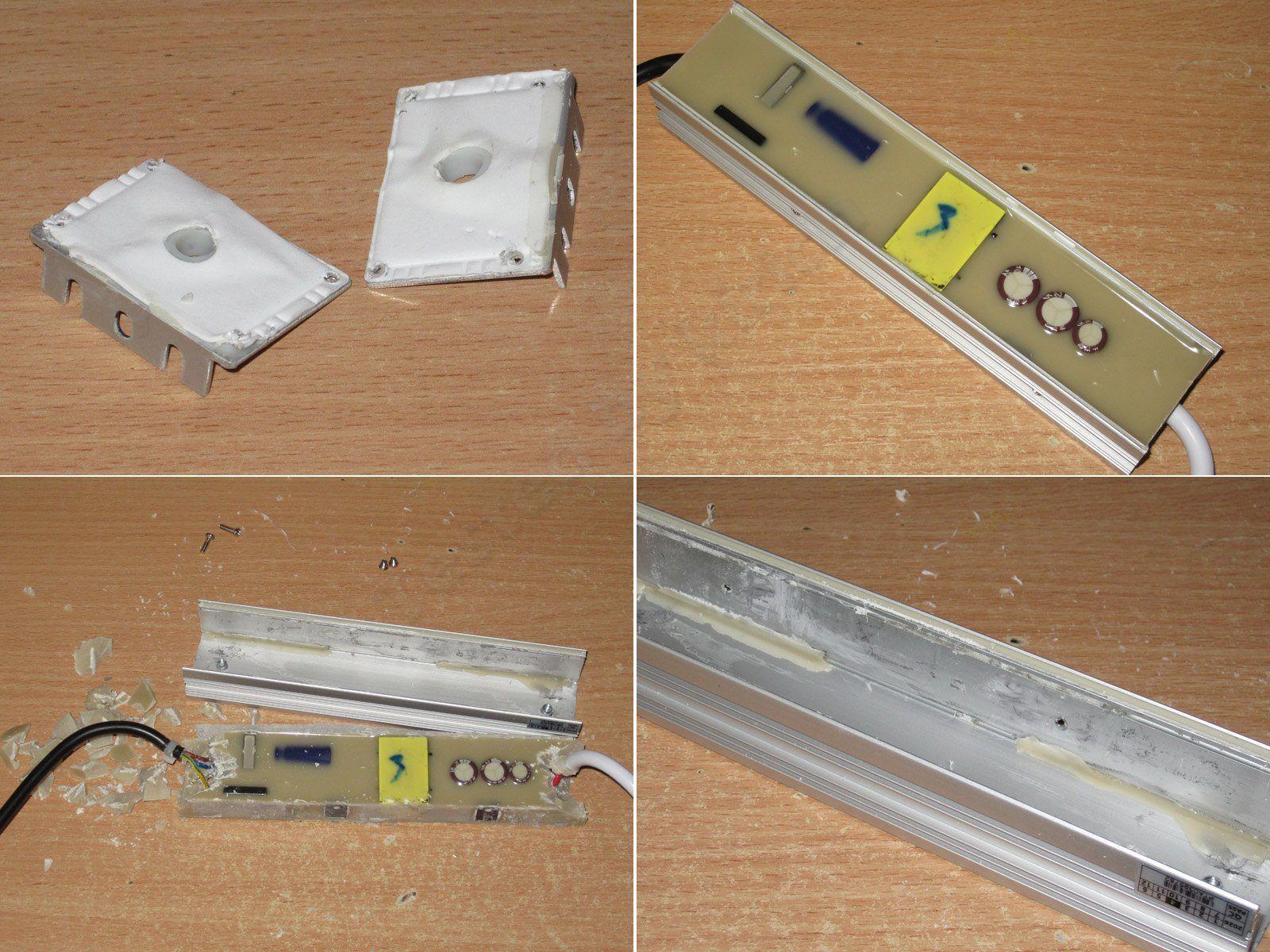
Here I decided to take this power supply apart, because I was curious how it was built. Just kidding :) Of course, I know perfectly well what's inside, at least in broad strokes. What I wanted to find out were the details.
As expected, inside there was potting compound, with some components visible here and there.
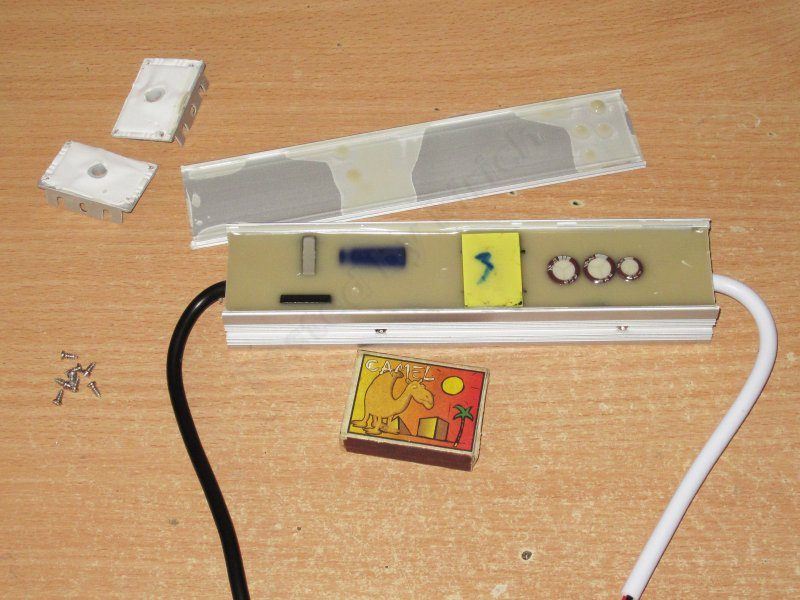
It's nice that the end caps have soft seals—thoughtful design, thumbs up.
The compound is filled almost to the cover, although the transformer and capacitors stick out a little.
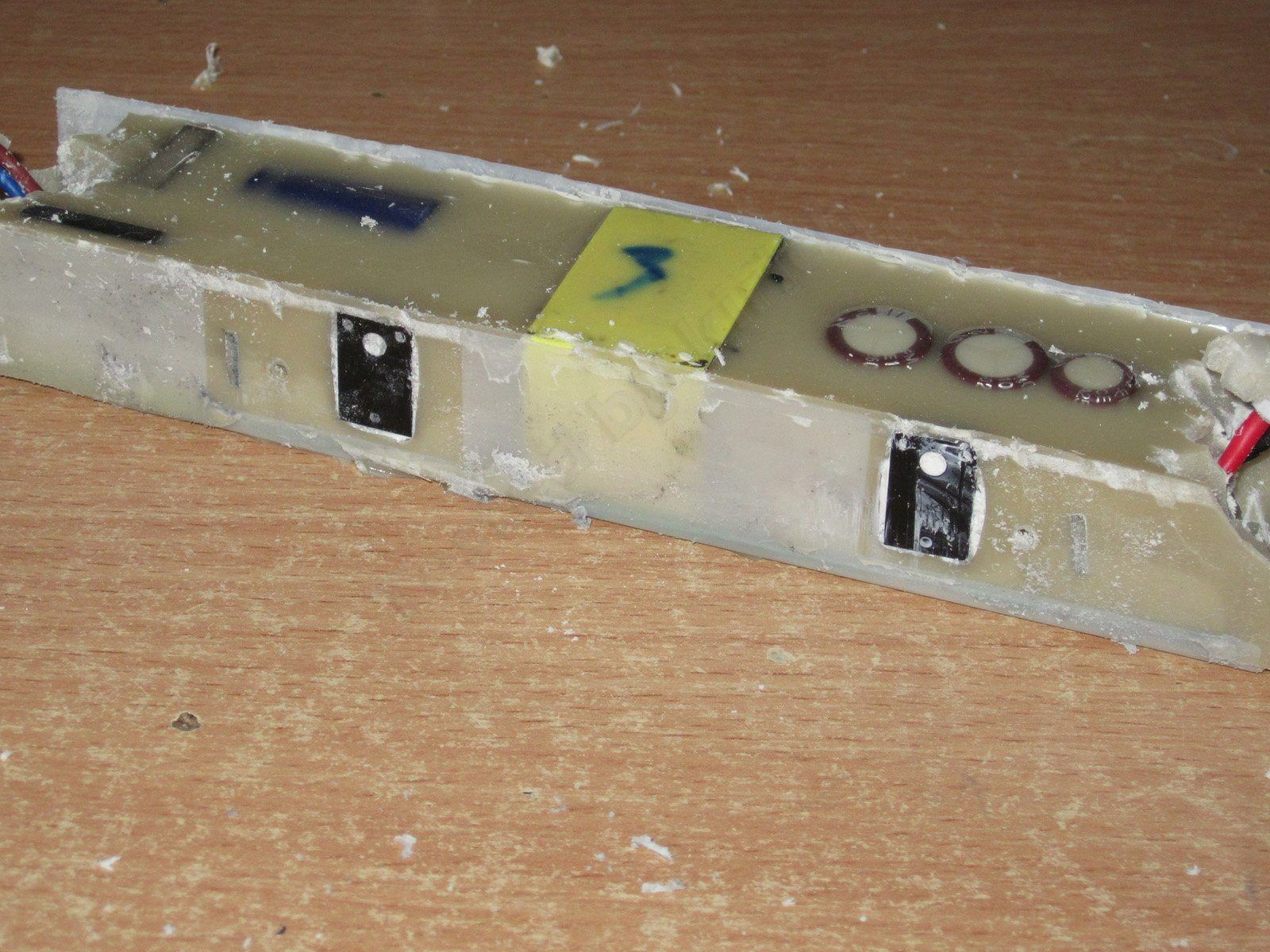
With a few simple maneuvers, I first pulled the block of potting compound out of the case, with the internals visible inside it.
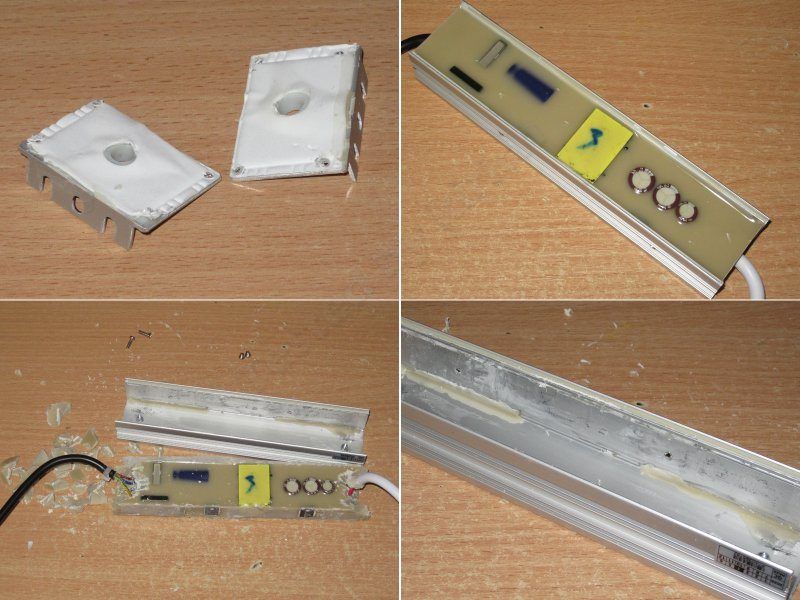
The transistor and diode assembly were installed with thermal paste, which is good.
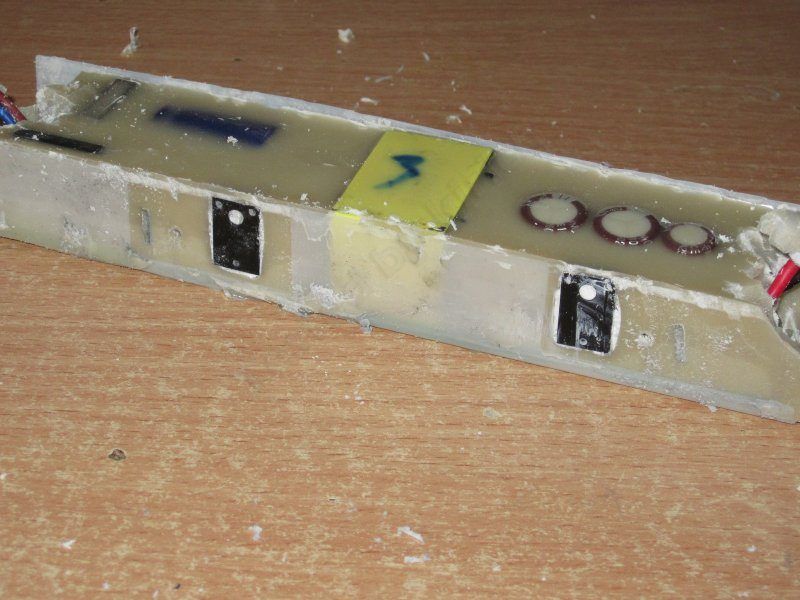
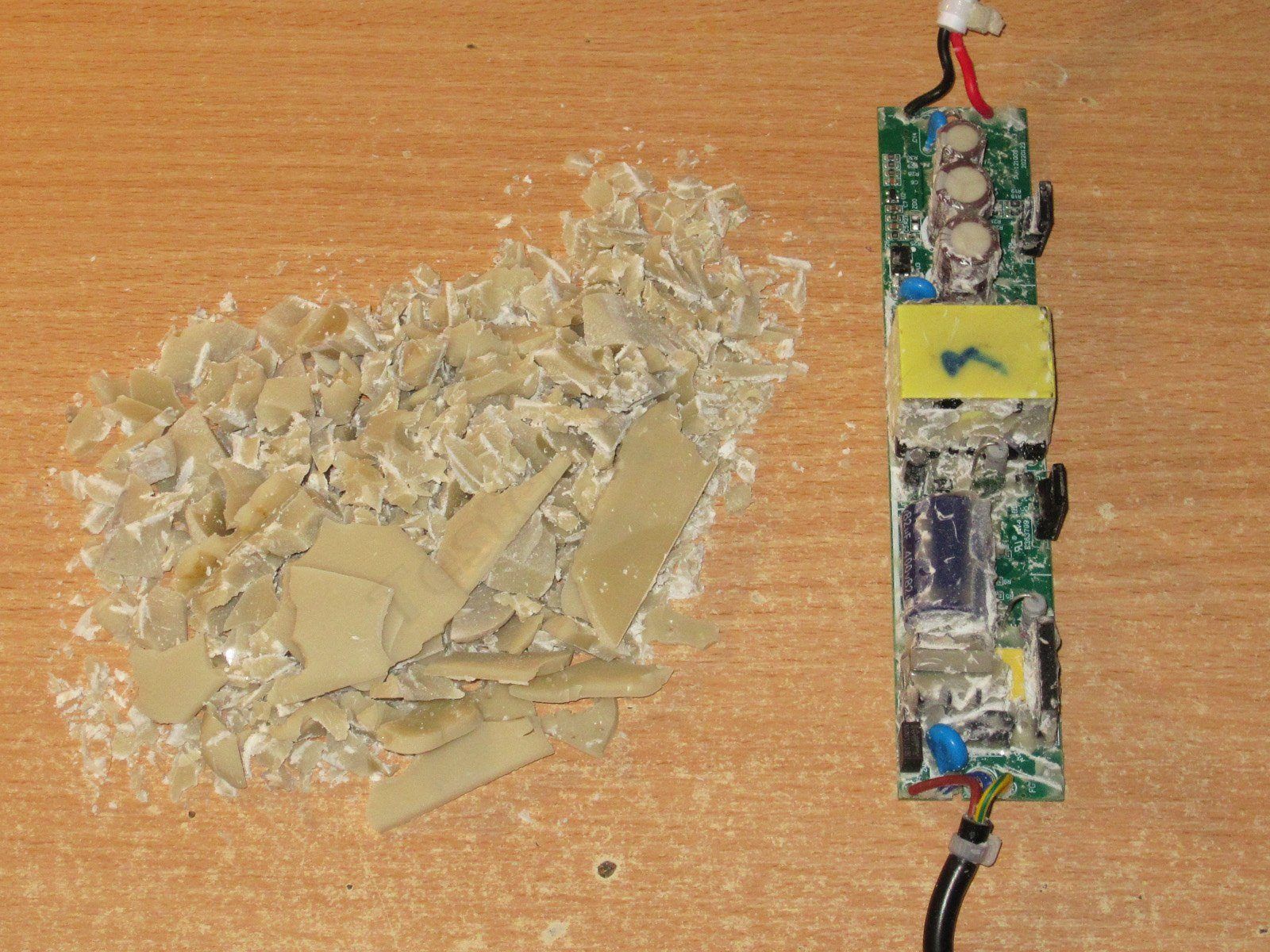
Then came some time spent working with whatever tools I had on hand, and eventually there was a pile of potting compound on the table and the power supply on its own. It's a bit annoying to have to pick all this rubber-like compound off the table afterward.
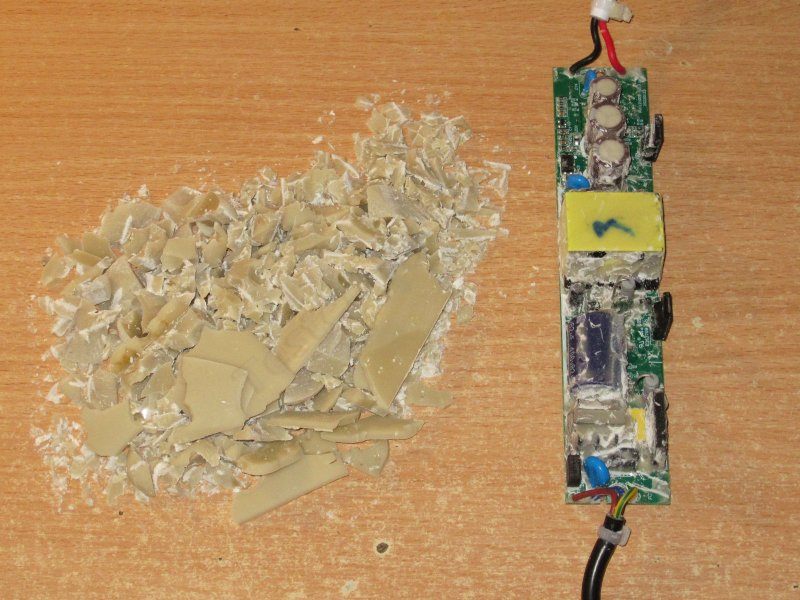
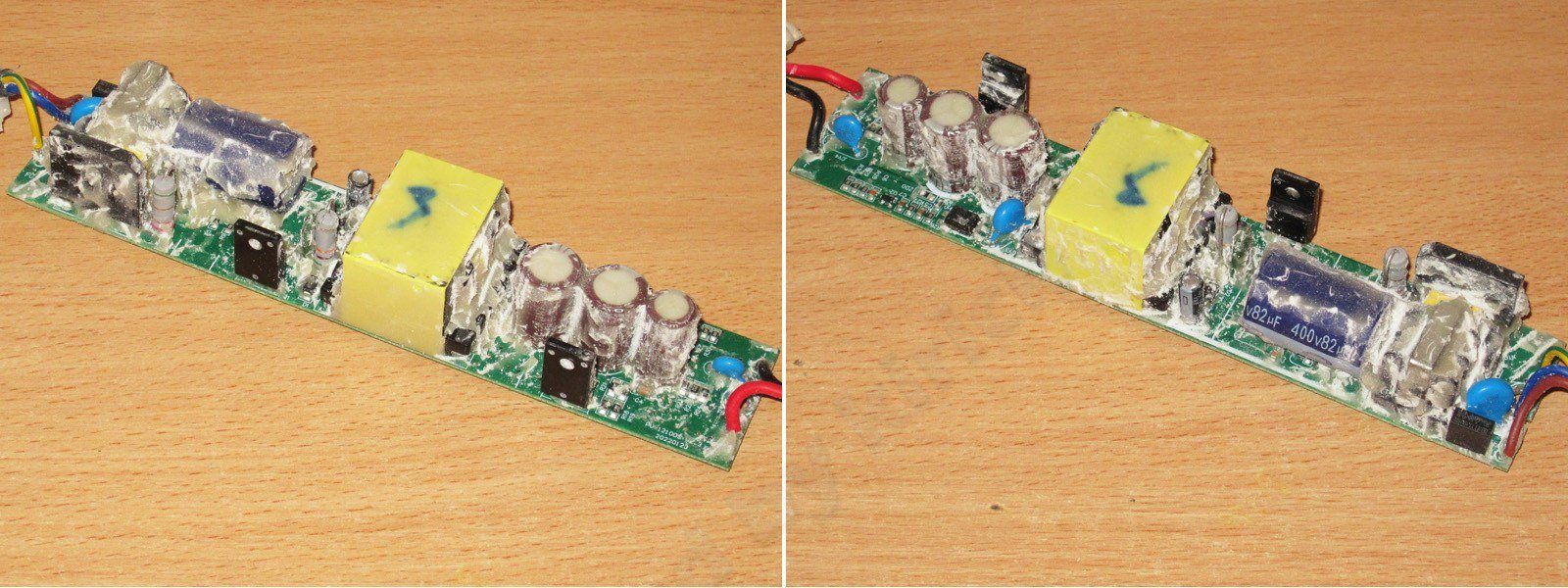
And here's the power supply, almost cleaned up. It's not visible in the photo, but I liked that heat-shrink tubing was fitted over the clamping bars for the transistor and diode assembly, apparently as a cushion—though I can't say for sure.
The layout is typical, with a linear board topology.
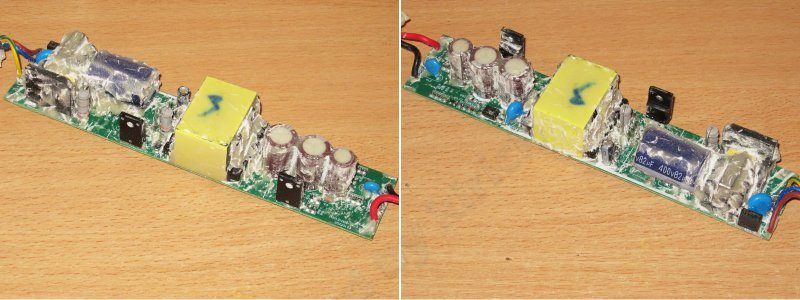
No safety concerns: there's sufficient clearance between the primary and secondary sides, as well as a protective slot.
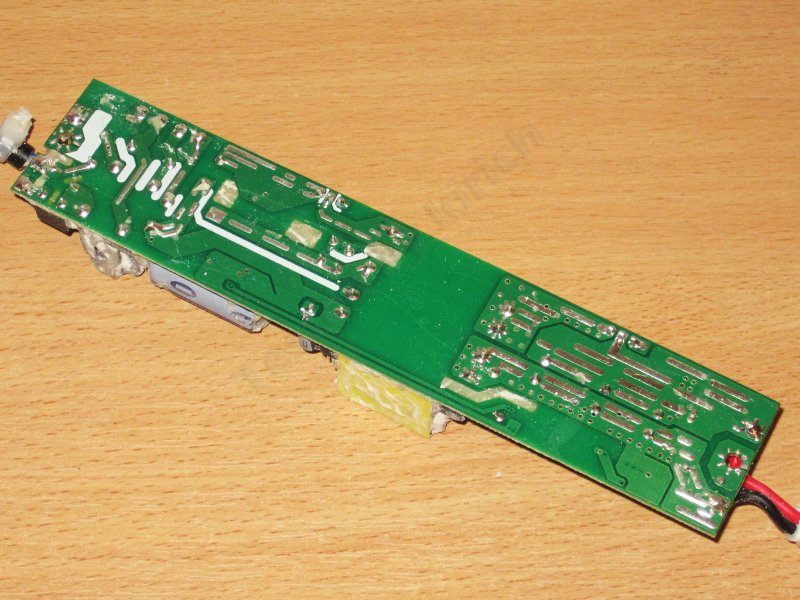
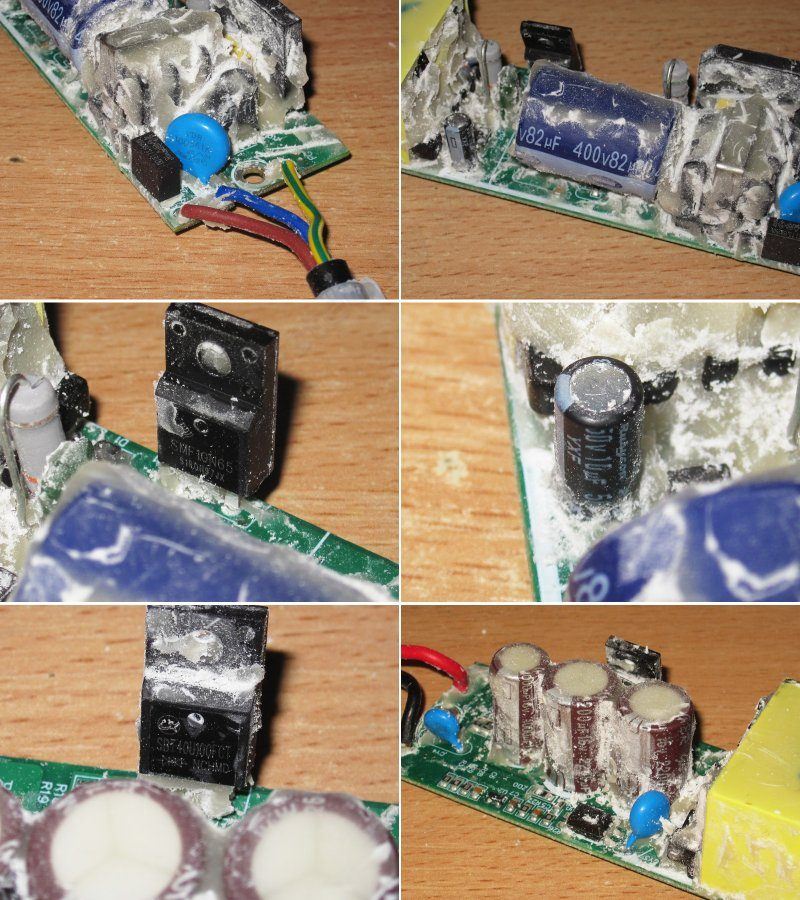
1. The input has a full-fledged mains filter, which also includes a varistor to protect against voltage spikes.
2. The input capacitor is 82 µF, 400 V. I'd say that's a bit small, but bear in mind that this model is designed only for the “high” mains voltage range.
3. The transistor is the same as in the previous unit: 10 A, 650 V.
4. The PWM controller's supply capacitor is marked Rubycon; I can't confirm or deny whether it's genuine.
5. The diode assembly here is rated for 40 A, 100 V, which is good and appropriate, with plenty of headroom.
6. There are two Y capacitors: one between the windings, the other connected to the case. There are three output capacitors: two at 2200 µF and one at 1000 µF, all rated for 16 V. Both the input and output capacitors are from manufacturers I don't recognize.
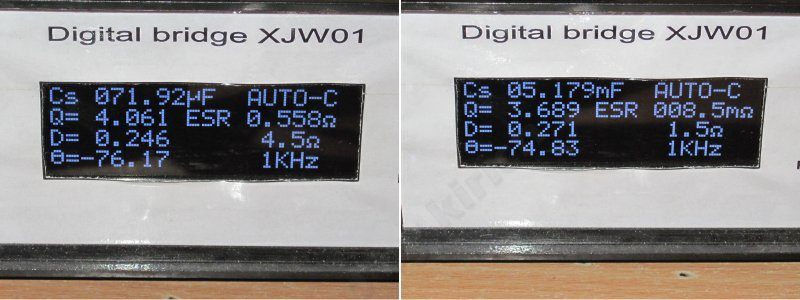
The input capacitor's actual capacitance is about 72 µF, which is already borderline even for the high mains voltage range.
The output capacitance is about 5200 µF, and the ESR is relatively low, which speaks well of the quality of the installed capacitors.
And here's the third test subject: the same 100 W, again 12 V at 8.3 A, and also in a sealed enclosure like the previous one.
But as often happens, “there's a catch.” First, it's more expensive than the previous one; second, it's larger; and third, it's marketed as a more reliable power supply with an extended warranty.
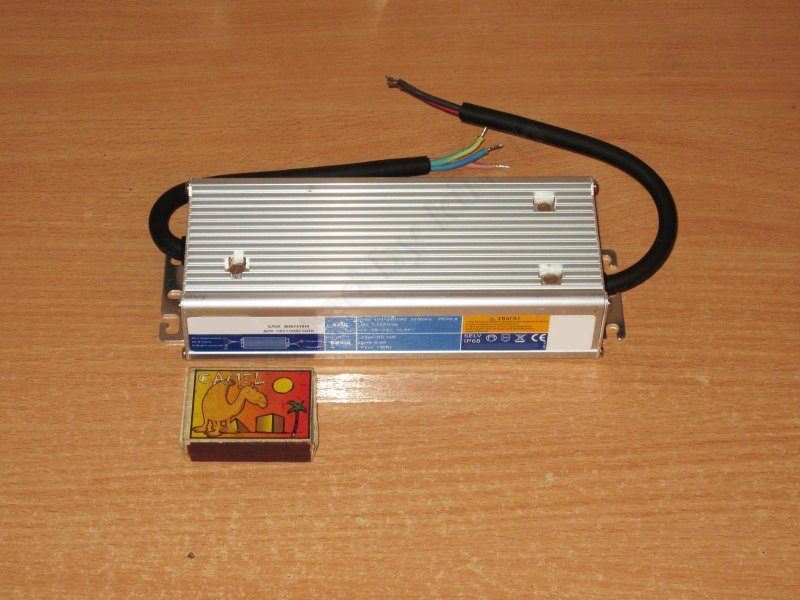
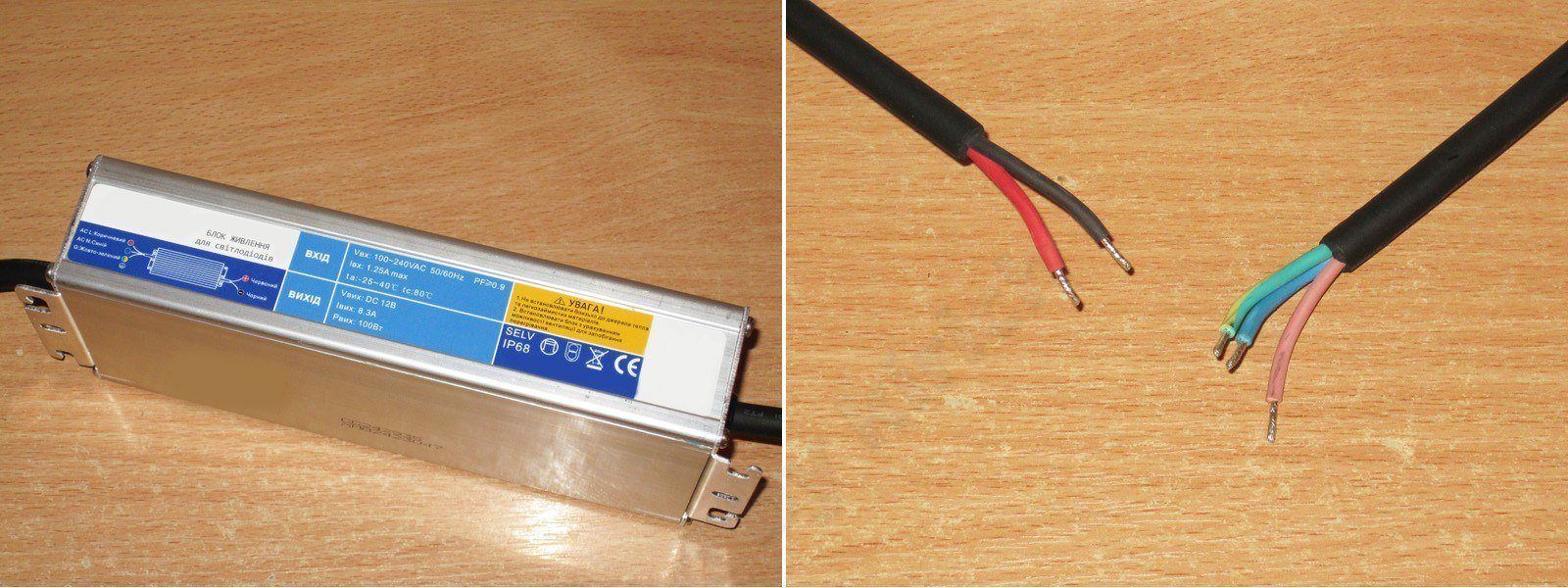
The label has all the necessary specifications and connection information. The cables are thick, with a decent conductor cross-section.
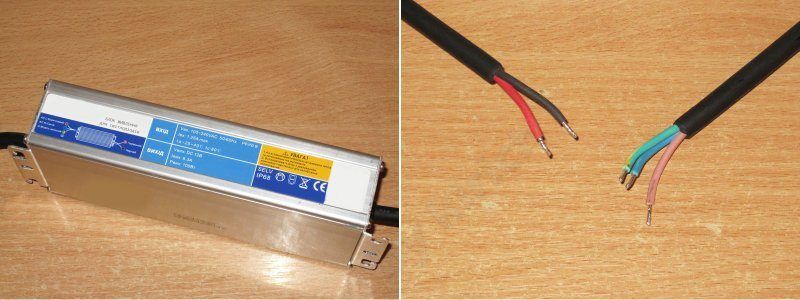
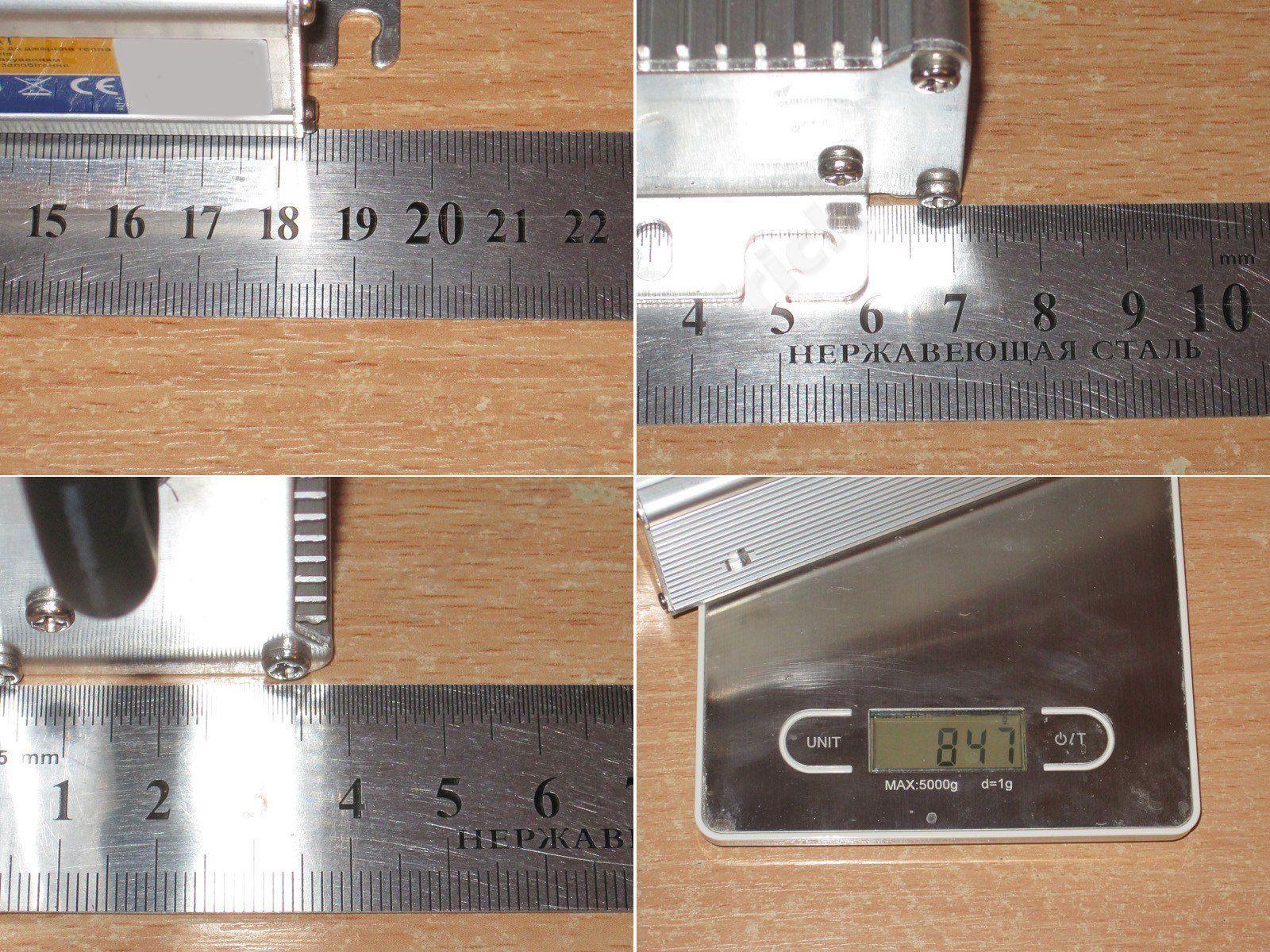
Dimensions are about 196 (166) × 71 × 38 mm.
At 850 grams, it really feels substantial—you could even use it to fend off pushy customers :)
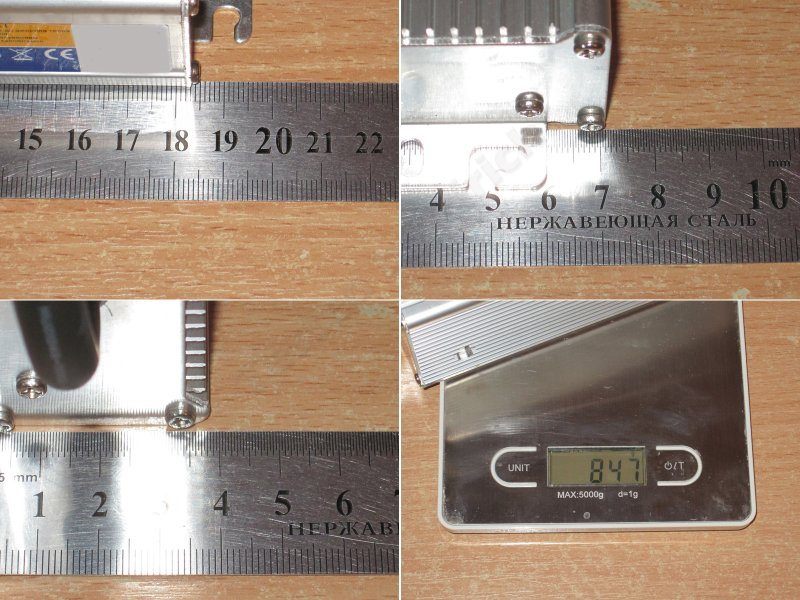
The protection current is set to about 9.2 A. I think this is partly for improved reliability. As I often say, it’s hard to burn out a power supply if the protection is set to shut it down before it reaches a dangerous operating range.
The output voltage drops by about 120 mV under load. This is partly because the voltage was measured after the output cable.
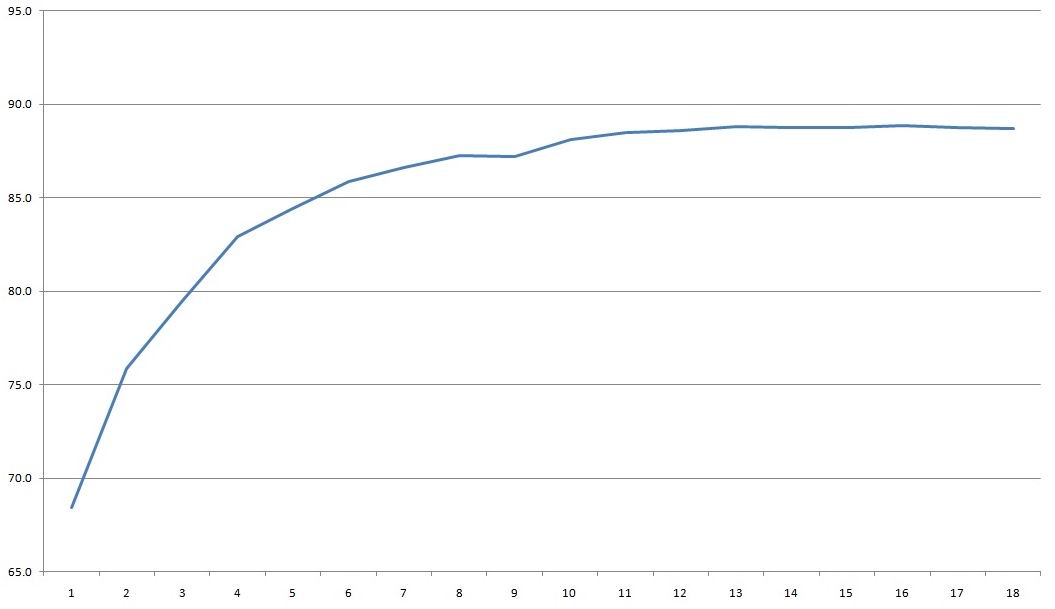
This power supply is specified for an extended input voltage range starting at 100 V, as well as a power factor above 0.9, which usually indicates an active power factor correction circuit.
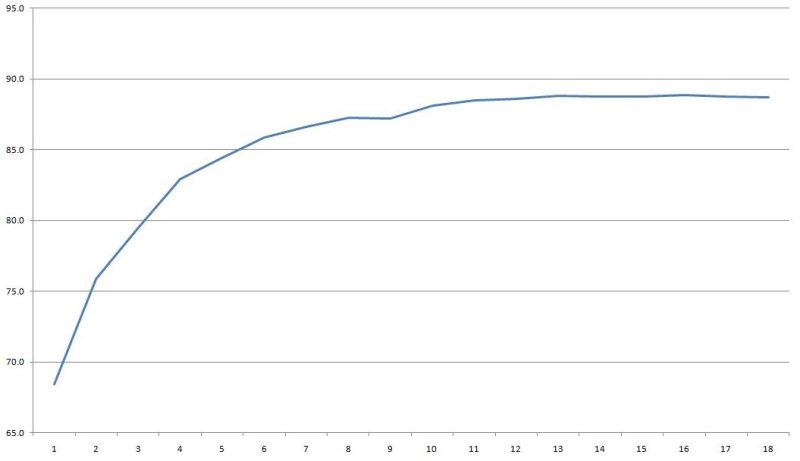
The efficiency dip at the beginning of the range is another sign of power factor correction. Efficiency is around 88% in the middle and at the top of the range, which is quite good in this case. Combined with the compact enclosure and low heat dissipation, that should also help keep the temperature down.
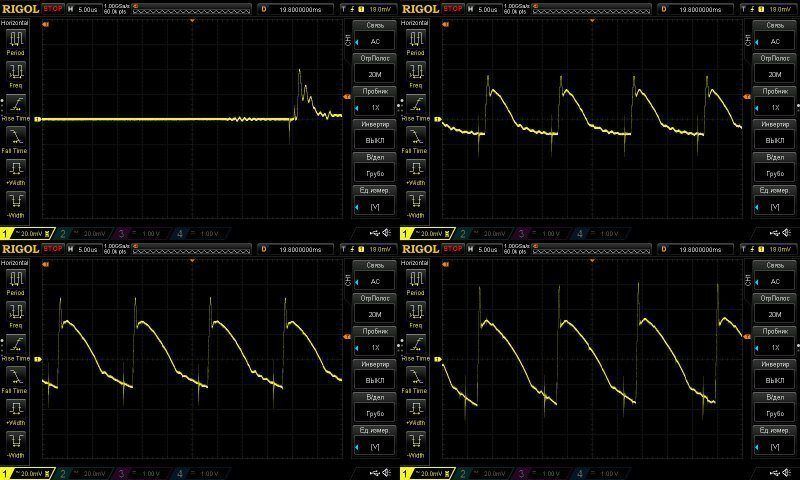
As with the previous units, ripple was measured with no load and at currents of 3, 6, and 9 A.
At maximum load, I measured about 75 mV of the main ripple component and 90–100 mV of switching ripple. I have no complaints here. It could certainly have been made cleaner, especially given the price, but that’s another matter.
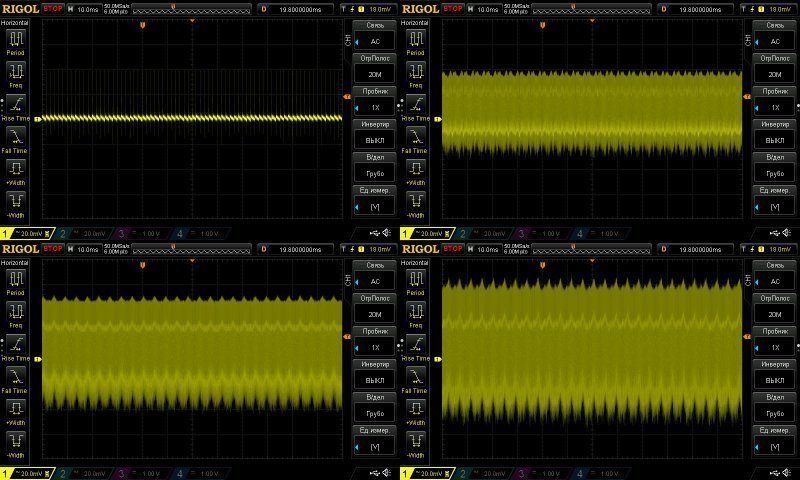
There is some minor ripple at low frequency, possibly caused by the power factor correction circuit, but overall it looks good.
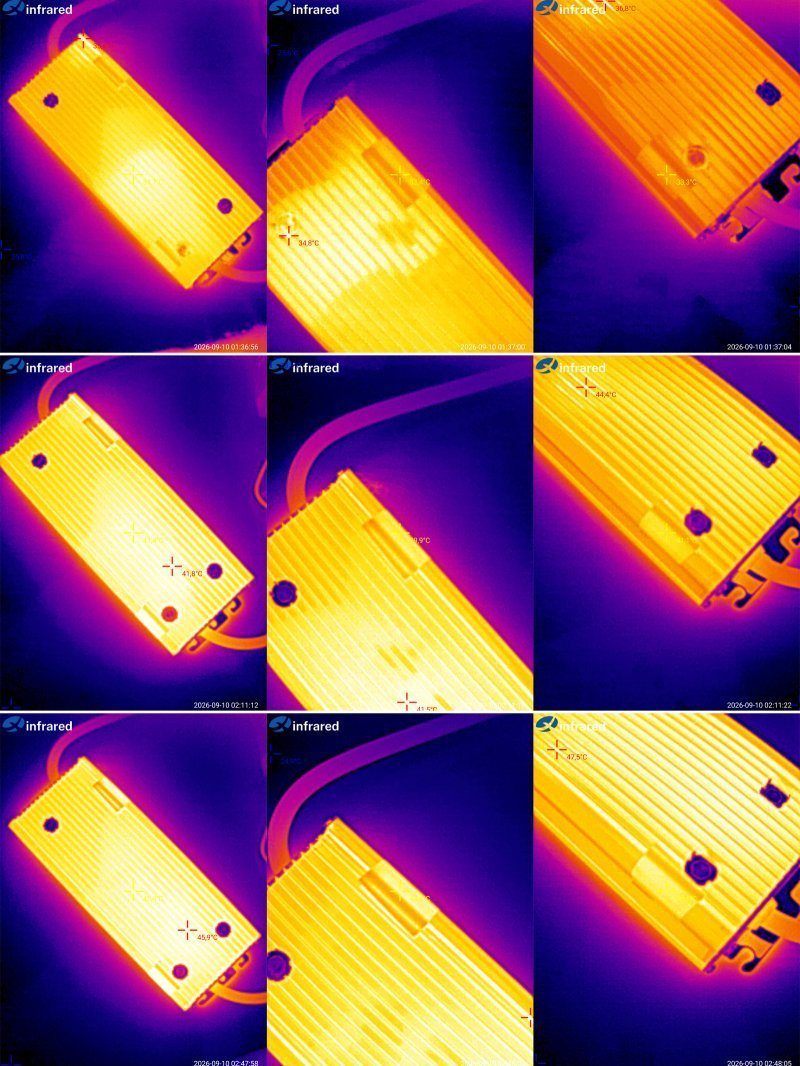
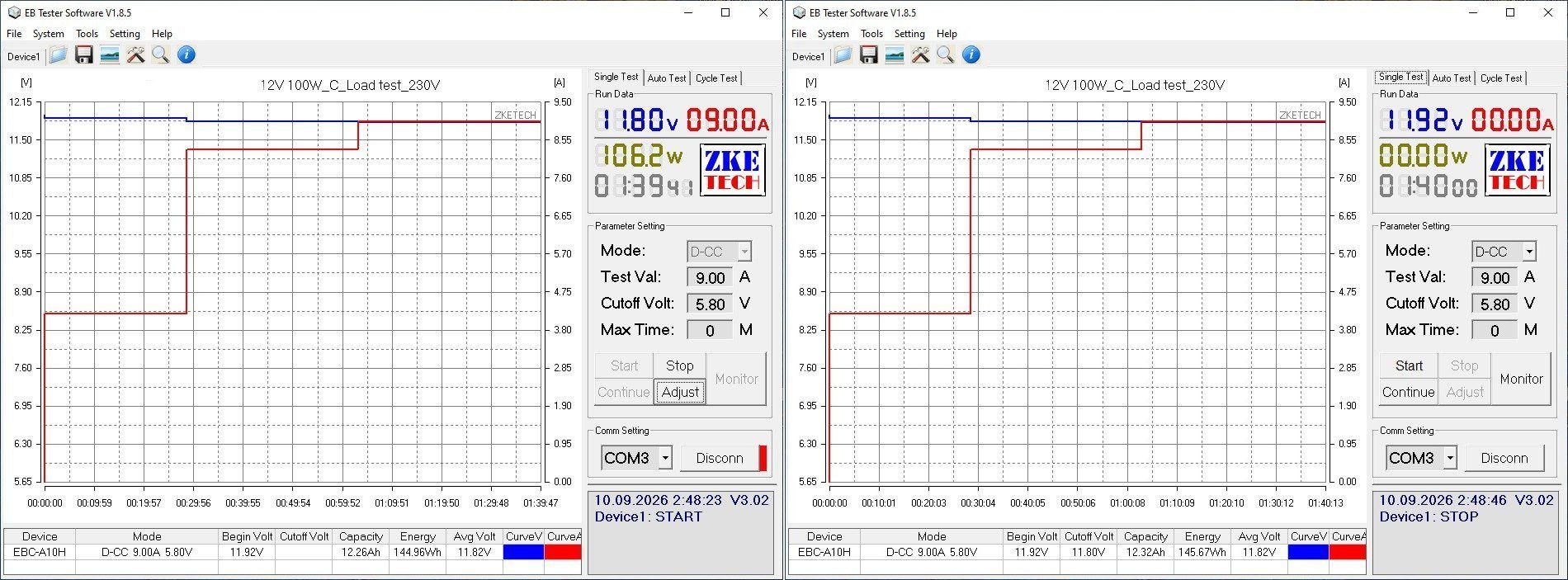
The load test was run at 50% and 100% of rated power, and also at 9 A; the protection wouldn’t allow any more.
There is no voltage dependence on temperature; under load, the voltage drops by 120 mV.
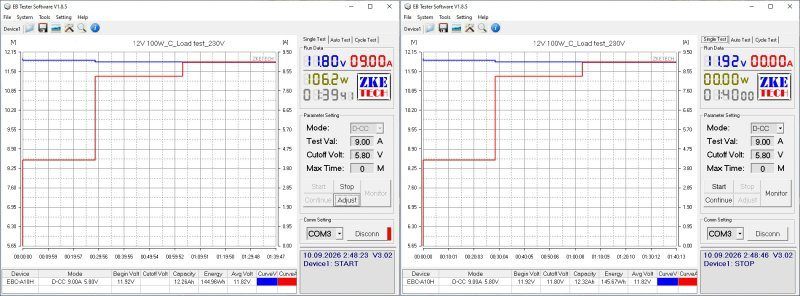
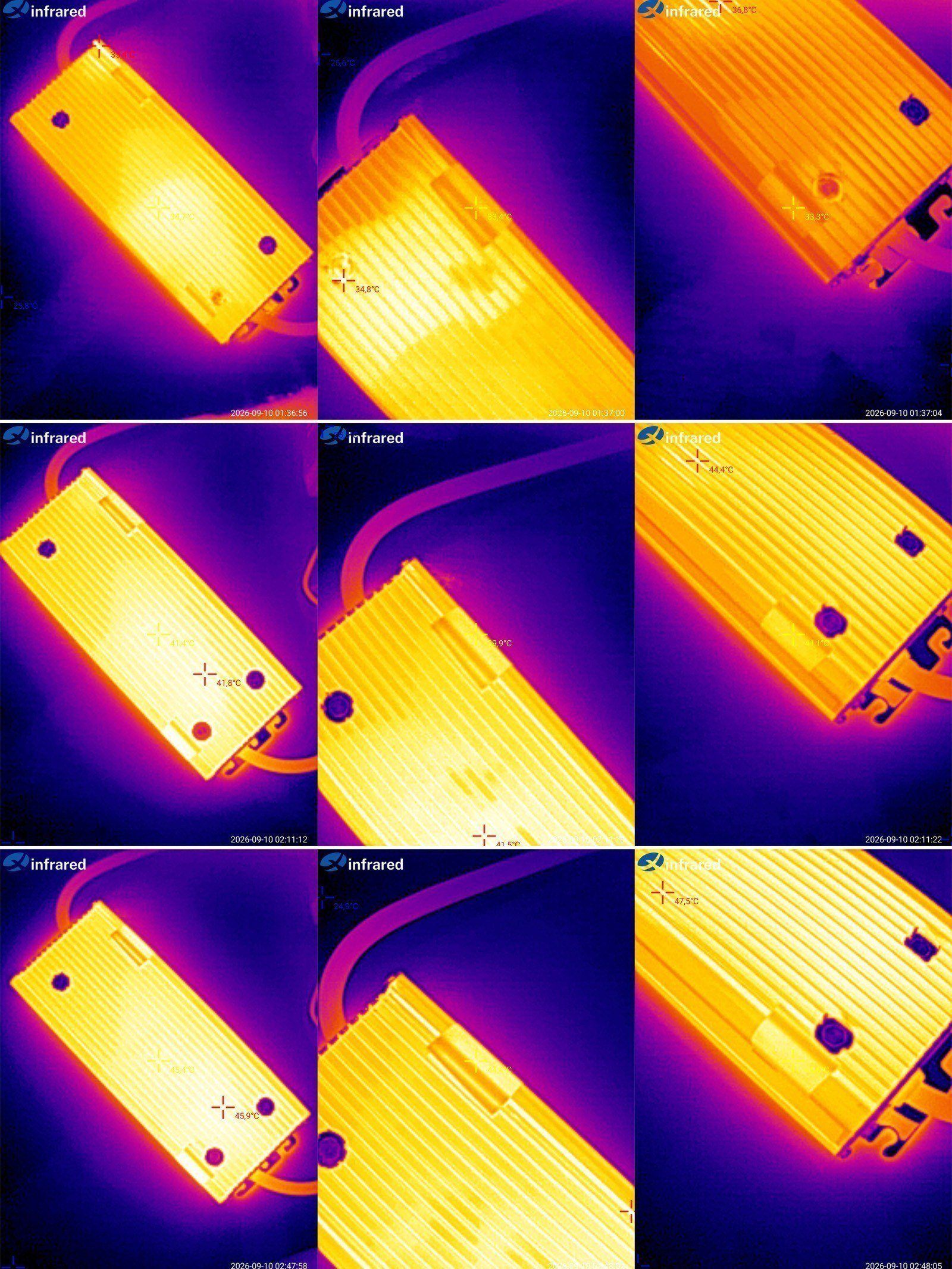
Here are the temperatures at different load levels. As with the previous unit, I could have limited myself to measuring the case temperature.
But this time I measured the temperature at three points: in the center and at two reference points where I had stuck on pieces of electrical tape.
50% power — 35, 33, 33 degrees
100% power — 42, 40, 41 degrees
110% power — 45, 44, 46 degrees.
Here I can say unequivocally: good. But that’s essentially down to two things. This model is a little more efficient, but more importantly, try getting this “brick” to warm up, especially given its size and the cooling fins on the case.
Conclusions.
The first power supply — a classic example, plain and simple. There’s really nothing to criticize, except that the protection current seems a little too high to me, and the ripple could be lower. Otherwise, it’s perfectly decent. It’s similar to the Meanwell LRS-100-12, and the price is almost identical. No offense to the maker of the unit reviewed here, but for roughly the same money, I’d still choose Mean Well.
The second power supply — not bad at all, very good, in fact. The input capacitor is a little undersized in my opinion, but overall it’s a solid power supply.
The third power supply — if you can overlook the relatively high price, it’s a good power supply. It has lower ripple than the first two models, active power factor correction, slightly higher efficiency, low operating temperatures, and a long expected service life. So yes, the only real complaint here is the price.
As I said at the very beginning, I’d try to be as objective as possible, and I hope I managed it. There are always drawbacks, everywhere: for some, it’s the price; for others, poor quality or the case color. But if I have no complaints, I won’t make them up. And if I spot problems, I won’t keep quiet.
That’s all for today. And thanks to the sponsor of this review, who wished to remain anonymous.
If I’m wrong and these power supplies really are made in Ukraine, let me know in the comments.
To keep up with new posts on the blog, I recommend following me on Instagram. I’ll post notifications about all new articles there, and might also share something interesting from time to time: link to my account
You can also follow updates and new articles on the Telegram channel - https://t.me/KirichBlog Note that discussion of reviews and articles is enabled on the channel, along with general chat. I recommend it.
A note: to avoid any accusations, and as agreed with the project sponsor, the markings on all the test units have been removed. Any resemblance to particular brands is coincidental. Otherwise, I promise this review will be as unbiased as possible, as are all my reviews.
So, today we’ll look at three 100 W models, in two different designs and from different price segments.
I’ll start with the standard power supply in a perforated metal case. After plastic-cased units, this is probably the most common format.
Power: 100 W; voltage: 12 V; current: about 8.3 A.
The CE marking gave me pause. These aren’t just random characters: their design, and especially the spacing between them, follows a specific standard. It could indicate European certification, or it could be China Export.
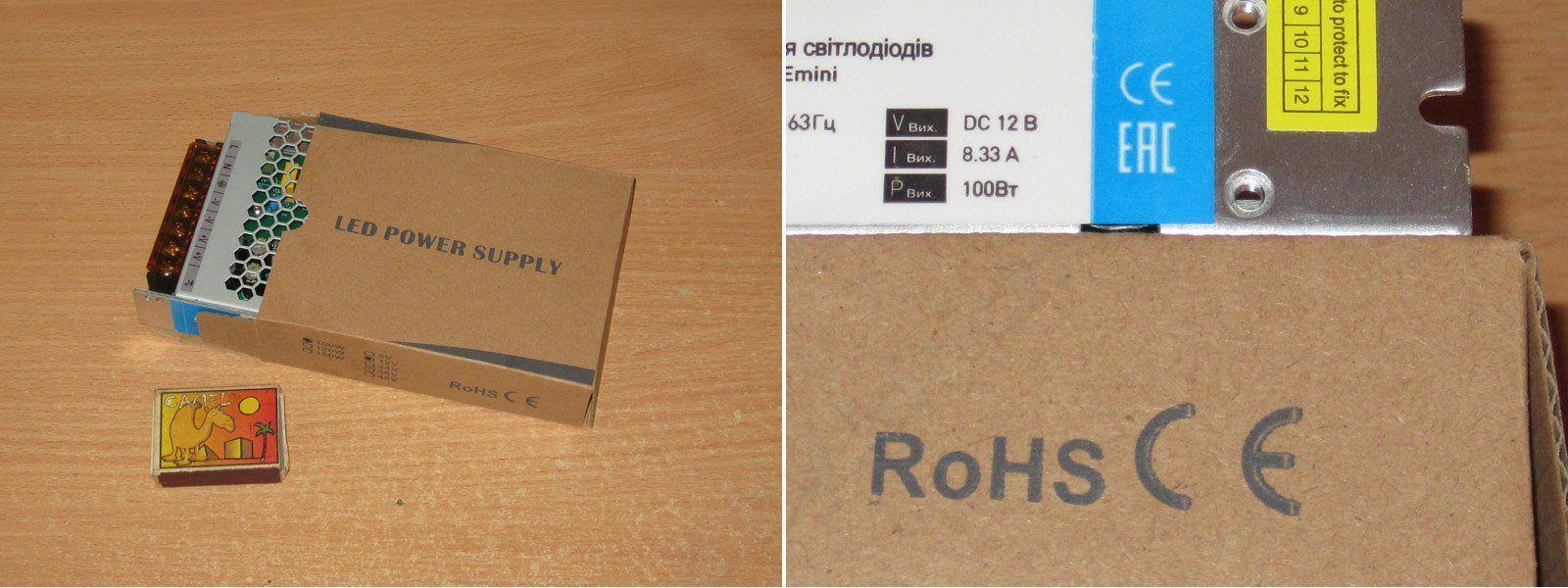
For anyone who doesn’t know, here’s a quick reminder. You can find the rest on Google.
This is a familiar design to many: convenient, practical, and effective at cooling. In principle, you’d have to try pretty hard to mess this one up.
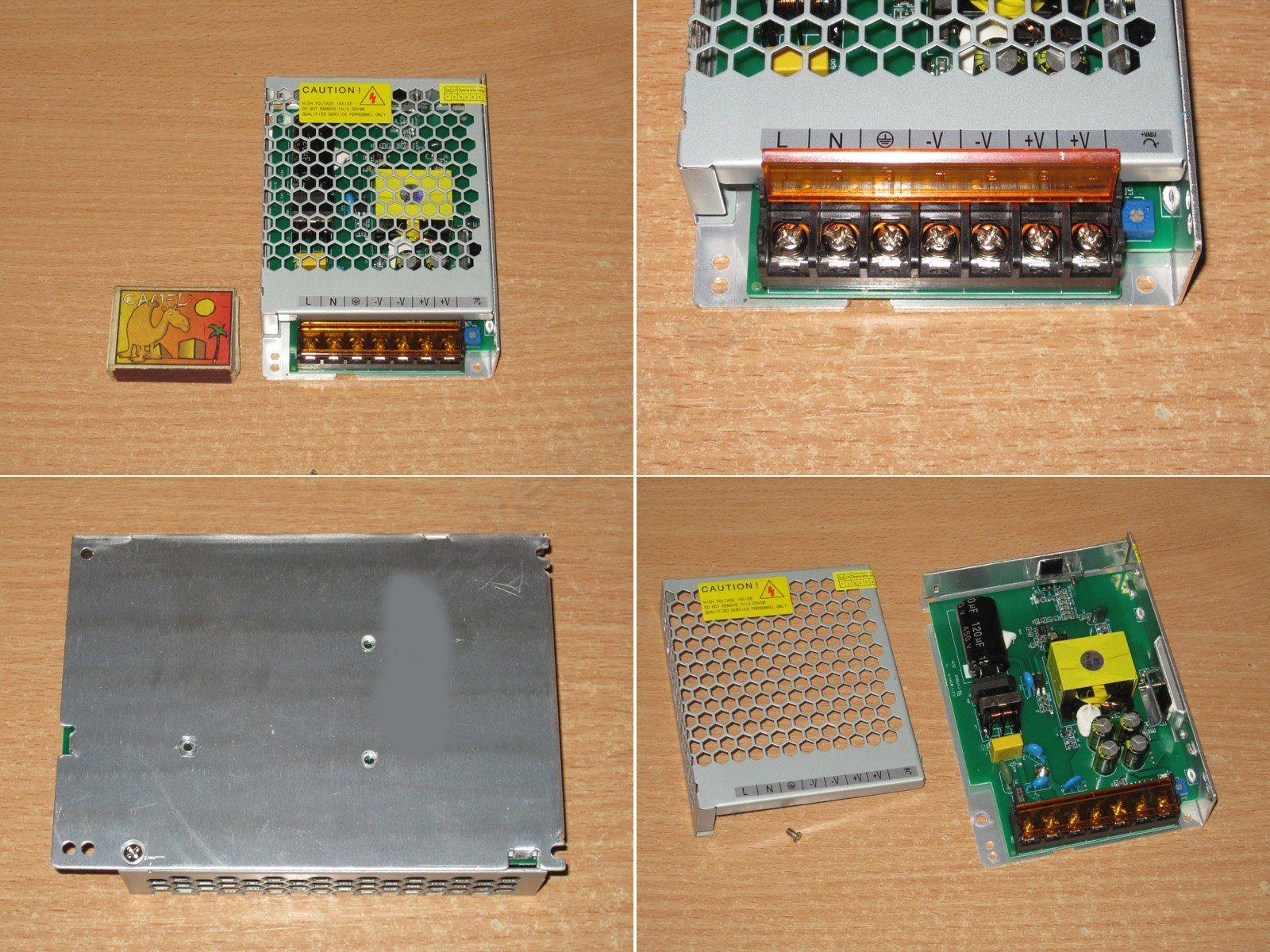
Dimensions are about 135 × 96 × 29 mm.
The circuit board is neat, the layout is spacious, and I have no complaints about the assembly.
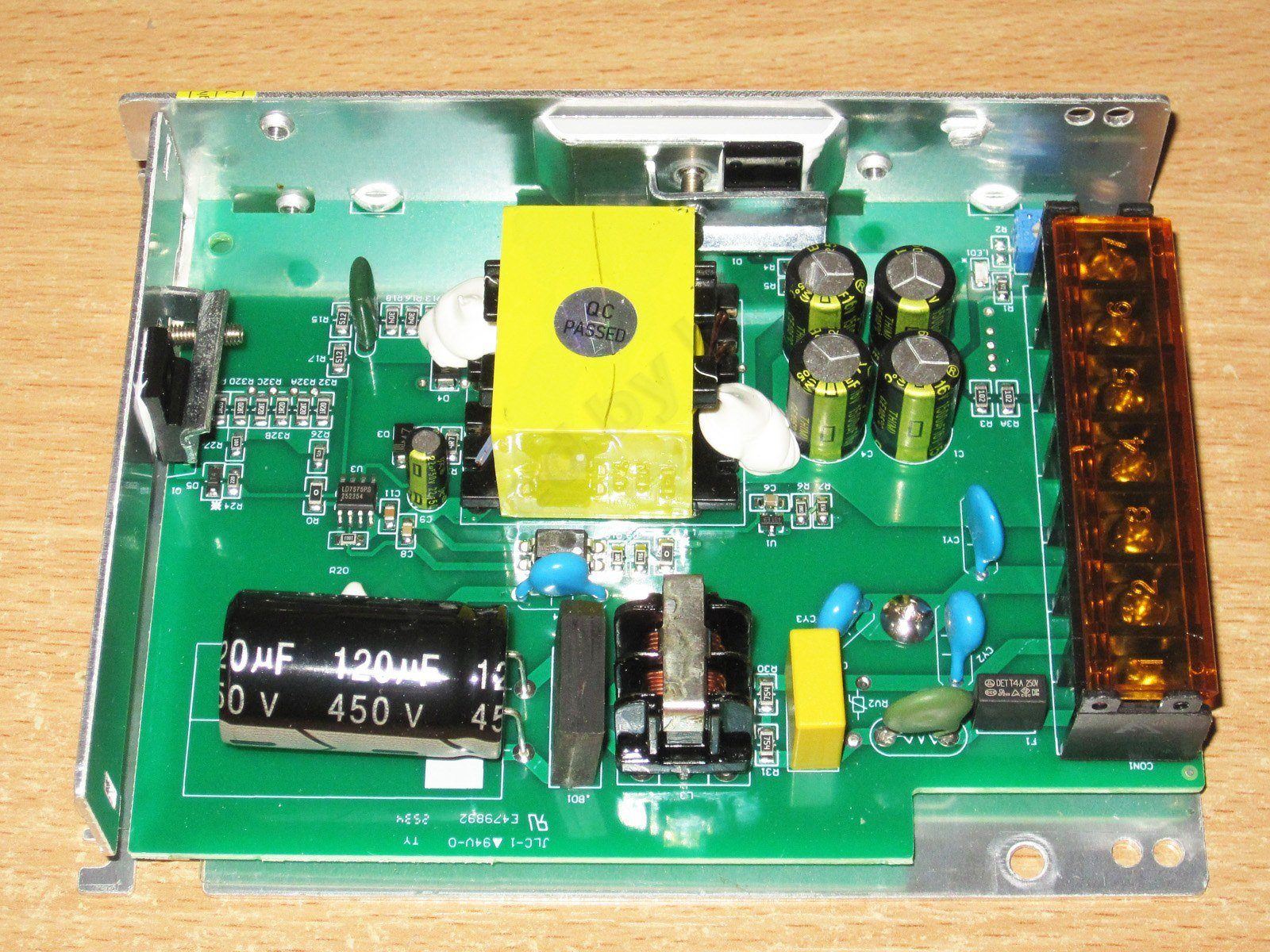
The input has a filter, a thermistor, and a fuse, but no varistor.
The input capacitor is rated at 120 µF and 450 V—unusual, but a nice touch.
The PWM controller section. It’s interesting that they chose to make the shunt from a bunch of small resistors.
There are four capacitors on the output, which is also the right approach: more small ones are better than one large one. There are two 1 kΩ bleeder resistors in parallel; personally, I think one is unnecessary, but that’s just my opinion.
The high-voltage transistor is rated for 10 A and 650 V. No issues there.
The rectifier assembly is rated for 20 A and 100 V. It’s a close fit, but with proper cooling, it should be fine.
The output has four 1500 µF, 16 V capacitors. I approve, both in terms of capacitance and quantity.
There are three Y capacitors, and I have no complaints about those either.
The unit comes apart easily, in the usual way.
The only thing I can really fault is that the circuit board hasn’t been cleaned properly in places, with some unexplained blobs left behind. Otherwise, no complaints. I'll note that the board is made of fiberglass laminate, not phenolic paper.
The actual input capacitor is 107 µF. That's on the low side, but quite sufficient for a 100 W power supply. The manufacturer does specify an input range starting at 100 V, though, so assuming it can deliver full power at that voltage is rather optimistic. I'd recommend reducing the load at low input voltages.
The total output capacitance is 6000 µF, which is fine.
The output was initially 12.26 V. No-load power consumption was about 0.65 W, almost half of which was used by the bleeder resistors.
The adjustment is very smooth, with a range of about 11.8–12.8 V.
The output voltage barely changes with the load over the 0–10 A range; the change is negative and about 40 mV.
The overcurrent protection threshold is set high: it trips above 12.5–13 A, which is about 150% of the rated current. That's just my subjective opinion, of course.
Since my main electronic load is limited to 10 A, I checked the actual trip current using another load.
Efficiency is about 86–86.5%, which is typical for most power supplies with this topology, though there are exceptions on both sides.
Ripple was measured with no load and at currents of 3, 6, and 9 A.
At full power, the ripple amplitude of the main component was about 160 mV. Including the spikes, the total amplitude was about 400 mV. That's not particularly high—quite typical—but given the output capacitor arrangement, I expected it to be a little lower.
Still, 160 mV is neither good nor bad—more or less average.
I have no complaints about mains-frequency ripple; in fact, there isn't any.
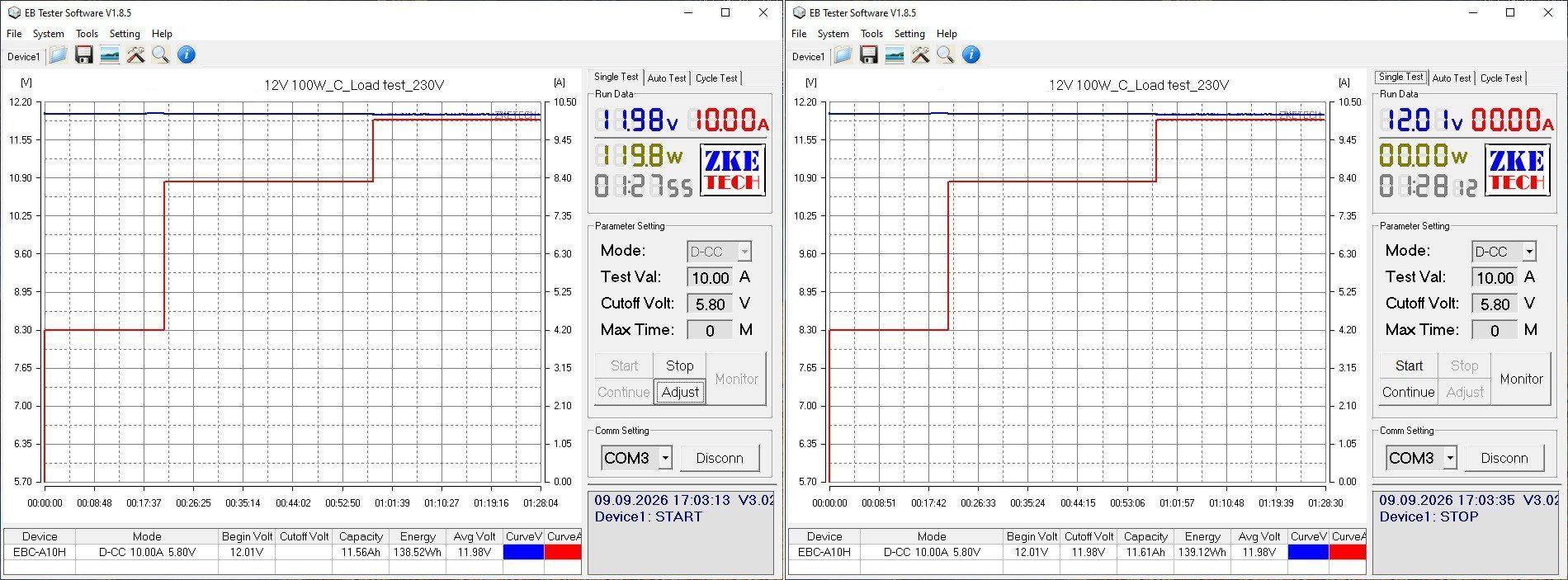
The load test was run in three modes: the two rated load levels, 50% and 100%, and at 10 A, or 120%.
The voltage doesn't vary with temperature, and its change with load is slightly negative, as I mentioned above.
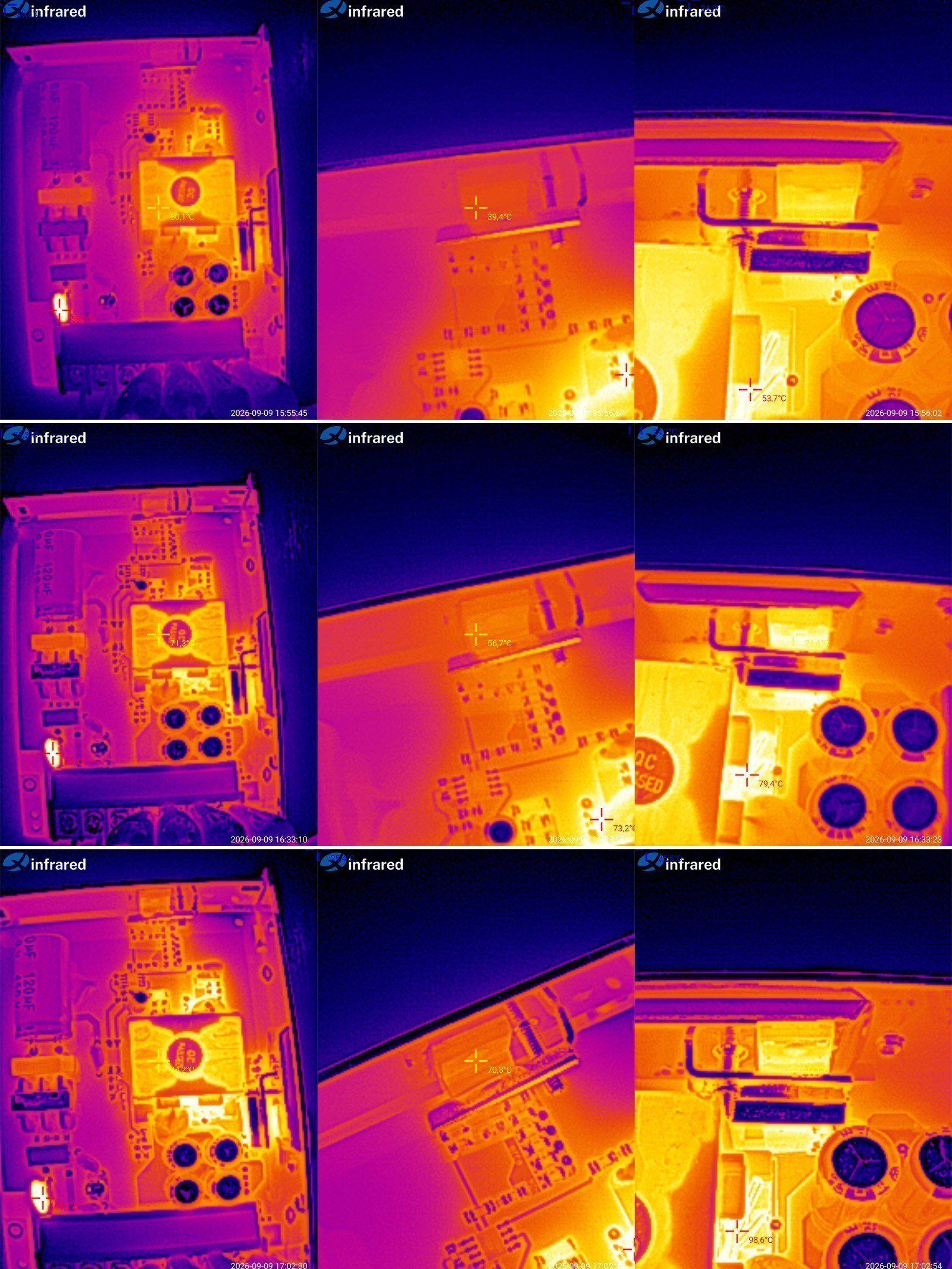
And, of course, the temperatures.
4.2 A — transformer 50 degrees, transistor 39, diode assembly 50
8.4 A — transformer 71 degrees, transistor 57, diode assembly 77 degrees
10 A — transformer 84 degrees, transistor 70, diode assembly 92 degrees.
So, this is a good example of heat being distributed normally, with reasonable operating temperatures. The power supply works just fine at 10 A, so the 12.5–13 A protection threshold may make sense, although higher ambient temperatures could cause problems.
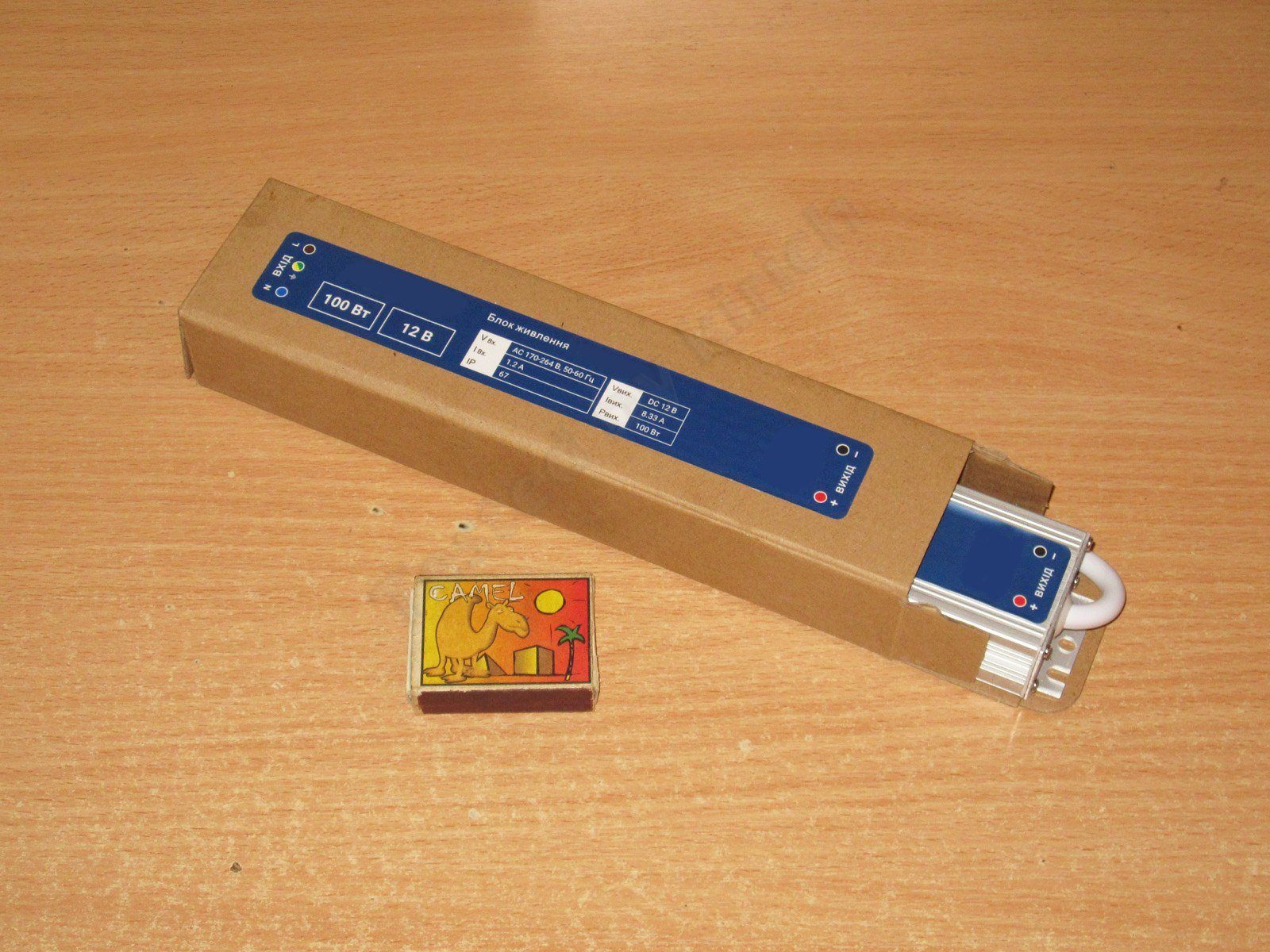
The second power supply is also rated at 100 W, 12 V, and 8.3 A, but this one has a sealed enclosure.
The packaging is neat, with all the key information shown both on the box and on the power supply itself.
There's not much to show here: it's a typical aluminum enclosure with cables coming out of it. The enclosure has cooling fins, which is certainly useful, and the cables have an adequate cross-section.
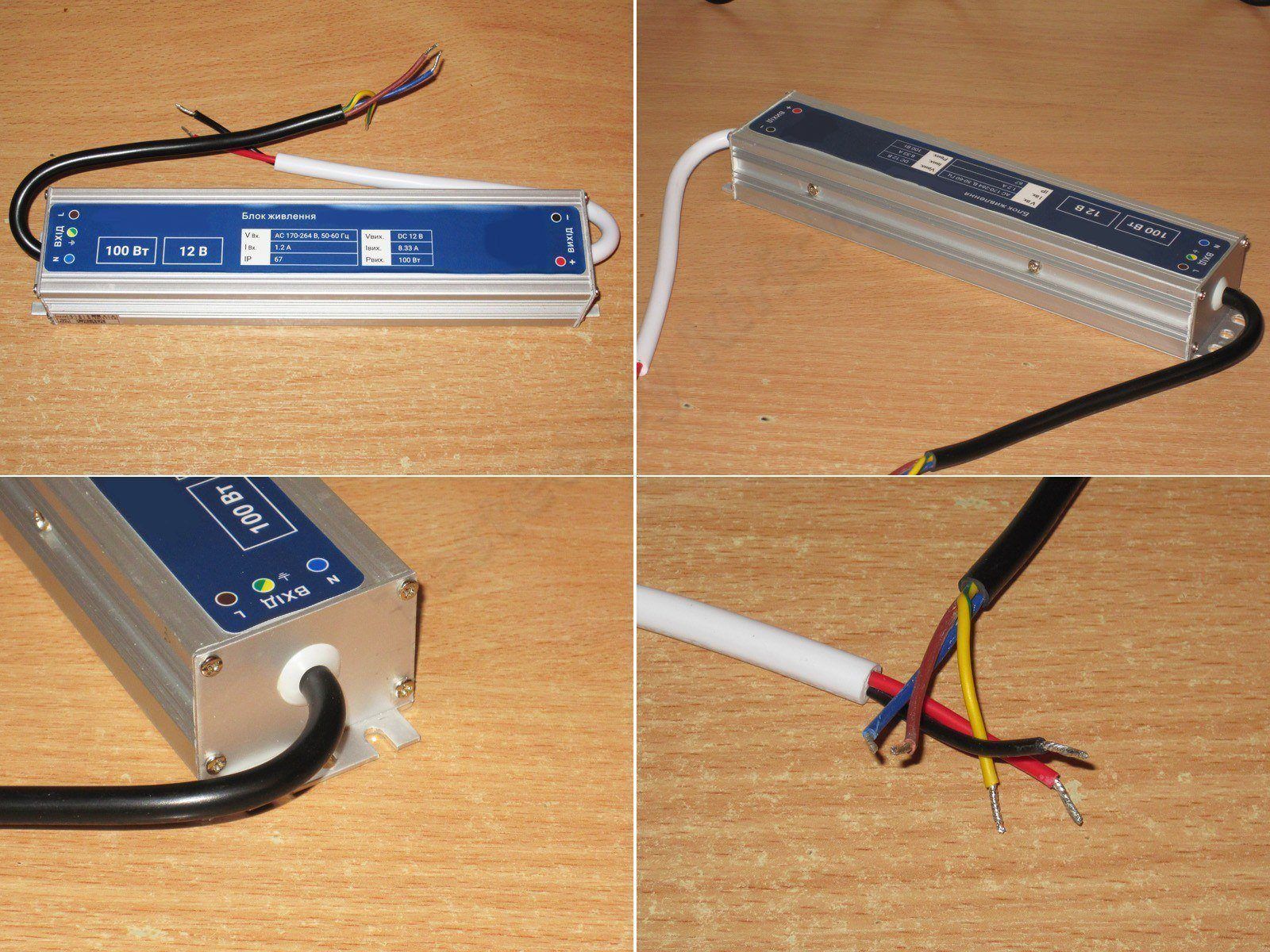
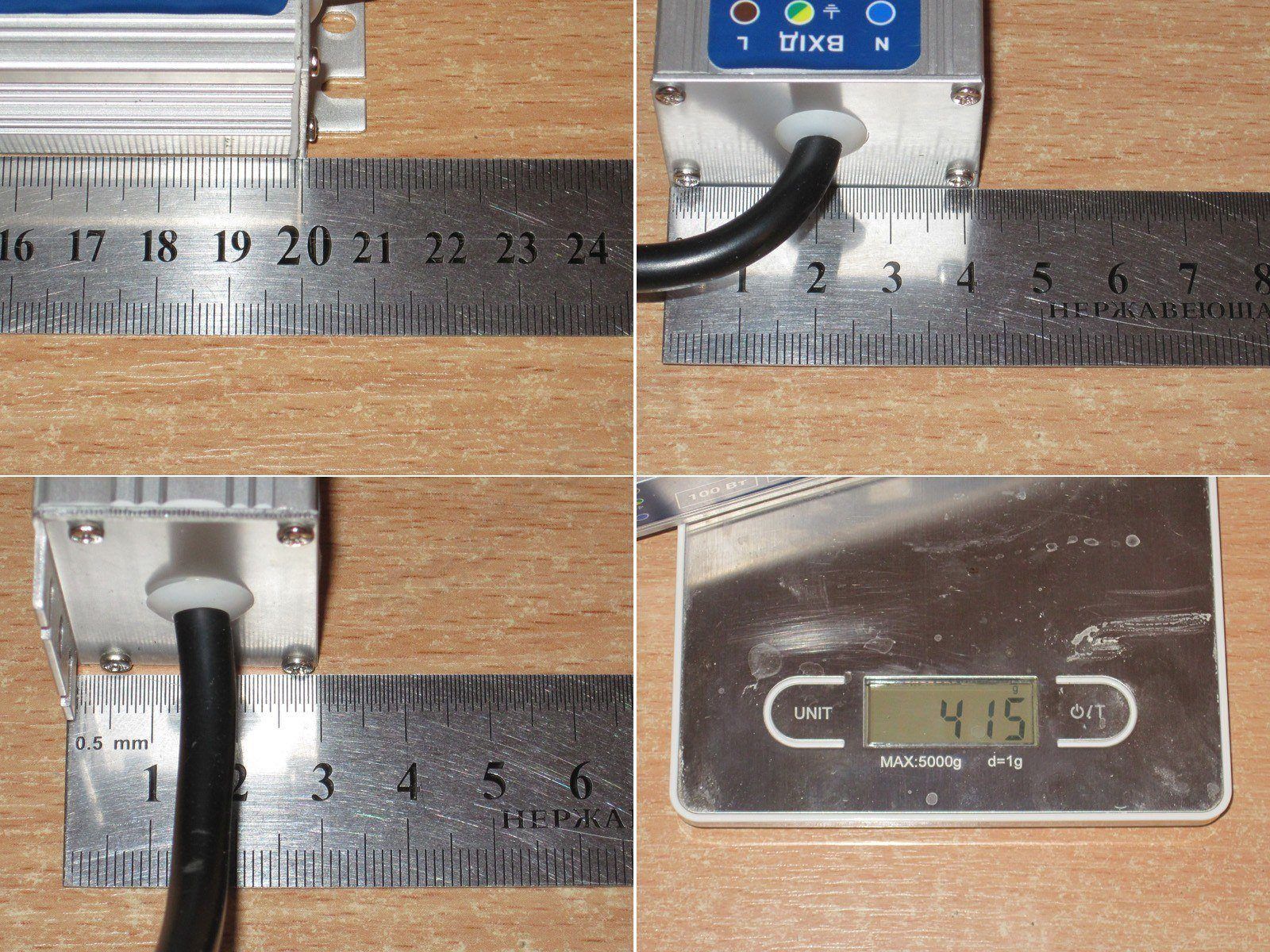
Overall dimensions are about 210 (190) × 42 × 30 mm; weight is 415 g.
The protection tripped above 10 A. A follow-up test with another load showed a trip current of about 11–11.5 A, which is quite reasonable.
The output voltage changed by 90 mV with the load, which is fine considering I was measuring after the cable.
Efficiency is slightly lower than the previous model, at 85–85.5%. Some of the loss may be in the cable, but either way, that's a typical efficiency figure.
High-frequency ripple was measured with no load and at currents of 3, 6, and 9 A.
I have no complaints here either: the main component is 100–110 mV, with a total amplitude of about 170 mV. Interestingly, the spikes made it through the cable, even though it was short.
Overall, no complaints.
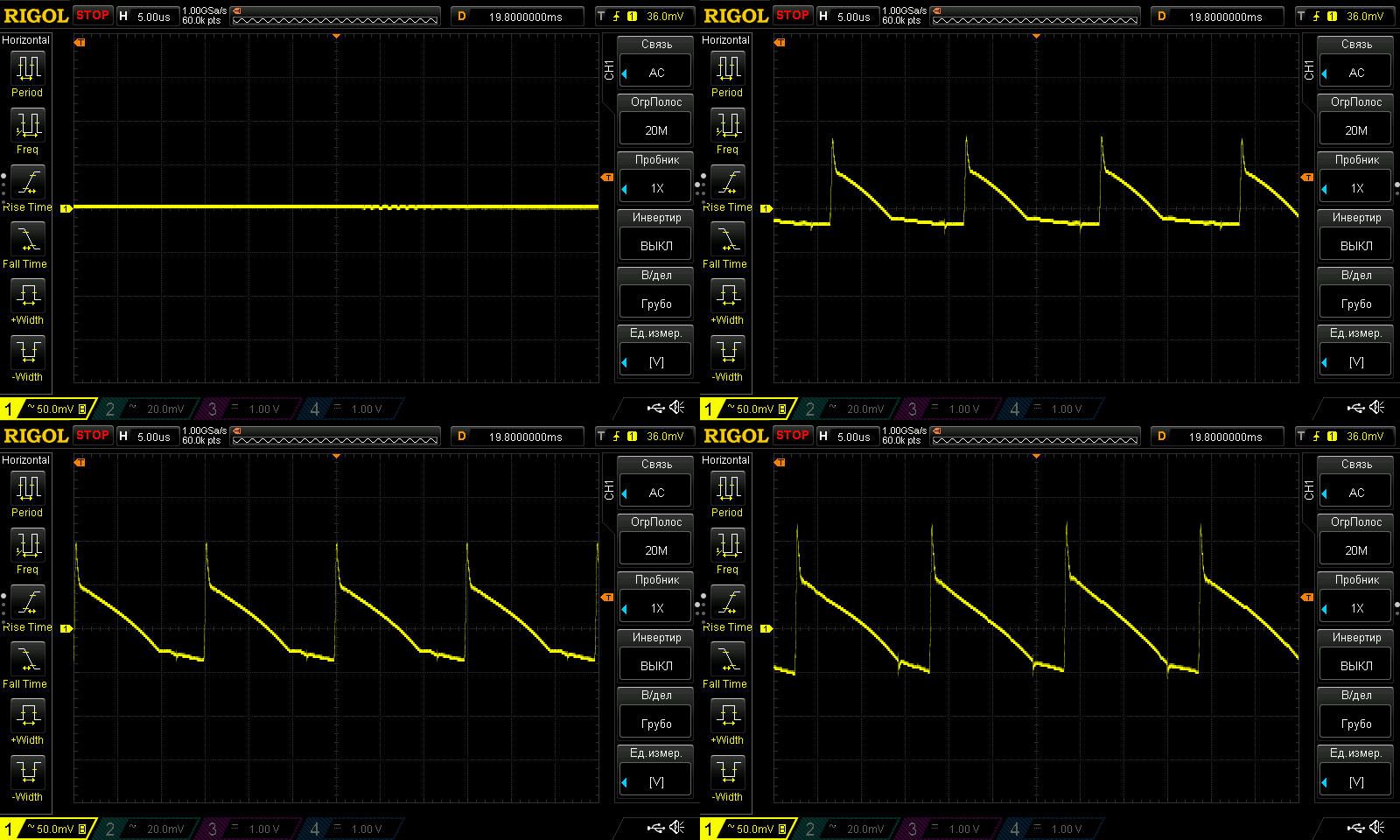
There's practically no 100 Hz ripple, which is nice.
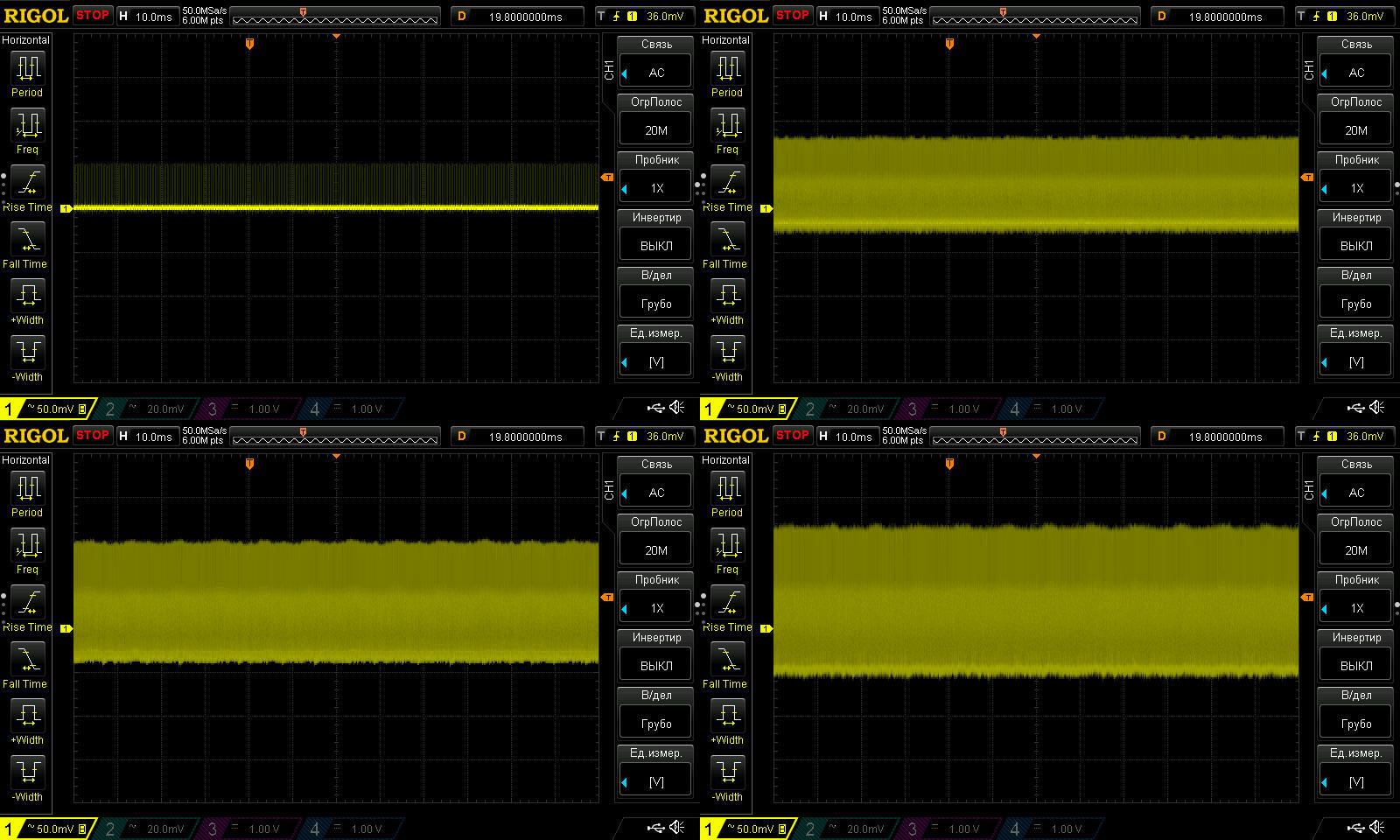
The test was run in the same modes as for the previous model, i.e. 50% and 100% are the rated loads, and 10 A is the maximum, but after a while the 10 A test shut down. The protection threshold may have dropped, so I set it to 9.8 A and continued the test.
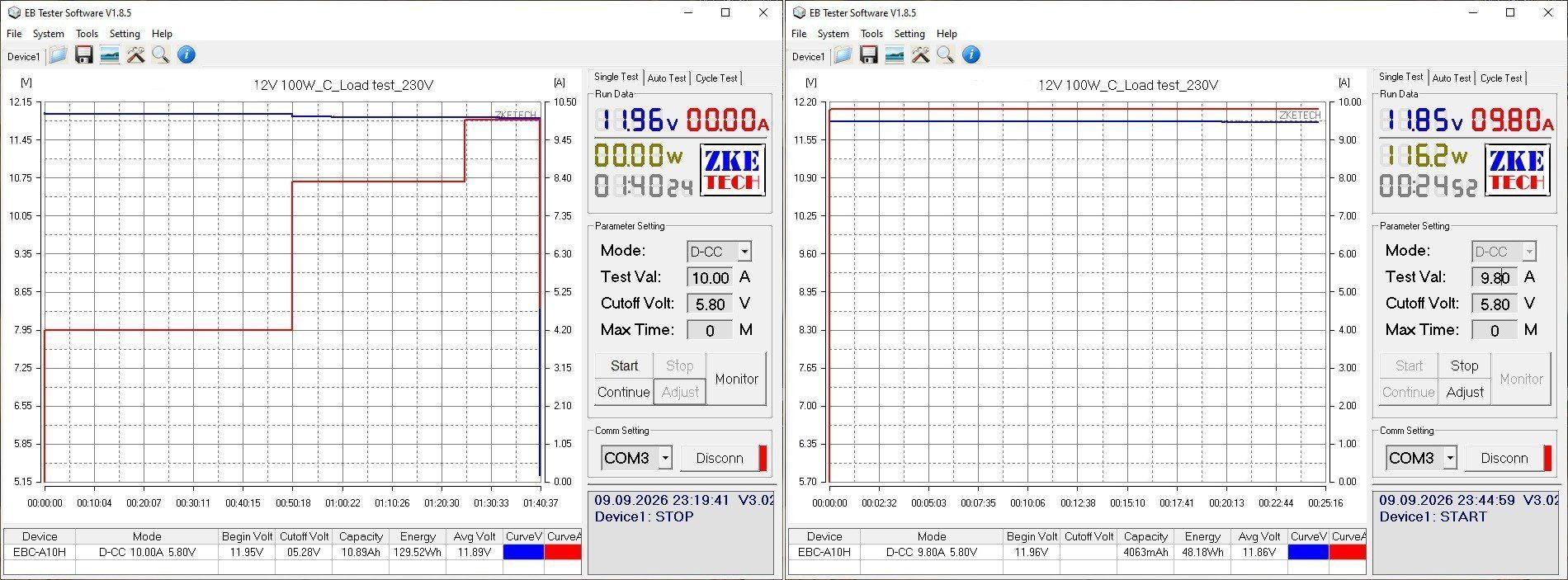
Test results at load currents of 8.3 and 10 A.
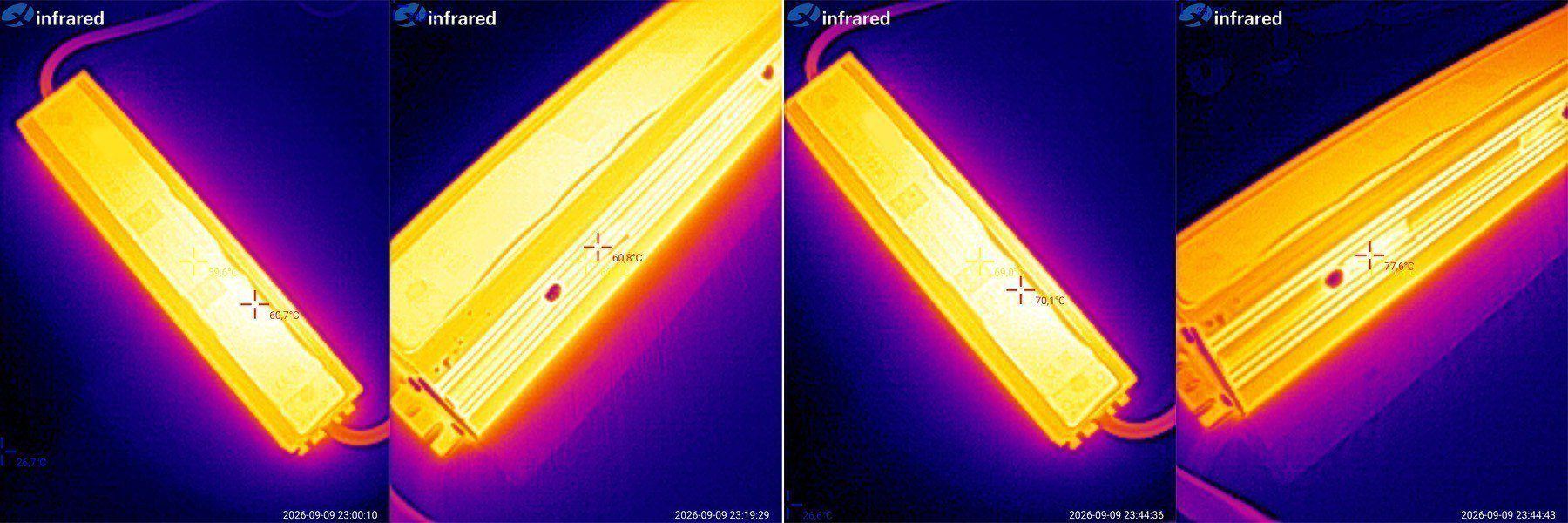
The top measurement was essentially the temperature of the label, indirectly indicating the temperature around the transformer. On the side, near the diode assembly—the usual hottest spot—I stuck on a small piece of electrical tape to improve measurement accuracy.
The results of the 50% load test were spoiled, so I'm not posting them.
So, we have:
At 100% load, the case is at 61 degrees and the side is at 61.
At 120% load, the case is at 70, and the side is closer to 78.
Nothing unusual—typical temperatures for a typical power supply of this design. And yes, a reminder: if the case burns your hands, that doesn't mean it's overheating; that's usually its normal operating temperature.
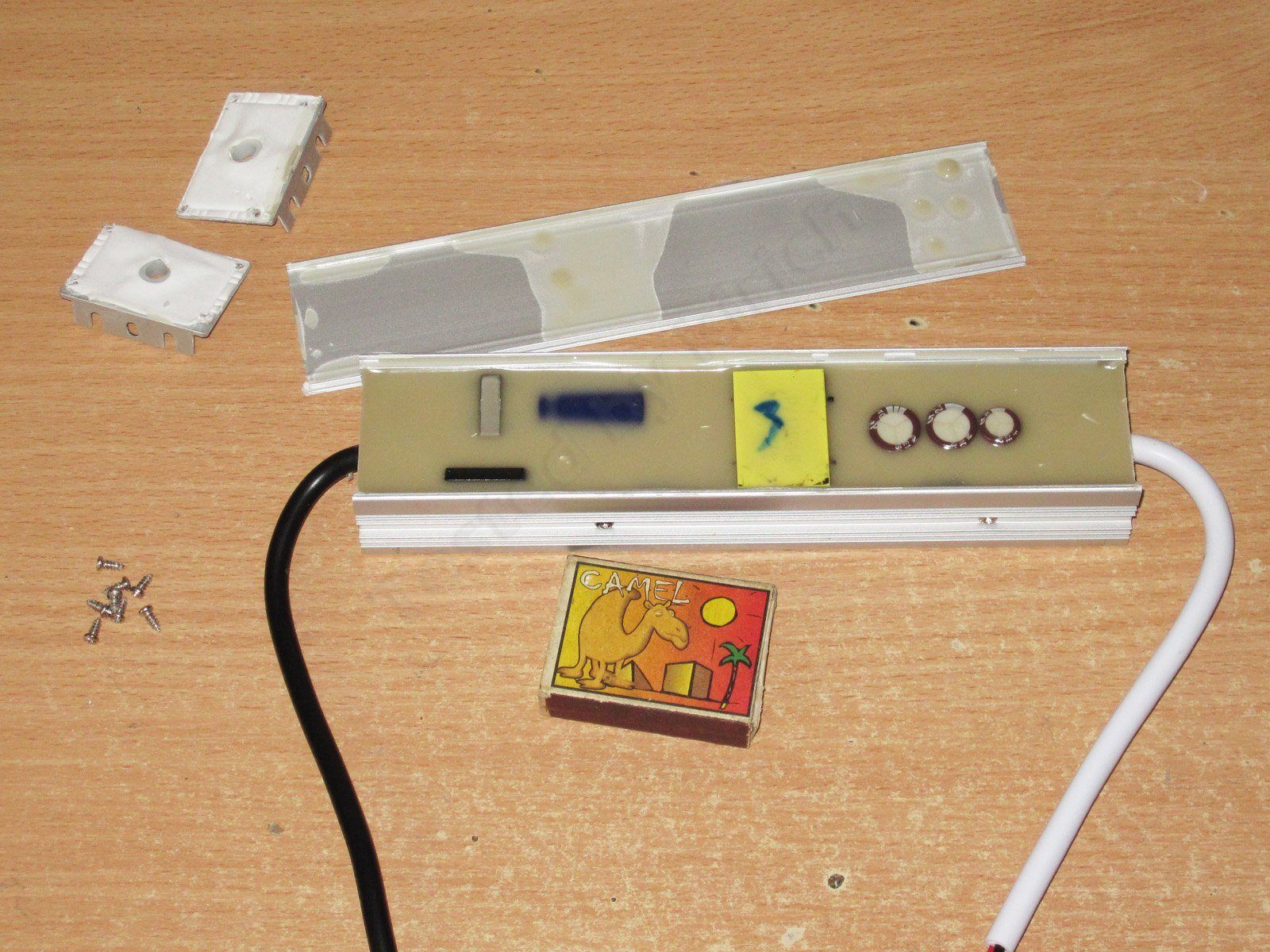
Here I decided to take this power supply apart, because I was curious how it was built. Just kidding :) Of course, I know perfectly well what's inside, at least in broad strokes. What I wanted to find out were the details.
As expected, inside there was potting compound, with some components visible here and there.
It's nice that the end caps have soft seals—thoughtful design, thumbs up.
The compound is filled almost to the cover, although the transformer and capacitors stick out a little.
With a few simple maneuvers, I first pulled the block of potting compound out of the case, with the internals visible inside it.
The transistor and diode assembly were installed with thermal paste, which is good.
Then came some time spent working with whatever tools I had on hand, and eventually there was a pile of potting compound on the table and the power supply on its own. It's a bit annoying to have to pick all this rubber-like compound off the table afterward.
And here's the power supply, almost cleaned up. It's not visible in the photo, but I liked that heat-shrink tubing was fitted over the clamping bars for the transistor and diode assembly, apparently as a cushion—though I can't say for sure.
The layout is typical, with a linear board topology.
No safety concerns: there's sufficient clearance between the primary and secondary sides, as well as a protective slot.
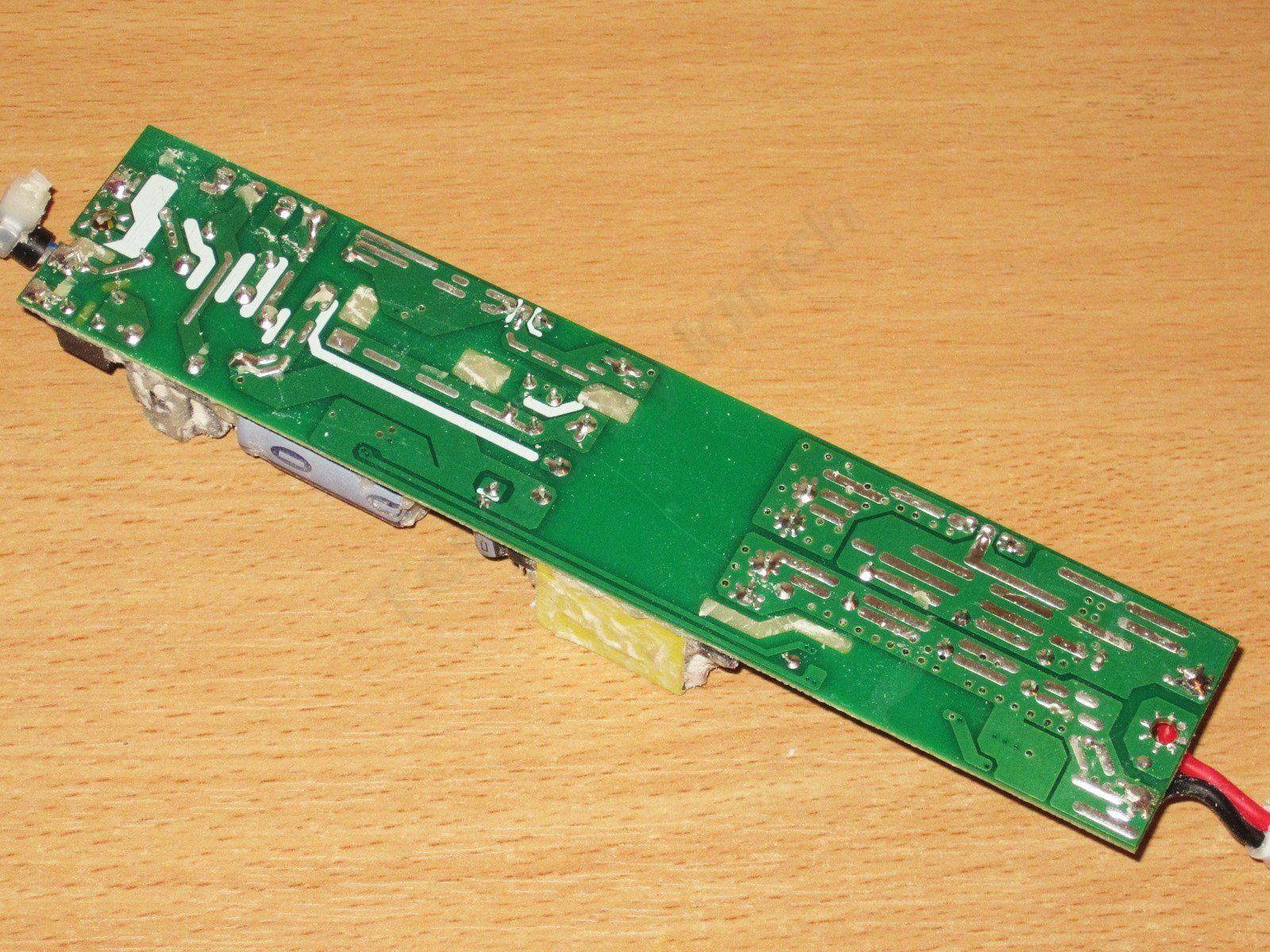
1. The input has a full-fledged mains filter, which also includes a varistor to protect against voltage spikes.
2. The input capacitor is 82 µF, 400 V. I'd say that's a bit small, but bear in mind that this model is designed only for the “high” mains voltage range.
3. The transistor is the same as in the previous unit: 10 A, 650 V.
4. The PWM controller's supply capacitor is marked Rubycon; I can't confirm or deny whether it's genuine.
5. The diode assembly here is rated for 40 A, 100 V, which is good and appropriate, with plenty of headroom.
6. There are two Y capacitors: one between the windings, the other connected to the case. There are three output capacitors: two at 2200 µF and one at 1000 µF, all rated for 16 V. Both the input and output capacitors are from manufacturers I don't recognize.
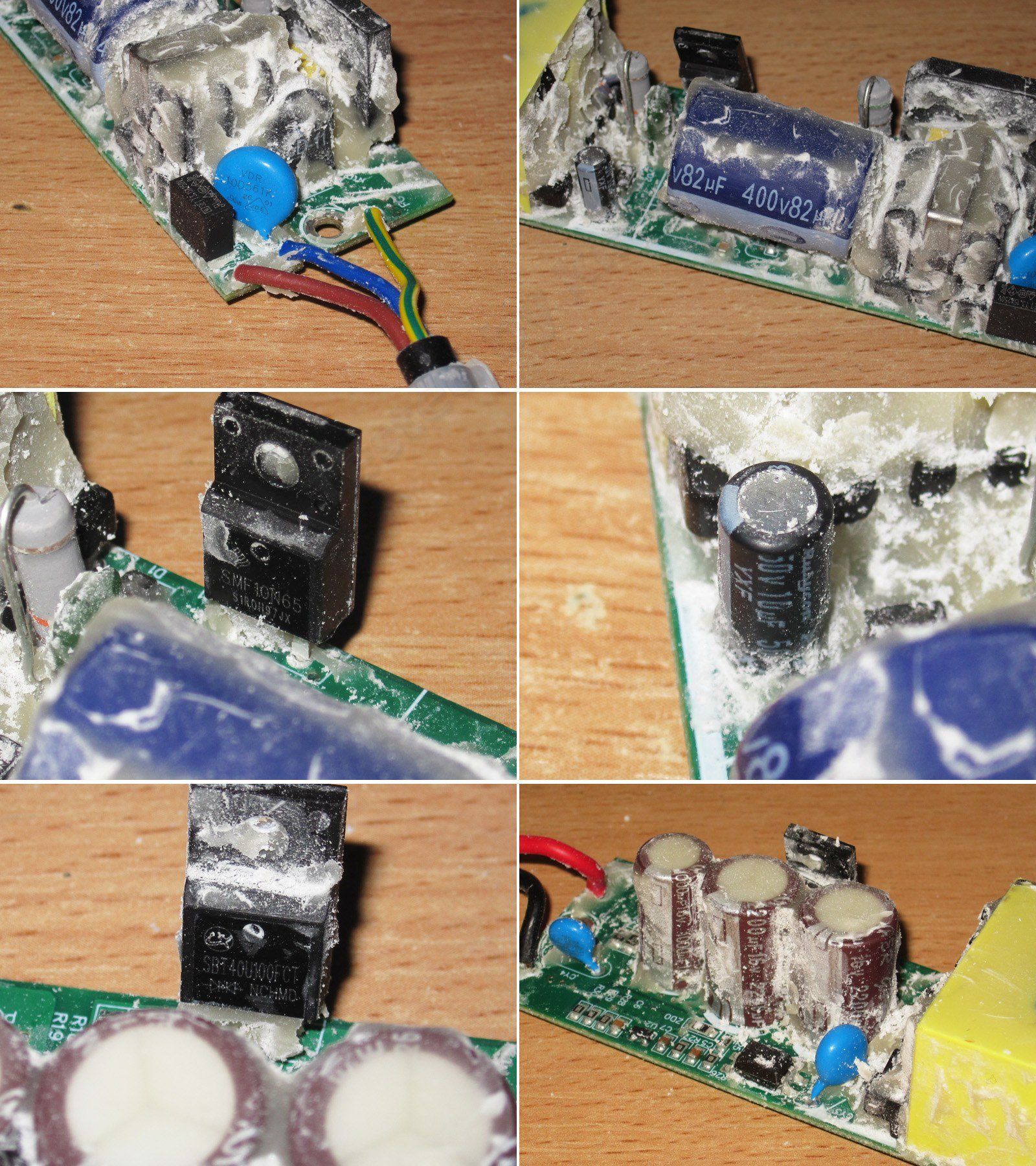
The input capacitor's actual capacitance is about 72 µF, which is already borderline even for the high mains voltage range.
The output capacitance is about 5200 µF, and the ESR is relatively low, which speaks well of the quality of the installed capacitors.
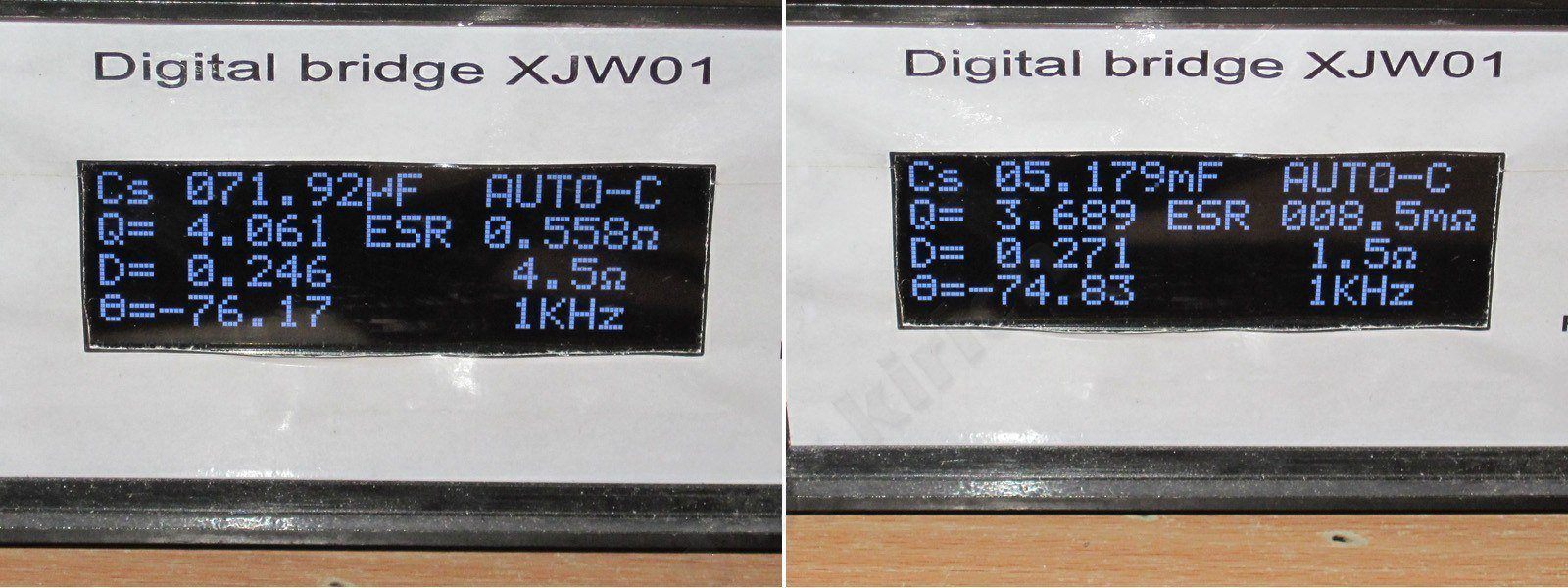
And here's the third test subject: the same 100 W, again 12 V at 8.3 A, and also in a sealed enclosure like the previous one.
But as often happens, “there's a catch.” First, it's more expensive than the previous one; second, it's larger; and third, it's marketed as a more reliable power supply with an extended warranty.
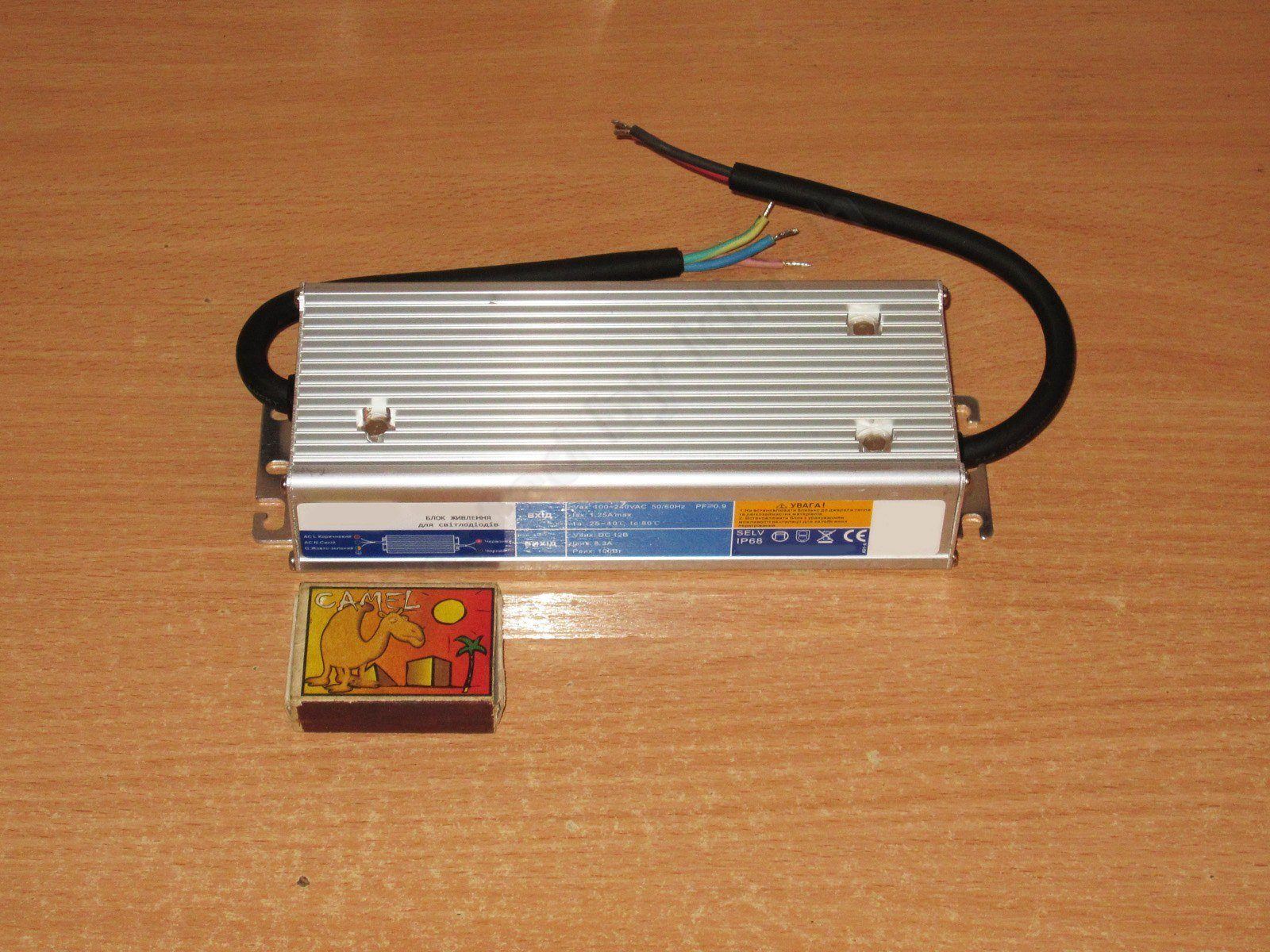
The label has all the necessary specifications and connection information. The cables are thick, with a decent conductor cross-section.
Dimensions are about 196 (166) × 71 × 38 mm.
At 850 grams, it really feels substantial—you could even use it to fend off pushy customers :)
The protection current is set to about 9.2 A. I think this is partly for improved reliability. As I often say, it’s hard to burn out a power supply if the protection is set to shut it down before it reaches a dangerous operating range.
The output voltage drops by about 120 mV under load. This is partly because the voltage was measured after the output cable.
This power supply is specified for an extended input voltage range starting at 100 V, as well as a power factor above 0.9, which usually indicates an active power factor correction circuit.
The efficiency dip at the beginning of the range is another sign of power factor correction. Efficiency is around 88% in the middle and at the top of the range, which is quite good in this case. Combined with the compact enclosure and low heat dissipation, that should also help keep the temperature down.
As with the previous units, ripple was measured with no load and at currents of 3, 6, and 9 A.
At maximum load, I measured about 75 mV of the main ripple component and 90–100 mV of switching ripple. I have no complaints here. It could certainly have been made cleaner, especially given the price, but that’s another matter.
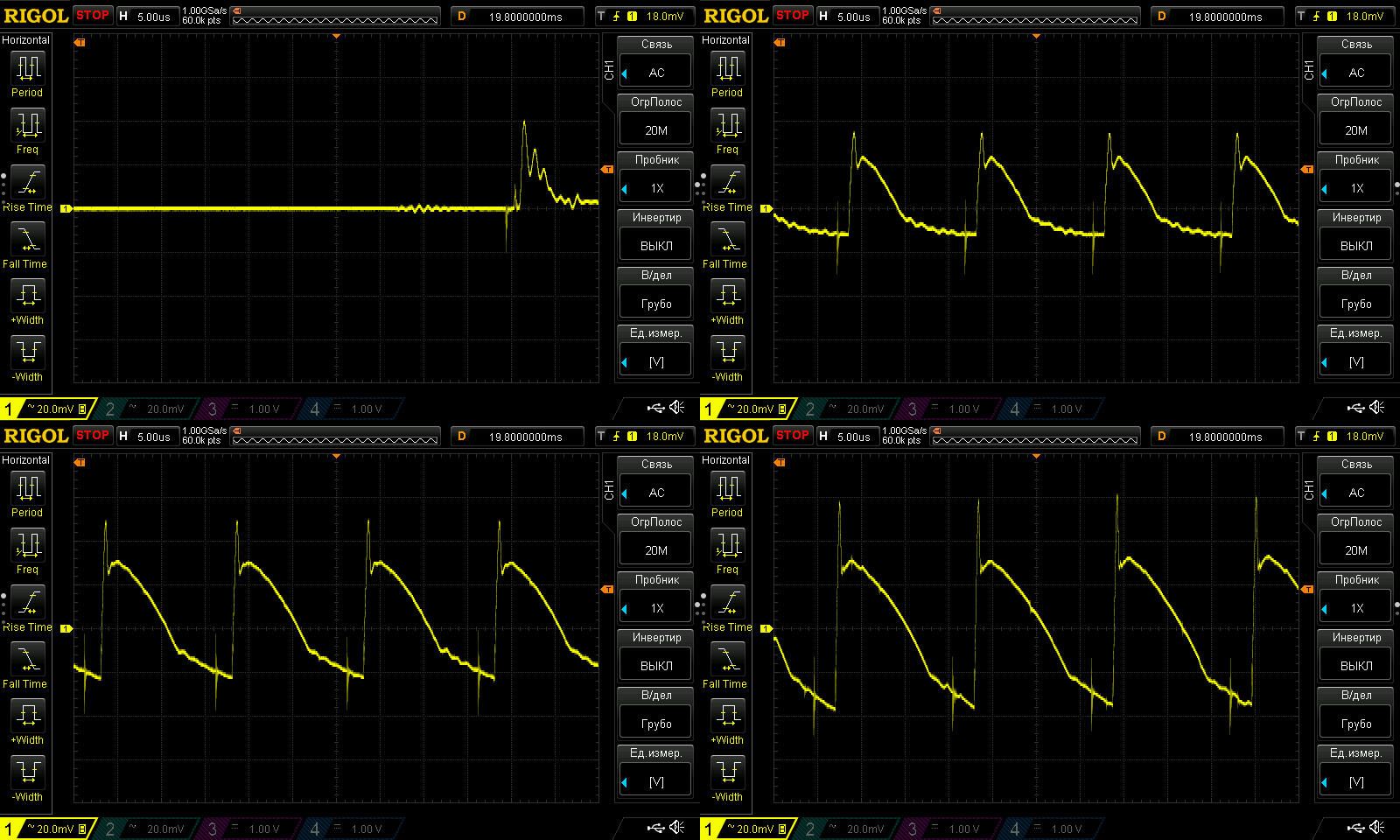
There is some minor ripple at low frequency, possibly caused by the power factor correction circuit, but overall it looks good.
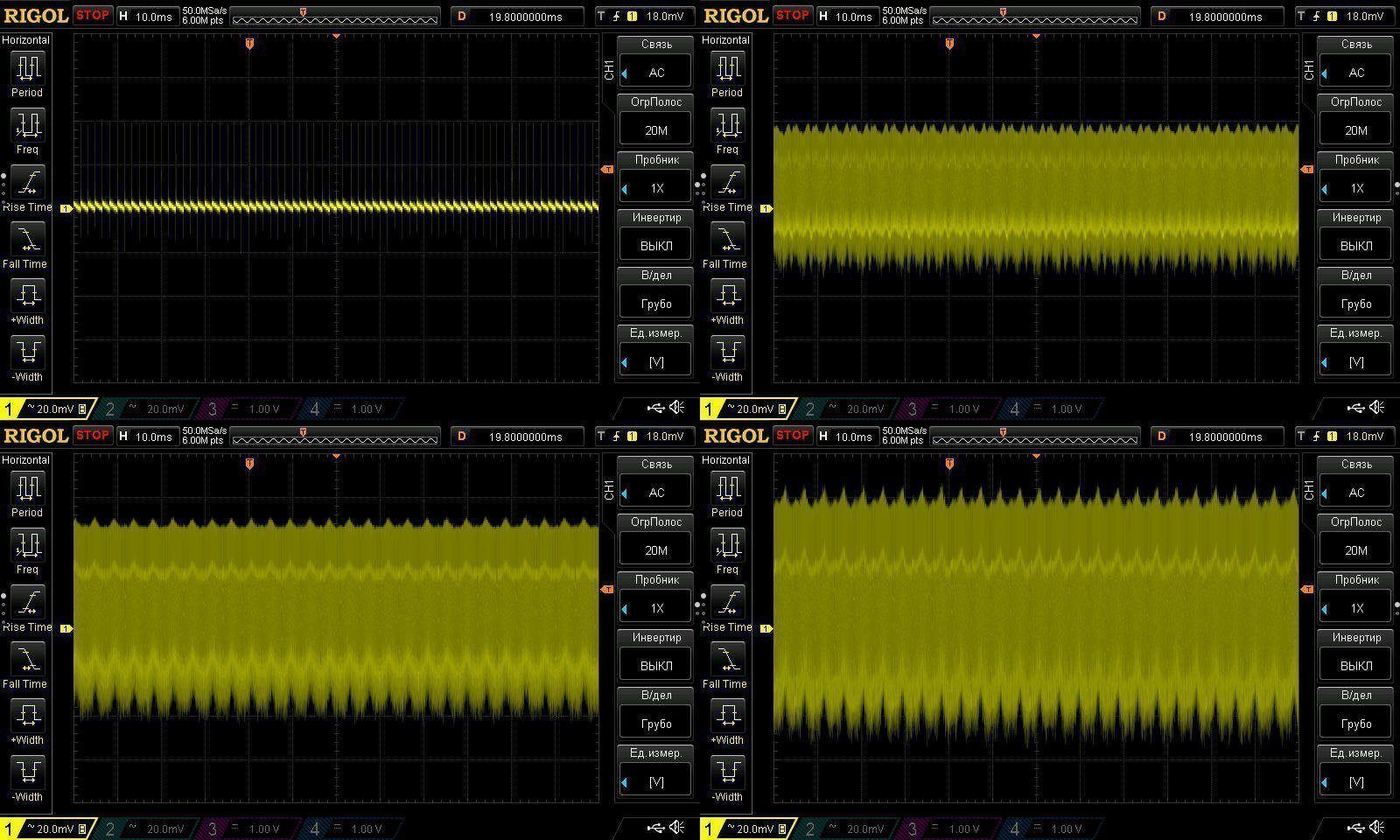
The load test was run at 50% and 100% of rated power, and also at 9 A; the protection wouldn’t allow any more.
There is no voltage dependence on temperature; under load, the voltage drops by 120 mV.
Here are the temperatures at different load levels. As with the previous unit, I could have limited myself to measuring the case temperature.
But this time I measured the temperature at three points: in the center and at two reference points where I had stuck on pieces of electrical tape.
50% power — 35, 33, 33 degrees
100% power — 42, 40, 41 degrees
110% power — 45, 44, 46 degrees.
Here I can say unequivocally: good. But that’s essentially down to two things. This model is a little more efficient, but more importantly, try getting this “brick” to warm up, especially given its size and the cooling fins on the case.
Conclusions.
The first power supply — a classic example, plain and simple. There’s really nothing to criticize, except that the protection current seems a little too high to me, and the ripple could be lower. Otherwise, it’s perfectly decent. It’s similar to the Meanwell LRS-100-12, and the price is almost identical. No offense to the maker of the unit reviewed here, but for roughly the same money, I’d still choose Mean Well.
The second power supply — not bad at all, very good, in fact. The input capacitor is a little undersized in my opinion, but overall it’s a solid power supply.
The third power supply — if you can overlook the relatively high price, it’s a good power supply. It has lower ripple than the first two models, active power factor correction, slightly higher efficiency, low operating temperatures, and a long expected service life. So yes, the only real complaint here is the price.
As I said at the very beginning, I’d try to be as objective as possible, and I hope I managed it. There are always drawbacks, everywhere: for some, it’s the price; for others, poor quality or the case color. But if I have no complaints, I won’t make them up. And if I spot problems, I won’t keep quiet.
That’s all for today. And thanks to the sponsor of this review, who wished to remain anonymous.
This model is included in the summary table: Comparison of power supplies: ripple, efficiency, and temperature rise
The figures from this review are in the measurement database: Power supplies
Calculate manuallyAll calculators
Discounted products
You may be interested in


Discounted products
Support the project
All the content on the site and the advice are free, but we’d be grateful for your support of the project and the channel!
Discuss on the forumHave a question or some experience to share? Discuss the article with the author and readers: the forum is a convenient place to share schematics and photos.
Go to the forumOnly registered readers can comment. It takes a minute to sign up, and you can log in with the same account you use on the forum.
Log inRegister