
LiFePO4 ANR26650M1-B batteries from Vapcell
$17.99 (лот 2шт)
Let’s inspect and test them, then compare them with the ones from the previous review. I think it’ll be useful. I also seem to have figured out how to read the production date on these batteries.
As last time, I’ll start with an excerpt from the datasheet.

I’ll say up front that things turned out a little more interesting than I initially expected, but as always, I’ll start with the packaging.
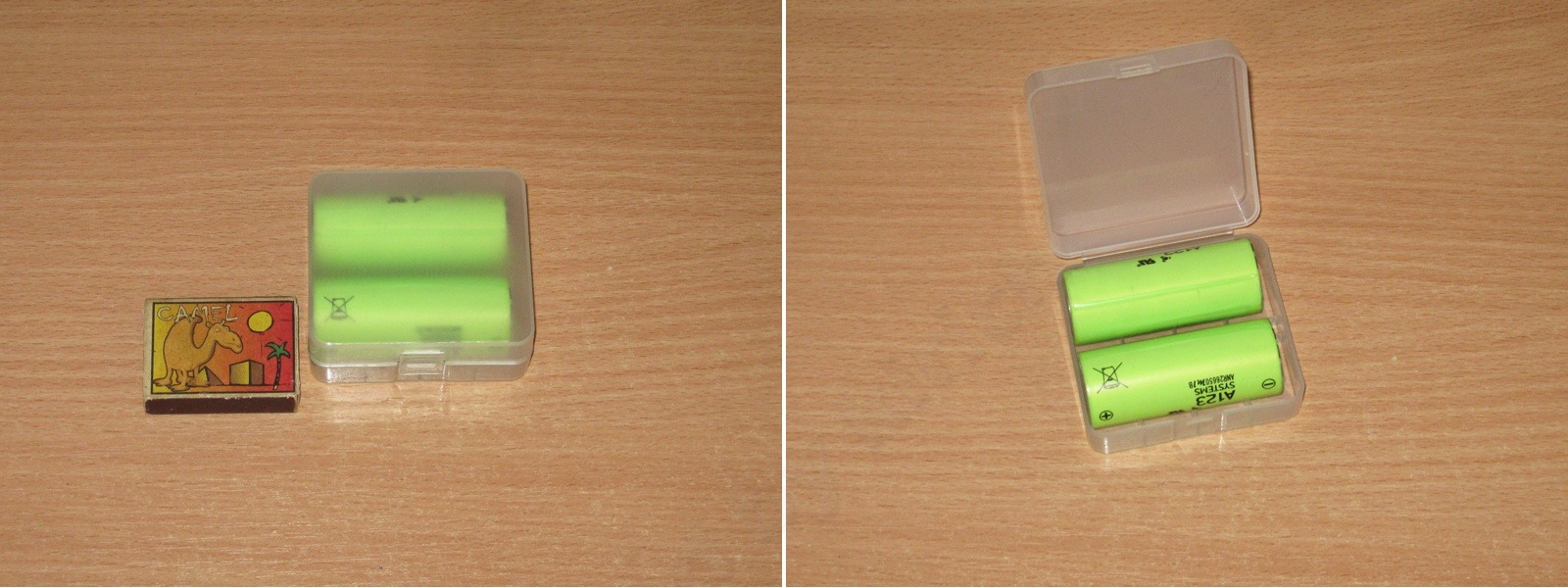
There’s no nice branded box this time, just a plain plastic case, though it also has the Vapcell logo.
Specifications.

The batteries look exactly like the picture in the datasheet. And a reminder: because the contacts are an unusual size, it’s easy to mix up positive and negative on these batteries, so be very careful!
There’s a barcode sticker under the heat-shrink wrap.

Yes, these batteries were made back when A123 was still called A123, before it became Lithium Werks. That’s easy to see in the comparison photo.
The batteries from the previous review are on the left, and the ones in this review are on the right. Also, last time I wrote that the production date was unknown. It looks like the date is encoded in the digits after the FH_- marking.
Why do I think that’s the production date? It’s simple: I looked through the photos I could find and compared them with the approximate dates they were taken. Plus, the format looks very much like a date.
The batteries in this review have the code FH_-1603512; the ones in the previous review had code FH_-1808247. I’ve also come across the codes FH_-1309622, FH_-1105790 and FH_-1807606.
So we can assume the first pair of digits is the year, the second is the month, and the last three may be an additional code.
That would mean the batteries in this review were made in March 2016, while the previous ones were made in August 2018—that is, they’re 2.5 years newer.

Dimensions and weight—no surprises here.

Since my auxiliary charger doesn’t work with LiFePO4, I ran the “normalization” cycle using the EBC-A20 tester.
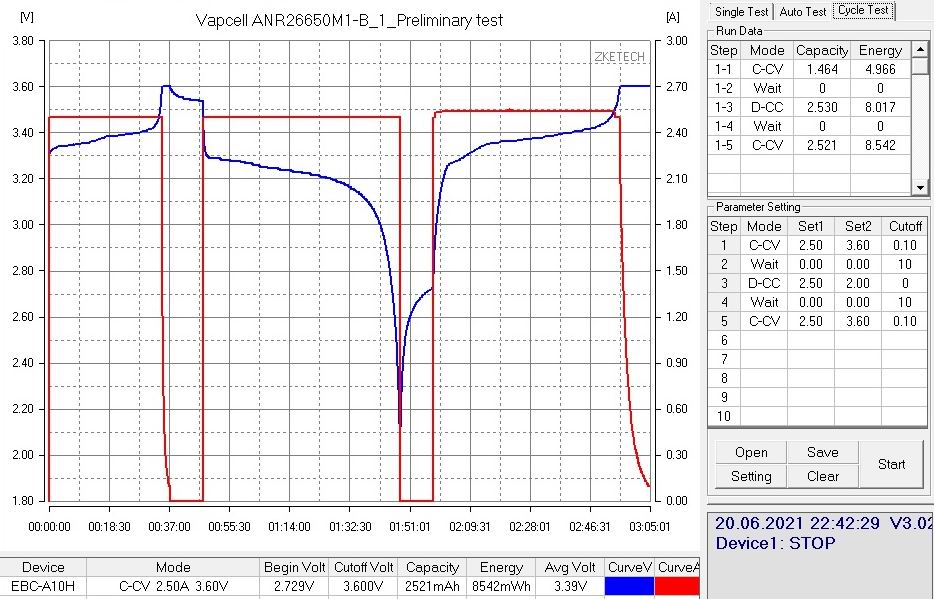

According to the datasheet, the batteries support standard charging at 1C (2.5 A) and fast charging at 4C (10 A). In standard mode, charging takes 1 hour and 6 minutes, which is excellent—just one minute longer than the previous ones.

Charging at 10 A took 20 minutes and 5 seconds. The previous batteries took 20 minutes and 52 seconds in the same mode.

The discharge curves here are also from the datasheet, but they’re not very useful to me because they show constant-power discharge, while I use constant-current discharge for my tests.

I tested them at 0.2, 0.5, 1, 2, 4, 6, 8, 12 and 16C, where C = 2.5 A.
Honestly, it’s almost a little boring: you start the test and get the predictable result you’d expect from the datasheet.

Temperature at 20, 30 and 40 A.

The second sample.


The comparison of the specifications was a bit surprising, since there are noticeable differences even though the batteries come from different but closely related batches. The second sample has slightly more capacity.

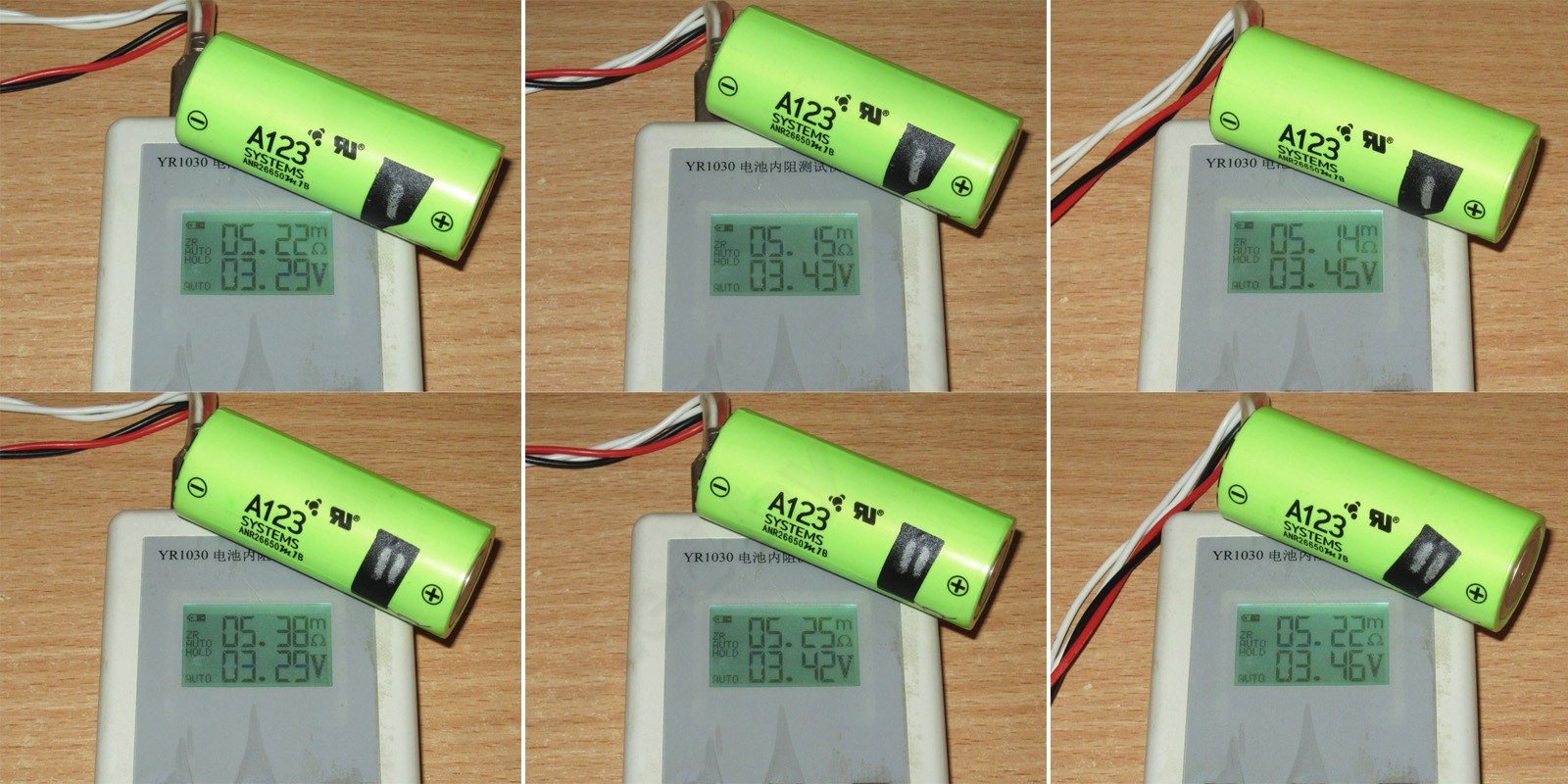
Impedance as received, after “normalization,” and at the end. Interestingly, it’s a little lower than on the previous batteries: 5.15–5.15 here, compared with 5.75–5.85 last time, even though the batteries in this review are clearly older.
To compare them with the previous batteries, I plotted the test results for both pairs at 20 and 40 A.
There is some variation, but the graph shows that it was considerably smaller with the previous batteries.

Conclusion.
The only thing I wasn’t too happy with was the variation in the specifications. But knowing these batteries, I suspect it’s simply because they come from different batches.
Otherwise, these are the same excellent high-current cells—probably some of the best, if not the best. The only disappointing thing about them is the price-to-capacity ratio. But if you need high current output in a compact size with excellent reliability, it’s hard to find an alternative.
Now, about the price. They used to cost around $6 on Nkon, excluding shipping; now the price has dropped to $3.3. I think Vapcell’s managers should consider running some promotions or sales, because $9 apiece is, to put it mildly... rather steep, even with free shipping.
That’s all from me. I hope you found this useful.
$17.99 (лот 2шт)
This page was found when searching for:
antbatt lifepo4 26650 mp, 1, e199900 df-2h 94v-0
antbatt lifepo4 26650 mp, 1, e199900 df-2h 94v-0
The figures from this review are in the measurement database: Batteries
Calculate manuallyAll calculators
Discounted products
You may be interested in


Discounted products
Support the project
All the content on the site and the advice are free, but we’d be grateful for your support of the project and the channel!
Discuss on the forumHave a question or some experience to share? Discuss the article with the author and readers: the forum is a convenient place to share schematics and photos.
Go to the forumOnly registered readers can comment. It takes a minute to sign up, and you can log in with the same account you use on the forum.
Log inRegister