
LiFePO4 batteries, 15 and 25 Ah
This is the third part of my review of various batteries. Today we’re looking at completely different cells: a different size, manufacturer and chemistry. But in my opinion, cells like these are just as much in demand today as the ones covered earlier.
As a reminder, to keep up with new posts on the blog, I recommend following me on Instagram. I’ll post notifications about every new topic there, and might also write about something interesting from time to time: link to my account
You can also subscribe to updates and new articles on the Telegram channel - https://t.me/KirichBlog
A reminder: the promo code kirich_blog gives you 5% off all products at the miliom.com.ua online store. The discount is valid until February 28, 2026, and applies only to orders placed by individuals through the website using the promo code.
I’m often asked which is better: “regular” lithium batteries or LiFePO4. There’s no such thing as, say, X being better than Y; each has its own applications.
Broadly speaking, there are currently three popular and relevant groups of batteries:
“Regular” lithium batteries are for applications that need either very high current or high capacity, all in a compact, lightweight package. That means mobile devices, power banks, or drones, for example.
LiFePO4 cells have a poorer capacity-to-volume and capacity-to-weight ratio, so they’re not a great fit for mobile devices. But they’re very well suited to stationary applications. The operating voltage range of a 4S pack matches that of a 6S lead-acid battery, and they can also operate in buffer mode (at the same voltage as a lead-acid battery), making them suitable for replacing batteries in UPS units.
LTO cells are clear losers when it comes to capacity for the price, size and weight. But they’re top of the line for cycle life. If you have plenty of money and want a reliable, safe battery at home, they’re the way to go.
There are also sodium-ion batteries. They’re continuing to expand and improve, but compared with the types listed above, they’re still just a drop in the ocean.
So, today I’ll be looking at three LiFePO4 cell options: one 15 Ah model from Taizhou Jiashikai New Energy Co., Ltd., or simply TZJSK, and two from QNAS, with capacities of 15 and 25 Ah.
I’ll start, of course, with the smallest capacity: the JSK 32140 15Ah - link
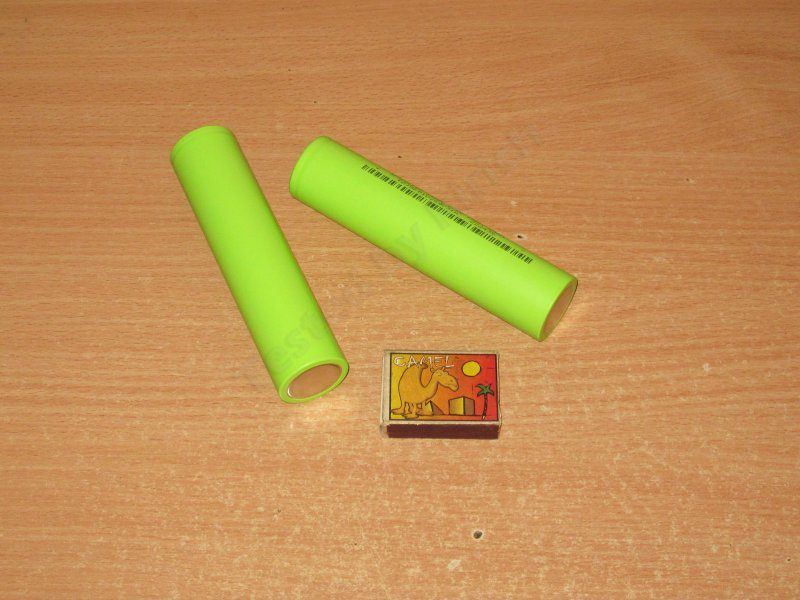
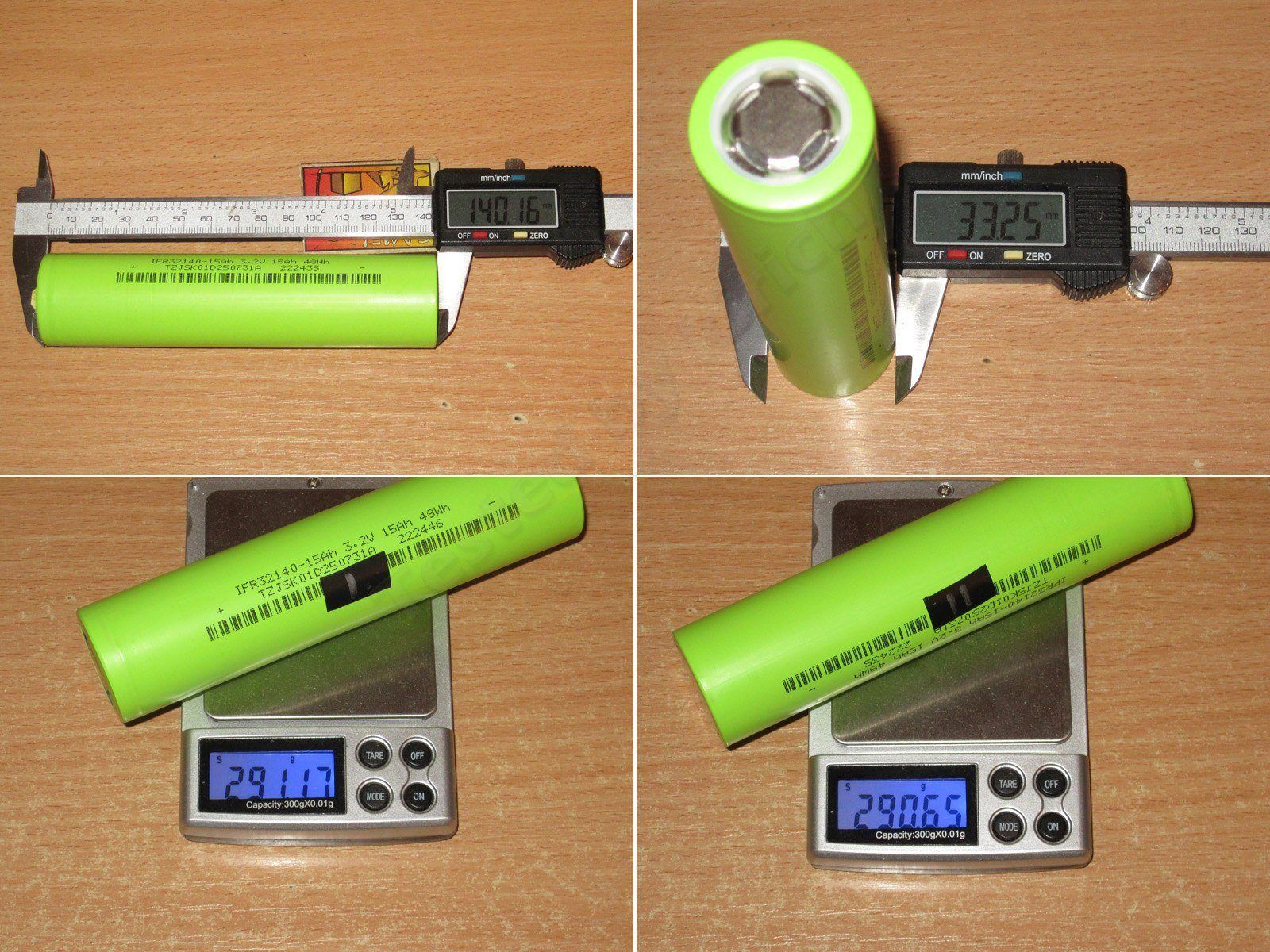
The size is 32140, which, like 33140, you’ve already seen in my other reviews. I don’t have much more to say about it for now.
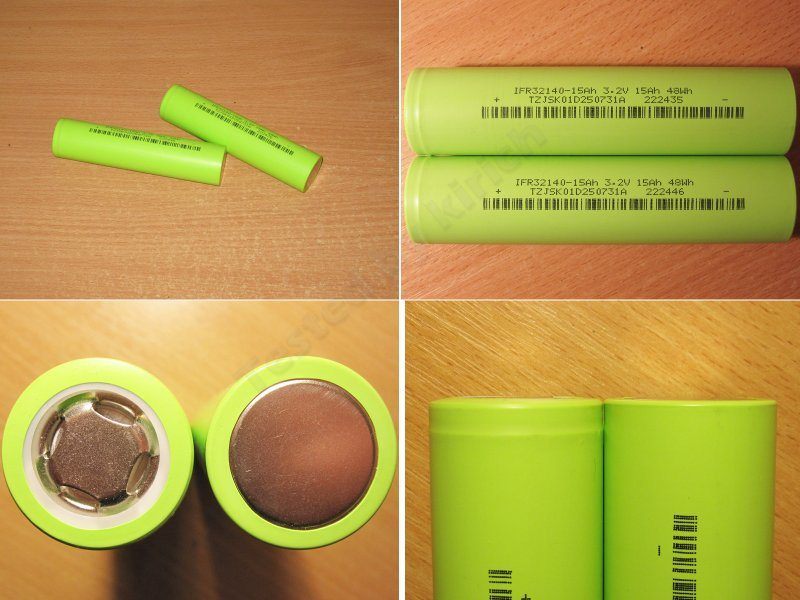
The label lists the voltage, capacity in Ah and energy in Wh, which is very convenient. Each cell also has its own unique barcode, making it easy to check whether it’s genuine.
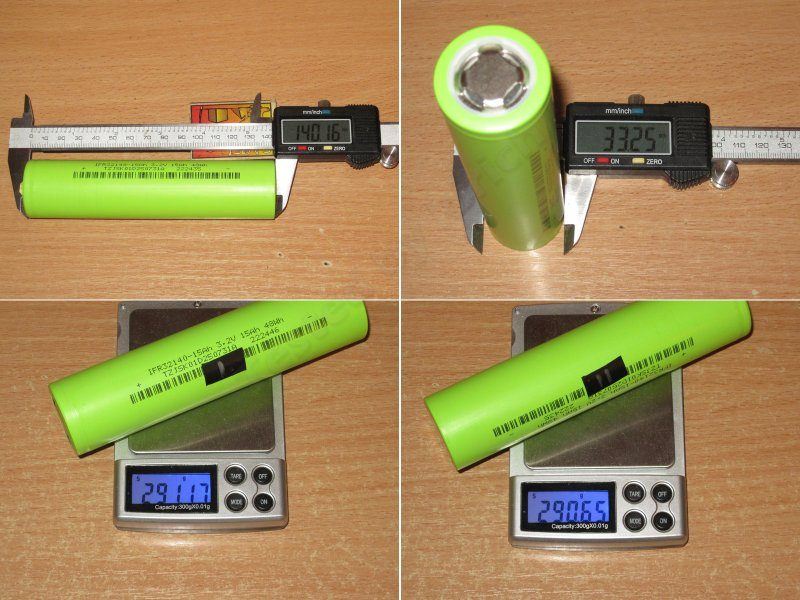
As for size and weight, nothing new here. Though I do wonder why the market has both 32140 and 33140 cells, formats that differ by just 1 mm. I ran into something similar many years ago, when I found out that besides 18650 cells, there are also 17670 cells, and even 17650 cells. They look similar, but if you have a 17670 or 17650, you either won’t be able to squeeze an 18680 into its place, or you’ll be swearing a lot....
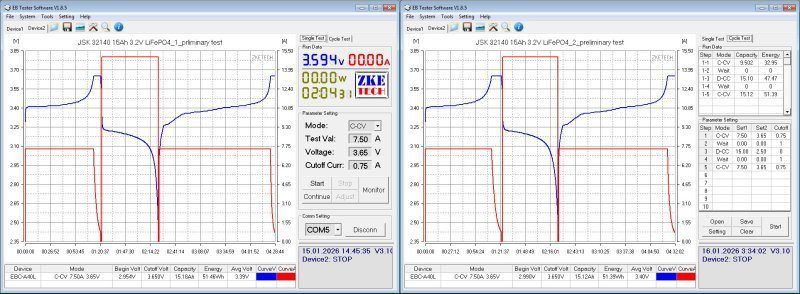
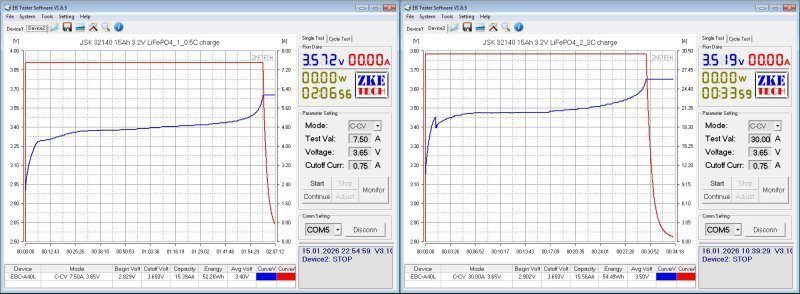
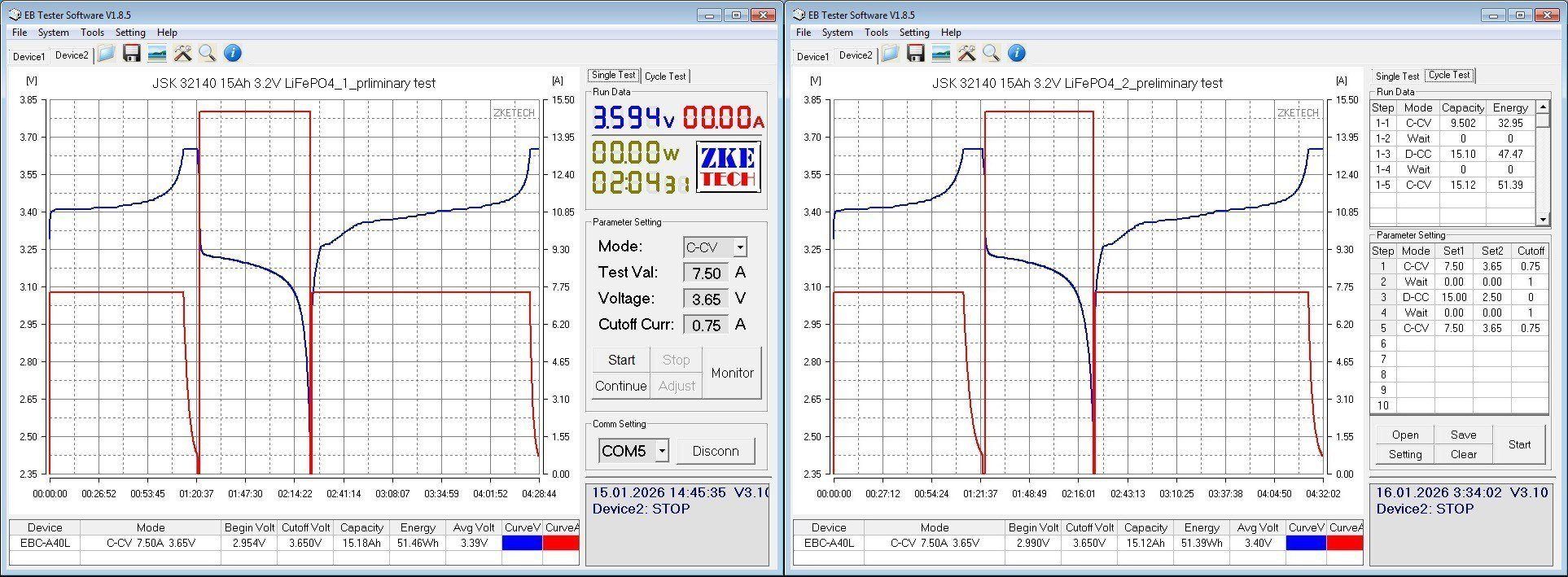
The batteries were put through a “Normalization” cycle. Unfortunately, I made a mistake when taking the screenshot of the first cell. But even at this stage, you can see that the results are very similar, at least in terms of the test duration.
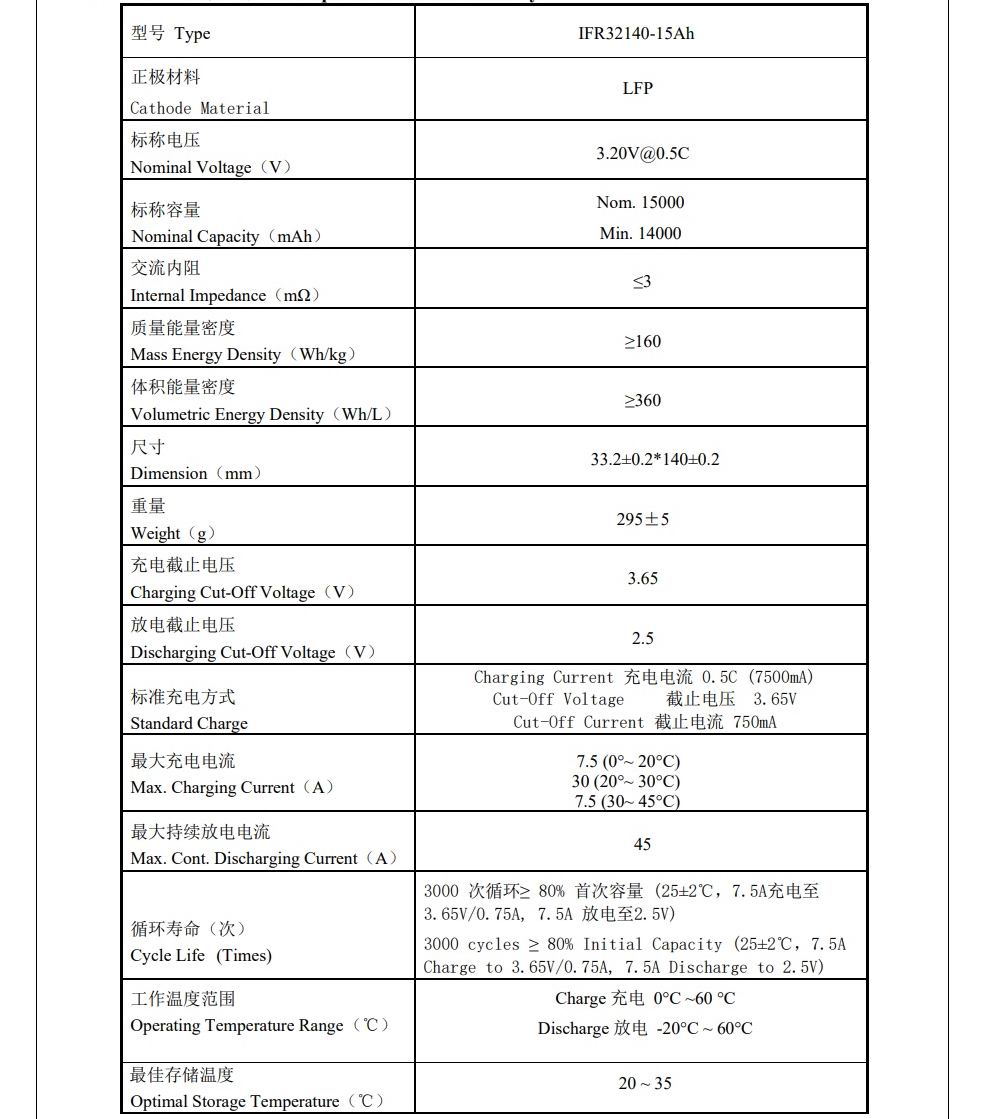
The rated capacity is 15 Ah, with a minimum of 14 Ah when discharged to 2.5 V. The maximum discharge current is 3C. The nominal charge current is 0.5C, with fast charging at 2C at room temperature.
I’ll point out once again that charging is the most demanding operating mode, so the limits are stricter. The datasheet makes this very clear: if the temperature is above 30 or below 20 degrees, the maximum current is already 0.5C.

At 0.5C, charging took 2 hours and 7 minutes—excellent. At 2C, it charged in 34 minutes—simply fantastic. You can clearly see that the battery accepts charge easily.
There’s a small voltage change right at the beginning of the graph. It turned out that sometimes the central contact in the contact group could short against the outer one. I fixed that problem later.
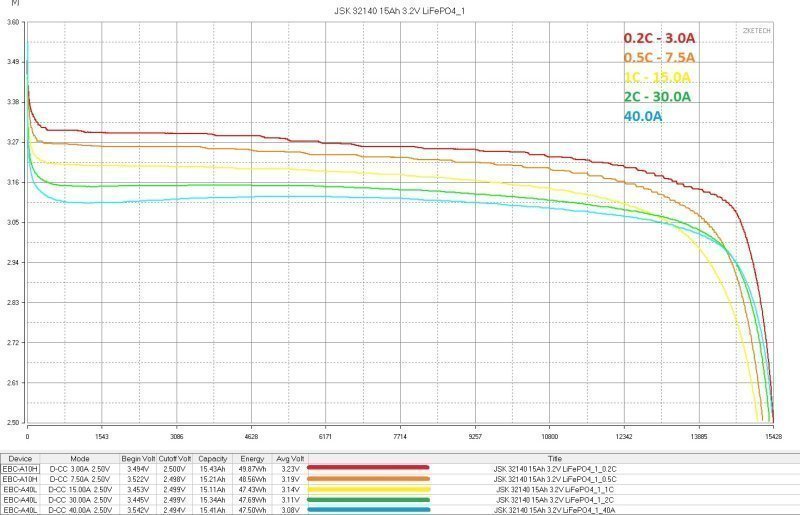
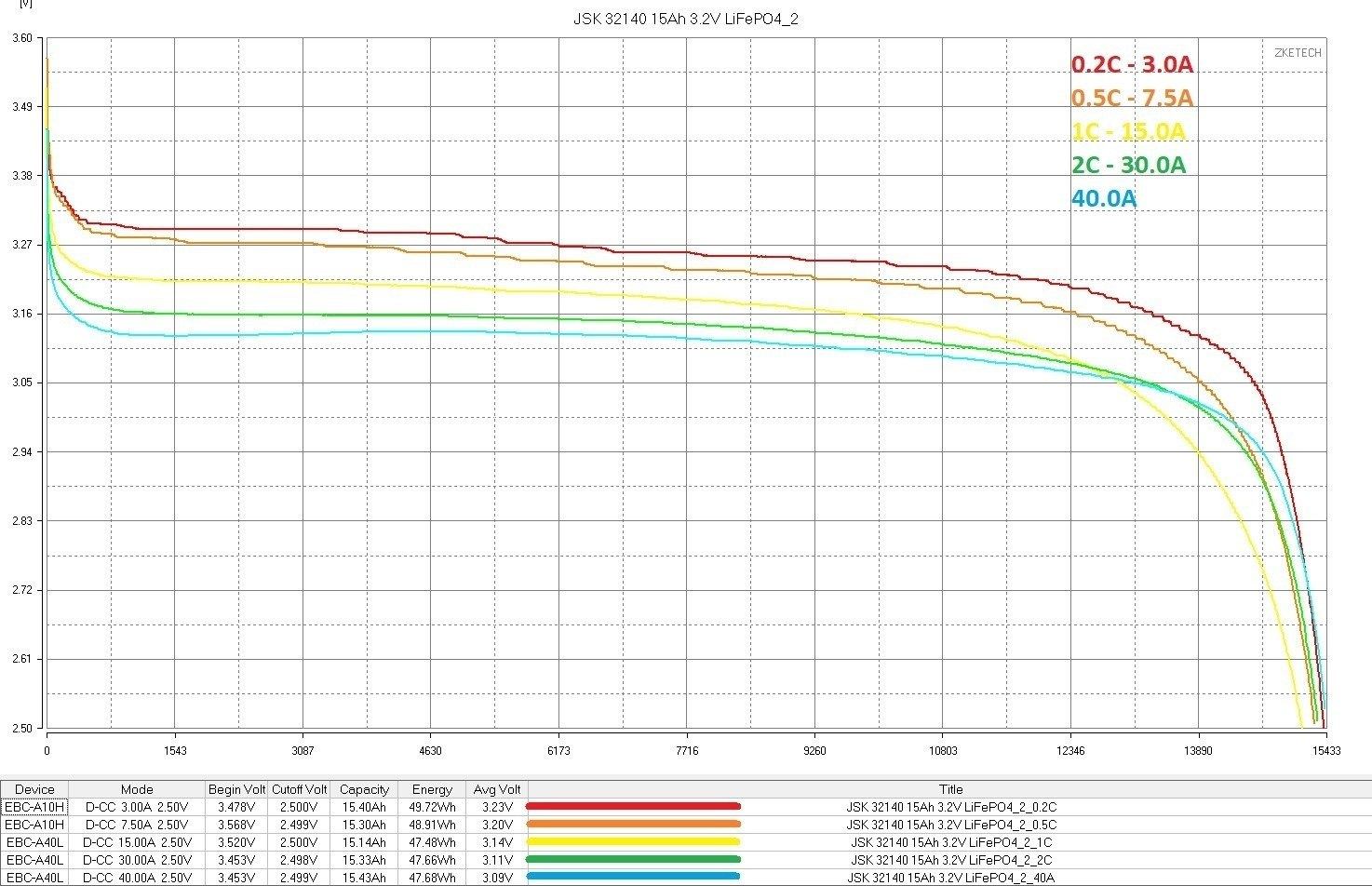
And now the discharge test. I tested at 0.2C, 0.5C, 1C, 2C and 40 A. The load was limited to 40 A, but that’s not much less than the specified 3C, so the result can certainly be considered valid.
Some of you will immediately notice that the capacity delivered in Ah initially decreases as the current increases, but then turns out to be higher at 2C and 40 A. This is due to the cell’s self-heating. But in any case, the results are even better than claimed.
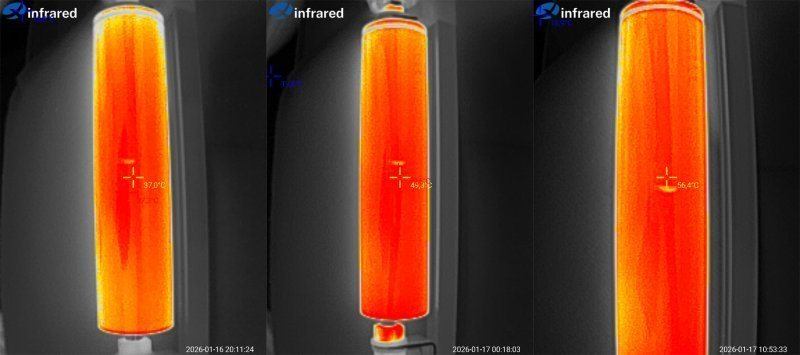
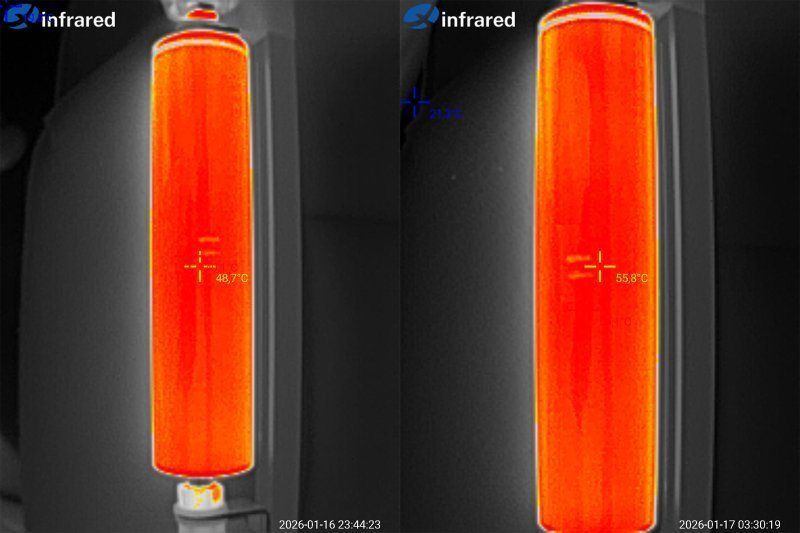
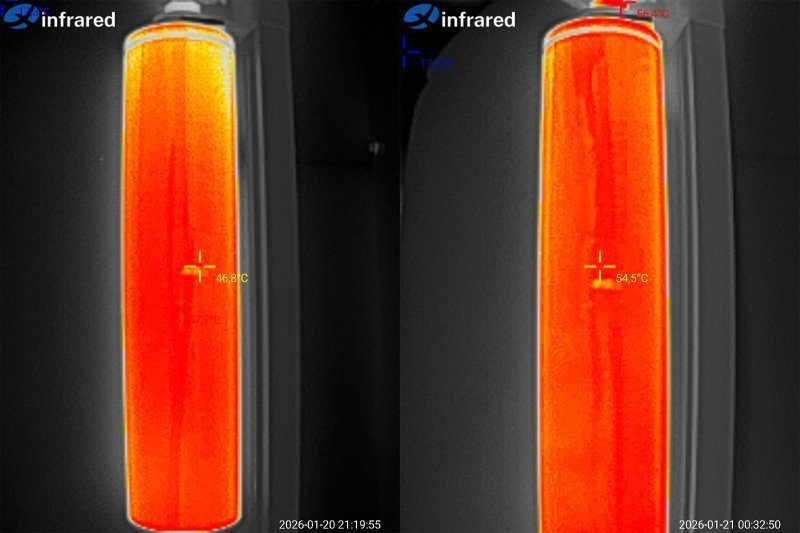
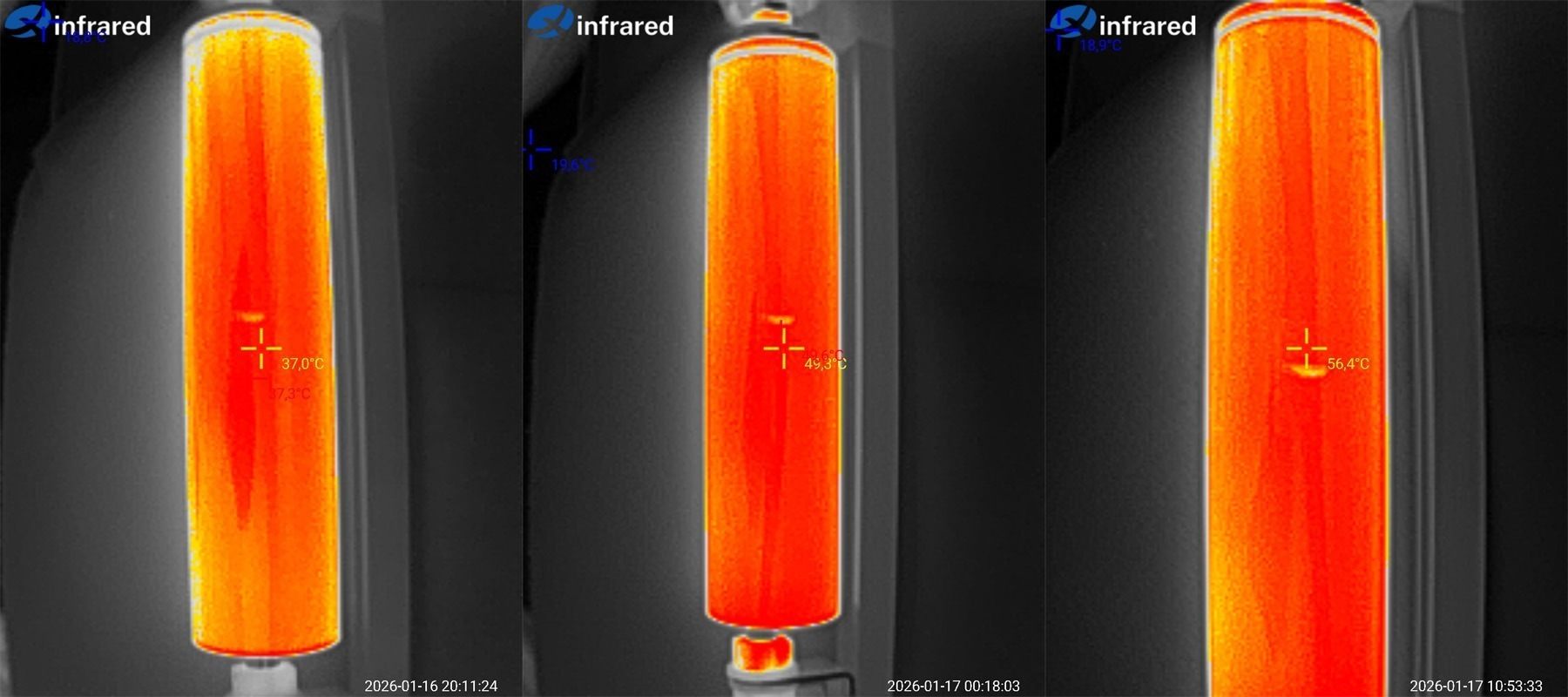
Temperature at 1C, 2C, and 40 A. I didn't check the temperature at 1C later, since it essentially makes no sense.
In the most demanding mode, the case warmed up to 56 degrees. The room was a little cooler than required, but even if it had been 60 degrees, the result would still have been fine.
Results for the second sample; all the test conditions are the same.
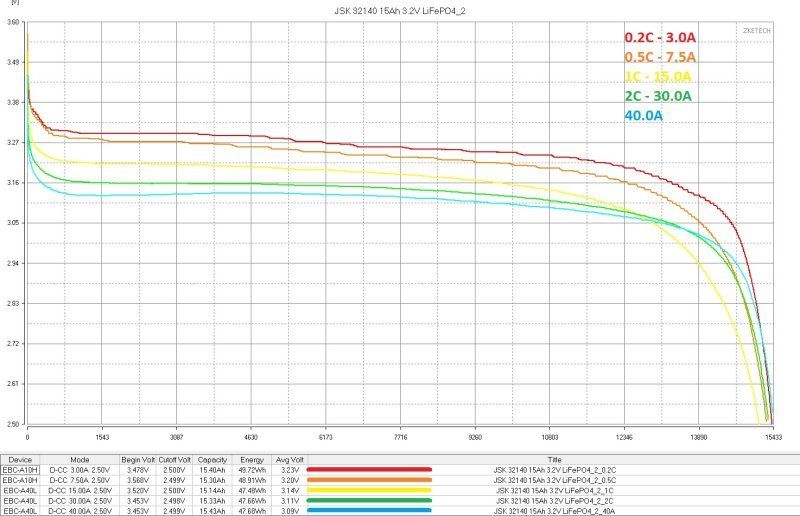
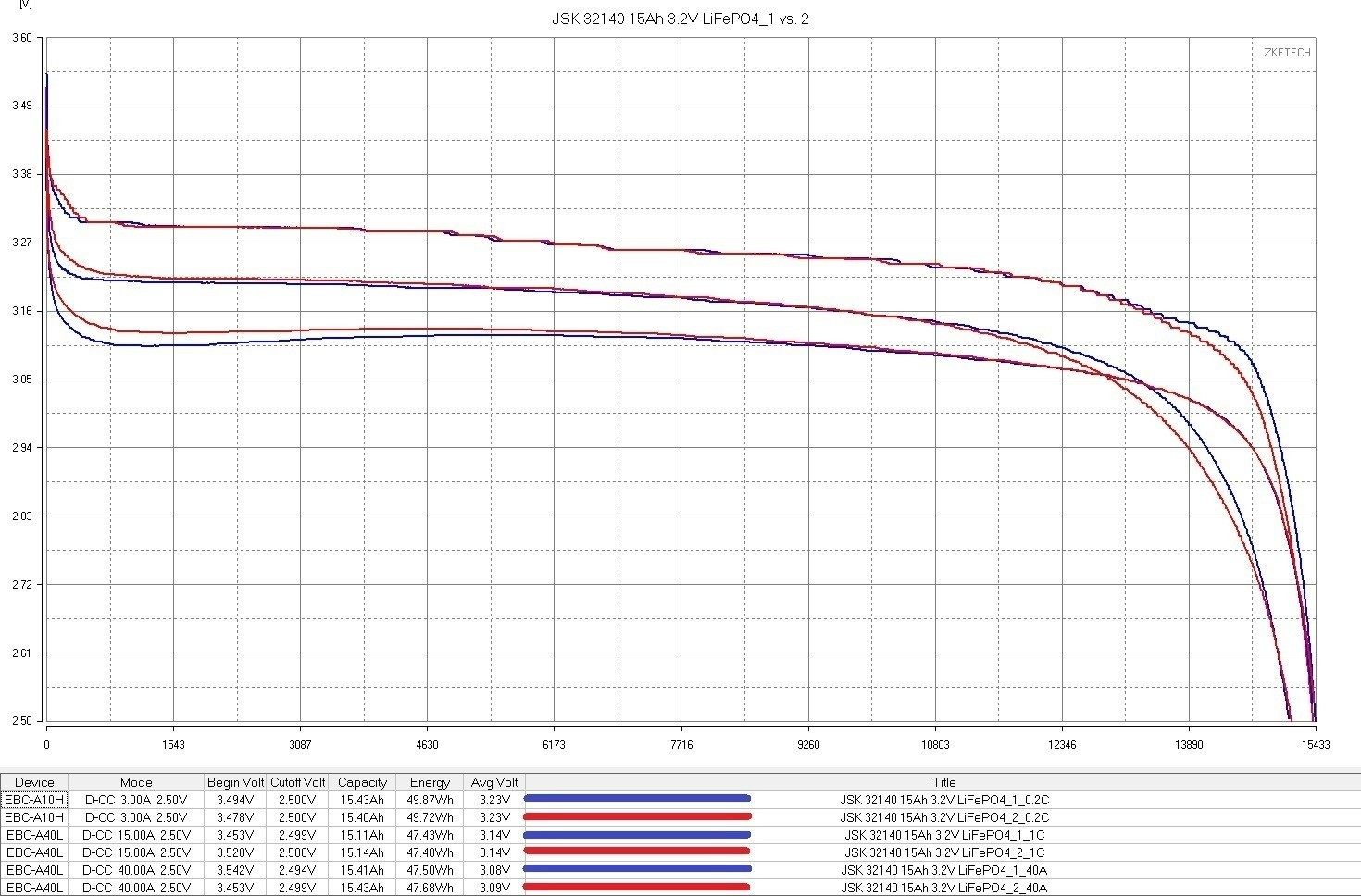
Checking how closely the cells match at 0.2C, 1C, and 40 A. In my opinion, these results are perfect.
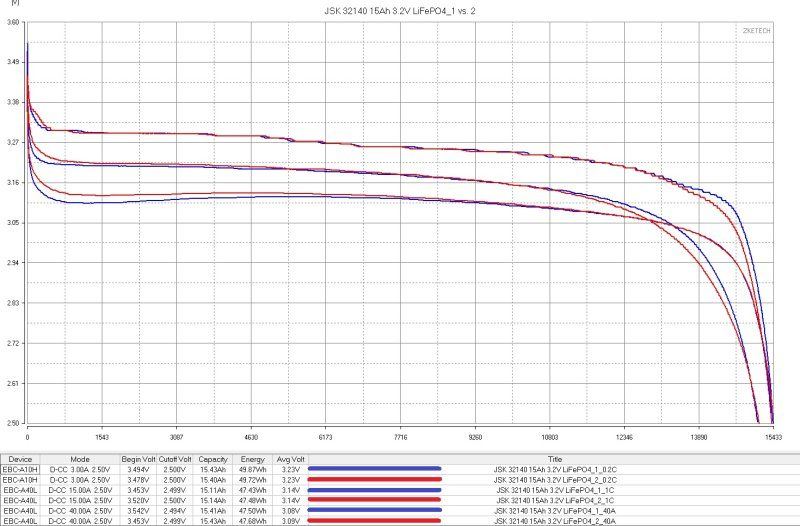
Remaining capacity after discharging at 40 A. The batteries were left to rest, then discharged at 0.2C.
Both the result itself and how closely the cells match are pretty good.

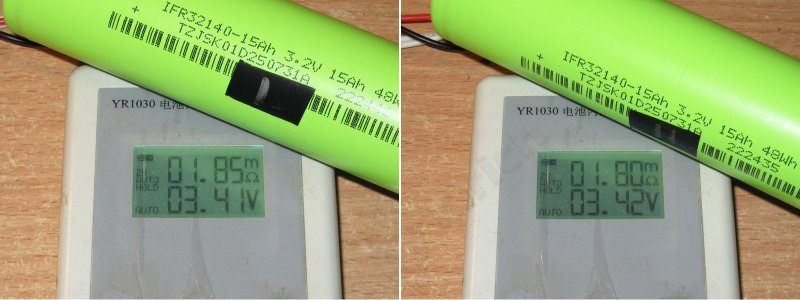
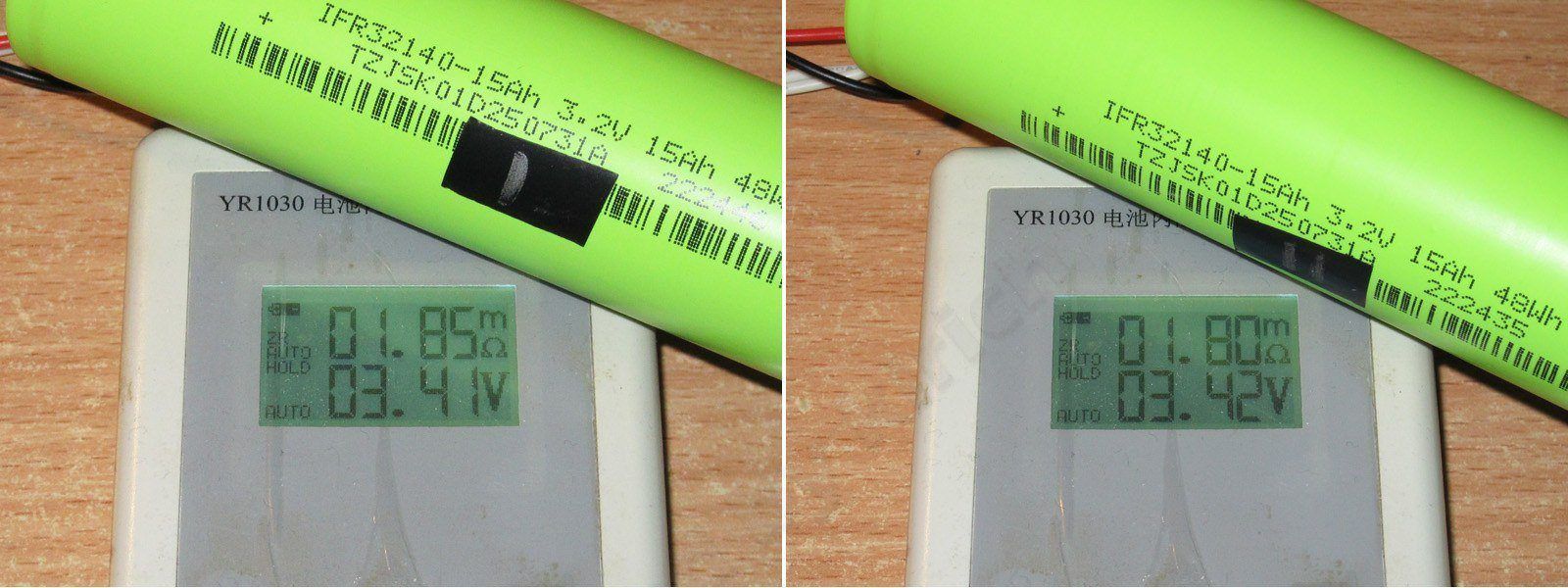
The cell impedance after testing and a full charge was about 1.8 mΩ; the claimed maximum is 3 mΩ.
The second one—I’d call it a “pair,” but no, there are clearly more than two here—is the QNAS 32140 15Ah - link
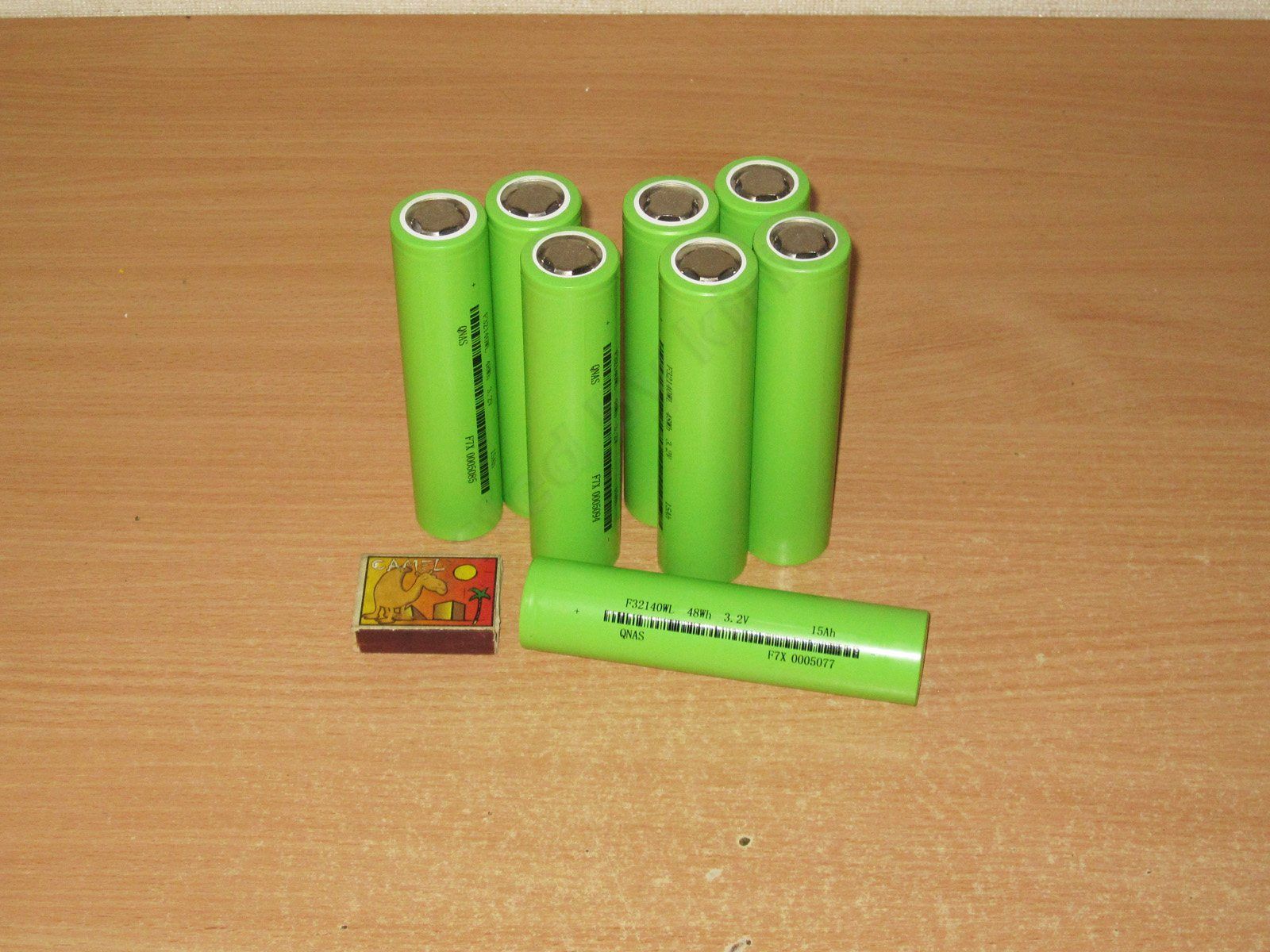
Yes, there are eight cells, and they were a gift from the person who sent me all these batteries. A huge thank-you to him; I’ll be able to bring another UPS back to life so I can properly test batteries :)
For those who don’t know, a test at 0.2C takes at least 5 hours, and the power must not be interrupted for even a second. If it is, you have to start the test over. I can reserve my “test bench”—a couple of testers and a computer—for an hour or so, but not for 5 hours. The other problem is that power outages in Kharkiv are usually unplanned emergencies, so nobody can tell you when the power will go out or for how long. It could be an hour, or it could be 9 hours.
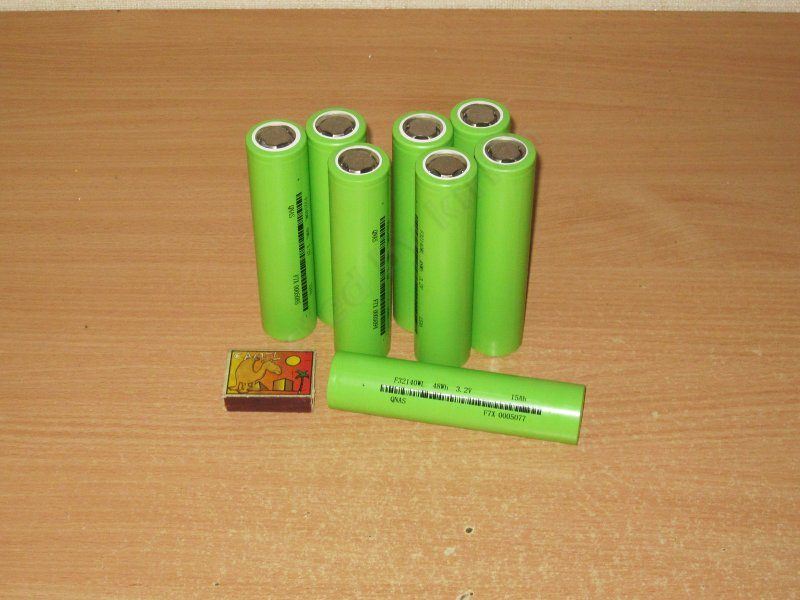
I’ll test two randomly selected samples. I’ll probably run a quick test on the rest later, but for now, this is what I’ve got.
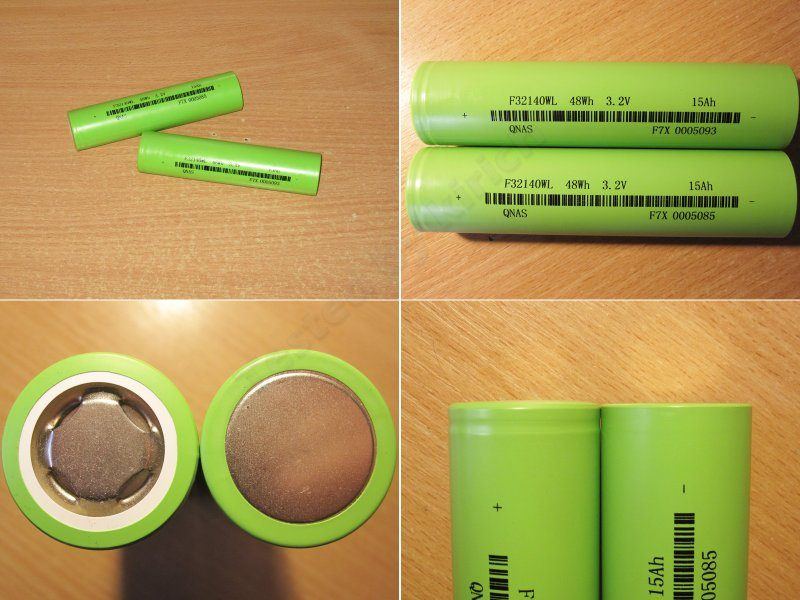
The barcode and markings are pretty typical; even the color is almost the same as the previous ones.
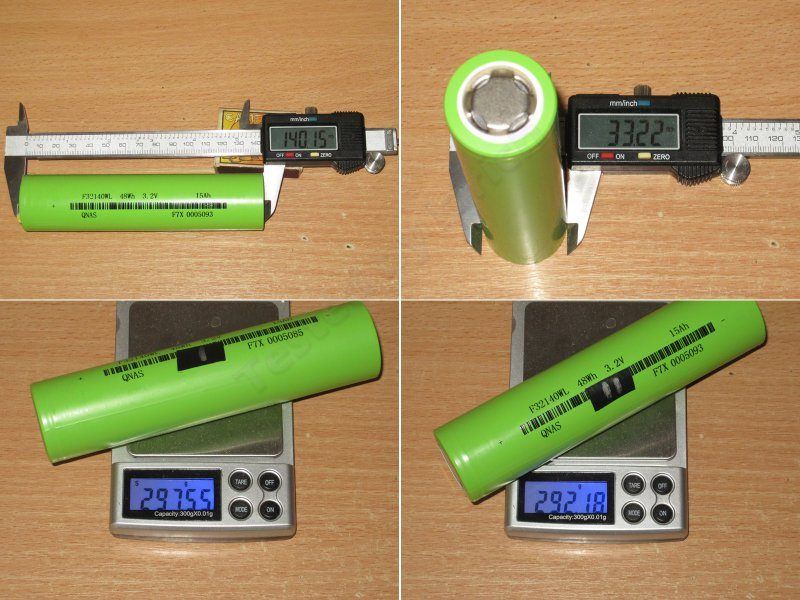
The dimensions and weight are also almost the same as the previous ones.
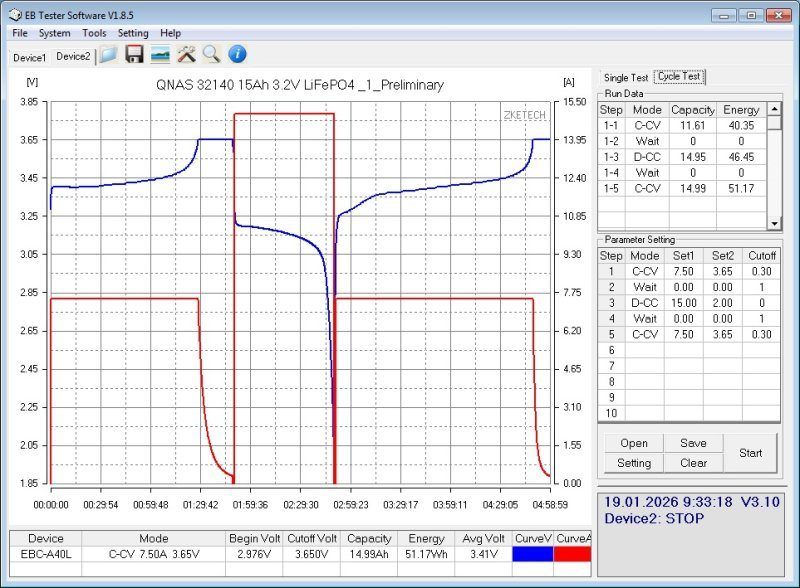
And here’s an example of an emergency outage. I managed to complete the “normalization” cycle on only one cell. The power went out about halfway through the second one—and worse, it was during the charging stage. In other words, the “normalization” cycle uses more energy because the cell has to be charged almost twice.
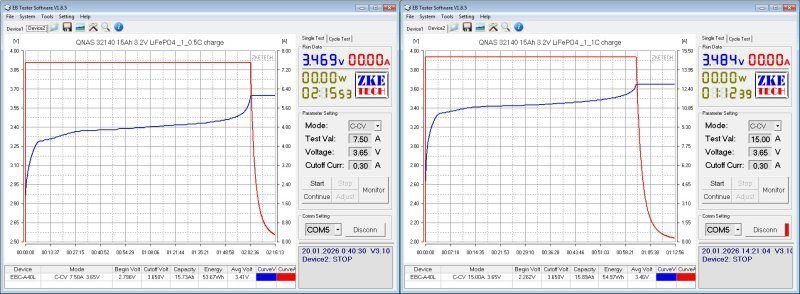
Interestingly, the charge and discharge characteristics differ noticeably. Here are a few things I noticed:
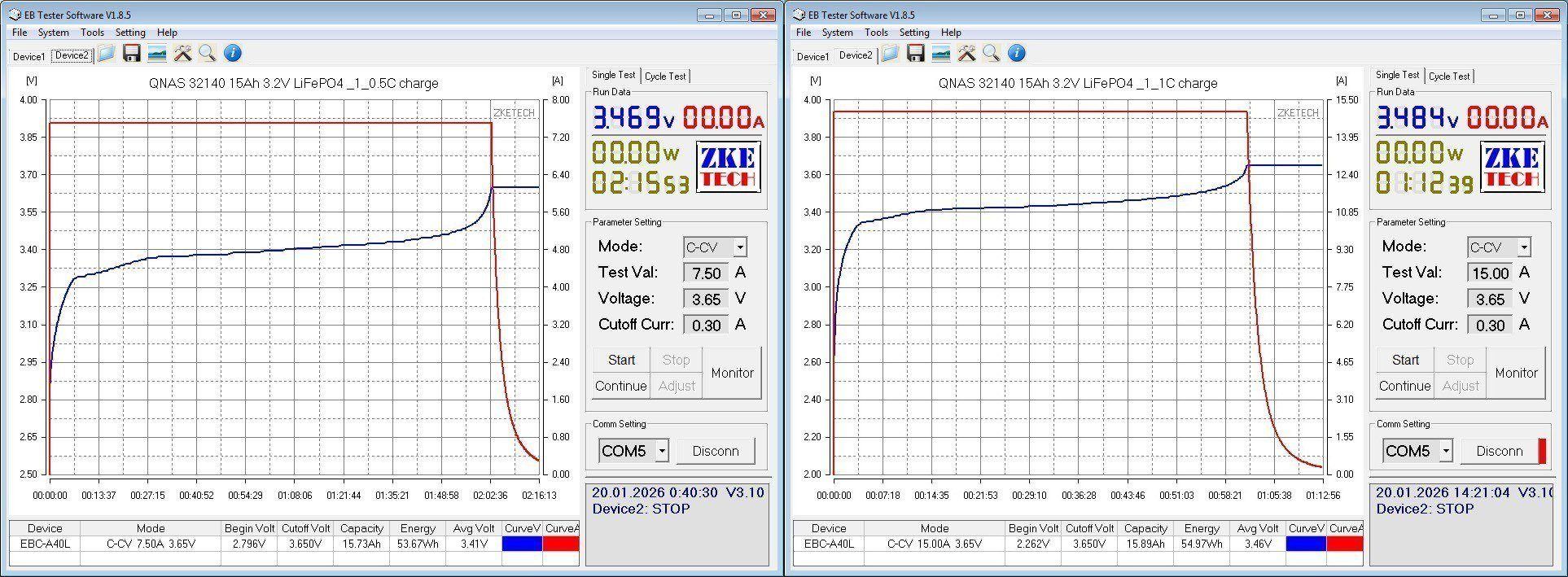
Charging at 0.5C, with a maximum of 1C, rather than 2C as with the previous ones.
The cutoff current is 300 mA (0.02C), not 750 mA.
Discharge down to 2 V, not 2.5 V.
So there’s a bit of “cheating” going on: first, we charge with a lower cutoff current, putting in a little more charge; then, during discharge, we run the cells a little longer. The result is slightly more capacity. The charging difference doesn’t really matter, but the discharge cutoff is trickier: not all devices can discharge down to 2 V per cell; usually they stop at 2.5 V.

Charging takes longer than with the previous ones, but that’s because the cutoff here is 300 mA, which makes the CV phase much longer.
Otherwise, I have no complaints. And if you use them in a UPS, it doesn’t matter at all—they operate in standby mode at a lower voltage.
Discharge at 0.2C, 0.5C, 1C, 2C, and 40 A, i.e. The same modes as for the previous cells, differing only in the discharge cutoff voltage.
At a glance, the capacity is slightly higher than the previous ones, though again this is more likely because they were discharged to 2.0 V rather than 2.5 V.

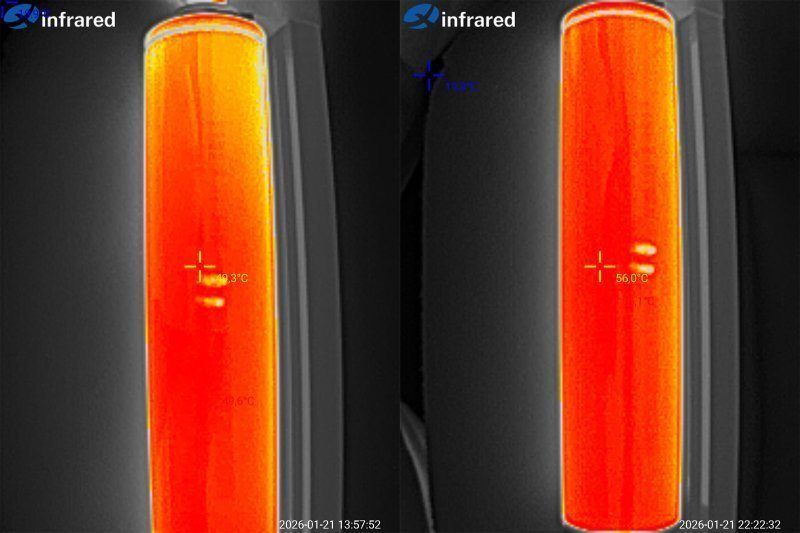
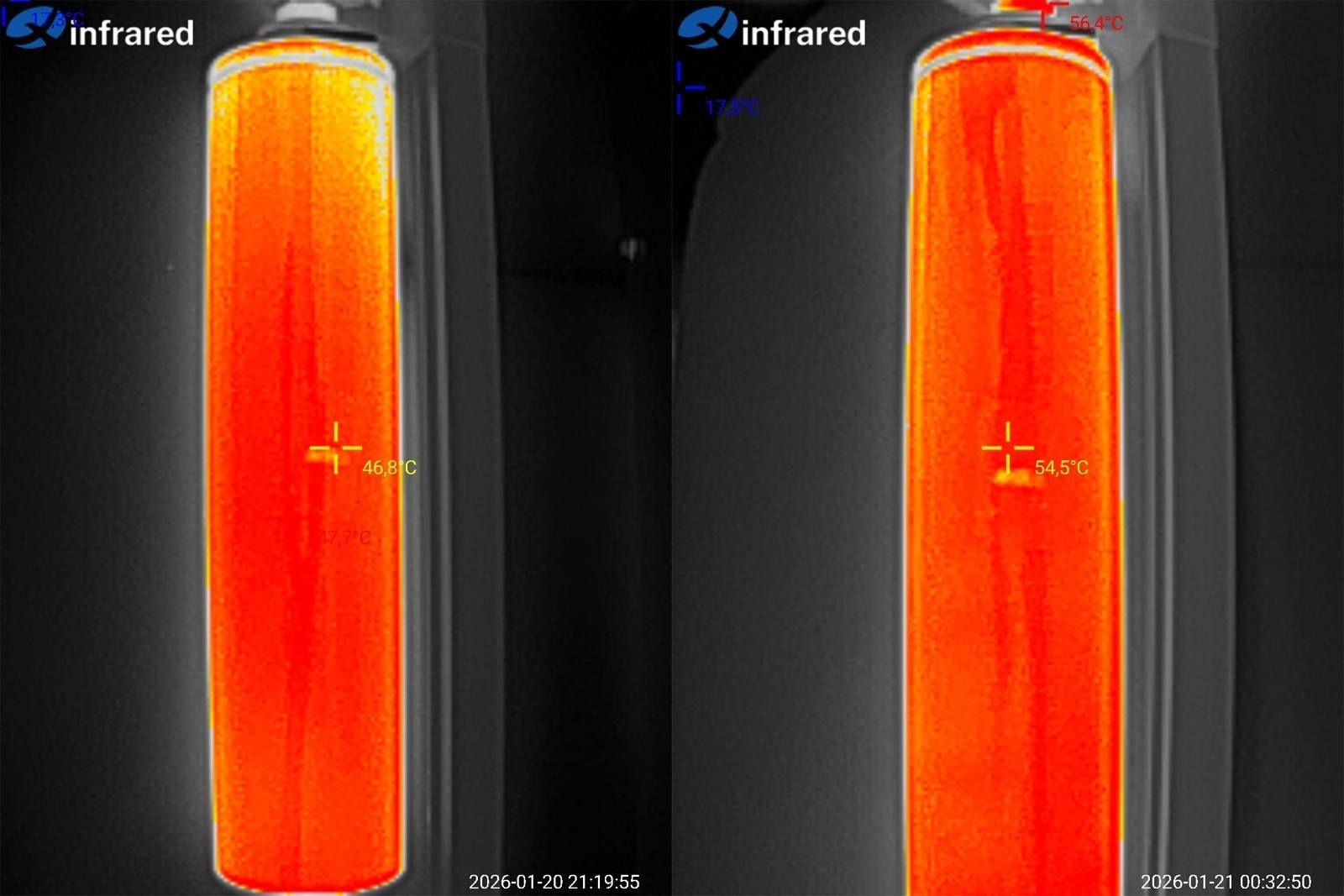
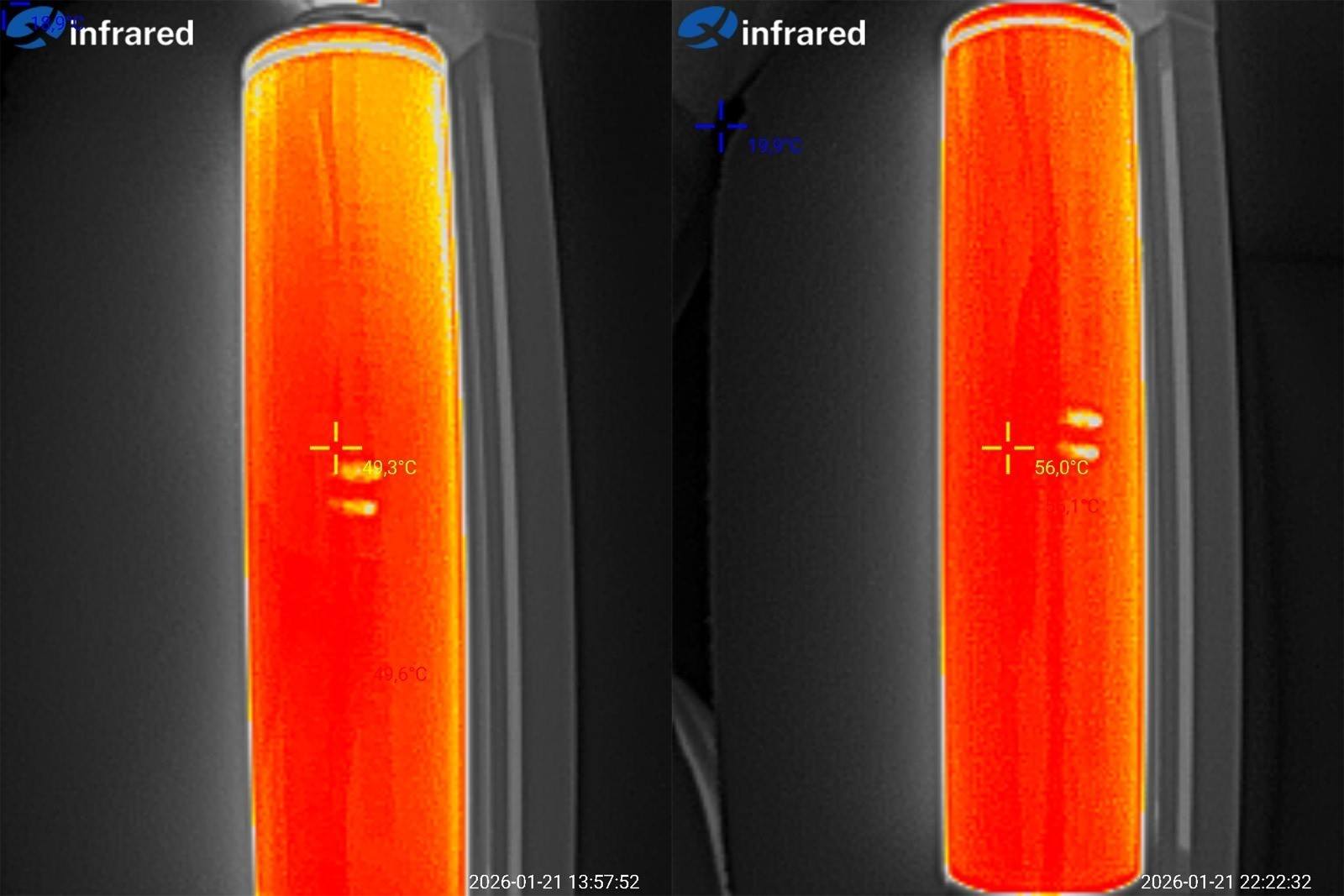
At 2C and 40 A, the temperature is practically the same as for the previous cells, with no issues.
The second sample

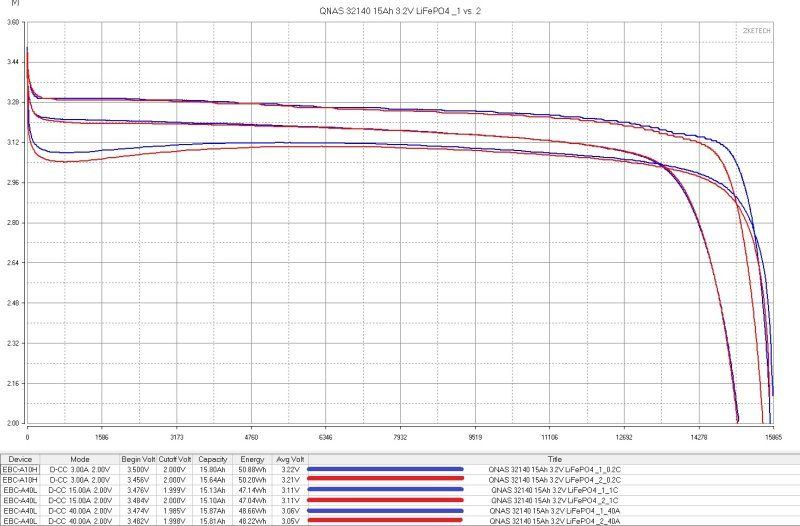
The results at 0.2C, 1C, and 40 A are consistent too, which is excellent in my opinion.
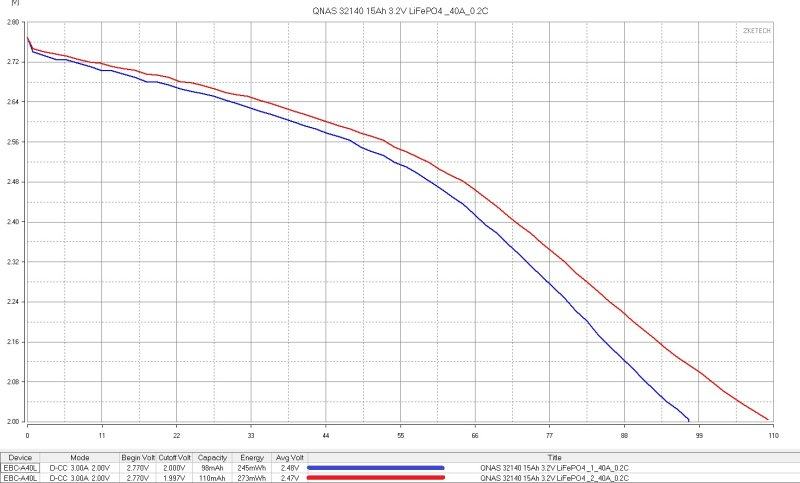
As for residual capacity after discharging at 40 A, the results are even better than for the previous cells. It’s clear that at 40 A the cells delivered all they could.
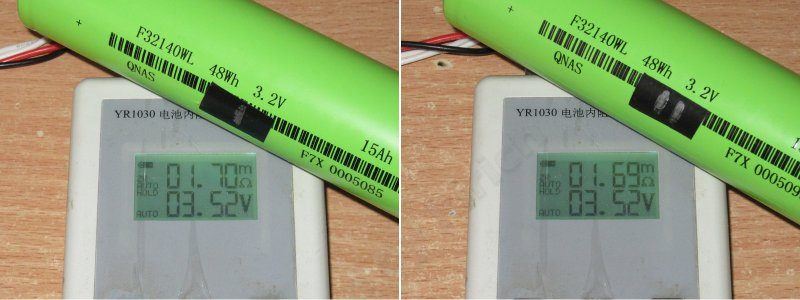
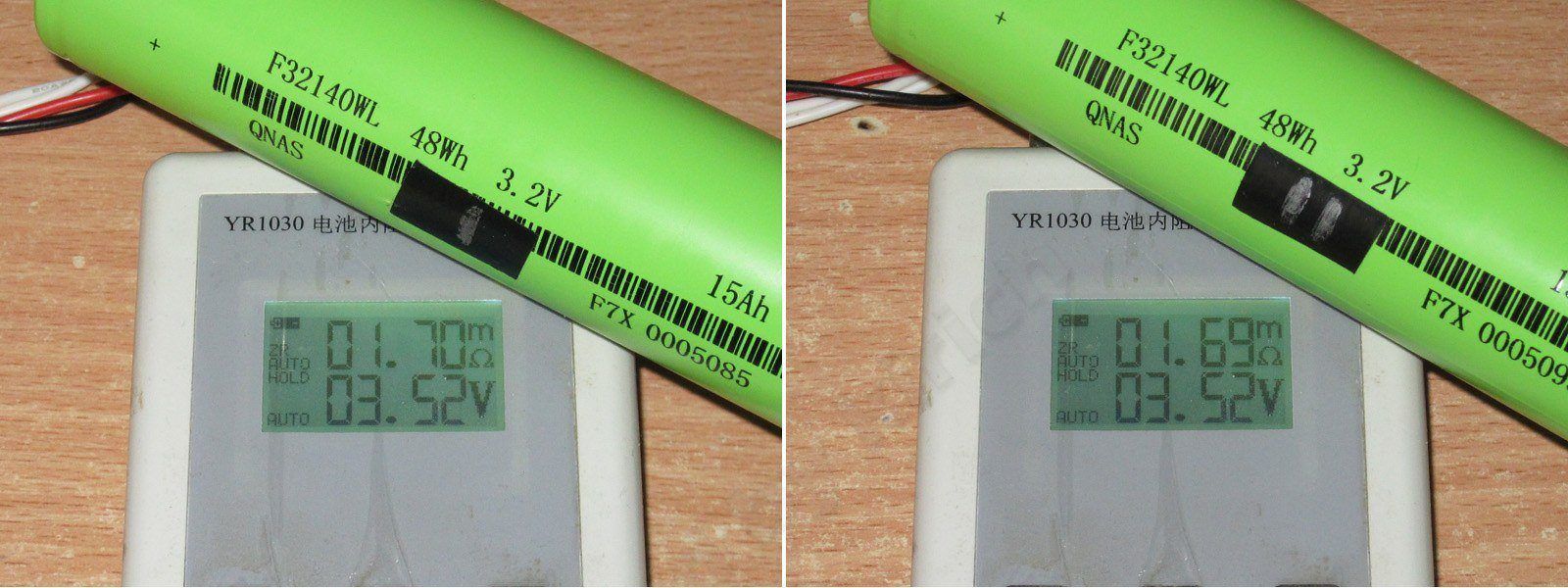
Impedance after all the tests and a full charge: the previous cells measured 1.8, these measured 1.7. To me, that’s basically the same.
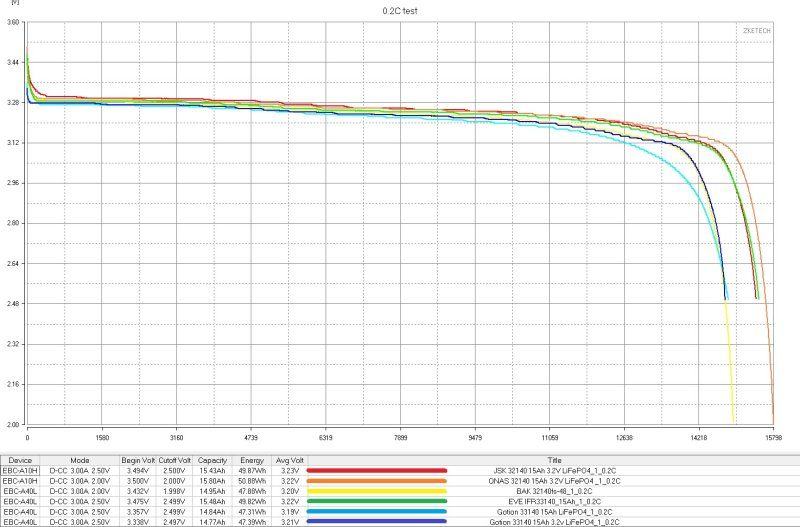
And of course, the most interesting part: comparing them with other batteries of the same size and rated capacity. I hadn’t even realized I’d ended up with so many samples to compare.
1. JSK 32140 15Ah - current review
2. QNAS 32140 15Ah - current review
3. BAK 32140FS-48 - review
4. EVE IFR33140 15Ah - review
5. Gotion 33140 - review
6. Gotion 33140 from another source - review
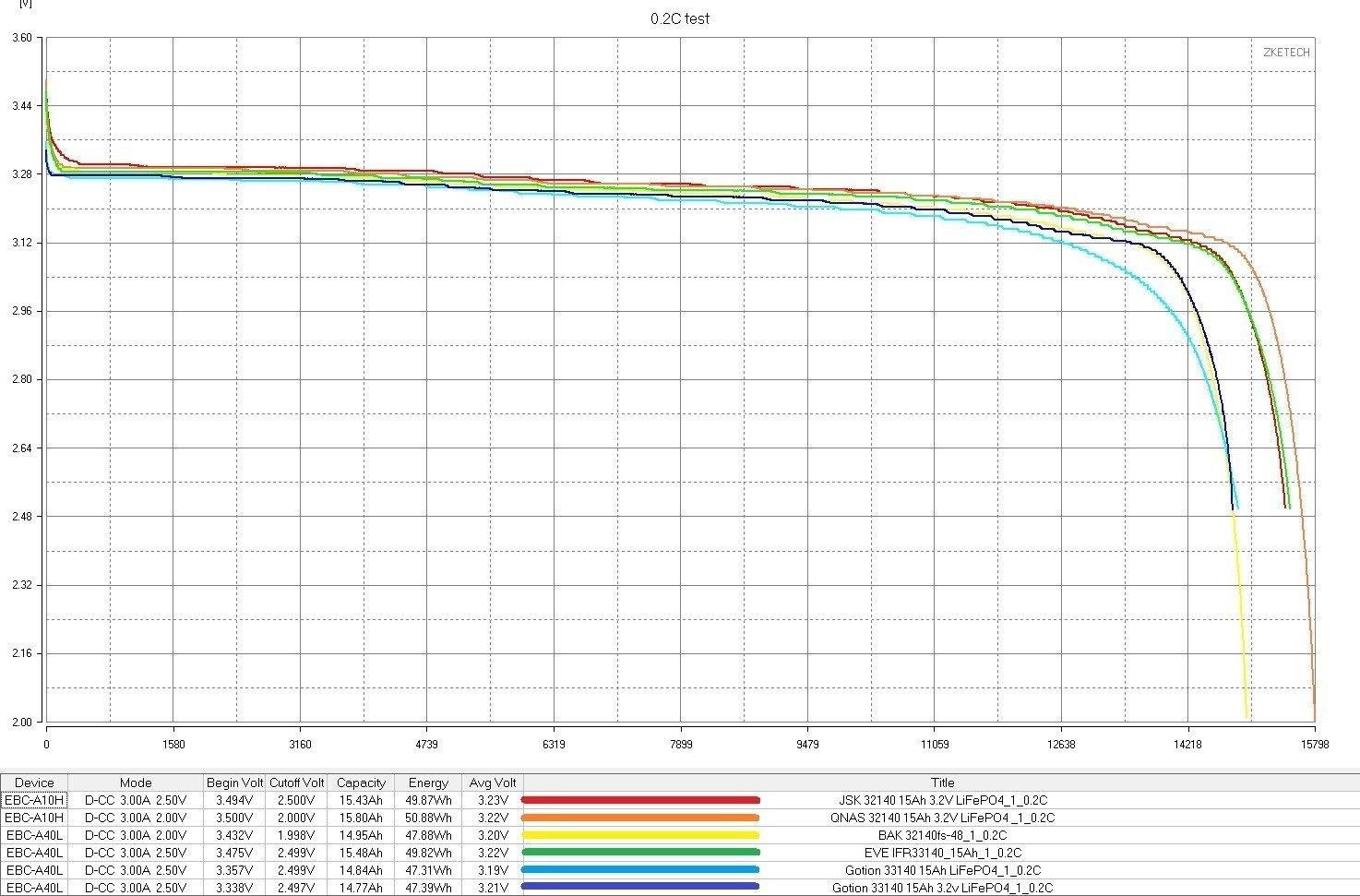
First, at 0.2C. Here, QNAS 32140 15Ah comes out on top, and not just because it was discharged to 2 V: looking at the graph, you can see that even down to 2.5 V it still performs better. JSK 32140 15Ah and EVE IFR33140 15Ah are neck and neck after that.
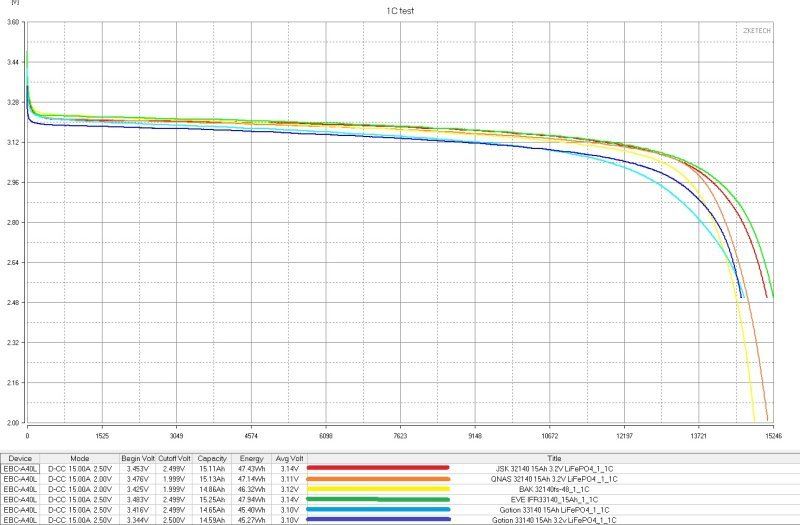
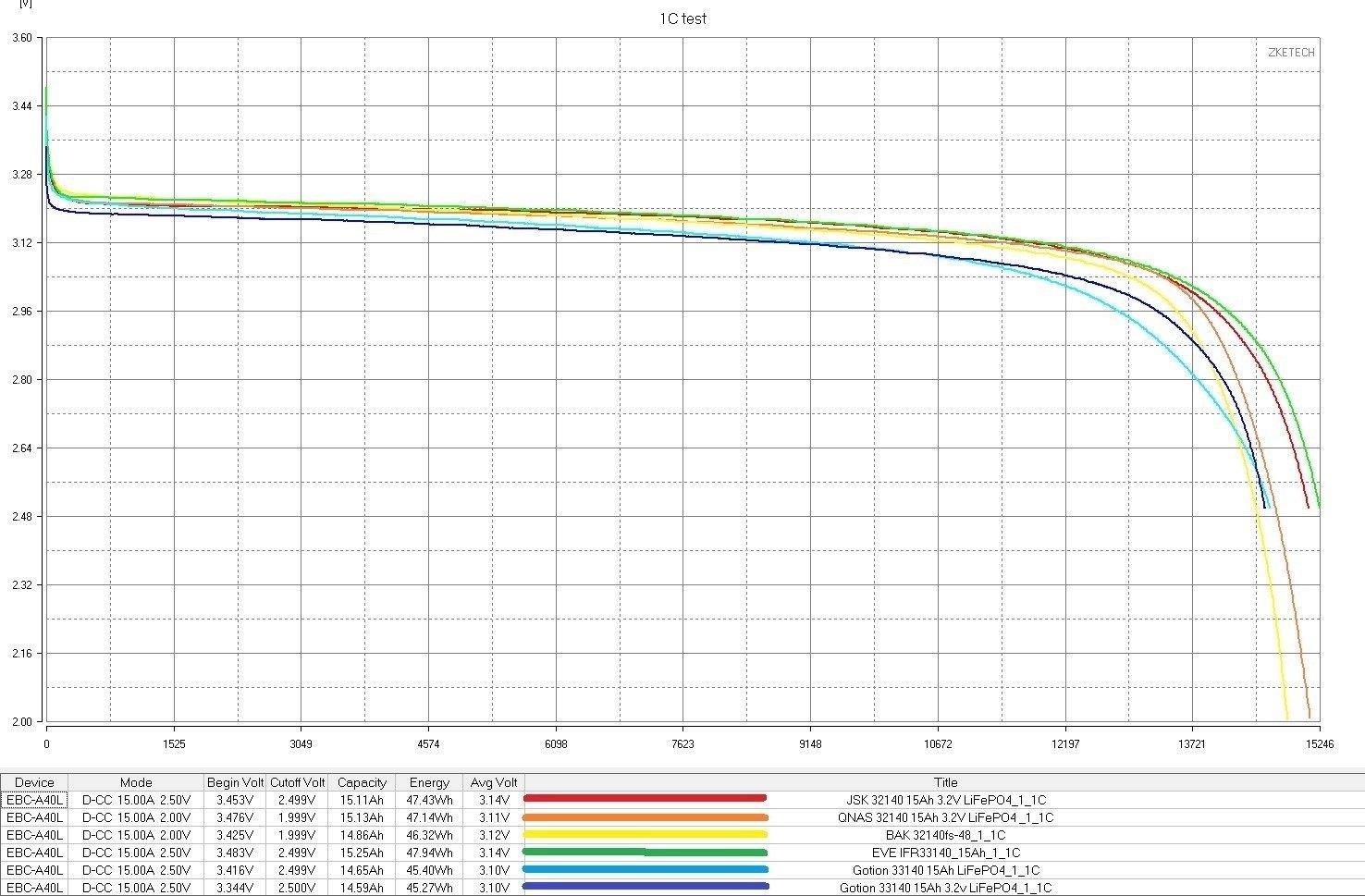
A 1C discharge current is the most realistic for this type of cell. In other words, 0.2C is for very light loads, while currents above 1C are more often used for short periods.
QNAS 32140 15Ah fell noticeably behind, although it still came in third. JSK 32140 15Ah and EVE IFR33140 15Ah took first and second place, respectively.
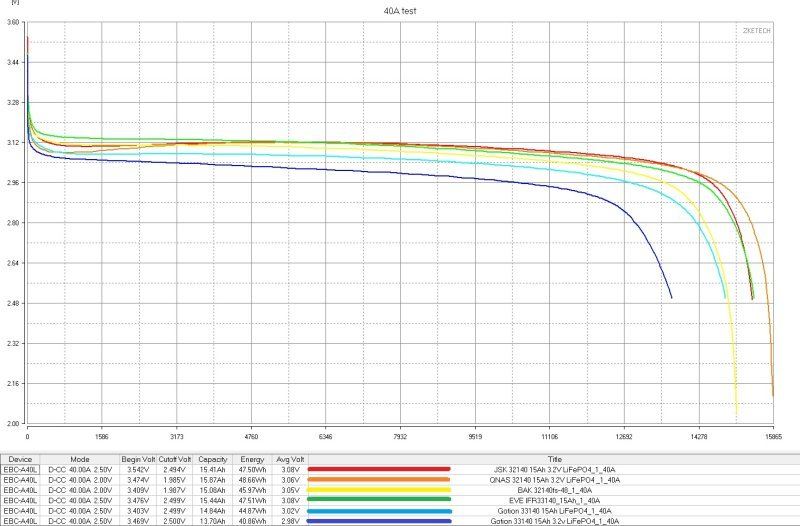
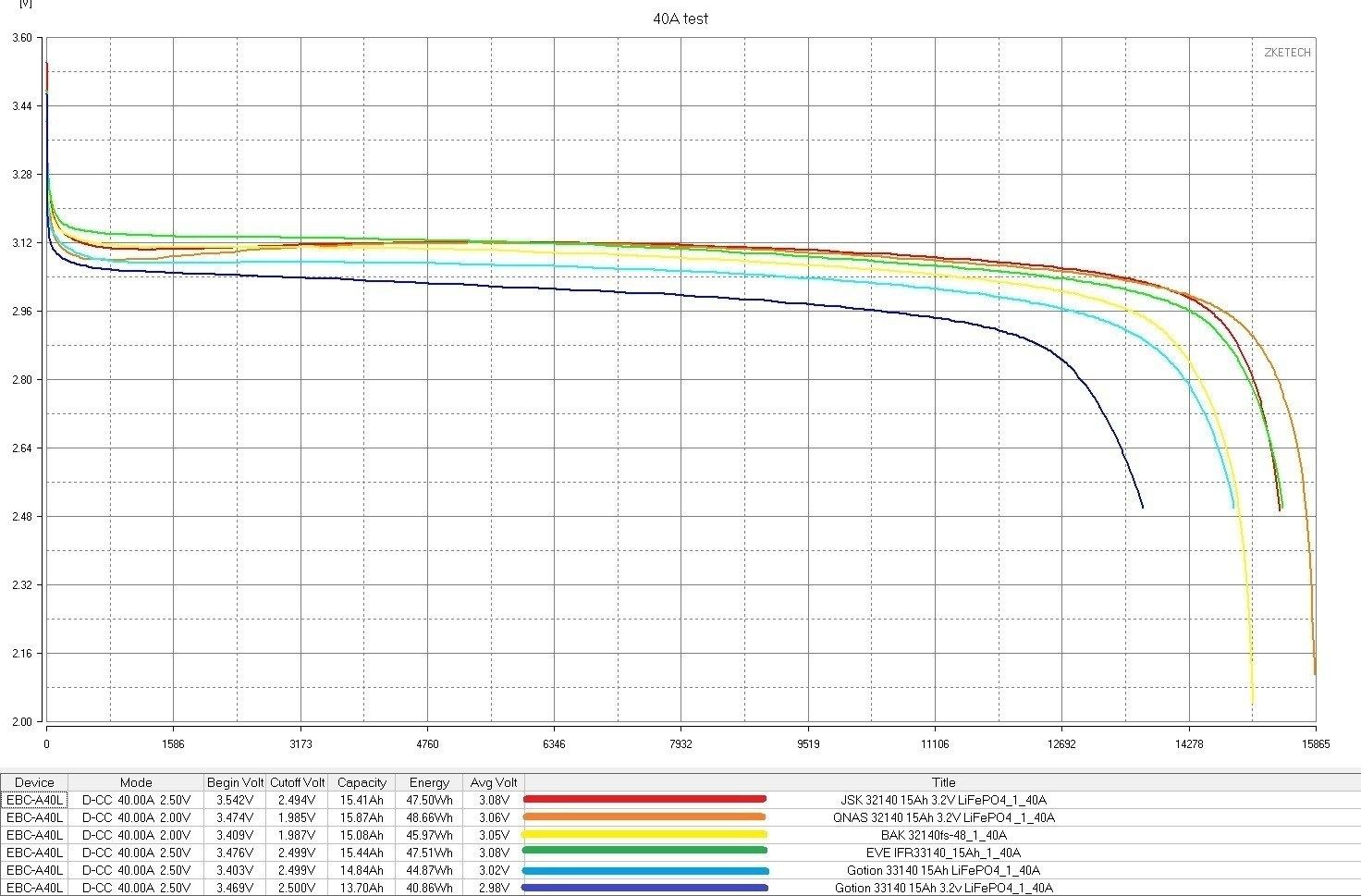
And now 40 A, which is close to the maximum for this type of cell.
The ranking is exactly the same as at 0.2C: QNAS 32140 15Ah comes first, followed by JSK 32140 15Ah and EVE IFR33140 in second and third place.
I should point out how much the Gotion 33140 I got from someone else dropped off. As I recall, they ordered trial batches of various cells in China for energy storage systems. It’s strange that the results differ so much from the previous test of the same batteries.
The third pair, QNAS 40160 25Ah 3.2V LFP - link
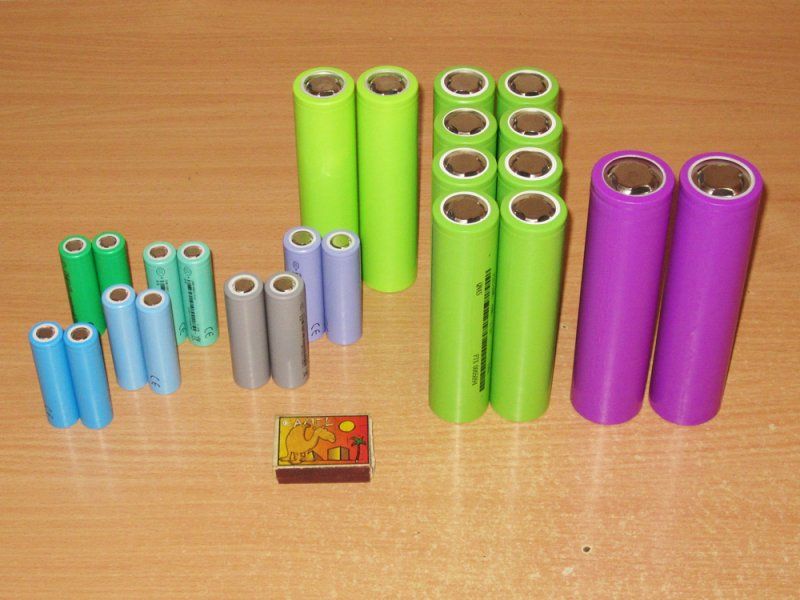
These are more serious cells, with almost twice the capacity. As you’d expect, they’re also larger, and the price difference is roughly proportional to the previous pair. So the main advantage is probably easier assembly: putting together 8 large cells is a little simpler than 16 small ones.
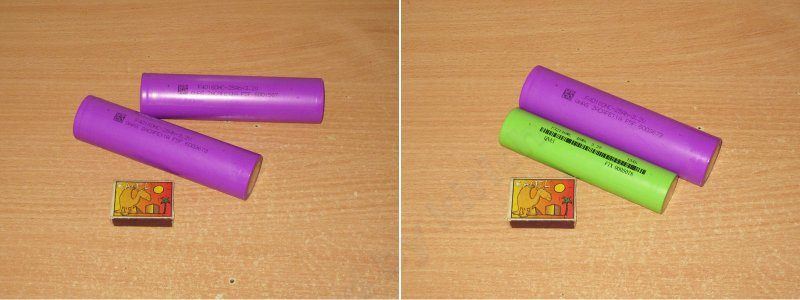
And yes, these are from the same company, QNAS, as the previous cells; they’re just bigger and a different color :)

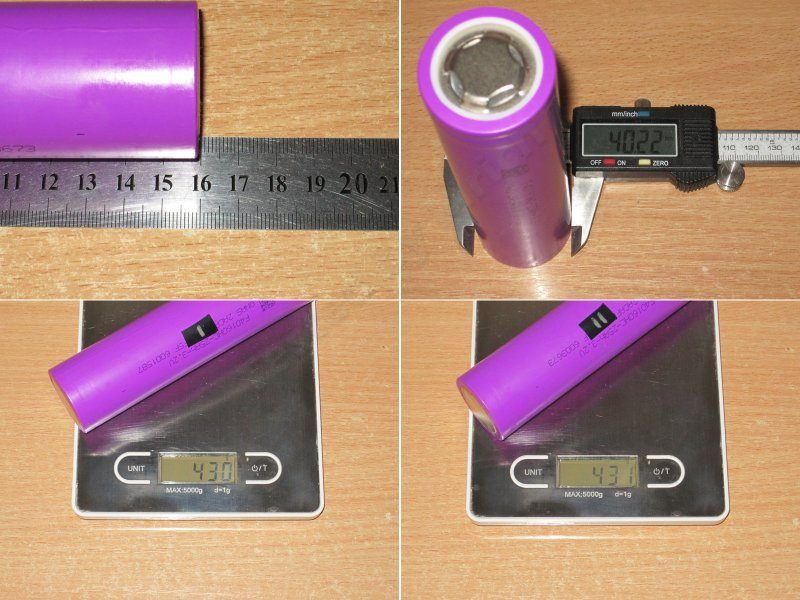
I didn’t have a caliper or a small scale for these. By the way, they weigh about one and a half times as much, while their capacity is almost twice as high, so their weight-to-capacity ratio is a little better.
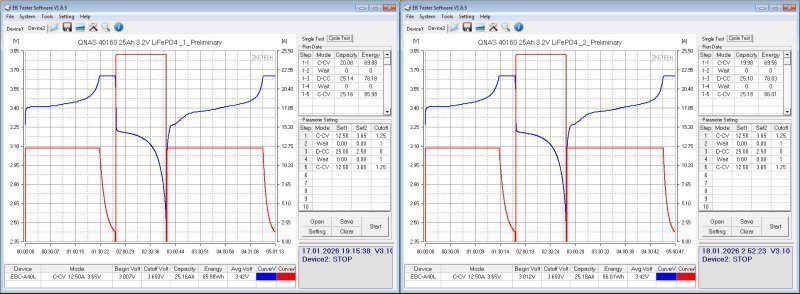
The “normalization” cycle went smoothly this time, and nothing got in the way or slipped my mind :)
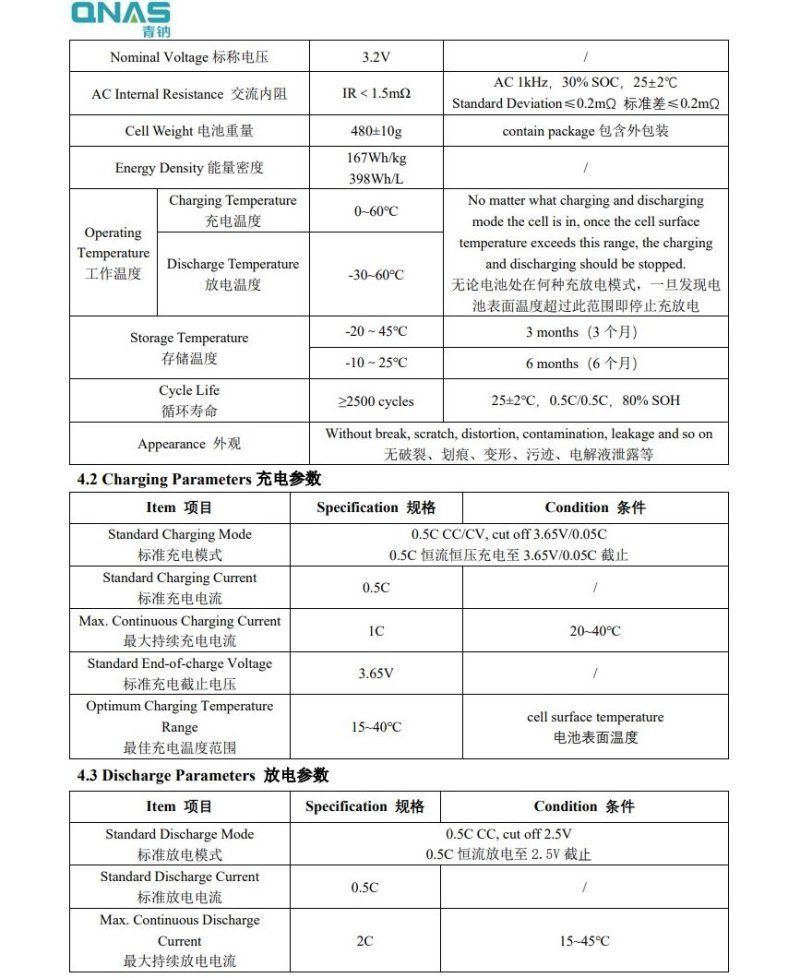
According to the datasheet, the maximum discharge current is 2C when discharging to 2.5 V, so there’s no cheating here. By the way, the modest 2C current explains their better weight-to-capacity ratio: they simply have higher capacity and are therefore more “delicate.”
The standard charging current is 0.5C; fast charging is at 1C, down to the typical 0.05C cutoff, rather than 0.02C as for the previous cells, even though they’re from the same company.
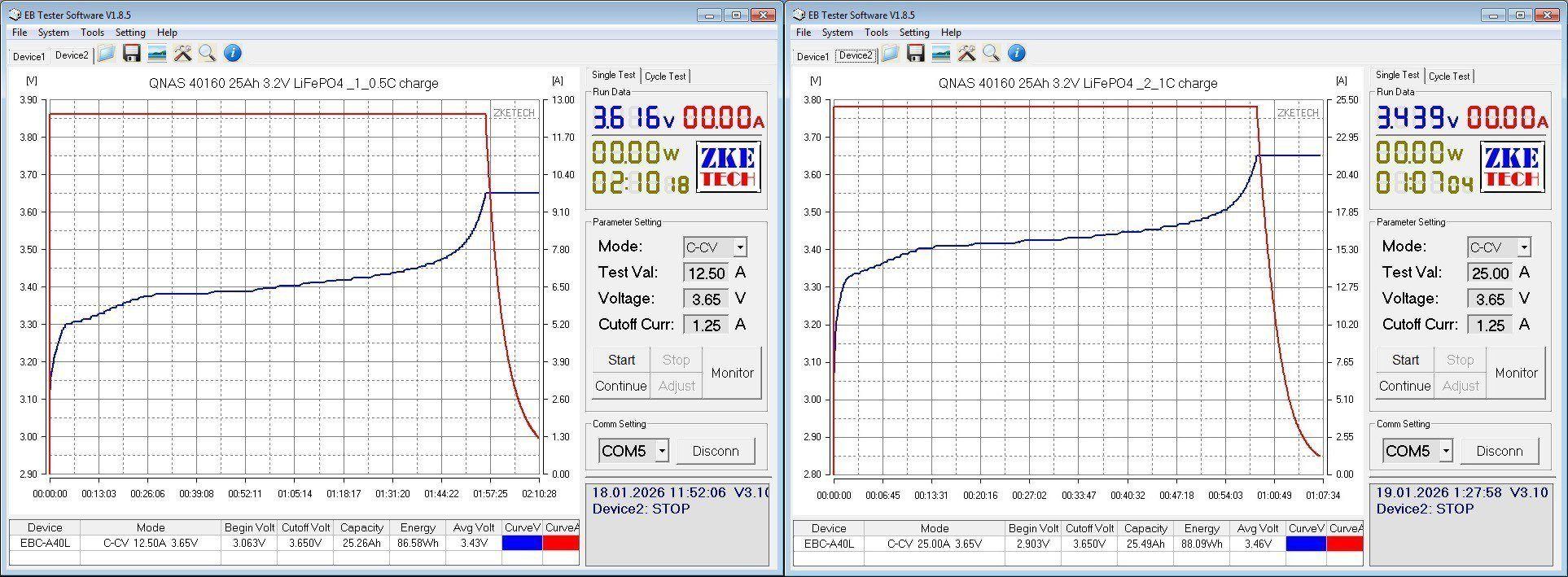
Charging at 0.5C took 2 hours 10 minutes, a very good result. At 1C, charging took relatively little longer: 1 hour 7 minutes, so the cell charged almost twice as fast, which is excellent.
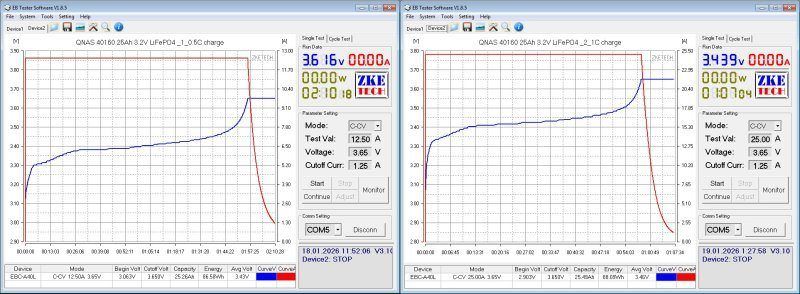
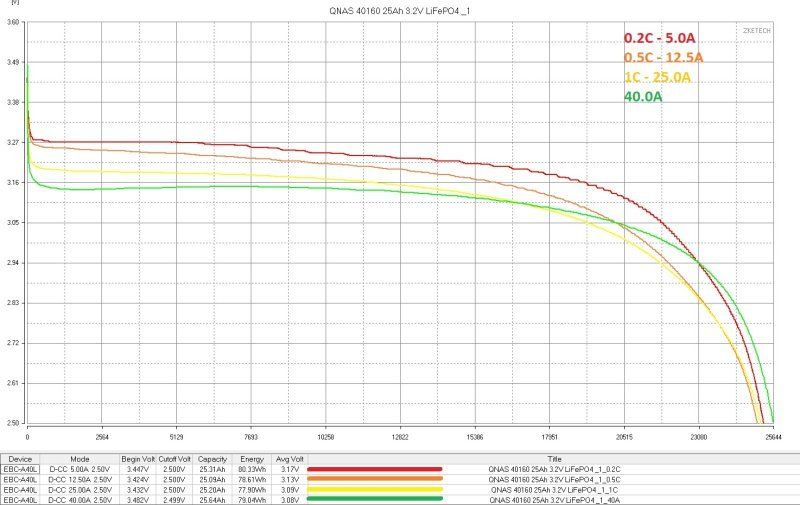
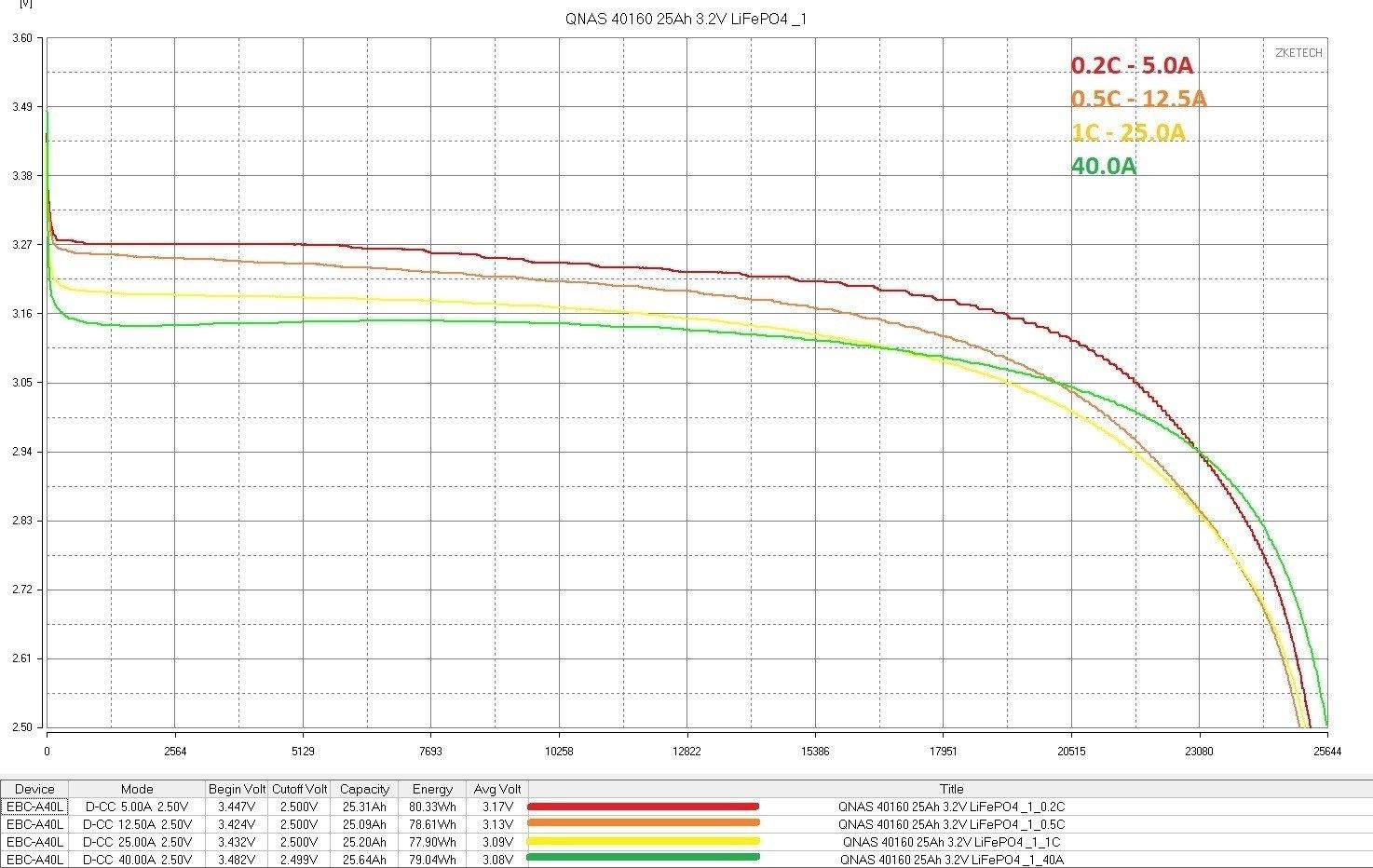
I discharged it at 0.2C, 0.5C, 1C, and 40 A. Yes, the stated maximum is 50 A, so 40 A is a bit low; in practice, I’d say it’s closer to 1.5C than 2C, but I think it should still give us useful information.
In every test mode, I easily got the stated 25 Ah, even though the room temperature was slightly below the recommended 23–27 degrees.
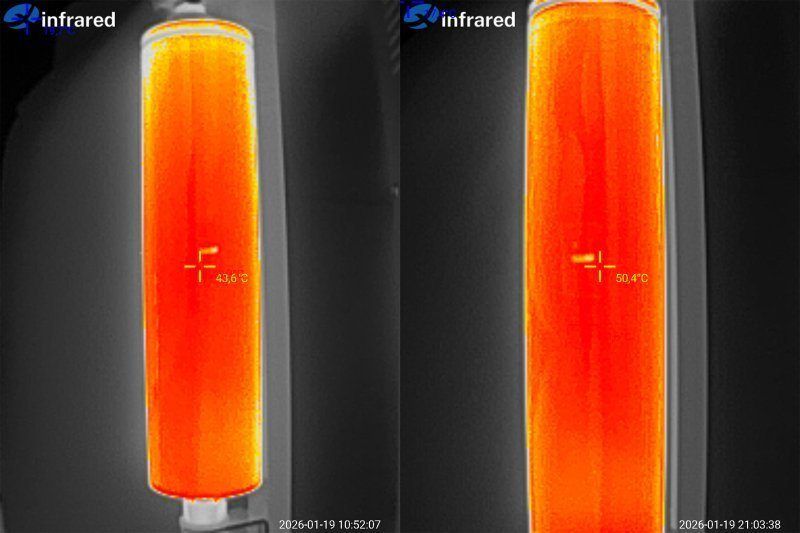
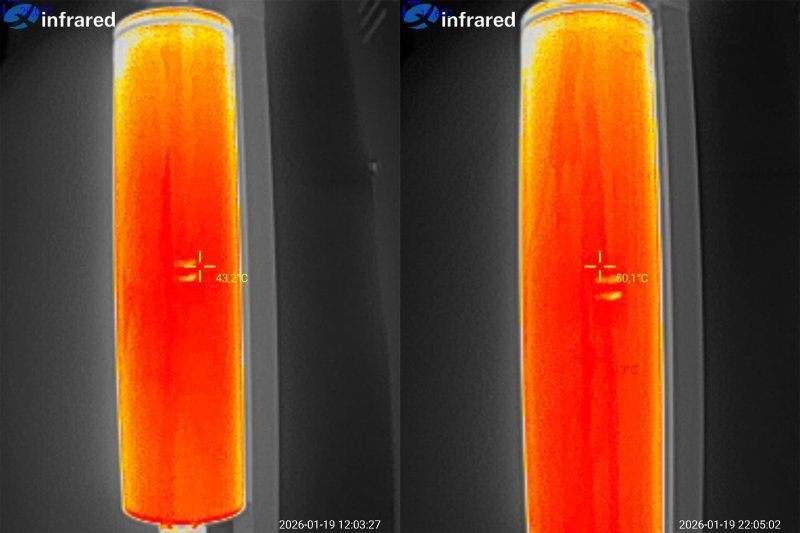
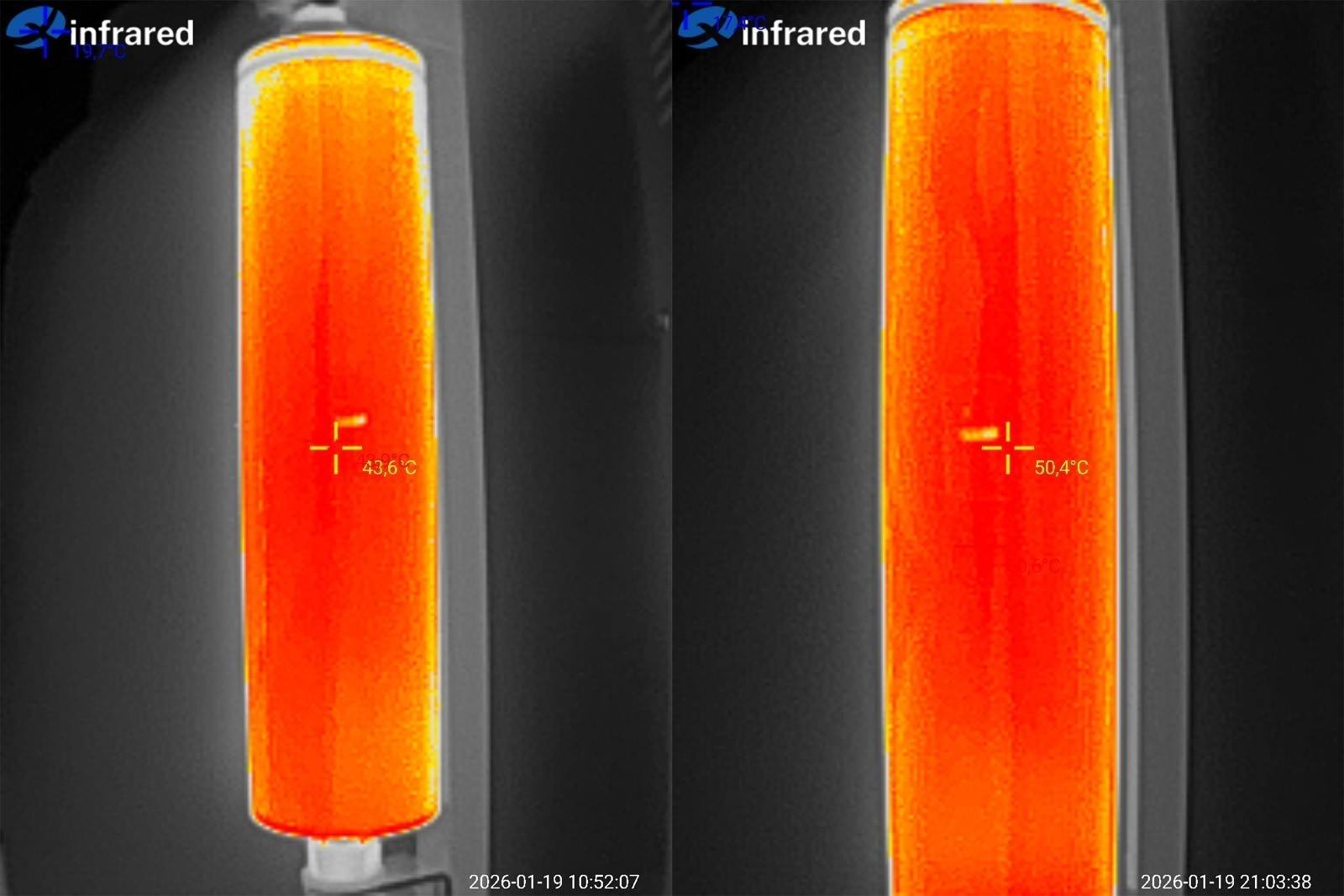
Temperature at 25 A and 40 A. Judging by the results, at the maximum current of 50 A it would be closer to 55–60 degrees, which is perfectly normal for high-capacity batteries.
The second sample is very, very similar.
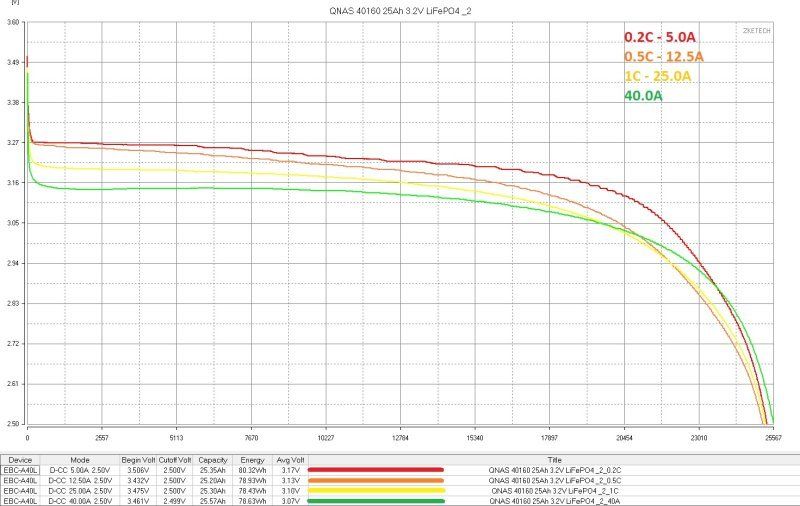
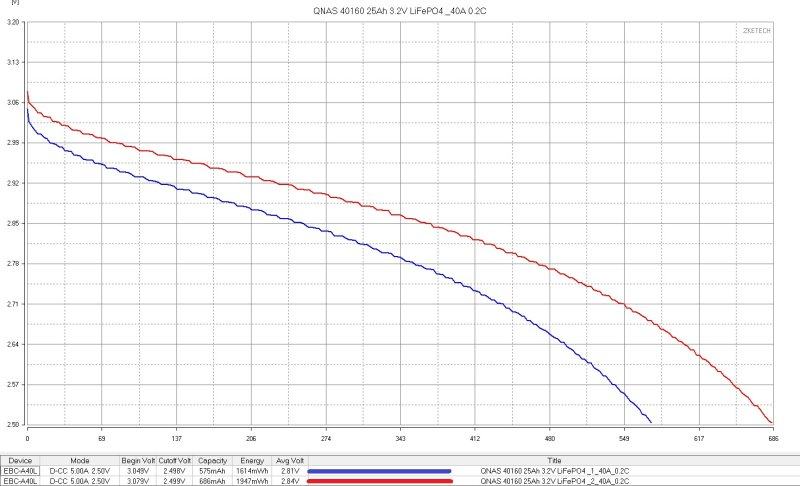
The results match very well, in my opinion—essentially within the measurement error.

The residual capacity after discharging at 0.2C following a 40 A discharge is somewhat worse, both in absolute and relative terms. I think that’s because these are high-capacity cells.
I managed to get about another 600 mAh out of them, which is around 2.5%.
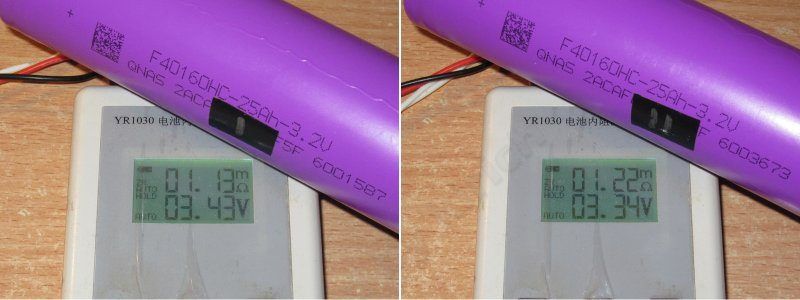
After all the tests and a full charge, the impedance is about one and a half times lower than that of the previous 32140-format cells. By this measure, they’re essentially proportional to their capacity and fully match the datasheet value.
Conclusions.
JSK 32140 15Ah cells are pretty good. The comparison graph shows they’re very similar to the popular EVE IFR33140—neck and neck. I liked them.
QNAS 32140 15Ah is an equally interesting option, though a bit of a “cheat.” It’s curious that they performed better at 0.2C and 40 A (even without taking the “cheating” into account), but lost to the previous cells at 1C. Still, I think they’re good cells: they confidently made the top three alongside EVE IFR33140 and JSK 32140 15Ah.
QNAS 40160 25Ah are simply good cells in their own right: honest capacity, good thermal performance, and they take a charge very well. Overall, I liked them.
In the end, I couldn’t pick a clear winner among these three batteries. To me, they’re more or less on a par, and all equally good. The fact that the two 15 Ah options confidently compete with—and even outperform—a well-known EVE model says it all.
That’s all for now. I hope this information was useful, and once again, a huge thank-you to Alexander both for sending the samples and for the eight QNAS 32140 cells. I’m sure they’ll come in handy.
As a reminder, to keep up with new posts on the blog, I recommend following me on Instagram. I’ll post notifications about every new topic there, and might also write about something interesting from time to time: link to my account
You can also subscribe to updates and new articles on the Telegram channel - https://t.me/KirichBlog
A reminder: the promo code kirich_blog gives you 5% off all products at the miliom.com.ua online store. The discount is valid until February 28, 2026, and applies only to orders placed by individuals through the website using the promo code.
I’m often asked which is better: “regular” lithium batteries or LiFePO4. There’s no such thing as, say, X being better than Y; each has its own applications.
Broadly speaking, there are currently three popular and relevant groups of batteries:
“Regular” lithium batteries are for applications that need either very high current or high capacity, all in a compact, lightweight package. That means mobile devices, power banks, or drones, for example.
LiFePO4 cells have a poorer capacity-to-volume and capacity-to-weight ratio, so they’re not a great fit for mobile devices. But they’re very well suited to stationary applications. The operating voltage range of a 4S pack matches that of a 6S lead-acid battery, and they can also operate in buffer mode (at the same voltage as a lead-acid battery), making them suitable for replacing batteries in UPS units.
LTO cells are clear losers when it comes to capacity for the price, size and weight. But they’re top of the line for cycle life. If you have plenty of money and want a reliable, safe battery at home, they’re the way to go.
There are also sodium-ion batteries. They’re continuing to expand and improve, but compared with the types listed above, they’re still just a drop in the ocean.
So, today I’ll be looking at three LiFePO4 cell options: one 15 Ah model from Taizhou Jiashikai New Energy Co., Ltd., or simply TZJSK, and two from QNAS, with capacities of 15 and 25 Ah.
I’ll start, of course, with the smallest capacity: the JSK 32140 15Ah - link
The size is 32140, which, like 33140, you’ve already seen in my other reviews. I don’t have much more to say about it for now.
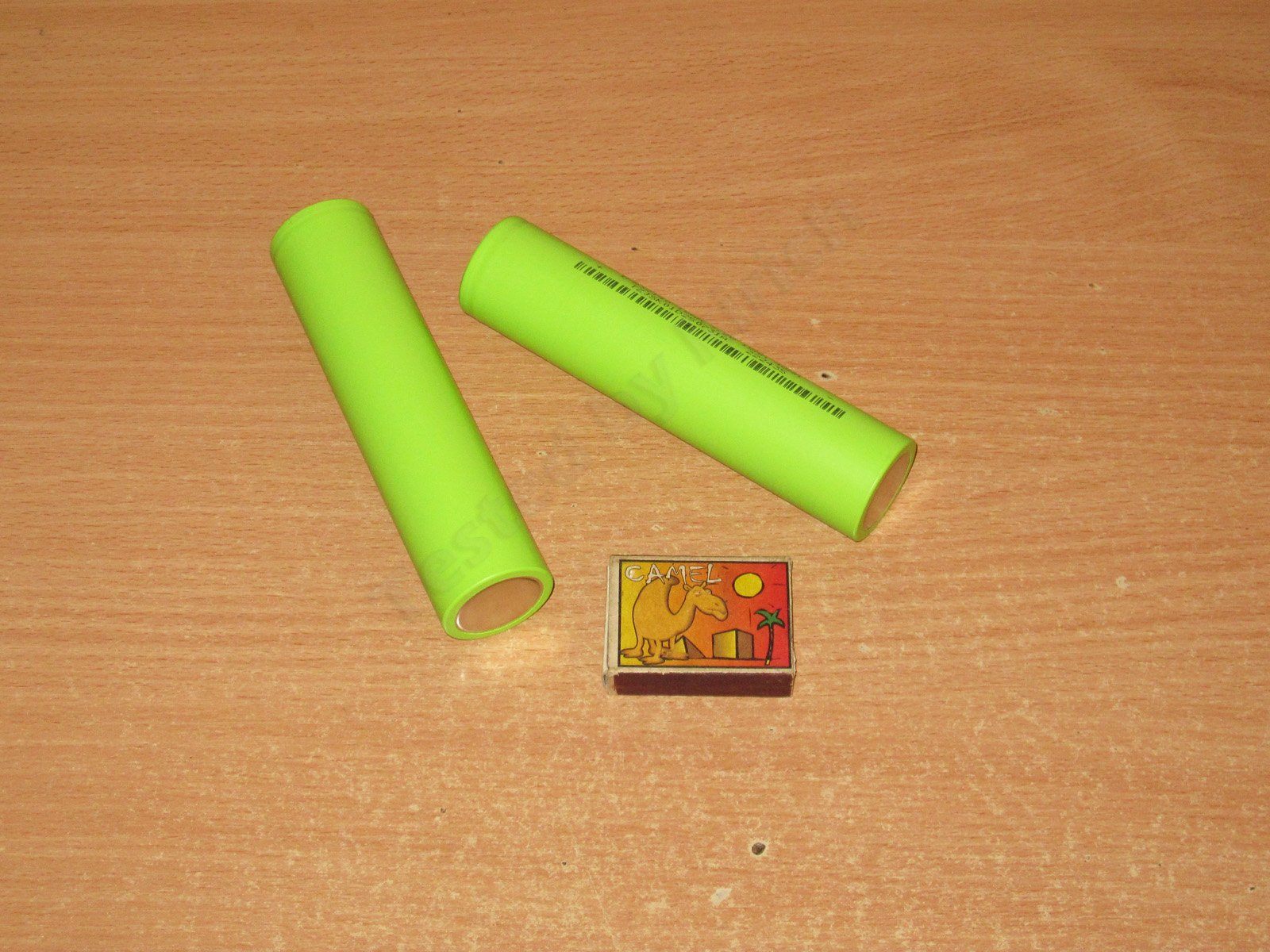
The label lists the voltage, capacity in Ah and energy in Wh, which is very convenient. Each cell also has its own unique barcode, making it easy to check whether it’s genuine.

As for size and weight, nothing new here. Though I do wonder why the market has both 32140 and 33140 cells, formats that differ by just 1 mm. I ran into something similar many years ago, when I found out that besides 18650 cells, there are also 17670 cells, and even 17650 cells. They look similar, but if you have a 17670 or 17650, you either won’t be able to squeeze an 18680 into its place, or you’ll be swearing a lot....
The batteries were put through a “Normalization” cycle. Unfortunately, I made a mistake when taking the screenshot of the first cell. But even at this stage, you can see that the results are very similar, at least in terms of the test duration.
The rated capacity is 15 Ah, with a minimum of 14 Ah when discharged to 2.5 V. The maximum discharge current is 3C. The nominal charge current is 0.5C, with fast charging at 2C at room temperature.
I’ll point out once again that charging is the most demanding operating mode, so the limits are stricter. The datasheet makes this very clear: if the temperature is above 30 or below 20 degrees, the maximum current is already 0.5C.
At 0.5C, charging took 2 hours and 7 minutes—excellent. At 2C, it charged in 34 minutes—simply fantastic. You can clearly see that the battery accepts charge easily.
There’s a small voltage change right at the beginning of the graph. It turned out that sometimes the central contact in the contact group could short against the outer one. I fixed that problem later.

And now the discharge test. I tested at 0.2C, 0.5C, 1C, 2C and 40 A. The load was limited to 40 A, but that’s not much less than the specified 3C, so the result can certainly be considered valid.
Some of you will immediately notice that the capacity delivered in Ah initially decreases as the current increases, but then turns out to be higher at 2C and 40 A. This is due to the cell’s self-heating. But in any case, the results are even better than claimed.

Temperature at 1C, 2C, and 40 A. I didn't check the temperature at 1C later, since it essentially makes no sense.
In the most demanding mode, the case warmed up to 56 degrees. The room was a little cooler than required, but even if it had been 60 degrees, the result would still have been fine.
Results for the second sample; all the test conditions are the same.

Checking how closely the cells match at 0.2C, 1C, and 40 A. In my opinion, these results are perfect.
Remaining capacity after discharging at 40 A. The batteries were left to rest, then discharged at 0.2C.
Both the result itself and how closely the cells match are pretty good.

The cell impedance after testing and a full charge was about 1.8 mΩ; the claimed maximum is 3 mΩ.
The second one—I’d call it a “pair,” but no, there are clearly more than two here—is the QNAS 32140 15Ah - link
Yes, there are eight cells, and they were a gift from the person who sent me all these batteries. A huge thank-you to him; I’ll be able to bring another UPS back to life so I can properly test batteries :)
For those who don’t know, a test at 0.2C takes at least 5 hours, and the power must not be interrupted for even a second. If it is, you have to start the test over. I can reserve my “test bench”—a couple of testers and a computer—for an hour or so, but not for 5 hours. The other problem is that power outages in Kharkiv are usually unplanned emergencies, so nobody can tell you when the power will go out or for how long. It could be an hour, or it could be 9 hours.
I’ll test two randomly selected samples. I’ll probably run a quick test on the rest later, but for now, this is what I’ve got.
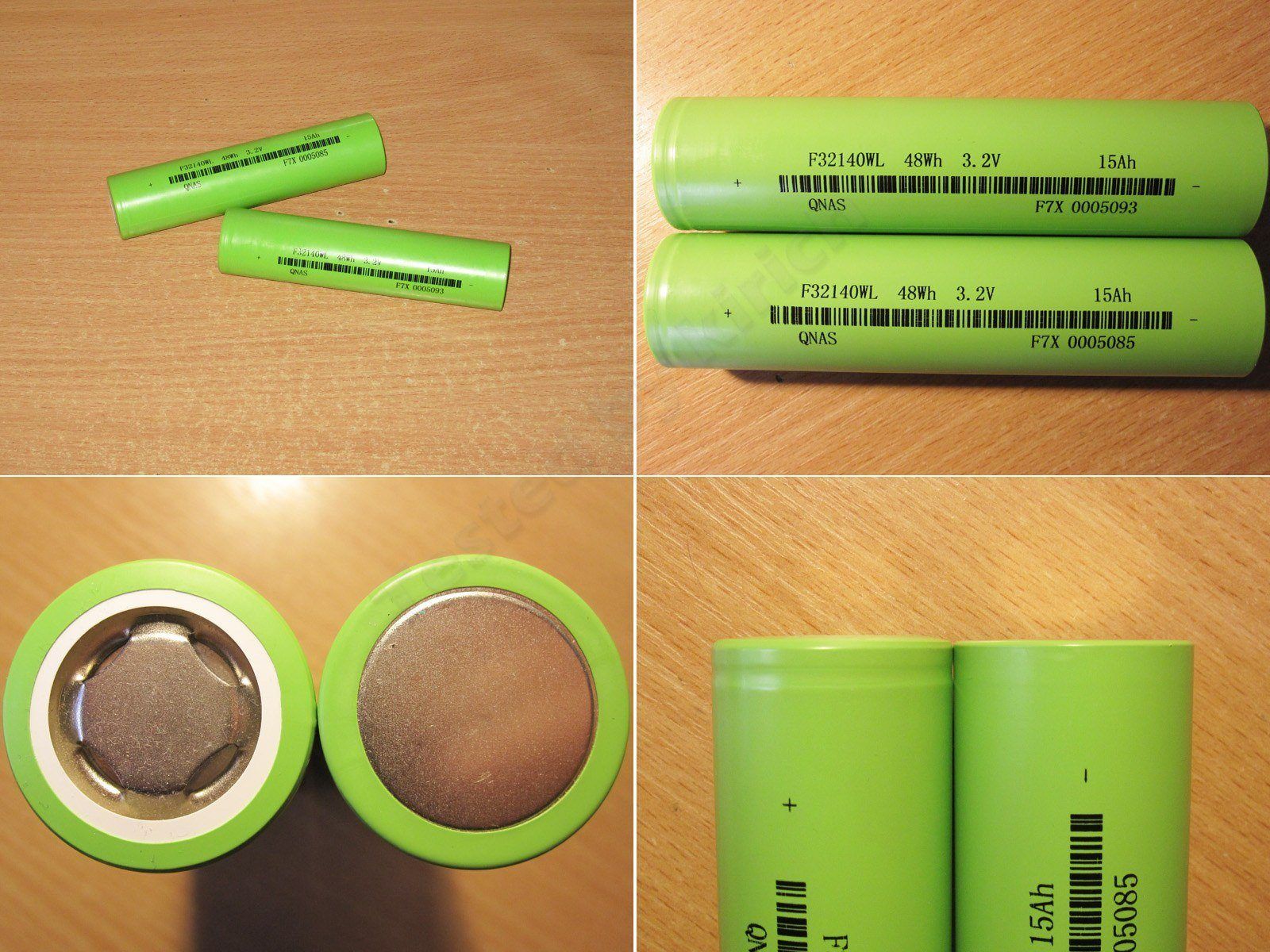
The barcode and markings are pretty typical; even the color is almost the same as the previous ones.
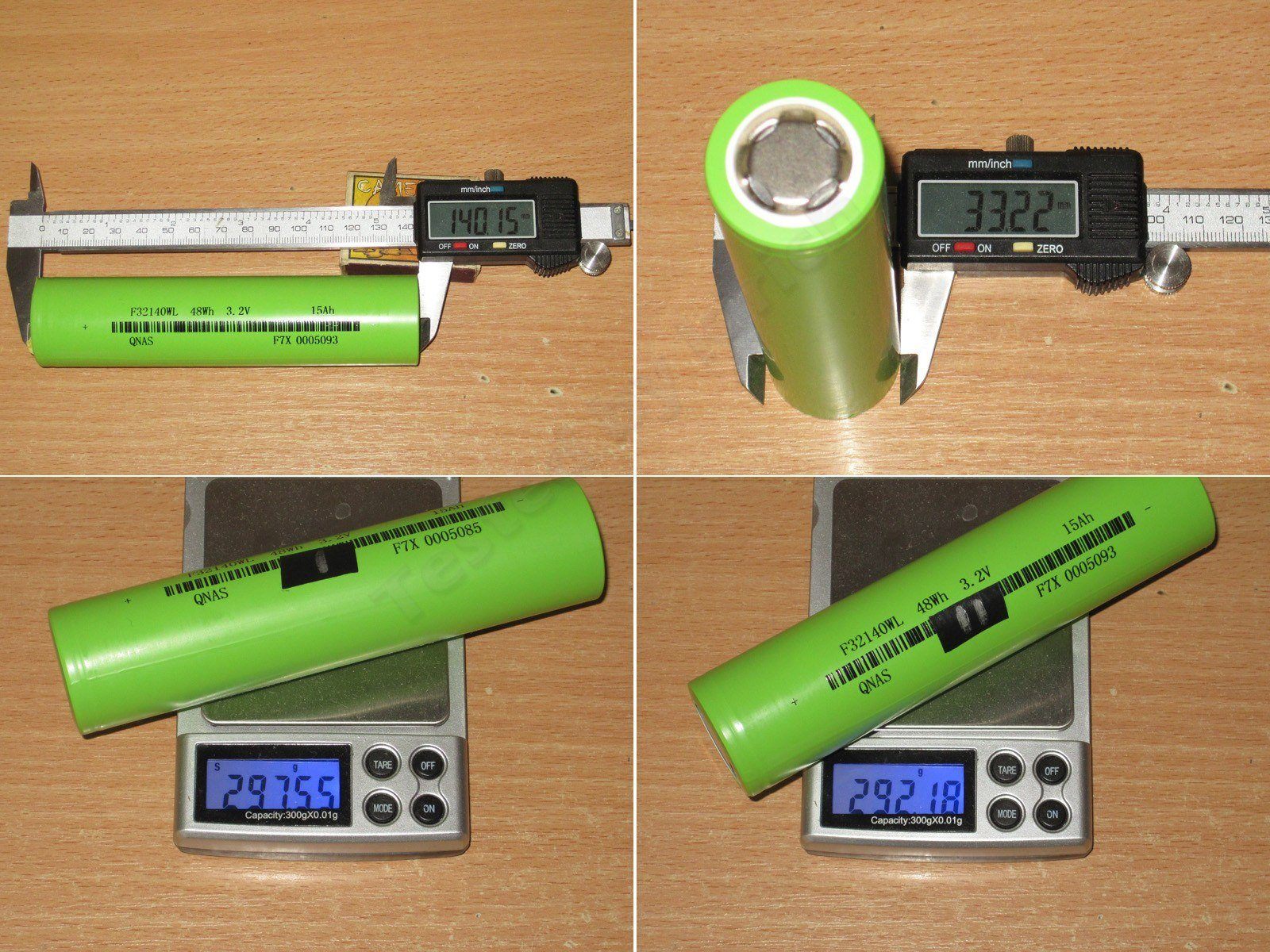
The dimensions and weight are also almost the same as the previous ones.
And here’s an example of an emergency outage. I managed to complete the “normalization” cycle on only one cell. The power went out about halfway through the second one—and worse, it was during the charging stage. In other words, the “normalization” cycle uses more energy because the cell has to be charged almost twice.
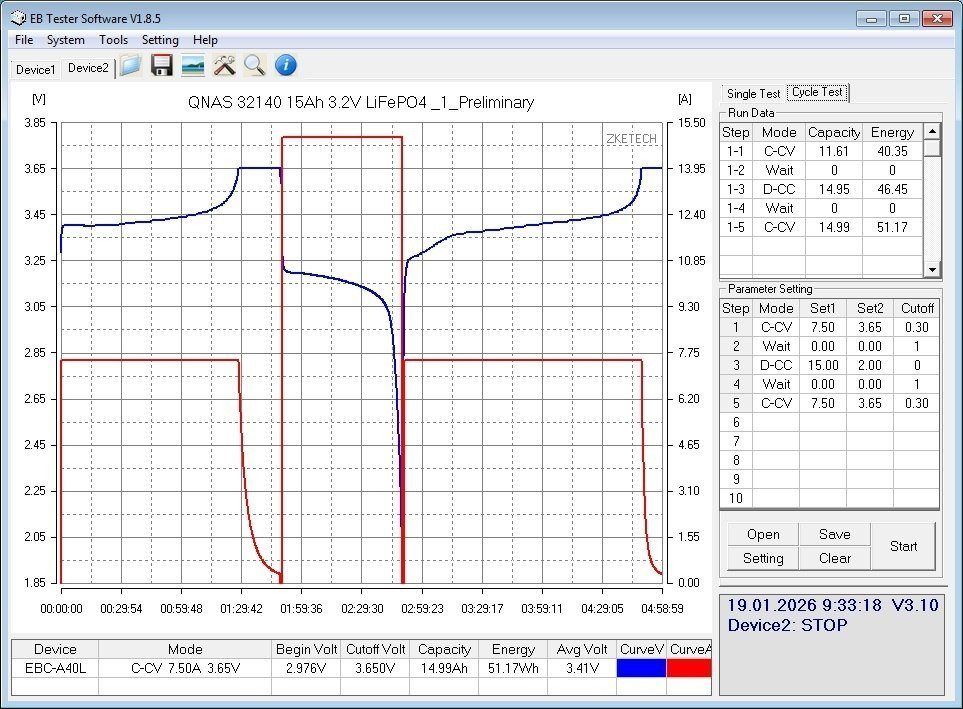
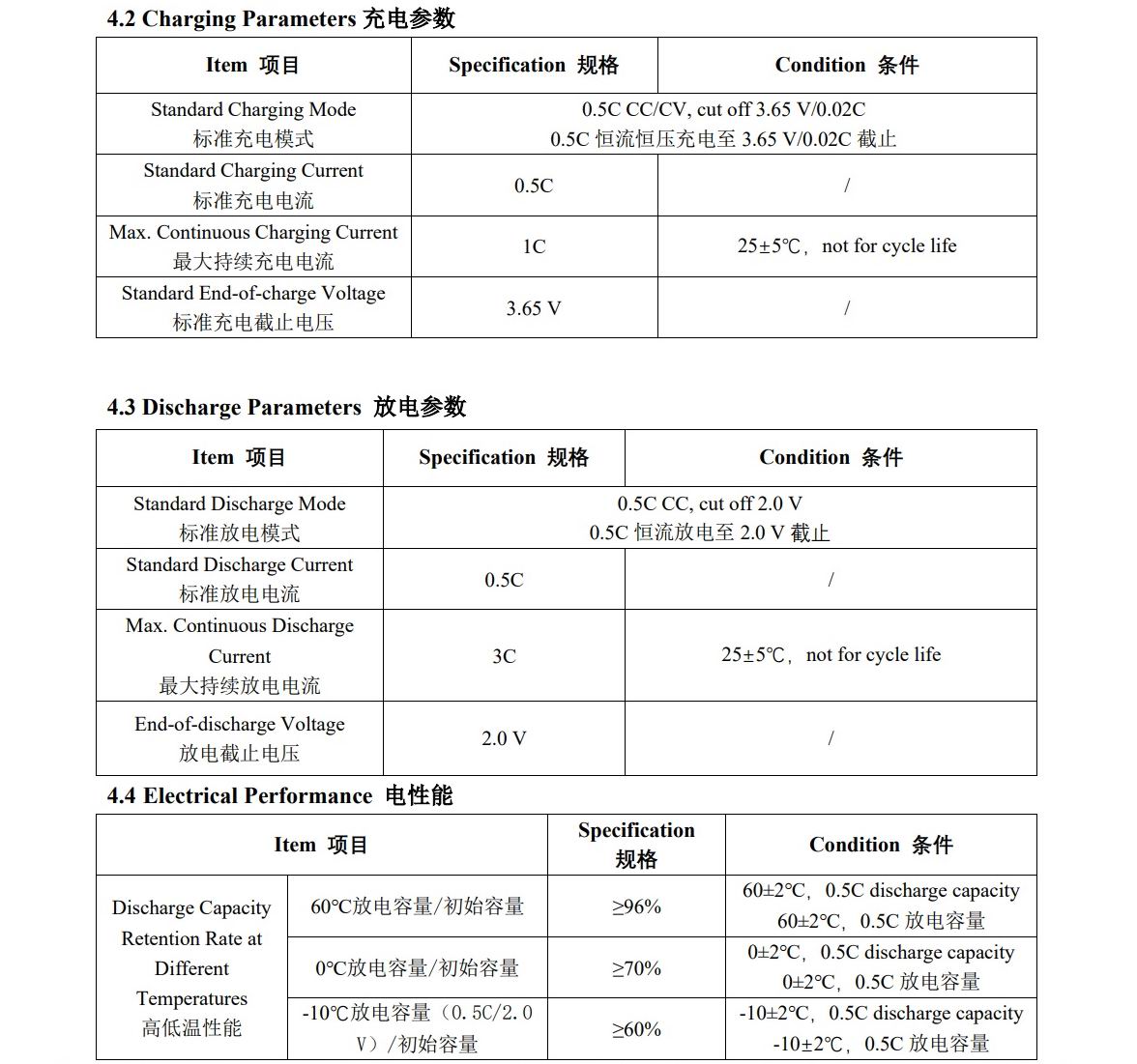
Interestingly, the charge and discharge characteristics differ noticeably. Here are a few things I noticed:
Charging at 0.5C, with a maximum of 1C, rather than 2C as with the previous ones.
The cutoff current is 300 mA (0.02C), not 750 mA.
Discharge down to 2 V, not 2.5 V.
So there’s a bit of “cheating” going on: first, we charge with a lower cutoff current, putting in a little more charge; then, during discharge, we run the cells a little longer. The result is slightly more capacity. The charging difference doesn’t really matter, but the discharge cutoff is trickier: not all devices can discharge down to 2 V per cell; usually they stop at 2.5 V.
Charging takes longer than with the previous ones, but that’s because the cutoff here is 300 mA, which makes the CV phase much longer.
Otherwise, I have no complaints. And if you use them in a UPS, it doesn’t matter at all—they operate in standby mode at a lower voltage.
Discharge at 0.2C, 0.5C, 1C, 2C, and 40 A, i.e. The same modes as for the previous cells, differing only in the discharge cutoff voltage.
At a glance, the capacity is slightly higher than the previous ones, though again this is more likely because they were discharged to 2.0 V rather than 2.5 V.

At 2C and 40 A, the temperature is practically the same as for the previous cells, with no issues.
The second sample

The results at 0.2C, 1C, and 40 A are consistent too, which is excellent in my opinion.

As for residual capacity after discharging at 40 A, the results are even better than for the previous cells. It’s clear that at 40 A the cells delivered all they could.

Impedance after all the tests and a full charge: the previous cells measured 1.8, these measured 1.7. To me, that’s basically the same.
And of course, the most interesting part: comparing them with other batteries of the same size and rated capacity. I hadn’t even realized I’d ended up with so many samples to compare.
1. JSK 32140 15Ah - current review
2. QNAS 32140 15Ah - current review
3. BAK 32140FS-48 - review
4. EVE IFR33140 15Ah - review
5. Gotion 33140 - review
6. Gotion 33140 from another source - review
First, at 0.2C. Here, QNAS 32140 15Ah comes out on top, and not just because it was discharged to 2 V: looking at the graph, you can see that even down to 2.5 V it still performs better. JSK 32140 15Ah and EVE IFR33140 15Ah are neck and neck after that.
A 1C discharge current is the most realistic for this type of cell. In other words, 0.2C is for very light loads, while currents above 1C are more often used for short periods.
QNAS 32140 15Ah fell noticeably behind, although it still came in third. JSK 32140 15Ah and EVE IFR33140 15Ah took first and second place, respectively.
And now 40 A, which is close to the maximum for this type of cell.
The ranking is exactly the same as at 0.2C: QNAS 32140 15Ah comes first, followed by JSK 32140 15Ah and EVE IFR33140 in second and third place.
I should point out how much the Gotion 33140 I got from someone else dropped off. As I recall, they ordered trial batches of various cells in China for energy storage systems. It’s strange that the results differ so much from the previous test of the same batteries.
The third pair, QNAS 40160 25Ah 3.2V LFP - link
These are more serious cells, with almost twice the capacity. As you’d expect, they’re also larger, and the price difference is roughly proportional to the previous pair. So the main advantage is probably easier assembly: putting together 8 large cells is a little simpler than 16 small ones.
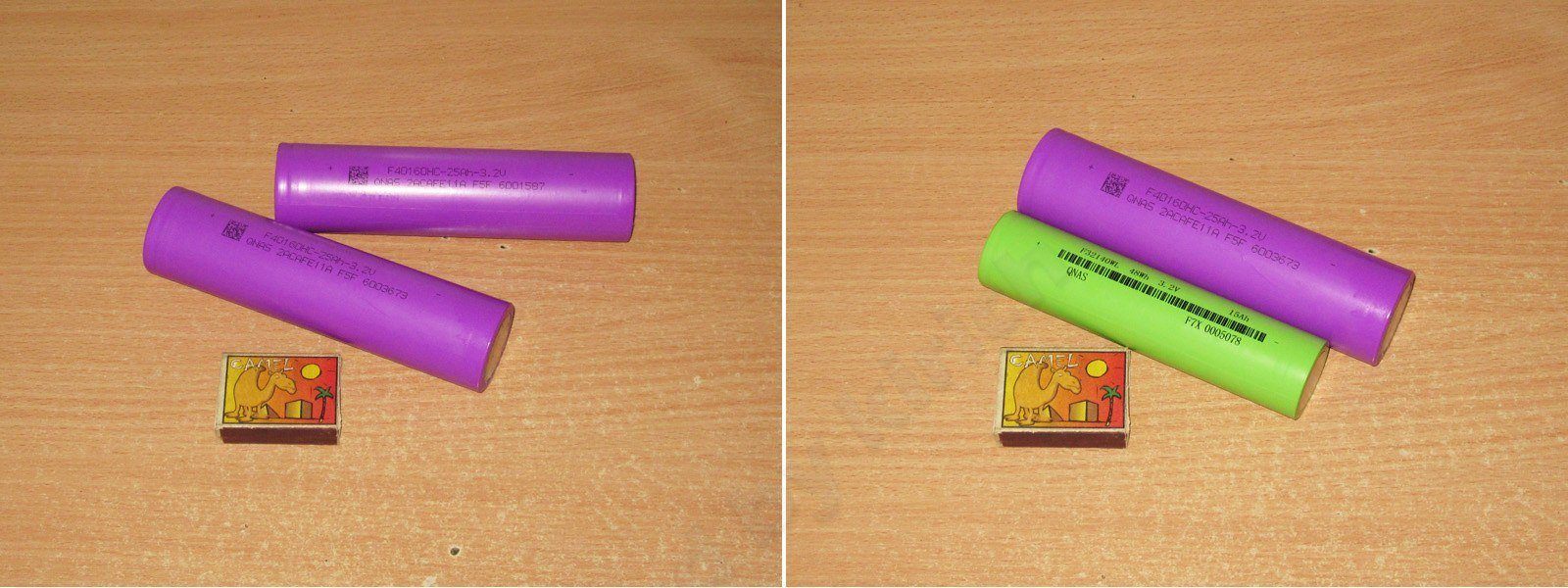
And yes, these are from the same company, QNAS, as the previous cells; they’re just bigger and a different color :)
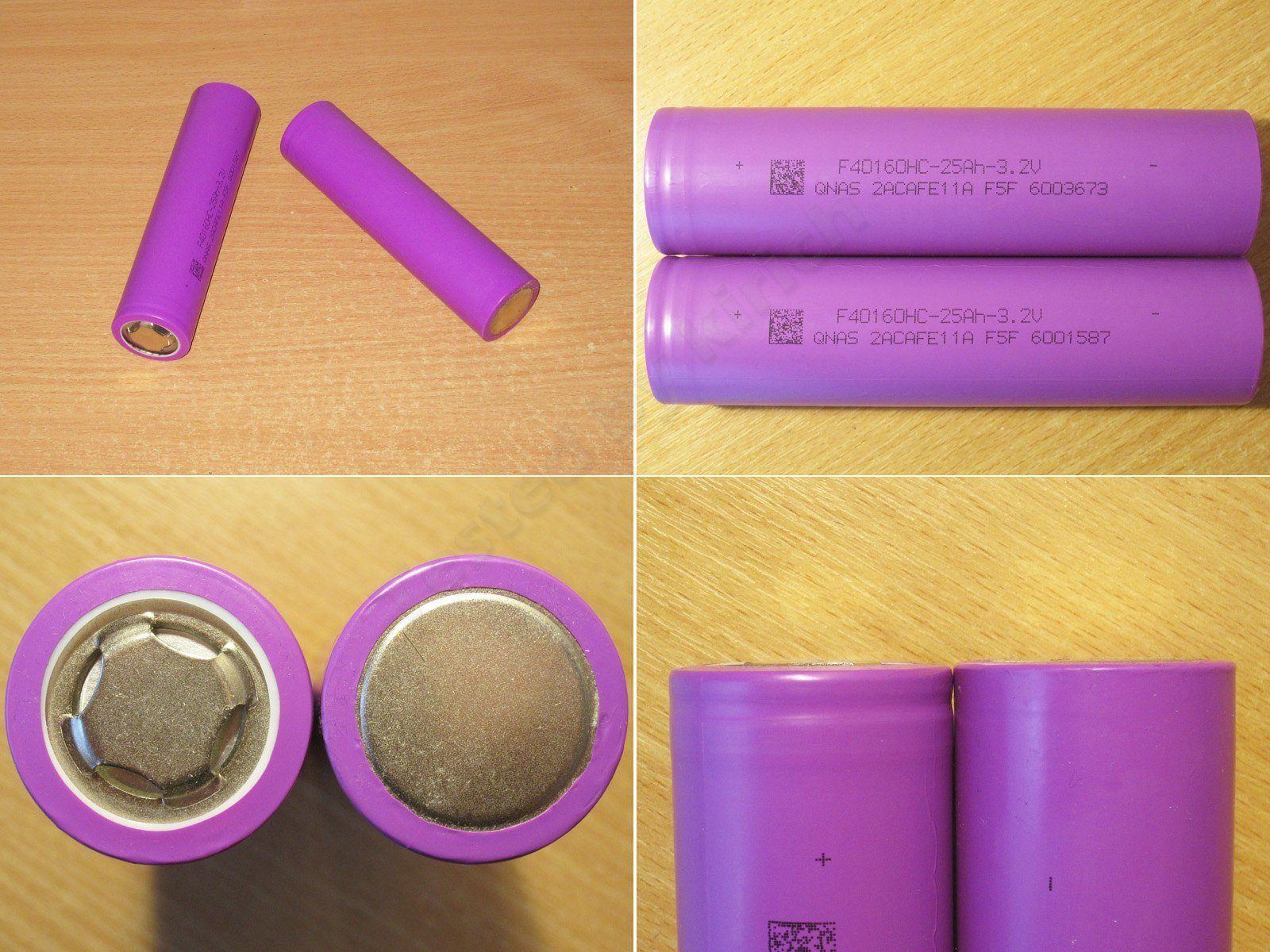
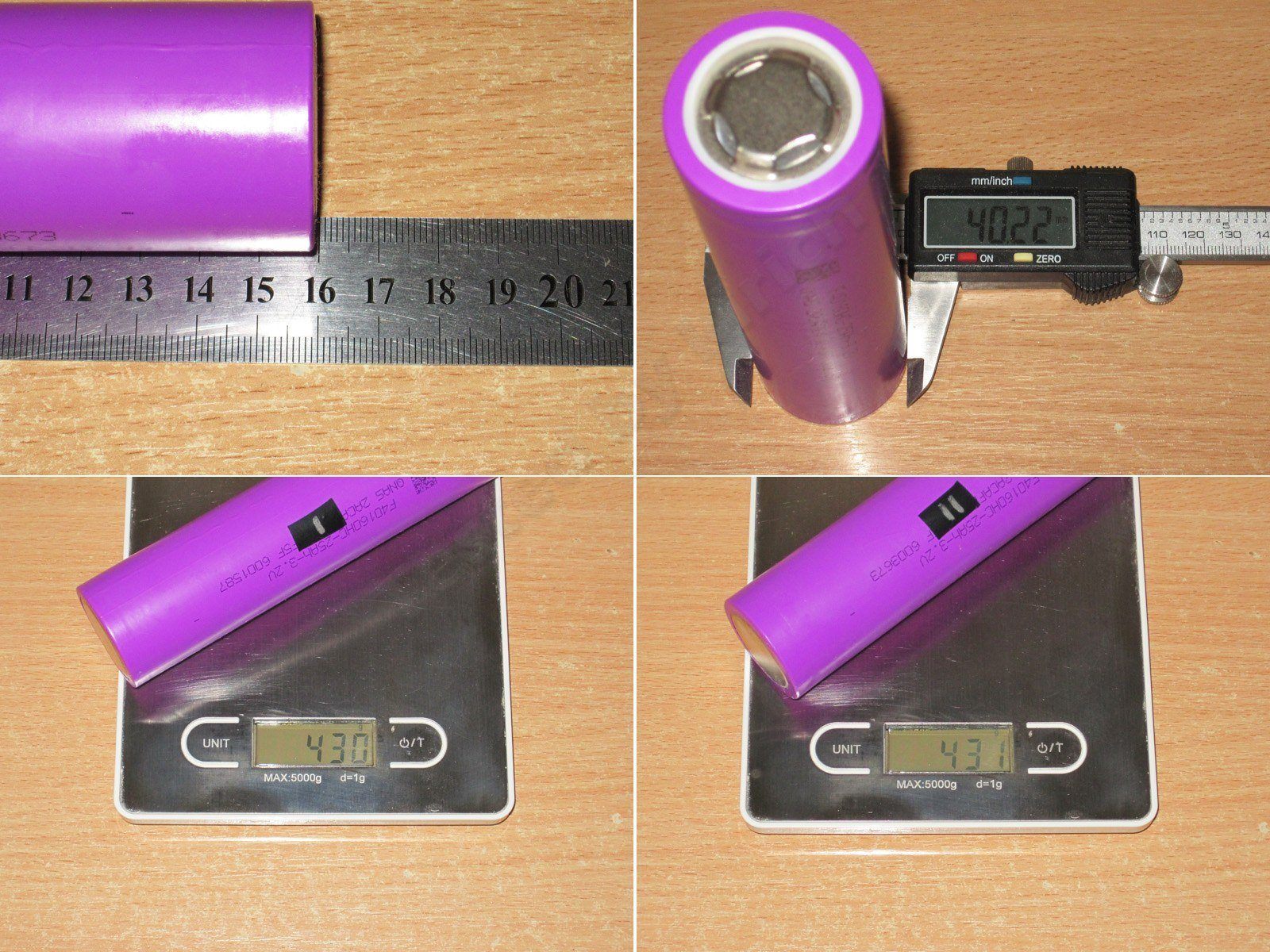
I didn’t have a caliper or a small scale for these. By the way, they weigh about one and a half times as much, while their capacity is almost twice as high, so their weight-to-capacity ratio is a little better.
The “normalization” cycle went smoothly this time, and nothing got in the way or slipped my mind :)
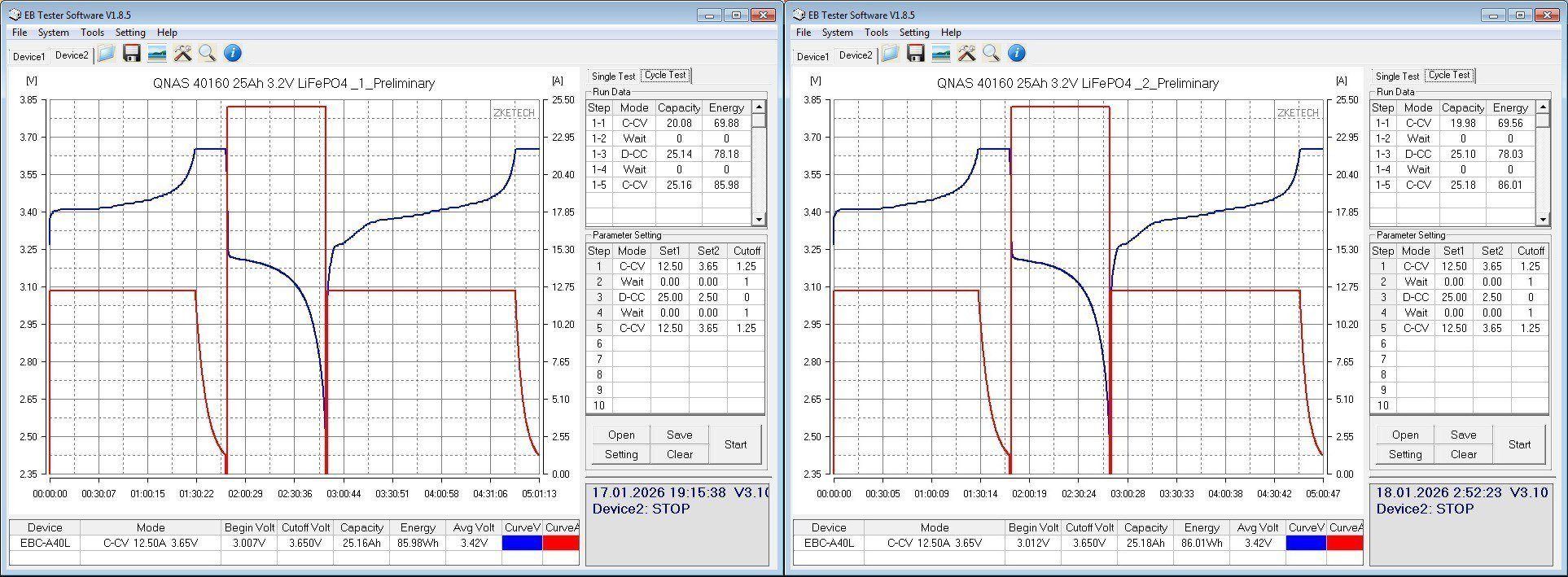
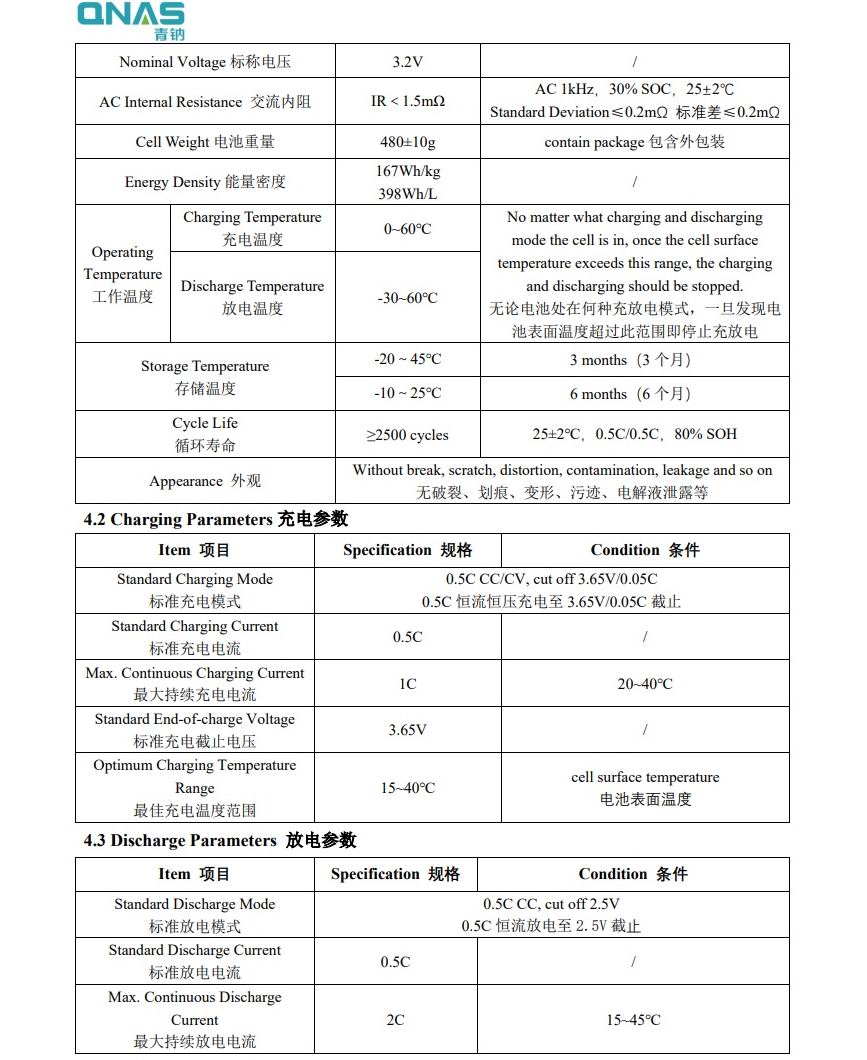
According to the datasheet, the maximum discharge current is 2C when discharging to 2.5 V, so there’s no cheating here. By the way, the modest 2C current explains their better weight-to-capacity ratio: they simply have higher capacity and are therefore more “delicate.”
The standard charging current is 0.5C; fast charging is at 1C, down to the typical 0.05C cutoff, rather than 0.02C as for the previous cells, even though they’re from the same company.
Charging at 0.5C took 2 hours 10 minutes, a very good result. At 1C, charging took relatively little longer: 1 hour 7 minutes, so the cell charged almost twice as fast, which is excellent.
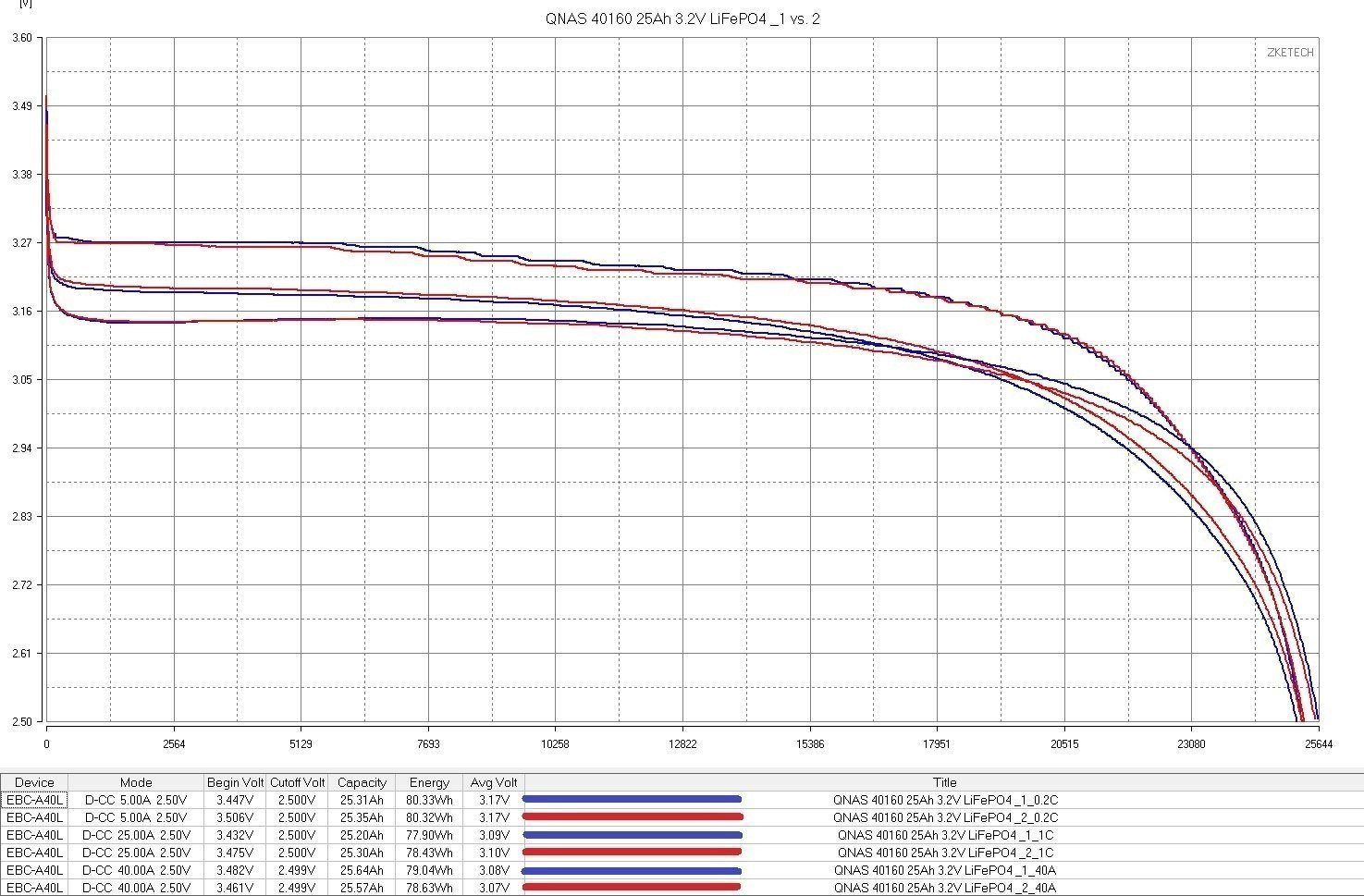
I discharged it at 0.2C, 0.5C, 1C, and 40 A. Yes, the stated maximum is 50 A, so 40 A is a bit low; in practice, I’d say it’s closer to 1.5C than 2C, but I think it should still give us useful information.
In every test mode, I easily got the stated 25 Ah, even though the room temperature was slightly below the recommended 23–27 degrees.
Temperature at 25 A and 40 A. Judging by the results, at the maximum current of 50 A it would be closer to 55–60 degrees, which is perfectly normal for high-capacity batteries.
The second sample is very, very similar.
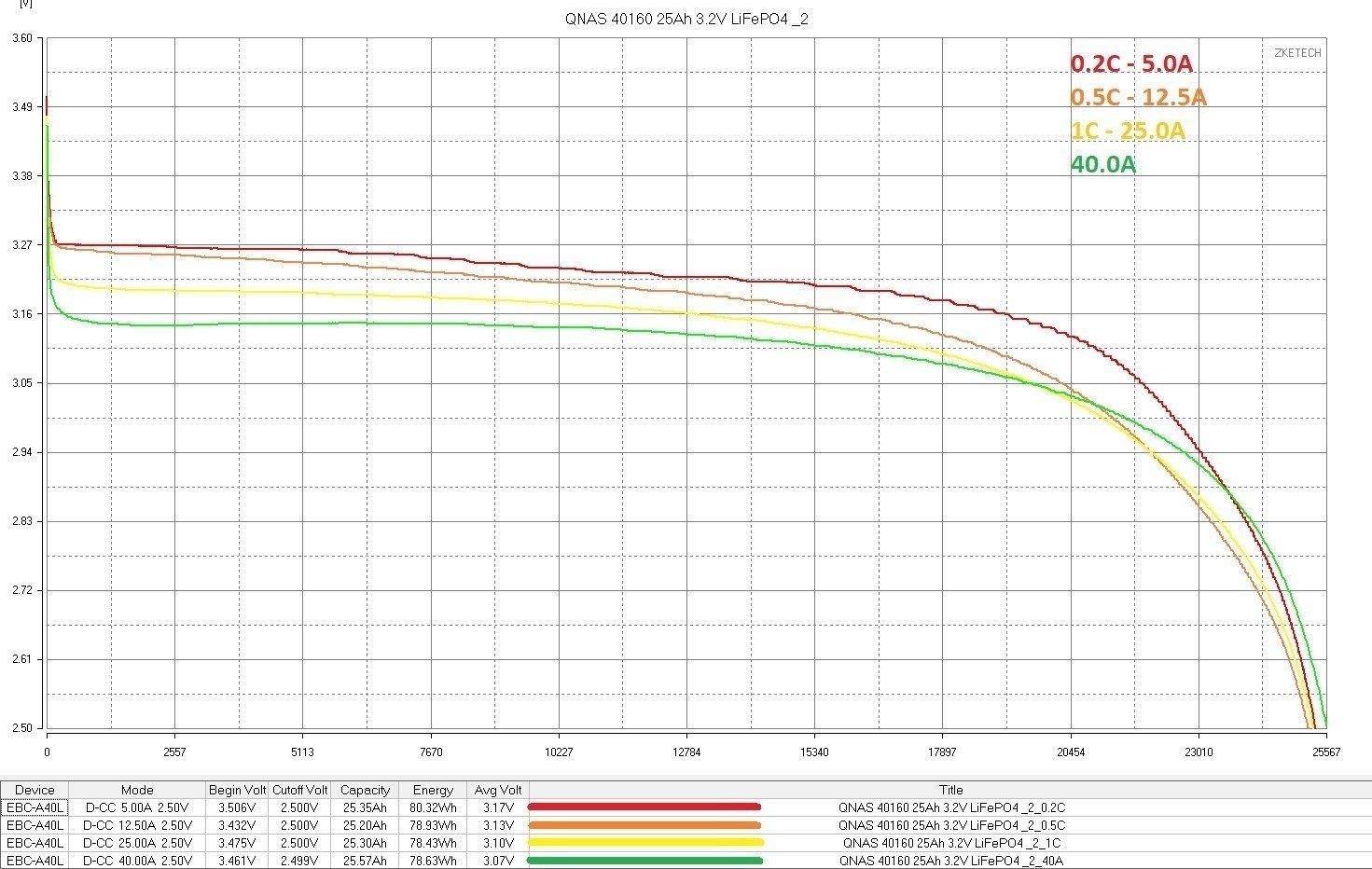
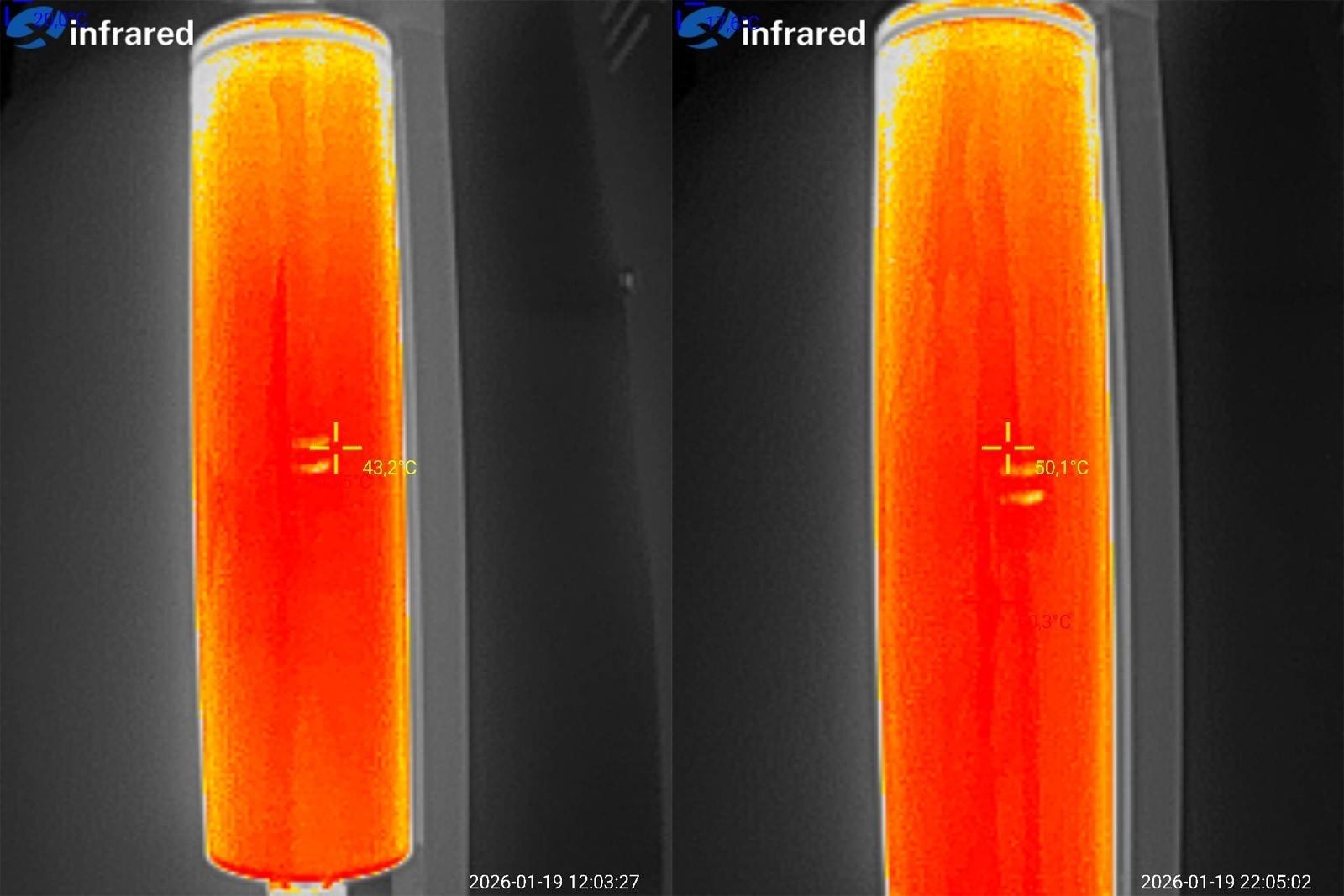
The results match very well, in my opinion—essentially within the measurement error.
The residual capacity after discharging at 0.2C following a 40 A discharge is somewhat worse, both in absolute and relative terms. I think that’s because these are high-capacity cells.
I managed to get about another 600 mAh out of them, which is around 2.5%.

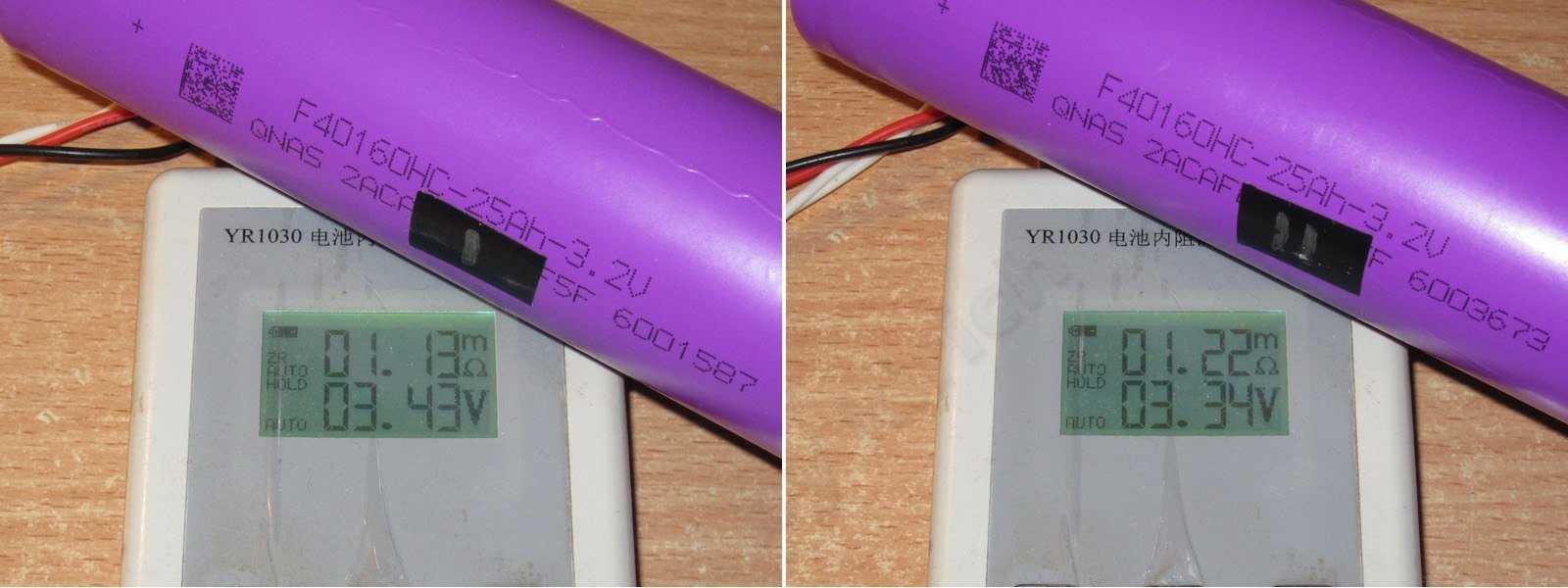
After all the tests and a full charge, the impedance is about one and a half times lower than that of the previous 32140-format cells. By this measure, they’re essentially proportional to their capacity and fully match the datasheet value.
Conclusions.
JSK 32140 15Ah cells are pretty good. The comparison graph shows they’re very similar to the popular EVE IFR33140—neck and neck. I liked them.
QNAS 32140 15Ah is an equally interesting option, though a bit of a “cheat.” It’s curious that they performed better at 0.2C and 40 A (even without taking the “cheating” into account), but lost to the previous cells at 1C. Still, I think they’re good cells: they confidently made the top three alongside EVE IFR33140 and JSK 32140 15Ah.
QNAS 40160 25Ah are simply good cells in their own right: honest capacity, good thermal performance, and they take a charge very well. Overall, I liked them.
In the end, I couldn’t pick a clear winner among these three batteries. To me, they’re more or less on a par, and all equally good. The fact that the two 15 Ah options confidently compete with—and even outperform—a well-known EVE model says it all.
That’s all for now. I hope this information was useful, and once again, a huge thank-you to Alexander both for sending the samples and for the eight QNAS 32140 cells. I’m sure they’ll come in handy.
This model is included in the summary table: Battery comparison: measured capacity and resistance
The figures from this review are in the measurement database: Batteries
Calculate manuallyAll calculators
Discounted products
You may be interested in


Discounted products
Support the project
All the content on the site and the advice are free, but we’d be grateful for your support of the project and the channel!
Comments1
Discuss on the forumHave a question or some experience to share? Discuss the article with the author and readers: the forum is a convenient place to share schematics and photos.
Go to the forumOnly registered readers can comment. It takes a minute to sign up, and you can log in with the same account you use on the forum.
Log inRegister
Comments are published in their original language.